Judge blocks Trump name from Kennedy Center

Shibbir Ahmed, WASHINGTON DC: A US federal judge on Tuesday blocked the Kennedy Center board from adding President Donald Trump’s name to the building or its grounds, ruling that such a move would require approval from Congress. US District Judge Christopher Cooper said the board could not circumvent his earlier order by using alternative wording to honor Trump. The ruling came after the Kennedy Center board proposed adding an inscription reading that the building had been “Restored and Renovated By President Donald J. Trump.”

“Simply put,” Cooper wrote, the defendants cannot install memorials for Trump or anyone or anything else at the Kennedy Center without congressional approval. The decision follows Cooper’s May ruling that the Kennedy Center’s name could not be changed without action by Congress. Trump’s name, which had been added to the building’s exterior, was subsequently removed in June.

The Kennedy Center board, which Trump chairs, had voted in August to pursue new signage recognizing his role in the institution’s renovation. The board also considered naming the center’s grounds the “President Donald J. Trump Plaza.” The latest court ruling blocks those efforts.

The legal dispute comes as the Kennedy Center faces financial difficulties and questions over the condition of its aging building. Trump and his allies have argued that extensive repairs are urgently needed, while the administration has warned in court filings that the building could eventually face demolition if major renovations are not carried out.

Trump has pointed to recent damage at the center following severe weather as evidence of safety concerns. In a post on Truth Social on Tuesday, he argued that the building required immediate attention and criticized the court proceedings over its future.

Meanwhile, the Kennedy Center board voted Tuesday to temporarily close the performing arts complex for renovations. The decision followed the court ruling and came amid reports of severe financial pressures facing the institution. The Kennedy Center, officially established as a memorial to former President John F. Kennedy, was created by Congress and opened in 1971. Cooper’s rulings have emphasized that Congress has the authority to determine its name.

The dispute has also affected programming at the venue. A number of artists have canceled or reconsidered appearances following Trump’s takeover of the institution, while reports have pointed to declines in ticket sales and fundraising.

Trump has said his involvement is intended to help secure the center’s finances and fund necessary renovations. The legal battle over the institution’s name and future is expected to continue as the administration considers its options following Cooper’s ruling.


Trump Changes Defense Production Act Powers, Expands Energy Authority

Shibbir Ahmed, Washington DC: President Donald Trump has issued a new executive order changing how certain authorities under the Defense Production Act are delegated, giving both the Interior and Energy secretaries independent authority over energy-related matters.

The White House announced the order on September 8, saying it amends an earlier executive order governing national defense resource preparedness and updates delegations of presidential authority under the Defense Production Act.

Under the new order, the Secretary of the Interior and the Secretary of Energy may independently exercise delegated authority over forms of energy under their respective purviews. Previously, those responsibilities were delegated to the Energy secretary.

The order also establishes a process for resolving disputes between the two departments. Energy-related disputes will generally be referred first to the National Energy Dominance Council. If a matter involves national defense infrastructure or military operations, it will also be referred to the National Security Council, with coordination involving the Department of War.

Trump’s order further gives the Interior, Commerce and Energy secretaries independent authority to exercise certain presidential powers under the Defense Production Act.

The changes are part of the administration’s broader effort to reorganize federal authority over energy resources and strengthen coordination between energy policy and national security.

The Defense Production Act gives the president broad powers to support national defense by influencing the production, allocation and distribution of critical resources. The law has also been used to strengthen domestic supply chains for strategically important materials and industries.

The White House said the latest order must be implemented in accordance with applicable law and subject to the availability of appropriated funds. The administration previously adjusted Defense Production Act delegations in March, when Trump gave the Energy secretary independent authority alongside the Commerce secretary over certain powers under the law.


Trump Honors 9/11 Victims and First Responders

Shibbir Ahmed, Washington DC: President Donald Trump honored the victims of the September 11, 2001, terrorist attacks and the first responders who risked their lives to save others as the United States prepares to mark the 25th anniversary of the tragedy.

Trump held a remembrance ceremony Tuesday at the Ellipse outside the White House, bringing together firefighters, police officers, first responders, Gold Star families and representatives of the Tunnel to Towers Foundation.

A 21-foot steel beam recovered from the wreckage of the World Trade Center’s South Tower was displayed during the ceremony. The beam is part of the Tunnel to Towers Foundation’s “Steel Across America” initiative, which is taking pieces of the World Trade Center to communities across the country. Trump paid tribute to the nearly 3,000 people who were killed in the attacks and reaffirmed the nation’s commitment to remembering those who lost their lives.

The president also posthumously awarded the Presidential Medal of Freedom to Welles Crowther, who helped save numerous people during the attacks and became known as the “Man in the Red Bandana.” Members of Crowther’s family accepted the nation’s highest civilian honor on his behalf.

Trump also announced that a new U.S. Coast Guard fast-response cutter would be named after Jeffrey Palazzo, a New York firefighter and Coast Guard reservist who was killed in the September 11 attacks.

The White House said Trump and Vice President JD Vance will visit sites connected to the September 11 attacks on Friday, the 25th anniversary, to honor the victims and meet with their families.

On September 11, 2001, al-Qaeda terrorists hijacked four commercial airplanes. Two planes were flown into the World Trade Center towers in New York, another struck the Pentagon, and the fourth crashed in Pennsylvania after passengers attempted to regain control of the aircraft.

Nearly 3,000 people were killed in the attacks, which profoundly changed U.S. national security policy and shaped American foreign policy for decades. The anniversary ceremony comes as the country continues to remember the victims, first responders and ordinary Americans whose actions on that day became part of the history of the United States.


25 Years After 9/11: How America Will Remember the Attacks From New York to Washington

Shibbir Ahmed, New York: Twenty-five years have passed since the devastating terrorist attacks of September 11, 2001. A quarter-century later, the loss of nearly 3,000 lives, the sacrifice of thousands of first responders, and the attacks’ lasting health and social consequences remain deeply embedded in the American memory. This year, New York, Washington and Pennsylvania will mark the 25th anniversary of 9/11 with a series of commemorations and public events.

Main Commemoration in New York

The main 9/11 commemoration will take place Friday at the 9/11 Memorial Plaza in Lower Manhattan, with family members of the victims participating in the ceremony. The program will begin at 8:40 a.m. and is primarily a private gathering for victims’ families, although the ceremony will be streamed live online.

Family members will read the names of those killed in the 2001 attacks as well as victims of the 1993 World Trade Center bombing. Moments of silence will mark several key moments of the attacks, including the aircraft impacts, the collapse of the Twin Towers, the attack on the Pentagon and the crash of Flight 93.
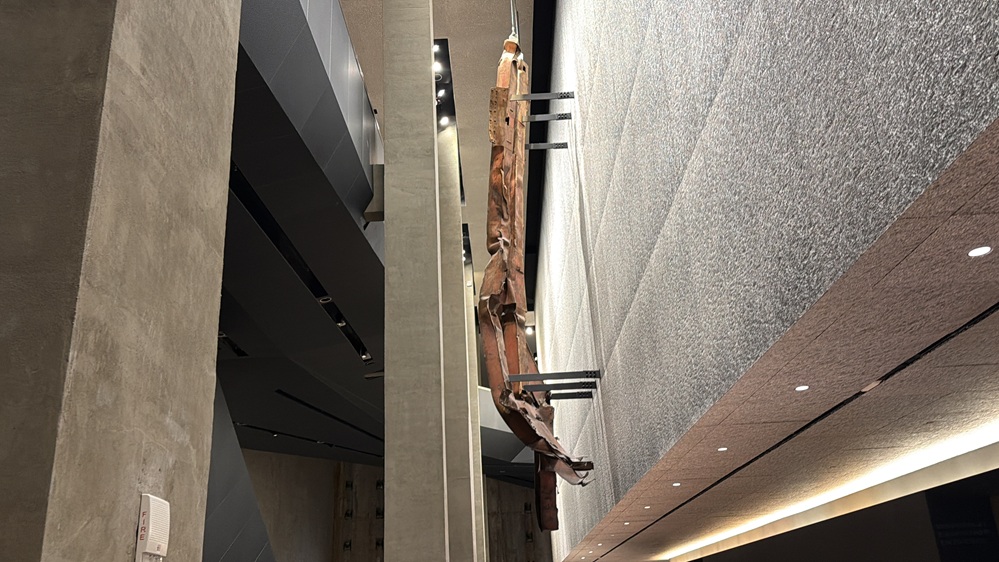
A special moment of silence will also honor those who died in the years following the attacks from 9/11-related illnesses. Vice President JD Vance and other administration officials are expected to attend the New York commemoration. President Donald Trump, meanwhile, will mark the 25th anniversary at the Pentagon instead of attending the New York ceremony.

First Moment of Silence at 8:46 a.m.

At 8:46 a.m. on September 11, 2001, the first hijacked aircraft, American Airlines Flight 11, struck the North Tower of the World Trade Center. The moment will be marked with the first moment of silence during the New York commemoration.

The ceremony will also remember the impact of the second aircraft on the South Tower, the collapse of both towers, the attack on the Pentagon and the crash of Flight 93 in Pennsylvania.

A total of 2,753 people were killed in New York, while 184 people died at the Pentagon in Arlington, Virginia. Another 40 passengers and crew members were killed when United Airlines Flight 93 crashed in Pennsylvania.

New Exhibition at the 9/11 Museum

For the 25th anniversary, the National September 11 Memorial & Museum in New York is launching a new exhibition titled “In Their Honor: 25 Years of 9/11-Inspired Service.”

Opening to the public on September 12, the exhibition will highlight stories of service, sacrifice and humanity over the 25 years since the attacks. It explores how individuals and communities transformed grief into public service and acts of compassion.

The museum is also introducing a new digital educational experience designed to help a new generation understand the history of 9/11 and its long-term impact. According to the museum, nearly 100 million Americans were either not yet born or were too young to remember the attacks. Connecting this generation with the history and legacy of 9/11 is one of the major goals of this year’s anniversary programs.

Trump to Mark Anniversary at Pentagon

In Arlington, Virginia, President Donald Trump is expected to attend and speak at the 25th anniversary commemoration at the Pentagon Memorial. The Pentagon was the third major target of the September 11 attacks. At 9:37 a.m., American Airlines Flight 77 struck the Pentagon. A total of 184 people were killed, including people inside the building as well as passengers and crew members aboard the aircraft. Vice President Vance will attend the main commemoration in New York.

Pennsylvania Also to Hold Commemorations

At the Flight 93 National Memorial in Pennsylvania, a commemorative ceremony will take place Friday from 8:30 a.m. to 10:30 a.m. The names of the 40 passengers and crew members aboard Flight 93 will be read, followed by the ringing of the Bells of Remembrance. A second ceremony will take place from 1 p.m. to 2:30 p.m., featuring additional commemorative activities and a public wreath-laying ceremony at the memorial.

New York’s Nighttime “Tribute in Light”

After a full day of remembrance, New York’s skyline will once again be illuminated by the historic Tribute in Light—two powerful beams of light representing the Twin Towers destroyed in the attacks. For the 25th anniversary, a special program titled “9/11 Tribute in Light: Live from Lower Manhattan” is scheduled to air nationally beginning at 8 p.m. on major television networks and other platforms.
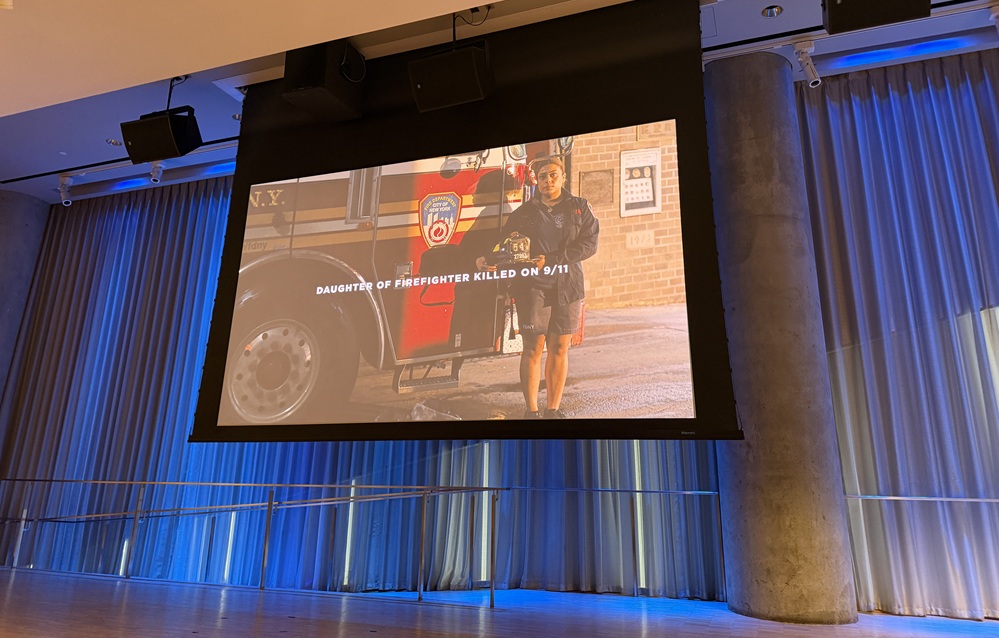
The program will connect audiences across the country with the commemoration in New York and the annual Tribute in Light, bringing the day of remembrance to a national audience.

New Initiative in New York City

As part of this year’s 25th anniversary observance, New York City is officially recognizing September 11 as a Day of Remembrance and Service. The administration of Mayor Zohran Mamdani is emphasizing citywide remembrance, moments of silence, educational programs and volunteer service.

The city has also established a new Continuity and Mission Assurance Team, aimed at ensuring that essential city government operations and services can continue during emergencies while strengthening preparedness and coordination among city agencies.

25 Years Later, the Memory of 9/11 Endures

Twenty-five years later, 9/11 remains far more than a historical event. It continues to shape the security, politics, foreign policy and public health of New York, Washington and the United States as a whole.

This year’s commemorations are therefore not limited to honoring those who were killed. They also recognize first responders, rescue workers, survivors, families who lost loved ones and a new generation born after the attacks. A quarter-century later, the message remains the same: Never Forget.


Trump Calls Iran Conflict ‘Small Potatoes’ as 18 US Service Members Killed

Shibbir AHmed, WASHINGTON DC — President Donald Trump has described the ongoing U.S. military conflict with Iran as “small potatoes,” downplaying the scale of a confrontation that has continued for months and resulted in the deaths of 18 U.S. service members.

Speaking to reporters in the Oval Office on Friday, Trump said he preferred to describe the situation as a “military conflict” rather than a war, echoing Vice President JD Vance’s argument that the fighting does not meet the definition of a conventional war.

Trump said U.S. military operations have largely involved intermittent airstrikes and emphasized that American ground troops have not been engaged in sustained combat. He compared the current casualties with those suffered in previous major U.S. wars. The president’s comments came as tensions with Tehran remain high and the United States continues military operations against Iranian targets.

Trump threatens further strike

Trump also warned that the United States could strike Iran’s Pickaxe Mountain, a deeply buried nuclear facility, if Washington determines that Iran is moving equipment or taking other action at the site. The president said the United States could act against the facility “quite soon,” adding another potential escalation point in the conflict.

The conflict began on February 28 and has involved repeated U.S. military strikes against Iranian targets, while Iran has retaliated with attacks against U.S. and allied positions in the region. According to reporting cited by AP, the conflict has killed 18 U.S. service members and cost the United States more than $37.5 billion.

Trump says Iran will not obtain nuclear weapons

Trump reiterated that Iran will not be allowed to acquire nuclear weapons under his administration. The comments come amid continuing concerns over Iran’s nuclear infrastructure and the possibility that further U.S. strikes could broaden the conflict.

Trump has repeatedly sought to portray the U.S. military campaign as limited, while the continuing casualties, financial costs and regional consequences have kept the conflict at the center of U.S. foreign-policy and domestic political debate.

Vice President Vance has also defended the administration’s decision not to characterize the confrontation as a traditional war, pointing to the nature of the military operations and the absence of sustained U.S. ground combat.

Trump’s remarks are likely to intensify debate over the administration’s Iran strategy as the conflict continues and the United States approaches the 2026 midterm elections.


Trump Signs Funding Bill to Keep U.S. Government Open Through December

Shibbir Ahmed, WASHINGTON DC — President Donald Trump has signed a short-term government funding bill designed to keep the U.S. federal government operating through December 11, averting the threat of another government shutdown just weeks before the November midterm elections.

Trump signed the legislation Wednesday, September 2, after the U.S. House of Representatives approved the measure by an overwhelming bipartisan vote of 370–48. The Senate had already approved the legislation in August.

The measure, known as a continuing resolution, extends federal funding beyond the beginning of the new fiscal year on October 1. It largely maintains existing funding levels while giving Congress additional time to negotiate and approve the full set of spending bills needed to finance the federal government through fiscal year 2027.

Shutdown threat pushed beyond midterm elections

Without congressional action, federal funding was scheduled to expire at the end of September. That would have raised the possibility of a government shutdown during the final weeks of the midterm-election campaign. Instead, lawmakers have moved the deadline to December 11.

The timing is politically significant. Americans will vote in the November 3 midterm elections, and both Republicans and Democrats had strong incentives to prevent another prolonged disruption of federal services during the campaign season. The legislation gives Congress roughly two additional months to negotiate a longer-term agreement.

However, the agreement does not resolve the underlying budget dispute. Congress still has to complete the regular appropriations process covering major areas of federal spending, including defense, housing, energy and homeland security.

Bipartisan House vote

The House vote demonstrated unusually broad support for the temporary measure. The bill passed 370–48, reflecting support from members of both parties. Its passage followed the Senate’s earlier approval in August, allowing the legislation to reach Trump’s desk before the September 30 funding deadline. The overwhelming vote also underscored the political desire in Washington to avoid another shutdown. The United States experienced major funding disruptions during Trump’s second presidency, making another shutdown particularly politically risky as voters prepare to go to the polls.

What happens next?

The immediate crisis has been postponed, but the budget battle is far from over. Congress must now return to the more difficult task of reaching agreement on full-year appropriations for fiscal year 2027. The December 11 deadline will give lawmakers another opportunity to negotiate, but it also creates a new potential funding showdown later this year.

The outcome of the November elections could significantly influence those negotiations. If control of either chamber changes, the political balance surrounding federal spending, taxation, immigration, defense and domestic programs could shift substantially. For now, however, federal agencies have greater certainty that funding will continue beyond October 1.

A temporary solution, not a permanent budget

The legislation should therefore be viewed as a temporary political compromise rather than a final budget agreement. A continuing resolution allows the government to operate while Congress works toward completing its annual appropriations bills. It prevents the immediate disruption associated with a funding lapse but leaves many of the major disagreements unresolved.

The temporary agreement also means that the next major budget confrontation is likely to occur after the midterm elections, when lawmakers return to Washington with a new political landscape.

For federal employees, contractors and millions of Americans who depend on government services, the immediate message is straightforward: there will be no federal government shutdown at the beginning of October because of the current funding deadline.

But Washington’s budget battle has only been delayed. The next deadline — December 11, 2026 — could once again put Congress and the White House under pressure to reach a deal. With the midterm elections approaching and major disagreements over federal spending still unresolved, the temporary peace in Washington may prove to be just that — temporary.


US House Passes Funding Bill 370–48 to Avert Government Shutdown

Shibbir Ahmed, Washington, D.C.: The United States House of Representatives has taken a major step to avert a potential government shutdown, overwhelmingly passing a short-term federal funding bill on Tuesday.

The measure passed by a vote of 370–48 and would keep the federal government funded through December 11, 2026. The bill has now been sent to President Donald Trump for his signature. The Senate had already approved the measure on August 8.

The vote came as Congress has yet to complete the full set of spending legislation needed to fund the federal government for fiscal year 2027. The new fiscal year begins on October 1. With lawmakers unable to complete the 12 regular appropriations bills, Congress turned to a temporary funding measure to prevent federal agencies from running out of money at the start of the new fiscal year.

The House vote received strong bipartisan support. According to the official House Clerk’s voting record, 193 Republicans, 176 Democrats and one Independent voted in favor of the measure. Nineteen Republicans and 29 Democrats voted against it, while 14 members did not vote.

The legislation, H.R. 6500, is a continuing appropriations measure designed to maintain federal government funding on a temporary basis. By extending current funding through December 11, it removes the immediate threat of a shutdown that otherwise could have begun when existing funding expires on October 1.

The Senate passed the measure on August 8. Following Tuesday’s House approval, the legislation was sent to President Trump. Once signed, it will become law and provide temporary funding for federal operations through December 11.

However, Tuesday’s vote does not resolve the broader budget dispute facing Washington. Instead, it postpones the most difficult funding decisions until later in the year. Congress will still need to negotiate and approve the full set of appropriations measures for fiscal year 2027 before the December 11 deadline.

The timing of the agreement also carries significant political implications. The United States is scheduled to hold its midterm elections on November 3, and lawmakers from both parties have a strong incentive to avoid a government shutdown during the final weeks of the campaign. A shutdown could disrupt federal services, affect government workers and create additional political pressure ahead of the elections.

The temporary funding agreement therefore allows Congress to move the broader budget confrontation beyond the November elections. Lawmakers will have additional time to negotiate the government’s full-year spending plans after the election.

The bill also contains funding provisions for specific areas. Among them is $1.2 billion in additional funding related to the continued construction of Virginia-class and Columbia-class submarines, according to information released by congressional lawmakers.

Despite the overwhelming bipartisan vote, disagreements between Republicans and Democrats over federal spending and policy priorities remain unresolved. Some Republicans opposed the measure over policy concerns, while Democrats have also criticized aspects of the administration’s spending and policy agenda.

Nevertheless, Tuesday’s vote represents a significant bipartisan effort to keep the federal government operating and prevent an immediate shutdown.

For now, Washington has avoided another shutdown crisis. But the underlying budget battle has not gone away. As the December 11 deadline approaches, Congress will once again face the question of whether it can reach agreement on the full fiscal year 2027 spending bills—or whether the United States will once again face the threat of a government shutdown.


Trump Sends Saudi Nuclear Deal to Congress

Shibbir Ahmed, Washington, D.C.: The administration of U.S. President Donald Trump has formally submitted a civil nuclear cooperation agreement with Saudi Arabia to Congress for review. However, the Trump administration remains firm that Saudi Arabia must normalize relations with Israel and join the Abraham Accords as part of the broader agreement.

Under the U.S. Atomic Energy Act, the agreement is now subject to congressional review. Congress has 90 days to review and potentially reject the agreement. If Congress does not pass a joint resolution of disapproval during that period, the agreement could take effect.

Last month, U.S. and Saudi energy officials signed the agreement in Washington. Under the deal, U.S. companies would be able to participate in the development of Saudi Arabia’s civilian nuclear program. The proposed agreement could remain in effect for 30 years.

However, the Trump administration’s condition regarding Israel has created new uncertainty over the future of the agreement. Saudi Arabia has long maintained that it would want to see credible progress toward the establishment of a Palestinian state before normalizing diplomatic relations with Israel. Israeli Prime Minister Benjamin Netanyahu, meanwhile, has opposed the establishment of a Palestinian state.

The agreement has also raised concerns among some members of Congress and nuclear nonproliferation experts. In particular, there are concerns that allowing Saudi Arabia to pursue uranium enrichment in the future could increase the risk of a nuclear arms race in the Middle East.

The key issue: The Trump administration wants to advance long-term civilian nuclear cooperation with Saudi Arabia while linking the agreement to its broader diplomatic goal of normalizing Saudi-Israeli relations. The agreement’s next steps will therefore depend on both Congressional review in Washington and Riyadh’s position on normalization with Israel.