California Governor Newsom Commutes Death Sentences of 548 Inmates

California — California Governor Gavin Newsom has commuted the death sentences of 548 inmates on death row, converting their sentences to life imprisonment without the possibility of parole. In a letter explaining his decision, Newsom said the inmates should be allowed to die of natural causes in prison while ensuring that the victims of their crimes continue to be remembered and honored.

Newsom said he was exercising his constitutional authority to commute the sentences. He argued that state-sanctioned killing is inconsistent with California’s values, undermines the foundation of the justice system and diminishes human dignity. The immediate impact of the decision is limited, however, because California has not carried out an execution since 2006.

Since the death penalty was reinstated in California in 1978, only 13 executions have been carried out in the state. California has historically had the largest death-row population in the United States. Experts say Newsom’s decision could save several million dollars annually by reducing the costs associated with death-penalty cases and related legal proceedings. In 2019, Newsom imposed a moratorium on executions in California shortly after taking office. His decision to commute the sentences comes as his tenure as governor approaches its conclusion.

Newsom has also been discussed as a potential Democratic presidential candidate for the 2028 U.S. election. Bernard E. Harcourt, a professor at Columbia University, told the BBC that similar political positions have been seen elsewhere. He cited former French President François Mitterrand, who took a position against the death penalty before the 1981 presidential election and went on to receive public support.

Newsom’s decision could similarly appeal to voters who oppose capital punishment, Harcourt suggested. The death penalty remains a contentious issue across the United States. Executions have continued in several states, while incidents surrounding executions have also generated public criticism.

Anthony D. Romero, executive director of the American Civil Liberties Union (ACLU), welcomed Newsom’s decision, describing it as a step toward justice and an important move toward ending what he called California’s racist and inhumane system of punishment.

However, Los Angeles County District Attorney Nathan Hochman criticized the governor’s action. Hochman argued that although the governor has the constitutional authority to commute individual sentences, abolishing the death penalty itself is a matter for the legislature or California voters. California voters have previously voted twice in statewide ballot measures to retain the death penalty.

Meanwhile, U.S. President Donald Trump is a strong supporter of capital punishment. On the first day of his second term, Trump signed an order directing the federal government to pursue the reinstatement of capital punishment at the federal level. The death penalty is currently legal in 27 U.S. states, while 23 states and Washington, D.C., have abolished it.


DOJ Deploys Election Monitors Across All 50 States for First Time in History

Shibbir Ahmed, Washington, D.C. — For the first time in U.S. history, the Department of Justice (DOJ) is deploying election monitors across all 50 states. The initiative aims to promote transparency in the electoral process, protect voting rights, and ensure compliance with federal election laws during the 2026 midterm elections.

On Tuesday, November 3, the Justice Department announced that approximately 1,000 election monitors and observers would be deployed for this year’s elections. This marks the largest election-monitoring operation in the department’s history. Although the DOJ has deployed election monitors under previous administrations, this is the first time the initiative has covered all 50 states.

The operation is being coordinated by the DOJ’s Civil Rights Division. The monitoring teams will include personnel from the division, representatives from other DOJ divisions and components, officials from U.S. Attorney’s Offices, and federal observers from the Office of Personnel Management. Throughout Election Day, Civil Rights Division personnel will maintain contact with state and local election officials.

Assistant Attorney General Harmeet K. Dhillon of the DOJ’s Civil Rights Division said, “Election integrity has been one of the top priorities for this Administration and this Division. I am very proud we are deploying the largest monitoring effort in DOJ history, and pursuing transparency for elections in an assertive and nondiscriminatory manner.”

The Justice Department said election monitors would examine whether federal voting rights laws are being properly followed. The Voting Section of the Civil Rights Division is responsible for enforcing the civil provisions of several federal laws designed to protect voting rights.

These laws include the Voting Rights Act, the National Voter Registration Act, the Help America Vote Act, the Uniformed and Overseas Citizens Absentee Voting Act, and the Civil Rights Acts.

In addition, the division’s Disability Rights Section will oversee compliance with the Americans with Disabilities Act (ADA) to ensure that people with disabilities have a full and equal opportunity to vote. Meanwhile, the Criminal Section will enforce federal criminal laws prohibiting voter intimidation and voter suppression based on race, color, national origin, or religion.

The Justice Department also announced that its officials would remain available throughout Election Day and the following week to receive public questions, complaints, and reports of potential violations involving federal voting rights laws.

U.S. residents can report election-related concerns by calling the department’s election issues hotline at 1-800-253-3931. Complaints can also be submitted by email at VEM@usdoj.gov or through the department’s website at www.civilrights.justice.gov/report.

For complaints involving the voting rights of people with disabilities, the DOJ’s ADA Information Hotline can be reached toll-free at 1-800-514-0301. The TTY number is 1-833-610-1264. Complaints can also be filed through www.ada.gov.

The department advised that any disruptions at polling places should be reported to local election officials, including officials stationed at the polling locations. Incidents involving violence, threats of violence, or intimidation at polling places should be reported immediately to local police by calling 911. After contacting local law enforcement authorities, individuals should also notify the Justice Department.

The DOJ said election monitors would be deployed in selected cities, counties, and other jurisdictions across all 50 states. The designated locations include Jefferson, Montgomery, and Mobile in Alabama; Anchorage, Dillingham, and Kusilvak in Alaska; Maricopa, Pima, Apache, and Navajo in Arizona; and Pulaski and Washington in Arkansas.

The monitoring effort will also cover Los Angeles, Alameda, Sacramento, and San Diego in California; Adams in Colorado; New Haven in Connecticut; New Castle in Delaware; Leon, Hillsborough, Miami-Dade, Broward, and Palm Beach in Florida; and Cobb, DeKalb, Fulton, Gwinnett, Chatham, and Bibb in Georgia.

Additional locations include Honolulu in Hawaii; Ada in Idaho; and Chicago, Cook, Champaign, Sangamon, St. Clair, and Madison in Illinois. Monitors will also be assigned to Lake and Marion in Indiana; Linn and Polk in Iowa; Johnson, Wyandotte, and Sedgwick in Kansas; and Fayette and Jefferson in Kentucky.

In Louisiana, the designated areas are Orleans, East Baton Rouge, and Lafayette. In Maine, they include Lewiston, Portland, and South Portland. The monitoring operation will also cover Prince George’s in Maryland; Lowell and Boston in Massachusetts; and Lansing, East Lansing, Grand Rapids, Flint, Detroit, Hamtramck, Warren, and Dearborn in Michigan.

The DOJ’s list further includes Minneapolis, Hennepin, and Ramsey in Minnesota; Lafayette and Hinds in Mississippi; St. Louis, Jackson, and Clay in Missouri; Yellowstone in Montana; Douglas in Nebraska; and Clark in Nevada. In New Hampshire, monitors will cover Manchester and Nashua, while Middlesex, Bergen, and Union are included in New Jersey.

Other designated areas include Bernalillo in New Mexico; New York, Westchester, Kings, Albany, and Erie in New York; Alamance, Mecklenburg, and Wake in North Carolina; and Cass in North Dakota. The monitoring effort will also extend to Cuyahoga, Franklin, and Medina in Ohio; Muskogee, Tulsa, and Oklahoma in Oklahoma; and Multnomah in Oregon.

In Pennsylvania, the designated jurisdictions are Philadelphia, Allegheny, Luzerne, and Lehigh. Other locations include Pawtucket in Rhode Island; Charleston in South Carolina; Minnehaha in South Dakota; and Davidson, Knox, and Shelby in Tennessee.

In Texas, election monitors will be deployed to Bexar, Dallas, Harris, Waller, Blanco, Bowie, and Nueces. The list also includes Salt Lake in Utah; Burlington in Vermont; Charlottesville, Fairfax, Prince William, and Virginia Beach in Virginia; and King and Yakima in Washington state. The remaining designated areas are Kanawha in West Virginia; Madison and Milwaukee in Wisconsin; and Laramie County in Wyoming.

The Justice Department’s nationwide initiative is being described as the largest election-monitoring operation in U.S. history, highlighting the department’s efforts to promote election transparency and protect voting rights across the country.

US Charges 63 People in Election-Related Crimes

Shibbir Ahmed, New York — The U.S. Department of Justice (DOJ) has announced charges against 63 individuals in connection with alleged illegal voting, fraudulent voter registration and other election-related offenses across the country. Four of those individuals were identified by the department as illegal aliens. In a press release issued Monday, the Justice Department said the cases involve allegations of noncitizens voting in federal elections, falsely claiming U.S. citizenship to register or vote, and fraudulently submitting voter registration applications in another state.

Attorney General Todd Blanche described the announcement as the largest surge of voter-fraud arrests since President Donald Trump returned to office. He said the department would continue investigating and prosecuting election-related offenses to restore public confidence in the U.S. electoral system.

According to the Justice Department, prosecutors have charged 195 noncitizens across 25 states with illegal voting and voter-registration offenses during the past nine weeks. Since the beginning of the current administration, the department says it has charged 239 people with voting fraud-related offenses.

The cases include Mohammad Hachibur Rahman, a 33-year-old Bangladeshi national named in a case in the District of Maryland. According to the Justice Department, Rahman has been charged with unlawful voting. Prosecutors allege that he voted in the November 2024 election, which included contests for federal offices such as president, vice president and members of Congress. The department’s announcement does not report a final judicial determination in his case. The allegation therefore should not be treated as proof of guilt.

The Justice Department’s announcement outlines cases across numerous federal judicial districts, including Georgia, Texas, North Carolina, Tennessee, California, New York, New Jersey, Nevada, Pennsylvania and Wisconsin.

The alleged offenses include falsely claiming U.S. citizenship on voter-registration documents, voting in federal elections while not a U.S. citizen, providing false information on election-related forms, and allegedly concealing previous voting or registration activity on naturalization applications. Some defendants are lawful permanent residents, commonly known as green-card holders. Lawful permanent residency does not, by itself, grant the right to vote in federal elections.

Several cases involve allegations of voting in multiple elections over a number of years. Other cases concern allegedly fraudulent voter-registration applications or false statements made during the naturalization process.

The Justice Department emphasized that criminal complaints, indictments and related charging documents contain allegations, not proof of guilt. All defendants are presumed innocent unless and until their guilt is established beyond a reasonable doubt in court.


Deadly Storms Leave Hundreds of Thousands Without Power Across the US

FLORIDA, United States — Hurricane Isaias has left a trail of destruction across the southeastern United States, killing at least four people and knocking out electricity to hundreds of thousands of homes and businesses after making landfall along Florida’s Gulf Coast. The storm came ashore near Destin, Florida, on October 9 as a Category 2 hurricane, bringing powerful winds, heavy rainfall and a dangerous storm surge. It subsequently weakened as it moved inland, but its effects continued to disrupt communities across Florida, Alabama, Georgia and Mississippi.

Approximately 670,000 electricity customers were without power across the four states in the immediate aftermath of the storm, according to Reuters. The number of outages subsequently declined as utility crews began restoring electricity.

At least four deaths have been linked to Hurricane Isaias, according to authorities and news reports. Two of the reported fatalities involved trees falling on homes, while another person in Florida died in an incident involving a generator operating inside a closed garage. Officials have warned residents against using fuel-powered generators indoors or in enclosed spaces because the resulting carbon monoxide can cause fatal poisoning.

Strong winds brought down trees and power lines, making roads dangerous and complicating emergency response efforts. In Houston County, Alabama, authorities temporarily closed roads because of hazardous debris and fallen electrical lines. Emergency crews continued assessing damage and clearing affected areas as conditions gradually improved.

Florida and Alabama experienced some of the most significant electricity disruptions. In the immediate aftermath of landfall, approximately 420,000 customers in Florida and 190,000 in Alabama were without power. Additional outages affected Georgia and Mississippi.

Florida officials made electricity restoration a priority, deploying utility workers and coordinating with emergency management agencies. More than 16,000 utility workers had been prepared to respond to storm-related damage, according to reporting by Reuters. By October 12, more than 149,000 customers in Florida alone were still without electricity, highlighting the scale of the recovery effort. The outages disrupted daily life, with residents facing difficulties accessing essential services, operating businesses and keeping food and medicine refrigerated.

Although Isaias weakened after moving inland, the storm continued to produce hazardous weather across parts of the Southeast. Heavy rainfall increased the risk of flash flooding, while strong winds and tornado threats prompted additional warnings in affected areas. Some communities faced blocked roads and damaged infrastructure, slowing recovery operations.

The National Weather Service also scheduled preliminary storm-damage surveys to assess the extent of wind damage and storm-surge impacts in affected areas of Florida and Alabama. Forecasters expected conditions to improve as the system moved farther inland and weakened, although residents were advised to remain alert to local weather warnings and avoid damaged infrastructure.

The hurricane also disrupted parts of the Gulf of Mexico’s oil and natural gas industry. Offshore operations were affected as companies assessed conditions and worked to protect personnel and facilities.

Reuters reported that significant portions of Gulf oil and gas production had been temporarily shut down in response to the storm. The U.S. Department of Energy also authorized the release of up to four million barrels of crude oil from the Strategic Petroleum Reserve to help address supply disruptions. The extent to which these interruptions would affect energy prices depended on how quickly offshore operations and transportation networks could return to normal.

State and local authorities continued coordinating cleanup operations, infrastructure assessments and electricity restoration following the storm. Emergency agencies urged residents to stay away from downed power lines, avoid flooded roads and follow instructions from local officials. Residents using generators were also reminded to operate them outdoors and away from windows and doors.

While Isaias had weakened significantly from its strength at landfall, the widespread outages and infrastructure damage underscored the continuing risks posed by powerful storms. Officials continued to assess the damage as affected communities worked to restore essential services and return to normal conditions.


White House Accord Sets New Safety Rules for Super Intelligence

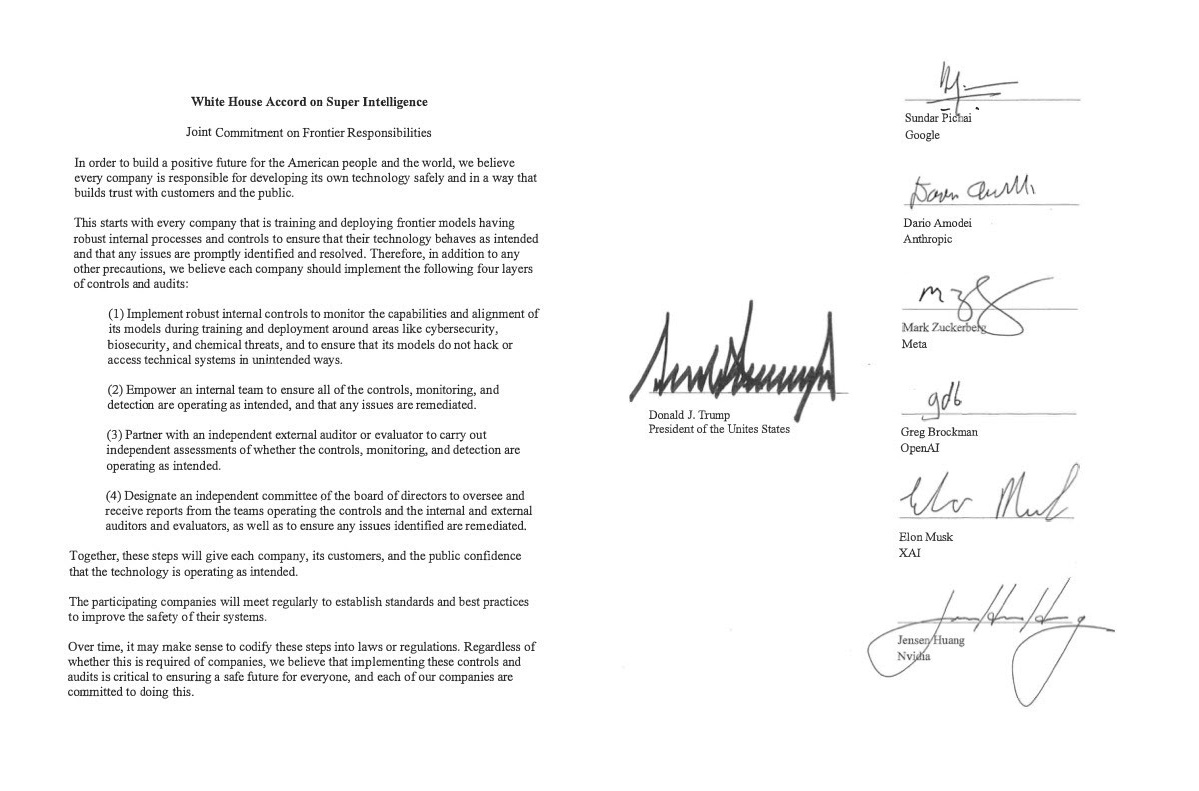
Shibbir Ahmed, Washington DC  — The White House has unveiled an accord with leading technology companies outlining a voluntary framework for strengthening safeguards around the development and deployment of advanced artificial intelligence systems. Titled the “White House Accord on Super Intelligence: Joint Commitment on Frontier Responsibilities,” the agreement calls on companies developing and deploying frontier AI models to establish robust internal controls, independent evaluations and board-level oversight.

The accord says companies have a responsibility to develop their technologies safely and in a manner that builds trust among customers and the public. It identifies four layers of controls and audits that participating companies should implement.

The first layer involves internal controls designed to monitor the capabilities and alignment of AI models during both training and deployment. The controls would cover risks involving cybersecurity, biosecurity and chemical threats, while also seeking to prevent AI systems from accessing or hacking technical systems in unintended ways.

The second layer calls for companies to establish dedicated internal teams responsible for ensuring that safety controls, monitoring and detection systems are functioning as intended. Those teams would also be responsible for ensuring that identified problems are addressed.

The third layer involves independent external auditors or evaluators. These outside reviewers would assess whether a company’s controls, monitoring and detection mechanisms are operating properly.

White House Accord on Super Intelligence — Joint Commitment on Frontier Responsibilities . Photo WH

The fourth layer would place responsibility at the board level, with companies designating an independent board committee to oversee the safety framework and receive reports from internal teams and external auditors. The committee would also monitor the remediation of problems identified through the oversight process.

According to the accord, the four-layer system is intended to provide companies, their customers and the public with greater confidence that advanced AI technologies are operating as intended. Participating companies are also expected to meet regularly to develop common standards and best practices aimed at improving the safety of their systems.

The document leaves open the possibility that the measures could eventually become part of formal government regulation. It states that, over time, it may be appropriate to codify the safeguards into laws or regulations, while emphasizing that the companies are committed to implementing the controls regardless of whether they are legally required.

The agreement was released following a White House meeting with leading technology executives on September 29. Reporting on the accord identifies Google CEO Sundar Pichai, Meta CEO Mark Zuckerberg, Anthropic CEO Dario Amodei, OpenAI President Greg Brockman, xAI CEO Elon Musk and Nvidia CEO Jensen Huang among the participating executives.

The accord focuses specifically on governance, monitoring and auditing of increasingly capable AI systems, rather than establishing detailed technical standards or specific implementation deadlines.


Trump Says He’ll Consider Releasing More 9/11 Records

Shibbir Ahmed, Washington DC — U.S. President Donald Trump said Sunday he would consider a request from relatives of victims of the September 11, 2001, terrorist attacks to release additional government records related to the attacks, including documents that could shed further light on possible Saudi connections.

Speaking to reporters in Ireland before returning to the United States, Trump was asked about calls from 9/11 victims’ families for the release of additional records. “I’m going to look at it when I get back,” Trump said.

The renewed push comes just days after the United States marked the 25th anniversary of the September 11 attacks, which killed nearly 3,000 people in New York, at the Pentagon and in Pennsylvania.

Families of 9/11 victims have for years sought the release of additional records they believe could help clarify whether individuals linked to Saudi Arabia provided assistance to some of the hijackers. Fifteen of the 19 hijackers were Saudi nationals.

Terry Strada, whose husband was killed in the attacks, has been among those pressing the Trump administration to release more information. During a 25th-anniversary remembrance ceremony, she urged Trump to stop protecting Saudi Arabia and provide families and survivors with greater transparency.

Saudi Arabia has consistently denied involvement in the attacks. The issue has nevertheless remained the subject of years of investigation and legal action by victims’ families.

Trump’s comments do not amount to a commitment to release the records, but they could reopen a long-running debate over the remaining classified material surrounding the September 11 attacks.

The Public Interest Declassification Board has also been advocating for the release of additional historically significant 9/11 records. The board said earlier this month that it was pursuing the potential declassification of high-priority records associated with the 9/11 Commission, including material related to intelligence assessments before the attacks.

For families who have spent a quarter-century seeking answers, Trump’s statement represents a potentially significant development in their long-running effort to obtain additional information about what U.S. officials knew before September 11 and whether individuals connected to the attacks received assistance from foreign actors.


Iran Captures U.S. Underwater Drone in Strait of Hormuz

SHibbir Ahmed, WASHINGTON DC — Iran’s Islamic Revolutionary Guard Corps (IRGC) says it has captured a U.S. unmanned underwater vehicle near the entrance to the Strait of Hormuz, in the latest development in the escalating confrontation between Tehran and Washington.

Iranian state media identified the vessel as a Dive-LD, a large autonomous underwater vehicle manufactured by California-based defense company Anduril. The approximately 19-foot (5.8-meter) unmanned submersible is designed for missions including seabed mapping, mine detection, intelligence gathering and inspection of underwater infrastructure. The IRGC described the operation as a complex intelligence and military mission and claimed that Iranian forces had “trapped” one of the most advanced unmanned submarines operated by the United States.

However, the U.S. military gave a significantly different account of the incident. A Pentagon spokesperson acknowledged that a U.S. underwater drone had been lost, but said the vehicle had malfunctioned more than a day earlier while surveying regional waters in support of ongoing operations. According to the Pentagon, the drone was an older model and did not carry classified sonar or radar equipment or collect sensitive data.

Anduril also confirmed the loss of one of its underwater vehicles and emphasized that the Dive-LD was designed to operate in dangerous environments where losing the vehicle was considered a possibility.

Reuters said it could not independently verify Iran’s claim that it had captured the vehicle through a deliberate intelligence operation. The Dive-LD can reportedly operate for up to 10 days and is designed to reach depths of approximately 6,000 meters (19,700 feet). The system is part of the U.S. military’s growing use of autonomous underwater and surface vessels for surveillance, mine detection and other missions without putting American personnel directly at risk.

The incident comes as tensions around the Strait of Hormuz continue to rise. Commercial shipping through the strategic waterway has fallen sharply amid the ongoing U.S.-Iran confrontation, while oil prices have climbed above $100 a barrel amid fears of further disruption to global energy supplies.


9/11 at 25: New ‘In Their Honor’ Exhibition Unveiled in New York

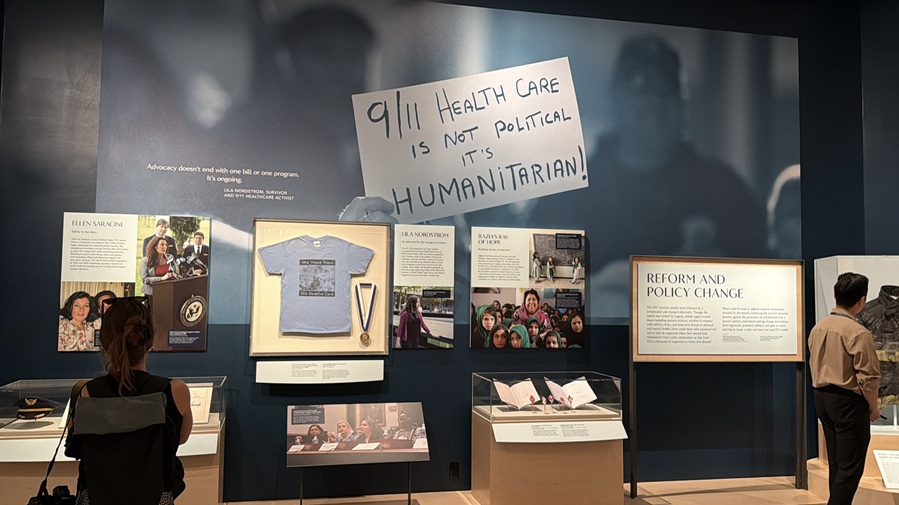
Shibbir Ahmed, NEW YORK — The 9/11 Memorial & Museum on 31St August Monday unveiled a new exhibition highlighting the enduring legacy of service inspired by the September 11 attacks, as New York prepares to mark the 25th anniversary of the tragedy. Titled “In Their Honor: 25 Years of 9/11-Inspired Service,” the exhibition offers a look at how individuals and communities transformed the aftermath of the attacks into acts of service and public commitment.

The exhibition was previewed for members of the media during a briefing at the 9/11 Memorial & Museum in Lower Manhattan. It will open to the public on September 12, 2026, one day after the 25th anniversary of the attacks.

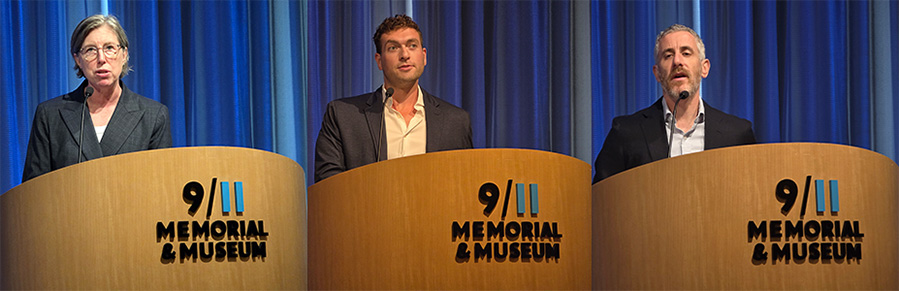
The afternoon program began with remarks from Beth Hillman, President and CEO of the 9/11 Memorial & Museum, followed by comments from 9/11 family member Logan Miller and Noah Rauch, Senior Vice President of Education and Public Programming.

The museum’s new exhibition comes as New York and the nation prepare for a major commemoration of the nearly 3,000 people killed in the September 11, 2001 terrorist attacks. The exhibition focuses on the continuing impact of September 11 beyond the immediate loss of life, emphasizing the service and civic engagement that emerged in the years following the attacks.

Museum officials said the exhibition explores the ways people responded to the attacks through service, volunteering and efforts to help others, demonstrating how the legacy of September 11 continues to shape communities a quarter-century later.

Monday’s media program also included a guided preview of the exhibition, giving journalists an early look before its public opening. The museum is also preparing for the 25th-anniversary commemoration on September 11, which will bring families of victims, survivors, first responders and government and community leaders together at the World Trade Center site.

As the anniversary approaches, the museum’s programming is placing particular emphasis not only on remembering those who were killed, but also on the long-term consequences of the attacks and the continuing acts of service inspired by their memory.

The 25th anniversary will mark a quarter-century since the attacks on the World Trade Center, the Pentagon and United Airlines Flight 93. For many families and survivors, the anniversary remains both a day of remembrance and an opportunity to reflect on how the events of September 11 have shaped the lives of subsequent generations. The “In Their Honor” exhibition will open to visitors at the 9/11 Memorial & Museum on September 12.