Bangladeshi Diaspora Forum Submits 9-Point Demands to PM Tarique Rahman

Hakikul Islam, New York: A Bangladeshi diaspora organization in the United States has submitted a nine-point set of demands to Prime Minister Tarique Rahman, seeking measures to address issues involving the rights, welfare, property and interests of Bangladeshis living abroad. Leaders of the Bangladeshi Diaspora Forum handed over a memorandum containing the demands to the Consul General of Bangladesh in New York on Tuesday afternoon, September 22, 2026.

The Consul General received the memorandum and said the issues raised by the expatriate community would be communicated to the appropriate authorities, according to the forum. The memorandum was submitted while Prime Minister Tarique Rahman was in New York to attend the 81st session of the United Nations General Assembly. During his visit, he attended the UNGA opening and held a series of high-level meetings and engagements.

We wanted to meet the prime minister directly

Forum convener Fakhrul Alam said the organization had hoped to meet the prime minister personally and present the demands directly. “We wanted to meet Prime Minister Tarique Rahman and present these demands to him directly, but that was not possible,” Alam said. He said the prime minister’s New York visit was relatively brief and that his schedule was largely focused on UN-related engagements.

“We were advised to submit the memorandum to the Consul General. We were told that it would be conveyed to the prime minister,” Alam said. The forum expressed hope that the government would give serious consideration to the issues raised by expatriate Bangladeshis and take steps to address them.

Nine demands of expatriate Bangladeshis

According to the memorandum, the Bangladeshi Diaspora Forum has called for action on the following nine issues:

1. Representation in national affairs: Ensure meaningful participation and representation of expatriate Bangladeshis in the Jatiya Sangsad and in the governance of the country.

2. Direct New York-Dhaka flights: Introduce direct flights between New York and Dhaka, including service on the New York-Dhaka-New York route.

3. Priority services for expatriates: Establish effective mechanisms through which expatriate Bangladeshis can receive priority, respectful and efficient services at government offices, administrative agencies and courts in Bangladesh.

4. Protection of land and property: Protect expatriate Bangladeshis from land-related disputes and alleged land grabbing. The forum specifically called for measures to ensure that land, plots and apartments purchased by expatriates under contractual agreements are properly handed over to their rightful owners.

5. End harassment at Dhaka airport: Take effective measures to prevent harassment of expatriate Bangladeshis at Hazrat Shahjalal International Airport.

6. Reduce complications involving dual citizenship: End what the forum describes as unnecessary harassment and complications faced by Bangladeshis holding dual citizenship.

7. Action against money laundering and illicit transfers: Take action to prevent the alleged diversion of large amounts of money abroad, including funds generated through an economy supported by remittances, and bring those responsible for illegal transfers to justice.

8. Ensure safety during visits to Bangladesh: Guarantee the security of life and property of expatriate Bangladeshis when they travel to their homeland.

9. Protect property and expedite legal cases: Protect expatriates’ residential and other movable and immovable properties in Bangladesh and establish mechanisms for the speedy resolution of related legal cases.

Expatriates make significant contributions to Bangladesh

Fakhrul Alam said millions of Bangladeshis living in the United States and other countries continue to contribute to Bangladesh’s economy and society. He said expatriates contribute not only through remittances but also through investment, business, education, healthcare and humanitarian activities.

“Leaving the country is itself a painful experience,” Alam said, adding that many Bangladeshis living abroad continue to support the country’s economy because of their connection to Bangladesh and their sense of responsibility toward their homeland.

According to the forum, successive governments have spoken about protecting the interests of expatriate Bangladeshis and have made various commitments, but many long-standing concerns remain unresolved.

Focus on citizenship, property and consular services

The forum said expatriate Bangladeshis continue to face difficulties involving citizenship rights, property ownership, voting rights, passports and National Identification Cards (NIDs), consular services and investment in Bangladesh. Forum leaders called for long-term government initiatives to address these issues and urged the government to establish more direct communication channels with Bangladeshis living overseas. They also called for expatriate services to be made more accessible, efficient and technology-driven.

The memorandum was endorsed by advisers and members of the Bangladeshi Diaspora Forum, including Dr. Mohsin Patwari, Dr. Iqbal Chowdhury, Dr. Wadud Bhuiyan, Maf Misbah Uddin, Mohammad Shah Moazzem, Attorney Sheikh Selim, Attorney Moin Chowdhury, Mohammad N. Majumder, Engineer Altaf Chowdhury, Sheikh Shahjahan and Fakhrul Alam, along with other members of the organization. The forum said it expects the government to consider the nine demands and take concrete steps to address the concerns of Bangladeshis living abroad.

Jaishankar Warns of ‘Weaponisation of Everything’ at UN

Shibbir Ahmed, New York — Indian External Affairs Minister S. Jaishankar has warned that the world is witnessing the “weaponisation of everything,” with finance, market access, supply chains and technology increasingly being used as tools of pressure. Addressing the General Debate of the 81st United Nations General Assembly in New York on Saturday, Jaishankar said growing conflicts and confrontations were undermining international security, economic progress and development, particularly affecting countries in the Global South.

“What we are actually seeing is a weaponisation of everything,” Jaishankar said, referring to the growing use of economic and technological tools as leverage. He said a mindset of extreme competition was undermining institutions and creating new chokepoints in global trade and cooperation.

According to Jaishankar, the trend extends from finance and market access to supply chains and technology. He said countries were increasingly focused on reducing risks and diversifying their economic relationships, but warned that the overall atmosphere was becoming less conducive to trust and goodwill.

Concerns Over Global Conflicts

Jaishankar also addressed ongoing conflicts in the Gulf, Ukraine and West Asia. He called for restraint, de-escalation and the protection of civilians, while stressing the importance of maintaining the uninterrupted flow of energy and commerce. He particularly condemned attacks on commercial shipping and seafarers in international waterways, saying the loss of Indian and other nationals in such attacks was “simply unacceptable.”

India has also launched a Group of Friends on Safety and Security of Shipping and Seafarers, with 23 other partners, aimed at strengthening international attention to maritime safety. On Ukraine, Jaishankar said India supports efforts to bring the conflict to an end, while reiterating the importance of protecting food and energy supplies. Regarding West Asia, he said India supports a two-state solution as the basis for a durable and lasting peace and called for humanitarian assistance for Palestinians.

Warning Over Global South’s ‘4F Crisis’

Jaishankar said developing countries were facing what he described as a “4F crisis” involving food, fuel, fertiliser and finance. He warned that fertiliser shortages, disruptions to grain movements and other global pressures were increasing the challenges faced by developing nations. He also argued that restrictions on market access and non-market practices were making it harder for countries in the Global South to industrialise. Jaishankar further raised concerns about artificial intelligence, saying technology that was expected to create opportunities could also become a source of anxiety if misused.

Call for a More Representative Global Order

The Indian minister also called for reforms to international institutions, arguing that the global order established after World War II is facing new realities. He said the world is moving toward a more multipolar system and that countries should engage through dialogue and cooperation. He also argued that large sections of humanity should not be excluded from global decision-making.

Jaishankar’s address placed India’s concerns about terrorism, maritime security, economic pressures, technology and global governance within a broader call for greater stability and international cooperation.


Russia Backs India’s Bid for Permanent UN Security Council Seat

Shibbir Ahmed, New York — Russia has backed India’s bid for a permanent seat on the United Nations Security Council, with Foreign Minister Sergey Lavrov calling for greater representation of Asia, Africa and Latin America in the powerful UN body. Speaking during the general debate of the 81st United Nations General Assembly in New York on Saturday, Lavrov said Moscow supports the candidacies of both India and Brazil for permanent membership of the Security Council.

“We are in favour of broadening the representation of Asia, Africa, and Latin America. We support Brazil’s and India’s candidatures for a permanent seat,” Lavrov said, according to reports of his UNGA address. Lavrov also said Russia opposed allocating additional permanent seats to Western countries, specifically mentioning Germany and Japan. He argued that any reform of the Security Council should preserve the prerogatives of its existing permanent members while increasing representation from the Global South.

The Security Council currently has 15 members, including five permanent members — China, France, Russia, the United Kingdom and the United States — which hold veto power. The remaining 10 members are elected for two-year terms. India has for years sought a permanent seat on the Security Council as part of broader efforts to reform the UN’s principal body responsible for international peace and security. India has argued that the Council’s composition should better reflect contemporary geopolitical and economic realities.

Russia’s latest statement adds to recent international support for India’s bid. During the current UNGA session, Mauritius and Portugal also expressed support for India’s candidature, while other countries have called for broader reform of the Security Council. The issue of Security Council reform has gained renewed attention at the 81st UN General Assembly, where countries from the Global South have continued to call for greater representation in the UN’s decision-making institutions.

Russia’s position, however, distinguishes between the countries seeking permanent membership. While Moscow supports India and Brazil, Lavrov opposed additional permanent seats for Germany and Japan, according to reports of his speech. The debate over expansion of the Security Council remains subject to negotiations among UN member states, and Russia’s support for particular candidates does not itself change the Council’s membership.


PM Tarique Rahman Returns Home from New York After UNGA Visit

DHAKA — Prime Minister Tarique Rahman returned home Sunday morning after concluding a five-day visit to New York, where he attended the 81st session of the United Nations General Assembly (UNGA), delivered his maiden address to the General Debate and held a series of high-level bilateral and multilateral meetings. An Emirates flight carrying the prime minister, his wife Dr. Zubaida Rahman and members of his entourage landed at Hazrat Shahjalal International Airport at 8:21 a.m., according to PM’s Deputy Press Secretary Hasan Shiplu.

Local Government, Rural Development and Cooperatives Minister Dr. Abdul Moyeen Khan, Chief Whip Nurul Islam Moni, Prime Minister’s Defence Adviser Brigadier General (retd.) AKM Shamsul Islam, Whip Miah Nuruddin Ahmad Apu, local MP SM Jahangir Hossain, Cabinet Secretary Nasimul Ghani and Prime Minister’s Principal Secretary ABM Abdus Sattar received the prime minister at the airport.

Tarique Rahman left Dhaka on September 21 and reached New York the same day after a stopover in Istanbul. He departed New York on September 25 and travelled through Dubai before returning to Dhaka. During his four working days in New York, the prime minister took part in 30 engagements, including 11 bilateral meetings, eight UNGA-related engagements and 11 institutional meetings. The prime minister and members of his delegation collectively represented Bangladesh at around 80 engagements, according to BSS.

A major highlight of the visit was Tarique Rahman’s first address to the UNGA General Debate on September 24. In his speech, he outlined Bangladesh’s positions on global peace and security, sustainable development, climate change, economic cooperation and humanitarian issues, while calling for conflicts to be resolved through dialogue, diplomacy and cooperation.

The prime minister held bilateral meetings with the leaders of Türkiye, Iran, Pakistan, Croatia, Haiti, Bhutan and Thailand. He also met the vice president of the Maldives, the crown prince of Kuwait, the UAE’s deputy prime minister and foreign minister, the Saudi foreign minister and Sweden’s foreign minister. The discussions covered bilateral relations, trade and investment, economic cooperation, manpower exports, energy security, regional and international issues and other areas of mutual interest.

The Rohingya crisis was another major issue during the visit. Tarique Rahman called for stronger international support for the safe, voluntary and dignified repatriation of Rohingyas to Myanmar and discussed the issue with UN Secretary-General António Guterres, UN Special Envoy on Myanmar Julie Bishop and UN High Commissioner for Refugees Barham Salih.

Climate change and the impact of rising sea levels also featured prominently in the prime minister’s engagements. He called for stronger global action to reduce emissions, greater access to climate finance and technology, and international cooperation to address climate-induced displacement and loss and damage. At a Bangladesh-Sweden-UNFPA high-level event on midwifery, Tarique Rahman outlined his government’s vision of a “Healthy Bangladesh,” with primary healthcare at the centre of health-sector reform. He said the government plans to recruit additional health workers and professional midwives while developing an integrated digital health system.

Economic diplomacy was also a significant part of the visit. At a breakfast meeting with Wall Street representatives hosted by JPMorgan Chase, the prime minister discussed Bangladesh’s economic prospects, investment opportunities and potential partnerships. During the visit, Biman Bangladesh Airlines also signed an agreement with Boeing for the purchase of 11 aircraft as Bangladesh plans to expand its aviation sector and open new international routes.

Tarique Rahman also held meetings with World Bank Group President Ajay Banga, Gates Foundation CEO Mark Suzman, International Peace Institute President and CEO Zeid Ra’ad Al Hussein and UN High Commissioner for Human Rights Volker Türk, among others. On September 22, Tarique Rahman and Dr. Zubaida Rahman attended a welcome breakfast hosted by UN Secretary-General António Guterres for world leaders and their spouses before attending the opening of the UNGA General Debate. They later attended a reception hosted by US President Donald Trump for leaders participating in the General Assembly.

Dr. Zubaida Rahman also took part in several high-level engagements during the visit, including the UN General Assembly’s Platform of Women Leaders, the First Spouses’ Dialogue and a high-level event focusing on maternal and child health and midwifery. The New York visit marked Tarique Rahman’s first participation in the UN General Assembly as prime minister and included a broad programme of diplomatic, economic, humanitarian and multilateral engagements.


Trump Signs Greenland Security Agreement With Denmark and Greenland

Shibbir Ahmed, New York — President Donald Trump on Tuesday signed a new security agreement with Denmark and Greenland aimed at strengthening defense cooperation in the Arctic, during the 81st United Nations General Assembly in New York.

Danish Prime Minister Mette Frederiksen and Greenlandic Prime Minister Jens-Frederik Nielsen joined Trump for the signing ceremony. Secretary of State Marco Rubio was also present as the agreement was signed.

The agreement amends and supplements the existing 1951 U.S.-Denmark defense agreement concerning Greenland. It reaffirms the parties’ defense cooperation and provides for expanded U.S. military access and activities in Greenland.

Under the agreement, the United States will be allowed to modernize and expand activities at Pituffik Space Base and establish additional defense areas at Narsarsuaq and Mestersvig, subject to arrangements between the parties. The agreement also provides a framework for establishing additional defense areas in Greenland through consultations and mutual agreement.

The agreement gives U.S. forces specified rights of access and movement in Greenland, including access by land, air and sea between defense areas. It also establishes provisions concerning U.S. aircraft and public vessels operating in Greenland and its territorial waters.

The three parties also agreed to strengthen cooperation on Arctic security, including through greater NATO engagement, planning, military presence, exercises and intelligence gathering.

The agreement includes provisions restricting non-NATO states from establishing military installations or maintaining a persistent military presence in Greenland unless otherwise agreed by the parties. It also contains restrictions related to certain foreign investments and activities considered potential threats to national security or public order.

The document reaffirms the sovereignty and territorial integrity of the Kingdom of Denmark and recognizes the right of the people of Greenland to self-determination under international law. It also states that the agreement has no end date and can be amended only by mutual consent under the existing defense framework.

The White House described the agreement as a major step in strengthening U.S. security interests in the Arctic. The signing took place as world leaders gathered in New York for the 81st session of the United Nations General Assembly.

The agreement was signed in New York on September 22, 2026, in English, Danish and Greenlandic. It will enter into force after the required parliamentary procedures in Denmark and Greenland are completed and the United States receives the necessary diplomatic notification.


Melania Trump Expands Fostering the Future Together Coalition to 57 Nations

Shibbir Ahmed, New York — First Lady Melania Trump on Tuesday reconvened members of her Fostering the Future Together initiative in New York during the high-level week of the 81st United Nations General Assembly, announcing new technology partnerships, international events and an expansion of the coalition to 57 participating countries.

The gathering brought together representatives from countries including the United Kingdom, South Korea, the Philippines, Poland, Ukraine, Türkiye, the United Arab Emirates, Panama and Canada, according to the White House.

“Together, we are a beautiful range of cultures, languages, histories, and traditions,” Trump said. “And yet, we stand unified around one everlasting truth: the future of our world will be determined by what we do for our children today.”

Fostering the Future Together is described by the White House as a global coalition focused on empowering children through technology and education. Trump said the initiative is intended to provide young people with opportunities to learn, create and develop skills for the future.

New International Events Announced

Trump announced several Fostering the Future Together events planned for 2026.

They include a G20 event in Miami, which Trump plans to host, an ASEAN conference in Manila hosted by Philippine First Lady Liza Araneta Marcos, a European regional meeting hosted by Polish First Lady Marta Nawrocka, and a Caribbean regional meeting hosted by Saint Kitts and Nevis First Lady Diani Prince-Drew. “These leaders have stepped forward to activate their regions,” Trump said, adding that the initiative would provide support for their efforts.

Representatives and participants from countries around the world attend the Fostering the Future Together gathering in New York. Photo: KHABOR

Technology Partnerships

The First Lady also announced new private-sector partnerships involving Adobe, Amazon, Intel, Starlink, Google and Zoom. The companies are being brought into the initiative as part of its focus on expanding children’s access to technology and education. Tim Cook, executive chairman of Apple, and Enrique Lores, CEO of HP, also attended the gathering, according to the White House.

Trump emphasized that access to technology alone does not constitute empowerment and called for young people to be taught how to use technological tools responsibly and effectively.

“We must give our children the tools—and teach them how to use those tools wisely,” she said.

Focus on Technology and Education

In her remarks, Trump highlighted the rapid development of artificial intelligence and other technologies, describing the current period as a major technological transformation. She cited technologies including artificial intelligence, video communications, mobile computing, autonomous vehicles, virtual environments and biometric identification as examples of technologies that have moved from the realm of science fiction into everyday life.

She also called on participating countries and technology companies to help young people develop the knowledge and skills necessary to participate in an increasingly technology-driven economy.

“Our Fostering the Future Together coalition must strive to empower the youth of our nations to bend the boundaries of imagination, explore new frontiers of intellect, have the courage to take calculated risks, and build toward advancement of society,” Trump said.

Coalition Expands to 57 Countries

The White House said the initiative now includes 57 participating nations. Trump said the coalition’s long-term purpose is to create opportunities for children regardless of where they are born. Fostering the Future Together was announced during the 80th UN General Assembly in 2025. According to the White House, Trump subsequently convened the initiative’s inaugural Global Coalition Summit in Washington in spring 2026, bringing together first spouses and technology-sector leaders.

The latest gathering took place during the UN General Assembly’s high-level week in New York. The United Nations says the general debate of the 81st session is being held from September 22 to 26 and again on September 28.

Trump said the initiative’s success should ultimately be measured by its impact on future generations rather than by the meetings and speeches themselves. “Years from now, our children may not remember the meetings we held or the speeches we gave. But they will live with the consequences of what we do here,” she said.


PM Seeks Global Support for Dignified Rohingya Repatriation

Shibbir Ahmed, New York — Prime Minister Tarique Rahman has called on the international community to extend stronger support for the dignified repatriation of Rohingyas to their homeland in Myanmar and help find a sustainable solution to the prolonged crisis.

The prime minister made the appeal on Tuesday when Julie Bishop, Special Envoy of the UN Secretary-General on Myanmar, paid a courtesy call on him in New York, where he is attending the 81st session of the United Nations General Assembly.

During the meeting, Tarique Rahman stressed the importance of continued international cooperation to facilitate the safe and dignified return of Rohingyas and resolve the crisis, according to PM’s Additional Press Secretary Atikur Rahman Ruman.

The two sides also discussed the role of the international community in addressing the Rohingya crisis, including efforts to create conditions conducive to their eventual return to Myanmar.

The meeting comes ahead of a high-level Rohingya crisis side event scheduled for Wednesday at UN Headquarters, co-hosted by Bangladesh and The Gambia. The event will focus on finding a durable solution to the protracted displacement, along with justice and accountability.

Bangladesh has consistently called for the safe, voluntary, dignified and sustainable return of Rohingyas to Myanmar, where the crisis originated. The country is currently hosting about 1.2 million Rohingya refugees, placing significant humanitarian, economic and environmental pressure on Bangladesh. Prime Minister Tarique Rahman is scheduled to address the UN General Assembly on September 24.


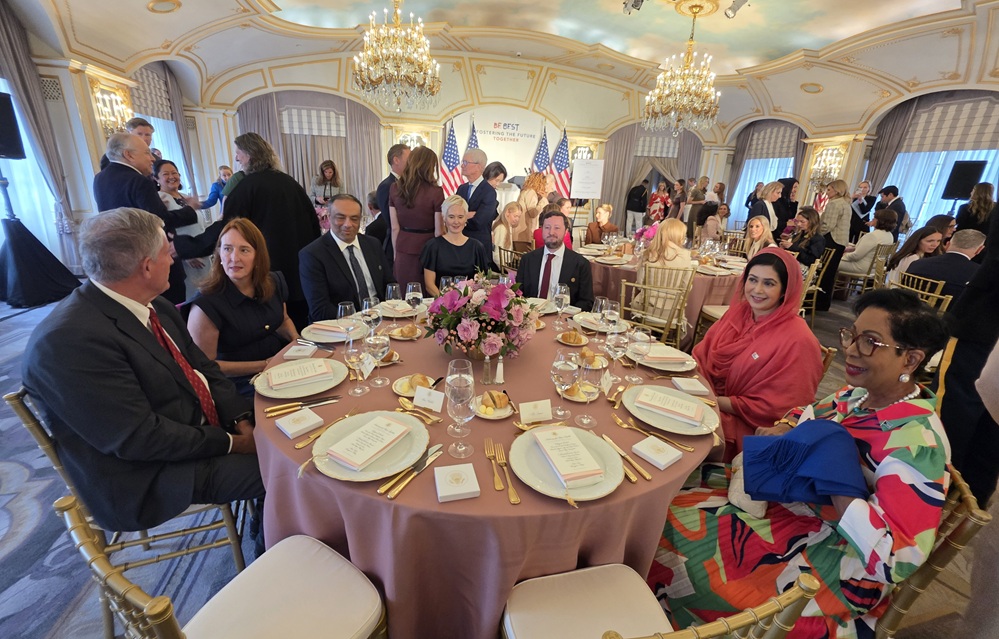
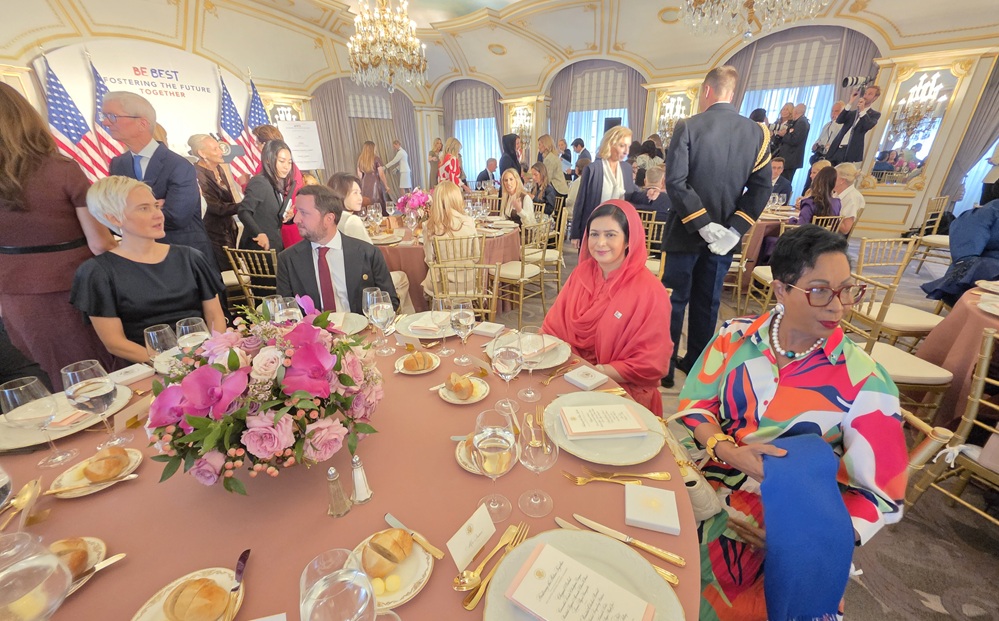
Zubaida Rahman Attends Melania Trump’s ‘Fostering the Future Together’ Event in New York

Shibbir Ahmed — Dr. Zubaida Rahman, wife of Bangladesh Prime Minister Tarique Rahman, attended U.S. First Lady Melania Trump’s “Fostering the Future Together” gathering Tuesday at The St. Regis New York, joining an international group focused on children’s education, technology, digital skills and online safety. Dr. Zubaida Rahman attended the Manhattan event at the invitation of Melania Trump, highlighting Bangladesh’s continuing engagement with the international initiative as the United States hosts a new gathering of participating First Spouses and leaders during the 81st session of the United Nations General Assembly.

The event brought together international participants and private-sector partners to discuss ways to expand opportunities for children through education, technology and responsible digital innovation. Melania Trump has made children’s education, digital literacy, artificial intelligence and online safety central themes of the Fostering the Future Together initiative.

For Bangladesh, Dr. Zubaida’s participation marks a continuation of her involvement in the initiative. She previously took part in the inaugural Fostering the Future Together: Global Coalition Summit in Washington, D.C., in March 2026, also at Melania Trump’s invitation. The two-day summit brought together First Ladies and spouses of leaders from more than 45 countries.

During the March summit, Dr. Zubaida addressed issues surrounding children’s welfare, education, healthcare and the responsible use of technology. She highlighted Bangladesh’s initiatives related to family support, education and healthcare and emphasized the potential of artificial intelligence and digital learning to help reduce educational disparities.

Dr. Zubaida Rahman, wife of Bangladesh Prime Minister Tarique Rahman, attends U.S. First Lady Melania Trump’s “Fostering the Future Together” event at The St. Regis New York on Tuesday, September 22, 2026. Photo: KHABOR

She also met Melania Trump during the Washington summit. According to reports from the March event, the two discussed cooperation on initiatives aimed at improving children’s welfare.

Dr. Zubaida’s presence in New York comes as she accompanies Prime Minister Tarique Rahman during his visit to the United States for the 81st UN General Assembly. The prime minister and his wife arrived in New York on September 22, with Zubaida traveling as part of his delegation.

The New York gathering also reflects the expansion of Melania Trump’s initiative beyond its inaugural Washington summit. The coalition has increasingly focused on partnerships involving education technology, artificial intelligence, digital skills and online protection, with governments, First Spouses and private-sector organizations participating in the effort.

For Bangladesh, Dr. Zubaida Rahman’s participation in both the March Washington summit and Tuesday’s New York gathering places the country within an international dialogue centered on the future, education and well-being of children.


Tarique Rahman Meets Bhutan PM, Maldives VP & Haitian PM on UNGA Sidelines

Shibbir Ahmed, New York — Bangladesh Prime Minister Tarique Rahman held separate meetings with Bhutanese Prime Minister Dasho Tshering Tobgay and Maldives Vice President Uz Hussain Mohamed Latheef on the sidelines of the 81st session of the United Nations General Assembly in New York on Tuesday.

The meetings were held at the UN Headquarters as Tarique Rahman attended the high-level General Debate of the 81st UNGA, according to the Prime Minister’s Assistant Press Secretary KM Nazmul Haque.During  his meeting with the Bhutanese prime minister and the Maldives vice president, Tarique Rahman discussed ways to further strengthen Bangladesh’s existing friendly and cordial relations with the two countries.

The discussions covered issues of mutual interest as well as opportunities to enhance regional and international cooperation. The leaders also exchanged views on identifying new areas of collaboration to expand bilateral ties and promote the mutual interests and welfare of their respective peoples.

The meetings were part of the prime minister’s diplomatic engagements on the sidelines of the UN General Assembly, where leaders from around the world are gathering to discuss major global and regional issues.

PM holds meeting with Haiti PM

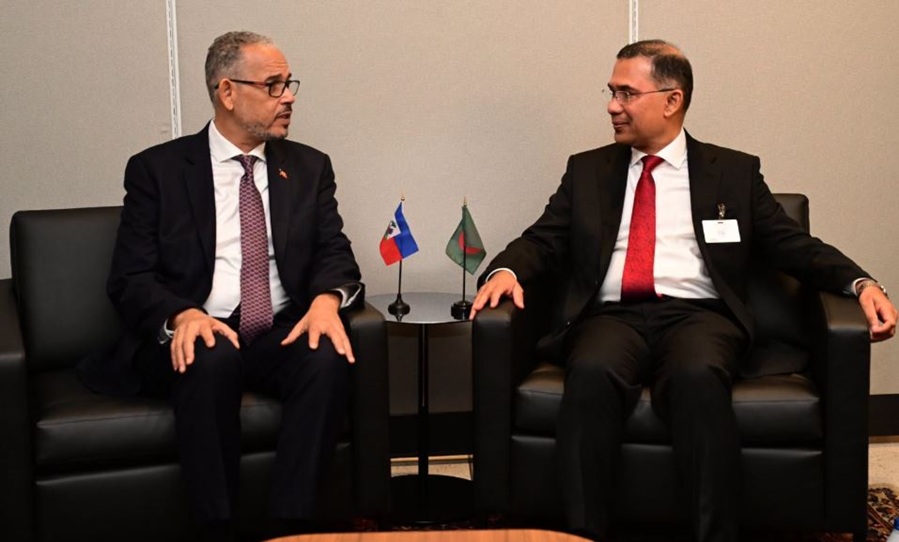
Prime Minister Tarique Rahman today held a meeting with Haitian Prime Minister Alix Didier Fils-Aime at the United Nations (UN) Headquarters on the sidelines of the 81st session of the UN General Assembly. During the meeting held this afternoon (New York time), the two leaders discussed bilateral relations between Bangladesh and Haiti, issues of mutual interest and various aspects of regional and international cooperation, PM’s Assistant Press Secretary KM Nazmul Haque said.

Prime Minister Tarique Rahman held a meeting with Haitian Prime Minister Alix Didier Fils-Aime at the UN Headquarters. Photo: KHABOR

They also exchanged views on ways to further strengthen cooperation for the mutual benefit of the peoples of the two countries and explored opportunities to expand bilateral relations in various areas. Prime Minister Tarique Rahman’s UN engagements began today with a welcome breakfast hosted by UN Secretary-General Antonio Guterres for heads of delegation and their spouses.

He later attended the opening session and the high-level General Debate of the General Assembly. During his visit, the Prime Minister is scheduled to hold a series of bilateral and high-level meetings with heads of state and government and leaders of international organisations. He is scheduled to address the General Debate of the 81st session of the United Nations General Assembly on September 24.


Tarique Rahman, World Bank President Discuss Bangladesh’s Development Priorities

Shibbir Ahmed, New York — Bangladesh Prime Minister Tarique Rahman and World Bank Group President Ajay Banga discussed Bangladesh’s development priorities and economic progress during a meeting at the United Nations Headquarters on Tuesday. The meeting took place on the sidelines of the 81st session of the United Nations General Assembly, according to the Prime Minister’s Assistant Press Secretary KM Nazmul Haque.

The two sides discussed issues of mutual interest and exchanged views on strengthening the World Bank’s cooperation with Bangladesh in its development activities. They also explored potential new areas of partnership that could support Bangladesh’s development priorities and economic progress in the coming years.

The meeting was part of Tarique Rahman’s bilateral engagements during his visit to New York for the UN General Assembly, where he is scheduled to participate in discussions on major international and development issues.