Nearly 86,000 Flee Yemen Fighting: UN

Shibbir Ahmed, New York — Nearly 86,000 people have fled their homes in Yemen as fighting between government forces and Iran-backed Houthi rebels intensifies, the United Nations said, citing displacement figures from the International Organization for Migration (IOM).

IOM said 85,818 people had been displaced by the renewed fighting, including 82,164 since the beginning of September alone. The latest wave of displacement has followed intensified hostilities along Yemen’s western coast and in parts of Taiz and Al-Hodeidah. Taiz has emerged as one of the areas hardest hit by the renewed fighting, with about 9,280 households—nearly 56,000 people—displaced, according to IOM figures.

The escalation comes as the Houthis advance along Yemen’s Red Sea coast, raising fears of a wider conflict and further civilian displacement. The Iran-backed group has made gains in areas near the strategic port of Mocha and the Bab el-Mandeb Strait.

The Bab el-Mandeb connects the Red Sea with the Gulf of Aden and is one of the world’s most important maritime routes. Any prolonged disruption in the area could affect international shipping, global trade and energy supplies.

The humanitarian crisis is also spilling beyond Yemen’s borders. More than 2,000 Yemenis fleeing the violence have reached Djibouti by sea, according to IOM. The crossings add another layer of danger for people already displaced by the conflict.

IOM Director General Amy Pope warned that behind the displacement figures are families who have repeatedly lost their homes and livelihoods. Many people fleeing the latest violence are crossing the sea with little more than what they can carry because they have few remaining options for safety.

Yemen has endured more than a decade of conflict since the Houthis seized the capital, Sanaa, in 2014. A UN-brokered truce in 2022 brought a period of relative calm and largely halted major fighting, but it expired after six months without producing a lasting political settlement.

The renewed offensive has raised fears that Yemen could once again descend into prolonged large-scale warfare. Humanitarian agencies have warned that continued fighting and repeated displacement will put additional pressure on families already struggling with poverty, food insecurity and limited access to basic services.

With tens of thousands of people newly displaced and thousands more crossing the sea to Djibouti, the latest escalation threatens to deepen one of the world’s longest-running humanitarian crises.


Nepal Flood Disaster: UN Seeks $49.6 Million to Help 84,000 People

KATHMANDU — The United Nations and humanitarian partners have launched a $49.6 million emergency appeal to provide life-saving assistance to more than 84,000 people affected by catastrophic flash floods and landslides in northern Nepal.

The disaster, which struck on August 26, devastated communities across the region, destroying homes, roads and other critical infrastructure and leaving thousands of people in urgent need of humanitarian assistance. The UN humanitarian community said the appeal is aimed at supporting those most severely affected by the disaster.

The emergency response is focused on providing essential supplies and services, including food, clean water, emergency shelter, healthcare and protection assistance for affected communities.

The scale of the disaster has also placed enormous pressure on Nepal’s search-and-rescue operations. According to Nepalese authorities cited by Reuters, more than 1,294 people have been killed, while thousands remain missing following the floods and landslides.

The disaster caused particularly severe damage along the Trishuli River, where floodwaters, rocks, mud and debris swept through communities and infrastructure. Hydropower facilities and access roads were also heavily damaged.

Rescue teams have continued searching for survivors in areas cut off by the disaster. In a dramatic development, two workers were rescued alive from a hydropower tunnel nine days after the disaster struck.

The humanitarian crisis is compounded by the destruction of homes and basic infrastructure. Nepalese officials have estimated that thousands of houses will need to be rebuilt, while overall property, housing and infrastructure losses have reached billions of dollars.

The UN and its humanitarian partners say the immediate priority is to reach people who have lost their homes and livelihoods and to prevent further suffering as recovery efforts begin.

The emergency appeal will support relief operations in the hardest-hit communities and help humanitarian agencies deliver assistance to people who urgently need it.

The disaster is among the most serious natural emergencies Nepal has faced in recent years, with the effects extending beyond immediate loss of life to homes, livelihoods, transportation networks and vital infrastructure.

As search-and-rescue operations continue, the United Nations is urging international support for the emergency response and emphasizing the urgent humanitarian needs of tens of thousands of survivors.


Bangladesh Takes Helm of 81st UN General Assembly

Shibbir Ahmed, New York — Bangladesh is set to take a prominent role at the United Nations as Foreign Minister Khalilur Rahman assumes the presidency of the 81st session of the UN General Assembly, which opens in New York on September 8.

Rahman was elected President of the 81st session on June 2, defeating Cyprus’s candidate Andreas Kakouris in a closely contested vote. The election placed Bangladesh at the center of one of the UN’s most important diplomatic forums at a time of growing geopolitical tensions and challenges to multilateral cooperation.

The 81st session will run from September 8, 2026, through September 7, 2027. During his one-year term, Rahman will preside over the General Assembly’s deliberations and high-level diplomatic engagements involving representatives of the UN’s 193 member states.

A critical moment for multilateralism

The theme of the 81st session is “Restoring trust and reigniting global solidarity.” The theme reflects the UN’s effort to rebuild confidence in multilateral institutions and strengthen international cooperation at a time when conflicts, humanitarian crises, economic uncertainty and geopolitical rivalries are placing pressure on the international system.

The General Assembly remains the UN’s principal policymaking and representative body, bringing together all 193 member states. Its annual high-level debate provides a platform for world leaders to address major international challenges and outline their countries’ priorities.

Bangladesh’s diplomatic opportunity

Rahman’s election gives Bangladesh an important diplomatic platform on the global stage. As President of the General Assembly, he will be responsible for guiding the Assembly’s proceedings, facilitating negotiations and encouraging dialogue among member states. The position does not give the president executive authority over the United Nations, but it carries significant diplomatic and political visibility.

For Bangladesh, the presidency provides an opportunity to highlight issues that are important to developing countries, including sustainable development, climate change, poverty reduction, migration, global peace and security, and greater international cooperation.

The presidency also comes at a time when developing countries are pressing for a stronger voice in global decision-making and for greater access to financing for development and climate action.

World leaders prepare for high-level week

The opening of the 81st General Assembly will be followed later in September by the UN’s annual high-level week, when presidents, prime ministers and other senior leaders gather in New York. The high-level segment is scheduled for September 22–28, bringing world leaders together for discussions on global cooperation and some of the most pressing international challenges. The gathering is expected to focus attention on ongoing conflicts, humanitarian emergencies, development, climate change and efforts to strengthen the international system.

Bangladesh at the center of UN diplomacy

Bangladesh has maintained a longstanding and active role in the United Nations, particularly on issues involving peacekeeping, development and the interests of developing countries. Rahman’s election to preside over the 81st General Assembly gives Dhaka a high-profile opportunity to contribute to discussions on how the international community can address increasingly complex global challenges.

The presidency will also require Bangladesh to maintain a balance between competing positions among UN member states while ensuring that the General Assembly’s work proceeds effectively. With the 81st session beginning on September 8, attention will now turn to Rahman’s opening priorities and the issues he intends to place at the center of the Assembly’s agenda.

For Bangladesh, the presidency represents both a diplomatic achievement and a significant responsibility as the country takes the chair of the world’s largest multilateral forum for the next year.


Syria Destroys Assad-Era Chemical Weapons as UN Hails First Verified Destruction Since 2014

Shibbir Ahmed, UNITED NATIONS, NY — September 4, 2026: Syria has begun destroying remnants of the chemical weapons programme inherited from the government of former President Bashar al-Assad, marking a major step in the country’s efforts to dismantle its clandestine chemical arsenal under international oversight.

The development was highlighted during a United Nations Security Council briefing on Syria’s chemical weapons programme, where UN officials reported that the Organisation for the Prohibition of Chemical Weapons (OPCW) had verified the destruction of chemical munitions in Syria for the first time since 2014.

UN High Representative for Disarmament Affairs Izumi Nakamitsu told the Council that the verified destruction represented “significant progress” in international efforts to eliminate Syria’s remaining chemical weapons capabilities.

According to UN and Reuters reporting, the destruction includes 42 aerial bombs, along with additional chemical-weapons-related production and storage facilities. The verification represents the first confirmed destruction of Syrian chemical munitions by the OPCW since the international disarmament process began more than a decade ago.

Remnants discovered after Assad’s fall

The latest operation follows the discovery earlier this year of previously undeclared chemical-weapons materials in Syria. In May, an OPCW expert team working with Syrian authorities reported finding previously undeclared chemical munitions, chemical substances, equipment and extensive documentation linked to the former government’s chemical weapons programme.

The OPCW said its investigation found dozens of previously undeclared chemical munitions, including aerial bombs of the same type associated with chemical attacks in Ltamenah in 2017 and Khan Shaykhun in 2017, as well as rockets of a type associated with the 2013 Ghouta chemical attack.

The discovery was significant because the OPCW had repeatedly raised questions about gaps and inconsistencies in Syria’s earlier declarations concerning the full extent of its chemical weapons programme. Following the fall of the Assad government in December 2024, Syria’s new authorities opened the door to renewed international inspections and cooperation with the OPCW.

International verification

The OPCW plays the central technical role in identifying, securing and destroying Syria’s remaining chemical weapons materials, while the issue continues to be addressed by the UN Security Council under its existing mandate.

The OPCW said in July that Syria’s rights and privileges under the Chemical Weapons Convention had been reinstated after the country’s new authorities demonstrated progress in cooperating with the organisation. The decision followed steps including amendments to Syria’s declaration, preparations for facility agreements and plans for verification and destruction activities.

The current process is therefore not simply a Syrian announcement of destruction. The significance lies in the fact that the destruction has been independently verified by the OPCW.

That distinction is crucial in international chemical-weapons disarmament, where verification is intended to establish that declared materials have actually been destroyed and cannot simply be transferred, concealed or reused.

Damascus promises further action

Syria’s representative to the United Nations, Ibrahim Olabi, told the Security Council that the destruction programme was intended to protect Syrians and prevent chemical weapons from falling into the wrong hands. The Syrian government has said it is cooperating with international experts to address the chemical weapons legacy left by the previous government.

The authorities are also preparing legal proceedings involving individuals allegedly connected to the former chemical weapons programme. Reuters reported that Syria is preparing trials involving 18 suspects, including senior figures allegedly connected to the programme.

The move could add an important accountability dimension to the international disarmament effort: not only destroying the remaining weapons and materials, but also investigating responsibility for their development and use.

Concerns over military activity

The Security Council discussion also reflected broader regional tensions. Syria’s UN representative criticized Israeli military actions in Syria, arguing that strikes could complicate chemical-weapons operations and place personnel involved in the destruction process at risk. Türkiye also raised concerns that Israeli military activity could make the disarmament effort more difficult.

Those claims remain part of the broader political dispute surrounding Syria and should be distinguished from the independently verified technical findings concerning chemical-weapons destruction.

A milestone after more than a decade

The latest development represents a significant change from the period when Syria’s chemical weapons programme was the subject of intense international confrontation. Syria joined the Chemical Weapons Convention in 2013, following international pressure after the deadly chemical attack in Ghouta. The OPCW subsequently supervised the removal and destruction of declared chemical weapons, but questions remained about whether Syria had fully disclosed the scope of its programme.
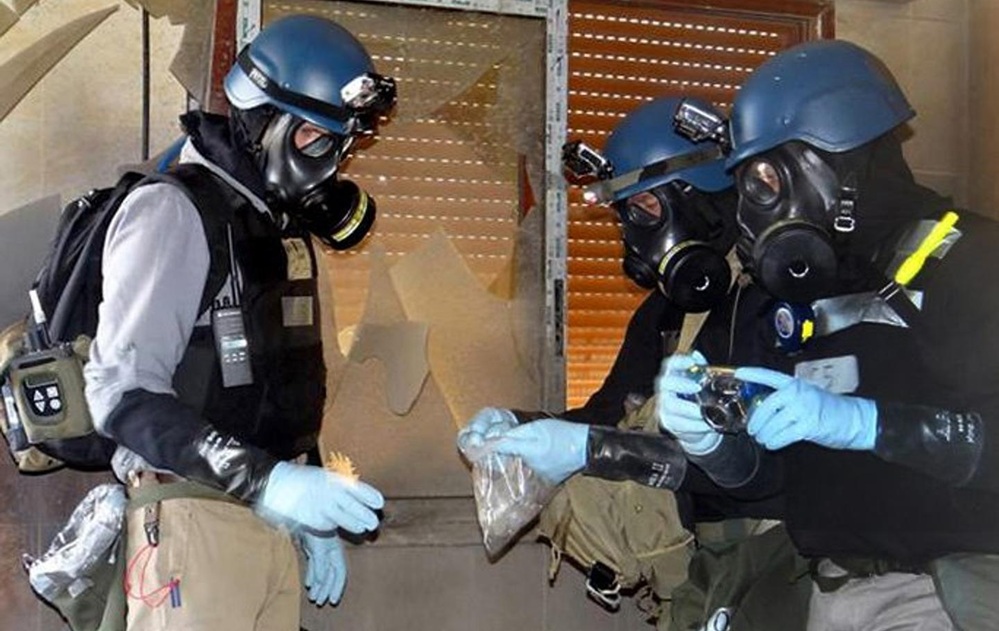
The discovery of previously undeclared materials in 2026 reinforced those concerns. The new Syrian authorities’ cooperation with the OPCW has now created an opportunity for international inspectors to revisit sites, collect documentation, identify undeclared materials and oversee their destruction.

The OPCW said its current work includes efforts to establish a complete and accurate inventory of remnants of the Assad-era programme and ultimately ensure their destruction in accordance with the Chemical Weapons Convention.

UN welcomes progress but warns work remains

The UN briefing made clear that the destruction of 42 aerial bombs and other materials does not mean the Syrian chemical weapons dossier is closed. International inspectors still have work to do to determine the full extent of the former programme, verify Syria’s declarations and oversee the destruction of remaining chemical-weapons-related materials.

The OPCW has previously said that more than 100 locations across Syria were considered potentially relevant to the former chemical weapons programme, with high-priority sites selected for investigation based on information gathered over many years.

For the United Nations and the OPCW, the immediate objective is therefore twofold: complete the inventory and ensure the irreversible destruction of everything that remains. The first verified destruction since 2014 nevertheless represents an important milestone.

After years of international disputes over Syria’s chemical weapons declarations, the combination of renewed Syrian cooperation, OPCW inspections and verified destruction could mark the beginning of a new phase in efforts to permanently eliminate the country’s chemical weapons legacy.

For the Security Council, however, the challenge remains ensuring that the process continues safely, transparently and under international verification until the entire inherited programme is accounted for and eliminated.
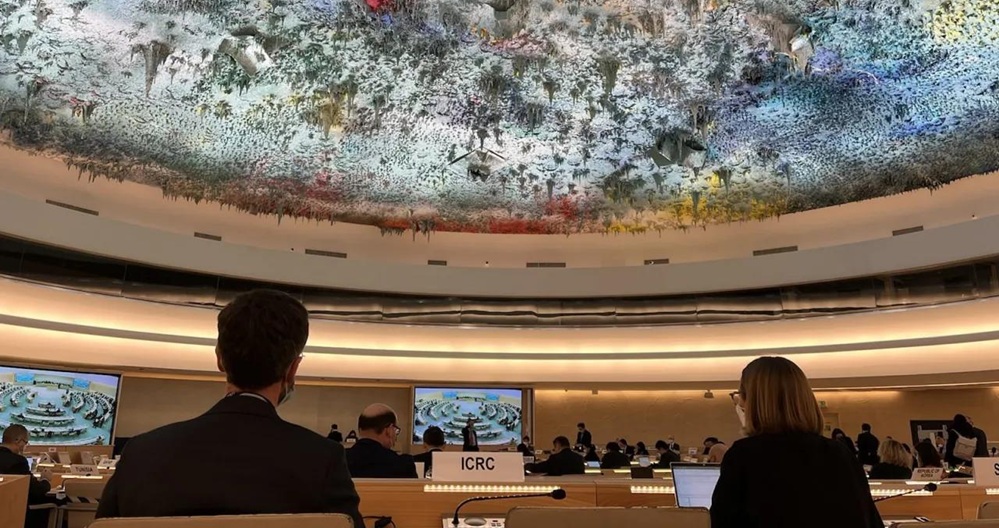
‘1945 World Order No Longer Reflects Reality’: Guterres Calls for UN Reform

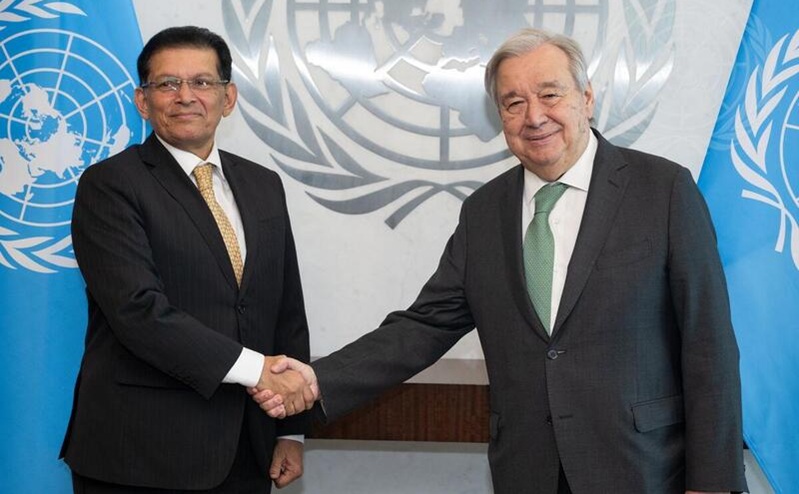
Shibbir Ahmed | United Nations, New York — United Nations Secretary-General António Guterres has called for sweeping reforms to global institutions, arguing that the international system must adapt to a rapidly changing, increasingly multipolar world.

Addressing the Shanghai Cooperation Organization (SCO) summit in Bishkek on Tuesday, Guterres said global power relations were changing while many multilateral institutions continued to reflect the geopolitical realities of 1945.

“We must reform our multilateral institutions, including the United Nations and the Bretton Woods system, to reflect today’s realities,” Guterres said, calling for greater representation and influence for developing countries in order to build a fairer global order.

Guterres said the world was becoming increasingly multipolar and argued that the trend should be strengthened.

“Multipolarity is a condition for justice in global governance and international relations,” he said, describing it as a foundation for effective multilateralism and a United Nations that serves all countries without double standards.

The UN chief has repeatedly called for reforms to the Security Council and other international institutions to make them more representative of the current distribution of global power.

His remarks in Bishkek also highlighted four areas for stronger international cooperation: global security, development financing, climate action and governance of artificial intelligence.

Guterres’ call comes amid growing geopolitical tensions, conflicts and disputes over the effectiveness of existing international institutions. His message was clear: as global power shifts, the institutions governing international affairs must change with it.


UN Urges Action to End Enforced Disappearances on International Day

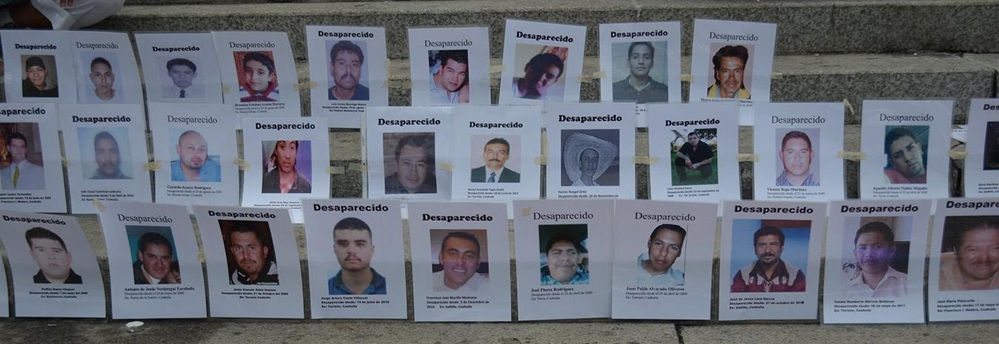
Shibbir Ahmed, UNITED NATIONS, NY — The United Nations is marking the International Day of the Victims of Enforced Disappearances on Sunday with renewed calls for governments to address the fate of missing people, protect victims and their families, and ensure truth and justice for those affected by enforced disappearance.

The annual observance, held on August 30, highlights the continuing suffering of people whose relatives have disappeared after being arrested, detained or otherwise taken into state custody while authorities deny or conceal their whereabouts.

UN human rights experts said the impact of enforced disappearance extends far beyond the individual victim. Families can be left for years without information about what happened to their loved ones, while communities can suffer social and economic consequences. The UN has described enforced disappearance as a serious human-rights violation that can also be used to spread fear throughout society.

The 2026 observance is particularly significant because it marks 20 years since the adoption of the International Convention for the Protection of All Persons from Enforced Disappearance. The convention was adopted by the UN General Assembly in 2006 and established an international legal framework aimed at preventing enforced disappearances and protecting people from the practice.

The UN Committee on Enforced Disappearances and the Working Group on Enforced or Involuntary Disappearances have used this year’s observance to renew attention to victims and their families and to the need for effective measures to prevent disappearances and clarify the fate of those who remain missing.

A Continuing Global Human Rights Challenge

Enforced disappearance occurs when people are arrested, detained or abducted by, or with the authorization, support or acquiescence of state authorities, followed by a refusal to acknowledge the person’s detention or to provide information about their whereabouts.

The consequences can continue for decades. Families may remain uncertain whether their relatives are alive or dead, while the lack of information can prevent them from obtaining justice, reparations and other forms of support.

The UN has repeatedly stressed that resolving cases of enforced disappearance requires credible investigations, accountability and access to information for families.

The International Day also serves as a reminder of the broader obligations of governments under international human-rights law to prevent enforced disappearance and investigate allegations when they occur.

Twenty Years of the UN Convention

The International Convention for the Protection of All Persons from Enforced Disappearance was adopted on December 20, 2006. It entered into force in 2010 and created the Committee on Enforced Disappearances to monitor implementation by states parties.

The convention recognizes the right of every person not to be subjected to enforced disappearance and calls on states to take measures to prevent the practice and ensure accountability. Two decades after its adoption, the UN continues to call for stronger implementation of the convention and greater protection for victims and their families.

The UN’s message on August 30 remains clear: families searching for missing relatives should not be left without answers, and enforced disappearance must not be allowed to remain a tool of fear, impunity or denial.


Irene Khan Takes Office as Bangladesh’s UN Representative

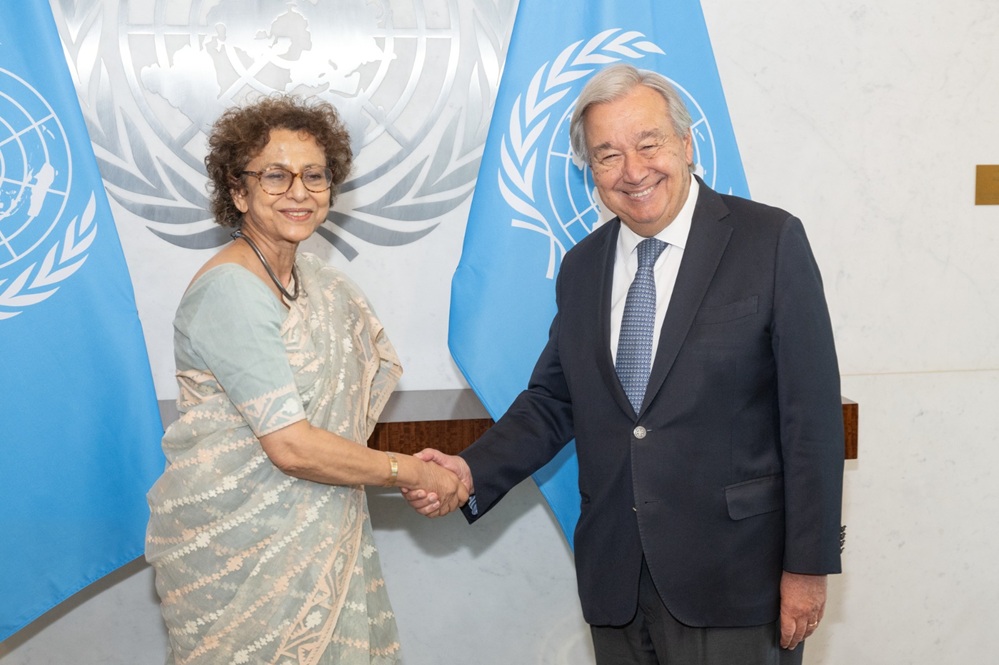
Shibbir Ahmed, UN, New York: Irene Zubaida Khan, a veteran international human rights advocate, has taken office as Bangladesh’s Permanent Representative to the United Nations in New York. Khan presented her credentials to United Nations Secretary-General António Guterres at UN Headquarters in New York on Friday, formally assuming her role as Bangladesh’s envoy to the world body.

She brings decades of experience in human rights, international law, refugee protection, the rule of law and sustainable development, including senior roles at the United Nations and other international organizations.

Before taking up her new role, Khan had served since 2020 as the UN Special Rapporteur on the promotion and protection of the right to freedom of opinion and expression. From 2001 to 2009, she served as Secretary-General of Amnesty International, becoming the first woman to lead the organization.

From 2012 to 2019, Khan served as Director-General of the International Development Law Organization (IDLO). Earlier in her career, she spent 21 years with the Office of the United Nations High Commissioner for Refugees (UNHCR), holding a number of senior positions including Chief of Mission in India and Deputy Director of the Division of International Protection.

Khan received the Sydney Peace Prize in 2006 and is the author of The Unheard Truth: Poverty and Human Rights. She studied law at the University of Manchester and Harvard Law School.


UN Secretary-General Mourns Loss of Life in Devastating Nepal Floods

Shibbir Ahmed, UN, NEW YORK: United Nations Secretary-General António Guterres has expressed deep sadness over the loss of life and widespread destruction caused by severe flooding in Nepal and China, extending his condolences to the families of those who died and solidarity to all those affected. According to a statement issued by his spokesperson, Guterres said he was saddened by reports of deaths and people still missing following the devastating floods.

The UN chief also wished those injured a speedy recovery and commended emergency responders working to save lives and assist communities affected by the disaster. The catastrophic flooding struck areas along the Nepal-China border after a massive ice and rock collapse in the Himalayas triggered torrents of water, mud and debris. The disaster swept through communities, damaging homes, roads, bridges and other critical infrastructure.

Nepali authorities have reported hundreds of deaths and hundreds of people still missing, while Chinese authorities have also reported fatalities and hundreds missing in Tibet. The figures continue to change as rescue teams reach affected areas. Guterres reiterated the United Nations’ readiness to provide further support to the relief and recovery efforts.

UN teams and humanitarian partners are mobilizing personnel and emergency supplies to assist communities affected by the floods, while working with the Government of Nepal to assess the scale of the disaster and determine urgent needs.

Rescue operations are continuing in difficult conditions, with damaged roads and bridges making access to several affected areas extremely challenging. Thousands of Nepalese army and police personnel have been deployed for search-and-rescue operations, while helicopters are being used to deliver emergency supplies and evacuate survivors.

The disaster has also affected foreign nationals, including tourists and religious pilgrims traveling in the Himalayan region. Nepalese authorities have reported hundreds of foreign nationals among those missing. The United Nations said it remains in close contact with the authorities and humanitarian partners as relief operations continue.


UN, Red Cross Warn of ‘Moral Red Line’ Over Autonomous Weapons

Shibbir Ahmed, New York: The United Nations and the International Committee of the Red Cross on Tuesday issued a renewed and urgent call for international rules governing autonomous weapons, warning that the world is dangerously close to a point where machines could autonomously target human beings.

UN Secretary-General António Guterres and International Committee of the Red Cross President Mirjana Spoljaric said governments must act urgently to prevent weapons from making life-and-death decisions without meaningful human control.

“We are now dangerously close to crossing a moral red line: the autonomous targeting of humans by machines,” the two leaders said in a joint appeal issued in Geneva on August 25. They called for negotiations to begin immediately on a legally binding international instrument establishing clear prohibitions and restrictions on autonomous weapon systems.

Risks are increasing

The UN and Red Cross said their fundamental concerns have remained unchanged since they first called for specific restrictions three years ago, but the risks have intensified as weapons technology has advanced rapidly.

Autonomous weapons are systems capable of selecting and engaging targets with limited or no direct human intervention. The growing use of artificial intelligence in military technology has raised concerns that machines could eventually determine independently who should be attacked.

The organizations stressed that autonomous weapons are not a distant possibility. A race toward greater autonomy in weapons systems is already underway, while international regulations have not kept pace with technological development.

Human judgment must remain central

A major concern is whether autonomous systems can reliably distinguish between combatants and civilians, particularly in complex battlefield conditions. Humanitarian organizations have also warned about the difficulty of determining responsibility when an autonomous system makes a fatal error. If a machine independently selects and attacks a person, questions could arise over who should be held legally responsible for the consequences.

At a Geneva briefing, the UN Office for Disarmament Affairs emphasized that some decisions should never be removed from human hands — particularly the decision over whether another human being lives or dies.

International talks have made limited progress

Governments have been discussing autonomous weapons under the United Nations framework since 2014. Important groundwork has been established through the UN General Assembly and the Group of Governmental Experts working under the Convention on Certain Conventional Weapons.

However, negotiations have struggled to keep pace with rapidly advancing technology. The UN and Red Cross now want governments to move beyond discussions and establish concrete international rules. The renewed appeal comes ahead of further international discussions in Geneva and a major review conference scheduled for November.

Growing use of artificial intelligence in warfare

Concerns have increased as artificial intelligence-assisted and semi-autonomous weapons have become more prominent in modern conflicts, including in Ukraine, Sudan, Gaza, Iran and the Gulf region. Some fully autonomous defensive systems are already in military use, including systems designed to intercept incoming missiles. However, there is currently no confirmed evidence that fully autonomous weapons have been used to deliberately target humans without human involvement.

The UN and Red Cross argue that governments should establish safeguards before technology reaches a point where machines can independently make decisions over human life.

“This year must mark a turning point,” the two organizations said, urging governments to show political determination and move toward decisive international action.