Khalilur Rahman Puts UN Reform at Top of Presidency Agenda

Shibbir Ahmed, United Nations, New York: Bangladesh’s Foreign Minister Dr. Khalilur Rahman has assumed the presidency of the 81st session of the United Nations General Assembly, pledging to prioritize dialogue, cooperation, rebuilding trust and meaningful reform of the world body. Speaking to reporters at UN Headquarters in New York on Tuesday ahead of the formal opening of the 81st session, Rahman said the multilateral system is facing unprecedented pressure and a growing deficit of trust.

Against this backdrop, he stressed the importance of finding common ground among countries despite their differences and pursuing solutions through dialogue and cooperation. According to the United Nations, Rahman was elected president of the General Assembly on June 2, 2026, and formally took office on September 8. He will preside over the 193-member General Assembly for the next year. The theme of the 81st session is “Restoring Trust, Managing Transformation: A United Nations That Delivers for All.”

Rahman acknowledged that many international disputes cannot be resolved quickly. However, he said disagreements should not prevent countries from identifying areas of common interest and working together. He said his presidency would remain firmly grounded in the UN Charter and the mandates entrusted to the organization by its member states. He also emphasized that global challenges can be addressed more effectively when countries work collectively and seek solutions through dialogue rather than confrontation.

UN Reform a Key Priority

Meaningful reform of the United Nations will be one of the central priorities of Rahman’s presidency. He said deeper reform is necessary to make the world body more effective and better prepared to respond to the challenges of the future. According to Rahman, public confidence in the United Nations has declined, making it necessary to strengthen the organization not only for the present but also for the generations ahead.

His broader agenda for the 81st session includes peace and security, progress toward the Sustainable Development Goals, climate and environmental protection, human rights, governance of emerging technologies including artificial intelligence, and reform of the United Nations. Rahman also pledged continued support for UN Secretary-General António Guterres’ reform efforts.

Giving Greater Space to Voices Beyond Governments

Rahman also called for greater participation in UN affairs by civil society, the media, academics, industry and innovation communities. Referring to the opening words of the UN Charter, “We the peoples of the United Nations,” he said the organization should not be viewed solely as an institution of member states.

He stressed the need to create greater opportunities for people from different sectors to contribute their views and participate in the work of the United Nations. While “Restoring Trust, Managing Transformation” remains the central theme of his presidency, Rahman said making the United Nations fit for the future would also be a major objective.

Pledge to Keep Rohingya Voices Heard

Responding to a question about how the United Nations can represent stateless populations, particularly the Rohingya, Rahman said the concept of “the peoples of the United Nations” should not be restricted by nationality or legal status.

Drawing on his previous experience as Bangladesh’s High Representative on Rohingya Issues, he said he had witnessed firsthand the suffering of forcibly displaced Rohingyas and their strong desire to return to their homeland.
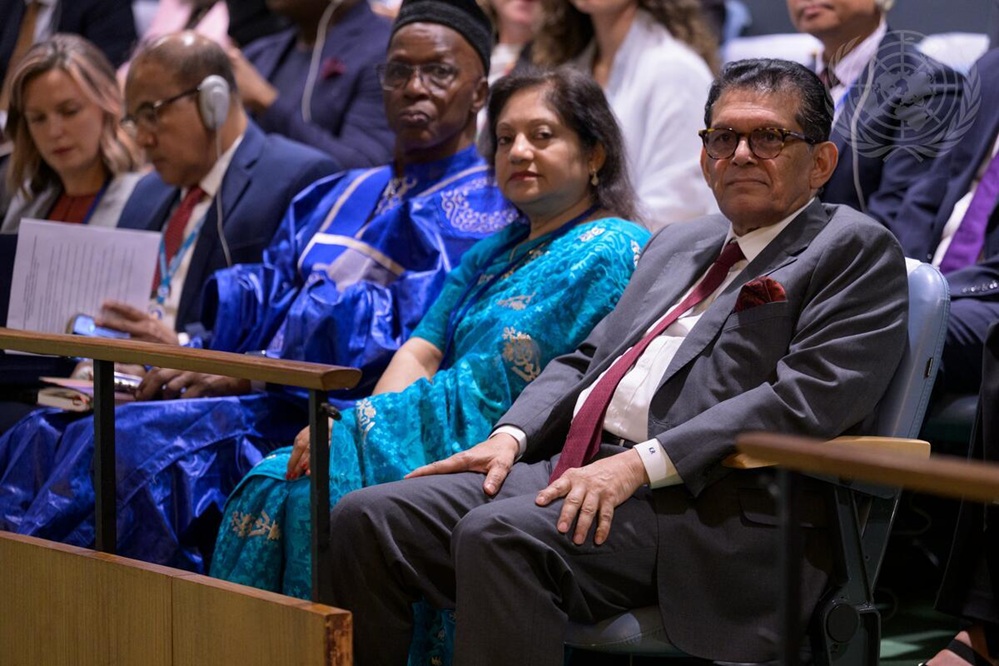
Recalling a visit by UN Secretary-General António Guterres to the Rohingya refugee camps in Bangladesh, Rahman said refugees had repeatedly expressed their desire to return home. He said Bangladesh had helped bring the voices of the Rohingya to the United Nations and pledged to continue raising their concerns during his presidency.

Dialogue During High-Level Week

Rahman described the presence of world leaders at the upcoming high-level week as an important opportunity to promote dialogue and diplomacy. The General Debate of the 81st General Assembly is scheduled to take place from September 22 to 28, bringing together heads of state and government and senior representatives from around the world.

Rahman expressed hope that world leaders would use their addresses to emphasize dialogue and diplomacy as means of resolving conflicts and reaffirm their commitments to development, human well-being and human rights. He said the presidency would review the priorities outlined by world leaders and seek areas that could form the basis of a common agenda.

“I Will Be President for All Countries”

Rahman emphasized that, as president of the General Assembly, he would represent all member states, regardless of whether they supported his election. He also addressed the selection of the next UN secretary-general, saying he would remain faithful to the process established by the UN Charter.

Under the Charter, the Security Council recommends a candidate for secretary-general and the General Assembly makes the appointment. Rahman said he would work closely with member states and the president of the Security Council to facilitate the process and ensure a smooth transition of leadership.
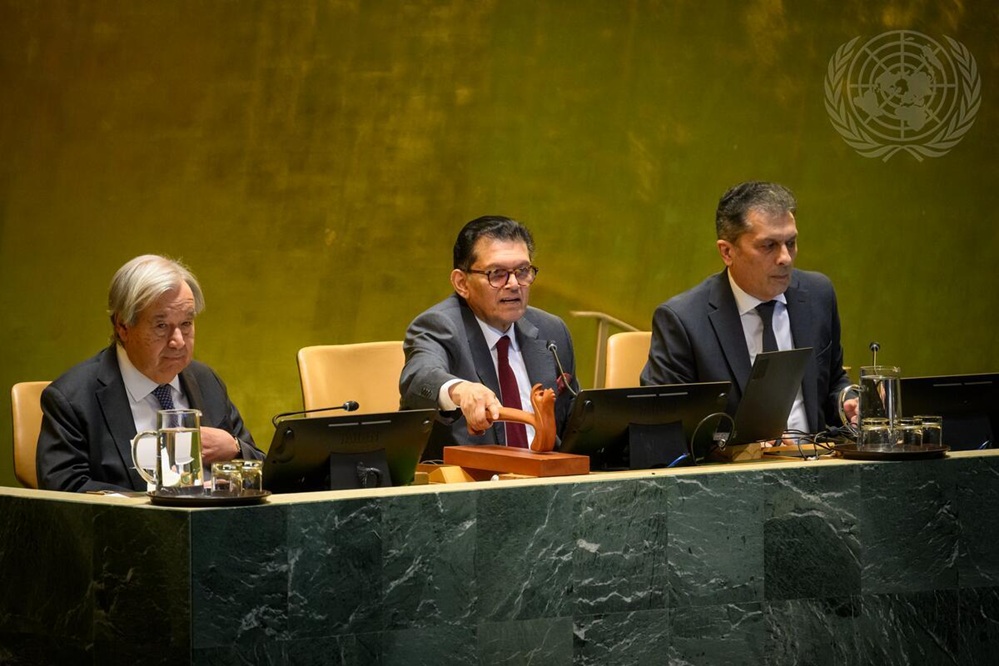
The 80th session of the General Assembly concluded at UN Headquarters on September 8, followed by Rahman’s formal assumption of the presidency of the 81st session. His election marks Bangladesh’s return to the presidency of the General Assembly after four decades. Former Bangladeshi Foreign Minister Humayun Rashid Choudhury presided over the 41st session in 1986-87.

Rahman, who first attended the United Nations as a member of Bangladesh’s delegation in 1985, described his return to the organization four decades later as a remarkable moment, while noting how dramatically the world has changed during the intervening years.

As president of the 81st session, Rahman will seek to promote dialogue in a deeply divided world, rebuild confidence in multilateralism and help make the United Nations more effective in confronting the challenges of the future.


‘This Is Not 1945’: Bangladesh’s Khalilur Rahman Opens UNGA 81

Shibbir Ahmed, UN, New York: The United Nations General Assembly opened its 81st session on Tuesday at United Nations Headquarters in New York, with Bangladesh’s veteran diplomat Khalilur Rahman taking over as president and calling for renewed global trust in the international organization amid wars, humanitarian crises, climate change and deepening geopolitical divisions.

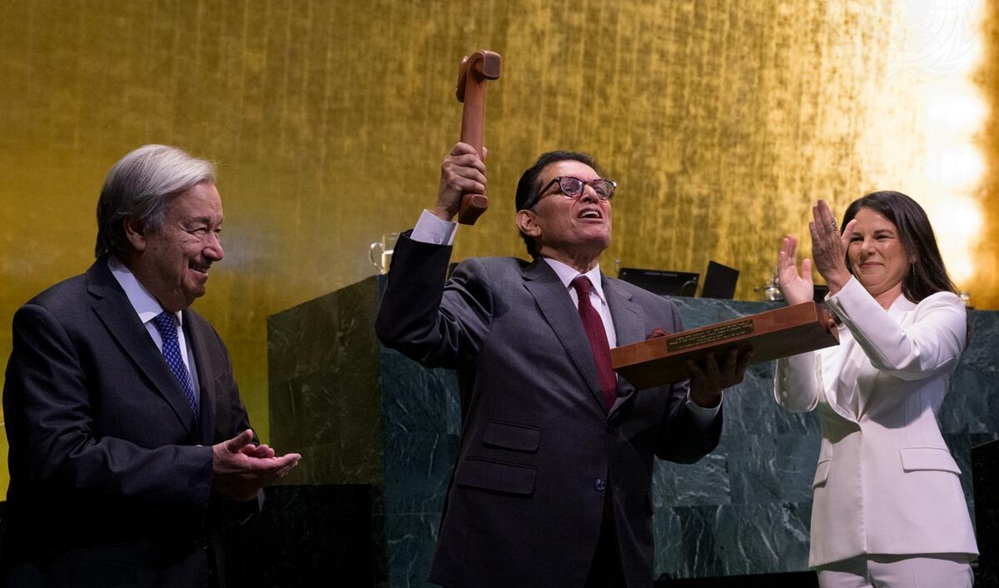
Rahman formally assumed the presidency after receiving the traditional Icelandic wooden gavel from outgoing General Assembly President Annalena Baerbock. In his opening remarks, he said the United Nations must adapt to the realities of a rapidly changing world and become more responsive to the needs and expectations of people across the globe.

“We must make the United Nations fit for the future,” Rahman said, stressing the importance of listening to civil society and giving greater space to voices outside governments and traditional diplomatic institutions.

“We have a situation where trust is in deficit. This is not 1945. This is the 81st session. The world has moved on. The Organization must move on, and I’ll help that process,” he said.

Rahman has placed restoring trust and managing global transformation at the center of his presidency. His agenda includes strengthening international peace and security, accelerating progress toward the 2030 Sustainable Development Goals, addressing climate change, protecting human rights, supporting refugees and migrants, promoting responsible technological development and advancing reform of the United Nations and the broader multilateral system.

The new session begins at a time of heightened international tensions, with conflicts in several regions, growing humanitarian emergencies, geopolitical rivalries, persistent poverty and inequality, and increasing concerns over climate-related disasters. The risk of nuclear escalation has also added to concerns about international peace and security.

United Nations Secretary-General António Guterres, speaking at the opening of the session, said rebuilding confidence in the multilateral system had become one of the defining challenges of the current era.

“Rebuilding trust in the multilateral system is the defining challenge of our time,” Guterres said, arguing that international cooperation remains essential at a moment when the world is confronting crises that cannot be effectively addressed by individual countries acting alone.

Guterres said institutions across the multilateral system, including the Security Council and international financial institutions, are under growing pressure to respond to the realities of the present day. He warned that international law and human rights are too often violated with impunity, while geopolitical mistrust and suspicion continue to prevent the international community from reaching effective solutions.

Despite those difficulties, Guterres said he remained hopeful about the ability of the General Assembly to contribute to a better future. Through diplomacy, dialogue and cooperation, he said, countries can work to rebuild trust and goodwill and help ensure that future generations inherit a more peaceful and sustainable world.

The opening of the 81st session also marked the conclusion of Baerbock’s term as president of the General Assembly. Addressing member states at the final meeting of the 80th session, she defended the continuing importance of the United Nations despite criticism of its shortcomings.

Baerbock said she was more convinced than ever of the importance and necessity of the organization. She pointed to the work of United Nations agencies and peacekeeping missions around the world as evidence of the practical impact of the international body.

She cited the role of the United Nations Children’s Fund in helping millions of children and the contribution of peacekeepers to protecting civilians in conflict-affected areas. Baerbock also warned that the positive work of the United Nations often receives less public attention than negative developments, particularly in an environment where divisive and hateful content can spread rapidly.

Climate change and sustainable development are expected to remain major issues during the new session. Rahman has called for stronger international efforts to build climate resilience and protect the environment, while also accelerating progress toward the 2030 Sustainable Development Goals.

The new president has emphasized the need to ensure that development reaches vulnerable populations and that no country is excluded from international efforts to address poverty, inequality, education, health, food security and other development challenges.

Human rights and humanitarian action are also central to the new presidency. Continuing conflicts and instability have displaced millions of people, increasing pressure on the international community to protect refugees and migrants and provide assistance to populations affected by war and persecution.

The rapid development of artificial intelligence and other emerging technologies is another issue expected to receive greater attention. Rahman has called for technological innovation that is inclusive and responsibly governed, with appropriate safeguards to protect people and future generations.

United Nations reform is also expected to feature prominently during the 81st session. The international political and economic landscape has changed substantially since the organization was established in 1945, prompting continued debate over whether its institutions adequately reflect the realities of the contemporary world.

Questions surrounding representation, inclusiveness and the effectiveness of international decision-making have become increasingly important, particularly for developing countries seeking a greater voice in global affairs.

Another major diplomatic issue during the coming year will be the selection of the next United Nations secretary-general. Guterres is scheduled to complete his term, with his successor expected to take office in January 2027.

Rahman brings extensive diplomatic experience to the presidency of the General Assembly. He previously served as foreign minister of Bangladesh and held senior positions including national security adviser and high representative for the Rohingya issue in Bangladesh’s interim government. He has also held senior positions within the United Nations system and was a founding member of East West University in Dhaka.

His assumption of the presidency gives Bangladesh a prominent role in one of the international community’s most representative forums at a particularly challenging moment for multilateral diplomacy.

As the 81st session begins, the central challenge for the General Assembly will be whether countries can overcome deep political divisions and rebuild confidence in international cooperation. For Rahman, the task is rooted in a simple premise: the world has changed significantly since 1945, and the United Nations must evolve with it.


81st UN General Assembly Opens in New York Amid Global Crises

Shibbir Ahmed, UN, NEW YORK — The 81st session of the United Nations General Assembly officially opens Tuesday in New York, bringing together the world’s nations at a time of intensifying conflicts, humanitarian crises, economic uncertainty and growing pressure on the multilateral system. The ordinary session will run from September 8, 2026, through September 7, 2027, according to the United Nations. Bangladesh’s Khalilur Rahman is serving as president of the 81st General Assembly session.

The theme of this year’s session is “Restoring Trust, Managing Transformation: A United Nations That Delivers for All.” The theme reflects growing international concern over the ability of multilateral institutions to respond effectively to war, humanitarian emergencies, climate change, inequality and rapid technological change.

The opening of the session comes as the international community faces multiple major crises, including ongoing armed conflicts and humanitarian emergencies. The General Assembly is expected to provide a major diplomatic forum for member states to discuss peace and security, sustainable development, human rights and international cooperation.

Khalilur Rahman, who was elected president of the 81st session in June, has outlined six major priorities for his presidency: peace and security, sustainable development, climate resilience, human rights and humanitarian protection, inclusive innovation and renewed multilateralism.

His vision also places emphasis on strengthening the United Nations’ ability to deliver practical results and rebuilding confidence in the multilateral system. The opening session is only the beginning of an intense period of diplomacy at UN Headquarters. The General Assembly’s high-level general debate is scheduled for later in September, when heads of state and government from around the world are expected to gather in New York.

The United Nations says the 81st session will also address major issues including peace and security, sustainable development, climate action, human rights, artificial intelligence and reform of the UN system. With the world facing deep geopolitical divisions, the 81st General Assembly is set to test whether nations can rebuild trust and find common ground through multilateral diplomacy.


‘1945 World Order No Longer Reflects Reality’: Guterres Calls for UN Reform

Shibbir Ahmed | United Nations, New York — United Nations Secretary-General António Guterres has called for sweeping reforms to global institutions, arguing that the international system must adapt to a rapidly changing, increasingly multipolar world.

Addressing the Shanghai Cooperation Organization (SCO) summit in Bishkek on Tuesday, Guterres said global power relations were changing while many multilateral institutions continued to reflect the geopolitical realities of 1945.

“We must reform our multilateral institutions, including the United Nations and the Bretton Woods system, to reflect today’s realities,” Guterres said, calling for greater representation and influence for developing countries in order to build a fairer global order.

Guterres said the world was becoming increasingly multipolar and argued that the trend should be strengthened.

“Multipolarity is a condition for justice in global governance and international relations,” he said, describing it as a foundation for effective multilateralism and a United Nations that serves all countries without double standards.

The UN chief has repeatedly called for reforms to the Security Council and other international institutions to make them more representative of the current distribution of global power.

His remarks in Bishkek also highlighted four areas for stronger international cooperation: global security, development financing, climate action and governance of artificial intelligence.

Guterres’ call comes amid growing geopolitical tensions, conflicts and disputes over the effectiveness of existing international institutions. His message was clear: as global power shifts, the institutions governing international affairs must change with it.