Biman to Sign Deal for 11 More Boeing Aircraft

Shibbir Ahmed, New York: Biman Bangladesh Airlines is set to sign an agreement in New York to purchase 11 additional commercial aircraft from U.S. aircraft manufacturer Boeing. The agreement is scheduled to be signed Wednesday on the sidelines of Prime Minister Tarique Rahman’s visit to New York for the 81st session of the United Nations General Assembly.

U.S. Ambassador to Bangladesh Brent T. Christensen welcomed the deal. In a social media post, he congratulated Boeing and Biman Bangladesh Airlines, describing the purchase of 11 additional commercial aircraft as another mutually beneficial achievement for U.S.-Bangladesh relations.

Christensen also said he was looking forward to witnessing the signing ceremony in New York. The new agreement for 11 aircraft is in addition to a $3.7 billion deal signed with Boeing on April 30. Under that agreement, Biman Bangladesh Airlines agreed to purchase 14 aircraft, including eight Boeing 787-10 Dreamliners, two Boeing 787-9s and four Boeing 737-8s.

With the additional 11 aircraft, Biman’s planned purchases from Boeing will rise to 25 aircraft. However, the specific models, total purchase price, financing arrangements and delivery schedule for the additional 11 aircraft have not yet been disclosed.

The purchase is part of Biman Bangladesh Airlines’ plans to expand and modernize its fleet. At the same time, Biman is considering a separate proposal to purchase 10 Airbus aircraft. The additional aircraft are expected to support the airline’s fleet expansion and meet growing demand in the aviation sector. The new aircraft are also intended to help Biman expand its international network and enhance passenger services.


Melania Trump Expands Fostering the Future Together Coalition to 57 Nations

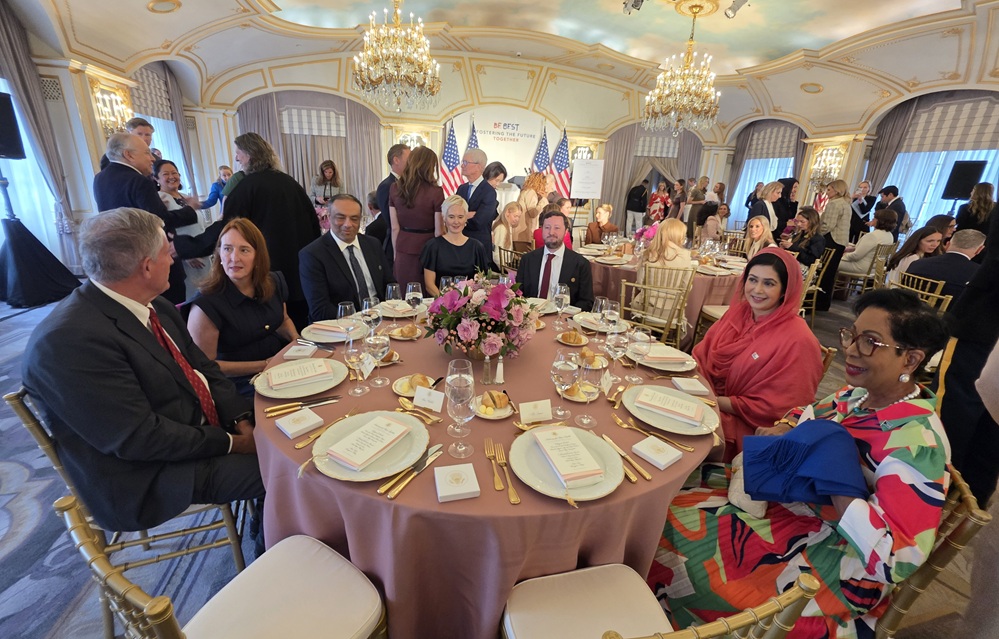
Shibbir Ahmed, New York — First Lady Melania Trump on Tuesday reconvened members of her Fostering the Future Together initiative in New York during the high-level week of the 81st United Nations General Assembly, announcing new technology partnerships, international events and an expansion of the coalition to 57 participating countries.

The gathering brought together representatives from countries including the United Kingdom, South Korea, the Philippines, Poland, Ukraine, Türkiye, the United Arab Emirates, Panama and Canada, according to the White House.

“Together, we are a beautiful range of cultures, languages, histories, and traditions,” Trump said. “And yet, we stand unified around one everlasting truth: the future of our world will be determined by what we do for our children today.”

Fostering the Future Together is described by the White House as a global coalition focused on empowering children through technology and education. Trump said the initiative is intended to provide young people with opportunities to learn, create and develop skills for the future.

New International Events Announced

Trump announced several Fostering the Future Together events planned for 2026.

They include a G20 event in Miami, which Trump plans to host, an ASEAN conference in Manila hosted by Philippine First Lady Liza Araneta Marcos, a European regional meeting hosted by Polish First Lady Marta Nawrocka, and a Caribbean regional meeting hosted by Saint Kitts and Nevis First Lady Diani Prince-Drew. “These leaders have stepped forward to activate their regions,” Trump said, adding that the initiative would provide support for their efforts.

Representatives and participants from countries around the world attend the Fostering the Future Together gathering in New York. Photo: KHABOR

Technology Partnerships

The First Lady also announced new private-sector partnerships involving Adobe, Amazon, Intel, Starlink, Google and Zoom. The companies are being brought into the initiative as part of its focus on expanding children’s access to technology and education. Tim Cook, executive chairman of Apple, and Enrique Lores, CEO of HP, also attended the gathering, according to the White House.

Trump emphasized that access to technology alone does not constitute empowerment and called for young people to be taught how to use technological tools responsibly and effectively.

“We must give our children the tools—and teach them how to use those tools wisely,” she said.

Focus on Technology and Education

In her remarks, Trump highlighted the rapid development of artificial intelligence and other technologies, describing the current period as a major technological transformation. She cited technologies including artificial intelligence, video communications, mobile computing, autonomous vehicles, virtual environments and biometric identification as examples of technologies that have moved from the realm of science fiction into everyday life.

She also called on participating countries and technology companies to help young people develop the knowledge and skills necessary to participate in an increasingly technology-driven economy.

“Our Fostering the Future Together coalition must strive to empower the youth of our nations to bend the boundaries of imagination, explore new frontiers of intellect, have the courage to take calculated risks, and build toward advancement of society,” Trump said.

Coalition Expands to 57 Countries

The White House said the initiative now includes 57 participating nations. Trump said the coalition’s long-term purpose is to create opportunities for children regardless of where they are born. Fostering the Future Together was announced during the 80th UN General Assembly in 2025. According to the White House, Trump subsequently convened the initiative’s inaugural Global Coalition Summit in Washington in spring 2026, bringing together first spouses and technology-sector leaders.

The latest gathering took place during the UN General Assembly’s high-level week in New York. The United Nations says the general debate of the 81st session is being held from September 22 to 26 and again on September 28.

Trump said the initiative’s success should ultimately be measured by its impact on future generations rather than by the meetings and speeches themselves. “Years from now, our children may not remember the meetings we held or the speeches we gave. But they will live with the consequences of what we do here,” she said.


Melania Trump’s Fostering the Future Together Secures 7 New Tech Partnerships

Shibbir Ahmed, New York — First Lady Melania Trump’s Fostering the Future Together (FTFT) initiative has secured seven new technology-sector partnerships aimed at expanding access to education, digital skills and technology for children and young people around the world. The new partnerships were announced Monday on the margins of the 81st United Nations General Assembly (UNGA) at an event hosted by Charity Wallace, Special Envoy for Best Future Generations at the U.S. Department of State.

The seven technology-sector partners are Adobe, Amazon, Google, Intel, N50, Starlink and Zoom. Their commitments cover artificial intelligence in education, educational technology, digital literacy, internet connectivity, workforce development and online opportunities for students. The mission of Fostering the Future Together is to empower children through technology and education. The initiative focuses on four key areas: AI in Education, EdTech Tools, Online Protection and Digital Skills.

Adobe Expands AI-Powered Education Tools

Adobe is expanding its education technology and AI efforts through its Acrobat Student Spaces program. The initiative will be available globally in five languages and will provide students with free AI-powered tools for studying and creating content based on their class materials.

Amazon Expands Student AI and Technology Training

Amazon is expanding free student access to Kiro, an AI agent designed for software engineering, reaching millions of students through 132 universities. Participating institutions include universities in Romania, Japan, Malaysia, South Korea and France. Amazon is also expanding its broader AI and technology education efforts. Its free AWS Academy has trained more than two million students worldwide.

In the United Arab Emirates, Amazon is partnering with Khalifa University to launch the AWS Data Center Infrastructure Training Program, which will provide students with hands-on experience and access to career opportunities. Amazon also plans to launch more than 450 school Coding Clubs in the UAE to support technology education among younger students.

Google Commits $4 Million for AI Educator Training

Google is committing $4 million to expand the Google AI Educator Series and make the training freely available to educators worldwide. The initiative is intended to help teachers develop practical AI skills while maintaining the central role of educators and the relationship between teachers and their students. Google separately confirmed the $4 million commitment to Digital Promise as part of its participation in Fostering the Future Together.

Intel Expands AI and Digital Literacy Programs

Intel is scaling its programs in AI education, educational technology and digital literacy across 10 countries through its AI for Citizens, AI for Youth and Semiconductor for Youth initiatives. The company is highlighting a major AI PC deployment in Panama, alongside new or expanded partnerships in Egypt, Ghana, Israel, Kenya, Malaysia, Poland, South Korea, the UAE and Vietnam.

N50 Launches AI Education Pilot in Uganda

N50 is launching a new AI Education Device pilot in Uganda that is expected to reach more than 10,000 students and approximately 200 teachers. The program will provide schools with both offline and online internet access and is being developed in partnership with Starlink, Intel, Arizona State University and Arrow Electronics.

Starlink Expands Internet Access in Papua New Guinea

Starlink is working with the Government of Papua New Guinea and the National Information and Communications Technology Authority (NICTA) to expand fast and reliable internet access across the country. The effort builds on $30 million in U.S. support announced during the U.S.-Papua New Guinea Strategic Partnership Dialogue.

Zoom Announces $2.75 Million in New Grants

Zoom, through its Zoom Cares program, is set to announce $2.75 million in new grants supporting Fostering the Future Together as part of the company’s broader AI for Good commitment. The grants will focus on education, workforce development and nonprofit AI readiness, with funding directed toward nonprofits operating in FTFT countries across Europe, Africa, Latin America and the Asia-Pacific region.

Global Public-Private Partnership

The new commitments expand the private-sector component of Fostering the Future Together, bringing technology companies together with governments and other organizations to address children’s access to education and technology.

The initiative was launched by Melania Trump during the 80th UN General Assembly in September 2025. Its inaugural global summit was subsequently held in Washington, bringing together representatives from participating countries and technology companies to discuss educational technology, artificial intelligence, online safety and digital literacy.

The White House says 57 member nations have joined the broader initiative, including France, Poland, the United Arab Emirates, Panama, the Philippines, St. Kitts and Nevis, Israel, Morocco, Kenya, Türkiye and the Republic of Korea.

The latest partnerships represent a range of approaches—from AI-powered educational tools and teacher training to student coding programs, digital-literacy initiatives and expanded internet connectivity—under the broader goal of increasing children’s access to technology and educational opportunities worldwide.


PM Tarique Rahman Arrives in New York for 81st UN General Assembly

Shibbir Ahmed, New York — Prime Minister Tarique Rahman arrived in New York on Monday to attend the 81st session of the United Nations General Assembly (UNGA), beginning a packed diplomatic visit that will include his address to the General Assembly, meetings with world leaders and engagements on climate change, the Rohingya crisis, global business and development.

The Prime Minister arrived at John F. Kennedy International Airport aboard a Turkish Airlines flight following a stopover in Istanbul. His wife, Dr Zubaida Rahman, and members of his delegation accompanied him.

Prime Minister’s Deputy Press Secretary Jahidul Islam Rony said the flight landed at JFK International Airport at around 6:20 p.m. New York time. Bangladesh’s Permanent Representative to the United Nations, Irene Zubaida Khan, and Bangladesh Ambassador to the United States Tareq Md Ariful Islam received the Prime Minister at the airport. Following his arrival, a motorcade escorted the Prime Minister to Hyatt Grand Central New York, where he is scheduled to stay during his visit.

Bangladeshi community welcomes Prime Minister

BNP leaders and activists, along with members of the Bangladeshi expatriate community, gathered in New York to welcome the Prime Minister. Supporters carrying banners, posters and festoons assembled near the airport and along parts of the route leading toward Manhattan. As the Prime Minister’s motorcade passed, members of the crowd waved and chanted slogans, while the Prime Minister responded by waving to them. Jackson Heights, home to one of the largest Bangladeshi communities in New York, was also decorated with banners, posters and festoons marking his visit.

UNGA address scheduled for September 24

The centerpiece of the Prime Minister’s New York visit will be his address to the 81st UN General Assembly on September 24. His official engagements are scheduled to begin on September 22, when he will attend a welcome breakfast hosted by UN Secretary-General António Guterres for heads of state and government and their spouses at UN Headquarters.

He will subsequently attend the opening of the UNGA general debate and hold a series of bilateral and courtesy meetings with foreign leaders and senior officials of international organizations.

Among his scheduled engagements are meetings with Turkish President Recep Tayyip Erdoğan, Bhutanese Prime Minister Tshering Tobgay, World Bank Group President Ajay Banga and Haitian Prime Minister Alix Didier Fils-Aimé.

The Prime Minister is also scheduled to meet UN Secretary-General’s Special Envoy on Myanmar Julie Bishop, European Council President António Costa, UN High Commissioner for Refugees Barham Salih, UN High Commissioner for Human Rights Volker Türk and Meta’s Chief Global Affairs Officer Joel Kaplan. In the evening, the Prime Minister and Dr Zubaida Rahman are scheduled to attend a reception hosted by the US President for visiting heads of state and government and their spouses.

Rohingya crisis and climate action on agenda

On September 23, the Prime Minister is scheduled to attend a breakfast meeting with representatives of international charitable and humanitarian organizations at the Bangladesh Permanent Mission to the United Nations. He will also participate in a high-level event focusing on the Rohingya crisis and efforts to achieve a durable solution to the prolonged displacement through justice and accountability.

Climate change will feature prominently on the Prime Minister’s agenda. He is scheduled to participate in the UN high-level meeting on “Climate Action and the Just Transition” and hold a bilateral meeting with Croatian Prime Minister Andrej Plenković.

Boeing Global President Dr Brendan Nelson is also scheduled to call on the Prime Minister at his hotel, where a signing ceremony involving Bangladesh government representatives is expected to take place.

Sea-level rise, maternal health and bilateral meetings

On September 24, Prime Minister Tarique Rahman is scheduled to deliver opening remarks at a high-level meeting addressing the existential threats posed by sea-level rise. He will also attend an event titled “From Commitment to Action: Integrating Midwifery into Primary Health Care to End Preventable Maternal and Newborn Deaths,” where he is expected to deliver opening remarks.

The Prime Minister is scheduled to hold a bilateral meeting with Pakistani Prime Minister Muhammad Shehbaz Sharif and meet UN Secretary-General António Guterres and Thai Prime Minister Anutin Charnvirakul.

Later in the day, he is expected to address the General Assembly. His speech is tentatively scheduled for around 5:30 p.m. New York time, although the timing may change depending on the progress of the general debate. Following his UNGA address, the Prime Minister is scheduled to attend a dinner hosted in his honor by Bangladesh’s Permanent Representative to the United Nations.

Wall Street engagement before departure

On September 25, the Prime Minister is scheduled to attend a breakfast meeting with Wall Street representatives hosted by JPMorgan at its Manhattan headquarters. He will also hold a bilateral meeting with Kuwait’s Crown Prince Sheikh Sabah Khaled Al-Hamad Al-Sabah and attend a lunch meeting with Prince Zeid Al Hussein, President of the International Peace Institute.

Before concluding his New York visit, the Prime Minister is also scheduled to meet BNP leaders in the United States. He is expected to depart New York for Dhaka at 11 p.m. on September 25 aboard Emirates flight EK202 via Dubai and arrive in Bangladesh on September 27.


Tarique Rahman Leaves for New York for UNGA

DHAKA — Prime Minister Tarique Rahman left Dhaka early Monday for New York to attend the 81st session of the United Nations General Assembly (UNGA), where he is scheduled to deliver his first address to the General Assembly as prime minister on September 24.

A Turkish Airlines flight carrying the prime minister, his wife Dr Zubaida Rahman and members of his entourage departed Hazrat Shahjalal International Airport at around 6:05 a.m. The flight is scheduled to transit through Istanbul before arriving at John F. Kennedy International Airport in New York at about 5:55 p.m. local time.

The prime minister will be received at JFK by Bangladesh’s Permanent Representative to the United Nations in New York Irene Zubaida Khan and Bangladesh Ambassador to the United States Tareq Md Ariful Islam before being escorted to the Hyatt Grand Central New York, where he is scheduled to stay.

His official engagements are set to begin on September 22 with a welcome breakfast hosted by UN Secretary-General António Guterres for heads of state and government. He will subsequently attend the opening of the high-level General Debate and a reception hosted by the U.S. president for heads of state and government and their spouses.

On September 23, Tarique Rahman is scheduled to attend meetings on global inequality and climate action. He will also participate in a side event on the Rohingya crisis, where Bangladesh is expected to seek stronger international cooperation for the early repatriation of forcibly displaced Rohingyas to Myanmar.

Bangladesh is also expected to highlight its position as a climate-vulnerable country, focusing on climate finance, adaptation, technology transfer, loss and damage, and climate justice.

On September 24, the prime minister will deliver his General Assembly address. He is also scheduled to speak at a high-level meeting on the threats posed by rising sea levels and attend Bangladesh-hosted events on maternal and newborn health and midwifery.

According to the Foreign Secretary, the prime minister’s UNGA address will cover Bangladesh’s democratic journey, rule of law and accountability, global peace and security, climate change, sustainable development, economic cooperation, youth and women’s empowerment, education and health, the Rohingya crisis, technology and reform of the multilateral system.

On the sidelines of the General Assembly, Tarique Rahman is scheduled to hold bilateral meetings with the Crown Prince of Kuwait and the prime ministers of Croatia, Bhutan, Thailand, Pakistan and Haiti. Discussions are expected to cover political and economic relations, trade and investment, development cooperation and the Rohingya crisis.

He is also scheduled to meet UN Secretary-General António Guterres, the President of the European Council, the President of the World Bank Group, the UN Special Envoy on Myanmar and the UN high commissioners for refugees and human rights.

As part of the government’s economic diplomacy, the prime minister is scheduled to meet senior representatives of Meta, Wall Street firms and other business organisations to discuss investment, manufacturing, infrastructure, technology, skills development and employment opportunities. Tarique Rahman is scheduled to leave New York for Dhaka on the night of September 25.


Bachelet Withdraws From Race for UN Secretary-General

Shibbir Ahmed, New York — Former Chilean President Michelle Bachelet has withdrawn her candidacy to become the next Secretary-General of the United Nations, narrowing the field to seven candidates in the race to succeed António Guterres. Bachelet, 74, announced her decision in a video posted on Instagram. She said she would continue her international work after ending her campaign for the top UN post.

The two-time president of Chile and former UN High Commissioner for Human Rights had campaigned on issues including multilateralism and international law. Her withdrawal came after a third informal Security Council straw poll in which her support declined significantly.

Bachelet’s decision leaves seven candidates in contention to succeed Guterres, whose second five-year term is scheduled to end on December 31, 2026. The UN Security Council will eventually recommend one candidate to the 193-member General Assembly, which will formally appoint the next Secretary-General. The UN Secretary-General selection process is taking place as world leaders gather in New York for the opening of the high-level phase of the 81st General Assembly session.

Bachelet’s candidacy had initially been jointly nominated by Chile, Brazil and Mexico. Chile later withdrew its nomination in March 2026, while the United Nations subsequently recorded Bachelet as a candidate nominated by Brazil and Mexico. The selection process will continue as the Security Council considers the remaining candidates before sending a recommendation to the General Assembly.


Why the UN General Assembly Still Matters

Shibbir Ahmed, New York — The United Nations General Assembly remains a central forum for international diplomacy, providing all 193 UN member states with a platform to debate global issues ranging from war and peace to development, climate change and human rights. In an interview with UN News, Richard Gowan, Director of UN and Multilateral Diplomacy at the International Crisis Group, discussed the Assembly’s changing role and its importance in global affairs ahead of the UN General Assembly’s high-level week.

Gowan said the UN’s founders initially expected the Security Council to be the main center of decision-making. However, divisions among the major powers quickly shifted many political discussions toward the General Assembly. During the early years of the UN, the Assembly played a significant role in debates over Palestine and Korea while the Security Council was frequently affected by Cold War divisions.

One major test came in 1956, when the Suez crisis and the Soviet intervention in Hungary unfolded simultaneously. According to Gowan, the General Assembly authorized the first UN peacekeeping operation in response to the Suez crisis, marking an important moment in the Assembly’s role in international crisis management.

A platform for newly independent states

The expansion of UN membership during the 1960s transformed the General Assembly. Newly independent countries used the forum to raise issues including apartheid in South Africa and remaining colonial conflicts.

Gowan said the Assembly became an important platform for countries emerging from colonial rule to make their voices heard internationally. During the 1960s, the Assembly adopted a series of resolutions condemning apartheid, while its debates increasingly reflected the growing influence of countries from what is now commonly called the Global South.

Developing countries also used the Assembly to challenge what they regarded as an unfair international economic system. In 1974, the General Assembly adopted a resolution calling for a new international economic order intended to provide a fairer system for developing countries.

Gowan said the Assembly gave countries emerging from colonialism a major platform to assert themselves on the world stage. He also argued that the international campaign against apartheid contributed to the eventual end of apartheid in South Africa, while acknowledging that efforts to establish a new international economic order did not achieve their intended outcome.

Post-Cold War cooperation

Following the end of the Cold War, diplomats were able to cooperate more closely on strengthening the UN system. Gowan pointed to the creation of the Peacebuilding Commission in 2005 as an example of initiatives developed through cooperation between member states and the UN Secretariat and subsequently approved by the General Assembly.

The global financial crisis of 2008–2009 presented another challenge. Gowan said many UN members expected the organization to respond, while the United States and other major economies instead worked through the G20. At the same time, discussions on environmental protection and efforts to address global environmental challenges gained greater prominence within the UN system.

A voice for smaller countries

Gowan said the General Assembly remains particularly important for small countries and middle powers, which often have fewer opportunities to influence international affairs through smaller diplomatic groupings. He noted that despite frequent discussion about the UN’s future, large numbers of world leaders continue to travel to New York every September to address the General Assembly.

He also emphasized the significance of keeping the Assembly at UN Headquarters in New York, describing the location as an important center for global diplomacy and international media attention.


Khalilur Rahman Puts Trust at Center of UN Presidency

Shibbir Ahmed, New York — United Nations General Assembly President Khalilur Rahman has made restoring trust in the United Nations the central theme of his one-year presidency, saying the organization needs to respond to unmet expectations on peace, development and human rights. Rahman, a senior Bangladeshi diplomat and Bangladesh’s sitting foreign minister, took the gavel as president of the 81st session of the General Assembly. In an interview with UN News, he said the UN faces a “crisis of confidence” and needs a transformation to meet the challenges of the modern world.

Speaking as High-Level Week gets underway, Rahman described the gathering of world leaders as a major expression of the UN General Assembly’s convening power. He said he would closely examine what world leaders say about rebuilding trust in the organization and use their views to guide his presidency.

Rahman said the United Nations was founded in 1945 with the ambition of preventing another global conflict. While he noted that the world has avoided another large-scale global war and that the UN has made progress in development, he said many conflicts have not been prevented and development progress has often been slow.

He also highlighted human rights as an area requiring greater attention, saying the UN spends about four percent of its total spending on human rights. Rahman said work across the UN’s peace and security, development and human rights pillars is needed to rebuild confidence in the organization.

AI poses a new challenge

Rahman identified artificial intelligence as one of the major challenges distinguishing today’s world from the era when the UN was founded. He said AI could accelerate human progress but could also create serious risks. While innovation should continue, he argued that safeguards are needed to ensure the technology serves humanity. He called for governments, developers and users to participate in discussions on the responsible development and use of AI.

Assembly’s role

Responding to criticism that General Assembly resolutions lack the authority of Security Council decisions, Rahman emphasized the Assembly’s ability to bring countries together. He said the Assembly provides heads of government and state with a setting to discuss serious international issues and seek solutions through diplomacy. He also said the Assembly will continue to play a role in establishing international norms and providing broader direction for the international community.

Rohingya crisis

Rahman also reflected on his experience working on the Rohingya crisis, describing it as a grave humanitarian crisis and highlighting the resilience of refugees and their desire to return home. He said the crisis reinforced his belief that violence does not provide a lasting solution and that dialogue and negotiation are necessary to resolve conflicts. Looking toward the end of his presidency, Rahman said he hopes to see progress on UN reform, the organization’s financial sustainability and faster delivery at the local level.


Tarique to Highlight Democracy, Rohingya Crisis at UNGA

DHAKA — Prime Minister Tarique Rahman is set to highlight Bangladesh’s renewed democratic journey and its positions on major global challenges when he addresses the 81st session of the United Nations General Assembly on September 24, Foreign Secretary Asad Alam Siam said Sunday. The prime minister will leave Dhaka for New York on Monday for the high-level UNGA proceedings. According to the Foreign Secretary, his maiden address to the General Assembly as prime minister will outline the government’s vision for Bangladesh and its approach to key regional and international issues.

At a press conference at the Ministry of Foreign Affairs, Siam said Tarique’s speech would cover Bangladesh’s democratic transition, the rule of law and accountability, global peace and security, climate change, sustainable development and economic cooperation.

The prime minister is also expected to address youth and women’s empowerment, education and health, the Rohingya crisis, equitable access to modern technology and reform of the multilateral system. The speech will be Tarique Rahman’s first appearance at the General Assembly as Bangladesh’s prime minister. It will also mark the first UNGA participation of the incumbent government, according to the Foreign Secretary.

Rohingya crisis to feature prominently

The protracted Rohingya crisis is expected to be a major focus of Bangladesh’s diplomatic engagement in New York. Tarique is scheduled to attend a Bangladesh-hosted side event on the Rohingya issue on September 23, where he is expected to seek stronger international cooperation toward the repatriation of Rohingyas who fled to Bangladesh from Myanmar.

Siam said Bangladesh would again use the gathering of world leaders to draw attention to the scale of the crisis, the challenges it poses and the international assistance required to address it. Bangladesh has consistently called for the safe, voluntary, dignified and sustainable return of Rohingyas to Myanmar as a lasting solution to the crisis.

Climate change and sea-level rise

Climate change will also be a prominent issue during the prime minister’s UN engagements. On September 23, Tarique is scheduled to participate in a high-level meeting on “Climate Action and the Just Transition,” convened at the initiative of the UN secretary-general. The following day, he will deliver opening remarks at a high-level meeting addressing the existential threats posed by sea-level rise.

At the climate-related meetings, Bangladesh is expected to emphasize the priorities of climate-vulnerable countries, including climate finance, adaptation, technology transfer, loss and damage, and climate justice.

Global inequality and maternal health

Tarique will also participate in a high-level meeting focused on tackling the global inequality crisis, jointly organized by Brazil, South Africa, Norway and Spain. A Bangladesh-hosted side event on maternal and newborn health and midwifery is also scheduled for September 24. The prime minister is expected to discuss government initiatives on maternal and child health and the importance of skilled and professionally trained midwives.

Bilateral meetings

Alongside the UNGA program, Tarique is scheduled to hold bilateral meetings with the Crown Prince of Kuwait and the prime ministers of Croatia, Bhutan, Thailand, Pakistan and Haiti. According to the Foreign Secretary, the discussions are expected to cover political and economic relations, trade and investment, development cooperation, the Rohingya crisis and other issues of mutual interest.

The prime minister is also scheduled to meet UN Secretary-General António Guterres, the president of the European Council, the president of the World Bank Group, the UN secretary-general’s special envoy on Myanmar, and the UN high commissioners for refugees and human rights. He is also expected to meet the president of the International Peace Institute.

Economic diplomacy

Tarique’s New York visit will also include an economic diplomacy component, with meetings planned with senior representatives of Meta, Wall Street and other business organizations. The discussions are expected to focus on Bangladesh’s investment climate, manufacturing, infrastructure and technology, human-resource and skills development, and employment opportunities for young people.

The prime minister is scheduled to leave New York for Dhaka on September 25 after completing his official engagements. The Foreign Secretary said the visit would provide an opportunity for Bangladesh to present its priorities to the international community and strengthen bilateral and multilateral cooperation.

Bangladesh will be presiding over the 81st UN General Assembly this year, with Foreign Minister Khalilur Rahman serving as president of the 193-member General Assembly for its one-year term.


Global Financial Architecture Must Support Sustainable Development: Titumir

Shibbir Ahmed, New York — Dr. Rashed Al Mahmud Titumir, Adviser to the Prime Minister on the Ministries of Finance and Planning, has called for comprehensive reform of the global financial architecture to ensure affordable, predictable and vulnerability-sensitive financing for developing countries.

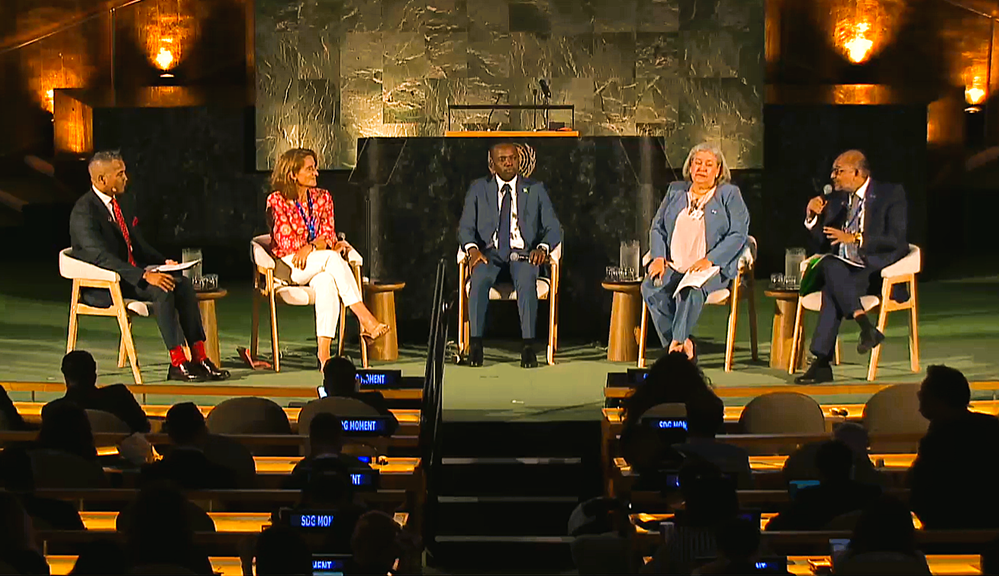
Speaking at the Leaders’ Dialogue on “Leading SDG Action” during the 2026 SDG Moment at the United Nations General Assembly Hall in New York, Dr. Titumir said the global financial system must move beyond simply financing development and instead create the conditions necessary to sustain it.

“Our broader vision should be collective and forward-looking: a global financial architecture that does not merely finance development, but creates the conditions in which development can be sustained,” he said. Dr. Titumir outlined five priorities for reforming the international financial architecture, particularly the role of multilateral development banks.

He called for a shift from responding to crises after they emerge toward anticipating vulnerabilities; greater representation and voice for vulnerable countries in international financial institutions; longer-term, lower-cost and predictable financing; closer alignment of international financing with national development strategies through coordinated, multi-year financing; and flexible transition support and preferential arrangements for countries graduating from the least developed country (LDC) category, including Bangladesh.

Bangladesh Adviser to the Prime Minister Dr. Rashed Al Mahmud Titumir speaks at the Leaders’ Dialogue on “Leading SDG Action” during the 2026 SDG Moment at the United Nations Headquarters in New York on September 18, 2026. Photo: Khabor

The Bangladeshi adviser also highlighted the country’s SDG Village initiative, describing it as an integrated, community-led approach to translating the Sustainable Development Goals into tangible improvements at the local level.

The 2026 SDG Moment, held on September 18 at UN Headquarters, brought together representatives of UN member states, international organizations and civil society to discuss accelerating action toward the Sustainable Development Goals ahead of the 2030 deadline.

The Leaders’ Dialogue also featured Teresa Ribera of the European Commission, Aristide Médénou, Minister of Economy and Finance of Benin, and Beatriz Carles de Arango, Minister for Social Development of Panama. The discussion was moderated by Sherwin Bryce-Pease of the South African Broadcasting Corporation.