Developing Nations Demand Greater Voice in Global AI Rules at UN

Shibbir AHmed, New York — Developing countries are calling for a greater role in shaping the global rules governing artificial intelligence, warning that the rapid expansion of AI could deepen existing economic inequalities if decisions about the technology remain concentrated in wealthy nations. The issue emerged prominently during discussions surrounding the 2026 United Nations General Assembly in New York, where leaders and officials from Africa, Asia and Latin America argued that developing countries should not be left simply to adopt technologies and standards designed elsewhere.

Thérèse Kayikwamba Wagner, foreign minister of the Democratic Republic of Congo, said developing countries should have a meaningful role in establishing international standards and norms for artificial intelligence. She warned that technological changes could reproduce longstanding economic inequalities unless countries in the developing world have a voice in determining how AI is governed.

The debate comes as governments and technology companies accelerate the development of increasingly powerful AI systems, while policymakers grapple with questions involving safety, economic disruption, employment, security and access to technology. United Nations Secretary-General António Guterres has compared the challenges posed by artificial intelligence with other major global risks, emphasizing the need for international cooperation and attention to power imbalances.

A UN Security Council discussion on artificial intelligence also brought technology leaders into the conversation. OpenAI CEO Sam Altman and Anthropic CEO Dario Amodei were among those discussing the importance of international cooperation on AI safety. For developing countries, however, the debate extends beyond safety.

Officials from those countries are increasingly focused on access to computing infrastructure, investment, digital skills, data, economic opportunities and participation in the institutions that will establish AI standards. The World Bank and International Monetary Fund have highlighted the potential economic benefits of AI for developing economies, while also warning that unequal access could widen the technological divide.

The stakes are particularly significant in Africa, Asia and Latin America, where governments are seeking to use AI to improve public services, education, health care, agriculture and economic productivity while confronting limited technological infrastructure.

The discussions at the United Nations therefore reflect a broader question about who will shape the next generation of global technology rules. As AI development accelerates, developing countries are pressing for an international framework in which they participate not only as consumers of artificial intelligence but also as decision-makers in determining how the technology is developed, governed and deployed.
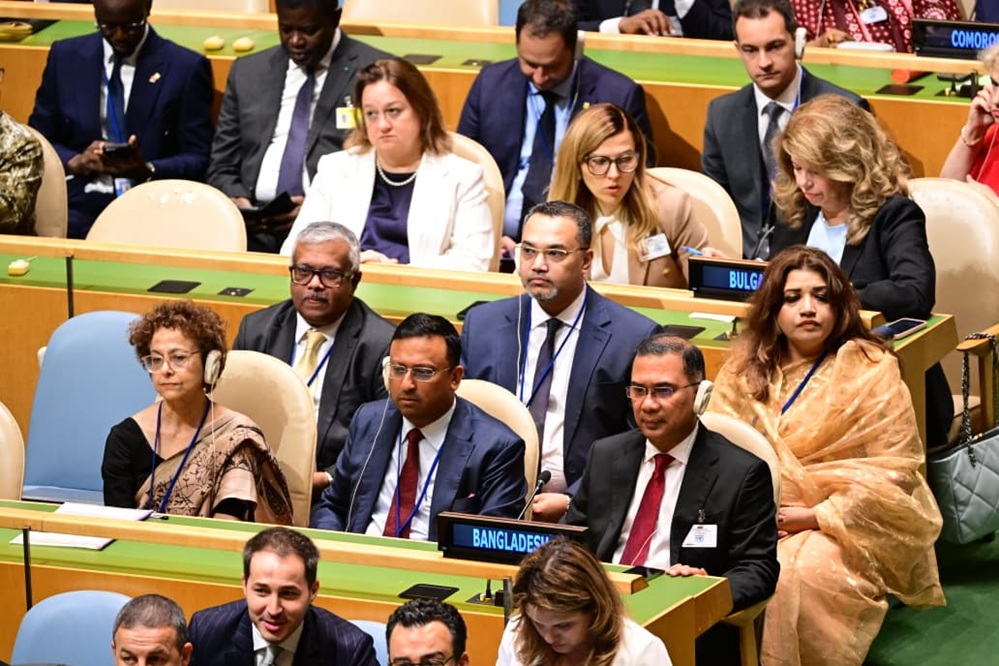


UN General Assembly 2026: Leaders Discuss Global Crises, AI

Shibbir AHmed, New York — World leaders and senior officials are continuing high-level diplomatic discussions at the 81st United Nations General Assembly in New York, with conflicts, artificial intelligence, climate change, development and international cooperation remaining central issues.

The General Assembly’s high-level week, which runs through September 28, has brought together leaders and representatives from across the world to address major global challenges and debate the future of multilateral cooperation.

The General Debate is scheduled to continue on September 28, following several days of speeches and diplomatic meetings focused on international security, regional conflicts, economic development and emerging global challenges.

Artificial intelligence has emerged as an important issue during this year’s UN discussions. Secretary-General António Guterres has called for stronger international governance of AI and warned that technological developments are moving faster than existing global institutions can respond.

The UN has also placed conflicts and international diplomacy at the center of the General Assembly agenda as governments seek diplomatic approaches to ongoing crises, including tensions in the Middle East. The UN General Assembly’s 81st session is being chaired by Bangladesh’s Khalilur Rahman. The session’s theme is “Restoring trust, managing transformation: A United Nations that delivers for all.”

A major UN meeting taking place today, September 28, is commemorating the 25th anniversary of the adoption of the Durban Declaration and Programme of Action, which focuses on combating racism, racial discrimination, xenophobia and related intolerance.

The high-level week has also included meetings on climate action, sea-level rise and pandemic preparedness, reflecting the broad range of issues being addressed by the international community.

As the high-level portion of the General Assembly concludes, diplomatic attention remains focused on how governments can address conflicts, technological risks and other global challenges through international cooperation.


PM Tarique Rahman Returns Home from New York After UNGA Visit

DHAKA — Prime Minister Tarique Rahman returned home Sunday morning after concluding a five-day visit to New York, where he attended the 81st session of the United Nations General Assembly (UNGA), delivered his maiden address to the General Debate and held a series of high-level bilateral and multilateral meetings. An Emirates flight carrying the prime minister, his wife Dr. Zubaida Rahman and members of his entourage landed at Hazrat Shahjalal International Airport at 8:21 a.m., according to PM’s Deputy Press Secretary Hasan Shiplu.

Local Government, Rural Development and Cooperatives Minister Dr. Abdul Moyeen Khan, Chief Whip Nurul Islam Moni, Prime Minister’s Defence Adviser Brigadier General (retd.) AKM Shamsul Islam, Whip Miah Nuruddin Ahmad Apu, local MP SM Jahangir Hossain, Cabinet Secretary Nasimul Ghani and Prime Minister’s Principal Secretary ABM Abdus Sattar received the prime minister at the airport.

Tarique Rahman left Dhaka on September 21 and reached New York the same day after a stopover in Istanbul. He departed New York on September 25 and travelled through Dubai before returning to Dhaka. During his four working days in New York, the prime minister took part in 30 engagements, including 11 bilateral meetings, eight UNGA-related engagements and 11 institutional meetings. The prime minister and members of his delegation collectively represented Bangladesh at around 80 engagements, according to BSS.

A major highlight of the visit was Tarique Rahman’s first address to the UNGA General Debate on September 24. In his speech, he outlined Bangladesh’s positions on global peace and security, sustainable development, climate change, economic cooperation and humanitarian issues, while calling for conflicts to be resolved through dialogue, diplomacy and cooperation.

The prime minister held bilateral meetings with the leaders of Türkiye, Iran, Pakistan, Croatia, Haiti, Bhutan and Thailand. He also met the vice president of the Maldives, the crown prince of Kuwait, the UAE’s deputy prime minister and foreign minister, the Saudi foreign minister and Sweden’s foreign minister. The discussions covered bilateral relations, trade and investment, economic cooperation, manpower exports, energy security, regional and international issues and other areas of mutual interest.

The Rohingya crisis was another major issue during the visit. Tarique Rahman called for stronger international support for the safe, voluntary and dignified repatriation of Rohingyas to Myanmar and discussed the issue with UN Secretary-General António Guterres, UN Special Envoy on Myanmar Julie Bishop and UN High Commissioner for Refugees Barham Salih.

Climate change and the impact of rising sea levels also featured prominently in the prime minister’s engagements. He called for stronger global action to reduce emissions, greater access to climate finance and technology, and international cooperation to address climate-induced displacement and loss and damage. At a Bangladesh-Sweden-UNFPA high-level event on midwifery, Tarique Rahman outlined his government’s vision of a “Healthy Bangladesh,” with primary healthcare at the centre of health-sector reform. He said the government plans to recruit additional health workers and professional midwives while developing an integrated digital health system.

Economic diplomacy was also a significant part of the visit. At a breakfast meeting with Wall Street representatives hosted by JPMorgan Chase, the prime minister discussed Bangladesh’s economic prospects, investment opportunities and potential partnerships. During the visit, Biman Bangladesh Airlines also signed an agreement with Boeing for the purchase of 11 aircraft as Bangladesh plans to expand its aviation sector and open new international routes.

Tarique Rahman also held meetings with World Bank Group President Ajay Banga, Gates Foundation CEO Mark Suzman, International Peace Institute President and CEO Zeid Ra’ad Al Hussein and UN High Commissioner for Human Rights Volker Türk, among others. On September 22, Tarique Rahman and Dr. Zubaida Rahman attended a welcome breakfast hosted by UN Secretary-General António Guterres for world leaders and their spouses before attending the opening of the UNGA General Debate. They later attended a reception hosted by US President Donald Trump for leaders participating in the General Assembly.

Dr. Zubaida Rahman also took part in several high-level engagements during the visit, including the UN General Assembly’s Platform of Women Leaders, the First Spouses’ Dialogue and a high-level event focusing on maternal and child health and midwifery. The New York visit marked Tarique Rahman’s first participation in the UN General Assembly as prime minister and included a broad programme of diplomatic, economic, humanitarian and multilateral engagements.


Tarique Rahman Joins 81st UN General Assembly General Debate

Shibbir Ahmed, New York – Prime Minister Tarique Rahman today attended the high level general debate of the 81st session of the United Nations General Assembly (UNGA) at the UN Headquarters here. The Prime Minister, accompanied by his wife Dr Zubaida Rahman, joined the debate at the North Delegates’ Lounge of the UN Headquarters at 9:00am (New York time), said PM’s Assistant Press Secretary K M Nazmul Haque.

UN Secretary-General Antonio Guterres addressed it, chaired by the president of UNGA 81st session and Bangladesh Foreign Minister Dr Khalilur Rahman. Upon his arrival at the venue, the Prime Minister was accorded a formal welcome. He then joined other world leaders at the high-level discussions of the prestigious global forum. The 81st UNGA session is focusing on a range of major global issues, including climate change, resolution of global conflicts, achievement of the Sustainable Development Goals (SDGs) and international economic cooperation.

On the sidelines of the session, Prime Minister Tarique Rahman is expected to hold a number of bilateral meetings with heads of state and government and representatives of various international organisations.

Prime Minister Tarique Rahman attended a high-level general debate of the 81st session of the UN General Assembly (UNGA) at the UN Headquarters. Photo: KHABOR

He will also deliver Bangladesh’s statement at the General Debate of the General Assembly, where he is expected to highlight global peacekeeping, climate justice and Bangladesh’s recent socio-economic development.

Foreign Affairs State Minister Humaiun Kobir, Shama Obaed Islam, Prime Minister’s Office spokesperson Mahdi Amin, senior government officials and Bangladesh’s Permanent Representative to the United Nations were also present during the session. The 81st session of the UN General Assembly formally commenced on September 8, while its General Debate began today.


Trump Defends Iran War, Warns of ‘Annihilation’ Without Deal in UN Speech

Shibbir Ahmed, New York — U.S. President Donald Trump used his address to the United Nations General Assembly on Tuesday to defend his administration’s military actions abroad, warn Iran of further escalation if it does not reach a peace agreement, and call for an end to the war in Ukraine. In a roughly 37-minute address at the 81st session of the UN General Assembly in New York, Trump outlined his foreign-policy priorities, including Iran, Ukraine, Venezuela, Cuba, Mexico, artificial intelligence and reform of the United Nations.

Trump strongly defended the U.S.-Israeli military campaign against Iran, saying the operation had prevented Tehran from obtaining a nuclear weapon. He warned that the United States could “annihilate” Iran if a peace agreement is not reached, while also saying he believes a deal could be reached after the U.S. midterm elections on Nov. 3.

“I believe we’ll make a deal right after the election because it doesn’t make sense for them not to,” Trump said. Trump also addressed the Russia-Ukraine war, saying the United States was working with both Moscow and Kyiv and expressing confidence that a settlement could be reached.

“We will get that one done,” Trump said, adding that an agreement could come sooner than many people expect. The president also highlighted U.S. actions in Venezuela and the wider Western Hemisphere. He said Washington would not allow threats against the United States to establish a foothold in the region and said the country would use its military power when necessary to protect what he described as vital U.S. national interests.

On Cuba, Trump described the country as a failed state and said his administration was seeking fundamental political change there. “Communism will never be coming to America, but freedom will be coming to Cuba,” he said. Members of the Cuban delegation walked out of the General Assembly hall while Trump was discussing Cuba, Reuters reported.

Trump also criticized Mexico over drug-cartel violence and described the fight against cartels as a major U.S. security priority. He said his administration had carried out strikes against cartel groups and argued that the United States needed to take stronger action against organizations it considers terrorist threats.

Artificial intelligence was another major theme of the speech. Trump said his administration would use the term “super intelligence” rather than artificial intelligence in official communications and argued against international restrictions that could limit technological development.

He said the United States was leading China and other countries in the AI race and argued that AI could become more transformative than the Industrial Revolution. Trump also renewed his criticism of the International Criminal Court, urging member countries to withdraw and arguing that the court should not have jurisdiction over U.S. military personnel.

Turning to the United Nations itself, Trump said the organization had significant potential but called for further reforms, including reductions in bureaucracy and spending. He criticized what he described as the influence of “globalist bureaucrats” and said the United States would continue pushing for changes at international institutions.

The speech comes as world leaders gather in New York amid continuing conflicts in the Middle East and Ukraine, uncertainty over global economic conditions and growing debate over the international governance of artificial intelligence. The UN’s 81st General Assembly general debate runs from Sept. 22 through Sept. 28.


Melania Trump Expands Global Coalition for Children at UN General Assembly

Shibbir Ahmed, New York — U.S. First Lady Melania Trump on Tuesday announced an expansion of her Fostering the Future Together initiative, bringing together representatives from 57 countries and unveiling new international events and private-sector technology partnerships focused on children’s education and access to technology. The announcement came during the 81st United Nations General Assembly in New York, where Trump reconvened members of the coalition and welcomed representatives from countries including the United Kingdom, South Korea, the Philippines, Poland, Ukraine, Türkiye, the United Arab Emirates, Panama and Canada.

“Together, we are a beautiful range of cultures, languages, histories, and traditions. And yet, we stand unified around one everlasting truth: the future of our world will be determined by what we do for our children today,” Trump said.

Fostering the Future Together was launched by Trump during the 80th UN General Assembly in September 2025 as a global coalition aimed at promoting children’s education, technology access and digital safety. The White House says the initiative focuses on the use of advanced technology, including artificial intelligence, to support children, educators and parents while addressing online risks.

The coalition held its inaugural two-day global summit in Washington in March, bringing together first spouses or equivalent leaders from 45 countries and technology-sector representatives. The White House described the gathering as the largest international assembly of its kind hosted by a U.S. first lady at the White House.

At Tuesday’s event, Trump announced several upcoming regional and international gatherings. They include a G20 event to be hosted by Trump in Miami in December, an ASEAN conference hosted by Philippine First Lady Liza Araneta Marcos in Manila, a European regional meeting hosted by Polish First Lady Marta Nawrocka, and a Caribbean regional meeting hosted by Saint Kitts and Nevis First Lady Diani Prince-Drew.

“When nations speak with one voice, the world listens. Our collective influence is profound. Together, we can open doors, move markets, shape policy. And most importantly, we can change lives for the better,” Trump said.

The initiative is also expanding its cooperation with the technology sector. The U.S. State Department said Monday that seven technology companies — Adobe, Amazon, Google, Intel, N50, Starlink and Zoom — had announced partnerships involving more than 15 countries to expand educational and technological opportunities for children and young people.

Amazon separately said it is supporting the coalition with AI-powered learning tools and digital-skills initiatives for students. Trump said access to technology by itself was not enough and called for children to be taught how to use new technologies responsibly.

“Access alone is not empowerment. We must give our children the tools—and teach them how to use those tools wisely,” she said. She cited artificial intelligence, video communications, mobile computing, self-driving vehicles, virtual environments and biometric identification as examples of technologies that are increasingly part of everyday life.

The coalition’s stated focus includes four areas: AI in education, education technology, online protection and digital skills, according to the State Department. Trump urged participating first spouses and leaders to work together despite differences among their countries. “Years from now, our children may not remember the meetings we held or the speeches we gave. But they will live with the consequences of what we do here,” she said.

She added that the coalition should seek to help young people expand their imagination, explore new areas of knowledge, take calculated risks and contribute to the advancement of society. The White House says Fostering the Future Together has no membership fees and that participating countries are responsible for any indirect costs associated with their own engagements, including travel.


US, Japan, South Korea Reaffirm North Korea Denuclearization Commitment

Shibbir Ahmed, New York — The United States, Japan and South Korea have reaffirmed their commitment to the complete denuclearization of North Korea while calling for the resumption of dialogue with Pyongyang.

U.S. Secretary of State Marco Rubio, Japanese Foreign Minister Toshimitsu Motegi and South Korean Foreign Minister Cho Hyun met in New York on the sidelines of the United Nations General Assembly High-Level Week. In a joint statement released September 21, the three countries also pledged to strengthen cooperation on regional security, economic resilience and emerging technologies.

The three ministers reiterated their opposition to support that generates revenue for North Korea’s nuclear and ballistic missile programs, in line with relevant UN Security Council resolutions. At the same time, they said the path to dialogue remains open and called on Pyongyang to return to negotiations.

Washington, Tokyo and Seoul also welcomed international efforts to monitor North Korea’s violations and evasion of UN sanctions. They highlighted cooperation against North Korean cyber threats and activities involving North Korean IT workers. The statement also addressed humanitarian issues, including abductees, detainees, unrepatriated prisoners of war and separated families.

Focus on Economic Security

Economic security was another major topic of the trilateral meeting. The three countries said they would work to strengthen free and transparent trade and protect critical supply chains. They agreed to enhance their trilateral Supply Chain Early Warning System and welcomed a new consultation mechanism on economic security.

The countries also discussed energy security, including greater regional cooperation and increased oil stockpiles. They said they would advance implementation of a July 7 trilateral agreement aimed at accelerating small modular reactor deployments while maintaining nuclear safety, security and nonproliferation standards. The three governments further pledged cooperation in artificial intelligence, quantum technology, digital infrastructure, biotechnology and semiconductors.

Taiwan Strait and Regional Security

The United States reiterated its defense commitments to Japan and South Korea, including extended deterrence commitments. The three ministers also stressed the importance of peace and stability across the Taiwan Strait. They called for peaceful resolution of cross-Strait issues and opposed unilateral attempts to change the status quo.

They also reaffirmed support for freedom of navigation and overflight and lawful commerce in the Indo-Pacific and globally, consistent with international law and the UN Convention on the Law of the Sea.

The statement also announced trilateral cooperation with the UN Office on Drugs and Crime to combat organized crime, particularly scam centers in Southeast Asia. The three countries agreed to continue cooperation on maritime security, law enforcement, disaster relief and Arctic issues. The ministers concluded by committing to continue trilateral meetings and strengthen cooperation at regional and global levels.


BNP-Awami League Tensions Escalate in New York, Riot Police Intervene

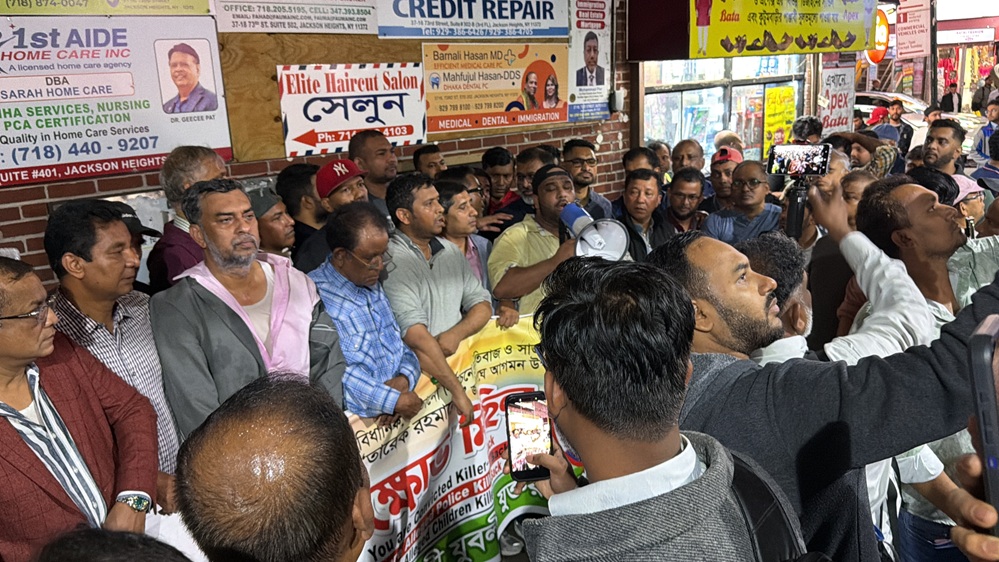
NEW YORK — Tensions between supporters of Bangladesh’s ruling Bangladesh Nationalist Party (BNP) and the opposition Awami League escalated in New York’s Jackson Heights on Sunday evening, September 20, as rival groups gathered for competing programmes ahead of Prime Minister Tarique Rahman’s visit to the city for the 81st session of the United Nations General Assembly.

The situation at Diversity Plaza became increasingly tense as supporters of the BNP gathered to welcome Tarique Rahman, while a large group of Awami League activists assembled nearby chanting, “Wherever Tarique goes, resistance will follow.”

The two sides initially exchanged competing slogans before the confrontation reportedly escalated into pushing, shoving and verbal altercations. The BNP alleged that several banners welcoming Tarique Rahman were torn down by Awami League activists, further intensifying tensions.

A section of the Awami League gathering during the tense face-off between Awami League and BNP supporters at Diversity Plaza in Jackson Heights. Photo: Khabor

According to witnesses, several hundred activists from both sides were involved in the confrontation. Multiple teams of the New York Police Department responded to the scene after receiving reports of the escalating situation. More than 50 riot-control officers subsequently moved between the two groups and attempted to keep them separated.

Police eventually intervened more forcefully as the two sides continued their confrontation. The area remained crowded with competing chants, while traffic was temporarily disrupted. Pedestrians moved away from the scene as police worked to prevent the situation from escalating further.

The confrontation comes as Bangladeshi political groups in New York prepare for a series of activities surrounding Tarique Rahman’s visit. BNP supporters have been organizing welcome programmes in Jackson Heights and elsewhere in the city. Recent reporting also confirms that BNP activists gathered in Jackson Heights ahead of the prime minister’s arrival.

Tarique Rahman left Dhaka on September 21 to attend the 81st UN General Assembly. According to Bangladesh Sangbad Sangstha (BSS), he is scheduled to arrive at John F. Kennedy International Airport at about 5:55 p.m. New York time after a stopover in Istanbul. He is scheduled to address the General Assembly on September 24 and depart New York for Dhaka on September 25.

New York police officers remove BNP supporters from the area during the tense confrontation between Awami League and BNP supporters at Diversity Plaza in Jackson Heights. Photo: Khabor

The United Nations’ high-level week for the 81st General Assembly is scheduled for September 22–29, with the general debate taking place from September 22 to 26 and again on September 28.

Meanwhile, Awami League leader Imdad Chowdhury said the party is preparing to mobilize about 1,000 activists at JFK Airport as part of its “Wherever Tarique, Resistance There” programme. He said permission had been obtained from the relevant airport authorities for the gathering.

BNP leader Golam Faruk Shaheen, meanwhile, said hundreds of BNP supporters would gather at JFK Airport to welcome Tarique Rahman. He also said the BNP had obtained the necessary authorization for its programme.

A section of the Awami League gathering during the tense face-off between Awami League and BNP supporters in Jackson Heights. Photo: Khabor

The competing plans are expected to require additional security measures at the airport. Police may establish separate areas and security barriers to keep the two groups at a safe distance from each other.

Security arrangements are also being heightened in New York during the UN General Assembly’s high-level week, when heads of state, government leaders and senior officials from around the world gather at the United Nations headquarters. The UN’s official schedule places the 81st General Assembly’s high-level week from September 22 through September 29.

The latest confrontation in Jackson Heights has raised concerns within the Bangladeshi-American community about the possibility of further tensions during Tarique Rahman’s visit, particularly around the airport and other locations where competing political groups are expected to gather.


PM Tarique Heads to New York, to Address UNGA on Sept. 24

DHAKA — Prime Minister Tarique Rahman will leave Dhaka on Monday for New York to attend the 81st session of the United Nations General Assembly and is scheduled to address the General Debate on September 24, the Foreign Ministry said Sunday. Foreign Secretary Asad Alam Siam told reporters at the Ministry of Foreign Affairs that the prime minister’s address will outline the government’s positions on Bangladesh’s democratic transition and a range of national and global issues.

According to the Foreign Secretary, Tarique Rahman is expected to speak about the rule of law and accountability, global peace and security, climate change, sustainable development and economic cooperation. He is also expected to highlight youth and women’s empowerment, education and health, the Rohingya crisis, equitable access to modern technology and reform of the multilateral system.

The visit will mark Tarique Rahman’s first participation in the UN General Assembly as Bangladesh’s prime minister. It will also be the first appearance at the UN’s highest-level global forum by the incumbent government, according to the Foreign Secretary. Bangladesh’s Foreign Minister is serving as president of the 81st General Assembly session, which officials described as an additional significance for the country’s participation this year.

Packed diplomatic schedule

Tarique Rahman’s official engagements are scheduled to begin on September 22 with a welcome breakfast hosted by UN Secretary-General António Guterres for heads of state and government. He is also scheduled to attend the opening of the high-level segment and a reception hosted by the U.S. president for heads of state and government and their spouses.

On September 23, the prime minister is expected to meet representatives of international charitable and humanitarian organizations. He will also participate in a high-level meeting on global inequality and attend a meeting on climate action and a just transition.

The Rohingya crisis will be another major focus of the visit. At a side event on the crisis, Tarique Rahman is expected to call for greater international cooperation to facilitate the earliest possible repatriation of Rohingyas to Myanmar. At climate-related meetings, Bangladesh is expected to emphasize issues including climate finance, adaptation, technology transfer, loss and damage, and climate justice.

Sea-level rise and maternal health

On September 24, the prime minister is scheduled to deliver opening remarks at a high-level UN meeting addressing the threats posed by sea-level rise. The United Nations has scheduled the high-level meeting for September 24 at its New York headquarters. The meeting will bring together world leaders and other stakeholders to discuss international cooperation and practical measures to address the growing impacts of rising sea levels, particularly on vulnerable coastal and low-lying countries.

Tarique Rahman is also scheduled to address a Bangladesh-hosted side event on maternal and newborn health and midwifery. He is expected to outline government initiatives concerning maternal and child health and emphasize the importance of trained midwifery services.

Bilateral meetings

On the sidelines of the General Assembly, the prime minister is scheduled to hold bilateral meetings with the crown prince of Kuwait and the prime ministers of Croatia, Bhutan, Thailand, Pakistan and Haiti. According to the Foreign Secretary, the meetings are expected to cover bilateral political and economic relations, trade and investment, development cooperation, the Rohingya crisis and other issues of mutual interest.

Tarique Rahman is also expected to meet UN Secretary-General António Guterres, the president of the European Council, the president of the World Bank Group, the UN Secretary-General’s special envoy on Myanmar, and the UN high commissioners for refugees and human rights. He is additionally scheduled to meet the president of the International Peace Institute.

Focus on investment and economic diplomacy

Economic diplomacy will also feature during the visit, with meetings planned between the prime minister and senior representatives of Meta, Wall Street and other business organizations. The discussions are expected to focus on Bangladesh’s investment environment, manufacturing, infrastructure and technology, human-resource and skills development, and employment opportunities for young people.

The prime minister is scheduled to leave New York for Dhaka on the night of September 25. The Foreign Secretary said the government hopes the visit will help expand Bangladesh’s bilateral and multilateral cooperation and present its priorities to the international community.


UN General Assembly 2026: World Leaders Gather in New York

Shibbir Ahmed, New York: World leaders are converging on New York as the United Nations prepares for the high-level week of its 81st General Assembly, with wars, global security, artificial intelligence, climate change and the future of multilateral cooperation expected to dominate discussions. The high-level segment of the 81st session will take place at United Nations Headquarters in New York beginning September 22, with the General Debate continuing through September 26 and September 28. Nearly 130 heads of state and government are expected to participate in the annual gathering, according to current reporting.

The theme of this year’s General Assembly is “Restoring Trust, Managing Transformation: A United Nations That Delivers for All.” The 81st session officially opened on September 8. The gathering comes at a time of heightened international tensions, with the wars in the Middle East and Ukraine, global energy and food-security concerns, and the rapid development of artificial intelligence among the major issues facing governments.

The Middle East is expected to feature prominently in diplomatic discussions. The Ukraine war will also remain a major international issue, while leaders are expected to discuss humanitarian concerns and the broader challenges facing the international system. Reuters reported that the UN is also facing financial pressures and questions about its role in responding to major global crises.

AI emerges as a major global issue

Artificial intelligence is expected to receive significant attention during this year’s UN meetings. UN officials and governments are examining how the international community can establish appropriate rules and cooperation mechanisms as AI technology develops rapidly.

OpenAI CEO Sam Altman is also scheduled to brief the UN Security Council during the General Assembly week at an open session focused on artificial intelligence and international security. The meeting is expected to address both the opportunities and security risks associated with rapidly advancing AI technologies.

Climate, sea-level rise and pandemic preparedness

The General Assembly’s formal program includes several high-level meetings dealing with major global challenges. A high-level meeting on the 40th anniversary of the Declaration on the Right to Development is scheduled for September 23. On September 24, world leaders will address the existential threats posed by sea-level rise, while September 25 will focus on pandemic prevention, preparedness and response. A meeting commemorating the 25th anniversary of the Durban Declaration and Programme of Action is scheduled for September 28.

Climate change and sustainable development are also expected to feature prominently throughout the week as governments discuss efforts to accelerate progress toward the Sustainable Development Goals.

Diplomatic meetings beyond the General Debate

The UN General Assembly week traditionally provides an opportunity for leaders to hold numerous bilateral and multilateral meetings on the sidelines of the formal sessions. The European Union, for example, is planning several meetings and initiatives during the week, including a Partners for Multilateralism, International Law, Peace and Prosperity Summit on September 21, co-hosted by the European Council, Canada and Kenya.

The annual gathering is therefore expected to turn New York into the center of international diplomacy, with leaders using the week not only to address the General Assembly but also to negotiate and discuss issues affecting global peace, security, development and international cooperation.

With conflicts continuing in several regions and governments facing new challenges from technology, climate change and economic pressures, the 81st General Assembly is set to become one of the year’s most closely watched international diplomatic gatherings.