U.S. Election Security Faces Foreign Interference Threats Ahead of 2026 Midterms

Shibbir Ahmed, Washington DC — U.S. intelligence agencies are monitoring efforts by Russia and other foreign adversaries to influence the 2026 midterm elections through disinformation and efforts to undermine public confidence in the electoral process, according to U.S. lawmakers and officials cited in a report published Sunday. The intelligence assessment comes as state election officials prepare for the November elections amid concerns about the ability of the federal government and states to respond to foreign interference and other election-related threats.

According to the Washington Post, U.S. intelligence agencies expect Russia to use digital disinformation and other influence operations to sow distrust in the 2026 election results and deepen political divisions in the United States.

However, U.S. intelligence agencies have not detected evidence that foreign adversaries are capable of directly manipulating voting machines or vote counts, the report said. The assessment places renewed attention on election security as Americans approach the November midterm elections, when all 435 seats in the House of Representatives and 35 Senate seats are scheduled to be contested.

Foreign interference in U.S. elections has increasingly focused on information operations rather than direct manipulation of voting equipment. Officials say adversaries can use social media, fabricated material and coordinated online campaigns to spread false or misleading claims about candidates, voting procedures and election results. The objective can be to create confusion, increase distrust and deepen existing political divisions.

The latest intelligence assessment specifically identifies Russia as a continuing source of concern, while also referring to efforts by other foreign adversaries. The concerns come as election officials across the country work to protect voting infrastructure and maintain public confidence in the electoral process.

The Washington Post reported that state officials are concerned about changes to the federal government’s election-security infrastructure and its ability to coordinate effectively with states ahead of the midterms. Election administration in the United States is highly decentralized, with states and local jurisdictions responsible for conducting elections. That structure means cybersecurity, physical security, voter-registration systems and election-related communications involve federal, state and local authorities.

The federal government has nevertheless played a significant role in identifying and responding to foreign threats, particularly through intelligence and cybersecurity agencies. The Defense Department has also recently directed its personnel to strengthen efforts against foreign interference in U.S. elections. An Axios report published September 28 said Defense Secretary Pete Hegseth issued a directive instructing the department to use intelligence and cyber capabilities against foreign actors seeking to interfere in U.S. elections.

The foreign-interference threat is unfolding alongside intense domestic political disputes over election administration. Democrats in Congress have been conducting contingency planning for possible disruptions surrounding Election Day, including scenarios involving misinformation, federal involvement at polling locations and disputes over election results. CNN reported that Senate Democrats have held closed-door discussions with legal experts and former officials to prepare for a range of possible election-day scenarios.

Those scenarios are political contingency plans rather than evidence that the events described will occur. At the same time, federal officials have continued investigations into alleged election-related violations, including suspected illegal voting and registration offenses. The Associated Press reported last month that federal investigations since January 2025 had resulted in approximately 1,600 voter-fraud cases and 160 arrests, although election-law experts emphasized that such cases represent a very small share of the country’s more than 211 million active registered voters.

Despite the warnings about foreign influence operations, the distinction between influencing voters and manipulating votes remains critical. The latest intelligence assessment cited by the Washington Post found no evidence that foreign adversaries can directly interfere with voting machines or alter vote counts. The primary concern is therefore the integrity of the information environment surrounding the election: whether voters receive accurate information, whether false claims can spread rapidly online and whether foreign actors can exploit political divisions to undermine confidence in legitimate election results.

With the November midterms approaching, federal and state authorities face the challenge of countering foreign influence while maintaining public confidence in an election system administered largely at the state and local levels. The 2026 election-security debate is consequently developing on two separate fronts: protecting the technical process of voting and protecting public trust in the results.


Russia Backs India’s Bid for Permanent UN Security Council Seat

Shibbir Ahmed, New York — Russia has backed India’s bid for a permanent seat on the United Nations Security Council, with Foreign Minister Sergey Lavrov calling for greater representation of Asia, Africa and Latin America in the powerful UN body. Speaking during the general debate of the 81st United Nations General Assembly in New York on Saturday, Lavrov said Moscow supports the candidacies of both India and Brazil for permanent membership of the Security Council.

“We are in favour of broadening the representation of Asia, Africa, and Latin America. We support Brazil’s and India’s candidatures for a permanent seat,” Lavrov said, according to reports of his UNGA address. Lavrov also said Russia opposed allocating additional permanent seats to Western countries, specifically mentioning Germany and Japan. He argued that any reform of the Security Council should preserve the prerogatives of its existing permanent members while increasing representation from the Global South.

The Security Council currently has 15 members, including five permanent members — China, France, Russia, the United Kingdom and the United States — which hold veto power. The remaining 10 members are elected for two-year terms. India has for years sought a permanent seat on the Security Council as part of broader efforts to reform the UN’s principal body responsible for international peace and security. India has argued that the Council’s composition should better reflect contemporary geopolitical and economic realities.

Russia’s latest statement adds to recent international support for India’s bid. During the current UNGA session, Mauritius and Portugal also expressed support for India’s candidature, while other countries have called for broader reform of the Security Council. The issue of Security Council reform has gained renewed attention at the 81st UN General Assembly, where countries from the Global South have continued to call for greater representation in the UN’s decision-making institutions.

Russia’s position, however, distinguishes between the countries seeking permanent membership. While Moscow supports India and Brazil, Lavrov opposed additional permanent seats for Germany and Japan, according to reports of his speech. The debate over expansion of the Security Council remains subject to negotiations among UN member states, and Russia’s support for particular candidates does not itself change the Council’s membership.


Russia and China Veto US-Backed Iran Sanctions Monitoring Resolution

Shibbir Ahmed, New York — Russia and China on Thursday vetoed a U.S.-drafted United Nations Security Council resolution that sought to extend the mandate of a panel of experts monitoring international sanctions on Iran. The resolution received 11 votes in favor, while Pakistan and Somalia abstained. The Russian and Chinese vetoes blocked its adoption.

The proposed resolution would have extended the mandate of the independent panel of experts for another year. The panel was established to monitor implementation of sanctions imposed on Iran and report possible violations to the 15-member Security Council.

The vote comes amid a wider dispute over the legal status of UN sanctions on Iran. Western countries, including Britain, France and Germany, triggered the “snapback” mechanism under the 2015 Iran nuclear agreement in 2025, arguing that Tehran had violated its nuclear commitments. The move resulted in the reimposition of UN sanctions.

Russia and China reject the Western interpretation and argue that the UN sanctions had expired when Security Council Resolution 2231 reached its scheduled end date in October 2025. Russian Ambassador Vassily Nebenzia said the U.S.-backed resolution lacked a legal basis and urged the parties to resolve the nuclear dispute through political and diplomatic means.

The United States criticized the vetoes, saying the absence of an independent panel would create a gap in monitoring sanctions violations. U.S. Deputy Ambassador Jennifer Locetta said the panel provided impartial, evidence-based reporting on potential violations.

France and other Western members also criticized the veto, while stressing that the veto does not itself remove the sanctions that they consider to remain in force. The dispute has also left the Security Council divided over how to monitor Iran’s nuclear-related activities and enforce sanctions. The UN sanctions include measures affecting Iranian assets, arms-related transactions and ballistic-missile activities.

The latest vote highlights continuing divisions among the permanent members of the Security Council over Iran’s nuclear program, the validity of the sanctions and the role of international monitoring.


Rooppur to Supply 300MW Next Month

DHAKA — Russian Ambassador to Bangladesh Alexander Grigoryevich Khozin has said the Rooppur Nuclear Power Plant is expected to supply 300 megawatts (MW) of electricity to Bangladesh’s national grid by next month.

The ambassador made the remarks during a courtesy meeting with Federation of Bangladesh Chambers of Commerce and Industry (FBCCI) Administrator Md Fazlul Hoque at the FBCCI office in Gulshan on Wednesday afternoon. Khozin said work is underway to resolve technical issues at the nuclear power plant, with nearly 4,000 Russian experts and engineers currently involved in the process.

During the meeting, the Russian envoy also agreed to jointly establish a Russia-Bangladesh Business Council aimed at expanding trade, investment and broader economic cooperation between the two countries.

He said Russia is also planning to organize a Russia-Bangladesh Business Forum in Moscow, providing an opportunity for businesses from both countries to establish direct contacts and explore potential partnerships.

According to the ambassador, a formal announcement about the proposed forum is expected during a meeting of the Intergovernmental Commission, scheduled to be held in Dhaka in early November. The business forum is expected to facilitate greater interaction between Bangladeshi and Russian traders and create new opportunities for bilateral business cooperation.

To further strengthen trade ties, FBCCI Administrator Fazlul Hoque urged Russia to give greater priority to Bangladesh’s ready-made garment (RMG) sector, along with other emerging areas of mutual economic interest. The discussions highlighted the two countries’ interest in expanding economic and commercial relations while exploring new avenues for investment and private-sector cooperation.


Up to 101,000 North Korean Workers Still Deployed Overseas

Shibbir Ahmed, NEW YORK — North Korea continues to deploy tens of thousands of workers overseas in violation of United Nations sanctions, generating hundreds of millions of dollars that the country’s government allegedly uses to support its nuclear weapons and ballistic missile programs, according to a new report released Wednesday by the Multilateral Sanctions Monitoring Team (MSMT).

The MSMT, a multilateral mechanism established in October 2024 to monitor implementation of UN sanctions against North Korea, estimated that between 35,600 and 101,280 North Korean workers remain deployed abroad, with nearly all located in China and Russia.

The report says the overseas labor network generated an estimated $450 million to $800 million in 2025, despite UN Security Council resolutions requiring member states to end such employment and repatriate North Korean nationals earning income in their territories.

According to the MSMT, at least 17 countries are suspected of continuing to host North Korean workers. The UN Security Council adopted measures in 2017 under Resolutions 2375 and 2397 that prohibited member states from providing work authorization to North Korean nationals and required countries to repatriate North Koreans earning income in their jurisdictions by the end of 2019.

China and Russia remain major destinations

The report estimates that between 20,000 and 70,000 North Korean workers are deployed in China. While an estimated 10,000 to 20,000 workers were temporarily repatriated from China between 2023 and 2025, the MSMT said approximately 10,000 new North Korean workers arrived in China between January 2025 and January 2026. Russia has also become a major destination for North Korean laborers. The MSMT estimates that between 15,000 and 30,000 North Korean workers were in Russia at the end of 2025.

The report says some North Korean workers in Russia have been involved in manufacturing military drones and other activities connected to Russia’s defense-industrial sector. The MSMT identified North Korean workers at facilities involved in areas including drone production, arms manufacturing, steel processing and shipbuilding. The report also says Russia has used a student-visa scheme that the MSMT considers a mechanism for disguising some North Korean workers as students.

Most wages allegedly seized by North Korea

The MSMT estimates that North Korean authorities confiscate 80% to 90% of workers’ wages. In some cases, the report says, the amount taken can exceed workers’ actual earnings, leaving them indebted to the North Korean government.

North Korean authorities also maintain strict controls over workers’ movements and contacts with outsiders, according to the report. Workers who attempt to defect face the risk of retaliation against family members who remain in North Korea.

The report estimates that a North Korean worker in Russia generates an average of about $7,500 in annual wages, while monthly earnings can be several times higher than those of workers in China, depending on the industry.

MSMT seeks restoration of UN expert panel

The latest report also addresses the monitoring gap created after the UN Security Council’s 1718 Committee Panel of Experts was disbanded in April 2024 following Russia’s veto of a resolution extending its mandate. The MSMT said its latest findings are intended to help the international community implement existing UN sanctions and identify efforts to circumvent them.

The participating governments called for the UN Security Council to reestablish the Panel of Experts with the same strength and structure it had before its dissolution. The MSMT said it will continue monitoring implementation of UN sanctions related to North Korea and reporting suspected violations and sanctions-evasion activities.

The participating governments also urged UN member states to increase awareness of the risks associated with employing North Korean overseas laborers and to take domestic action against parties and facilitators involved in alleged violations of UN sanctions.

Source: Multilateral Sanctions Monitoring Team (MSMT); joint statement by participating governments.


US Sanctions Russian VTB Bank Over Iran Sanctions Evasion

Shibbir Ahmed, New York — The United States has imposed new sanctions on Russia’s VTB Bank, accusing the major financial institution of helping Iran evade U.S. sanctions and establishing correspondent banking relationships with sanctioned Iranian banks. The U.S. Department of the Treasury’s Office of Foreign Assets Control (OFAC) announced the action on September 14 under the administration’s Operation Economic Outcast, a campaign aimed at disrupting the Iranian regime’s financial networks and sources of revenue.

“Under Operation Economic Outcast, Treasury will continue to target and disrupt those who provide material, technological, or financial support that allows the Iranian regime to sustain its terrorist enterprise,” Treasury Secretary Scott Bessent said. Bessent added that the United States would continue identifying, exposing and isolating individuals and institutions that support the Iranian regime.

VTB Accused of Expanding Ties With Iran

According to the Treasury Department, VTB Bank, one of Russia’s largest financial institutions, has expanded its banking presence in Iran in recent years as Moscow and Tehran have sought to deepen economic and trade ties.

U.S. authorities said VTB established correspondent banking relationships with Iranian financial institutions already under sanctions and began taking additional steps to expand its presence in Tehran in January 2025.

The Treasury Department also accused the bank of helping establish a settlement mechanism using Iranian rials and Russian rubles through correspondent accounts, with the aim of facilitating bilateral trade. U.S. officials further alleged that VTB took steps to move billions of dollars in frozen Iranian assets.

Operation Economic Outcast

The Treasury Department announced Operation Economic Outcast on August 24, describing the campaign as an effort to sever the remaining economic lifelines supporting the Iranian regime. The operation focuses on financial networks involved in oil smuggling, sanctions evasion and the financing of Iran’s security apparatus, terrorist proxies and other affiliated networks.

Washington has warned foreign financial institutions that continuing significant business with sanctioned Iranian entities could expose them to secondary sanctions and potentially restrict their access to the U.S. financial system. The Treasury Department said it is also working with partners in the European Union, the United Kingdom and Gulf countries to target financial channels connected to Iran.

VTB Already Under U.S. Sanctions

The latest action is not the first time VTB Bank has been targeted by the United States. OFAC previously designated VTB in January 2025 under sanctions authorities targeting Russia’s financial sector. The bank was also sanctioned in February 2022 over its ties to the Russian government and its operations in Russia’s financial services sector. The new designation adds Iran-related sanctions exposure to the bank’s existing restrictions.

Assets Blocked

Under the latest action, all property and interests in property belonging to VTB Bank that are located in the United States or held by U.S. persons are blocked and must be reported to OFAC. U.S. persons are generally prohibited from conducting transactions involving the blocked property unless authorized by OFAC or covered by an applicable exemption. The restrictions also extend to entities that are owned, directly or indirectly, 50% or more by one or more blocked persons.

Foreign financial institutions engaging in certain significant transactions involving designated entities may also face the risk of secondary sanctions, including restrictions on their ability to maintain correspondent or payable-through accounts in the United States.

The Treasury Department said the latest action sends a broader warning to foreign banks and businesses that facilitate Iran’s efforts to circumvent U.S. sanctions. Washington is expected to continue targeting financial institutions and other entities that it says provide Iran with access to international financial networks.


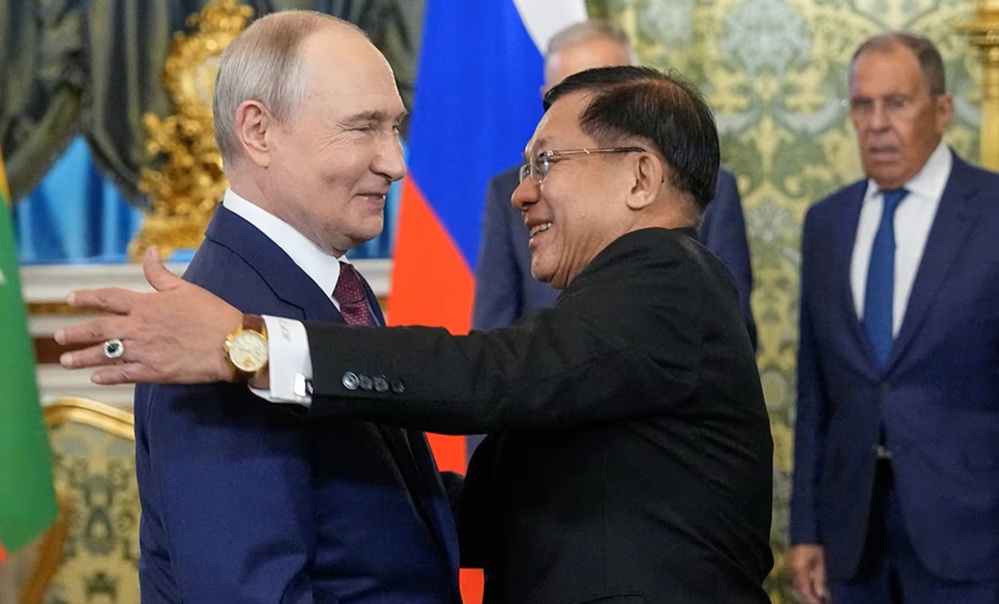
Russia Deepens Role in Myanmar’s Dawei Deep-Sea Port Project

Shibbir Ahmed, New York — Russia is deepening its involvement in Myanmar’s long-delayed Dawei deep-sea port and special economic zone project, as the two countries seek to revive the strategic development in the country’s southern Tanintharyi Region.

The Dawei project, which includes a deep-sea port, industrial zone and major energy facilities, has returned to the center of Myanmar-Russia economic cooperation after years of delays over financing and implementation.

During a meeting in Vladivostok on September 1, Myanmar Vice President U Nyo Saw and Russian Deputy Prime Minister Yury Trutnev discussed the Dawei project along with energy, trade and tourism cooperation. No new financing agreement, project value or construction timetable was announced following the meeting.

Russia’s interest in Dawei has become more concrete in recent months. In June, Myanmar’s Launglon Economic Development Company and Russia’s state-controlled Inter RAO signed a memorandum of understanding for a power plant linked to the Dawei deep-sea port project.

At a Russia-Myanmar business forum in Moscow in August, Russian Economic Development Minister Maxim Reshetnikov said Moscow was seeking majority stakes for Russian companies investing in projects within the Dawei special economic zone during the investment payback period. The planned development includes a deep-water port, a 660-megawatt power plant, an oil refinery and industrial and warehouse facilities.

Strategic location

Dawei is located on Myanmar’s Andaman Sea coast in Tanintharyi Region. Supporters of the project say its location could provide an alternative trade route between the Indian Ocean and Southeast Asia, potentially reducing dependence on the Strait of Malacca.

Myanmar officials have promoted the project as a potential gateway linking the Indian Ocean with Thailand and other parts of the region. The proposed transport connections could eventually link Dawei with Thailand’s eastern economic areas and the wider Southern Economic Corridor.

The project was originally developed with Thai participation but stalled after difficulties securing financing and implementing the required infrastructure. Myanmar’s official port authority records show that the earlier agreement with Italian-Thai Development was terminated after the developer failed to secure the required funding.

Military campaign around project area

The renewed push to revive Dawei has coincided with an intensified military campaign in areas surrounding the proposed development. Reuters reported in August that Myanmar’s military had deployed hundreds of troops to clear areas designated for the Russia-backed Dawei special economic zone. The operation involved fighting with local resistance groups and the displacement of civilians.

Human rights organization Fortify Rights separately reported allegations of killings, torture and forced displacement during military operations around the project area. The organization said the operations were taking place against the backdrop of accelerating Myanmar-Russia cooperation over Dawei.

Despite renewed political support from Moscow and Naypyidaw, major questions remain over financing, security and the feasibility of completing the multibillion-dollar project amid Myanmar’s continuing conflict.

If successfully revived, Dawei could become one of the most strategically significant infrastructure projects on Myanmar’s Andaman Sea coast, with potential implications for trade routes connecting Southeast Asia and the Indian Ocean.


Putin Orders Halt in Strikes on Kyiv During Trump Envoys’ Visit

MOSCOW — Russian President Vladimir Putin has ordered a three-day halt in Russian strikes on Kyiv as U.S. President Donald Trump’s envoys prepare to visit the Ukrainian capital, the Kremlin said Saturday. Kremlin spokesman Dmitry Peskov said Putin had ordered Russian forces not to strike Kyiv for three days beginning at midnight. The temporary pause is linked to the visit of U.S. envoys Steve Witkoff and Jared Kushner, who are seeking to revive diplomatic efforts to end the Russia-Ukraine war.

“The Russian president and commander in chief has given the order not to strike Kyiv for three days from midnight tonight,” Peskov said, according to Russian state media.

Witkoff and Kushner arrived in Moscow on Saturday and were scheduled to meet Putin before traveling to Kyiv on Sunday. Their visit is part of a renewed diplomatic effort by the Trump administration to push Russia and Ukraine toward an agreement to end the more than four-year war.

The announcement of the temporary halt comes after Russia carried out attacks across Ukraine, including strikes targeting areas around Kyiv. Ukrainian authorities have continued to report Russian missile and drone attacks as the conflict remains active.

The Kremlin’s decision to pause strikes on Kyiv appears intended to facilitate the U.S. delegation’s planned visit and meetings in the Ukrainian capital. The latest diplomatic push comes amid continued disagreements between Moscow and Kyiv over territory, security guarantees and Ukraine’s future relationship with NATO.

Trump has repeatedly said he wants to bring the war to an end, while his administration has stepped up high-level contacts with both Russian and Ukrainian officials. The outcome of Witkoff and Kushner’s meetings in Moscow and Kyiv could determine whether the latest diplomatic initiative develops into broader peace negotiations between Russia and Ukraine.


Trump Envoys Arrive in Moscow for Russia-Ukraine Peace Push

MOSCOW — U.S. President Donald Trump’s envoys Steve Witkoff and Jared Kushner arrived in Moscow on Saturday as part of a renewed diplomatic effort to end the Russia-Ukraine war. The two U.S. representatives met Russian President Vladimir Putin at the Kremlin for talks focused on efforts to find a possible path toward ending the conflict. Putin described the situation in Ukraine as difficult and complex, while praising Trump’s efforts to seek a diplomatic solution to the war.

Trump has said his envoys are carrying a proposal aimed at bringing an end to the conflict. The latest diplomatic initiative comes as Washington continues to push Moscow and Kyiv toward negotiations despite major disagreements between the two sides. Witkoff and Kushner are also expected to travel to Kyiv on Sunday for talks with Ukrainian President Volodymyr Zelenskyy.

As part of the diplomatic effort, Russia announced a temporary 72-hour pause in strikes on Kyiv during the visit, according to reports. Zelenskyy has also agreed to suspend Ukrainian strikes on Moscow during the talks.

However, fighting continues in other parts of Ukraine, and significant differences remain between Moscow and Kyiv over issues including territory, security guarantees and Ukraine’s future relationship with NATO. The latest meetings represent one of the most significant diplomatic efforts by the Trump administration to advance negotiations since returning to the White House. The outcome of the Moscow and Kyiv meetings could determine whether the latest peace initiative develops into broader negotiations between Russia and Ukraine.


CIA Chief John Ratcliffe Travels to Moscow for Talks With Russian Officials

Shibbir Ahmed, Washington DC: CIA Director John Ratcliffe traveled to Moscow on Tuesday for meetings with Russian officials, according to U.S. media reports citing people familiar with the trip. The visit was not publicly announced, and the CIA and Kremlin have not disclosed who Ratcliffe met or what was discussed.

Ratcliffe’s trip marks the first known visit to Moscow by a U.S. CIA director since William Burns traveled there in November 2021, when Burns met Russian President Vladimir Putin amid growing tensions over Ukraine. Russia launched its full-scale invasion of Ukraine several months later.

The unusual trip became public after a U.S. Air Force C-17 Globemaster III was tracked flying from the United States through Latvia and then to Moscow. A U.S. diplomatic motorcade was also seen in the Russian capital.

The purpose of Ratcliffe’s visit remains unclear. It comes as U.S.-mediated efforts to end Russia’s war in Ukraine remain stalled, while Washington is also dealing with heightened tensions involving Russia and Iran. U.S. officials reportedly asked Ukraine to avoid certain strikes on Russian territory while the American delegation was in Moscow, according to reports cited by U.S. media.

Ratcliffe has previously been involved in sensitive U.S.-Russia contacts, including negotiations connected to prisoner and detainee exchanges. His Moscow visit therefore raises questions about whether the discussions could involve Ukraine, detainees, Russia-Iran relations, or broader U.S.-Russia security issues. However, there is currently no official confirmation of the agenda.

The Kremlin has not publicly confirmed a meeting with Ratcliffe, and U.S. officials have declined to comment on the reported visit.

The development is likely to draw significant international attention because it represents an unusually high-level U.S. engagement with Moscow at a time when relations remain deeply strained and the Ukraine peace process is uncertain.