Dengue Cases Surge in Bangladesh’s Coastal Districts, Experts Call for More Research

KHULNA – Dengue infections are rising sharply across Bangladesh’s coastal belt, with more than 45,000 reported cases in 19 coastal districts, putting increasing pressure on upazila-level hospitals in the Khulna, Barishal and Chattogram regions. Public health experts are calling for further research to understand changing disease patterns and identify the factors driving the spread of the mosquito-borne disease.

According to the Directorate General of Health Services (DGHS), more than 40 percent of dengue patients hospitalised nationwide this year through October 23 were admitted to healthcare facilities in the 19 coastal districts. The figures highlight the growing burden of dengue beyond major urban centres. As of October 23, a total of 118,502 dengue patients had been hospitalised nationwide this year. Nearly 44,000 were admitted to government upazila hospitals and private healthcare facilities across the 19 coastal districts. During the same period, 361 patients died, while 112,111 recovered and were discharged from hospitals.

The affected coastal districts are Cox’s Bazar, Bagerhat, Barguna, Barishal, Bhola, Chandpur, Chattogram, Feni, Gopalganj, Jashore, Jhalakathi, Khulna, Lakshmipur, Narail, Noakhali, Pirojpur, Satkhira, Shariatpur and Patuakhali. The DGHS reported 1,512 new dengue hospital admissions across the country in the 24 hours leading up to October 23. In the Khulna division, 206 new patients were admitted during the same period, with no deaths reported. Since January 1, the Khulna division has recorded 18,734 dengue patients, of whom 17,112 have recovered and returned home.

Researchers, entomologists, physicians and public health specialists have identified several possible factors behind the growing number of dengue infections in coastal communities. These include limited previous exposure to the disease, inadequate drainage and sanitation, water storage caused by shortages of safe drinking water, and environmental conditions that favour mosquito breeding.

Dr. Banga Kamal Basu, a professor of surgery at Gazi Medical College Hospital in Khulna and a medico-social researcher, said further investigation was necessary to understand the changing pattern of dengue transmission. He suggested that the spread of dengue might involve factors that are not yet fully understood and stressed the need for more research into the disease’s transmission patterns.

Dr. Basu also said changes in dengue patterns could require a review of existing diagnostic approaches. He called for the establishment of specialised infectious disease isolation hospitals in every district to strengthen the country’s capacity to manage outbreaks.

Dr. Tanmoy Mallick, resident medical officer at Dacope Upazila Health Complex in Khulna, said coastal residents were generally less familiar with dengue prevention than people in urban areas, where the disease has circulated for years. He attributed part of the increase to relatively heavy rainfall this year, which has created additional breeding opportunities for Aedes mosquitoes in water-filled drains, canals, ponds and other locations across rural communities.

People in villages also tend to spend considerable time outdoors in the early morning and evening, potentially increasing their exposure to mosquito bites, he added. Dr. Rezaul Karim, health and family planning officer at Koyra Hospital in the coastal upazila of Koyra, said unhygienic surroundings and limited public awareness were contributing to the spread of dengue.

He identified water scarcity as another major concern. Because safe drinking water is not readily available in many coastal communities, residents often store rainwater and other water supplies in household containers. When left uncovered, these containers can become breeding sites for Aedes mosquitoes. Waterlogging in several unions of Koyra has further aggravated the problem, as inadequate drainage allows stagnant water to persist for extended periods.

Dr. Karim said awareness campaigns were underway to encourage residents to maintain clean surroundings and prevent water from accumulating in household containers, coconut shells and cattle drinking vessels.

Experts have also highlighted the possible role of Aedes albopictus, another mosquito species capable of transmitting dengue, in the growing number of infections in rural and coastal areas. Unlike Aedes aegypti, which is commonly associated with urban environments, Aedes albopictus can breed in vegetation, leaf axils, bamboo joints, coconut shells and other natural or artificial sites where water collects.

A survey conducted by the Institute of Epidemiology, Disease Control and Research (IEDCR) in Barguna in August found Aedes larvae in 26 of 134 water-holding containers inspected at homes and other establishments.

The survey recorded a Breteau Index of 53.06. The index measures the number of containers containing Aedes larvae per 100 houses inspected. A reading above 20 is generally considered an indication of a high risk of dengue transmission.

The findings identified water shortages, limited access to deep groundwater, household rainwater storage and insufficient awareness of mosquito breeding sites as possible contributors to the problem. The survey also found that approximately 58 percent of the Aedes mosquitoes identified were Aedes albopictus, while 42 percent were Aedes aegypti.

Entomologist Dr. Kabirul Bashar, a professor in the Department of Zoology at Jahangirnagar University and principal investigator of the Insect Rearing and Experimental Station (IRES), said commonly cited estimates of the two species’ relative contributions to dengue transmission were largely based on studies conducted in other countries.

Their behaviour and contribution to dengue transmission in Bangladesh could differ, making locally focused research essential, he said. “Perhaps Aedes albopictus has become capable of carrying a higher viral load. This requires detailed research,” Dr. Bashar said. He added that research into Aedes mosquitoes was beginning.

Dr. Sheikh Md. Mosharraf Hossain, director of health services for the Khulna division, said there was no specific dengue prevention programme dedicated to the coastal region, although mosquito-control and dengue prevention activities were being conducted nationwide. He also said research was ongoing. Dr. Sujat Ahmed, deputy director of Khulna Medical College Hospital, said Aedes mosquitoes reproduce in stagnant water during and after the rainy season.

He observed that mosquitoes, which were previously considered more active in biting during the daytime, now appeared to be biting people during both daytime and nighttime hours. Meanwhile, government agencies and other organisations have intensified mosquito-control operations, including insecticide spraying in coastal districts and other parts of the country.

Historical figures underline the growing importance of dengue in coastal Bangladesh. In 2023, the 19 coastal districts recorded 97,552 cases out of 321,179 nationwide, accounting for approximately 30.4 percent of the national total.

In 2025, the same districts recorded 35,511 hospitalised patients out of 102,358 nationwide, or around 34.7 percent. The 2025 figures cover the entire year, while the current year’s figures are available only through October 23, so the periods are not directly comparable. Experts say the rising burden of dengue in coastal communities calls for more extensive research into mosquito species, local transmission patterns and environmental risk factors.

They have also stressed the importance of improving drainage systems, ensuring safer household water storage, strengthening mosquito surveillance and expanding public awareness campaigns tailored to the needs of coastal residents. As dengue increasingly affects communities outside major cities, health specialists say locally targeted prevention strategies and evidence-based interventions will be crucial to reducing infections and preventing further deaths.



US Provides 500,000 Dengue Test Kits to Bangladesh

DHAKA — The United States has provided 500,000 dengue NS1 rapid diagnostic test kits to Bangladesh to support the country’s ongoing efforts to detect dengue cases and strengthen treatment management. The kits were provided through the STRIDES programme, funded by the US government, according to a press release. US Chargé d’Affaires to Bangladesh Trishita Maula formally handed over the kits to Health and Family Welfare Minister Sardar Md Sakhawat Husain at Kurmitola Multicare Specialized Hospital in Dhaka on Thursday morning.

Speaking at the handover ceremony, the health minister directed the authorities concerned to distribute the dengue testing kits across the country promptly. He said the ceremony was held at Kurmitola Multicare Specialized Hospital considering traffic congestion and transportation convenience. “However, all the handed-over kits will be deposited directly with the Central Medical Stores Depot (CMSD). Subsequently, the kits will be sent to district and upazila hospitals across the country through the Directorate General of Health Services (DGHS), based on demand,” Sakhawat said. The minister said the government currently has adequate stocks of dengue antigen test kits and intravenous saline in addition to the newly received supplies.

“As a result, the health sector is prepared to ensure necessary testing and treatment even if the number of dengue cases increases in any part of the country,” he said. On the possibility of introducing a dengue vaccine in Bangladesh, Sakhawat said the government was considering the option but stressed the importance of ensuring the vaccine’s efficacy and safety because of its high cost.

“Since the vaccine is costly, it is important to ensure its efficacy and safety,” he said. Discussions are underway with the World Health Organization (WHO), UNICEF and Gavi on the issue, the minister said, adding that a final decision would be taken in line with international guidelines.

Additional Secretary of the Health Services Division Md Rafiqul Islam, Additional Director General of the DGHS Professor Dr Md Zahid Raihan, Director of Kurmitola Multicare Specialized Hospital Brigadier General Md Saydur Rahman, and senior officials from the US Embassy and the Ministry of Health and Family Welfare attended the programme. Later, the minister visited the hospital’s dengue ward and diagnostic laboratory.


New York City Launches 17 High-Tech Public Toilets in $4M Pilot Program

NEW YORK — New York City has launched a new pilot program to address the long-standing shortage of clean, accessible public restrooms across the city. Under the initiative, 17 high-tech modular public toilets will be installed across all five boroughs as part of a $4 million, one-year pilot program launched by Mayor Zohran Kwame Mamdani. Speaking at a news conference Wednesday, Mayor Mamdani said access to public restrooms is an important part of maintaining clean streets and ensuring dignity for New Yorkers.

“Many New Yorkers and working people—especially delivery workers who spend up to 12 hours on the streets and mothers traveling with children—struggle to find a restroom when they urgently need one,” Mamdani said. “This public health infrastructure will play an important role in keeping our streets clean and ensuring dignity for all New Yorkers.”

Self-contained toilets require no underground utility connections

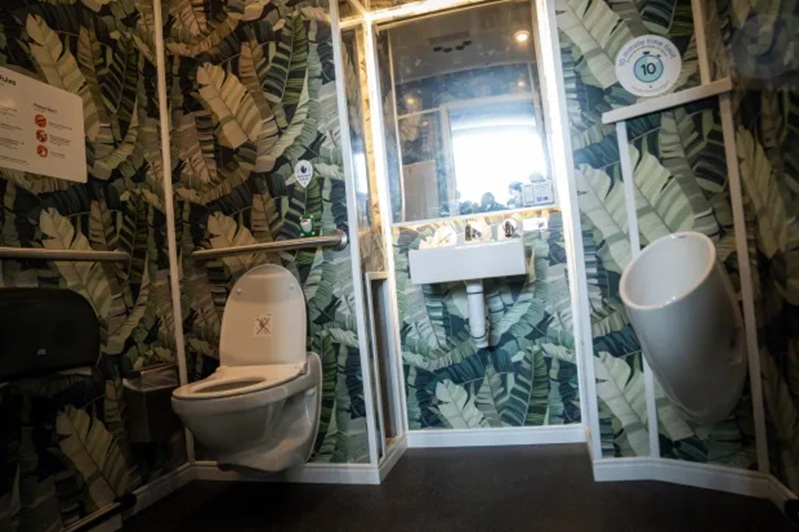
The modular restroom units are being developed by technology company Throne Labs. The units are fully self-contained, meaning they do not require connections to underground water or sewer lines. That design allows the toilets to be installed relatively quickly in busy intersections, plazas and other high-traffic locations. The units can also be relocated when necessary.

A high-tech modular public restroom developed by Throne Labs as part of New York City’s new public toilet pilot program. Photo: KHABOR

Free access and modern amenities

The public toilets will be free to use and available daily from 7 a.m. to 10 p.m. Each unit is equipped with a range of modern features, including a touchless-flush toilet, running-water sink, automated heating and air conditioning, and a baby-changing station. The units are also designed to be ADA-compliant, making them accessible to people with disabilities.

Smartphone, QR code and text-message access

Users will be able to unlock the restrooms through a smartphone app, QR code or text message. For people without smartphones, including unhoused New Yorkers, special tap cards will be distributed through local community organizations.

Ten-minute limit raises eyebrows

One of the program’s most notable features is a strict 10-minute usage limit. Users will receive audio warnings after five and eight minutes inside the restroom. Once the 10-minute limit is reached, flashing lights will activate and the door will automatically unlock. Jessica Heinzelman, chief operating officer of Throne Labs, said the system is designed to prevent individuals from occupying the facilities for extended periods.

A high-tech modular public restroom developed by Throne Labs as part of New York City’s new public toilet pilot program. Photo: KHABOR

“Someone shouldn’t be able to occupy the restroom for a long time,” Heinzelman said, noting that the company estimates a typical restroom visit takes about three and a half minutes.

Initial locations across Manhattan, Brooklyn and the Bronx

The first units are being installed in high-density locations, including Cooper Square in Manhattan, Columbus Park in Brooklyn and the area around Yankee Stadium in the Bronx. City officials say the one-year pilot will help determine how effectively the modular restroom system serves residents and visitors. If the pilot proves successful, the city could consider expanding the public restroom network to additional locations across New York City.


Bangladesh Measles Outbreak: 3 More Die as Toll Nears 1,000

DHAKA — Bangladesh’s measles outbreak continues to claim lives, with three more people dying after developing suspected measles symptoms, according to health authorities. The latest deaths bring the nationwide toll among people who have died with suspected measles symptoms to nearly 1,000, highlighting the continuing pressure on Bangladesh’s healthcare system.

During the latest 24-hour reporting period, 964 people sought hospital treatment for suspected measles symptoms, while 977 patients were admitted, according to figures reported by bdnews24.

Dhaka Division has recorded the highest number of deaths linked to suspected measles symptoms, with 401 deaths reported so far. The figures include both confirmed measles-related deaths and deaths among patients who exhibited symptoms associated with the disease. The continuing fatalities come despite nationwide efforts to expand measles vaccination and strengthen hospital capacity.

Health officials have been monitoring the outbreak since March, when the Directorate General of Health Services began regularly publishing data on patients with measles and measles-like symptoms. Earlier government figures showed that hundreds of people had died while tens of thousands required hospital treatment.

The outbreak has placed additional pressure on hospitals already dealing with a surge in dengue infections. Bangladesh has also reported a sharp increase in dengue hospitalisations in recent months, creating an increasingly difficult public-health environment.

Public-health specialists have previously raised concerns about vaccination coverage, gaps in disease surveillance and the capacity of hospitals to manage severe measles cases and complications.

Measles can be particularly dangerous for young children and can lead to serious complications, including pneumonia and other infections, especially among patients who are malnourished or otherwise vulnerable.

The government has conducted emergency measles-rubella vaccination campaigns in high-risk areas and later expanded vaccination efforts nationwide. Officials have said millions of children have received vaccines as part of the response.

However, the persistence of deaths and new hospital admissions suggests that the outbreak remains a serious public-health challenge. Health authorities are continuing to monitor suspected cases and hospital admissions as Bangladesh attempts to contain both measles and dengue outbreaks simultaneously.