U.S. Pays $725 Million to UN, Keeps Voting Rights

Shibbir Ahmed, New York — The United States has paid $725 million to the United Nations, reducing its outstanding financial obligations to the world body and ensuring that Washington retains its voting rights in the UN General Assembly. The payment comes just days before world leaders are due to gather in New York for the annual General Assembly session.

The United Nations said the United States transferred $725 million for the organization’s regular budget on Tuesday. Washington also paid an additional $102 million toward UN peacekeeping operations on Friday. Despite the latest payments, the United States still owes approximately $1.312 billion to the UN regular budget, according to UN spokesperson Farhan Haq.

The payment also removes the immediate risk that the United States could lose its voting rights under Article 19 of the UN Charter. The provision says a member state can lose its vote in the General Assembly when its arrears reach or exceed the amount of contributions due for the preceding two full years, although the General Assembly can grant an exception in certain circumstances.

The United States is the largest contributor to the UN budget, but the Trump administration has criticized the organization and reduced or delayed funding to various UN agencies. Washington has also pushed for reforms and cost reductions across the UN system.

The latest payment comes as the United Nations faces continuing financial pressure and implements its “UN80” reform and cost-cutting initiative. China, the UN’s second-largest contributor, paid $641.4 million toward its regular budget contribution earlier this month, according to UN figures cited by Reuters. The U.S. payment means Washington will retain its vote as the 2026 UN General Assembly prepares to convene in New York next week, while the broader dispute over U.S. funding and UN reforms remains unresolved.


America Marks 25 Years Since 9/11

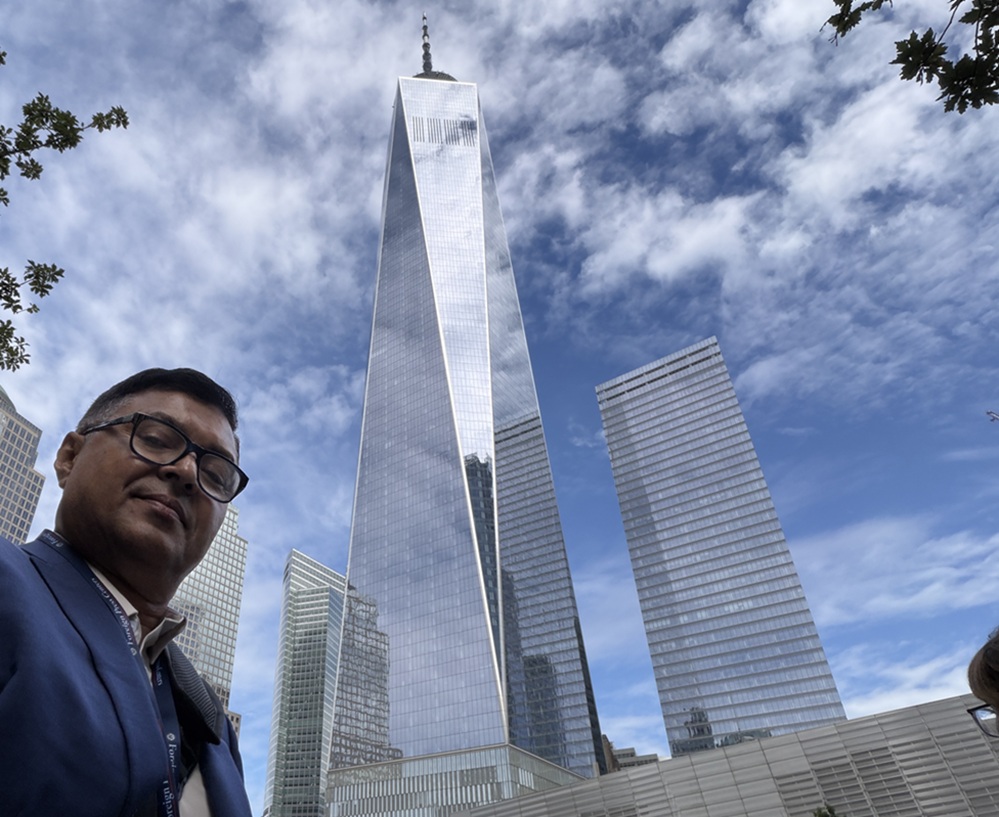
Shibbir Ahmed, Ground Zero, New York — The United States on Friday marked the 25th anniversary of the September 11, 2001, terrorist attacks with memorial ceremonies in New York, Virginia and Pennsylvania, while the release of newly declassified CIA intelligence records renewed attention on what U.S. officials knew about al-Qaida and Osama bin Laden before the attacks. Nearly 3,000 people were killed when 19 al-Qaida hijackers seized four commercial passenger aircraft and carried out coordinated attacks on the World Trade Center in New York and the Pentagon in Virginia. United Airlines Flight 93 crashed near Shanksville, Pennsylvania, after passengers attempted to regain control of the aircraft.

At Ground Zero in Lower Manhattan, relatives of victims gathered for the annual memorial ceremony and read the names of those killed. The observance began with a moment of silence at 8:46 a.m., the time American Airlines Flight 11 struck the World Trade Center’s North Tower. Vice President JD Vance attended the New York ceremony alongside former Presidents Bill Clinton, George W. Bush, Barack Obama and Joe Biden. The gathering brought together current and former national leaders as families commemorated those who died a quarter-century ago.

The ceremony included additional moments of silence marking the attacks on the South Tower, the Pentagon and Flight 93. This year, organizers also included a seventh moment of silence for people who subsequently died from illnesses associated with exposure to toxic materials at the World Trade Center site.

The 9/11 Memorial & Museum said the commemoration remains centered on the victims and their families, with the names of those killed read during the ceremony. The annual Tribute in Light is also scheduled to illuminate the New York skyline Friday evening.

Trump Attends Pentagon Ceremony

President Donald Trump marked the anniversary at the Pentagon in Arlington, Virginia, where American Airlines Flight 77 crashed after being hijacked. The attack killed 184 people at the Pentagon and aboard the aircraft. Trump attended the ceremony with First Lady Melania Trump and Defense Secretary Pete Hegseth. Senior military and government officials also participated in the remembrance.

The Pentagon ceremony focused on the victims and the military personnel, civilian employees and others who lost their lives in the attack. Trump and Hegseth also linked the events of September 11 to current U.S. national-security policy and the country’s military role overseas. Arlington County and other communities in Virginia also held local commemorations honoring residents, first responders and others connected to the Pentagon attack.

Flight 93 Remembered in Pennsylvania

In Shanksville, Pennsylvania, families and visitors gathered at the Flight 93 National Memorial to commemorate the 40 passengers and crew members who died when the hijacked aircraft crashed into a field. The passengers had learned through telephone calls that other hijacked aircraft had struck the World Trade Center and the Pentagon and attempted to take control of Flight 93. The plane crashed before reaching its intended target. The Pennsylvania observance included the reading of the passengers’ and crew members’ names and a wreath-laying ceremony.

CIA releases 71 intelligence reports

The 25th anniversary also brought a significant new development in Washington. The Central Intelligence Agency released 71 intelligence reports related to the period before and immediately after the September 11 attacks. The collection includes 70 reports prepared before the attacks and one report dated September 12, 2001. The documents were prepared for the President’s Daily Brief and were provided to Presidents Bill Clinton and George W. Bush and senior administration officials.

The documents show that U.S. intelligence agencies had been tracking bin Laden and al-Qaida for years before the attacks. A February 1998 report warned about bin Laden’s interest in obtaining chemical, biological and nuclear materials. Other reports discussed his growing network, his activities in Afghanistan and the Taliban’s reluctance to surrender him.

A September 1998 intelligence report described a possible al-Qaida plan involving an explosive-laden aircraft and identified Washington as a preferred target. Later reports discussed possible hijackings and surveillance of locations in the United States.

An August 2001 President’s Daily Brief, already publicly known as “Bin Ladin Determined To Strike in US,” warned of suspicious activity in the United States consistent with preparations for hijackings or other attacks. The newly released collection provides additional surrounding intelligence records from that period.

The documents remain partly redacted, and officials said the release does not fundamentally overturn the established historical account of the attacks. Instead, the records provide additional detail about the intelligence available to U.S. officials before September 11.

The 9/11 Commission previously concluded that failures involving intelligence sharing, management, policy and the ability to interpret the available information contributed to the government’s inability to prevent the attacks.

New records revive questions about Ground Zero exposure

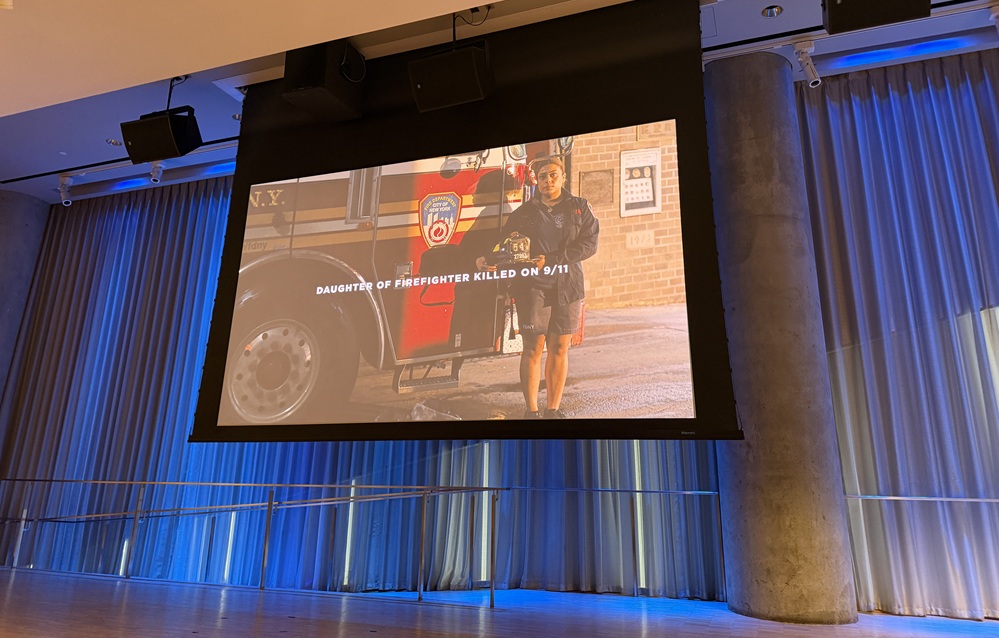
In New York, the anniversary has also brought renewed attention to the long-term health consequences of the attacks. Thousands of firefighters, police officers, emergency workers, construction workers, residents and others who were exposed to the dust and debris around the World Trade Center site have developed illnesses associated with the disaster.

The FDNY has continued adding the names of members who died from illnesses linked to their work at Ground Zero. More than 600 firefighters have died from 9/11-related illnesses, according to department figures cited in anniversary coverage.

The city has also begun releasing large collections of records concerning its response to the World Trade Center disaster, including documents related to air quality and the handling of information about environmental hazards after the attacks. The records have renewed questions about what officials knew about the risks in Lower Manhattan and when that information was communicated to residents and workers.

A continuing national security legacy

The attacks prompted major changes in U.S. national security policy. Congress created the Department of Homeland Security, federal agencies expanded counterterrorism operations and intelligence-sharing systems were reorganized. Airport security procedures were substantially expanded, while Congress approved new surveillance authorities.

The attacks also led to the U.S. military campaign in Afghanistan against al-Qaida and the Taliban. The United States later invaded Iraq in 2003, beginning two wars that became central to American foreign policy for the following two decades.

The wars resulted in the deaths of thousands of U.S. military personnel and large numbers of civilians in Afghanistan and Iraq. The post-9/11 period also produced prolonged debates over detention, interrogation, surveillance, civil liberties and the balance between national security and individual rights.

Impact on Muslim and South Asian Americans

The attacks also had significant consequences for Muslim, Arab and South Asian communities across the United States. In the years following September 11, members of those communities faced hate crimes, discrimination, profiling and increased scrutiny. At the same time, Muslim and South Asian Americans have become an increasingly visible part of American civic, political and professional life. The 25th anniversary has therefore prompted communities across the country to remember both the victims of the attacks and the broader social consequences that followed.

Texas and communities across the country

The anniversary was not limited to New York, Virginia and Pennsylvania. Communities across the United States held ceremonies, vigils, memorial services and events honoring victims and first responders. In Houston, an interfaith remembrance brought together volunteers who read the names of those killed on September 11 alongside names associated with the wars in Afghanistan and Iraq. The event reflected a broader effort in some communities to discuss both the attacks and the consequences of the U.S. response. Other communities organized stair climbs, flag displays and local memorial ceremonies, often focusing on residents who died in the attacks or first responders who later became ill.

A 25-year transition

The anniversary comes as the United States enters a period in which a growing portion of the population has no personal memory of September 11. People born after the attacks now make up a significant share of the American population. For victims’ relatives, survivors and first responders, however, the events remain personal rather than historical. At Ground Zero, in Arlington and at Shanksville, the ceremonies continued to place individual victims at the center of the commemoration.

The newly released intelligence documents added another dimension to this year’s anniversary by providing additional evidence of the warnings available to U.S. officials before the attacks.

The records do not offer a simple explanation for why the attacks were not prevented. They instead add to an extensive historical record showing that U.S. agencies had identified bin Laden and al-Qaida as serious threats but failed to translate available intelligence into effective action against the specific plot.

Twenty-five years after September 11, the United States is therefore commemorating the victims while continuing to examine the decisions, intelligence failures, policies and human consequences associated with the attacks and their aftermath.
Khalilur Rahman Puts UN Reform at Top of Presidency Agenda

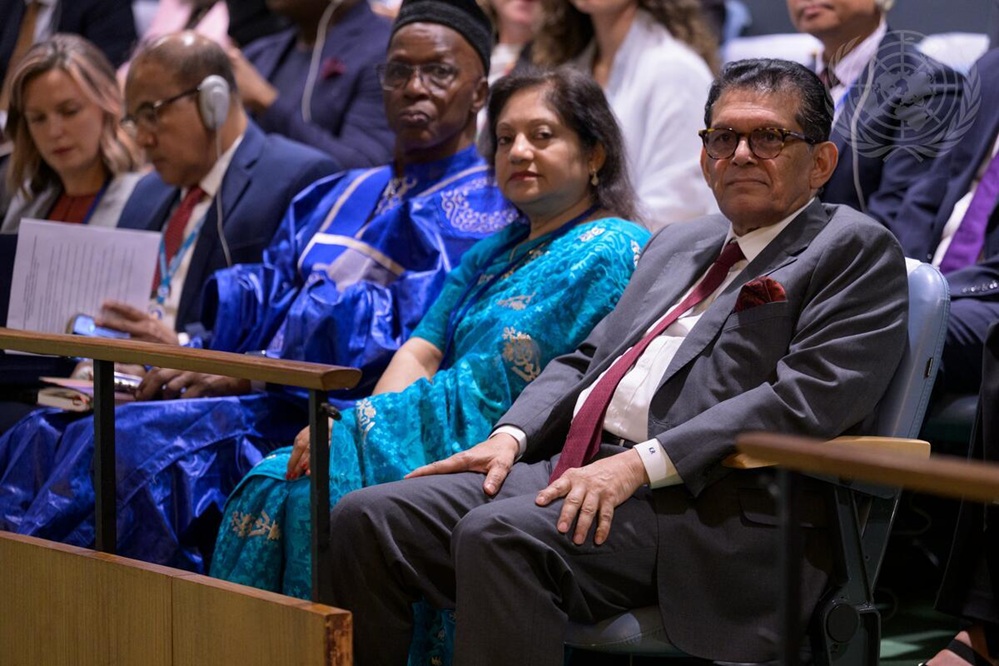
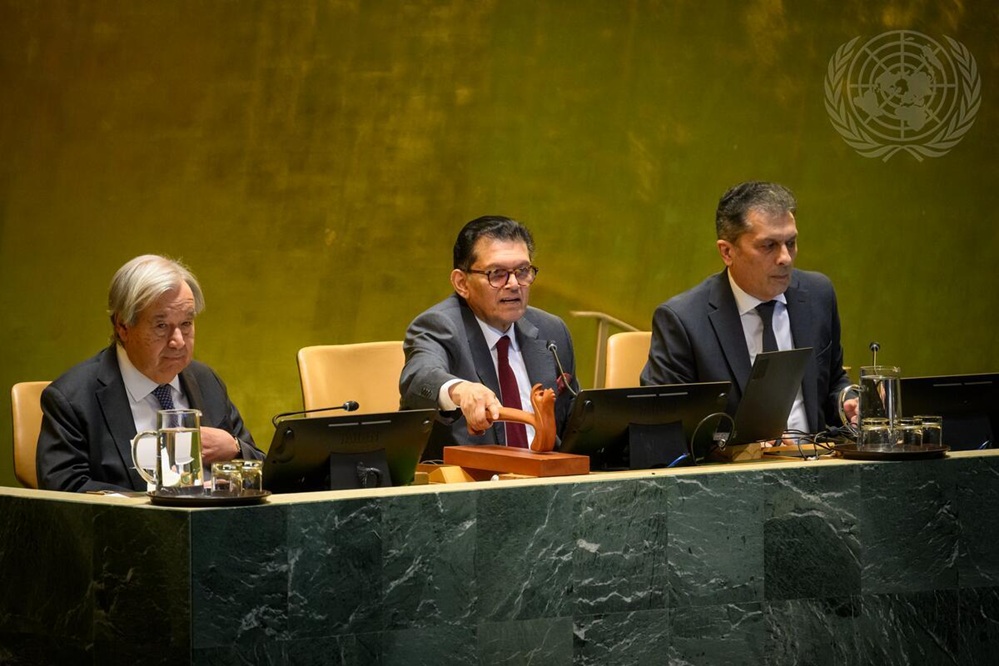
Shibbir Ahmed, United Nations, New York: Bangladesh’s Foreign Minister Dr. Khalilur Rahman has assumed the presidency of the 81st session of the United Nations General Assembly, pledging to prioritize dialogue, cooperation, rebuilding trust and meaningful reform of the world body. Speaking to reporters at UN Headquarters in New York on Tuesday ahead of the formal opening of the 81st session, Rahman said the multilateral system is facing unprecedented pressure and a growing deficit of trust.

Against this backdrop, he stressed the importance of finding common ground among countries despite their differences and pursuing solutions through dialogue and cooperation. According to the United Nations, Rahman was elected president of the General Assembly on June 2, 2026, and formally took office on September 8. He will preside over the 193-member General Assembly for the next year. The theme of the 81st session is “Restoring Trust, Managing Transformation: A United Nations That Delivers for All.”

Rahman acknowledged that many international disputes cannot be resolved quickly. However, he said disagreements should not prevent countries from identifying areas of common interest and working together. He said his presidency would remain firmly grounded in the UN Charter and the mandates entrusted to the organization by its member states. He also emphasized that global challenges can be addressed more effectively when countries work collectively and seek solutions through dialogue rather than confrontation.

UN Reform a Key Priority

Meaningful reform of the United Nations will be one of the central priorities of Rahman’s presidency. He said deeper reform is necessary to make the world body more effective and better prepared to respond to the challenges of the future. According to Rahman, public confidence in the United Nations has declined, making it necessary to strengthen the organization not only for the present but also for the generations ahead.

His broader agenda for the 81st session includes peace and security, progress toward the Sustainable Development Goals, climate and environmental protection, human rights, governance of emerging technologies including artificial intelligence, and reform of the United Nations. Rahman also pledged continued support for UN Secretary-General António Guterres’ reform efforts.

Giving Greater Space to Voices Beyond Governments

Rahman also called for greater participation in UN affairs by civil society, the media, academics, industry and innovation communities. Referring to the opening words of the UN Charter, “We the peoples of the United Nations,” he said the organization should not be viewed solely as an institution of member states.

He stressed the need to create greater opportunities for people from different sectors to contribute their views and participate in the work of the United Nations. While “Restoring Trust, Managing Transformation” remains the central theme of his presidency, Rahman said making the United Nations fit for the future would also be a major objective.

Pledge to Keep Rohingya Voices Heard

Responding to a question about how the United Nations can represent stateless populations, particularly the Rohingya, Rahman said the concept of “the peoples of the United Nations” should not be restricted by nationality or legal status.

Drawing on his previous experience as Bangladesh’s High Representative on Rohingya Issues, he said he had witnessed firsthand the suffering of forcibly displaced Rohingyas and their strong desire to return to their homeland.

Recalling a visit by UN Secretary-General António Guterres to the Rohingya refugee camps in Bangladesh, Rahman said refugees had repeatedly expressed their desire to return home. He said Bangladesh had helped bring the voices of the Rohingya to the United Nations and pledged to continue raising their concerns during his presidency.

Dialogue During High-Level Week

Rahman described the presence of world leaders at the upcoming high-level week as an important opportunity to promote dialogue and diplomacy. The General Debate of the 81st General Assembly is scheduled to take place from September 22 to 28, bringing together heads of state and government and senior representatives from around the world.

Rahman expressed hope that world leaders would use their addresses to emphasize dialogue and diplomacy as means of resolving conflicts and reaffirm their commitments to development, human well-being and human rights. He said the presidency would review the priorities outlined by world leaders and seek areas that could form the basis of a common agenda.

“I Will Be President for All Countries”

Rahman emphasized that, as president of the General Assembly, he would represent all member states, regardless of whether they supported his election. He also addressed the selection of the next UN secretary-general, saying he would remain faithful to the process established by the UN Charter.

Under the Charter, the Security Council recommends a candidate for secretary-general and the General Assembly makes the appointment. Rahman said he would work closely with member states and the president of the Security Council to facilitate the process and ensure a smooth transition of leadership.

The 80th session of the General Assembly concluded at UN Headquarters on September 8, followed by Rahman’s formal assumption of the presidency of the 81st session. His election marks Bangladesh’s return to the presidency of the General Assembly after four decades. Former Bangladeshi Foreign Minister Humayun Rashid Choudhury presided over the 41st session in 1986-87.

Rahman, who first attended the United Nations as a member of Bangladesh’s delegation in 1985, described his return to the organization four decades later as a remarkable moment, while noting how dramatically the world has changed during the intervening years.

As president of the 81st session, Rahman will seek to promote dialogue in a deeply divided world, rebuild confidence in multilateralism and help make the United Nations more effective in confronting the challenges of the future.


81st UN General Assembly Opens in New York Amid Global Crises

Shibbir Ahmed, UN, NEW YORK — The 81st session of the United Nations General Assembly officially opens Tuesday in New York, bringing together the world’s nations at a time of intensifying conflicts, humanitarian crises, economic uncertainty and growing pressure on the multilateral system. The ordinary session will run from September 8, 2026, through September 7, 2027, according to the United Nations. Bangladesh’s Khalilur Rahman is serving as president of the 81st General Assembly session.

The theme of this year’s session is “Restoring Trust, Managing Transformation: A United Nations That Delivers for All.” The theme reflects growing international concern over the ability of multilateral institutions to respond effectively to war, humanitarian emergencies, climate change, inequality and rapid technological change.

The opening of the session comes as the international community faces multiple major crises, including ongoing armed conflicts and humanitarian emergencies. The General Assembly is expected to provide a major diplomatic forum for member states to discuss peace and security, sustainable development, human rights and international cooperation.

Khalilur Rahman, who was elected president of the 81st session in June, has outlined six major priorities for his presidency: peace and security, sustainable development, climate resilience, human rights and humanitarian protection, inclusive innovation and renewed multilateralism.

His vision also places emphasis on strengthening the United Nations’ ability to deliver practical results and rebuilding confidence in the multilateral system. The opening session is only the beginning of an intense period of diplomacy at UN Headquarters. The General Assembly’s high-level general debate is scheduled for later in September, when heads of state and government from around the world are expected to gather in New York.

The United Nations says the 81st session will also address major issues including peace and security, sustainable development, climate action, human rights, artificial intelligence and reform of the UN system. With the world facing deep geopolitical divisions, the 81st General Assembly is set to test whether nations can rebuild trust and find common ground through multilateral diplomacy.


25 Years After 9/11: How America Will Remember the Attacks From New York to Washington

Shibbir Ahmed, New York: Twenty-five years have passed since the devastating terrorist attacks of September 11, 2001. A quarter-century later, the loss of nearly 3,000 lives, the sacrifice of thousands of first responders, and the attacks’ lasting health and social consequences remain deeply embedded in the American memory. This year, New York, Washington and Pennsylvania will mark the 25th anniversary of 9/11 with a series of commemorations and public events.

Main Commemoration in New York

The main 9/11 commemoration will take place Friday at the 9/11 Memorial Plaza in Lower Manhattan, with family members of the victims participating in the ceremony. The program will begin at 8:40 a.m. and is primarily a private gathering for victims’ families, although the ceremony will be streamed live online.

Family members will read the names of those killed in the 2001 attacks as well as victims of the 1993 World Trade Center bombing. Moments of silence will mark several key moments of the attacks, including the aircraft impacts, the collapse of the Twin Towers, the attack on the Pentagon and the crash of Flight 93.

A special moment of silence will also honor those who died in the years following the attacks from 9/11-related illnesses. Vice President JD Vance and other administration officials are expected to attend the New York commemoration. President Donald Trump, meanwhile, will mark the 25th anniversary at the Pentagon instead of attending the New York ceremony.

First Moment of Silence at 8:46 a.m.

At 8:46 a.m. on September 11, 2001, the first hijacked aircraft, American Airlines Flight 11, struck the North Tower of the World Trade Center. The moment will be marked with the first moment of silence during the New York commemoration.

The ceremony will also remember the impact of the second aircraft on the South Tower, the collapse of both towers, the attack on the Pentagon and the crash of Flight 93 in Pennsylvania.

A total of 2,753 people were killed in New York, while 184 people died at the Pentagon in Arlington, Virginia. Another 40 passengers and crew members were killed when United Airlines Flight 93 crashed in Pennsylvania.

New Exhibition at the 9/11 Museum

For the 25th anniversary, the National September 11 Memorial & Museum in New York is launching a new exhibition titled “In Their Honor: 25 Years of 9/11-Inspired Service.”

Opening to the public on September 12, the exhibition will highlight stories of service, sacrifice and humanity over the 25 years since the attacks. It explores how individuals and communities transformed grief into public service and acts of compassion.

The museum is also introducing a new digital educational experience designed to help a new generation understand the history of 9/11 and its long-term impact. According to the museum, nearly 100 million Americans were either not yet born or were too young to remember the attacks. Connecting this generation with the history and legacy of 9/11 is one of the major goals of this year’s anniversary programs.

Trump to Mark Anniversary at Pentagon

In Arlington, Virginia, President Donald Trump is expected to attend and speak at the 25th anniversary commemoration at the Pentagon Memorial. The Pentagon was the third major target of the September 11 attacks. At 9:37 a.m., American Airlines Flight 77 struck the Pentagon. A total of 184 people were killed, including people inside the building as well as passengers and crew members aboard the aircraft. Vice President Vance will attend the main commemoration in New York.

Pennsylvania Also to Hold Commemorations

At the Flight 93 National Memorial in Pennsylvania, a commemorative ceremony will take place Friday from 8:30 a.m. to 10:30 a.m. The names of the 40 passengers and crew members aboard Flight 93 will be read, followed by the ringing of the Bells of Remembrance. A second ceremony will take place from 1 p.m. to 2:30 p.m., featuring additional commemorative activities and a public wreath-laying ceremony at the memorial.

New York’s Nighttime “Tribute in Light”

After a full day of remembrance, New York’s skyline will once again be illuminated by the historic Tribute in Light—two powerful beams of light representing the Twin Towers destroyed in the attacks. For the 25th anniversary, a special program titled “9/11 Tribute in Light: Live from Lower Manhattan” is scheduled to air nationally beginning at 8 p.m. on major television networks and other platforms.

The program will connect audiences across the country with the commemoration in New York and the annual Tribute in Light, bringing the day of remembrance to a national audience.

New Initiative in New York City

As part of this year’s 25th anniversary observance, New York City is officially recognizing September 11 as a Day of Remembrance and Service. The administration of Mayor Zohran Mamdani is emphasizing citywide remembrance, moments of silence, educational programs and volunteer service.

The city has also established a new Continuity and Mission Assurance Team, aimed at ensuring that essential city government operations and services can continue during emergencies while strengthening preparedness and coordination among city agencies.

25 Years Later, the Memory of 9/11 Endures

Twenty-five years later, 9/11 remains far more than a historical event. It continues to shape the security, politics, foreign policy and public health of New York, Washington and the United States as a whole.

This year’s commemorations are therefore not limited to honoring those who were killed. They also recognize first responders, rescue workers, survivors, families who lost loved ones and a new generation born after the attacks. A quarter-century later, the message remains the same: Never Forget.


Bangladesh’s Khalilur Rahman Set to Take Helm of 81st UN General Assembly

Shibbir Ahmed, UN, NEW YORK — Bangladesh Foreign Minister Dr. Khalilur Rahman is set to assume the presidency of the 81st session of the United Nations General Assembly on Tuesday, placing a Bangladeshi diplomat at the helm of the UN’s most representative body at a critical moment for global diplomacy. Rahman will formally open the 81st General Assembly session at United Nations Headquarters in New York at 3 p.m. local time on September 8, succeeding Germany’s former foreign minister Annalena Baerbock. The session will run through September 7, 2027.

His year-long presidency comes as the international community faces continuing conflicts, climate emergencies, development challenges and growing concerns over trust in multilateral institutions. The United Nations has identified the theme of the 81st session as “Restoring Trust, Managing Transformation: A United Nations That Delivers for All.”

Rahman was elected president of the 81st session in June after defeating Cyprus’ candidate, Andreas Kakouris, in a closely contested secret-ballot vote. He received 99 votes, compared with 91 for Kakouris, out of 190 ballots cast.

The presidency marks Bangladesh’s return to the top post of the General Assembly after four decades. The first Bangladeshi to hold the position was former Foreign Minister Humayun Rasheed Choudhury, who presided over the 41st session in 1986–87.

Rahman’s tenure will coincide with several major developments at the United Nations, including the high-level General Debate from September 22 to 28 and the selection of a successor to Secretary-General António Guterres, whose second term ends on December 31, 2026.

The 81st session is expected to address a wide range of global issues, including conflicts, climate change, sustainable development, pandemic preparedness, nuclear disarmament and reform of the United Nations.

For Bangladesh, Rahman’s presidency represents a significant diplomatic milestone and provides the country with a prominent platform to contribute to international consensus-building during a period of major geopolitical and institutional change.


NYC Protest Demands End to Minority Persecution in Bangladesh

NEW YORK — A protest rally was held in New York demanding an end to persecution of minority communities in Bangladesh, an impartial investigation and swift justice in the killing of retired Rangpur teacher Ganapati Chakraborty and four members of his family, the release of political prisoners, restoration of political rights, protection of freedom of expression, and measures to control the soaring prices of essential commodities.

The rally, organized by Probashi Bangladeshi American, was held on September 2 at Diversity Plaza in Jackson Heights, Queens. Speakers said no citizen should be deprived of security or justice because of their religion, ethnicity, political identity or social status. They called on the state to ensure the life, liberty and constitutional rights of every citizen.

The killing of Ganapati Chakraborty and four members of his family received particular attention at the rally. Speakers said such a brutal attack on an entire family cannot be ignored and called for a prompt and impartial investigation to identify those responsible and bring them to justice.

Speakers expressed concern over what they described as growing incidents of attacks, persecution, killings and sexual violence against members of minority communities in Bangladesh. They warned that failure to ensure proper investigations and justice could embolden perpetrators and further increase insecurity among ordinary citizens. They urged the authorities to guarantee the constitutional rights and security of all citizens without discrimination.

The speakers also expressed their dissatisfaction with Bangladesh’s ongoing political situation. They called for the release of political prisoners, the withdrawal of restrictions on political activities, and the holding of a free, fair and credible election with the participation of all political parties.

According to the speakers, genuine democratic development is not possible without ensuring citizens’ voting rights and meaningful political participation. The country’s economic situation was also discussed at the rally. Speakers said the sharp rise in the prices of essential goods has made everyday life increasingly difficult for ordinary people. They called for effective measures to stabilize the market and bring the prices of essential commodities within the reach of consumers. They also alleged that failure to control the market and what they described as government indifference were contributing to the growing hardship faced by the public.

The rally was chaired by Pradip Kar, an adviser to the U.S. Awami League. Among those who addressed the gathering were U.S. Awami League Organizing Secretary Abdul Hasib Mamun; Office Secretary Mohammad Ali Siddiqui; former president of the U.S. Bangladesh Hindu Buddhist Christian Unity Council Nabendu Dutta; U.S. Eastern Awami League Organizing Secretary Hasibul Hasan Mamun; U.S. Awami League leaders Faruk T. Molla, Sheikh Atiq, Lutfor Karim, Shyamal Kanti Chandra and Bishwas Liton Hossain; City Awami League Vice President Akhtar Hossain Sakhawat; senior journalist Haqikul Islam Khokon; New York State Awami League Vice President and member-secretary of the Sheikh Hasina Mukti Sangram Parishad Sheikh Atiq; former president of the U.S. Awami Swechhasebak League Nuruzzaman Sardar; U.S. Sramik League General Secretary Jewel Ahmed; U.S. Awami League Vice President Manzur Chowdhury; Jubo League leader Sheikh Jamal; Connecticut State Awami League General Secretary Humayun Ahmed Chowdhury; Sammilito Borshoboron Convener Mozahid Ansari; former press minister of the Bangladesh Embassy in Washington Sazzad Hossain Sabuj; Mahanagar Awami League leader Shah Selim; Sheikh Hasina Mancha President Abdul Jalil and General Secretary Kaykobad; Ataur Rahman, Shahidul Islam, Rumana Akter, Z.A. Joy, former Chhatra League President Anisuzzaman Sabuj, U.S. Swechhasebak League General Secretary Syed Kibria Zaman, Shakti D. Gupta, a candidate for cultural secretary of Bangladesh Society, and former U.S. Chhatra League General Secretary Mohammad Jahangir Mia.

Speakers said justice for Ganapati Chakraborty and his family members is not merely a matter concerning one family, but is directly connected to the security, human rights and rule of law of every citizen in Bangladesh. They called for those responsible to be brought to justice through an impartial investigation, regardless of their political, religious or social identities.

They further emphasized that freedom of expression, political rights, religious freedom and cultural rights are not privileges granted to any particular group, but fundamental rights of every citizen. They urged the state to play an effective and impartial role in protecting those rights. Participants displayed banners and placards carrying various demands and chanted slogans in support of justice, human rights, democracy and citizen security.

From Jackson Heights, New York, the protesters delivered what they described as a clear message to Bangladesh: No citizen’s life or rights should be made unsafe because of religion, identity or political beliefs. Every killing must be impartially investigated and prosecuted, and the fundamental rights of every citizen must be guaranteed.


Central Park Adapts to Climate Change While Helping Cool New York City

NEW YORK — As climate change brings hotter temperatures and more frequent extreme weather to New York City, Central Park is taking on an increasingly important role in helping the city adapt. The vast green space in the heart of Manhattan is more than a destination for recreation. Its trees, lawns, vegetation and water features help moderate temperatures and provide relief from the heat of the surrounding city.

The effects of a changing climate are becoming increasingly visible across New York, including higher temperatures and growing pressure on urban infrastructure. In this environment, parks such as Central Park are becoming an important part of the city’s climate-resilience efforts, according to the United Nations.

Urban green spaces can help reduce the “heat island” effect created when buildings, roads and other paved surfaces absorb and retain heat. Trees and vegetation provide shade while also releasing moisture into the atmosphere, helping cool the surrounding environment.

Central Park also offers other environmental benefits. Its natural landscape can help absorb rainfall, support biodiversity and provide residents with access to nature in one of the world’s most densely populated cities.

For New Yorkers, these benefits can become particularly important during periods of extreme heat. The park provides cooler spaces where people can escape some of the intense temperatures found in heavily built-up neighborhoods.

But adapting the park itself to a changing climate is also becoming necessary. Maintaining trees and vegetation, protecting natural areas and managing water resources are increasingly important as temperatures rise and weather patterns become less predictable.

Central Park therefore represents a broader lesson for cities around the world: protecting and expanding urban nature can be both a climate-adaptation strategy and an investment in public health and quality of life.

As New York continues to confront the effects of climate change, the park’s role is evolving. What was once primarily designed as a place for recreation and escape from the city is increasingly functioning as part of the city’s natural infrastructure — helping New York remain more livable as the climate changes.


9/11 at 25: New ‘In Their Honor’ Exhibition Unveiled in New York

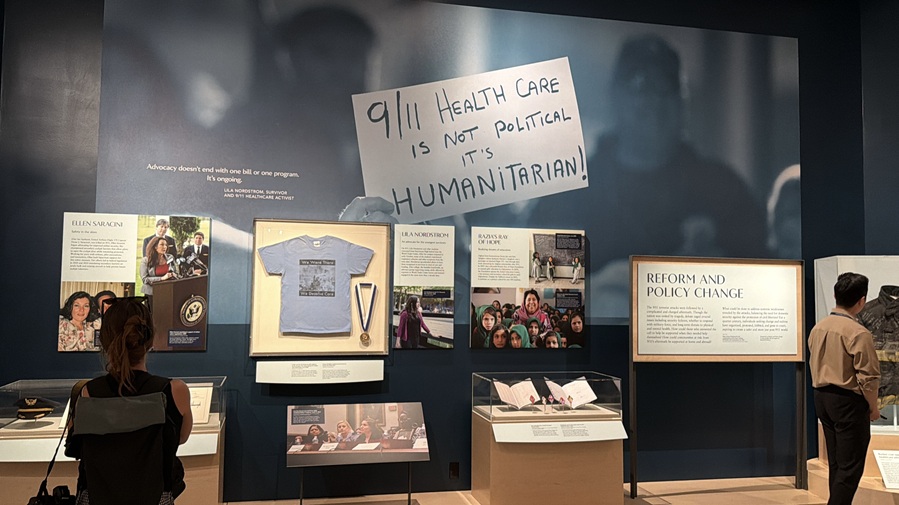
Shibbir Ahmed, NEW YORK — The 9/11 Memorial & Museum on 31St August Monday unveiled a new exhibition highlighting the enduring legacy of service inspired by the September 11 attacks, as New York prepares to mark the 25th anniversary of the tragedy. Titled “In Their Honor: 25 Years of 9/11-Inspired Service,” the exhibition offers a look at how individuals and communities transformed the aftermath of the attacks into acts of service and public commitment.

The exhibition was previewed for members of the media during a briefing at the 9/11 Memorial & Museum in Lower Manhattan. It will open to the public on September 12, 2026, one day after the 25th anniversary of the attacks.

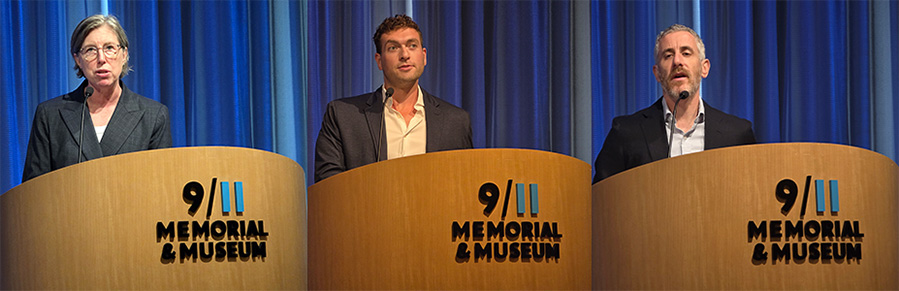
The afternoon program began with remarks from Beth Hillman, President and CEO of the 9/11 Memorial & Museum, followed by comments from 9/11 family member Logan Miller and Noah Rauch, Senior Vice President of Education and Public Programming.

The museum’s new exhibition comes as New York and the nation prepare for a major commemoration of the nearly 3,000 people killed in the September 11, 2001 terrorist attacks. The exhibition focuses on the continuing impact of September 11 beyond the immediate loss of life, emphasizing the service and civic engagement that emerged in the years following the attacks.

Museum officials said the exhibition explores the ways people responded to the attacks through service, volunteering and efforts to help others, demonstrating how the legacy of September 11 continues to shape communities a quarter-century later.

Monday’s media program also included a guided preview of the exhibition, giving journalists an early look before its public opening. The museum is also preparing for the 25th-anniversary commemoration on September 11, which will bring families of victims, survivors, first responders and government and community leaders together at the World Trade Center site.

As the anniversary approaches, the museum’s programming is placing particular emphasis not only on remembering those who were killed, but also on the long-term consequences of the attacks and the continuing acts of service inspired by their memory.

The 25th anniversary will mark a quarter-century since the attacks on the World Trade Center, the Pentagon and United Airlines Flight 93. For many families and survivors, the anniversary remains both a day of remembrance and an opportunity to reflect on how the events of September 11 have shaped the lives of subsequent generations. The “In Their Honor” exhibition will open to visitors at the 9/11 Memorial & Museum on September 12.


Irene Khan Takes Office as Bangladesh’s UN Representative

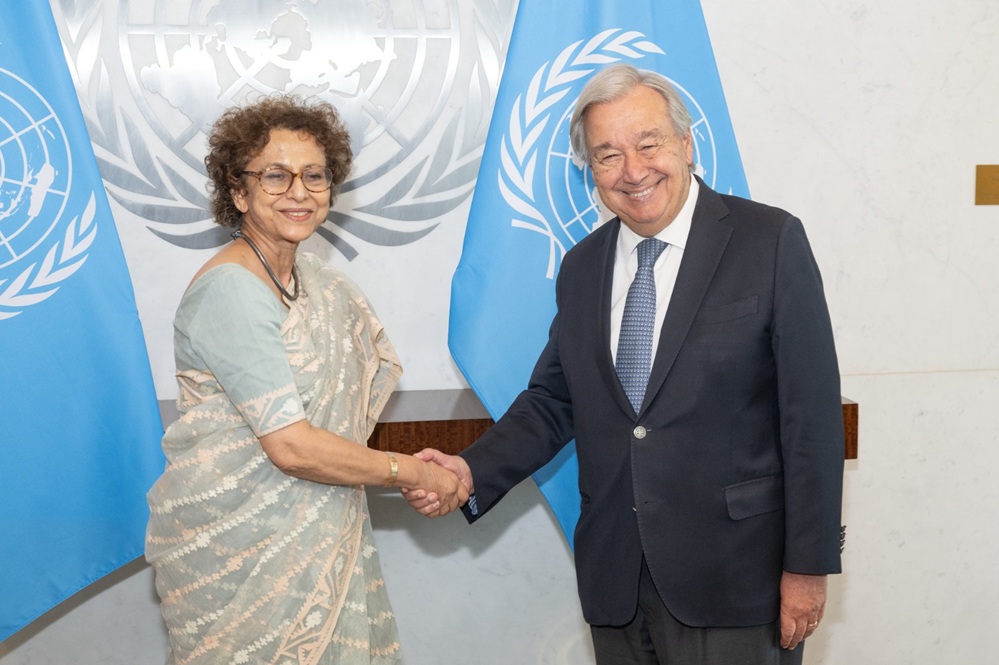
Shibbir Ahmed, UN, New York: Irene Zubaida Khan, a veteran international human rights advocate, has taken office as Bangladesh’s Permanent Representative to the United Nations in New York. Khan presented her credentials to United Nations Secretary-General António Guterres at UN Headquarters in New York on Friday, formally assuming her role as Bangladesh’s envoy to the world body.

She brings decades of experience in human rights, international law, refugee protection, the rule of law and sustainable development, including senior roles at the United Nations and other international organizations.

Before taking up her new role, Khan had served since 2020 as the UN Special Rapporteur on the promotion and protection of the right to freedom of opinion and expression. From 2001 to 2009, she served as Secretary-General of Amnesty International, becoming the first woman to lead the organization.

From 2012 to 2019, Khan served as Director-General of the International Development Law Organization (IDLO). Earlier in her career, she spent 21 years with the Office of the United Nations High Commissioner for Refugees (UNHCR), holding a number of senior positions including Chief of Mission in India and Deputy Director of the Division of International Protection.

Khan received the Sydney Peace Prize in 2006 and is the author of The Unheard Truth: Poverty and Human Rights. She studied law at the University of Manchester and Harvard Law School.