Tarique Rahman on world stage, voicing Bangladesh’s aspirations

Shibbir Ahmed, New York  — The vast General Assembly Hall of the United Nations fell into attention as Prime Minister Tarique Rahman walked to the podium, dressed in a black suit and red tie, smiling and acknowledging greetings from the audience. As he took the floor at the 81st session of the United Nations General Assembly, the hall broke into applause. For a moment, the attention of Bangladesh and the wider international community turned to the Bangladeshi leader standing at the podium of the world’s premier multilateral forum.

It was more than a speech by a head of government. From the global stage, Tarique Rahman presented Bangladesh’s aspirations, concerns and expectations, placing the country’s priorities before the international community at a time when conflicts, displacement and humanitarian crises continue to challenge the world.

At the outset of his address, the prime minister paid tribute to the martyrs of Bangladesh’s Liberation War and recalled the contributions of those who sacrificed their lives in the struggle for democracy, justice and people’s rights. He also paid respect to those killed and injured during the July-August 2024 mass uprising. He then turned to the challenges confronting the international community.

In a world witnessing conflicts, displacement and humanitarian suffering, Tarique Rahman called for disputes to be resolved through dialogue, diplomacy and mutual cooperation. He said international relations should be founded on equality, fairness, mutual interests, respect and dignity, while stressing the importance of the United Nations in building an understanding-based global community that respects the independence and sovereignty of all nations.

He also reaffirmed Bangladesh’s support for UN initiatives aimed at promoting global humanity and world peace. The prime minister’s message on peace was closely linked to Bangladesh’s longstanding positions on disarmament, nuclear non-proliferation and arms control. He said the diversion of development resources towards military expenditure remained an obstacle to lasting peace.

The issue of Palestine also featured prominently in his address. Tarique Rahman reaffirmed Bangladesh’s support for the legitimate demands of the Palestinian people, including their right to self-determination and to establish an independent State of Palestine. The Rohingya crisis was another major issue Bangladesh placed before the international community. Referring to more than 1.2 million forcibly displaced Rohingyas from Myanmar who have been sheltered in Bangladesh for more than nine years, the prime minister said the source of the crisis lies in Myanmar and that its solution must also be found there.

“The only solution to this problem is the safe return of the displaced Rohingya population to their homeland, Myanmar,” he said, calling for firm and effective international support for their repatriation. He also urged the international community to continue life-saving humanitarian assistance until their safe return becomes possible. Migration was another issue through which Bangladesh articulated its concerns before the global community.

As one of the world’s major labour-sending countries, Bangladesh reiterated its commitment to regular, safe and orderly migration and called for stronger international cooperation to protect the rights, dignity and welfare of migrants. Tarique Rahman also highlighted Bangladesh’s role in global peace efforts, reaffirming the country’s commitment to multilateralism and its engagement with the UN Peacebuilding Commission.

He recalled the contributions of Bangladeshi peacekeepers serving in UN missions around the world and highlighted the participation of Bangladeshi women in peacekeeping, reflecting the country’s commitment to the Women, Peace and Security agenda. Climate change, another major concern for Bangladesh, also featured in the country’s broader priorities at the UNGA. Despite being highly vulnerable to the impacts of climate change, Bangladesh contributes relatively little to global greenhouse-gas emissions. The country has therefore continued to call for stronger international action on climate justice, climate finance and adaptation support.

Beyond the immediate global challenges, Tarique Rahman’s address also carried a strong message about Bangladesh’s own aspirations. The prime minister spoke of building a prosperous, self-reliant and welfare-oriented democratic Bangladesh through recovery, restoration and reconstruction, with emphasis on youth employment, women’s empowerment, education, skills development, innovation and social protection.

He outlined a vision of a country where young people can pursue their ambitions without fear, women can live with confidence and every child has the opportunity to realise their potential. He also highlighted the importance of preparing Bangladesh for a rapidly changing global environment shaped by technology and artificial intelligence. Yet the significance of the occasion extended beyond the contents of the speech itself.

Tarique Rahman’s appearance at the UN General Assembly marked another chapter in Bangladesh’s political history, as he became the third member of his family to address the world body. His father, Shaheed President Ziaur Rahman, addressed the UN General Assembly in 1980, focusing on issues including poverty, hunger, economic development and greater international cooperation. His mother, former Prime Minister Khaleda Zia, first addressed the General Assembly in 1993 and subsequently addressed the UN on several occasions.

More than four decades after his father’s first appearance at the world body, Tarique Rahman stood at the same global podium as Prime Minister of Bangladesh. The moment therefore brought together a chapter of family history and the contemporary aspirations Bangladesh sought to present before the international community. But beyond that legacy, the prime minister’s presence at the UN offered Bangladesh an opportunity to articulate its position on some of the most pressing issues confronting humanity — peace and conflict, Palestine, the Rohingya crisis, migration, climate change, development and multilateral cooperation.

From the floor of the General Assembly Hall, Bangladesh placed its message before the international community: dialogue over confrontation, diplomacy over conflict, cooperation over division and human dignity as a shared global responsibility. Tarique Rahman concluded his address by reaffirming Bangladesh’s support for the principles and values of the United Nations in the cause of establishing world peace.
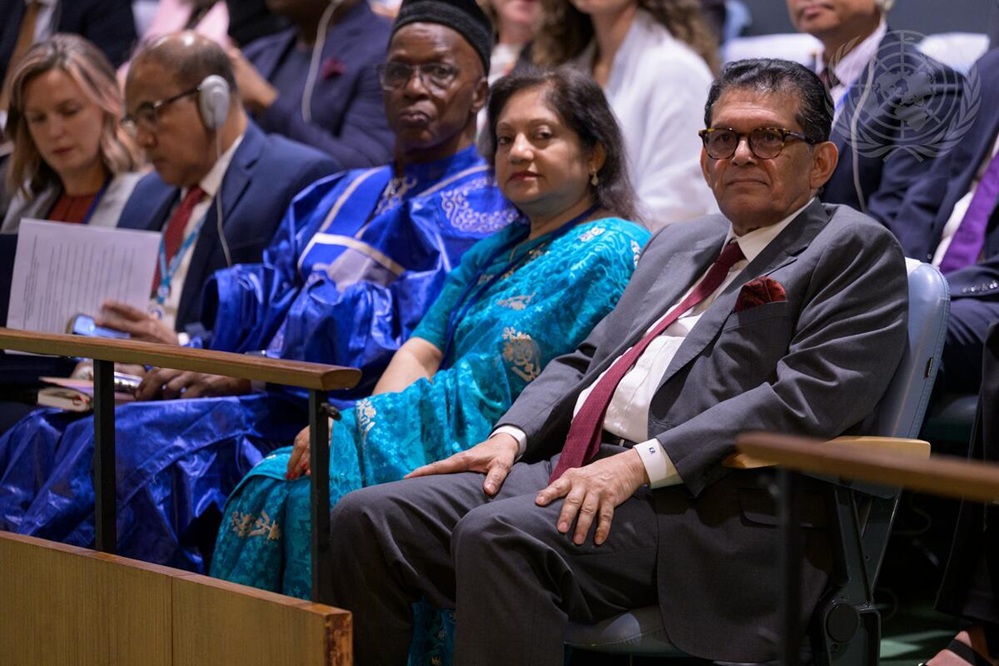
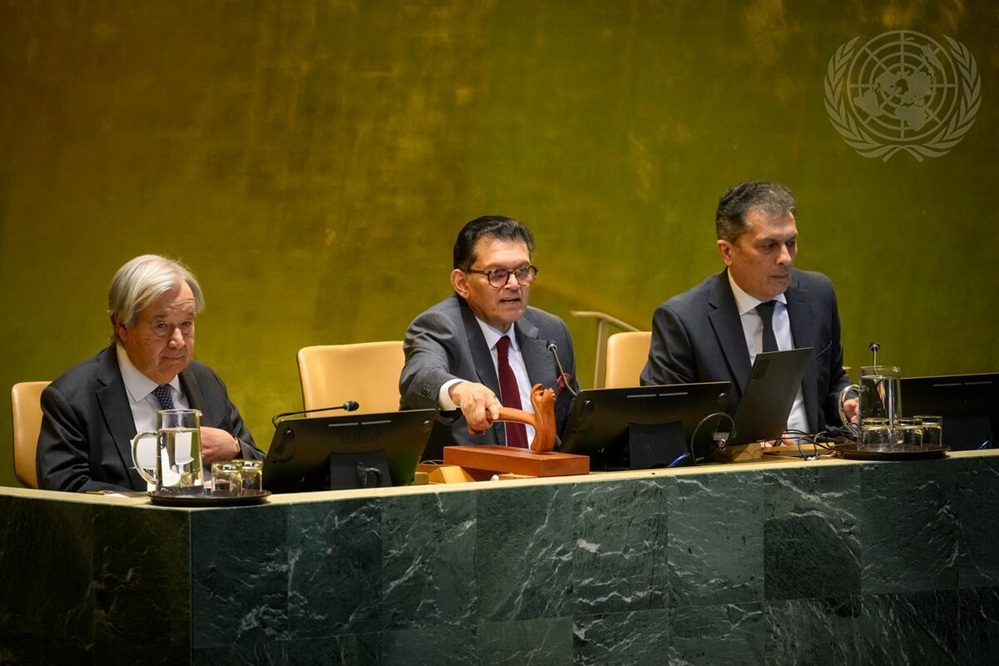


Khalilur Rahman Puts UN Reform at Top of Presidency Agenda

Shibbir Ahmed, United Nations, New York: Bangladesh’s Foreign Minister Dr. Khalilur Rahman has assumed the presidency of the 81st session of the United Nations General Assembly, pledging to prioritize dialogue, cooperation, rebuilding trust and meaningful reform of the world body. Speaking to reporters at UN Headquarters in New York on Tuesday ahead of the formal opening of the 81st session, Rahman said the multilateral system is facing unprecedented pressure and a growing deficit of trust.

Against this backdrop, he stressed the importance of finding common ground among countries despite their differences and pursuing solutions through dialogue and cooperation. According to the United Nations, Rahman was elected president of the General Assembly on June 2, 2026, and formally took office on September 8. He will preside over the 193-member General Assembly for the next year. The theme of the 81st session is “Restoring Trust, Managing Transformation: A United Nations That Delivers for All.”

Rahman acknowledged that many international disputes cannot be resolved quickly. However, he said disagreements should not prevent countries from identifying areas of common interest and working together. He said his presidency would remain firmly grounded in the UN Charter and the mandates entrusted to the organization by its member states. He also emphasized that global challenges can be addressed more effectively when countries work collectively and seek solutions through dialogue rather than confrontation.

UN Reform a Key Priority

Meaningful reform of the United Nations will be one of the central priorities of Rahman’s presidency. He said deeper reform is necessary to make the world body more effective and better prepared to respond to the challenges of the future. According to Rahman, public confidence in the United Nations has declined, making it necessary to strengthen the organization not only for the present but also for the generations ahead.

His broader agenda for the 81st session includes peace and security, progress toward the Sustainable Development Goals, climate and environmental protection, human rights, governance of emerging technologies including artificial intelligence, and reform of the United Nations. Rahman also pledged continued support for UN Secretary-General António Guterres’ reform efforts.

Giving Greater Space to Voices Beyond Governments

Rahman also called for greater participation in UN affairs by civil society, the media, academics, industry and innovation communities. Referring to the opening words of the UN Charter, “We the peoples of the United Nations,” he said the organization should not be viewed solely as an institution of member states.

He stressed the need to create greater opportunities for people from different sectors to contribute their views and participate in the work of the United Nations. While “Restoring Trust, Managing Transformation” remains the central theme of his presidency, Rahman said making the United Nations fit for the future would also be a major objective.

Pledge to Keep Rohingya Voices Heard

Responding to a question about how the United Nations can represent stateless populations, particularly the Rohingya, Rahman said the concept of “the peoples of the United Nations” should not be restricted by nationality or legal status.

Drawing on his previous experience as Bangladesh’s High Representative on Rohingya Issues, he said he had witnessed firsthand the suffering of forcibly displaced Rohingyas and their strong desire to return to their homeland.

Recalling a visit by UN Secretary-General António Guterres to the Rohingya refugee camps in Bangladesh, Rahman said refugees had repeatedly expressed their desire to return home. He said Bangladesh had helped bring the voices of the Rohingya to the United Nations and pledged to continue raising their concerns during his presidency.

Dialogue During High-Level Week

Rahman described the presence of world leaders at the upcoming high-level week as an important opportunity to promote dialogue and diplomacy. The General Debate of the 81st General Assembly is scheduled to take place from September 22 to 28, bringing together heads of state and government and senior representatives from around the world.

Rahman expressed hope that world leaders would use their addresses to emphasize dialogue and diplomacy as means of resolving conflicts and reaffirm their commitments to development, human well-being and human rights. He said the presidency would review the priorities outlined by world leaders and seek areas that could form the basis of a common agenda.

“I Will Be President for All Countries”

Rahman emphasized that, as president of the General Assembly, he would represent all member states, regardless of whether they supported his election. He also addressed the selection of the next UN secretary-general, saying he would remain faithful to the process established by the UN Charter.

Under the Charter, the Security Council recommends a candidate for secretary-general and the General Assembly makes the appointment. Rahman said he would work closely with member states and the president of the Security Council to facilitate the process and ensure a smooth transition of leadership.

The 80th session of the General Assembly concluded at UN Headquarters on September 8, followed by Rahman’s formal assumption of the presidency of the 81st session. His election marks Bangladesh’s return to the presidency of the General Assembly after four decades. Former Bangladeshi Foreign Minister Humayun Rashid Choudhury presided over the 41st session in 1986-87.

Rahman, who first attended the United Nations as a member of Bangladesh’s delegation in 1985, described his return to the organization four decades later as a remarkable moment, while noting how dramatically the world has changed during the intervening years.

As president of the 81st session, Rahman will seek to promote dialogue in a deeply divided world, rebuild confidence in multilateralism and help make the United Nations more effective in confronting the challenges of the future.


81st UN General Assembly Opens in New York Amid Global Crises

Shibbir Ahmed, UN, NEW YORK — The 81st session of the United Nations General Assembly officially opens Tuesday in New York, bringing together the world’s nations at a time of intensifying conflicts, humanitarian crises, economic uncertainty and growing pressure on the multilateral system. The ordinary session will run from September 8, 2026, through September 7, 2027, according to the United Nations. Bangladesh’s Khalilur Rahman is serving as president of the 81st General Assembly session.

The theme of this year’s session is “Restoring Trust, Managing Transformation: A United Nations That Delivers for All.” The theme reflects growing international concern over the ability of multilateral institutions to respond effectively to war, humanitarian emergencies, climate change, inequality and rapid technological change.

The opening of the session comes as the international community faces multiple major crises, including ongoing armed conflicts and humanitarian emergencies. The General Assembly is expected to provide a major diplomatic forum for member states to discuss peace and security, sustainable development, human rights and international cooperation.

Khalilur Rahman, who was elected president of the 81st session in June, has outlined six major priorities for his presidency: peace and security, sustainable development, climate resilience, human rights and humanitarian protection, inclusive innovation and renewed multilateralism.

His vision also places emphasis on strengthening the United Nations’ ability to deliver practical results and rebuilding confidence in the multilateral system. The opening session is only the beginning of an intense period of diplomacy at UN Headquarters. The General Assembly’s high-level general debate is scheduled for later in September, when heads of state and government from around the world are expected to gather in New York.

The United Nations says the 81st session will also address major issues including peace and security, sustainable development, climate action, human rights, artificial intelligence and reform of the UN system. With the world facing deep geopolitical divisions, the 81st General Assembly is set to test whether nations can rebuild trust and find common ground through multilateral diplomacy.