Iran Captures U.S. Underwater Drone in Strait of Hormuz

SHibbir Ahmed, WASHINGTON DC — Iran’s Islamic Revolutionary Guard Corps (IRGC) says it has captured a U.S. unmanned underwater vehicle near the entrance to the Strait of Hormuz, in the latest development in the escalating confrontation between Tehran and Washington.

Iranian state media identified the vessel as a Dive-LD, a large autonomous underwater vehicle manufactured by California-based defense company Anduril. The approximately 19-foot (5.8-meter) unmanned submersible is designed for missions including seabed mapping, mine detection, intelligence gathering and inspection of underwater infrastructure. The IRGC described the operation as a complex intelligence and military mission and claimed that Iranian forces had “trapped” one of the most advanced unmanned submarines operated by the United States.

However, the U.S. military gave a significantly different account of the incident. A Pentagon spokesperson acknowledged that a U.S. underwater drone had been lost, but said the vehicle had malfunctioned more than a day earlier while surveying regional waters in support of ongoing operations. According to the Pentagon, the drone was an older model and did not carry classified sonar or radar equipment or collect sensitive data.

Anduril also confirmed the loss of one of its underwater vehicles and emphasized that the Dive-LD was designed to operate in dangerous environments where losing the vehicle was considered a possibility.

Reuters said it could not independently verify Iran’s claim that it had captured the vehicle through a deliberate intelligence operation. The Dive-LD can reportedly operate for up to 10 days and is designed to reach depths of approximately 6,000 meters (19,700 feet). The system is part of the U.S. military’s growing use of autonomous underwater and surface vessels for surveillance, mine detection and other missions without putting American personnel directly at risk.

The incident comes as tensions around the Strait of Hormuz continue to rise. Commercial shipping through the strategic waterway has fallen sharply amid the ongoing U.S.-Iran confrontation, while oil prices have climbed above $100 a barrel amid fears of further disruption to global energy supplies.


UN Chief Urges Israel to Leave Lebanon Amid Nabatieh Escalation

Shibbir Ahmed, UN, New York: United Nations Secretary-General António Guterres has called for an immediate cessation of hostilities in southern Lebanon and urged Israel to withdraw its forces from Lebanese territory as Israeli military operations intensify in and around Nabatieh.

In a statement issued on Tuesday by his spokesperson, Stéphane Dujarric, Guterres said he was deeply concerned about the escalating Israeli military operations and condemned the mounting civilian casualties, including women and children killed and injured in the attacks. The UN chief also expressed alarm over the displacement caused by evacuation orders and the widespread destruction reported across Nabatieh District.

According to the UN humanitarian affairs office, OCHA, around 5,000 families, or approximately 20,000 people, fled Nabatieh District last week. Healthcare services in the area are also facing increasing pressure as the conflict intensifies. Guterres was particularly concerned by reports of Israeli strikes affecting hospitals, healthcare workers and public institutions, as well as restrictions on humanitarian access.

He stressed that all parties must comply with their obligations under international law, including international humanitarian law, and emphasized that civilians and civilian infrastructure must be protected at all times.

“Civilians and civilian objects must be protected at all times, and attacks directed against them are unacceptable,” the UN chief said. Guterres called for an immediate end to the hostilities, urged Israel to withdraw its forces from Lebanese territory and called on all sides to respect Lebanon’s sovereignty and territorial integrity. He also urged the parties to fulfil their obligations under UN Security Council Resolution 1701, adopted in 2006 to help establish a lasting cessation of hostilities between Israel and Hezbollah.

Meanwhile, the UN Interim Force in Lebanon, UNIFIL, reported a sharp increase in Israeli military activity between Thursday and Monday, including ground operations, projectile fire, airstrikes and violations of Lebanese airspace.

UNIFIL detected 528 projectiles fired by the Israel Defense Forces during that period. On Sunday alone, the peacekeeping mission recorded 62 Israeli airspace violations, among the highest daily totals since June. UNIFIL also reported airstrikes in both sectors of its area of operations and north of the Litani River. For the first time since June 21, the mission also detected one projectile fired by Hezbollah on Sunday.

The UN said the deteriorating security situation is further worsening humanitarian conditions in southern Lebanon. UNIFIL facilitated 13 humanitarian missions between Thursday and Monday in coordination with OCHA, all in its western sector. The Secretary-General said the United Nations remains committed to supporting efforts to end the violence, protect civilians and advance a lasting solution to the conflict.


US Sanctions 36 Individuals and Entities, Including 27 Iranian Airlines

Shibbir Ahmed | Washington, DC: The United States has imposed sweeping new sanctions targeting Iran’s aviation sector, placing 36 individuals and entities—including 27 Iranian airlines—under sanctions. The US Treasury Department announced the measures on Tuesday, saying the action was taken under “Operation Economic Outcast” to increase pressure on Iran’s aviation industry, aircraft procurement activities and related networks.

US authorities allege that the sanctioned individuals and entities were involved in procuring and transferring aircraft, aviation technology and other sensitive equipment for Iran. They are also accused of supporting Iranian aviation networks used to transport weapons, personnel and illicit cargo.

27 Iranian Airlines Sanctioned

The Treasury Department’s Office of Foreign Assets Control (OFAC) designated 27 Iranian airlines for operating in Iran’s aviation sector. The airlines include Air Shiraz, Asa Jet Airline, ATA Airlines, Atlas Aviation Group, Ava Airlines, Chabahar Airlines, Fly Kish Airlines, Iran Air Tour, Iran Aseman Airlines, Kish Airlines, Karun Airlines, Qeshm Air, Saha Airlines, Sepehran Airlines, Taban Airlines, Varesh Airlines and Zagros Airlines, among others. According to Washington, the latest measures represent one of the most significant sanctions actions against Iran’s commercial aviation sector in recent years.

Mahan Air Support Network Also Targeted

The United States also imposed sanctions on several companies and individuals in third countries accused of supporting Mahan Air, an Iranian airline that is already under US sanctions. According to the Treasury Department, intermediaries based in the United Arab Emirates and Türkiye played a role in transferring US-made or US-controlled aircraft to Mahan Air.

US authorities said that at least three Boeing 777 aircraft were transferred to Mahan Air through a network during the summer of 2026. The United States alleges that several companies based in the UAE and Oman were involved in the network.

Aviation Authorizations Suspended

Alongside the new sanctions, OFAC suspended three previously issued authorizations related to aviation operations involving Iran. The authorizations had permitted, under certain circumstances, the use of Iranian airspace and the operation of US-origin or US-controlled commercial aircraft in Iran by non-US airlines. US authorities said aviation safety-related matters would continue to be considered separately on a case-by-case basis.

Warning to Financial Institutions

The Financial Crimes Enforcement Network (FinCEN) also issued a separate alert to financial institutions. The agency urged banks and other financial institutions to increase scrutiny of suspicious transactions linked to Iran’s efforts to procure commercial aircraft and aircraft parts.

The Treasury Department alleges that Iran has used intermediaries and front companies across Europe, the Middle East, Africa and Asia to obtain aircraft, aviation components and dual-use technologies while concealing their ultimate destination.

Part of ‘Operation Economic Outcast’

The latest sanctions are part of the United States’ “Operation Economic Outcast,” an initiative announced in August aimed at increasing pressure on financial networks and revenue streams linked to the Iranian government.

The Treasury Department said assets and interests belonging to sanctioned individuals and entities that fall under US jurisdiction will be blocked. US citizens and companies are generally prohibited from engaging in financial or commercial transactions with those designated.

Foreign companies and financial institutions could also face the risk of US sanctions for engaging in significant transactions with sanctioned individuals or entities. US authorities said the latest measures are intended to further isolate Iran’s aviation sector from the international financial system.


Oil Prices Surge Toward $100 as Middle East Tensions Intensify

Shibbir Ahmed, NEW YORK: Oil prices surged toward $100 a barrel on Tuesday as escalating violence in the Middle East raised fresh concerns about global energy supplies. Brent crude futures climbed as high as $99.46 a barrel, the highest level since July 24, before easing slightly. U.S. West Texas Intermediate crude also rose sharply, reaching $94.73 a barrel, its highest level since June 8.

The latest surge came after Iran-backed Houthi forces launched attacks on several southern Saudi Arabian cities and energy facilities. The attacks injured at least 73 people and sparked fires at Saudi energy sites, adding to concerns about disruptions to oil production and exports. At around 0956 GMT, Brent was trading at about $98.39 a barrel, up 1.43%, while WTI stood at approximately $93.73, up 2.46%, according to Reuters.

Growing supply concerns

Investors are increasingly concerned that continued attacks on energy infrastructure could further tighten global oil supplies. The situation is particularly sensitive because the conflict is unfolding across the Gulf region and around critical shipping routes. Any prolonged disruption to oil production or transportation could have consequences for fuel prices, inflation and economic growth worldwide. Iran has also threatened what it described as “economic warfare” against the United States, adding another layer of uncertainty to already volatile energy markets.

Markets under pressure

The rise in oil prices is also affecting global financial markets. Higher energy costs are raising concerns about inflation and increasing pressure on central banks as they assess interest-rate policy. U.S. stock futures were lower in early trading Tuesday, while Asian markets also faced pressure amid rising geopolitical tensions and higher energy costs.

Analysts are watching closely to see whether Brent can break above the $100-a-barrel threshold. Reuters reported that although supply disruptions are significant, alternative export routes, rising production outside OPEC and weaker demand are helping prevent prices from moving decisively above $100 for now.

For consumers and businesses, a sustained rise in crude prices could translate into higher gasoline, diesel, transportation and production costs in the weeks ahead. With fighting continuing and energy infrastructure increasingly caught in the conflict, global markets remain highly sensitive to developments across the Middle East.


Houthis Attack Four Saudi Cities, 73 Wounded in Major Escalation

CAIRO/DUBAI — Iran-backed Houthi forces attacked four cities in southern Saudi Arabia on Tuesday, wounding 73 people and setting fires at energy facilities in what officials described as a major escalation of the expanding Middle East conflict. The attacks targeted the Saudi cities of Abha, Khamis Mushait, Jazan and Najran, according to Saudi authorities. Women and children were among those injured.

The strikes also affected energy-related infrastructure. Fires were reported at several sites, including facilities linked to Saudi oil giant Aramco, while some energy operations were temporarily disrupted. Saudi authorities said the attacks targeted civilian and economic sites and vowed to take measures to protect the kingdom’s security and sovereignty.

The Houthis, meanwhile, claimed responsibility for the attacks and said they had targeted Saudi energy infrastructure using drones and ballistic missiles. Houthi military spokesman Yahya Saree said the operation was carried out in response to recent Saudi attacks in Yemen. The escalation comes as tensions across the Middle East have intensified, threatening to draw additional regional actors into the conflict.

Oil prices surge

The attacks immediately affected global energy markets. Brent crude rose to around $98 a barrel on Tuesday, while U.S. West Texas Intermediate crude climbed above $93 a barrel. Brent had earlier approached the $100 mark, reaching its highest level since July 24.

Analysts are increasingly concerned that attacks on Gulf energy infrastructure and disruptions to major shipping routes could further tighten global oil supplies. Saudi Arabia is the world’s largest oil exporter, making any sustained disruption to its energy infrastructure a major concern for global markets.

Risk of wider regional escalation

The latest attacks add another dangerous dimension to the conflict. The Houthis control large parts of northern Yemen and have previously targeted shipping and regional infrastructure. The strategic importance of the Red Sea has increased as disruptions elsewhere in the region have affected traditional energy-export routes. Any prolonged attacks on Saudi energy facilities or shipping lanes could have consequences well beyond the Middle East.

Saudi officials have vowed a response, raising fears that the latest attacks could trigger another cycle of retaliation between Riyadh-backed forces and the Houthis.The escalation also comes amid heightened tensions involving Iran and the United States, increasing concerns that the conflict could spread across multiple fronts. For global energy markets, the key question now is whether the attacks remain limited or develop into a sustained campaign against Gulf oil infrastructure.


U.S.-Iran Clash Near Strait of Hormuz, Oil Tankers Hit

WASHINGTON DC — The United States and Iran exchanged attacks around the strategically vital Strait of Hormuz, sharply escalating tensions after the U.S. military struck three Iranian oil tankers following Iranian missile attacks on American Navy vessels.

The U.S. Central Command said American forces targeted three Iranian crude-oil carriers on Saturday after Iran’s Islamic Revolutionary Guard Corps launched ballistic missiles toward two U.S. Navy ships. No American personnel were reported injured in the attacks.

The strikes targeted vessels including a tanker near Iran’s Kharg Island, a major hub for the country’s oil exports. The escalation has raised fresh concerns about the security of commercial shipping through the Strait of Hormuz, one of the world’s most important energy corridors.

Iran subsequently claimed that its forces struck an unmanned U.S. vessel attempting to enter the Strait of Hormuz. The United States had not immediately confirmed the Iranian claim, according to The Associated Press.

Iranian authorities have also threatened further action against vessels they consider to be using unauthorized routes in the region. The exchange of attacks comes as military tensions between Washington and Tehran continue to intensify following the collapse of an earlier ceasefire.

The Strait of Hormuz is a critical global energy chokepoint, and disruption there could have consequences far beyond the Middle East. Shipping traffic through the waterway has already fallen significantly amid the conflict, while oil markets remain highly sensitive to developments in the region.

The latest confrontation also comes as OPEC+ prepares to meet Sunday. The group is expected to maintain its current oil-production policy amid continuing disruption to energy exports through the Strait of Hormuz.

The situation remains fluid, with both sides issuing competing claims about attacks on vessels. Independent confirmation of some Iranian military claims was not immediately available.


U.S. Strikes 3 Iranian Oil Tankers After Missile Attacks on Navy Ships

WASHINGTON — The United States military said Saturday that it struck three Iranian crude-oil tankers after Iran’s Islamic Revolutionary Guard Corps (IRGC) launched ballistic missiles toward two U.S. Navy warships operating in the region. U.S. Central Command (CENTCOM) said a U.S. aircraft carrier and a guided-missile destroyer successfully evaded multiple Iranian attacks. No American personnel were injured, according to the command.

CENTCOM said U.S. forces permanently disabled the M/T Downy off the coast of Iran’s Kharg Island and the M/T Stark 1 near Jask. American forces also destroyed the unladen M/T Kylo, also known as the Noxen, in the Gulf of Oman after the crew was directed to abandon the vessel, according to CENTCOM. The U.S. military said the three tankers were part of what it described as a multibillion-dollar “shadow network” allegedly used to finance the IRGC and its regional proxies.

“Let the message to the IRGC be clear,” CENTCOM Commander Adm. Brad Cooper said. “If you shoot at two of our ships, we will impose an even higher economic cost.” Cooper added that the United States would continue defending its forces and, if necessary, could target Iran’s oil fleet.

Iran condemns the strikes

Iran has condemned the U.S. attacks and warned that continued attacks on Iranian vessels could lead to further military retaliation. The strikes represent a significant escalation in the confrontation between Washington and Tehran, particularly because they directly target Iranian oil shipping. One of the attacks occurred near Kharg Island, Iran’s major oil-export hub.

The latest exchange of fire also raises concerns about the security of commercial shipping and energy supplies in and around the Strait of Hormuz, one of the world’s most strategically important oil-shipping routes.


Trump Says U.S. May Strike Iran’s ‘Pickaxe Mountain’ Very Soon

Shibbir Ahmed, WASHINGTON DC— U.S. President Donald Trump said Friday that the United States may strike Iran’s heavily fortified Pickaxe Mountain site “very soon,” raising the possibility of a further escalation in the ongoing conflict between Washington and Tehran. Trump’s remarks came as tensions between the United States and Iran remain high, with Washington continuing military and economic pressure on Tehran.

According to Reuters, Pickaxe Mountain is located near Iran’s already heavily damaged Natanz uranium-enrichment complex. The site contains deeply buried tunnel complexes and has been identified by U.S. and Israeli officials as a location of concern because of its potential connection to Iran’s nuclear activities.

Trump signals possible new strike

Speaking to reporters on Friday, Trump said the United States could target Pickaxe Mountain soon. His comments represent a renewed warning over the facility after he previously threatened military action against the site.

Trump has repeatedly said that preventing Iran from obtaining a nuclear weapon remains a central U.S. objective. In a separate interview aired this week, he said the United States was closely monitoring Pickaxe Mountain and claimed American surveillance capabilities provide information about activity at the location.

The president’s latest comments do not establish that a strike has been ordered or that one is imminent. They indicate that military action against the site remains under consideration.

What is Pickaxe Mountain?

Pickaxe Mountain, also known by its Persian name Kuh-e Kolang Gaz La, is an underground facility being developed south of the Natanz nuclear complex, roughly 225 kilometers (140 miles) from Tehran.

The facility is located beneath a mountain, making it considerably more difficult to attack than above-ground nuclear infrastructure. Satellite imagery and open-source assessments have shown extensive construction and tunnel systems at the site.

The International Atomic Energy Agency has not had direct access to the underground facility, leaving uncertainty over precisely what equipment or nuclear material may be located there.

Why the site is important

The concern surrounding Pickaxe Mountain centers on its potential ability to protect sensitive nuclear equipment underground. Reports have suggested that Iran could potentially move uranium-enrichment centrifuges or other nuclear-related equipment into deeply buried facilities. However, the exact contents and operational status of Pickaxe Mountain remain uncertain.

Trump previously acknowledged that Iran may have moved centrifuges to the site but said the presence of centrifuges alone would not necessarily mean Iran possessed nuclear material there. The facility’s depth also presents a significant military challenge. Earlier reporting has noted that even the most powerful U.S. bunker-busting weapons may face difficulties reaching installations buried deep beneath the mountain.

Comes amid wider U.S.-Iran confrontation

Trump’s latest warning comes amid continuing military confrontation between the United States and Iran. The United States has also intensified economic pressure on Tehran. On Friday, the U.S. Treasury Department sanctioned Türkiye-based Golden Global Bank and two subsidiaries, accusing them of helping Iranian financial institutions access international banking networks.

The Treasury said the action was part of Operation Economic Outcast, a broader campaign aimed at disrupting Iranian financial networks and restricting resources that Washington says support Iran’s regional activities. The combination of military pressure and financial sanctions reflects Washington’s continuing effort to pressure Tehran over its nuclear program and other regional activities.

Risk of further escalation

A U.S. strike on Pickaxe Mountain could mark another significant development in the conflict because of the facility’s location and its reported underground construction. Any attack could also increase regional tensions and potentially affect ongoing diplomatic efforts involving Iran and international mediators.

For now, Trump’s statement indicates that the facility remains under close U.S. surveillance and that military action remains a possibility. Whether Washington ultimately carries out an attack, however, remains unclear. The situation is developing.


Syria Destroys Assad-Era Chemical Weapons as UN Hails First Verified Destruction Since 2014

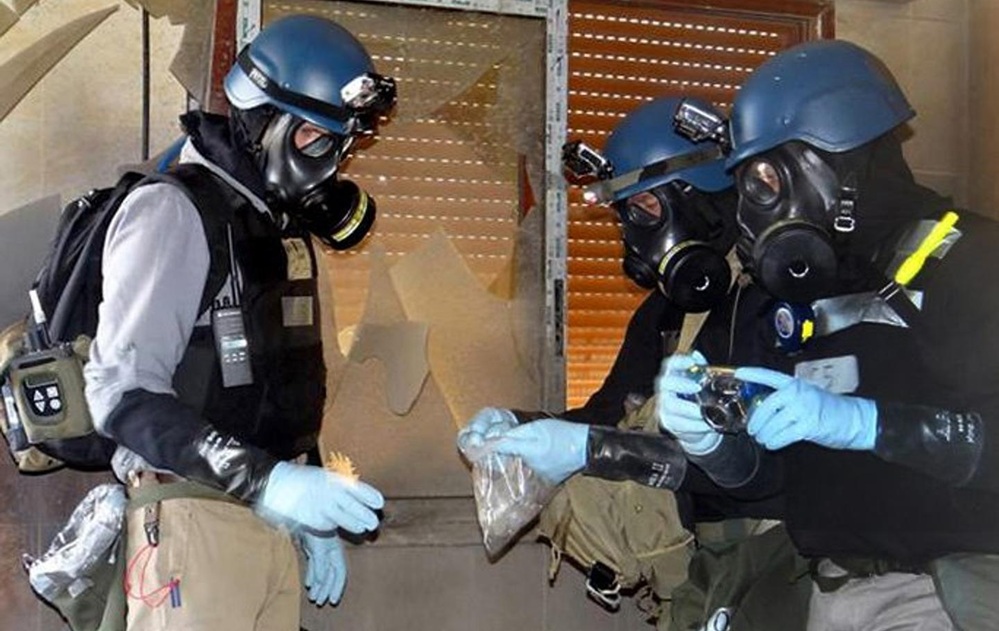
Shibbir Ahmed, UNITED NATIONS, NY — September 4, 2026: Syria has begun destroying remnants of the chemical weapons programme inherited from the government of former President Bashar al-Assad, marking a major step in the country’s efforts to dismantle its clandestine chemical arsenal under international oversight.

The development was highlighted during a United Nations Security Council briefing on Syria’s chemical weapons programme, where UN officials reported that the Organisation for the Prohibition of Chemical Weapons (OPCW) had verified the destruction of chemical munitions in Syria for the first time since 2014.

UN High Representative for Disarmament Affairs Izumi Nakamitsu told the Council that the verified destruction represented “significant progress” in international efforts to eliminate Syria’s remaining chemical weapons capabilities.

According to UN and Reuters reporting, the destruction includes 42 aerial bombs, along with additional chemical-weapons-related production and storage facilities. The verification represents the first confirmed destruction of Syrian chemical munitions by the OPCW since the international disarmament process began more than a decade ago.

Remnants discovered after Assad’s fall

The latest operation follows the discovery earlier this year of previously undeclared chemical-weapons materials in Syria. In May, an OPCW expert team working with Syrian authorities reported finding previously undeclared chemical munitions, chemical substances, equipment and extensive documentation linked to the former government’s chemical weapons programme.

The OPCW said its investigation found dozens of previously undeclared chemical munitions, including aerial bombs of the same type associated with chemical attacks in Ltamenah in 2017 and Khan Shaykhun in 2017, as well as rockets of a type associated with the 2013 Ghouta chemical attack.

The discovery was significant because the OPCW had repeatedly raised questions about gaps and inconsistencies in Syria’s earlier declarations concerning the full extent of its chemical weapons programme. Following the fall of the Assad government in December 2024, Syria’s new authorities opened the door to renewed international inspections and cooperation with the OPCW.

International verification

The OPCW plays the central technical role in identifying, securing and destroying Syria’s remaining chemical weapons materials, while the issue continues to be addressed by the UN Security Council under its existing mandate.

The OPCW said in July that Syria’s rights and privileges under the Chemical Weapons Convention had been reinstated after the country’s new authorities demonstrated progress in cooperating with the organisation. The decision followed steps including amendments to Syria’s declaration, preparations for facility agreements and plans for verification and destruction activities.

The current process is therefore not simply a Syrian announcement of destruction. The significance lies in the fact that the destruction has been independently verified by the OPCW.

That distinction is crucial in international chemical-weapons disarmament, where verification is intended to establish that declared materials have actually been destroyed and cannot simply be transferred, concealed or reused.

Damascus promises further action

Syria’s representative to the United Nations, Ibrahim Olabi, told the Security Council that the destruction programme was intended to protect Syrians and prevent chemical weapons from falling into the wrong hands. The Syrian government has said it is cooperating with international experts to address the chemical weapons legacy left by the previous government.

The authorities are also preparing legal proceedings involving individuals allegedly connected to the former chemical weapons programme. Reuters reported that Syria is preparing trials involving 18 suspects, including senior figures allegedly connected to the programme.

The move could add an important accountability dimension to the international disarmament effort: not only destroying the remaining weapons and materials, but also investigating responsibility for their development and use.

Concerns over military activity

The Security Council discussion also reflected broader regional tensions. Syria’s UN representative criticized Israeli military actions in Syria, arguing that strikes could complicate chemical-weapons operations and place personnel involved in the destruction process at risk. Türkiye also raised concerns that Israeli military activity could make the disarmament effort more difficult.

Those claims remain part of the broader political dispute surrounding Syria and should be distinguished from the independently verified technical findings concerning chemical-weapons destruction.

A milestone after more than a decade

The latest development represents a significant change from the period when Syria’s chemical weapons programme was the subject of intense international confrontation. Syria joined the Chemical Weapons Convention in 2013, following international pressure after the deadly chemical attack in Ghouta. The OPCW subsequently supervised the removal and destruction of declared chemical weapons, but questions remained about whether Syria had fully disclosed the scope of its programme.

The discovery of previously undeclared materials in 2026 reinforced those concerns. The new Syrian authorities’ cooperation with the OPCW has now created an opportunity for international inspectors to revisit sites, collect documentation, identify undeclared materials and oversee their destruction.

The OPCW said its current work includes efforts to establish a complete and accurate inventory of remnants of the Assad-era programme and ultimately ensure their destruction in accordance with the Chemical Weapons Convention.

UN welcomes progress but warns work remains

The UN briefing made clear that the destruction of 42 aerial bombs and other materials does not mean the Syrian chemical weapons dossier is closed. International inspectors still have work to do to determine the full extent of the former programme, verify Syria’s declarations and oversee the destruction of remaining chemical-weapons-related materials.

The OPCW has previously said that more than 100 locations across Syria were considered potentially relevant to the former chemical weapons programme, with high-priority sites selected for investigation based on information gathered over many years.

For the United Nations and the OPCW, the immediate objective is therefore twofold: complete the inventory and ensure the irreversible destruction of everything that remains. The first verified destruction since 2014 nevertheless represents an important milestone.

After years of international disputes over Syria’s chemical weapons declarations, the combination of renewed Syrian cooperation, OPCW inspections and verified destruction could mark the beginning of a new phase in efforts to permanently eliminate the country’s chemical weapons legacy.

For the Security Council, however, the challenge remains ensuring that the process continues safely, transparently and under international verification until the entire inherited programme is accounted for and eliminated.


Trump Warns Iran of More U.S. Strikes as Middle East Conflict Escalates

Shibbir Ahmed, WASHINGTON DC — President Donald Trump has warned Iran that the United States is prepared to launch additional military strikes, as the latest round of fighting between Washington and Tehran threatens to widen into a broader regional conflict.

Trump’s warning came after U.S. forces conducted a major wave of strikes against Iranian targets, which the U.S. military said included air-defense systems, radar installations, maritime assets, mine-laying capabilities and communications facilities.

Speaking to reporters in the Oval Office on Wednesday, Trump said the United States had hit Iran “very hard” and was prepared to carry out another attack whenever he believed it was necessary. The warning came as Iran continued its retaliation against U.S. positions and regional countries hosting American forces.

Iran launches missiles and drones toward Kuwait

The conflict took another dangerous turn Thursday when Kuwait said its air-defense systems confronted incoming Iranian missiles and drones. Kuwait hosts several U.S. military facilities and has become increasingly exposed to the consequences of the widening U.S.–Iran confrontation. The Kuwaiti military said the attacks were hostile missile and drone strikes originating from Iran, although it did not immediately report casualties.

The latest attack follows Iranian strikes and attempted strikes against locations associated with U.S. forces across the Gulf and surrounding region. The developments have raised fears that the conflict could increasingly involve U.S. allies and partners, turning the confrontation between Washington and Tehran into a wider regional crisis.

U.S. strikes target Iranian military infrastructure

The Pentagon’s Central Command said the latest U.S. operation targeted Islamic Revolutionary Guard Corps facilities and military infrastructure. Among the targets were air-defense sites, radar systems, maritime equipment, communications facilities and capabilities that the United States says could threaten shipping through the strategically vital Strait of Hormuz.

The waterway is one of the world’s most important energy corridors, carrying a significant portion of global oil shipments. The renewed fighting has already disrupted commercial shipping through the area. Reuters reported Thursday that only six vessels passed through the Strait of Hormuz on Wednesday, compared with a normal daily average of about 13.

Civilian casualties increase pressure on Washington

The latest U.S. strikes have also generated concern over civilian casualties. Iranian officials reported that a strike in southern Iran hit a wedding gathering, with civilians among those killed and wounded. U.S. Central Command said the American military does not target civilians and said it was reviewing the reports.

Reuters reported Thursday that Iranian officials had reported 18 civilian deaths and more than 100 people wounded in the latest U.S. strikes. The competing claims have become another source of tension as the two sides present sharply different accounts of the conflict.

The United States maintains that its operations are directed against Iranian military capabilities, while Iranian officials accuse Washington of attacking civilian infrastructure and violating international law.

Iran reports military casualties

Iran has also suffered significant military losses during the latest American strikes. According to Iran’s semi-official Tasnim news agency, at least 13 Iranian military personnel have been killed in U.S. strikes this week. The reported dead include members of Iran’s regular military, the Islamic Revolutionary Guard Corps and its paramilitary forces.

The casualties come after a month-long lull in major direct hostilities. The latest fighting began again over the weekend, with the United States saying it had attacked Iranian launchers preparing to fire rockets into the Strait of Hormuz. Iran then retaliated against U.S.-linked targets in the region.

Gulf states caught between Washington and Tehran

The widening conflict is placing America’s Gulf partners in an increasingly difficult position. Countries including Kuwait, Bahrain, Qatar and the United Arab Emirates host important U.S. military facilities while maintaining their own relationships with the United States and other international powers.

Iran’s attacks or attempted attacks against locations in these countries raise the possibility that regional governments could become directly involved in the conflict even if they do not seek confrontation with Tehran.

Kuwait’s latest experience illustrates the problem. Although Kuwait is not a direct party to the U.S.–Iran war, its territory and military infrastructure are exposed because of the presence of American forces. Analysts have warned that Gulf states could face increasing pressure if Washington and Tehran continue exchanging attacks.

Strait of Hormuz becomes critical flashpoint

The Strait of Hormuz has emerged as one of the most important flashpoints in the conflict. The narrow waterway connects the Persian Gulf with the Gulf of Oman and the Arabian Sea and is critical to international energy markets. Any prolonged disruption could affect oil supplies, shipping costs and fuel prices around the world.

Oil markets reacted sharply to the latest escalation. Reuters reported Thursday that Brent crude rose to around $96 a barrel, while U.S. West Texas Intermediate crude approached $92 a barrel, putting both benchmarks near six-week highs. Higher energy prices could eventually increase transportation and consumer costs and add to inflationary pressures in the United States and other economies.

Pentagon prepares for a prolonged conflict

The military situation also suggests that Washington is preparing for the possibility that the conflict could last longer than initially expected.The Wall Street Journal reported Thursday that Defense Secretary Pete Hegseth has extended Middle East deployments into 2027. Approximately 50,000 U.S. troops remain in the region, supported by warships, air-defense systems, fighter aircraft and other military assets.

The deployment decisions indicate that, despite Trump’s public suggestion that the renewed campaign would not continue indefinitely, the Pentagon is maintaining a substantial military presence in the region.

That creates a complicated policy situation for the Trump administration. On one hand, the president has signaled that he wants to maintain pressure on Iran and has repeatedly warned Tehran against attacking American forces. On the other, prolonged military operations carry significant costs and risks, particularly if American forces become increasingly exposed to Iranian retaliation.

Political pressure grows ahead of midterm elections

The conflict is also unfolding against the backdrop of the November 2026 midterm elections. Reuters has reported that some Trump administration officials want to avoid allowing the war to dominate the political environment before voters go to the polls, while internal discussions have continued over whether the military campaign should be expanded or brought toward an end.

That creates a difficult political calculation for the White House. A continued military campaign could increase pressure over casualties, military spending and civilian deaths.But stepping back without achieving the administration’s stated objectives could create its own political challenges.

Trump has attempted to maintain flexibility, suggesting that the United States can strike again if necessary while also indicating that the renewed campaign will not necessarily continue indefinitely.

No clear diplomatic breakthrough

Despite occasional references to diplomacy, there is currently no clear indication of a comprehensive agreement between Washington and Tehran that would bring the conflict to an end. Instead, the latest developments point toward continued military pressure and retaliation.

The danger is that an attack initially directed at U.S. or Iranian military targets could trigger a chain reaction involving Gulf states, commercial shipping or other regional actors. The reported Iranian attack on Kuwait demonstrates how quickly the geographic scope of the conflict can expand.

A conflict with global consequences

The U.S.–Iran confrontation is no longer simply a bilateral military dispute. It has become a major international security and economic issue. The conflict is affecting shipping through the Strait of Hormuz, pushing oil prices higher and forcing Gulf governments to strengthen their defenses. It is also placing thousands of American service members across the Middle East in an increasingly dangerous environment.

For Iran, continued U.S. strikes threaten military infrastructure and economic interests while creating pressure on Tehran to demonstrate that it can retaliate. For Washington, the central challenge is balancing military pressure against the risk of a wider war.

Trump’s latest warning that the United States can launch another strike whenever it chooses underscores the uncertainty. Whether that warning becomes another military operation or part of a broader effort to force Iran back toward negotiations could determine the next phase of the conflict.

For now, however, the message from Washington is clear the United States has not ruled out further strikes, while Iran continues to retaliate. And with Gulf states increasingly exposed and the Strait of Hormuz under growing pressure, the consequences of the next move could extend far beyond the battlefield.