US, Partners Reaffirm UN Restrictions on Iran One Year After Snapback

Shibbir Ahmed, Washington DC  — The United States and dozens of partner countries have reaffirmed their commitment to implementing United Nations restrictions on Iran, one year after a series of UN Security Council resolutions were restored through the so-called “snapback” mechanism. In a joint statement issued October 2, the countries participating in the Proliferation Security Initiative (PSI) said they would continue implementing the obligations contained in six UN Security Council resolutions that returned into force on September 27, 2025.

The resolutions are UNSCR 1696 (2006), 1737 (2006), 1747 (2007), 1803 (2008), 1835 (2008) and 1929 (2010). According to the statement, France, Germany and the United Kingdom initiated the snapback process in response to what they described as Iran’s “persistent and significant non-performance” of its nuclear commitments under the Joint Comprehensive Plan of Action (JCPOA).

The United States and its PSI partners said they remain committed to preventing the supply, sale or transfer to Iran of materials, equipment, goods and technology that could contribute to proliferation-sensitive nuclear activities or the development of nuclear-weapons delivery systems. They also reaffirmed restrictions on the supply, sale or transfer of arms and related materiel to or from Iran.

The participating countries said they would strengthen their domestic legal authorities and capabilities to address proliferation-sensitive activities involving Iran. Their commitments include preventing direct or indirect transfers of items that could contribute to weapons of mass destruction and their means of delivery, including unmanned aerial vehicles (UAVs), as well as materials covered by the reinstated UN arms restrictions.

The countries also pledged to improve information-sharing among PSI partners concerning Iran’s proliferation activities and to review national legal authorities where necessary to ensure that enforcement measures remain effective. They further committed to taking appropriate actions in support of interdiction efforts involving Iran’s proliferation-related activities. The joint statement welcomed national-level efforts to implement the reinstated UN obligations and cited activities linked to Operation Economic Outcast as supporting the broader objective of preventing Iran from acquiring a nuclear weapon.

The participating states called on all UN member countries to implement the reinstated resolutions and said they would continue coordinating counterproliferation efforts to prevent Iran from undertaking activities prohibited under the resolutions, including efforts related to its nuclear and ballistic missile programs. They also urged Tehran to return to compliance with its nonproliferation obligations, cooperate fully with the International Atomic Energy Agency (IAEA), and address what the signatories described as international concerns over Iran’s nuclear activities.

The snapback process began in August 2025, when France, Germany and the United Kingdom notified the UN Security Council that they considered Iran to be in significant non-performance of its JCPOA commitments. The process culminated on September 27, 2025, when the six earlier Security Council resolutions returned into force.

The status and legality of the snapback have been disputed by Iran, which has argued that the mechanism was invalid and that the states invoking it lacked the authority to restore the earlier resolutions. The dispute has remained part of the broader international debate over the future of the JCPOA and Iran’s nuclear program. The October 2 statement was signed by a broad group of PSI-endorsing countries, including the United States, Canada, France, Germany, the United Kingdom, Japan, Australia, Israel, South Korea and numerous European and other partner states.


Iranian Delegation Leaves New York Early Amid US-Iran Tensions

Shibbir Ahmed, New York — U.S. Secretary of State Marco Rubio ordered Iranian Foreign Minister Abbas Araghchi and his delegation to leave New York earlier than scheduled, according to two U.S. officials familiar with the matter, adding a new dimension to ongoing diplomatic tensions between Washington and Tehran. Iranian President Masoud Pezeshkian left New York last week after delivering his address to the United Nations General Assembly. Araghchi, however, remained in the city as efforts continued toward indirect discussions with the United States on reopening the Strait of Hormuz, ending the ongoing conflict and restarting negotiations over Iran’s nuclear program.

According to U.S. officials, weekend meetings involving Iranian and Qatari mediators produced little progress. Rubio subsequently instructed the Iranian delegation on Monday to leave New York immediately. One U.S. official said the delegation had remained in the country after the high-level UN meetings had ended and was no longer expected to stay. Araghchi and members of his delegation left New York early Tuesday and were expected to travel back to Iran via Doha, Qatar.

Iran, however, rejected the U.S. account. Iran’s permanent mission to the United Nations said the delegation had not been ordered to leave or expelled from the United States. The mission said its departure schedule had been arranged in advance and had been communicated to the U.S. State Department on September 17.

The Iranian mission also accused Washington of spreading what it described as “baseless” reports following the lack of progress in the negotiations. The conflicting accounts have highlighted the differences between Washington and Tehran over the circumstances surrounding the delegation’s departure.

Indirect discussions between the United States and Iran have continued with Qatar playing a mediating role. Key issues remain unresolved, including the reopening of the Strait of Hormuz, sanctions, frozen Iranian assets, the ongoing conflict and Iran’s nuclear program.

The departure of the Iranian delegation comes as diplomatic contacts between Washington and Tehran continue, but the two sides have yet to reach an agreement aimed at resolving the broader conflict and their longstanding disputes.


Trump Reportedly Rejects Iran’s Proposal to Reopen Strait of Hormuz

Washington DC — U.S. President Donald Trump has reportedly rejected an Iranian proposal aimed at reopening the Strait of Hormuz within seven days and ending fighting across the region, according to a report by The Wall Street Journal cited by Reuters.

Iran has been seeking an agreement that would reopen the strategically important waterway and establish a pause in the wider regional conflict. Tehran said the proposal was transmitted to the United States through Qatari mediators.

Iranian Foreign Minister Abbas Araqchi said the plan would trigger a seven-day countdown to reopening the strait if Washington agreed to the terms. Tehran has also called for the lifting of U.S. restrictions affecting Iranian ports, the release of frozen Iranian funds and the removal of oil sanctions.

However, The Wall Street Journal reported that Trump had rejected the proposal. Reuters said it could not immediately independently confirm the report, and Iran was still awaiting an official U.S. response.

The uncertainty comes as the Strait of Hormuz remains central to the international economic consequences of the conflict. The waterway is a critical route for global energy shipments, and prolonged disruption has contributed to concerns about oil supplies and shipping costs.

Iran has said it is prepared to discuss broader issues after hostilities are paused, but Tehran has ruled out concessions on several aspects of its nuclear program. The latest developments leave the diplomatic initiative in an uncertain position as Washington considers its response and regional tensions continue.


Iran Proposes Seven-Day Plan to Reopen Strait of Hormuz

Shibbir Ahmed, New York — Iran has proposed a plan that could reopen the strategically important Strait of Hormuz within seven days and pause fighting across the region, Iranian officials said during the United Nations General Assembly in New York.

Iranian Foreign Minister Abbas Araqchi said the proposal was transmitted to the United States through Qatari mediators. Under the proposal, a seven-day countdown would begin once Washington agrees to the terms, potentially leading to the reopening of the strategic waterway and a halt to hostilities. The Strait of Hormuz is one of the world’s most important energy-shipping routes, making its continued disruption a major concern for global oil markets and international trade.

Iran’s proposal reportedly calls for the United States to lift its blockade on Iranian ports, release frozen Iranian funds and waive oil sanctions. Tehran has also indicated that broader negotiations could follow once fighting is halted.

Iranian officials have said they are not prepared to make concessions on their nuclear program as part of the proposal. Tehran maintains that it retains rights related to uranium enrichment and has rejected demands that it surrender highly enriched uranium.

The initiative comes amid continuing military tensions across the Middle East. The disruption of oil shipments through the Strait of Hormuz has added pressure to global energy markets and raised concerns about alternative shipping routes.

Iran has also discussed safe shipping arrangements in the strait with Saudi Arabia, according to Iranian officials. The United States has not formally accepted Iran’s proposal, leaving the status of the initiative uncertain.


Trump Defends Iran War, Warns of ‘Annihilation’ Without Deal in UN Speech

Shibbir Ahmed, New York — U.S. President Donald Trump used his address to the United Nations General Assembly on Tuesday to defend his administration’s military actions abroad, warn Iran of further escalation if it does not reach a peace agreement, and call for an end to the war in Ukraine. In a roughly 37-minute address at the 81st session of the UN General Assembly in New York, Trump outlined his foreign-policy priorities, including Iran, Ukraine, Venezuela, Cuba, Mexico, artificial intelligence and reform of the United Nations.

Trump strongly defended the U.S.-Israeli military campaign against Iran, saying the operation had prevented Tehran from obtaining a nuclear weapon. He warned that the United States could “annihilate” Iran if a peace agreement is not reached, while also saying he believes a deal could be reached after the U.S. midterm elections on Nov. 3.

“I believe we’ll make a deal right after the election because it doesn’t make sense for them not to,” Trump said. Trump also addressed the Russia-Ukraine war, saying the United States was working with both Moscow and Kyiv and expressing confidence that a settlement could be reached.

“We will get that one done,” Trump said, adding that an agreement could come sooner than many people expect. The president also highlighted U.S. actions in Venezuela and the wider Western Hemisphere. He said Washington would not allow threats against the United States to establish a foothold in the region and said the country would use its military power when necessary to protect what he described as vital U.S. national interests.

On Cuba, Trump described the country as a failed state and said his administration was seeking fundamental political change there. “Communism will never be coming to America, but freedom will be coming to Cuba,” he said. Members of the Cuban delegation walked out of the General Assembly hall while Trump was discussing Cuba, Reuters reported.

Trump also criticized Mexico over drug-cartel violence and described the fight against cartels as a major U.S. security priority. He said his administration had carried out strikes against cartel groups and argued that the United States needed to take stronger action against organizations it considers terrorist threats.

Artificial intelligence was another major theme of the speech. Trump said his administration would use the term “super intelligence” rather than artificial intelligence in official communications and argued against international restrictions that could limit technological development.

He said the United States was leading China and other countries in the AI race and argued that AI could become more transformative than the Industrial Revolution. Trump also renewed his criticism of the International Criminal Court, urging member countries to withdraw and arguing that the court should not have jurisdiction over U.S. military personnel.

Turning to the United Nations itself, Trump said the organization had significant potential but called for further reforms, including reductions in bureaucracy and spending. He criticized what he described as the influence of “globalist bureaucrats” and said the United States would continue pushing for changes at international institutions.

The speech comes as world leaders gather in New York amid continuing conflicts in the Middle East and Ukraine, uncertainty over global economic conditions and growing debate over the international governance of artificial intelligence. The UN’s 81st General Assembly general debate runs from Sept. 22 through Sept. 28.


Saudi Arabia Seeks Air Defense Support as Interceptors Run Low

RIYADH — Saudi Arabia is seeking additional air-defense support from regional and Western allies as its stocks of missile interceptors come under pressure amid intensifying attacks by Yemen’s Iran-backed Houthi rebels, according to two regional officials. The officials told The Associated Press that Saudi Arabia has asked France, Britain, Pakistan and Egypt to deploy air-defense capabilities to the region to help counter missiles and drones launched by the Houthis and other Iran-backed groups. Saudi officials had not immediately confirmed the requests.

The reported requests come as Saudi Arabia faces increasing attacks against its territory, military facilities and energy infrastructure. The kingdom has also been seeking to protect vital oil facilities and shipping routes amid the wider regional conflict. The officials said Saudi Arabia’s need for additional support is partly linked to pressure on U.S. stocks of missile interceptors after more than six months of war with Iran. The United States has been Saudi Arabia’s principal military ally and arms supplier.

The escalation has opened another front in the broader regional conflict. Houthi forces have intensified their attacks while Saudi Arabia has carried out airstrikes against targets in Yemen. Reuters reported Thursday that fighting between the two sides had intensified, with missiles and drones launched toward Saudi territory.

Saudi Arabia said earlier this week that it intercepted a Houthi drone south of Mecca before it entered restricted airspace over the holy city. The Houthis denied targeting Mecca. The Saudi Civil Defense said Thursday that debris from an intercepted Houthi drone killed one person and injured two others in Taif province. The incident was reported amid a wider increase in drone attacks targeting Saudi territory and energy infrastructure.

Saudi Arabia is also facing pressure on its energy infrastructure. A key East-West oil pipeline has been shut following an attack linked to Iran-aligned militias in Iraq, while attacks and disruptions around the Red Sea and Strait of Hormuz have affected regional energy and shipping routes.

Britain has acknowledged its close defense partnership with Saudi Arabia but has not confirmed whether Riyadh formally requested British military assistance. Officials from Turkey and Pakistan have also said they had not received a Saudi request for military support under their recently established defense arrangement.

The United States has maintained contact with Saudi authorities and is providing intelligence-sharing and planning support, but Washington has so far stopped short of directly entering the fighting against the Houthis.

Saudi Arabia’s reported search for additional air-defense assistance comes as the regional conflict places growing demands on missile-defense systems and raises concerns over the security of energy infrastructure and major maritime trade routes.


Republican lawmaker seeks Hegseth impeachment over Iran war

Shibbir Ahmed, WASHINGTON DC: Republican Rep. Thomas Massie on Tuesday filed articles of impeachment against Defense Secretary Pete Hegseth, accusing him of conducting military action against Iran without congressional authorization.

Massie, a Kentucky Republican and outspoken critic of the U.S. war in Iran, filed the impeachment resolution as a privileged measure, meaning the House is required to take it up within two legislative days.

The lawmaker’s resolution accuses Hegseth of abusing his office by carrying out hostilities against Iran without a declaration of war or specific authorization from Congress. Massie has argued that the administration’s continued military operations violate Congress’s constitutional authority over decisions to initiate war.

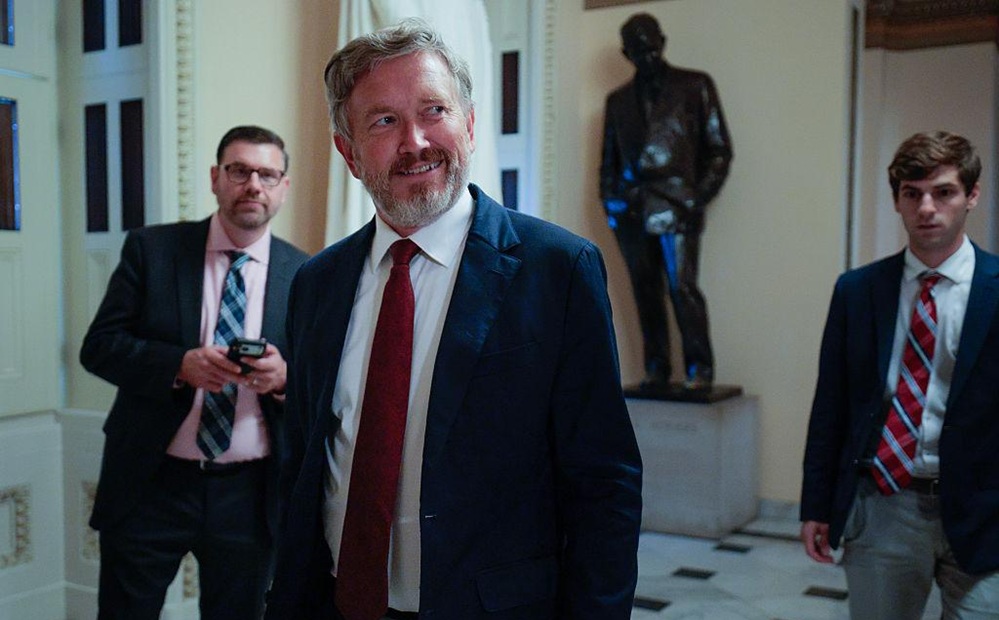
Rep. Thomas Massie, the Republican congressman from Kentucky who filed the impeachment articles against Defense Secretary Pete Hegseth today.

The move comes as the United States remains involved in the conflict with Iran, which began with U.S.-Israeli strikes on Iran on February 28. Massie has repeatedly opposed the war and has also criticized U.S. military support for Israel. The Pentagon rejected the impeachment effort and reaffirmed its support for Hegseth.

“The entire Department is unified behind the Secretary’s vision and will continue working to put our warfighters and America first,” Pentagon press secretary Kingsley Wilson said in a statement. The impeachment effort is unlikely to secure the support needed to remove Hegseth, but Massie’s filing could force House members to take a position on the administration’s military actions.

Massie is not seeking reelection after losing the Republican primary earlier this year to Ed Gallrein, a candidate endorsed by President Donald Trump. His opposition to the Iran war has been a prominent feature of his congressional record. The filing comes amid continuing debate on Capitol Hill over the extent of the president’s authority to conduct military operations without explicit congressional authorization.


US Sanctions Russian VTB Bank Over Iran Sanctions Evasion

Shibbir Ahmed, New York — The United States has imposed new sanctions on Russia’s VTB Bank, accusing the major financial institution of helping Iran evade U.S. sanctions and establishing correspondent banking relationships with sanctioned Iranian banks. The U.S. Department of the Treasury’s Office of Foreign Assets Control (OFAC) announced the action on September 14 under the administration’s Operation Economic Outcast, a campaign aimed at disrupting the Iranian regime’s financial networks and sources of revenue.

“Under Operation Economic Outcast, Treasury will continue to target and disrupt those who provide material, technological, or financial support that allows the Iranian regime to sustain its terrorist enterprise,” Treasury Secretary Scott Bessent said. Bessent added that the United States would continue identifying, exposing and isolating individuals and institutions that support the Iranian regime.

VTB Accused of Expanding Ties With Iran

According to the Treasury Department, VTB Bank, one of Russia’s largest financial institutions, has expanded its banking presence in Iran in recent years as Moscow and Tehran have sought to deepen economic and trade ties.

U.S. authorities said VTB established correspondent banking relationships with Iranian financial institutions already under sanctions and began taking additional steps to expand its presence in Tehran in January 2025.

The Treasury Department also accused the bank of helping establish a settlement mechanism using Iranian rials and Russian rubles through correspondent accounts, with the aim of facilitating bilateral trade. U.S. officials further alleged that VTB took steps to move billions of dollars in frozen Iranian assets.

Operation Economic Outcast

The Treasury Department announced Operation Economic Outcast on August 24, describing the campaign as an effort to sever the remaining economic lifelines supporting the Iranian regime. The operation focuses on financial networks involved in oil smuggling, sanctions evasion and the financing of Iran’s security apparatus, terrorist proxies and other affiliated networks.

Washington has warned foreign financial institutions that continuing significant business with sanctioned Iranian entities could expose them to secondary sanctions and potentially restrict their access to the U.S. financial system. The Treasury Department said it is also working with partners in the European Union, the United Kingdom and Gulf countries to target financial channels connected to Iran.

VTB Already Under U.S. Sanctions

The latest action is not the first time VTB Bank has been targeted by the United States. OFAC previously designated VTB in January 2025 under sanctions authorities targeting Russia’s financial sector. The bank was also sanctioned in February 2022 over its ties to the Russian government and its operations in Russia’s financial services sector. The new designation adds Iran-related sanctions exposure to the bank’s existing restrictions.

Assets Blocked

Under the latest action, all property and interests in property belonging to VTB Bank that are located in the United States or held by U.S. persons are blocked and must be reported to OFAC. U.S. persons are generally prohibited from conducting transactions involving the blocked property unless authorized by OFAC or covered by an applicable exemption. The restrictions also extend to entities that are owned, directly or indirectly, 50% or more by one or more blocked persons.

Foreign financial institutions engaging in certain significant transactions involving designated entities may also face the risk of secondary sanctions, including restrictions on their ability to maintain correspondent or payable-through accounts in the United States.

The Treasury Department said the latest action sends a broader warning to foreign banks and businesses that facilitate Iran’s efforts to circumvent U.S. sanctions. Washington is expected to continue targeting financial institutions and other entities that it says provide Iran with access to international financial networks.


Iran Says Hormuz Will Remain Closed Amid Stalled Diplomacy

Shibbir Ahmed, New York — Iran has said the strategically vital Strait of Hormuz will remain closed despite efforts to revive regional diplomacy, as a planned meeting between Iran and Gulf states was postponed and concerns over global energy supplies continued to grow.

Iranian Foreign Minister Abbas Araghchi said an agreement reached with Oman over arrangements for maritime traffic through the strait would not mean the waterway would be reopened. Tehran has linked any reopening to the United States returning to commitments made under an earlier peace understanding.

The planned meeting in Oman, which was expected to bring together Iran, Iraq and Gulf Arab states to discuss navigation through the Strait of Hormuz, was postponed on Monday. Oman’s Foreign Minister Badr Albusaidi said the delay was intended to allow more time to build consensus among the participating countries.

The diplomatic setback comes as tensions around the region’s major energy routes continue to rise. Shipping traffic through Hormuz has fallen sharply, with only a small number of commodity vessels recorded passing through the waterway over the weekend, well below the recent daily average.

The Strait of Hormuz is one of the world’s most important energy chokepoints, carrying a significant share of global crude oil and liquefied natural gas supplies. Disruption to the route has already contributed to a sharp increase in oil prices, with Brent crude rising above $107 a barrel on Monday.

Iran has also warned vessels that violate its maritime protocols. Its Strait Authority issued an updated list of 77 vessels accused of violating Iranian rules and warned that sanctioned ships could face penalties including fines, detention or confiscation.

The stalled diplomacy has increased fears that the disruption could persist, putting further pressure on global energy markets, shipping costs and economies dependent on Gulf oil and gas.


Nearly 86,000 Flee Yemen Fighting: UN

Shibbir Ahmed, New York — Nearly 86,000 people have fled their homes in Yemen as fighting between government forces and Iran-backed Houthi rebels intensifies, the United Nations said, citing displacement figures from the International Organization for Migration (IOM).

IOM said 85,818 people had been displaced by the renewed fighting, including 82,164 since the beginning of September alone. The latest wave of displacement has followed intensified hostilities along Yemen’s western coast and in parts of Taiz and Al-Hodeidah. Taiz has emerged as one of the areas hardest hit by the renewed fighting, with about 9,280 households—nearly 56,000 people—displaced, according to IOM figures.

The escalation comes as the Houthis advance along Yemen’s Red Sea coast, raising fears of a wider conflict and further civilian displacement. The Iran-backed group has made gains in areas near the strategic port of Mocha and the Bab el-Mandeb Strait.

The Bab el-Mandeb connects the Red Sea with the Gulf of Aden and is one of the world’s most important maritime routes. Any prolonged disruption in the area could affect international shipping, global trade and energy supplies.

The humanitarian crisis is also spilling beyond Yemen’s borders. More than 2,000 Yemenis fleeing the violence have reached Djibouti by sea, according to IOM. The crossings add another layer of danger for people already displaced by the conflict.

IOM Director General Amy Pope warned that behind the displacement figures are families who have repeatedly lost their homes and livelihoods. Many people fleeing the latest violence are crossing the sea with little more than what they can carry because they have few remaining options for safety.

Yemen has endured more than a decade of conflict since the Houthis seized the capital, Sanaa, in 2014. A UN-brokered truce in 2022 brought a period of relative calm and largely halted major fighting, but it expired after six months without producing a lasting political settlement.

The renewed offensive has raised fears that Yemen could once again descend into prolonged large-scale warfare. Humanitarian agencies have warned that continued fighting and repeated displacement will put additional pressure on families already struggling with poverty, food insecurity and limited access to basic services.

With tens of thousands of people newly displaced and thousands more crossing the sea to Djibouti, the latest escalation threatens to deepen one of the world’s longest-running humanitarian crises.