30 Nations Condemn Iran Over RAF Fairford Incident

Shibbir Ahmed, Washington DC — The United States, the United Kingdom and 28 partner countries have jointly condemned what they describe as Iran-linked hostile activities, while backing Britain’s attribution of Iran’s involvement in an incident at Royal Air Force (RAF) Fairford on September 27. In a joint statement released Monday, the 30 governments said they recognized the United Kingdom’s attribution of Iran’s involvement in the incident. The statement also cited Britain’s assessment that the event demonstrated the Islamic Revolutionary Guard Corps (IRGC)’s continued willingness to project hostile activity beyond Iran’s borders through covert networks and proxy actors.

The statement was issued by the governments of the United States, the United Kingdom, Australia, Austria, Belgium, Bulgaria, Canada, Croatia, the Czech Republic, Denmark, Estonia, Finland, France, Germany, Greece, Hungary, Ireland, Latvia, Lithuania, Luxembourg, the Netherlands, New Zealand, Norway, Portugal, Romania, Slovakia, Slovenia, Spain and Sweden.

The governments condemned what they characterized as Iran’s use of violent attacks and other hostile activities, including lethal plotting, arson, sabotage, cyberattacks and other forms of hybrid operations against their countries and partners.

The joint statement linked the RAF Fairford incident to a broader series of recent attacks across Europe targeting Jewish communities, Iranian journalists and U.S. interests. According to the statement, the attacks were claimed by Harakat Ashab al-Yamin al-Islamiya (HAYI). The governments cited these developments as part of their broader concerns about threats and hostile activities allegedly carried out through proxies or other means.

The statement did not provide further operational details about the September 27 incident at RAF Fairford, identify suspects, or outline the evidence supporting the British attribution. Those details would require confirmation from official investigative sources.

The 30 governments warned that attempts to threaten, silence, intimidate, harass, harm or coerce people within their territories would not be tolerated, regardless of whether the activities were conducted directly or through proxies. They pledged to coordinate efforts to identify, investigate and disrupt hostile activities, prosecute those responsible where appropriate, and strengthen cooperation to protect their communities and national sovereignty.

The statement also emphasized the importance of improving national resilience, strengthening international coordination and ensuring accountability for those responsible for hostile acts. Although the governments issued a strong collective warning, the statement did not announce specific new sanctions, arrests or military measures against Iran.

The joint declaration underscores the signatories’ stated concern about alleged covert operations, threats against journalists and attacks affecting Jewish communities and U.S. interests in Europe. The reference to the IRGC is particularly significant because the statement attributes the alleged broader pattern of hostile activity to Iran’s capacity to operate beyond its borders through covert networks and proxy actors.

The declaration represents a coordinated diplomatic position among the participating governments. However, the specific circumstances of the RAF Fairford incident, the evidence behind the attribution and any potential legal or diplomatic consequences remain matters requiring further official clarification.


US, Partners Reaffirm UN Restrictions on Iran One Year After Snapback

Shibbir Ahmed, Washington DC  — The United States and dozens of partner countries have reaffirmed their commitment to implementing United Nations restrictions on Iran, one year after a series of UN Security Council resolutions were restored through the so-called “snapback” mechanism. In a joint statement issued October 2, the countries participating in the Proliferation Security Initiative (PSI) said they would continue implementing the obligations contained in six UN Security Council resolutions that returned into force on September 27, 2025.

The resolutions are UNSCR 1696 (2006), 1737 (2006), 1747 (2007), 1803 (2008), 1835 (2008) and 1929 (2010). According to the statement, France, Germany and the United Kingdom initiated the snapback process in response to what they described as Iran’s “persistent and significant non-performance” of its nuclear commitments under the Joint Comprehensive Plan of Action (JCPOA).

The United States and its PSI partners said they remain committed to preventing the supply, sale or transfer to Iran of materials, equipment, goods and technology that could contribute to proliferation-sensitive nuclear activities or the development of nuclear-weapons delivery systems. They also reaffirmed restrictions on the supply, sale or transfer of arms and related materiel to or from Iran.

The participating countries said they would strengthen their domestic legal authorities and capabilities to address proliferation-sensitive activities involving Iran. Their commitments include preventing direct or indirect transfers of items that could contribute to weapons of mass destruction and their means of delivery, including unmanned aerial vehicles (UAVs), as well as materials covered by the reinstated UN arms restrictions.

The countries also pledged to improve information-sharing among PSI partners concerning Iran’s proliferation activities and to review national legal authorities where necessary to ensure that enforcement measures remain effective. They further committed to taking appropriate actions in support of interdiction efforts involving Iran’s proliferation-related activities. The joint statement welcomed national-level efforts to implement the reinstated UN obligations and cited activities linked to Operation Economic Outcast as supporting the broader objective of preventing Iran from acquiring a nuclear weapon.

The participating states called on all UN member countries to implement the reinstated resolutions and said they would continue coordinating counterproliferation efforts to prevent Iran from undertaking activities prohibited under the resolutions, including efforts related to its nuclear and ballistic missile programs. They also urged Tehran to return to compliance with its nonproliferation obligations, cooperate fully with the International Atomic Energy Agency (IAEA), and address what the signatories described as international concerns over Iran’s nuclear activities.

The snapback process began in August 2025, when France, Germany and the United Kingdom notified the UN Security Council that they considered Iran to be in significant non-performance of its JCPOA commitments. The process culminated on September 27, 2025, when the six earlier Security Council resolutions returned into force.

The status and legality of the snapback have been disputed by Iran, which has argued that the mechanism was invalid and that the states invoking it lacked the authority to restore the earlier resolutions. The dispute has remained part of the broader international debate over the future of the JCPOA and Iran’s nuclear program. The October 2 statement was signed by a broad group of PSI-endorsing countries, including the United States, Canada, France, Germany, the United Kingdom, Japan, Australia, Israel, South Korea and numerous European and other partner states.


US, Bangladesh Reaffirm Strong Defense Ties

DHAKA — U.S. Ambassador to Bangladesh Christensen and Chief of Army Staff General Waqar-Uz-Zaman have reaffirmed the enduring strength of the defense relationship between the United States and Bangladesh. In a statement following the meeting, Ambassador Christensen said he and General Waqar-Uz-Zaman reaffirmed their commitment to the longstanding defense partnership between the two countries.

The ambassador also expressed appreciation for Bangladesh’s substantial contribution to the Haiti Gang Suppression Force, highlighting the country’s role in international security efforts.

“Chief of Army Staff General Waqar-Uz-Zaman and I reaffirmed the enduring strength of the U.S.-Bangladesh defense relationship,” Christensen said.

“I also expressed my appreciation for Bangladesh’s substantial contribution to the Haiti Gang Suppression Force—an example of Bangladesh’s important role as a global security partner,” he added.

Bangladesh has a long-standing record of participation in international peace and security operations. Its contribution to the Haiti mission underscores the country’s continued engagement in multinational efforts to address security challenges. The meeting comes as Washington and Dhaka continue to strengthen cooperation in defense and security, alongside broader bilateral engagement between the two countries.


Security Council Meets on United Nations Peacekeeping Operations

Shibbir Ahmed, New York — The United Nations Security Council met on September 18 to discuss the future of United Nations peacekeeping operations amid increasingly complex conflicts and growing challenges facing peace missions around the world. The meeting, the Council’s 10,226th, focused on the changing nature of UN peace operations and the need to ensure that missions remain effective, adaptable and capable of responding to evolving security threats. The meeting was formally listed as “United Nations peacekeeping operations.”

UN Secretary-General António Guterres told the Council that many UN peacekeeping missions are now operating in environments where peace remains elusive. He called for greater emphasis on peacemaking and for peace operations to adapt to the realities of modern conflicts.

The discussion comes as the United Nations undertakes a broader review of the future of all forms of peace operations. The review, led jointly by the Department of Peace Operations and the Department of Political and Peacebuilding Affairs, was submitted to the General Assembly and Security Council in August 2026.

According to the UN, today’s conflicts are increasingly protracted and internationalized, while peace agreements are becoming harder to achieve. Peace missions also face emerging challenges including the increased use of drones, advanced weapons technologies, threats to civilians and civilian infrastructure, and the involvement of a wider range of state and non-state actors.

The United Kingdom said peace operations must remain adaptable, effective and suited to the challenges they face. In a statement to the Council, UK Deputy Permanent Representative Kate Foster said Britain was prepared to work with the United Nations to strengthen the effectiveness of peace operations.

Pakistan’s Permanent Representative to the United Nations, Asim Iftikhar Ahmad, also addressed the Council, highlighting Pakistan’s longstanding contribution to UN peacekeeping. Pakistan has been among the major contributors of troops and personnel to UN peacekeeping missions for decades.

The Council’s discussion comes at a critical time for several UN missions. In Lebanon, for example, the UN Interim Force in Lebanon (UNIFIL) is preparing for a scheduled withdrawal by the end of 2026, with UN officials stressing the importance of a smooth transition and continued coordination with Lebanese authorities and other UN agencies.

The Security Council’s September 18 meeting formed part of its September programme of work, during which members also addressed issues including Sudan, Afghanistan, the Middle East, terrorism and non-proliferation.

The broader debate is expected to continue as UN member states consider how peace operations can become more focused, flexible and responsive while maintaining their mandates to support peace and security.


Syria Destroys Assad-Era Chemical Weapons as UN Hails First Verified Destruction Since 2014

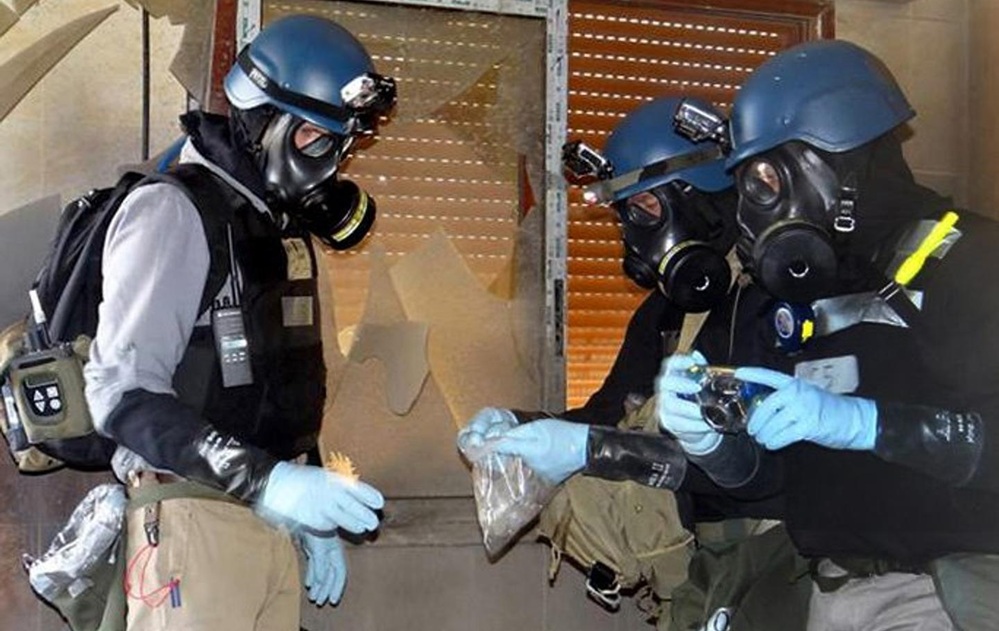
Shibbir Ahmed, UNITED NATIONS, NY — September 4, 2026: Syria has begun destroying remnants of the chemical weapons programme inherited from the government of former President Bashar al-Assad, marking a major step in the country’s efforts to dismantle its clandestine chemical arsenal under international oversight.

The development was highlighted during a United Nations Security Council briefing on Syria’s chemical weapons programme, where UN officials reported that the Organisation for the Prohibition of Chemical Weapons (OPCW) had verified the destruction of chemical munitions in Syria for the first time since 2014.

UN High Representative for Disarmament Affairs Izumi Nakamitsu told the Council that the verified destruction represented “significant progress” in international efforts to eliminate Syria’s remaining chemical weapons capabilities.

According to UN and Reuters reporting, the destruction includes 42 aerial bombs, along with additional chemical-weapons-related production and storage facilities. The verification represents the first confirmed destruction of Syrian chemical munitions by the OPCW since the international disarmament process began more than a decade ago.

Remnants discovered after Assad’s fall

The latest operation follows the discovery earlier this year of previously undeclared chemical-weapons materials in Syria. In May, an OPCW expert team working with Syrian authorities reported finding previously undeclared chemical munitions, chemical substances, equipment and extensive documentation linked to the former government’s chemical weapons programme.

The OPCW said its investigation found dozens of previously undeclared chemical munitions, including aerial bombs of the same type associated with chemical attacks in Ltamenah in 2017 and Khan Shaykhun in 2017, as well as rockets of a type associated with the 2013 Ghouta chemical attack.

The discovery was significant because the OPCW had repeatedly raised questions about gaps and inconsistencies in Syria’s earlier declarations concerning the full extent of its chemical weapons programme. Following the fall of the Assad government in December 2024, Syria’s new authorities opened the door to renewed international inspections and cooperation with the OPCW.

International verification

The OPCW plays the central technical role in identifying, securing and destroying Syria’s remaining chemical weapons materials, while the issue continues to be addressed by the UN Security Council under its existing mandate.

The OPCW said in July that Syria’s rights and privileges under the Chemical Weapons Convention had been reinstated after the country’s new authorities demonstrated progress in cooperating with the organisation. The decision followed steps including amendments to Syria’s declaration, preparations for facility agreements and plans for verification and destruction activities.

The current process is therefore not simply a Syrian announcement of destruction. The significance lies in the fact that the destruction has been independently verified by the OPCW.

That distinction is crucial in international chemical-weapons disarmament, where verification is intended to establish that declared materials have actually been destroyed and cannot simply be transferred, concealed or reused.

Damascus promises further action

Syria’s representative to the United Nations, Ibrahim Olabi, told the Security Council that the destruction programme was intended to protect Syrians and prevent chemical weapons from falling into the wrong hands. The Syrian government has said it is cooperating with international experts to address the chemical weapons legacy left by the previous government.

The authorities are also preparing legal proceedings involving individuals allegedly connected to the former chemical weapons programme. Reuters reported that Syria is preparing trials involving 18 suspects, including senior figures allegedly connected to the programme.

The move could add an important accountability dimension to the international disarmament effort: not only destroying the remaining weapons and materials, but also investigating responsibility for their development and use.

Concerns over military activity

The Security Council discussion also reflected broader regional tensions. Syria’s UN representative criticized Israeli military actions in Syria, arguing that strikes could complicate chemical-weapons operations and place personnel involved in the destruction process at risk. Türkiye also raised concerns that Israeli military activity could make the disarmament effort more difficult.

Those claims remain part of the broader political dispute surrounding Syria and should be distinguished from the independently verified technical findings concerning chemical-weapons destruction.

A milestone after more than a decade

The latest development represents a significant change from the period when Syria’s chemical weapons programme was the subject of intense international confrontation. Syria joined the Chemical Weapons Convention in 2013, following international pressure after the deadly chemical attack in Ghouta. The OPCW subsequently supervised the removal and destruction of declared chemical weapons, but questions remained about whether Syria had fully disclosed the scope of its programme.
The discovery of previously undeclared materials in 2026 reinforced those concerns. The new Syrian authorities’ cooperation with the OPCW has now created an opportunity for international inspectors to revisit sites, collect documentation, identify undeclared materials and oversee their destruction.

The OPCW said its current work includes efforts to establish a complete and accurate inventory of remnants of the Assad-era programme and ultimately ensure their destruction in accordance with the Chemical Weapons Convention.

UN welcomes progress but warns work remains

The UN briefing made clear that the destruction of 42 aerial bombs and other materials does not mean the Syrian chemical weapons dossier is closed. International inspectors still have work to do to determine the full extent of the former programme, verify Syria’s declarations and oversee the destruction of remaining chemical-weapons-related materials.

The OPCW has previously said that more than 100 locations across Syria were considered potentially relevant to the former chemical weapons programme, with high-priority sites selected for investigation based on information gathered over many years.

For the United Nations and the OPCW, the immediate objective is therefore twofold: complete the inventory and ensure the irreversible destruction of everything that remains. The first verified destruction since 2014 nevertheless represents an important milestone.

After years of international disputes over Syria’s chemical weapons declarations, the combination of renewed Syrian cooperation, OPCW inspections and verified destruction could mark the beginning of a new phase in efforts to permanently eliminate the country’s chemical weapons legacy.

For the Security Council, however, the challenge remains ensuring that the process continues safely, transparently and under international verification until the entire inherited programme is accounted for and eliminated.


UN, Red Cross Warn of ‘Moral Red Line’ Over Autonomous Weapons

Shibbir Ahmed, New York: The United Nations and the International Committee of the Red Cross on Tuesday issued a renewed and urgent call for international rules governing autonomous weapons, warning that the world is dangerously close to a point where machines could autonomously target human beings.

UN Secretary-General António Guterres and International Committee of the Red Cross President Mirjana Spoljaric said governments must act urgently to prevent weapons from making life-and-death decisions without meaningful human control.

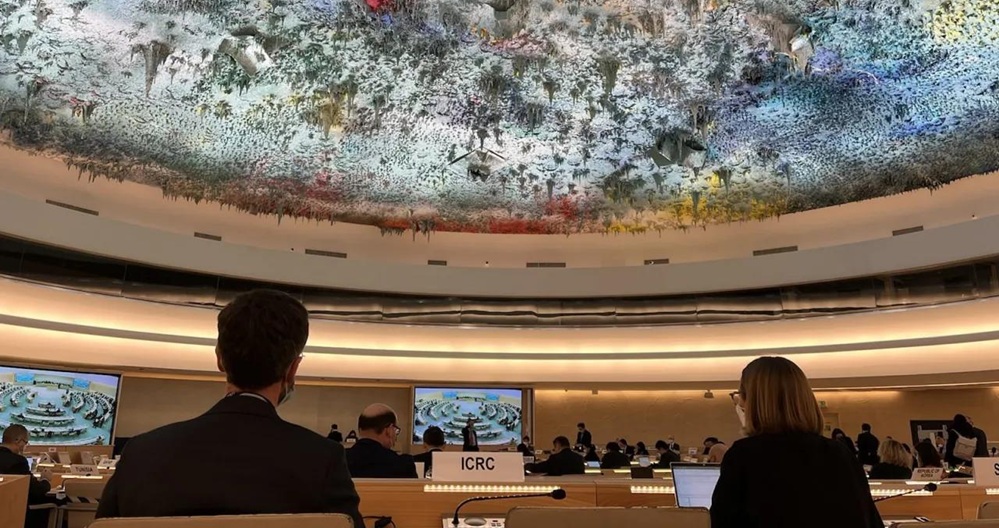
“We are now dangerously close to crossing a moral red line: the autonomous targeting of humans by machines,” the two leaders said in a joint appeal issued in Geneva on August 25. They called for negotiations to begin immediately on a legally binding international instrument establishing clear prohibitions and restrictions on autonomous weapon systems.

Risks are increasing

The UN and Red Cross said their fundamental concerns have remained unchanged since they first called for specific restrictions three years ago, but the risks have intensified as weapons technology has advanced rapidly.

Autonomous weapons are systems capable of selecting and engaging targets with limited or no direct human intervention. The growing use of artificial intelligence in military technology has raised concerns that machines could eventually determine independently who should be attacked.

The organizations stressed that autonomous weapons are not a distant possibility. A race toward greater autonomy in weapons systems is already underway, while international regulations have not kept pace with technological development.

Human judgment must remain central

A major concern is whether autonomous systems can reliably distinguish between combatants and civilians, particularly in complex battlefield conditions. Humanitarian organizations have also warned about the difficulty of determining responsibility when an autonomous system makes a fatal error. If a machine independently selects and attacks a person, questions could arise over who should be held legally responsible for the consequences.

At a Geneva briefing, the UN Office for Disarmament Affairs emphasized that some decisions should never be removed from human hands — particularly the decision over whether another human being lives or dies.

International talks have made limited progress

Governments have been discussing autonomous weapons under the United Nations framework since 2014. Important groundwork has been established through the UN General Assembly and the Group of Governmental Experts working under the Convention on Certain Conventional Weapons.

However, negotiations have struggled to keep pace with rapidly advancing technology. The UN and Red Cross now want governments to move beyond discussions and establish concrete international rules. The renewed appeal comes ahead of further international discussions in Geneva and a major review conference scheduled for November.

Growing use of artificial intelligence in warfare

Concerns have increased as artificial intelligence-assisted and semi-autonomous weapons have become more prominent in modern conflicts, including in Ukraine, Sudan, Gaza, Iran and the Gulf region. Some fully autonomous defensive systems are already in military use, including systems designed to intercept incoming missiles. However, there is currently no confirmed evidence that fully autonomous weapons have been used to deliberately target humans without human involvement.

The UN and Red Cross argue that governments should establish safeguards before technology reaches a point where machines can independently make decisions over human life.

“This year must mark a turning point,” the two organizations said, urging governments to show political determination and move toward decisive international action.