US Imposes New Sanctions on International Criminal Court, Warns of Further Action

Shibbir Ahmed, Washington DC — The United States has announced new sanctions-related measures against the International Criminal Court (ICC), with President Donald Trump’s administration warning that it will continue efforts to restrict the court’s activities unless its concerns are addressed.

In a statement explaining the decision, the administration said the measures were intended to protect American citizens, military personnel, and political leaders from what it considers the ICC’s unlawful assertion of jurisdiction over US nationals.

The administration emphasized that the United States is not a party to the Rome Statute, the treaty establishing the ICC, and rejects the court’s authority to prosecute Americans. It specifically cited concerns involving US servicemembers, Border Patrol agents, and elected officials responsible for national security.

According to the statement, Washington intends to prohibit certain transactions with the court and restrict its access to resources. The administration also warned that it could expand its efforts to dismantle the institution if the ICC and its member states fail to address American concerns.

The administration said it had given the court and its member states more than a year to respond to its demands. It argued that neither the court nor its member states had taken sufficient steps to resolve the dispute.

The latest action was taken under Section 1(a)(ii)(A) of Executive Order 14203, issued by President Trump on February 6, 2025. The US Treasury Department’s Office of Foreign Assets Control also announced related measures and general licenses permitting certain transactions involving the court. <Cite refs={[“turn378094search0″,”turn378094search1”]}/>

Despite the sanctions, the administration said it remained open to a diplomatic solution. It called on countries that are parties to the ICC to engage in discussions aimed at addressing Washington’s objections, warning that additional measures could follow if negotiations fail.

The ICC, based in The Hague, Netherlands, prosecutes individuals accused of genocide, war crimes, crimes against humanity, and the crime of aggression under the conditions established by its founding treaty.

The United States has long opposed the court’s jurisdiction over American nationals, arguing that the country has not consented to the Rome Statute. The dispute has intensified amid broader disagreements over the court’s investigations and legal actions involving US interests and allies.

The ICC has previously condemned US sanctions targeting its judges and officials, describing such measures as threats to judicial independence and the international rule of law. The court has maintained that it will continue carrying out its mandate to pursue accountability for serious international crimes and provide justice for victims. <Cite refs={[“turn378094search4″,”turn378094news8”]}/>

The latest US measures are expected to further strain relations between Washington and countries supporting the ICC, while raising renewed questions about the court’s financial operations, international cooperation, and the limits of its jurisdiction.


U.S. Announces New Visa Restrictions Over Child Abduction Cases

Shibbir Ahmed, Washington, DC — The Trump administration announced a new visa restriction policy Monday aimed at pressuring foreign officials to help resolve international parental child abduction cases involving children taken across international borders.

The policy targets foreign government officials, judges, judicial administrators, law enforcement officials and others who are determined to be responsible for, or complicit in, intentionally obstructing the prompt resolution of international parental child abduction cases.

Under the new policy, the United States may restrict visa issuance to individuals who intentionally fail to implement or comply with laws, policies or court orders intended to resolve such cases and facilitate the return of children to their country of habitual residence. The restrictions may also apply to the immediate family members of targeted individuals. The State Department said the policy provides the department with an additional accountability tool to encourage countries to meet their obligations and cooperate in resolving cases.

“The Department proactively works to prevent abductions and facilitate the quick and safe return of abducted children to their country of habitual residence,” the department said in its announcement.

The administration said the policy is intended to strengthen U.S. efforts to protect American children abducted across international borders and reunite them with their parents. The State Department also said the measures are intended to promote accountability when countries fail to meet their obligations under international law. The new visa restrictions are being implemented pursuant to Section 212(a)(3)(C) of the Immigration and Nationality Act.

The department emphasized that the United States remains committed to protecting the safety and well-being of American children involved in international parental child abduction cases.


UN Experts Cite Possible US War Crimes in Iran

GENEVA — United Nations-backed human rights experts said Thursday they found “reasonable grounds” to believe that the United States committed war crimes in two military strikes in Iran, including an attack on a school that killed more than 150 people. The findings come from the Independent International Fact-Finding Mission on Iran, which investigated the conduct of the United States during the war that began in February, as well as human rights violations allegedly committed by Iranian authorities. The mission’s report is due to be presented to the UN Human Rights Council in Geneva.

The experts said they found reasonable grounds to believe U.S. forces were responsible for a February 28 strike on the Shajareh Tayyebeh Primary School in Minab, southern Iran. Iranian officials said more than 150 people were killed, including about 120 schoolchildren.

According to the mission, the school was a clearly identifiable civilian facility and investigators found no evidence that it was being used for military purposes. The experts concluded that the attack was indiscriminate and caused civilian deaths and damage to civilian infrastructure, amounting to a war crime under international law.

The mission also examined a strike on a sports center in Lamerd. Investigators said the attack damaged nearby residential buildings and a school and killed or injured 22 civilians. They concluded that the strike was indiscriminate and therefore constituted a war crime.

U.S. Central Command said in March that American forces did not conduct strikes in Lamerd on the day in question. U.S. officials have also previously said that American military operations are carried out in accordance with the law of armed conflict.

The report also addressed Iran’s response to nationwide anti-government protests that began in late December. The experts said Iranian authorities carried out a widespread and systematic attack against civilians, including unlawful killings, torture, arbitrary detention and enforced disappearances, which they characterized as crimes against humanity.

The fact-finding mission is an investigative body rather than a court and cannot initiate criminal proceedings. Its findings, however, can be used in future investigations or proceedings before national courts or international tribunals. The United States and Iran have previously rejected allegations of wrongdoing, and the two governments did not immediately respond to requests for comment on the latest findings.


UN, Red Cross Warn of ‘Moral Red Line’ Over Autonomous Weapons

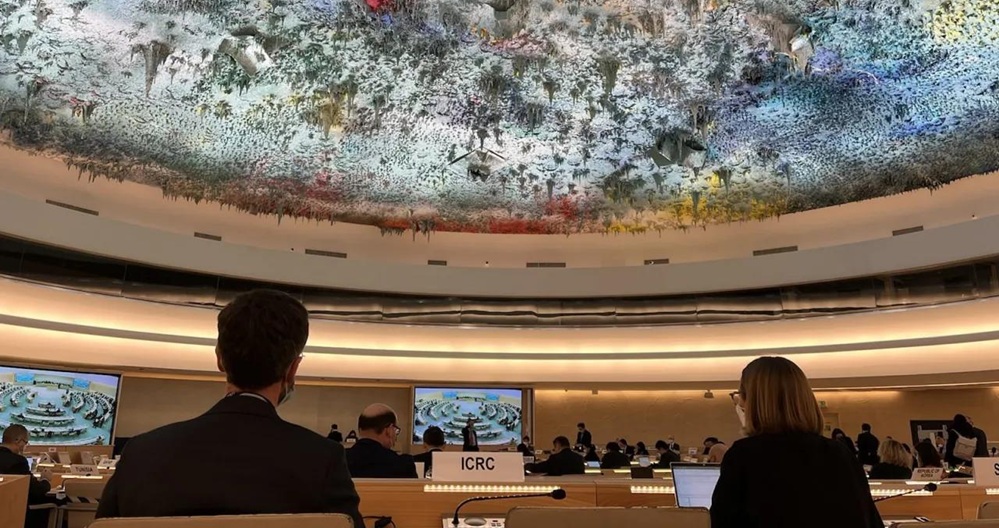
Shibbir Ahmed, New York: The United Nations and the International Committee of the Red Cross on Tuesday issued a renewed and urgent call for international rules governing autonomous weapons, warning that the world is dangerously close to a point where machines could autonomously target human beings.

UN Secretary-General António Guterres and International Committee of the Red Cross President Mirjana Spoljaric said governments must act urgently to prevent weapons from making life-and-death decisions without meaningful human control.

“We are now dangerously close to crossing a moral red line: the autonomous targeting of humans by machines,” the two leaders said in a joint appeal issued in Geneva on August 25. They called for negotiations to begin immediately on a legally binding international instrument establishing clear prohibitions and restrictions on autonomous weapon systems.

Risks are increasing

The UN and Red Cross said their fundamental concerns have remained unchanged since they first called for specific restrictions three years ago, but the risks have intensified as weapons technology has advanced rapidly.

Autonomous weapons are systems capable of selecting and engaging targets with limited or no direct human intervention. The growing use of artificial intelligence in military technology has raised concerns that machines could eventually determine independently who should be attacked.

The organizations stressed that autonomous weapons are not a distant possibility. A race toward greater autonomy in weapons systems is already underway, while international regulations have not kept pace with technological development.

Human judgment must remain central

A major concern is whether autonomous systems can reliably distinguish between combatants and civilians, particularly in complex battlefield conditions. Humanitarian organizations have also warned about the difficulty of determining responsibility when an autonomous system makes a fatal error. If a machine independently selects and attacks a person, questions could arise over who should be held legally responsible for the consequences.

At a Geneva briefing, the UN Office for Disarmament Affairs emphasized that some decisions should never be removed from human hands — particularly the decision over whether another human being lives or dies.

International talks have made limited progress

Governments have been discussing autonomous weapons under the United Nations framework since 2014. Important groundwork has been established through the UN General Assembly and the Group of Governmental Experts working under the Convention on Certain Conventional Weapons.

However, negotiations have struggled to keep pace with rapidly advancing technology. The UN and Red Cross now want governments to move beyond discussions and establish concrete international rules. The renewed appeal comes ahead of further international discussions in Geneva and a major review conference scheduled for November.

Growing use of artificial intelligence in warfare

Concerns have increased as artificial intelligence-assisted and semi-autonomous weapons have become more prominent in modern conflicts, including in Ukraine, Sudan, Gaza, Iran and the Gulf region. Some fully autonomous defensive systems are already in military use, including systems designed to intercept incoming missiles. However, there is currently no confirmed evidence that fully autonomous weapons have been used to deliberately target humans without human involvement.

The UN and Red Cross argue that governments should establish safeguards before technology reaches a point where machines can independently make decisions over human life.

“This year must mark a turning point,” the two organizations said, urging governments to show political determination and move toward decisive international action.