UN Urges Action to End Enforced Disappearances on International Day

Shibbir Ahmed, UNITED NATIONS, NY — The United Nations is marking the International Day of the Victims of Enforced Disappearances on Sunday with renewed calls for governments to address the fate of missing people, protect victims and their families, and ensure truth and justice for those affected by enforced disappearance.

The annual observance, held on August 30, highlights the continuing suffering of people whose relatives have disappeared after being arrested, detained or otherwise taken into state custody while authorities deny or conceal their whereabouts.

UN human rights experts said the impact of enforced disappearance extends far beyond the individual victim. Families can be left for years without information about what happened to their loved ones, while communities can suffer social and economic consequences. The UN has described enforced disappearance as a serious human-rights violation that can also be used to spread fear throughout society.

The 2026 observance is particularly significant because it marks 20 years since the adoption of the International Convention for the Protection of All Persons from Enforced Disappearance. The convention was adopted by the UN General Assembly in 2006 and established an international legal framework aimed at preventing enforced disappearances and protecting people from the practice.
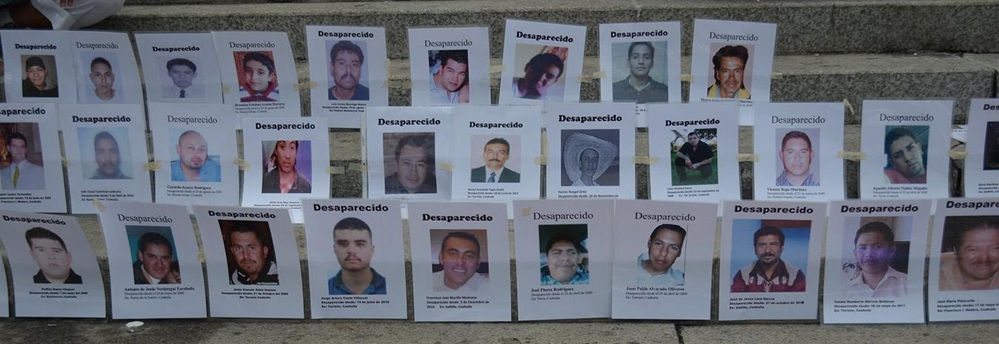
The UN Committee on Enforced Disappearances and the Working Group on Enforced or Involuntary Disappearances have used this year’s observance to renew attention to victims and their families and to the need for effective measures to prevent disappearances and clarify the fate of those who remain missing.

A Continuing Global Human Rights Challenge

Enforced disappearance occurs when people are arrested, detained or abducted by, or with the authorization, support or acquiescence of state authorities, followed by a refusal to acknowledge the person’s detention or to provide information about their whereabouts.

The consequences can continue for decades. Families may remain uncertain whether their relatives are alive or dead, while the lack of information can prevent them from obtaining justice, reparations and other forms of support.

The UN has repeatedly stressed that resolving cases of enforced disappearance requires credible investigations, accountability and access to information for families.

The International Day also serves as a reminder of the broader obligations of governments under international human-rights law to prevent enforced disappearance and investigate allegations when they occur.

Twenty Years of the UN Convention

The International Convention for the Protection of All Persons from Enforced Disappearance was adopted on December 20, 2006. It entered into force in 2010 and created the Committee on Enforced Disappearances to monitor implementation by states parties.

The convention recognizes the right of every person not to be subjected to enforced disappearance and calls on states to take measures to prevent the practice and ensure accountability. Two decades after its adoption, the UN continues to call for stronger implementation of the convention and greater protection for victims and their families.

The UN’s message on August 30 remains clear: families searching for missing relatives should not be left without answers, and enforced disappearance must not be allowed to remain a tool of fear, impunity or denial.
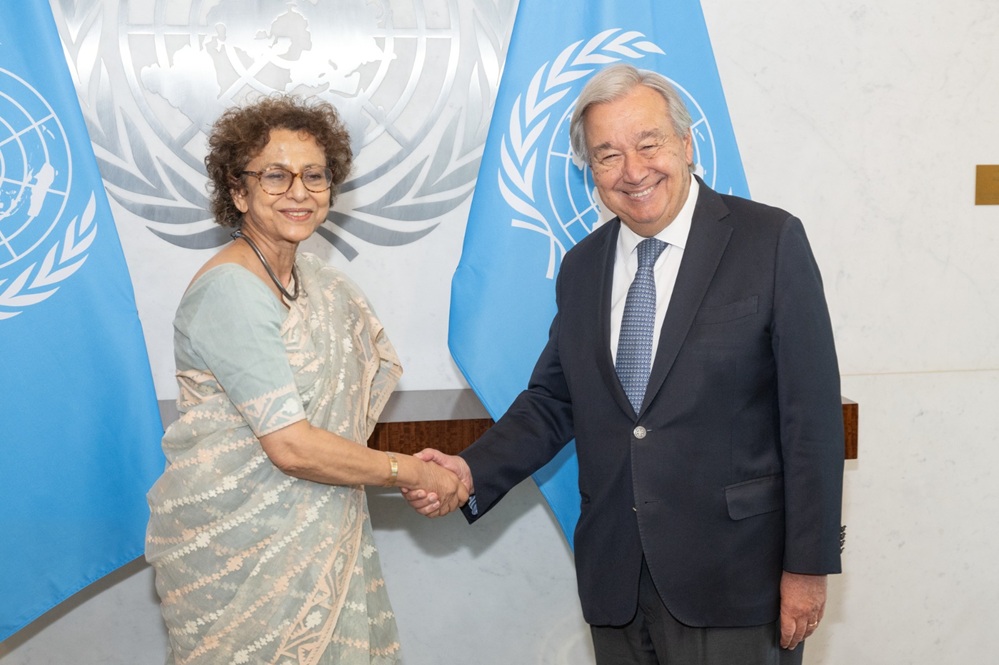


Irene Khan Takes Office as Bangladesh’s UN Representative

Shibbir Ahmed, UN, New York: Irene Zubaida Khan, a veteran international human rights advocate, has taken office as Bangladesh’s Permanent Representative to the United Nations in New York. Khan presented her credentials to United Nations Secretary-General António Guterres at UN Headquarters in New York on Friday, formally assuming her role as Bangladesh’s envoy to the world body.

She brings decades of experience in human rights, international law, refugee protection, the rule of law and sustainable development, including senior roles at the United Nations and other international organizations.

Before taking up her new role, Khan had served since 2020 as the UN Special Rapporteur on the promotion and protection of the right to freedom of opinion and expression. From 2001 to 2009, she served as Secretary-General of Amnesty International, becoming the first woman to lead the organization.

From 2012 to 2019, Khan served as Director-General of the International Development Law Organization (IDLO). Earlier in her career, she spent 21 years with the Office of the United Nations High Commissioner for Refugees (UNHCR), holding a number of senior positions including Chief of Mission in India and Deputy Director of the Division of International Protection.

Khan received the Sydney Peace Prize in 2006 and is the author of The Unheard Truth: Poverty and Human Rights. She studied law at the University of Manchester and Harvard Law School.


Govt Vows No Politically Motivated Detention: Shama

DHAKA: State Minister for Foreign Affairs Shama Obaed Islam has said the government is committed to protecting human rights and ensuring that no citizen is detained or imprisoned unjustly because of political affiliation or vendetta.

“The government will definitely ensure that no one is unjustly imprisoned or detained due to political vendetta,” she told journalists at the foreign ministry on Wednesday.

Shama said the government’s commitment to due process and fundamental rights extends to supporters of all political parties, including opposition parties and the Awami League, whose activities are currently banned.

“No party, be it the opposition party, Awami League, or any party, the current government will definitely ensure that no one is unjustly imprisoned or detained due to political vendetta,” she said.

The State Minister alleged that Bangladesh had experienced widespread human rights violations over the past 17 years, saying BNP leaders and activists were among the major victims.

“The kind of human rights that have been violated in Bangladesh in the last 17 years has never been violated in the history of Bangladesh,” she said.

“The biggest victim is the Bangladesh Nationalist Party, its leaders and activists,” she added.

Shama said the government would not allow a return to what she described as the country’s previous “fascist era” and would work to protect the fundamental rights of every citizen.

“We will never want the past fascist era to return now or in the future. We want all human rights to be ensured to every citizen,” she said.

She said the government has a responsibility to protect citizens’ rights and ensure that the justice system is not used for political revenge.

“Our government’s stand is that we are trying to protect human rights. We are responsible to the people,” she said.

Bangladesh policy guides foreign relations

Turning to foreign policy, Shama said Bangladesh’s approach is focused on protecting national interests while maintaining balanced and respectful relations with all countries.

“Our foreign policy is first and foremost a ‘Bangladesh policy’… with equal rights with everyone and maintaining our own interests with respect,” she said.

She said the elected government’s political mandate had strengthened Bangladesh’s position in negotiations with international partners.

“When Bangladesh is talking, the Prime Minister of Bangladesh is talking, then all the other stakeholders including China are listening to our words with more attention, more seriously,” she said.

“Now that Bangladesh is an elected government, we have a stronger position in our negotiation space,” she added.

Rohingya crisis requires political solution

On the Rohingya crisis, Shama said Bangladesh would use its strengthened diplomatic position to encourage greater international engagement and push for a lasting political solution.

“The matter is absolutely a political problem, it is a very sensitive matter and we need to solve this problem politically,” she said.

She said Bangladesh remains engaged in both official and unofficial communication with various stakeholders in Myanmar as part of efforts to resolve the crisis.

“We are trying to involve the international community more,” she said, referring to a high-level UN session on the Rohingya crisis scheduled for September, which Prime Minister Tarique Rahman is expected to attend.

Bangladesh will also explore whether greater involvement from the Muslim world could help increase pressure on Myanmar and create momentum towards a solution, she said.

According to Shama, the crisis has become increasingly complex since the massive influx of Rohingyas into Bangladesh began in 2017, particularly because of Myanmar’s changing political and security landscape.

She pointed to the emergence of the Arakan Army and other actors in Rakhine State, as well as growing security concerns along the Bangladesh-Myanmar border, including human smuggling and drug trafficking.

Shama said it was difficult to determine the exact number of Rohingyas currently living in Bangladesh because of continued arrivals and births in the camps.

“We don’t know the exact number right now, but it will definitely be over 1.3 million,” she said, adding that an estimated 30,000 children are born in the camps each year.

She said Chinese President Xi Jinping had expressed Beijing’s willingness to cooperate with Bangladesh in finding a solution to the Rohingya crisis during Prime Minister Tarique Rahman’s recent visit to China.

Shama also questioned the effectiveness of existing arrangements for resolving the crisis without stronger involvement from the United Nations and other major international stakeholders.

She said Bangladesh could gain additional diplomatic leverage from Foreign Minister Dr Khalilur Rahman’s upcoming role as President of the UN General Assembly.

“From that place, we have a power to speak for Bangladesh in the international community. We think that at least in the next year, we will be able to use this capacity a little better,” she said.

Shama reiterated that Bangladesh would continue to pursue a “Bangladesh policy” in its international relations, protecting national interests while maintaining ties with other countries on the basis of equality and mutual respect.