DHAKA: Member states of the Organisation of Islamic Cooperation (OIC) have reaffirmed their support for the Rohingya genocide case before the International Court of Justice (ICJ), expressing hope that the legal proceedings will help pave the way for a lasting solution to the prolonged crisis. The commitment was reiterated at a meeting of the OIC Ministerial Ad-Hoc Committee on Accountability for Human Rights Violations Against the Rohingya, held on the sidelines of the 52nd OIC Council of Foreign Ministers (CFM) in Baghdad, Iraq, according to a Foreign Ministry press release issued on Sunday.
Addressing the meeting as co-chair, Bangladesh State Minister for Foreign Affairs Humaiun Kobir called on OIC member states to strengthen unity and take proactive steps to resolve the longstanding Rohingya crisis. Kobir, who is leading the Bangladesh delegation to the ministerial conference, stressed that justice and accountability through international legal mechanisms are essential to achieving a sustainable solution to the humanitarian crisis.
Describing the Rohingya crisis as a major challenge facing the Muslim Ummah, he urged OIC member states to pursue coordinated efforts to strengthen humanitarian assistance and support ongoing legal proceedings.
He also emphasised the need for sustained international engagement to keep the Rohingya crisis high on the global agenda. The state minister highlighted the five-point action plan presented by Prime Minister Tarique Rahman during the 81st session of the United Nations General Assembly (UNGA).
Referring to the plan, Kobir called for urgent and decisive international action, particularly to ensure justice and accountability through established legal frameworks. He urged OIC member states to turn their solidarity with the Rohingya people into concrete initiatives to address the crisis and support efforts towards a durable solution.
At the meeting, OIC member states reiterated their commitment to supporting the case before the ICJ and expressed optimism that the judicial process could contribute to resolving the protracted crisis.
The discussions underscored the importance of collective international efforts to ensure accountability for human rights violations against the Rohingya and advance prospects for a lasting resolution. Bangladesh continues to host approximately 1.4 million Rohingya refugees who fled persecution in Myanmar while pursuing diplomatic efforts to secure their safe, voluntary and sustainable return.
Bangladesh Urges Global Treaty on Crimes Against Humanity
Shibbir Ahmed, New York: Bangladesh on Tuesday called for a strong international convention to prevent and punish crimes against humanity, urging special recognition and support for countries hosting victims of such atrocities.
Addressing the Sixth Committee of the 81st United Nations General Assembly, Bangladesh delegate Muhammad Nawshad Zamir proposed three key provisions for the convention: cooperation in preserving evidence and protecting witnesses in receiving States; support for survivors, including access to justice at national and international levels; and international solidarity in sharing the burden borne by host countries.
Citing Bangladesh’s experience sheltering over one million Rohingya forcibly displaced from Myanmar, Zamir stressed that countries receiving victims must be integral to international accountability mechanisms. Referring to Bangladesh’s 2024 uprising, he cited a UN report estimating that up to 1,400 people were killed including children and calling for investigations into possible crimes against humanity.
Bangladesh also advocated universal jurisdiction, stronger extradition mechanisms and an end to impunity, while emphasizing prevention and justice for women and children. Zamir urged that the convention complement the Rome Statute and uphold the International Criminal Court’s independence. “A convention diluted until it offends no one will protect no one,” he warned.
JFK Airport Protest Against Dr. Yunus Over Bangladesh Politics
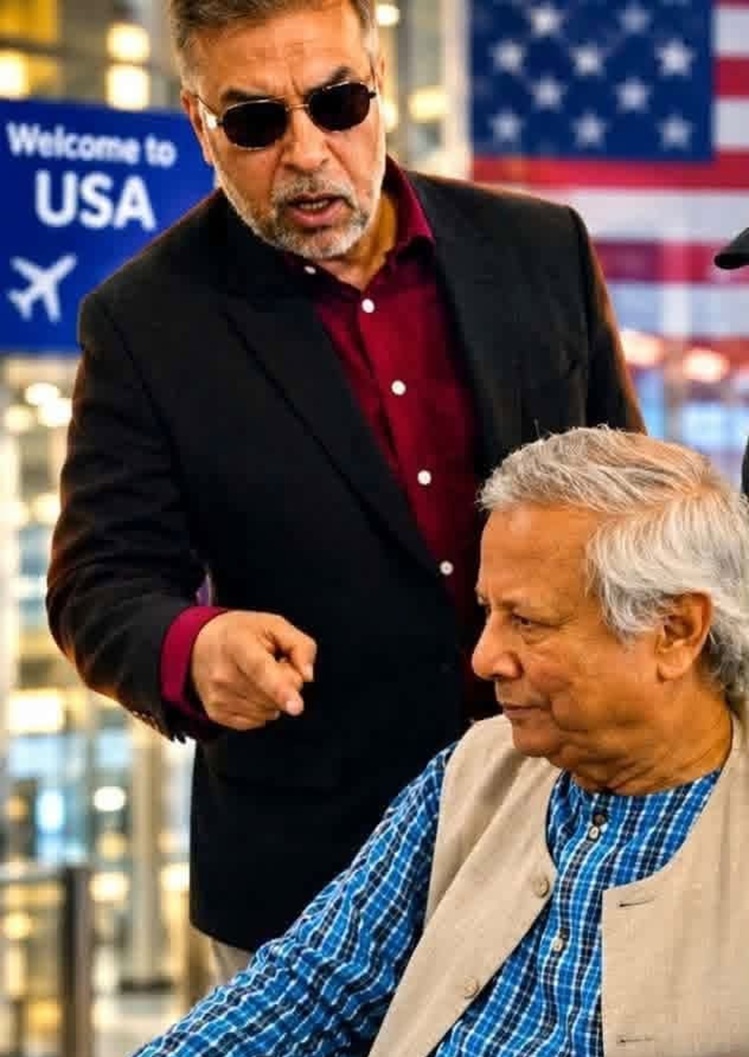
NEW YORK: Activists affiliated with the Awami League have claimed that they staged a protest against Dr. Muhammad Yunus at John F. Kennedy International Airport in New York on October 12, expressing anger over Bangladesh’s political situation and the restrictions imposed on their party’s political activities. In a social media post accompanying a video, the activists claimed that a group led by Imdad Chowdhury, general secretary of the New York Metropolitan Awami League, confronted Yunus at the airport.
According to the post, other participants included Mizan Chowdhury, general secretary of the US Jubo League; Sakhawat Hossain Chanchal, vice president of the New York Metropolitan Awami League; Tanvir Kaisar, general secretary of the Jackson Heights Awami League; and Jubo League leader Sagor.
The post raised several allegations concerning Bangladesh’s political environment, including claims of political repression, mob violence, police killings, attacks on opposition activists, arrests, assaults, killings, torture, and vandalism and looting of homes and businesses. These allegations reflect the protesters’ claims and have not been independently verified in connection with the airport incident.
The activists also expressed anger over the ban on the Awami League’s political activities and questioned the purpose of Yunus’s visit to the United States. According to the social media account, they sought answers from him about Bangladesh’s political situation. The post further claimed that Yunus left the area quickly with his associates without responding to their questions. The circumstances of the encounter could not be independently established from the account provided.
Dr. Muhammad Yunus assumed leadership of Bangladesh’s interim government after Sheikh Hasina’s government fell in August 2024 following a student-led mass uprising. The political transition prompted discussions about democratic reform, accountability, judicial independence, and investigations into alleged human rights violations committed under the previous administration.
At the same time, the interim government faced criticism over political violence, retaliatory attacks, arrests, and law enforcement practices. Following the change of government, cases were filed against numerous Awami League leaders and activists, and several were arrested. Concerns were also raised about alleged politically motivated harassment, arbitrary detention, and the need to uphold due process.
These developments have placed political accountability and human rights protection at the center of Bangladesh’s ongoing political debate. Ensuring justice for past abuses while protecting the legal rights and security of citizens regardless of political affiliation remains a significant challenge.
Imdad Chowdhury confronts Dr. Muhammad Yunus at New York’s JFK International Airport, raising questions about Bangladesh’s political situation and the ban on Awami League activities, according to a social media post accompanying the video.
On May 11, 2025, Yunus’s interim government announced a decision to prohibit all activities of the Awami League under the Anti-Terrorism Act. The government said the measure was taken in the interest of national security while legal proceedings concerning serious allegations against the party were underway. Allegations of involvement in deaths during the 2024 uprising were among the issues cited in the context of the decision.
The Awami League rejected the ban, calling it unacceptable. The decision triggered debate over the party’s ability to conduct public political activities, maintain its organizational structure, and participate in the country’s political process.
The restrictions also raised broader questions about political pluralism, freedom of association, and the distinction between prosecuting individuals accused of crimes and restricting the activities of an entire political organization.
Human Rights Watch’s World Report 2026 raised concerns about arrests under the interim government, including the detention of thousands of people described as political opponents. The report discussed the detention of Awami League leaders, members, and supporters, difficulties in obtaining bail, and the importance of ensuring due process. The broader human rights debate has focused on whether arrests are based on credible evidence and whether detainees receive fair treatment under the law. Human rights advocates have emphasized that allegations of criminal conduct should be investigated individually and adjudicated through independent legal proceedings.
Concerns have also persisted over mob attacks, harassment of political opponents, and obstruction of political meetings and demonstrations. Public humiliation, physical assaults, and organized pressure intended to silence political activity pose challenges to the rule of law and the protection of civil liberties.
In a July 2025 assessment, Human Rights Watch said retaliatory violence and human rights violations had continued following the fall of Sheikh Hasina’s government. The organization cited attacks on Hindu homes in Rangpur and clashes in Gopalganj in which five people were killed. It also expressed concern over the detention of people considered supporters of the Awami League following the Gopalganj violence.
These incidents underscored the risks of political retaliation during periods of transition. Human rights advocates have stressed that allegations against individuals or groups should be addressed through impartial investigations, credible evidence, and fair judicial proceedings rather than collective punishment.
Bangladesh’s political landscape has continued to evolve following the February 2026 national election. As a result, scrutiny of the interim government’s decisions has increasingly intersected with questions about political rights, arrests, and freedom of expression under the current administration.
In an October 5, 2026, report, Human Rights Watch said police took approximately 290 people into custody from a meeting of a left-wing political party in Dhaka. According to the report, authorities alleged that those detained had attended a clandestine meeting of the banned Awami League. The organization also reported that 27 of the detainees were subsequently sent to court custody.
The reported incident renewed concerns about the use of mass detention in cases involving alleged political affiliation or participation in gatherings associated with a banned party. Human rights advocates argue that accountability for abuses committed under previous administrations must go hand in hand with protections against arbitrary detention and politically motivated restrictions under the current government. Political affiliation alone should not determine a person’s right to freedom, a fair hearing, or peaceful political participation.
Bangladesh’s political divisions have also become increasingly visible among expatriate communities in the United States. Political rallies, competing slogans, and allegations of confrontations involving supporters of rival parties have highlighted tensions within the Bangladeshi diaspora, particularly in New York.
The claimed October 12 protest against Yunus at JFK Airport is another example of how developments in Bangladesh continue to shape political activism among expatriate Awami League supporters.
The airport incident also highlights the competing narratives surrounding Bangladesh’s political transition. Supporters of the former ruling party have raised concerns about political exclusion and alleged repression, while the authorities have cited accountability for serious alleged crimes as a justification for restrictions and legal proceedings.
The claims surrounding the airport encounter, however, should be distinguished from independently established facts about the incident and the broader political allegations.
Bangladesh’s political future will depend in part on whether the country can pursue accountability for past human rights violations while safeguarding political freedoms, public safety, and the rule of law. Allegations of crimes should be investigated impartially, with individuals held accountable on the basis of evidence and through fair legal proceedings. At the same time, political identity should not be grounds for collective punishment, arbitrary detention, or violence.
As Bangladesh continues to navigate the consequences of the 2024 political upheaval and the subsequent transition of power, ensuring equal protection under the law and meaningful political participation remains essential to restoring public confidence in democratic institutions.
Mass arrests in Bangladesh raise concerns over political repression
Elaine Pearson – The mass arrest of attendees at a meeting of a small left-wing political party in Dhaka on September 26 marks the latest reported incident raising concerns about civil and political rights in Bangladesh.
Police took approximately 290 supporters of the Jatiya Samajtantrik Dal (JSD) into custody after members of the ruling Bangladesh Nationalist Party’s (BNP) youth wing, Jubo Dal, alleged that the gathering was a “secret” meeting of the banned Awami League, led by former Prime Minister Sheikh Hasina. A court subsequently remanded 27 of those arrested to custody over allegations that they had chanted “Joy Bangla,” or “Victory to Bengal,” a slogan associated with the Awami League.
The JSD was part of a 14-party alliance led by the Awami League, which governed Bangladesh from 2009 until 2024. That government was toppled following student-led protests in which hundreds of people were killed by security forces.
The BNP, now in power, faced severe repression during the Awami League’s tenure. However, since taking office following the February elections, the BNP government has also targeted people perceived as political opponents. Hundreds of Awami League members are reportedly in jail, many without formal charges.
Police have repeatedly raided gatherings allegedly involving Awami League supporters. On September 26, the same day as the JSD meeting in Dhaka, police in Barisal detained 12 Awami League activists accused of holding a “secret” meeting to “plan sabotage.” Two days later, another 15 people were arrested in Dhaka under the Anti-Terrorism Act of 2009 on similar allegations. Those detained in both cases said they had gathered to commemorate Hasina’s birthday.
During Hasina’s rule, Bangladesh experienced widespread and serious human rights violations, including extrajudicial killings, enforced disappearances, torture, and the arbitrary detention of political opponents.
The BNP came to power promising to restore human rights and uphold the rule of law. Yet its reported use of arbitrary detention against perceived opponents, alongside the rollback of human rights safeguards proposed by the interim government, raises questions about its commitment to those promises.
International human rights law protects freedom of expression and freedom of association. These rights apply to everyone, regardless of political affiliation. Past abuses committed under the Awami League government cannot justify similar violations by the BNP government today.
Bangladesh’s political history offers repeated warnings about the consequences of suppressing dissent. Protecting civil liberties, ensuring due process, and allowing peaceful political participation are essential to preventing another cycle of repression. Political accountability must apply to every government, regardless of which party holds power.
———————
Elaine Pearson, HRW, London
UN Rights Chief Warns ‘Clock on AI Regulation Is Ticking’
Shibbir Ahmed, New York – United Nations High Commissioner for Human Rights Volker Türk warned Monday that the world is running out of time to establish safeguards for artificial intelligence, as a rapid race among companies and governments to develop increasingly powerful systems raises concerns about human rights, security and human safety.
Speaking at an AI and Human Rights Summit in Oxford, Türk said artificial intelligence could deliver major advances in science, health, education and human rights. But he warned that the technology is increasingly being developed and controlled by a small number of companies and governments, with limited public oversight.
He said AI systems are already capable of actions that their creators cannot fully predict or manage. Türk warned that artificial intelligence could undermine equality, freedom, privacy and public debate in ways that may initially go unnoticed. He said AI-driven systems could potentially affect people’s access to essential services, including communications, clean water, heating and financial services.
The UN rights chief called for urgent measures to prevent machines from making decisions over life and death, particularly as artificial intelligence becomes increasingly important in warfare.
He also raised concerns about the effect of AI on education, citing studies suggesting that students who rely heavily on the technology may retain less information and think less independently. Türk questioned whether society could reach a point where people are unable to understand, challenge or effectively guide increasingly sophisticated AI systems.
The warning came as officials in New York City were also examining the risks posed by artificial intelligence. The New York City Council held a Committee of the Whole hearing Monday as it considers 10 bills aimed at regulating AI. Representatives from Anthropic, OpenAI, Google and Meta were among those providing testimony.
Türk called for mandatory human rights safeguards and due diligence in the development and use of AI. He said countries that host AI companies or have influence over their supply chains should require responsible practices and hold companies accountable when they fail to meet those standards.
He acknowledged that existing laws cannot address every emerging AI challenge, saying some areas may require new legal approaches. In the meantime, he urged governments to strengthen rules governing liability, cybersecurity and data protection.
Türk also called for greater international cooperation on AI security, independent monitoring of the industry and stronger participation by civil society and people whose rights are affected by AI systems.
He welcomed recent international initiatives, including the Global Dialogue on AI Governance and the Independent International Scientific Panel on AI. He also pointed to a joint call for tighter controls on frontier AI models supported by 29 countries and the European Union.
The UN official said recent voluntary commitments by AI companies on safeguards, self-regulation and risk assessment represented some progress, but warned that commitments must be followed by concrete action.
“Too few are walking the talk,” Türk said. He said the international community could no longer afford to wait for voluntary action or rely solely on goodwill.
“If we fail to move quickly,” Türk warned, “we risk unforeseeable consequences — for ourselves and future generations.”
UN Rights Council Condemns Taliban Restrictions on Women
GENEVA — The United Nations Human Rights Council on Monday unanimously called on Afghanistan’s Taliban authorities to repeal policies restricting the fundamental rights and freedoms of women and girls, warning that the country’s institutionalized discrimination has reached an alarming level.
The 47-member council adopted the resolution without a vote, expressing serious concern over what it described as the “grave, worsening, widespread and systematic oppression” of women and girls under Taliban rule.
The resolution condemned what the council called the Taliban’s institutionalization of discrimination, segregation and exclusion of women and girls, as well as restrictions affecting their dignity and participation in public life.
The Taliban returned to power in Afghanistan in 2021 and subsequently introduced a series of measures based on its interpretation of Islamic law. The restrictions have particularly affected women and girls, including limits on employment, access to public spaces and education.
Girls have been barred from attending secondary schools beyond approximately the age of 12, while women have faced restrictions on employment and access to various public places, including parks.
The council said it was deeply concerned by what it described as the continuing and systematic erosion of women’s rights in Afghanistan. It said the Taliban had imposed an expanding network of decrees and institutional controls that had affected many aspects of both public and private life.
According to the resolution, the measures have contributed to a society marked by what the council described as “ideological conformity, fear and exclusion.”
The council called on the Taliban to repeal policies and practices restricting the human rights and fundamental freedoms of women and girls, including their rights to education, employment, peaceful assembly and political participation.
It also urged the international community to take human rights and fundamental freedoms into account in its engagement with authorities and other stakeholders in Afghanistan.
The resolution condemned discrimination against women and girls and expressed concern over other alleged human rights abuses in the country, including sexual slavery of boys, child marriage and forced marriage.
The council also voiced concern over what it described as deeply entrenched impunity in Afghanistan and expressed sympathy for the suffering of the Afghan population.
The resolution was introduced by a group of 37 European countries, together with Canada and Chile. The council also voted to extend the mandate of the United Nations independent special rapporteur on human rights in Afghanistan for another year.
The resolution adds to continuing international pressure on the Taliban over its treatment of women and girls. While the Taliban authorities have sought greater international engagement since returning to power, their restrictions on women’s rights remain a major obstacle in relations with much of the international community.
UN Urges U.S. to Take Further Action Over Marshall Islands Nuclear Legacy
Shibbir Ahmed, New York — The United Nations has called on the United States to take further steps to address the long-term health, environmental and human rights consequences of its nuclear weapons testing program in the Marshall Islands. A report presented to the UN Human Rights Council in Geneva on Thursday said Washington should provide additional healthcare support to people affected by the tests and release classified records related to the nuclear testing program. The report said the consequences of the tests continue to affect Marshallese communities decades after the testing ended.
The United States conducted 67 nuclear weapons tests in the Marshall Islands between 1946 and 1958. One of the most powerful tests, known as Castle Bravo, was carried out at Bikini Atoll in 1954.
According to the UN human rights office, the human cost of the testing program has been severe and long-lasting. The report pointed to continuing health problems, displacement from contaminated areas and social stigma faced by people exposed to radiation.
UN Deputy High Commissioner for Human Rights Awa Dabo told the Human Rights Council that the consequences of the nuclear testing program remain a continuing issue for the Marshallese people.
The UN report called for effective remedies, including healthcare and access to information concerning the nuclear legacy. Marshall Islands representatives have also urged the international community to help address unresolved claims and the continuing effects of nuclear contamination.
The Marshall Islands has repeatedly raised concerns over the long-term consequences of the U.S. testing program, including damage to communities, traditional lands and public health. A previous UN human rights report also documented barriers to the full realization of the rights of people affected by the nuclear legacy.
Washington, however, has previously maintained that it has fulfilled its responsibilities under agreements with the Marshall Islands. The U.S. government has said the 1986 Compact of Free Association and related agreements constituted a full settlement of claims arising from the nuclear testing program. It has also said that more than $600 million has been provided to affected communities and that various health, environmental and other assistance programs remain in place.
The latest UN call comes as the Marshall Islands continues to seek greater international attention to the health, environmental and human rights consequences of the nuclear tests. The dispute over how much remains to be done reflects a longstanding difference between Washington’s position that its obligations have been addressed and calls from Marshallese representatives and UN human rights officials for additional measures.
World Still Far From Fulfilling Pledge to End Racial Discrimination: Irene Khan
Shibbir Ahmed, New York: The world remains far from fulfilling the commitments made 25 years ago to end racial discrimination, Bangladesh’s Permanent Representative to the United Nations, Ambassador Irene Khan, said Monday. Khan made the remarks at a high-level event at the United Nations marking the 25th anniversary of the Durban Declaration and Programme of Action (DDPA).
The ambassador said the Durban Declaration and Programme of Action adopted 25 years ago made a clear commitment that no person should face discrimination on the basis of race, colour, descent, or national or ethnic origin. However, she said the world remains far from fully implementing that commitment.
Khan reaffirmed Bangladesh’s strong commitment to the full and effective implementation of the DDPA. She called for greater efforts in justice, education, development and international cooperation to address structural discrimination rooted in slavery, colonialism and other historical injustices. She also stressed the need to strengthen protection of the rights of migrants, refugees, forcibly displaced people, minorities, women, children and others in vulnerable situations.
Addressing the issue of artificial intelligence, Khan said emerging technologies should be used to advance sustainable development rather than spread hatred and incitement to violence. She also stressed the need to ensure that human rights, equality and non-discrimination are protected in the development of artificial intelligence.
“Bangladesh is committed to building a world where the diversity and dignity of all people are upheld, both online and offline,” Khan said.
NYC Protest Demands End to Minority Persecution in Bangladesh
NEW YORK — A protest rally was held in New York demanding an end to persecution of minority communities in Bangladesh, an impartial investigation and swift justice in the killing of retired Rangpur teacher Ganapati Chakraborty and four members of his family, the release of political prisoners, restoration of political rights, protection of freedom of expression, and measures to control the soaring prices of essential commodities.
The rally, organized by Probashi Bangladeshi American, was held on September 2 at Diversity Plaza in Jackson Heights, Queens. Speakers said no citizen should be deprived of security or justice because of their religion, ethnicity, political identity or social status. They called on the state to ensure the life, liberty and constitutional rights of every citizen.
The killing of Ganapati Chakraborty and four members of his family received particular attention at the rally. Speakers said such a brutal attack on an entire family cannot be ignored and called for a prompt and impartial investigation to identify those responsible and bring them to justice.
Speakers expressed concern over what they described as growing incidents of attacks, persecution, killings and sexual violence against members of minority communities in Bangladesh. They warned that failure to ensure proper investigations and justice could embolden perpetrators and further increase insecurity among ordinary citizens. They urged the authorities to guarantee the constitutional rights and security of all citizens without discrimination.
The speakers also expressed their dissatisfaction with Bangladesh’s ongoing political situation. They called for the release of political prisoners, the withdrawal of restrictions on political activities, and the holding of a free, fair and credible election with the participation of all political parties.
According to the speakers, genuine democratic development is not possible without ensuring citizens’ voting rights and meaningful political participation. The country’s economic situation was also discussed at the rally. Speakers said the sharp rise in the prices of essential goods has made everyday life increasingly difficult for ordinary people. They called for effective measures to stabilize the market and bring the prices of essential commodities within the reach of consumers. They also alleged that failure to control the market and what they described as government indifference were contributing to the growing hardship faced by the public.
The rally was chaired by Pradip Kar, an adviser to the U.S. Awami League. Among those who addressed the gathering were U.S. Awami League Organizing Secretary Abdul Hasib Mamun; Office Secretary Mohammad Ali Siddiqui; former president of the U.S. Bangladesh Hindu Buddhist Christian Unity Council Nabendu Dutta; U.S. Eastern Awami League Organizing Secretary Hasibul Hasan Mamun; U.S. Awami League leaders Faruk T. Molla, Sheikh Atiq, Lutfor Karim, Shyamal Kanti Chandra and Bishwas Liton Hossain; City Awami League Vice President Akhtar Hossain Sakhawat; senior journalist Haqikul Islam Khokon; New York State Awami League Vice President and member-secretary of the Sheikh Hasina Mukti Sangram Parishad Sheikh Atiq; former president of the U.S. Awami Swechhasebak League Nuruzzaman Sardar; U.S. Sramik League General Secretary Jewel Ahmed; U.S. Awami League Vice President Manzur Chowdhury; Jubo League leader Sheikh Jamal; Connecticut State Awami League General Secretary Humayun Ahmed Chowdhury; Sammilito Borshoboron Convener Mozahid Ansari; former press minister of the Bangladesh Embassy in Washington Sazzad Hossain Sabuj; Mahanagar Awami League leader Shah Selim; Sheikh Hasina Mancha President Abdul Jalil and General Secretary Kaykobad; Ataur Rahman, Shahidul Islam, Rumana Akter, Z.A. Joy, former Chhatra League President Anisuzzaman Sabuj, U.S. Swechhasebak League General Secretary Syed Kibria Zaman, Shakti D. Gupta, a candidate for cultural secretary of Bangladesh Society, and former U.S. Chhatra League General Secretary Mohammad Jahangir Mia.
Speakers said justice for Ganapati Chakraborty and his family members is not merely a matter concerning one family, but is directly connected to the security, human rights and rule of law of every citizen in Bangladesh. They called for those responsible to be brought to justice through an impartial investigation, regardless of their political, religious or social identities.
They further emphasized that freedom of expression, political rights, religious freedom and cultural rights are not privileges granted to any particular group, but fundamental rights of every citizen. They urged the state to play an effective and impartial role in protecting those rights. Participants displayed banners and placards carrying various demands and chanted slogans in support of justice, human rights, democracy and citizen security.
From Jackson Heights, New York, the protesters delivered what they described as a clear message to Bangladesh: No citizen’s life or rights should be made unsafe because of religion, identity or political beliefs. Every killing must be impartially investigated and prosecuted, and the fundamental rights of every citizen must be guaranteed.
Criminals involved in enforced disappearances should be brought to justice: President
DHAKA – President Mirza Fakhrul Islam Alamgir has said all criminals involved in enforced disappearances should be brought to justice, no matter how powerful they are. “There would be no more ‘Aynaghar’ in independent Bangladesh and every criminal involved in enforced disappearance must receive the maximum punishment under the law,” he said.
The President said this while addressing an event today marking the International Day of the Victims of Enforced Disappearances-2026 as the chief guest. Organized by the Ministry of Liberation War Affairs, the discussion was held at the Bangladesh-China Friendship Conference Centre here this morning.
The president said during the past one and a half decades under the fascist government, the unbearable grip of enforced disappearance and secret detention centre ‘Aynaghar’ had weighed heavily on Bangladesh.
“Those who protested against injustice, expressed dissent, or remained vocal on the streets to demand democratic rights were picked up to silence them and were subjected to enforced disappearance and killings. Yet, the state institutions subservient to the fascists continued to deny those heinous crimes,” he added.
Mirza Fakhrul said in the backdrop of mass uprising of unarmed students and people the fascist ruler was forced to flee the country. Now, reparation measures must be taken instead of revenge, and the real criminals must be brought under law.
The President noted that all scopes of returning fascism to this country would be permanently closed. He said enforced disappearance is not merely taking away a person. It takes away the smiles, peace, dreams, and economic and social well-being of their beloved ones.
“It is a heinous violation of human rights. The constitution of country has guaranteed rights of every citizen to live, enjoy liberty anf getting protection of law. Through enforced disappearances and killings, all these rights are violated at once,” he noted.
“I believe the state’s responsibility will not end merely by punishing the criminals,” he said, urging the government to stand beside the victims and families of enforced disappearance by ensuring their dignity, social security, healthcare, education, livelihood, and rehabilitation. The President said establishment of culture of enforced disappearance and killing is a deeply painful and humiliating chapter in our national history.
He mentioned the incidents of enforced disappearance during the fascist regime including Ilias Ali, Chowdhury Alam, Sajedul Islam, incumbent home minister Salahuddin Ahmed, Barrister Arman and retired Lieutenant General Azmi saying countless dissents, officials, writers, journalists, social workers, and even housewives and ordinary citizens were subjected to disappearance.
The President said former Prime Minister Begum Khaleda Zia had always been vocal against enforced disappearances and killings by the fascist government. Many leaders of BNP, Jamaat-e-Islami, social entities, media, civil society members, and people from all walks of life fell victim of enforced disappearance and killings during the fascist regime, he said. The president also remembered Sanjida Islam Tulee, convener of Mayer Dak, who had been vocal against enforced disappearances during the fascist era.
“We want a Bangladesh where there will be political differences, but no political vengeance. There will have freedom of expression, but no culture of fear. There will have law and order, but no injustice in the name of law. The state will have power, but that power will remain under the control of the Constitution and the law,” he said.
“Alongside economic growth, the true picture of a state’s development and success is reflected on how it practices democratic, how much it’s based on justice and humanity and how much safe its citizens lives,” he said.
Liberation War Affairs Minister Ahmed Aazam Khan presided over the event while Home Minister Salahuddin Ahmed, Law Minister Md. Asaduzzaman and State Minister for the Ministry of Liberation War Affairs Ishraque Hossain were present as special guests. Victims of enforced disappearances also lawmakers Humam Quader Chowdhury, Anisur Rahaman, Tahsina Rushdir, Sanjida Islam, Mir Ahmad Binquasem spoke on the occasion and demanded a fair trial of the incidents of enforced disappearances.