Bangladesh Mass Arrests Raise Human Rights Concerns, Says Human Rights Watch

Shibbir Ahmed, New York –  International human rights organization Human Rights Watch (HRW) has raised concerns over the mass detention of opposition political activists in Bangladesh, warning of growing threats to political freedoms and human rights. In a report published on October 5, HRW said police detained approximately 290 people attending a meeting of the Jatiya Samajtantrik Dal (JSD), a left-wing political party, in Dhaka on September 26.

According to the report written by Elaine Pearson, HRW’s Asia director, members of the ruling Bangladesh Nationalist Party’s (BNP) youth wing, Jubo Dal, alleged that the gathering was a secret meeting of the banned Awami League. The report said a court remanded 27 of those detained to custody over allegations that they had chanted “Joy Bangla,” a slogan associated with the Awami League.

The JSD was part of the 14-party alliance led by the Awami League, which governed Bangladesh from 2009 until 2024. The Sheikh Hasina government fell following student-led protests in 2024, during which hundreds of people were killed by security forces, according to the HRW report.

HRW also reported that police detained 12 Awami League activists in Barisal on September 26 over allegations that they had held a secret meeting to plan sabotage. Two days later, another 15 people were arrested in Dhaka under Bangladesh’s 2009 Anti-Terrorism Act on similar allegations. According to the report, those detained said they had gathered to mark former Prime Minister Sheikh Hasina’s birthday.

The report noted that serious human rights violations occurred during Hasina’s rule, including extrajudicial killings, enforced disappearances, torture and arbitrary detention of political opponents. The BNP also faced severe repression while it was in opposition. However, HRW stressed that past human rights abuses do not justify similar violations by the current government.

The organization expressed concern over the arbitrary detention of perceived Awami League supporters and the rollback of human rights safeguards proposed by the interim government.

International human rights law protects freedom of expression and association. According to HRW, violations committed under a previous government cannot justify restrictions on the same rights under a new administration. The report underscores continuing concerns over the protection of political freedoms, due process and the rule of law in Bangladesh.


UN Rights Council Condemns Taliban Restrictions on Women

GENEVA — The United Nations Human Rights Council on Monday unanimously called on Afghanistan’s Taliban authorities to repeal policies restricting the fundamental rights and freedoms of women and girls, warning that the country’s institutionalized discrimination has reached an alarming level.

The 47-member council adopted the resolution without a vote, expressing serious concern over what it described as the “grave, worsening, widespread and systematic oppression” of women and girls under Taliban rule.

The resolution condemned what the council called the Taliban’s institutionalization of discrimination, segregation and exclusion of women and girls, as well as restrictions affecting their dignity and participation in public life.

The Taliban returned to power in Afghanistan in 2021 and subsequently introduced a series of measures based on its interpretation of Islamic law. The restrictions have particularly affected women and girls, including limits on employment, access to public spaces and education.

Girls have been barred from attending secondary schools beyond approximately the age of 12, while women have faced restrictions on employment and access to various public places, including parks.

The council said it was deeply concerned by what it described as the continuing and systematic erosion of women’s rights in Afghanistan. It said the Taliban had imposed an expanding network of decrees and institutional controls that had affected many aspects of both public and private life.

According to the resolution, the measures have contributed to a society marked by what the council described as “ideological conformity, fear and exclusion.”

The council called on the Taliban to repeal policies and practices restricting the human rights and fundamental freedoms of women and girls, including their rights to education, employment, peaceful assembly and political participation.

It also urged the international community to take human rights and fundamental freedoms into account in its engagement with authorities and other stakeholders in Afghanistan.

The resolution condemned discrimination against women and girls and expressed concern over other alleged human rights abuses in the country, including sexual slavery of boys, child marriage and forced marriage.

The council also voiced concern over what it described as deeply entrenched impunity in Afghanistan and expressed sympathy for the suffering of the Afghan population.

The resolution was introduced by a group of 37 European countries, together with Canada and Chile. The council also voted to extend the mandate of the United Nations independent special rapporteur on human rights in Afghanistan for another year.

The resolution adds to continuing international pressure on the Taliban over its treatment of women and girls. While the Taliban authorities have sought greater international engagement since returning to power, their restrictions on women’s rights remain a major obstacle in relations with much of the international community.


Criminals involved in enforced disappearances should be brought to justice: President

DHAKA – President Mirza Fakhrul Islam Alamgir has said all criminals involved in enforced disappearances should be brought to justice, no matter how powerful they are. “There would be no more ‘Aynaghar’ in independent Bangladesh and every criminal involved in enforced disappearance must receive the maximum punishment under the law,” he said.

The President said this while addressing an event today marking the International Day of the Victims of Enforced Disappearances-2026 as the chief guest. Organized by the Ministry of Liberation War Affairs, the discussion was held at the Bangladesh-China Friendship Conference Centre here this morning.

The president said during the past one and a half decades under the fascist government, the unbearable grip of enforced disappearance and secret detention centre ‘Aynaghar’ had weighed heavily on Bangladesh.

“Those who protested against injustice, expressed dissent, or remained vocal on the streets to demand democratic rights were picked up to silence them and were subjected to enforced disappearance and killings. Yet, the state institutions subservient to the fascists continued to deny those heinous crimes,” he added.

Mirza Fakhrul said in the backdrop of mass uprising of unarmed students and people the fascist ruler was forced to flee the country. Now, reparation measures must be taken instead of revenge, and the real criminals must be brought under law.

The President noted that all scopes of returning fascism to this country would be permanently closed. He said enforced disappearance is not merely taking away a person. It takes away the smiles, peace, dreams, and economic and social well-being of their beloved ones.

“It is a heinous violation of human rights. The constitution of country has guaranteed rights of every citizen to live, enjoy liberty anf getting protection of law. Through enforced disappearances and killings, all these rights are violated at once,” he noted.

“I believe the state’s responsibility will not end merely by punishing the criminals,” he said, urging the government to stand beside the victims and families of enforced disappearance by ensuring their dignity, social security, healthcare, education, livelihood, and rehabilitation. The President said establishment of culture of enforced disappearance and killing is a deeply painful and humiliating chapter in our national history.

He mentioned the incidents of enforced disappearance during the fascist regime including Ilias Ali, Chowdhury Alam, Sajedul Islam, incumbent home minister Salahuddin Ahmed, Barrister Arman and retired Lieutenant General Azmi saying countless dissents, officials, writers, journalists, social workers, and even housewives and ordinary citizens were subjected to disappearance.

The President said former Prime Minister Begum Khaleda Zia had always been vocal against enforced disappearances and killings by the fascist government. Many leaders of BNP, Jamaat-e-Islami, social entities, media, civil society members, and people from all walks of life fell victim of enforced disappearance and killings during the fascist regime, he said. The president also remembered Sanjida Islam Tulee, convener of Mayer Dak, who had been vocal against enforced disappearances during the fascist era.

“We want a Bangladesh where there will be political differences, but no political vengeance. There will have freedom of expression, but no culture of fear. There will have law and order, but no injustice in the name of law. The state will have power, but that power will remain under the control of the Constitution and the law,” he said.

“Alongside economic growth, the true picture of a state’s development and success is reflected on how it practices democratic, how much it’s based on justice and humanity and how much safe its citizens lives,” he said.

Liberation War Affairs Minister Ahmed Aazam Khan presided over the event while Home Minister Salahuddin Ahmed, Law Minister Md. Asaduzzaman and State Minister for the Ministry of Liberation War Affairs Ishraque Hossain were present as special guests. Victims of enforced disappearances also lawmakers Humam Quader Chowdhury, Anisur Rahaman, Tahsina Rushdir, Sanjida Islam, Mir Ahmad Binquasem spoke on the occasion and demanded a fair trial of the incidents of enforced disappearances.


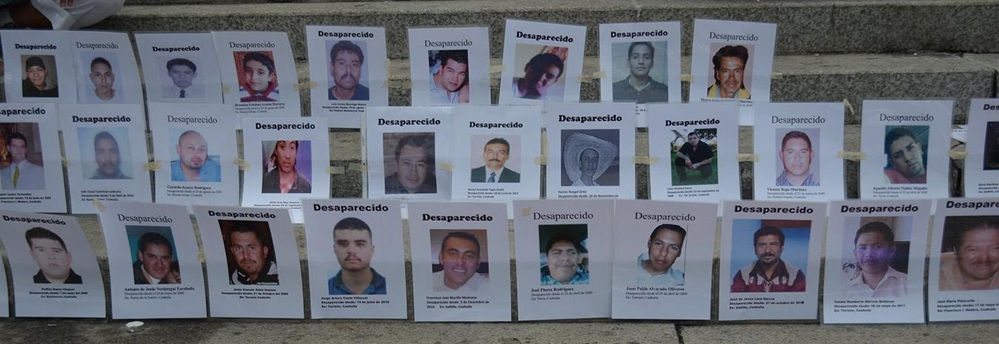
UN Urges Action to End Enforced Disappearances on International Day

Shibbir Ahmed, UNITED NATIONS, NY — The United Nations is marking the International Day of the Victims of Enforced Disappearances on Sunday with renewed calls for governments to address the fate of missing people, protect victims and their families, and ensure truth and justice for those affected by enforced disappearance.

The annual observance, held on August 30, highlights the continuing suffering of people whose relatives have disappeared after being arrested, detained or otherwise taken into state custody while authorities deny or conceal their whereabouts.

UN human rights experts said the impact of enforced disappearance extends far beyond the individual victim. Families can be left for years without information about what happened to their loved ones, while communities can suffer social and economic consequences. The UN has described enforced disappearance as a serious human-rights violation that can also be used to spread fear throughout society.

The 2026 observance is particularly significant because it marks 20 years since the adoption of the International Convention for the Protection of All Persons from Enforced Disappearance. The convention was adopted by the UN General Assembly in 2006 and established an international legal framework aimed at preventing enforced disappearances and protecting people from the practice.

The UN Committee on Enforced Disappearances and the Working Group on Enforced or Involuntary Disappearances have used this year’s observance to renew attention to victims and their families and to the need for effective measures to prevent disappearances and clarify the fate of those who remain missing.

A Continuing Global Human Rights Challenge

Enforced disappearance occurs when people are arrested, detained or abducted by, or with the authorization, support or acquiescence of state authorities, followed by a refusal to acknowledge the person’s detention or to provide information about their whereabouts.

The consequences can continue for decades. Families may remain uncertain whether their relatives are alive or dead, while the lack of information can prevent them from obtaining justice, reparations and other forms of support.

The UN has repeatedly stressed that resolving cases of enforced disappearance requires credible investigations, accountability and access to information for families.

The International Day also serves as a reminder of the broader obligations of governments under international human-rights law to prevent enforced disappearance and investigate allegations when they occur.

Twenty Years of the UN Convention

The International Convention for the Protection of All Persons from Enforced Disappearance was adopted on December 20, 2006. It entered into force in 2010 and created the Committee on Enforced Disappearances to monitor implementation by states parties.

The convention recognizes the right of every person not to be subjected to enforced disappearance and calls on states to take measures to prevent the practice and ensure accountability. Two decades after its adoption, the UN continues to call for stronger implementation of the convention and greater protection for victims and their families.

The UN’s message on August 30 remains clear: families searching for missing relatives should not be left without answers, and enforced disappearance must not be allowed to remain a tool of fear, impunity or denial.