Landau Calls for Shift From Aid to Investment in U.S. Economic Diplomacy
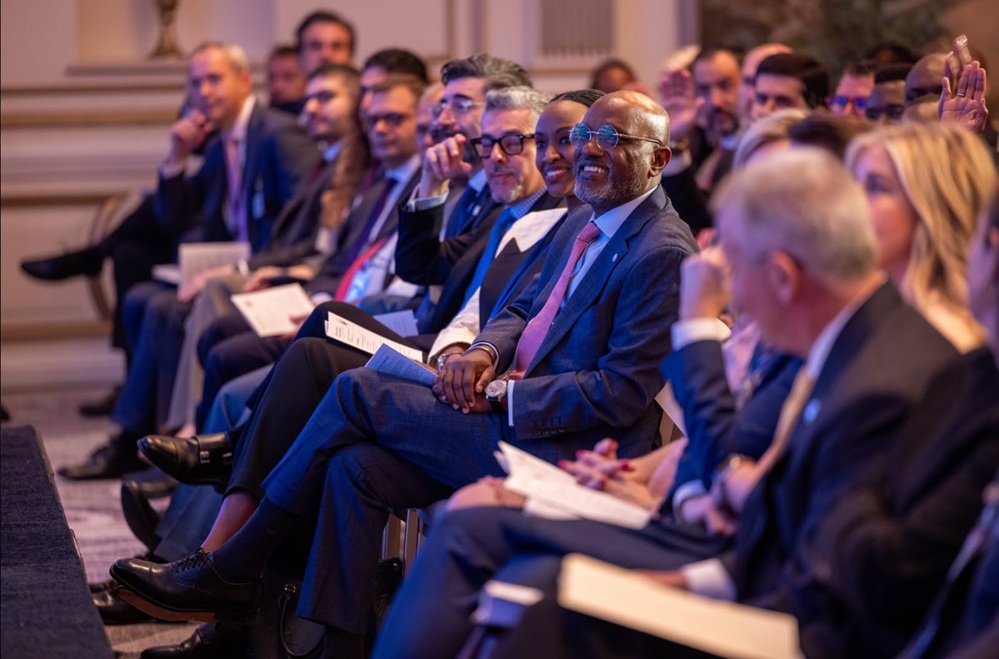
Shibbir Ahmed, New York — U.S. Deputy Secretary of State Christopher Landau has called for a stronger focus on trade and private investment as a long-term alternative to traditional foreign aid, saying economic diplomacy should play a central role in strengthening relationships between countries. Speaking at a Trade Over Aid Deals Showcase on September 25, Landau said economic and commercial issues had for decades taken a back seat in diplomacy, which he argued had too often focused primarily on political, military and security matters.
‘Economic and commercial issues should be treated as a core element of diplomacy’, Landau said, arguing that governments have a responsibility to create prosperity, economic opportunities and jobs for their people. Landau said economic projects can create lasting relationships that survive changes in government. While acknowledging that aid programs can help countries remain afloat, he argued that long-term economic projects can provide more sustainable value by generating investment, infrastructure, employment and economic growth.
He also emphasized that foreign investment does not necessarily mean a loss of national sovereignty. According to Landau, governments should establish clear terms and conditions for investments so that both investors and host countries understand their respective obligations and potential returns.
‘Investment is an engine of growth’, Landau said, urging governments and businesses to view foreign capital as an opportunity to expand economic activity rather than as a threat to sovereignty. He described investment relationships as potentially “win-win” arrangements, saying capital inflows can support infrastructure, jobs and economic growth while also strengthening political and commercial ties between countries.
U.S. private sector at the center
Landau said one of his priorities as deputy secretary is to improve communication between the U.S. government and American companies seeking investment opportunities overseas. He noted that during trips around the world, he frequently hears foreign governments asking why American companies are absent from projects where businesses from other countries have submitted bids.
Landau said he had previously focused largely on American companies directly operating overseas, including construction, infrastructure, oil and mining firms. He said he now sees a greater role for U.S. financial capital, particularly from New York City, which he described as the world’s financial capital.
‘There are trillions of dollars here that can be deployed around the world,’ Landau said, arguing that attracting capital providers could help connect foreign investment opportunities with American operating companies. He said he recently met with major capital providers to discuss why they were not investing in certain countries and what obstacles were preventing greater U.S. participation.
Calls for a more coordinated U.S. approach
Landau also acknowledged concerns from private investors about the fragmented nature of the U.S. government’s economic engagement overseas. He said investors sometimes want the U.S. government to have a financial stake or other involvement in projects to reduce risks associated with political changes in foreign countries.
Landau said he wants the State Department, Commerce Department, Export-Import Bank, Development Finance Corporation and Millennium Challenge Corporation to work more closely together and make the U.S. government a more accessible “one-stop shop” for businesses seeking to invest overseas.
He cited the Pacific Islands as one region where he believes greater investment opportunities exist. Landau said he had organized a business summit and investment roundtable in Honolulu in February with Pacific Island leaders and U.S. private-sector representatives to identify sectors where investment could be expanded.
Landau said the U.S. government’s role is to improve communication between governments, businesses and investors and help identify opportunities for private capital. Concluding his remarks, Landau reaffirmed his commitment to expanding the global role of American businesses and called for what he described as an “unprecedented golden era for the American private sector around the world.”