Melania Trump Expands Fostering the Future Together Coalition to 57 Nations
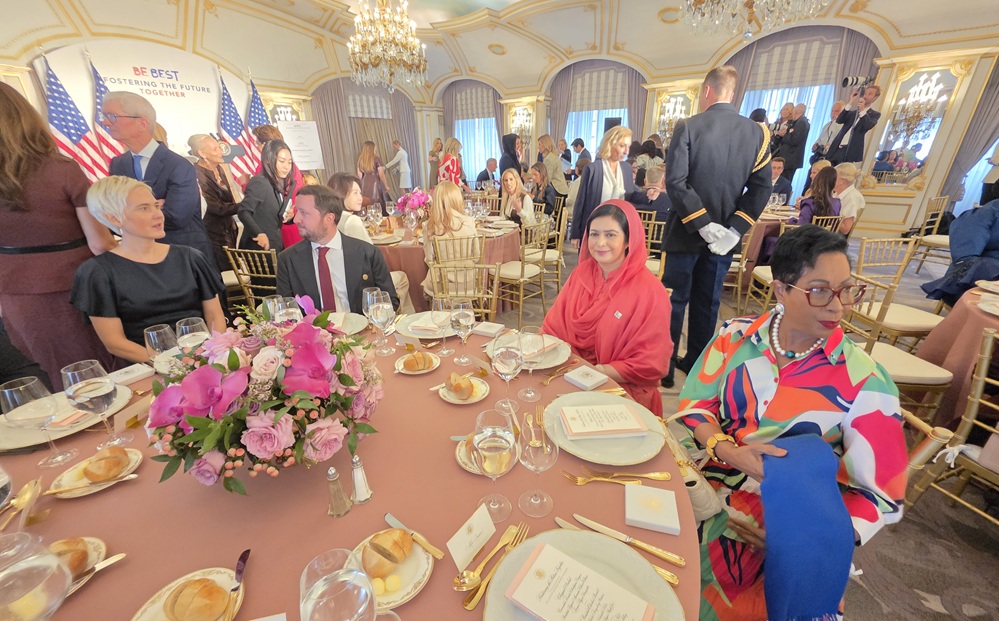
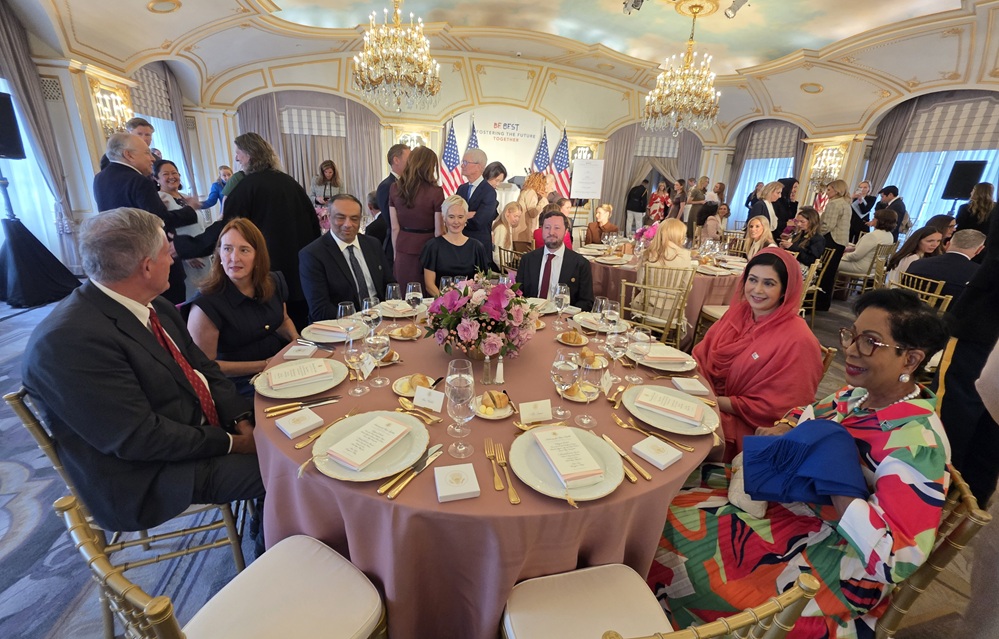
Shibbir Ahmed, New York — First Lady Melania Trump on Tuesday reconvened members of her Fostering the Future Together initiative in New York during the high-level week of the 81st United Nations General Assembly, announcing new technology partnerships, international events and an expansion of the coalition to 57 participating countries.
The gathering brought together representatives from countries including the United Kingdom, South Korea, the Philippines, Poland, Ukraine, Türkiye, the United Arab Emirates, Panama and Canada, according to the White House.
“Together, we are a beautiful range of cultures, languages, histories, and traditions,” Trump said. “And yet, we stand unified around one everlasting truth: the future of our world will be determined by what we do for our children today.”
Fostering the Future Together is described by the White House as a global coalition focused on empowering children through technology and education. Trump said the initiative is intended to provide young people with opportunities to learn, create and develop skills for the future.
New International Events Announced
Trump announced several Fostering the Future Together events planned for 2026.
They include a G20 event in Miami, which Trump plans to host, an ASEAN conference in Manila hosted by Philippine First Lady Liza Araneta Marcos, a European regional meeting hosted by Polish First Lady Marta Nawrocka, and a Caribbean regional meeting hosted by Saint Kitts and Nevis First Lady Diani Prince-Drew. “These leaders have stepped forward to activate their regions,” Trump said, adding that the initiative would provide support for their efforts.
Technology Partnerships
The First Lady also announced new private-sector partnerships involving Adobe, Amazon, Intel, Starlink, Google and Zoom. The companies are being brought into the initiative as part of its focus on expanding children’s access to technology and education. Tim Cook, executive chairman of Apple, and Enrique Lores, CEO of HP, also attended the gathering, according to the White House.
Trump emphasized that access to technology alone does not constitute empowerment and called for young people to be taught how to use technological tools responsibly and effectively.
“We must give our children the tools—and teach them how to use those tools wisely,” she said.
Focus on Technology and Education
In her remarks, Trump highlighted the rapid development of artificial intelligence and other technologies, describing the current period as a major technological transformation. She cited technologies including artificial intelligence, video communications, mobile computing, autonomous vehicles, virtual environments and biometric identification as examples of technologies that have moved from the realm of science fiction into everyday life.
She also called on participating countries and technology companies to help young people develop the knowledge and skills necessary to participate in an increasingly technology-driven economy.
“Our Fostering the Future Together coalition must strive to empower the youth of our nations to bend the boundaries of imagination, explore new frontiers of intellect, have the courage to take calculated risks, and build toward advancement of society,” Trump said.
Coalition Expands to 57 Countries
The White House said the initiative now includes 57 participating nations. Trump said the coalition’s long-term purpose is to create opportunities for children regardless of where they are born. Fostering the Future Together was announced during the 80th UN General Assembly in 2025. According to the White House, Trump subsequently convened the initiative’s inaugural Global Coalition Summit in Washington in spring 2026, bringing together first spouses and technology-sector leaders.
The latest gathering took place during the UN General Assembly’s high-level week in New York. The United Nations says the general debate of the 81st session is being held from September 22 to 26 and again on September 28.
Trump said the initiative’s success should ultimately be measured by its impact on future generations rather than by the meetings and speeches themselves. “Years from now, our children may not remember the meetings we held or the speeches we gave. But they will live with the consequences of what we do here,” she said.