Bangladesh Seeks Stronger UNDP, UNFPA Support for Development Priorities
Mashiur Rahman Majumder, NEW YORK: Bangladesh has sought stronger cooperation from the United Nations Development Programme (UNDP) and the United Nations Population Fund (UNFPA) to strengthen institutional capacity, advance economic reforms, create an investment-friendly environment, and address the country’s demographic challenges. Prime Minister’s Political Adviser Zahir Uddin Swapon made the appeal during separate meetings with senior officials of the two UN agencies at the United Nations Headquarters in New York on Monday.
He met with Kanni Wignaraja, UNDP Regional Director for Asia and the Pacific and Assistant Secretary-General of the United Nations, and separately with Swetlua Bayara, Deputy Director of UNFPA’s Programme Division, who represented UNFPA Executive Director Diene Keita. Bangladesh’s Chargé d’Affaires to the United Nations, Ambassador Sanchita Haque, along with senior officials from the two UN agencies and the Permanent Mission of Bangladesh, attended the meetings.
During his meeting with Wignaraja, Swapon highlighted Bangladesh’s need for technical assistance to address the challenges associated with its graduation from the Least Developed Country (LDC) category and to implement the Smooth Transition Strategy (STS). He emphasized the importance of strengthening institutional capacity, improving the business and trade environment, attracting foreign investment, and diversifying the country’s export base to sustain economic growth in the post-LDC graduation period.
In response, Wignaraja expressed UNDP’s willingness to work closely with Bangladesh and assured continued cooperation in strengthening institutional capacity, modernizing trade-related laws, and creating a more investment-friendly environment. In a separate meeting with UNFPA Deputy Director Swetlua Bayara, Swapon sought expanded cooperation in population research, the collection of reliable demographic data, and evidence-based policymaking.
Bayara briefed the adviser on UNFPA’s ongoing initiatives in Bangladesh, including maternal and reproductive healthcare, expansion of midwifery services, prevention of violence against women, and support for vulnerable communities, including Rohingya women. She reaffirmed UNFPA’s commitment to working more closely with Bangladesh and expanding areas of cooperation in the future.
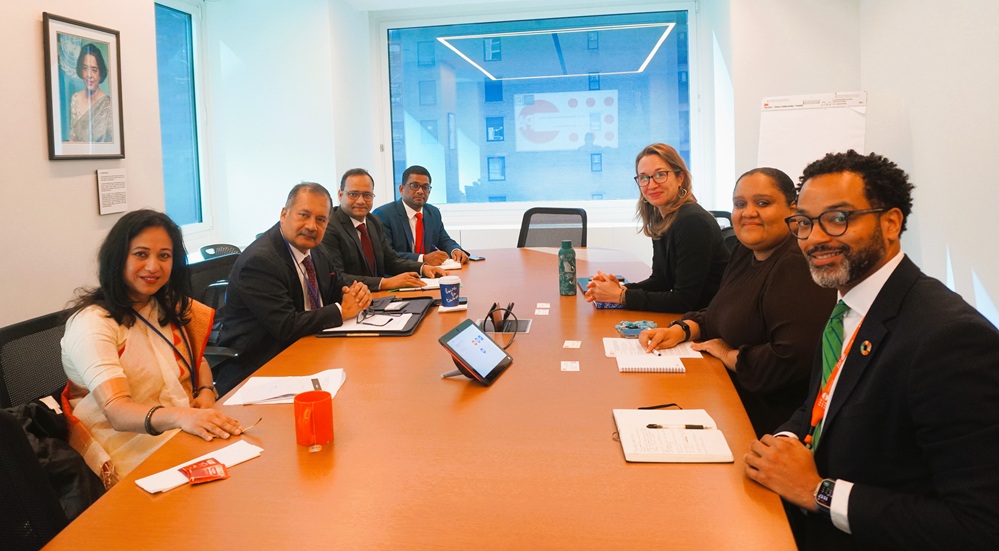
The meetings also addressed the importance of strengthening parliamentary oversight and accountability in Bangladesh. Swapon proposed making the ongoing programmes of both UN agencies more responsive to the country’s needs, particularly in enhancing the capacity of parliamentary committee members to effectively monitor government activities and ensure accountability.
Representatives of both agencies welcomed the proposal and expressed interest in taking necessary initiatives and expanding cooperation in this area. The discussions underscored Bangladesh’s interest in deepening its partnership with UN agencies to advance economic transformation, institutional reforms, demographic research, improved public services, and stronger parliamentary accountability.