Trump Says He’ll Consider Releasing More 9/11 Records

Shibbir Ahmed, Washington DC — U.S. President Donald Trump said Sunday he would consider a request from relatives of victims of the September 11, 2001, terrorist attacks to release additional government records related to the attacks, including documents that could shed further light on possible Saudi connections.

Speaking to reporters in Ireland before returning to the United States, Trump was asked about calls from 9/11 victims’ families for the release of additional records. “I’m going to look at it when I get back,” Trump said.

The renewed push comes just days after the United States marked the 25th anniversary of the September 11 attacks, which killed nearly 3,000 people in New York, at the Pentagon and in Pennsylvania.

Families of 9/11 victims have for years sought the release of additional records they believe could help clarify whether individuals linked to Saudi Arabia provided assistance to some of the hijackers. Fifteen of the 19 hijackers were Saudi nationals.

Terry Strada, whose husband was killed in the attacks, has been among those pressing the Trump administration to release more information. During a 25th-anniversary remembrance ceremony, she urged Trump to stop protecting Saudi Arabia and provide families and survivors with greater transparency.

Saudi Arabia has consistently denied involvement in the attacks. The issue has nevertheless remained the subject of years of investigation and legal action by victims’ families.

Trump’s comments do not amount to a commitment to release the records, but they could reopen a long-running debate over the remaining classified material surrounding the September 11 attacks.

The Public Interest Declassification Board has also been advocating for the release of additional historically significant 9/11 records. The board said earlier this month that it was pursuing the potential declassification of high-priority records associated with the 9/11 Commission, including material related to intelligence assessments before the attacks.

For families who have spent a quarter-century seeking answers, Trump’s statement represents a potentially significant development in their long-running effort to obtain additional information about what U.S. officials knew before September 11 and whether individuals connected to the attacks received assistance from foreign actors.


America Marks 25 Years Since 9/11

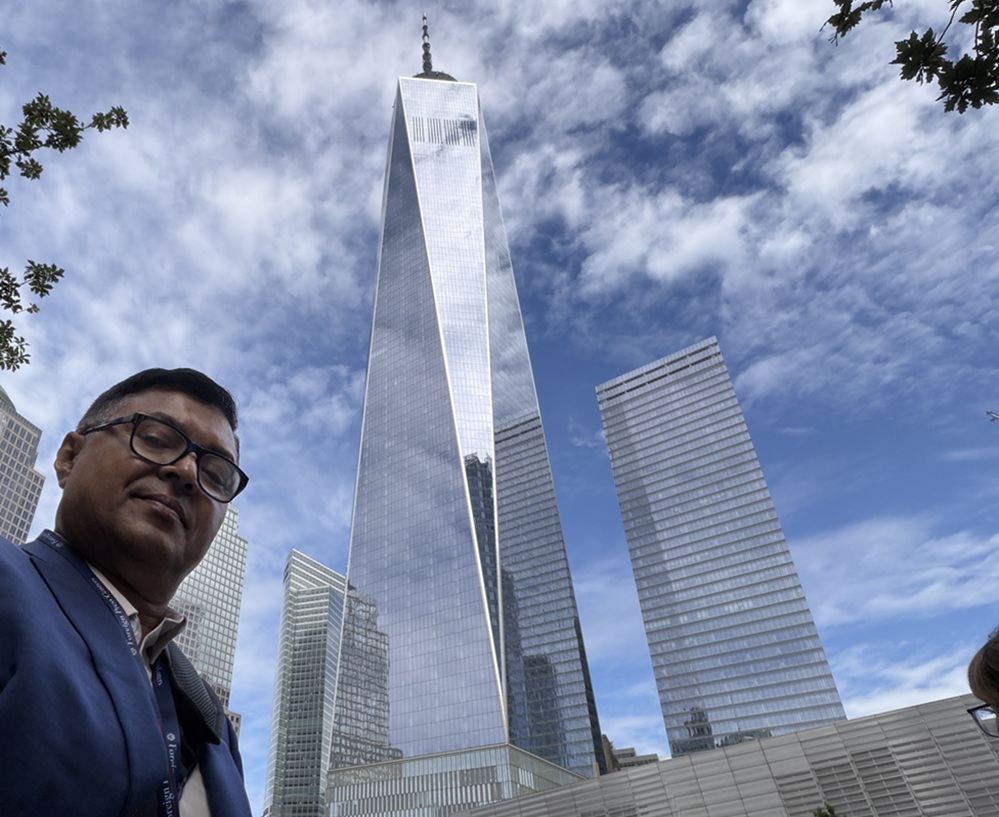
Shibbir Ahmed, Ground Zero, New York — The United States on Friday marked the 25th anniversary of the September 11, 2001, terrorist attacks with memorial ceremonies in New York, Virginia and Pennsylvania, while the release of newly declassified CIA intelligence records renewed attention on what U.S. officials knew about al-Qaida and Osama bin Laden before the attacks. Nearly 3,000 people were killed when 19 al-Qaida hijackers seized four commercial passenger aircraft and carried out coordinated attacks on the World Trade Center in New York and the Pentagon in Virginia. United Airlines Flight 93 crashed near Shanksville, Pennsylvania, after passengers attempted to regain control of the aircraft.

At Ground Zero in Lower Manhattan, relatives of victims gathered for the annual memorial ceremony and read the names of those killed. The observance began with a moment of silence at 8:46 a.m., the time American Airlines Flight 11 struck the World Trade Center’s North Tower. Vice President JD Vance attended the New York ceremony alongside former Presidents Bill Clinton, George W. Bush, Barack Obama and Joe Biden. The gathering brought together current and former national leaders as families commemorated those who died a quarter-century ago.

The ceremony included additional moments of silence marking the attacks on the South Tower, the Pentagon and Flight 93. This year, organizers also included a seventh moment of silence for people who subsequently died from illnesses associated with exposure to toxic materials at the World Trade Center site.

The 9/11 Memorial & Museum said the commemoration remains centered on the victims and their families, with the names of those killed read during the ceremony. The annual Tribute in Light is also scheduled to illuminate the New York skyline Friday evening.

Trump Attends Pentagon Ceremony

President Donald Trump marked the anniversary at the Pentagon in Arlington, Virginia, where American Airlines Flight 77 crashed after being hijacked. The attack killed 184 people at the Pentagon and aboard the aircraft. Trump attended the ceremony with First Lady Melania Trump and Defense Secretary Pete Hegseth. Senior military and government officials also participated in the remembrance.

The Pentagon ceremony focused on the victims and the military personnel, civilian employees and others who lost their lives in the attack. Trump and Hegseth also linked the events of September 11 to current U.S. national-security policy and the country’s military role overseas. Arlington County and other communities in Virginia also held local commemorations honoring residents, first responders and others connected to the Pentagon attack.

Flight 93 Remembered in Pennsylvania

In Shanksville, Pennsylvania, families and visitors gathered at the Flight 93 National Memorial to commemorate the 40 passengers and crew members who died when the hijacked aircraft crashed into a field. The passengers had learned through telephone calls that other hijacked aircraft had struck the World Trade Center and the Pentagon and attempted to take control of Flight 93. The plane crashed before reaching its intended target. The Pennsylvania observance included the reading of the passengers’ and crew members’ names and a wreath-laying ceremony.

CIA releases 71 intelligence reports

The 25th anniversary also brought a significant new development in Washington. The Central Intelligence Agency released 71 intelligence reports related to the period before and immediately after the September 11 attacks. The collection includes 70 reports prepared before the attacks and one report dated September 12, 2001. The documents were prepared for the President’s Daily Brief and were provided to Presidents Bill Clinton and George W. Bush and senior administration officials.

The documents show that U.S. intelligence agencies had been tracking bin Laden and al-Qaida for years before the attacks. A February 1998 report warned about bin Laden’s interest in obtaining chemical, biological and nuclear materials. Other reports discussed his growing network, his activities in Afghanistan and the Taliban’s reluctance to surrender him.

A September 1998 intelligence report described a possible al-Qaida plan involving an explosive-laden aircraft and identified Washington as a preferred target. Later reports discussed possible hijackings and surveillance of locations in the United States.

An August 2001 President’s Daily Brief, already publicly known as “Bin Ladin Determined To Strike in US,” warned of suspicious activity in the United States consistent with preparations for hijackings or other attacks. The newly released collection provides additional surrounding intelligence records from that period.

The documents remain partly redacted, and officials said the release does not fundamentally overturn the established historical account of the attacks. Instead, the records provide additional detail about the intelligence available to U.S. officials before September 11.

The 9/11 Commission previously concluded that failures involving intelligence sharing, management, policy and the ability to interpret the available information contributed to the government’s inability to prevent the attacks.

New records revive questions about Ground Zero exposure

In New York, the anniversary has also brought renewed attention to the long-term health consequences of the attacks. Thousands of firefighters, police officers, emergency workers, construction workers, residents and others who were exposed to the dust and debris around the World Trade Center site have developed illnesses associated with the disaster.

The FDNY has continued adding the names of members who died from illnesses linked to their work at Ground Zero. More than 600 firefighters have died from 9/11-related illnesses, according to department figures cited in anniversary coverage.

The city has also begun releasing large collections of records concerning its response to the World Trade Center disaster, including documents related to air quality and the handling of information about environmental hazards after the attacks. The records have renewed questions about what officials knew about the risks in Lower Manhattan and when that information was communicated to residents and workers.

A continuing national security legacy

The attacks prompted major changes in U.S. national security policy. Congress created the Department of Homeland Security, federal agencies expanded counterterrorism operations and intelligence-sharing systems were reorganized. Airport security procedures were substantially expanded, while Congress approved new surveillance authorities.

The attacks also led to the U.S. military campaign in Afghanistan against al-Qaida and the Taliban. The United States later invaded Iraq in 2003, beginning two wars that became central to American foreign policy for the following two decades.

The wars resulted in the deaths of thousands of U.S. military personnel and large numbers of civilians in Afghanistan and Iraq. The post-9/11 period also produced prolonged debates over detention, interrogation, surveillance, civil liberties and the balance between national security and individual rights.

Impact on Muslim and South Asian Americans

The attacks also had significant consequences for Muslim, Arab and South Asian communities across the United States. In the years following September 11, members of those communities faced hate crimes, discrimination, profiling and increased scrutiny. At the same time, Muslim and South Asian Americans have become an increasingly visible part of American civic, political and professional life. The 25th anniversary has therefore prompted communities across the country to remember both the victims of the attacks and the broader social consequences that followed.

Texas and communities across the country

The anniversary was not limited to New York, Virginia and Pennsylvania. Communities across the United States held ceremonies, vigils, memorial services and events honoring victims and first responders. In Houston, an interfaith remembrance brought together volunteers who read the names of those killed on September 11 alongside names associated with the wars in Afghanistan and Iraq. The event reflected a broader effort in some communities to discuss both the attacks and the consequences of the U.S. response. Other communities organized stair climbs, flag displays and local memorial ceremonies, often focusing on residents who died in the attacks or first responders who later became ill.

A 25-year transition

The anniversary comes as the United States enters a period in which a growing portion of the population has no personal memory of September 11. People born after the attacks now make up a significant share of the American population. For victims’ relatives, survivors and first responders, however, the events remain personal rather than historical. At Ground Zero, in Arlington and at Shanksville, the ceremonies continued to place individual victims at the center of the commemoration.

The newly released intelligence documents added another dimension to this year’s anniversary by providing additional evidence of the warnings available to U.S. officials before the attacks.

The records do not offer a simple explanation for why the attacks were not prevented. They instead add to an extensive historical record showing that U.S. agencies had identified bin Laden and al-Qaida as serious threats but failed to translate available intelligence into effective action against the specific plot.

Twenty-five years after September 11, the United States is therefore commemorating the victims while continuing to examine the decisions, intelligence failures, policies and human consequences associated with the attacks and their aftermath.


Trump Changes Defense Production Act Powers, Expands Energy Authority

Shibbir Ahmed, Washington DC: President Donald Trump has issued a new executive order changing how certain authorities under the Defense Production Act are delegated, giving both the Interior and Energy secretaries independent authority over energy-related matters.

The White House announced the order on September 8, saying it amends an earlier executive order governing national defense resource preparedness and updates delegations of presidential authority under the Defense Production Act.

Under the new order, the Secretary of the Interior and the Secretary of Energy may independently exercise delegated authority over forms of energy under their respective purviews. Previously, those responsibilities were delegated to the Energy secretary.

The order also establishes a process for resolving disputes between the two departments. Energy-related disputes will generally be referred first to the National Energy Dominance Council. If a matter involves national defense infrastructure or military operations, it will also be referred to the National Security Council, with coordination involving the Department of War.

Trump’s order further gives the Interior, Commerce and Energy secretaries independent authority to exercise certain presidential powers under the Defense Production Act.

The changes are part of the administration’s broader effort to reorganize federal authority over energy resources and strengthen coordination between energy policy and national security.

The Defense Production Act gives the president broad powers to support national defense by influencing the production, allocation and distribution of critical resources. The law has also been used to strengthen domestic supply chains for strategically important materials and industries.

The White House said the latest order must be implemented in accordance with applicable law and subject to the availability of appropriated funds. The administration previously adjusted Defense Production Act delegations in March, when Trump gave the Energy secretary independent authority alongside the Commerce secretary over certain powers under the law.


Trump Honors 9/11 Victims and First Responders

Shibbir Ahmed, Washington DC: President Donald Trump honored the victims of the September 11, 2001, terrorist attacks and the first responders who risked their lives to save others as the United States prepares to mark the 25th anniversary of the tragedy.

Trump held a remembrance ceremony Tuesday at the Ellipse outside the White House, bringing together firefighters, police officers, first responders, Gold Star families and representatives of the Tunnel to Towers Foundation.

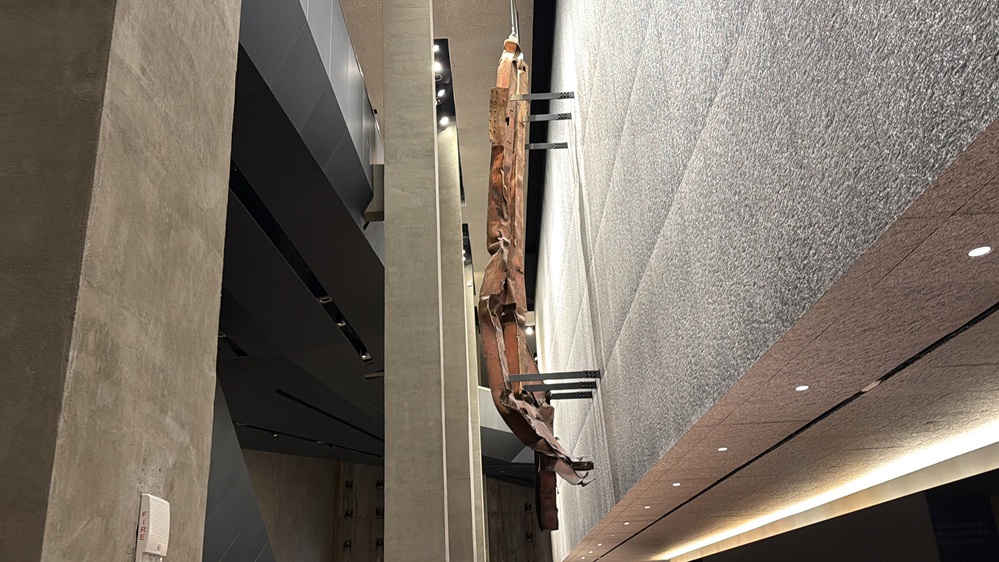
A 21-foot steel beam recovered from the wreckage of the World Trade Center’s South Tower was displayed during the ceremony. The beam is part of the Tunnel to Towers Foundation’s “Steel Across America” initiative, which is taking pieces of the World Trade Center to communities across the country. Trump paid tribute to the nearly 3,000 people who were killed in the attacks and reaffirmed the nation’s commitment to remembering those who lost their lives.

The president also posthumously awarded the Presidential Medal of Freedom to Welles Crowther, who helped save numerous people during the attacks and became known as the “Man in the Red Bandana.” Members of Crowther’s family accepted the nation’s highest civilian honor on his behalf.

Trump also announced that a new U.S. Coast Guard fast-response cutter would be named after Jeffrey Palazzo, a New York firefighter and Coast Guard reservist who was killed in the September 11 attacks.

The White House said Trump and Vice President JD Vance will visit sites connected to the September 11 attacks on Friday, the 25th anniversary, to honor the victims and meet with their families.

On September 11, 2001, al-Qaeda terrorists hijacked four commercial airplanes. Two planes were flown into the World Trade Center towers in New York, another struck the Pentagon, and the fourth crashed in Pennsylvania after passengers attempted to regain control of the aircraft.

Nearly 3,000 people were killed in the attacks, which profoundly changed U.S. national security policy and shaped American foreign policy for decades. The anniversary ceremony comes as the country continues to remember the victims, first responders and ordinary Americans whose actions on that day became part of the history of the United States.


25 Years After 9/11: How America Will Remember the Attacks From New York to Washington

Shibbir Ahmed, New York: Twenty-five years have passed since the devastating terrorist attacks of September 11, 2001. A quarter-century later, the loss of nearly 3,000 lives, the sacrifice of thousands of first responders, and the attacks’ lasting health and social consequences remain deeply embedded in the American memory. This year, New York, Washington and Pennsylvania will mark the 25th anniversary of 9/11 with a series of commemorations and public events.

Main Commemoration in New York

The main 9/11 commemoration will take place Friday at the 9/11 Memorial Plaza in Lower Manhattan, with family members of the victims participating in the ceremony. The program will begin at 8:40 a.m. and is primarily a private gathering for victims’ families, although the ceremony will be streamed live online.

Family members will read the names of those killed in the 2001 attacks as well as victims of the 1993 World Trade Center bombing. Moments of silence will mark several key moments of the attacks, including the aircraft impacts, the collapse of the Twin Towers, the attack on the Pentagon and the crash of Flight 93.

A special moment of silence will also honor those who died in the years following the attacks from 9/11-related illnesses. Vice President JD Vance and other administration officials are expected to attend the New York commemoration. President Donald Trump, meanwhile, will mark the 25th anniversary at the Pentagon instead of attending the New York ceremony.

First Moment of Silence at 8:46 a.m.

At 8:46 a.m. on September 11, 2001, the first hijacked aircraft, American Airlines Flight 11, struck the North Tower of the World Trade Center. The moment will be marked with the first moment of silence during the New York commemoration.

The ceremony will also remember the impact of the second aircraft on the South Tower, the collapse of both towers, the attack on the Pentagon and the crash of Flight 93 in Pennsylvania.

A total of 2,753 people were killed in New York, while 184 people died at the Pentagon in Arlington, Virginia. Another 40 passengers and crew members were killed when United Airlines Flight 93 crashed in Pennsylvania.

New Exhibition at the 9/11 Museum

For the 25th anniversary, the National September 11 Memorial & Museum in New York is launching a new exhibition titled “In Their Honor: 25 Years of 9/11-Inspired Service.”

Opening to the public on September 12, the exhibition will highlight stories of service, sacrifice and humanity over the 25 years since the attacks. It explores how individuals and communities transformed grief into public service and acts of compassion.

The museum is also introducing a new digital educational experience designed to help a new generation understand the history of 9/11 and its long-term impact. According to the museum, nearly 100 million Americans were either not yet born or were too young to remember the attacks. Connecting this generation with the history and legacy of 9/11 is one of the major goals of this year’s anniversary programs.

Trump to Mark Anniversary at Pentagon

In Arlington, Virginia, President Donald Trump is expected to attend and speak at the 25th anniversary commemoration at the Pentagon Memorial. The Pentagon was the third major target of the September 11 attacks. At 9:37 a.m., American Airlines Flight 77 struck the Pentagon. A total of 184 people were killed, including people inside the building as well as passengers and crew members aboard the aircraft. Vice President Vance will attend the main commemoration in New York.

Pennsylvania Also to Hold Commemorations

At the Flight 93 National Memorial in Pennsylvania, a commemorative ceremony will take place Friday from 8:30 a.m. to 10:30 a.m. The names of the 40 passengers and crew members aboard Flight 93 will be read, followed by the ringing of the Bells of Remembrance. A second ceremony will take place from 1 p.m. to 2:30 p.m., featuring additional commemorative activities and a public wreath-laying ceremony at the memorial.

New York’s Nighttime “Tribute in Light”

After a full day of remembrance, New York’s skyline will once again be illuminated by the historic Tribute in Light—two powerful beams of light representing the Twin Towers destroyed in the attacks. For the 25th anniversary, a special program titled “9/11 Tribute in Light: Live from Lower Manhattan” is scheduled to air nationally beginning at 8 p.m. on major television networks and other platforms.

The program will connect audiences across the country with the commemoration in New York and the annual Tribute in Light, bringing the day of remembrance to a national audience.

New Initiative in New York City

As part of this year’s 25th anniversary observance, New York City is officially recognizing September 11 as a Day of Remembrance and Service. The administration of Mayor Zohran Mamdani is emphasizing citywide remembrance, moments of silence, educational programs and volunteer service.

The city has also established a new Continuity and Mission Assurance Team, aimed at ensuring that essential city government operations and services can continue during emergencies while strengthening preparedness and coordination among city agencies.

25 Years Later, the Memory of 9/11 Endures

Twenty-five years later, 9/11 remains far more than a historical event. It continues to shape the security, politics, foreign policy and public health of New York, Washington and the United States as a whole.

This year’s commemorations are therefore not limited to honoring those who were killed. They also recognize first responders, rescue workers, survivors, families who lost loved ones and a new generation born after the attacks. A quarter-century later, the message remains the same: Never Forget.


Putin Orders Halt in Strikes on Kyiv During Trump Envoys’ Visit

MOSCOW — Russian President Vladimir Putin has ordered a three-day halt in Russian strikes on Kyiv as U.S. President Donald Trump’s envoys prepare to visit the Ukrainian capital, the Kremlin said Saturday. Kremlin spokesman Dmitry Peskov said Putin had ordered Russian forces not to strike Kyiv for three days beginning at midnight. The temporary pause is linked to the visit of U.S. envoys Steve Witkoff and Jared Kushner, who are seeking to revive diplomatic efforts to end the Russia-Ukraine war.

“The Russian president and commander in chief has given the order not to strike Kyiv for three days from midnight tonight,” Peskov said, according to Russian state media.

Witkoff and Kushner arrived in Moscow on Saturday and were scheduled to meet Putin before traveling to Kyiv on Sunday. Their visit is part of a renewed diplomatic effort by the Trump administration to push Russia and Ukraine toward an agreement to end the more than four-year war.

The announcement of the temporary halt comes after Russia carried out attacks across Ukraine, including strikes targeting areas around Kyiv. Ukrainian authorities have continued to report Russian missile and drone attacks as the conflict remains active.

The Kremlin’s decision to pause strikes on Kyiv appears intended to facilitate the U.S. delegation’s planned visit and meetings in the Ukrainian capital. The latest diplomatic push comes amid continued disagreements between Moscow and Kyiv over territory, security guarantees and Ukraine’s future relationship with NATO.

Trump has repeatedly said he wants to bring the war to an end, while his administration has stepped up high-level contacts with both Russian and Ukrainian officials. The outcome of Witkoff and Kushner’s meetings in Moscow and Kyiv could determine whether the latest diplomatic initiative develops into broader peace negotiations between Russia and Ukraine.


Trump Envoys Arrive in Moscow for Russia-Ukraine Peace Push

MOSCOW — U.S. President Donald Trump’s envoys Steve Witkoff and Jared Kushner arrived in Moscow on Saturday as part of a renewed diplomatic effort to end the Russia-Ukraine war. The two U.S. representatives met Russian President Vladimir Putin at the Kremlin for talks focused on efforts to find a possible path toward ending the conflict. Putin described the situation in Ukraine as difficult and complex, while praising Trump’s efforts to seek a diplomatic solution to the war.

Trump has said his envoys are carrying a proposal aimed at bringing an end to the conflict. The latest diplomatic initiative comes as Washington continues to push Moscow and Kyiv toward negotiations despite major disagreements between the two sides. Witkoff and Kushner are also expected to travel to Kyiv on Sunday for talks with Ukrainian President Volodymyr Zelenskyy.

As part of the diplomatic effort, Russia announced a temporary 72-hour pause in strikes on Kyiv during the visit, according to reports. Zelenskyy has also agreed to suspend Ukrainian strikes on Moscow during the talks.

However, fighting continues in other parts of Ukraine, and significant differences remain between Moscow and Kyiv over issues including territory, security guarantees and Ukraine’s future relationship with NATO. The latest meetings represent one of the most significant diplomatic efforts by the Trump administration to advance negotiations since returning to the White House. The outcome of the Moscow and Kyiv meetings could determine whether the latest peace initiative develops into broader negotiations between Russia and Ukraine.


Trump Calls Iran Conflict ‘Small Potatoes’ as 18 US Service Members Killed

Shibbir AHmed, WASHINGTON DC — President Donald Trump has described the ongoing U.S. military conflict with Iran as “small potatoes,” downplaying the scale of a confrontation that has continued for months and resulted in the deaths of 18 U.S. service members.

Speaking to reporters in the Oval Office on Friday, Trump said he preferred to describe the situation as a “military conflict” rather than a war, echoing Vice President JD Vance’s argument that the fighting does not meet the definition of a conventional war.

Trump said U.S. military operations have largely involved intermittent airstrikes and emphasized that American ground troops have not been engaged in sustained combat. He compared the current casualties with those suffered in previous major U.S. wars. The president’s comments came as tensions with Tehran remain high and the United States continues military operations against Iranian targets.

Trump threatens further strike

Trump also warned that the United States could strike Iran’s Pickaxe Mountain, a deeply buried nuclear facility, if Washington determines that Iran is moving equipment or taking other action at the site. The president said the United States could act against the facility “quite soon,” adding another potential escalation point in the conflict.

The conflict began on February 28 and has involved repeated U.S. military strikes against Iranian targets, while Iran has retaliated with attacks against U.S. and allied positions in the region. According to reporting cited by AP, the conflict has killed 18 U.S. service members and cost the United States more than $37.5 billion.

Trump says Iran will not obtain nuclear weapons

Trump reiterated that Iran will not be allowed to acquire nuclear weapons under his administration. The comments come amid continuing concerns over Iran’s nuclear infrastructure and the possibility that further U.S. strikes could broaden the conflict.

Trump has repeatedly sought to portray the U.S. military campaign as limited, while the continuing casualties, financial costs and regional consequences have kept the conflict at the center of U.S. foreign-policy and domestic political debate.

Vice President Vance has also defended the administration’s decision not to characterize the confrontation as a traditional war, pointing to the nature of the military operations and the absence of sustained U.S. ground combat.

Trump’s remarks are likely to intensify debate over the administration’s Iran strategy as the conflict continues and the United States approaches the 2026 midterm elections.


Trump Says U.S. May Strike Iran’s ‘Pickaxe Mountain’ Very Soon

Shibbir Ahmed, WASHINGTON DC— U.S. President Donald Trump said Friday that the United States may strike Iran’s heavily fortified Pickaxe Mountain site “very soon,” raising the possibility of a further escalation in the ongoing conflict between Washington and Tehran. Trump’s remarks came as tensions between the United States and Iran remain high, with Washington continuing military and economic pressure on Tehran.

According to Reuters, Pickaxe Mountain is located near Iran’s already heavily damaged Natanz uranium-enrichment complex. The site contains deeply buried tunnel complexes and has been identified by U.S. and Israeli officials as a location of concern because of its potential connection to Iran’s nuclear activities.

Trump signals possible new strike

Speaking to reporters on Friday, Trump said the United States could target Pickaxe Mountain soon. His comments represent a renewed warning over the facility after he previously threatened military action against the site.

Trump has repeatedly said that preventing Iran from obtaining a nuclear weapon remains a central U.S. objective. In a separate interview aired this week, he said the United States was closely monitoring Pickaxe Mountain and claimed American surveillance capabilities provide information about activity at the location.

The president’s latest comments do not establish that a strike has been ordered or that one is imminent. They indicate that military action against the site remains under consideration.

What is Pickaxe Mountain?

Pickaxe Mountain, also known by its Persian name Kuh-e Kolang Gaz La, is an underground facility being developed south of the Natanz nuclear complex, roughly 225 kilometers (140 miles) from Tehran.

The facility is located beneath a mountain, making it considerably more difficult to attack than above-ground nuclear infrastructure. Satellite imagery and open-source assessments have shown extensive construction and tunnel systems at the site.

The International Atomic Energy Agency has not had direct access to the underground facility, leaving uncertainty over precisely what equipment or nuclear material may be located there.

Why the site is important

The concern surrounding Pickaxe Mountain centers on its potential ability to protect sensitive nuclear equipment underground. Reports have suggested that Iran could potentially move uranium-enrichment centrifuges or other nuclear-related equipment into deeply buried facilities. However, the exact contents and operational status of Pickaxe Mountain remain uncertain.

Trump previously acknowledged that Iran may have moved centrifuges to the site but said the presence of centrifuges alone would not necessarily mean Iran possessed nuclear material there. The facility’s depth also presents a significant military challenge. Earlier reporting has noted that even the most powerful U.S. bunker-busting weapons may face difficulties reaching installations buried deep beneath the mountain.

Comes amid wider U.S.-Iran confrontation

Trump’s latest warning comes amid continuing military confrontation between the United States and Iran. The United States has also intensified economic pressure on Tehran. On Friday, the U.S. Treasury Department sanctioned Türkiye-based Golden Global Bank and two subsidiaries, accusing them of helping Iranian financial institutions access international banking networks.

The Treasury said the action was part of Operation Economic Outcast, a broader campaign aimed at disrupting Iranian financial networks and restricting resources that Washington says support Iran’s regional activities. The combination of military pressure and financial sanctions reflects Washington’s continuing effort to pressure Tehran over its nuclear program and other regional activities.

Risk of further escalation

A U.S. strike on Pickaxe Mountain could mark another significant development in the conflict because of the facility’s location and its reported underground construction. Any attack could also increase regional tensions and potentially affect ongoing diplomatic efforts involving Iran and international mediators.

For now, Trump’s statement indicates that the facility remains under close U.S. surveillance and that military action remains a possibility. Whether Washington ultimately carries out an attack, however, remains unclear. The situation is developing.


Trump Says Europe Should Repay U.S. for Ukraine Military Aid

Shibbir Ahmed, WASHINGTON DC — President Donald Trump said Thursday that the United States intends to seek repayment from European countries for military assistance and ammunition previously provided to Ukraine, opening a new front in his administration’s long-running dispute with European allies over the cost of supporting Kyiv. In a social media post, Trump said European nations should reimburse the United States for military aid that Washington provided to Ukraine and NATO without charging European governments directly.

Trump characterized the amount as involving “hundreds of billions of dollars” and said Europe would have paid for the assistance if it had been asked to do so at the time. The president’s comments represent a significant escalation in his criticism of the financial burden the United States has carried during the Ukraine war.

They also come at a particularly sensitive moment for Washington, as the United States is simultaneously engaged in a major military confrontation with Iran and is confronting concerns about the availability of key weapons and ammunition.

U.S. weapons stocks under pressure

Trump’s demand for repayment comes as his administration is focusing heavily on rebuilding American weapons inventories. In his Thursday statement, Trump criticized reports that U.S. ammunition stockpiles have been significantly depleted. He said the United States is now prioritizing weapons for its own military rather than continuing to sell the same quantities to other countries.

Trump indicated that weapons sales to U.S. allies could resume in the near future, but emphasized that American stockpiles are currently receiving priority. The issue has gained additional urgency because of the ongoing U.S. military campaign against Iran.

Reuters previously reported that the U.S. Army has used a substantial portion of its stockpile of highly accurate, long-range missiles during the Iran conflict, raising questions about America’s ability to respond to another major military contingency.

The combination of the Ukraine war and the Iran conflict has therefore created an unusual strategic challenge for the Pentagon: Washington is supporting partners overseas while simultaneously trying to ensure that its own forces retain sufficient weapons for future operations.

Trump challenges the traditional U.S.-Europe arrangement

Trump has repeatedly argued that European countries should shoulder more of the financial burden for their own security and for assistance to Ukraine. His latest comments go further by suggesting that Europe should retroactively compensate the United States for assistance already delivered. That position could create difficult conversations between Washington and European capitals.

European governments have provided substantial military, financial and humanitarian assistance to Ukraine since Russia’s full-scale invasion in 2022. Europe has also increasingly taken responsibility for purchasing American weapons for Ukraine through mechanisms in which NATO allies finance U.S.-made equipment.

A Congressional spending analysis cited by the Council on Foreign Relations estimates that the United States had made available roughly $195 billion in spending related to the Ukraine war as of March 31, 2026. However, that figure includes a wide range of war-related spending and should not be interpreted as money directly handed to the Ukrainian government.

The distinction is important because much of U.S. Ukraine-related spending has supported American military production, logistics, replacement of U.S. stocks and other activities associated with the war.

Europe has already increased its role

European countries have significantly expanded their own support for Ukraine. The United States under Trump has also supported a system in which NATO allies pay for American weapons that are then provided to Ukraine. Under the Prioritized Ukraine Requirements List, or PURL, European and other NATO countries finance the purchase of U.S. weapons for Kyiv rather than requiring Washington to bear the full cost. The arrangement has allowed Ukraine to obtain advanced American systems while shifting more of the financial responsibility toward European allies.

A British Parliament research briefing published in August noted that the Trump administration had made clear that the United States would not pay for new assistance supplied through the PURL mechanism; NATO allies would finance the purchases. Trump’s latest demand nevertheless suggests that the president believes the existing burden-sharing arrangements do not go far enough.

Ukraine faces continuing pressure

For Ukraine, the development comes at a difficult time. Kyiv remains heavily dependent on Western military assistance, particularly air-defense systems, missiles, ammunition and other advanced weapons needed to defend against Russian attacks. Any reduction in American weapons availability could place additional pressure on European governments to increase their own contributions.

The issue is particularly sensitive for air defense. Ukraine has relied heavily on American-made systems and interceptors, while European governments have struggled to provide enough comparable equipment from their own inventories. The growing European role has therefore become both a financial and strategic necessity.

Trump’s comments linked to Iran war

The timing of Trump’s announcement is significant. The president’s comments came while the United States is engaged in the separate war with Iran, which has created additional demand for American precision-guided weapons. The Iran conflict has raised concerns inside Washington about whether U.S. weapons inventories are sufficient to sustain prolonged operations while simultaneously meeting commitments to allies.

Trump’s message indicates that the administration is responding by putting U.S. military requirements ahead of some foreign sales. That could affect not only Ukraine but also other American allies that depend on U.S.-manufactured weapons. The president said weapons sales to allies would eventually resume, suggesting that the administration views the current restrictions as a temporary measure while American stockpiles are rebuilt.

A new burden-sharing debate

Trump’s demand could also reopen a broader debate over NATO and transatlantic security. For decades, the United States has provided the backbone of NATO’s military capabilities, while European allies have often spent less on defense than Washington. Russia’s invasion of Ukraine dramatically changed that calculation.

European governments have increased defense spending and begun expanding domestic weapons production. But European militaries remain dependent on the United States for several critical capabilities, including strategic airlift, intelligence, missile defense and advanced weapons systems.

A report released Thursday by the European Court of Auditors warned that the European Union still faces major challenges in achieving its goal of defense readiness by 2030, including fragmented national systems, industrial bottlenecks and continued reliance on the United States. The report illustrates why Trump’s pressure on European allies is likely to continue.

Potential impact on NATO

Trump’s demand also raises questions about the future relationship between Washington and European allies. European governments may argue that they have already spent enormous sums supporting Ukraine and strengthening their own militaries. Washington, meanwhile, can point to decades of American spending on NATO’s collective defense and the extensive U.S. military assistance provided to Ukraine.

The disagreement is therefore about more than a single bill. It reflects a fundamental question about how the transatlantic alliance should divide the costs of security in an increasingly dangerous international environment. If European countries are asked to make retroactive payments for American assistance, negotiations could become particularly complicated.

There is also the question of how such payments would be calculated and whether the proposed reimbursement would cover the cost of weapons transferred directly from U.S. stockpiles, the cost of replacing those weapons, or broader U.S. spending related to the war. Trump did not provide a detailed mechanism for calculating or collecting the payments in his Thursday statement.

Russia watches the dispute

The growing disagreement between Washington and Europe is also being closely watched in Moscow. Russia has long sought to weaken Western unity over support for Ukraine and has portrayed the war as evidence of a broader confrontation between Russia and NATO.

Any significant reduction in U.S. support or disagreement among NATO members could therefore have consequences beyond the immediate financial dispute. At the same time, European governments are unlikely to abandon Ukraine simply because Washington is demanding greater financial responsibility.

Instead, Trump’s latest comments could encourage Europe to accelerate efforts to build an independent defense industry and reduce its reliance on American weapons. That process, however, would take years rather than months.

What comes next?

Trump’s announcement is likely to trigger discussions between Washington and European governments over the financial responsibilities associated with Ukraine. The immediate question will be whether European allies accept the principle of retroactive reimbursement or reject the proposal. A second question will be how the dispute affects future American weapons sales.

If U.S. weapons production remains under pressure because of the Iran conflict, European countries could face stronger incentives to finance American weapons directly for Ukraine while simultaneously increasing their own defense production.

For Ukraine, the key concern will be whether American weapons deliveries continue at a level sufficient to meet battlefield requirements. For Europe, the challenge will be balancing continued support for Kyiv with the need to rebuild national military inventories. And for Washington, the administration must balance support for allies with the increasingly urgent requirement to maintain adequate U.S. weapons stocks.

A changing transatlantic relationship

Trump’s latest demand is another sign that the traditional model of American leadership in European security is changing. The president has repeatedly called for NATO allies to spend more and take greater responsibility for their own defense. His demand that Europe reimburse the United States for past Ukraine assistance pushes that argument into new territory.

Whether European governments ultimately agree to Trump’s proposal remains uncertain. But the message from Washington is unmistakable: the Trump administration wants America’s allies to carry a much larger share of the financial burden for military security.

With the Ukraine war continuing, the Iran conflict consuming American weapons and Europe confronting its own defense shortcomings, the dispute over who should pay for Western security is likely to remain one of the most important issues shaping the transatlantic alliance.