New York Labor League President Khokon Dies at 58; Body Sent to Bangladesh
Shibbir Ahmed, New York — Kazi Azizul Haque Khokon, 58, president of the United States Labor League, was remembered with tears, prayers and heartfelt tributes as hundreds of Bangladeshi expatriates from across the political spectrum gathered to pay their final respects to the community leader in New York City.
Thousands of worshippers and mourners attended his funeral prayers after Jumu’ah on October 9 at Diversity Plaza in Jackson Heights, Queens. Community members, political leaders and longtime acquaintances gathered to bid farewell to Khokon, whose death had left many in the Bangladeshi diaspora in mourning.
Khokon reportedly suffered a cardiac emergency while traveling by bus to work on October 3. When he could not be located, a report was filed with police. Friends and political associates searched for him before his body was found at Bellevue’s morgue on the evening of October 7.
Originally from Magura, Bangladesh, Khokon came to the United States in 1992. According to people familiar with his circumstances, he had not obtained permanent immigration status and spent his years in the country living as a bachelor.
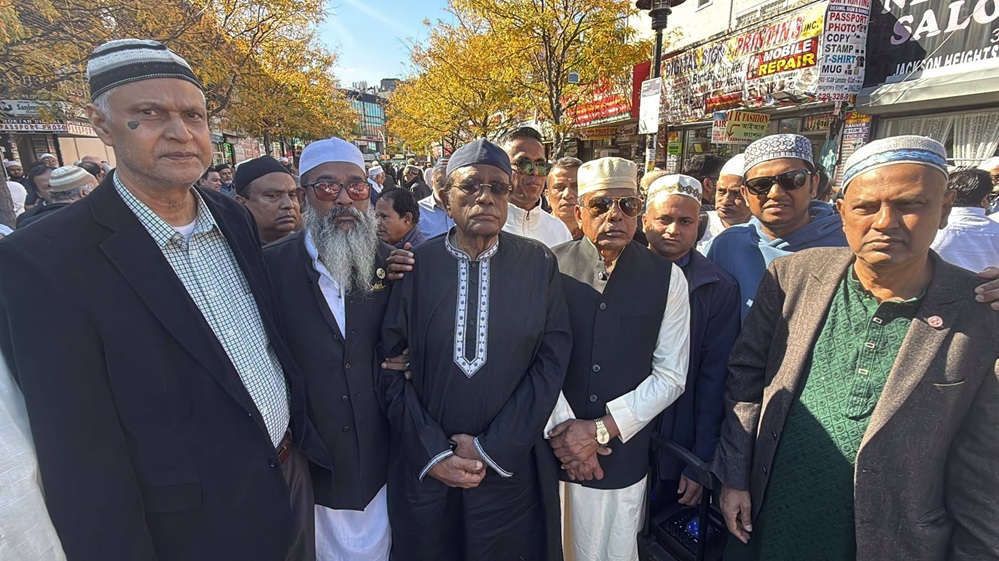
Before the funeral prayers, Jewel Ahmed, secretary of the U.S. Labor League, appealed to anyone who had outstanding financial matters with Khokon to contact him. Hossain Rana, an Awami League leader and one of the owners of Obosor Book Corner, where Khokon worked in Jackson Heights, also asked anyone who believed Khokon had wronged them to forgive him.
Ataur Rahman Selim, president of the Bangladesh Society, prayed for the forgiveness of Khokon’s soul and said the organization was taking responsibility for the funeral arrangements and the costs associated with sending his body to Bangladesh.
The funeral drew a broad cross-section of the Bangladeshi-American political and community leadership. Those attending included Moin Chowdhury, a Democratic Party district leader-at-large and attorney; Siddiqur Rahman, president of the U.S. Awami League; General Secretary Abdus Samad Azad; spokesperson Dr. Masudul Hasan; Awami League leader Engineer Mohammad Ali Siddiqui; Haji Enam; Misbah Ahmed; Rafiqul Rahman and Imdad Chowdhury, president and general secretary of the New York City Awami League, respectively.
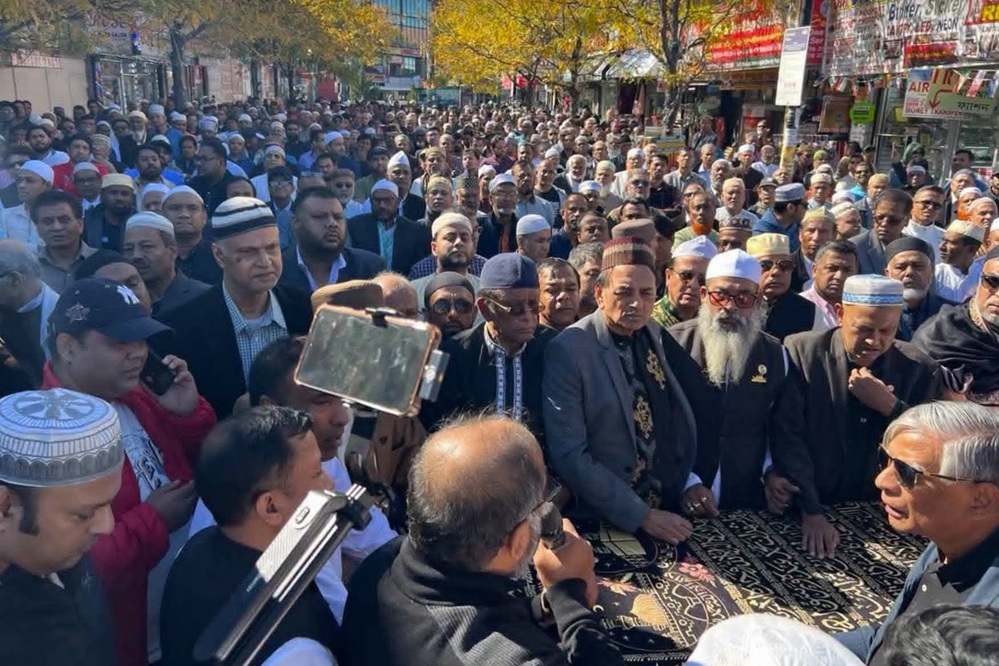
Also present were Mujibur Rahman Mia, president of the State Awami League and a freedom fighter; General Secretary Shaheen Azmal; Abdur Rahim Badsha, chief adviser to the U.S. Labor League; H.M. Iqbal and Syed Kibria Zaman, president and general secretary of the Swechchhasebak League; former president Nuruzzaman Sardar; Momtaz Shahnaz, president of the Women’s Awami League; Shahahana Rahman, an executive committee member of the U.S. Awami League; former member of parliament Nazrul Islam Babu; Mahmud Hasan and Hridoy Mia, president and general secretary of the U.S. Chhatra League; Harun Bhuiyan and Fahad Solaiman, president and general secretary of the JBBBA; and Mahiyuddin Dewan and Mohammad Ali, senior vice president and general secretary of the Bangladesh Society, among others.
Following the funeral prayers, a vehicle carrying Khokon’s coffin departed for John F. Kennedy International Airport. His body was scheduled to leave for Dhaka on an Emirates flight that night, according to the information provided by community representatives.
Meanwhile, members of the Awami League and affiliated organizations gathered at Nabanna Party Hall on the evening of October 8 in response to a call from the Labor League. They reportedly raised approximately $10,000 to assist with arrangements related to Khokon’s death and support his family.
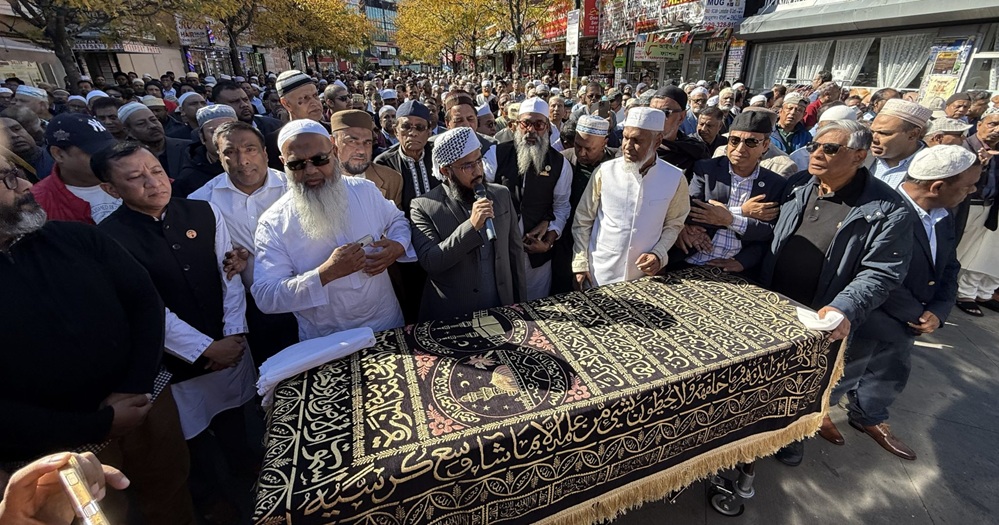
Jewel Ahmed and Dr. Masudul Hasan said the collected funds, along with cash reportedly found in Khokon’s pocket, would be sent to his brothers and sisters in Magura. Khokon’s funeral brought together political colleagues, community leaders and expatriates from different backgrounds, reflecting the connections he had built during his decades in the United States. As his body was prepared for its final journey to Bangladesh, members of the community offered prayers and expressed condolences to his family.