Syria Destroys Assad-Era Chemical Weapons as UN Hails First Verified Destruction Since 2014
Shibbir Ahmed, UNITED NATIONS, NY — September 4, 2026: Syria has begun destroying remnants of the chemical weapons programme inherited from the government of former President Bashar al-Assad, marking a major step in the country’s efforts to dismantle its clandestine chemical arsenal under international oversight.
The development was highlighted during a United Nations Security Council briefing on Syria’s chemical weapons programme, where UN officials reported that the Organisation for the Prohibition of Chemical Weapons (OPCW) had verified the destruction of chemical munitions in Syria for the first time since 2014.
UN High Representative for Disarmament Affairs Izumi Nakamitsu told the Council that the verified destruction represented “significant progress” in international efforts to eliminate Syria’s remaining chemical weapons capabilities.
According to UN and Reuters reporting, the destruction includes 42 aerial bombs, along with additional chemical-weapons-related production and storage facilities. The verification represents the first confirmed destruction of Syrian chemical munitions by the OPCW since the international disarmament process began more than a decade ago.
Remnants discovered after Assad’s fall
The latest operation follows the discovery earlier this year of previously undeclared chemical-weapons materials in Syria. In May, an OPCW expert team working with Syrian authorities reported finding previously undeclared chemical munitions, chemical substances, equipment and extensive documentation linked to the former government’s chemical weapons programme.
The OPCW said its investigation found dozens of previously undeclared chemical munitions, including aerial bombs of the same type associated with chemical attacks in Ltamenah in 2017 and Khan Shaykhun in 2017, as well as rockets of a type associated with the 2013 Ghouta chemical attack.
The discovery was significant because the OPCW had repeatedly raised questions about gaps and inconsistencies in Syria’s earlier declarations concerning the full extent of its chemical weapons programme. Following the fall of the Assad government in December 2024, Syria’s new authorities opened the door to renewed international inspections and cooperation with the OPCW.
International verification
The OPCW plays the central technical role in identifying, securing and destroying Syria’s remaining chemical weapons materials, while the issue continues to be addressed by the UN Security Council under its existing mandate.
The OPCW said in July that Syria’s rights and privileges under the Chemical Weapons Convention had been reinstated after the country’s new authorities demonstrated progress in cooperating with the organisation. The decision followed steps including amendments to Syria’s declaration, preparations for facility agreements and plans for verification and destruction activities.
The current process is therefore not simply a Syrian announcement of destruction. The significance lies in the fact that the destruction has been independently verified by the OPCW.
That distinction is crucial in international chemical-weapons disarmament, where verification is intended to establish that declared materials have actually been destroyed and cannot simply be transferred, concealed or reused.
Damascus promises further action
Syria’s representative to the United Nations, Ibrahim Olabi, told the Security Council that the destruction programme was intended to protect Syrians and prevent chemical weapons from falling into the wrong hands. The Syrian government has said it is cooperating with international experts to address the chemical weapons legacy left by the previous government.
The authorities are also preparing legal proceedings involving individuals allegedly connected to the former chemical weapons programme. Reuters reported that Syria is preparing trials involving 18 suspects, including senior figures allegedly connected to the programme.
The move could add an important accountability dimension to the international disarmament effort: not only destroying the remaining weapons and materials, but also investigating responsibility for their development and use.
Concerns over military activity
The Security Council discussion also reflected broader regional tensions. Syria’s UN representative criticized Israeli military actions in Syria, arguing that strikes could complicate chemical-weapons operations and place personnel involved in the destruction process at risk. Türkiye also raised concerns that Israeli military activity could make the disarmament effort more difficult.
Those claims remain part of the broader political dispute surrounding Syria and should be distinguished from the independently verified technical findings concerning chemical-weapons destruction.
A milestone after more than a decade
The latest development represents a significant change from the period when Syria’s chemical weapons programme was the subject of intense international confrontation. Syria joined the Chemical Weapons Convention in 2013, following international pressure after the deadly chemical attack in Ghouta. The OPCW subsequently supervised the removal and destruction of declared chemical weapons, but questions remained about whether Syria had fully disclosed the scope of its programme.
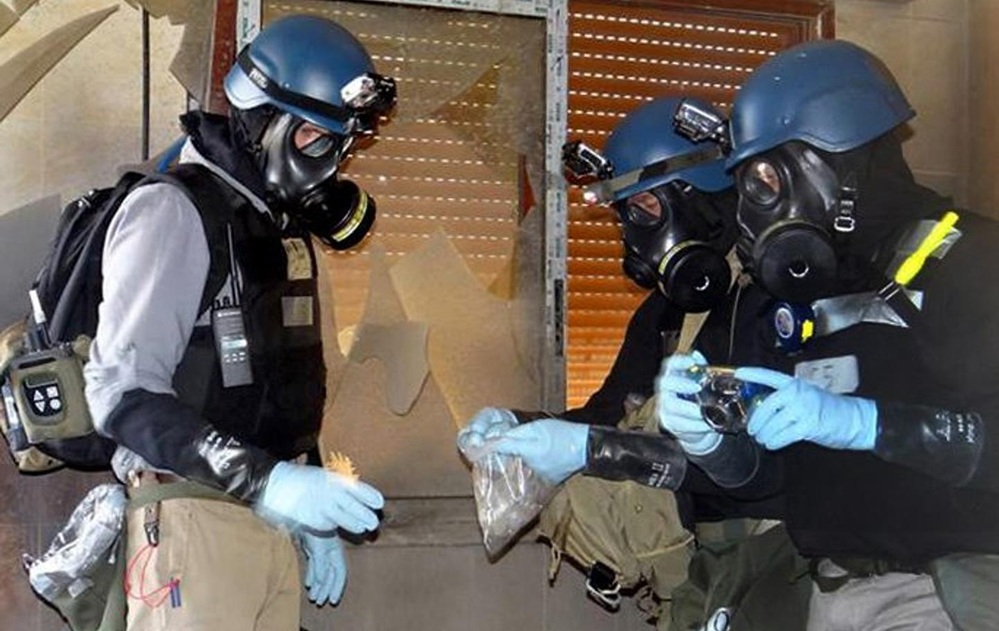
The discovery of previously undeclared materials in 2026 reinforced those concerns. The new Syrian authorities’ cooperation with the OPCW has now created an opportunity for international inspectors to revisit sites, collect documentation, identify undeclared materials and oversee their destruction.
The OPCW said its current work includes efforts to establish a complete and accurate inventory of remnants of the Assad-era programme and ultimately ensure their destruction in accordance with the Chemical Weapons Convention.
UN welcomes progress but warns work remains
The UN briefing made clear that the destruction of 42 aerial bombs and other materials does not mean the Syrian chemical weapons dossier is closed. International inspectors still have work to do to determine the full extent of the former programme, verify Syria’s declarations and oversee the destruction of remaining chemical-weapons-related materials.
The OPCW has previously said that more than 100 locations across Syria were considered potentially relevant to the former chemical weapons programme, with high-priority sites selected for investigation based on information gathered over many years.
For the United Nations and the OPCW, the immediate objective is therefore twofold: complete the inventory and ensure the irreversible destruction of everything that remains. The first verified destruction since 2014 nevertheless represents an important milestone.
After years of international disputes over Syria’s chemical weapons declarations, the combination of renewed Syrian cooperation, OPCW inspections and verified destruction could mark the beginning of a new phase in efforts to permanently eliminate the country’s chemical weapons legacy.
For the Security Council, however, the challenge remains ensuring that the process continues safely, transparently and under international verification until the entire inherited programme is accounted for and eliminated.