Rohingya Crisis: Beyond Relief, Bangladesh Needs Diplomacy for a Solution

Editorial:

Bangladesh’s Rohingya crisis is no longer simply a humanitarian emergency. After years of hosting a large displaced population, the crisis has increasingly become intertwined with national security, border management, economic pressure, environmental degradation and regional stability.

Bangladesh has demonstrated remarkable humanitarian responsibility by providing shelter and assistance to Rohingya refugees fleeing violence in Myanmar. But humanitarian assistance, however essential, cannot be a permanent solution. The longer the crisis continues, the greater the burden becomes for Bangladesh—and the greater the risks become for the refugees themselves.

The fundamental question is therefore becoming increasingly difficult to avoid: How long can Bangladesh continue to manage the crisis without a credible pathway to resolving it?

Food, healthcare, education and shelter remain essential for the Rohingya population. International humanitarian assistance must continue. But relief programmes address the consequences of displacement, not its root causes.

The central issue remains unchanged: why are the Rohingya unable to return safely to their homeland, and what must be done to create the conditions for a voluntary, safe and dignified return?That is where diplomacy must take centre stage.

A humanitarian crisis with security implications 

The prolonged presence of large refugee communities has placed significant pressure on Bangladesh, particularly in Cox’s Bazar and surrounding areas. Local infrastructure, public services, the environment and economic opportunities have all faced additional pressure.

There is also a growing security dimension. Concerns over organised crime, human trafficking, narcotics networks, illegal arms flows and the activities of armed groups in and around refugee camps cannot be ignored. At the same time, it is important not to stigmatise the Rohingya population as a whole. The overwhelming majority are victims of displacement who want security, basic rights and the opportunity to return home.

The challenge for Bangladesh is to protect the refugee population while preventing criminal and armed networks from exploiting the vulnerability created by prolonged displacement. This requires stronger law enforcement, intelligence cooperation, border surveillance and action against trafficking and organised crime. But security measures must also remain consistent with humanitarian principles. Ordinary refugees should not become victims of collective suspicion or punishment.

Myanmar remains at the centre of the problem

Ultimately, the Rohingya crisis cannot be permanently resolved inside Bangladesh because the root of the displacement lies in Myanmar. The continuing instability in Myanmar, particularly in Rakhine State, makes the prospect of safe and sustainable repatriation increasingly complicated. If conditions inside Rakhine do not allow refugees to return with adequate security and basic rights, simply sending people back would not constitute a genuine solution.

Unsafe repatriation is not a solution; it risks creating another cycle of displacement. For that reason, Bangladesh must continue to insist that any repatriation process be voluntary, safe, dignified and sustainable. The international community also has a responsibility that goes beyond humanitarian fundraising.

From aid diplomacy to solution-oriented diplomacy

For years, international attention has focused heavily on humanitarian assistance. That support has been indispensable. But the international response cannot remain confined to raising funds to sustain refugee camps indefinitely. The objective must now be to build a credible international framework for a lasting political solution.

Bangladesh should intensify diplomatic engagement with the United Nations, regional organisations and countries capable of exercising political and economic influence over Myanmar. The major powers and regional actors must be encouraged to play a more active role in creating conditions for safe and sustainable repatriation.

Diplomatic discussions should move beyond general expressions of concern. There must be greater focus on practical questions: security guarantees, citizenship and legal rights, freedom of movement, access to essential services, property and livelihood rights, and international monitoring of the repatriation process. Without addressing these issues, repatriation risks becoming a numbers exercise rather than a durable solution.

Bangladesh cannot carry the burden indefinitely

Bangladesh has already carried a substantial humanitarian and economic burden. International support for refugees must therefore continue, but the burden on host communities must also receive greater attention. The people of Cox’s Bazar and surrounding areas should not feel that they have been forgotten while international attention remains focused exclusively on the refugee population.

Development assistance should therefore address both refugees and host communities. Infrastructure, healthcare, education, employment opportunities and environmental protection require sustained investment. This is not about placing refugees and local residents against each other. It is about recognising that long-term stability depends on supporting both communities.

The next generation is at stake

Perhaps the most serious long-term concern is the future of Rohingya children and young people. A generation is growing up in an environment defined by displacement and uncertainty. Without adequate education, skills and hope for a better future, prolonged marginalisation can create frustration and vulnerability to exploitation by criminal or armed groups.

Education and skills development must therefore remain central to the humanitarian response. Providing young Rohingya with opportunities is not simply an act of charity; it is also an investment in regional stability.

At the same time, Bangladesh must strengthen the security and governance of the camps without turning them into permanent detention-like environments. Humanitarian protection and security are not mutually exclusive. In fact, effective humanitarian management can itself reduce security risks.

Bangladesh needs a stronger diplomatic strategy

Bangladesh now needs to move beyond crisis management towards a more comprehensive diplomatic strategy. The country should pursue three objectives simultaneously: protecting the humanitarian rights of the Rohingya, safeguarding Bangladesh’s national security, and creating sustained international pressure for safe and dignified repatriation.

These objectives should not be treated as competing priorities. They are interconnected parts of the same solution. Bangladesh should also ensure that the Rohingya issue remains on the international agenda. Global attention tends to shift as new conflicts and crises emerge. But the absence of headlines does not mean the crisis has disappeared.

Diplomatic engagement must therefore be continuous, coordinated and evidence-based. Bangladesh has a strong moral and legal argument for seeking international support. But moral appeals alone are not enough. Dhaka needs a clear strategy, measurable diplomatic objectives and stronger coordination with countries that have influence over Myanmar.

Relief must continue—but it cannot be the destination

The international community should not mistake the relative stability of the refugee camps for resolution of the crisis. A camp can provide temporary shelter. It cannot replace a homeland. Humanitarian assistance can save lives. It cannot resolve statelessness. International funding can sustain basic services. It cannot guarantee a political settlement. That is why the international response must evolve from relief diplomacy to solution-oriented diplomacy.

Bangladesh should continue providing humanitarian protection, but it should also make clear that the country cannot be expected to carry the consequences of a crisis it did not create indefinitely. The Rohingya crisis has reached a point where humanitarian responsibility and national security must be addressed together. Ignoring either dimension would be a mistake.

Bangladesh needs stronger border security, better camp management and tougher action against criminal networks. But it also needs sustained international diplomacy aimed at changing the conditions that made mass displacement possible in the first place.

The ultimate solution lies not in making refugee camps more permanent, but in making return possible. The Rohingya crisis will not be solved by relief alone. It will be solved when diplomacy produces the conditions for a safe, voluntary and dignified return.

For Bangladesh, the message should now be clear: aid must continue, but the goal must be a solution. The Rohingya crisis cannot remain a permanent humanitarian burden when what is urgently needed is a lasting political and diplomatic settlement.


Bangladesh Takes Helm of 81st UN General Assembly

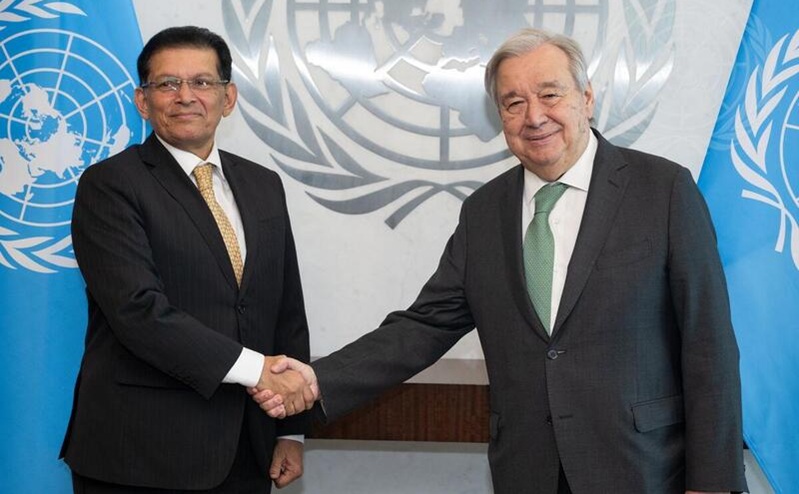
Shibbir Ahmed, New York — Bangladesh is set to take a prominent role at the United Nations as Foreign Minister Khalilur Rahman assumes the presidency of the 81st session of the UN General Assembly, which opens in New York on September 8.

Rahman was elected President of the 81st session on June 2, defeating Cyprus’s candidate Andreas Kakouris in a closely contested vote. The election placed Bangladesh at the center of one of the UN’s most important diplomatic forums at a time of growing geopolitical tensions and challenges to multilateral cooperation.

The 81st session will run from September 8, 2026, through September 7, 2027. During his one-year term, Rahman will preside over the General Assembly’s deliberations and high-level diplomatic engagements involving representatives of the UN’s 193 member states.

A critical moment for multilateralism

The theme of the 81st session is “Restoring trust and reigniting global solidarity.” The theme reflects the UN’s effort to rebuild confidence in multilateral institutions and strengthen international cooperation at a time when conflicts, humanitarian crises, economic uncertainty and geopolitical rivalries are placing pressure on the international system.

The General Assembly remains the UN’s principal policymaking and representative body, bringing together all 193 member states. Its annual high-level debate provides a platform for world leaders to address major international challenges and outline their countries’ priorities.

Bangladesh’s diplomatic opportunity

Rahman’s election gives Bangladesh an important diplomatic platform on the global stage. As President of the General Assembly, he will be responsible for guiding the Assembly’s proceedings, facilitating negotiations and encouraging dialogue among member states. The position does not give the president executive authority over the United Nations, but it carries significant diplomatic and political visibility.

For Bangladesh, the presidency provides an opportunity to highlight issues that are important to developing countries, including sustainable development, climate change, poverty reduction, migration, global peace and security, and greater international cooperation.

The presidency also comes at a time when developing countries are pressing for a stronger voice in global decision-making and for greater access to financing for development and climate action.

World leaders prepare for high-level week

The opening of the 81st General Assembly will be followed later in September by the UN’s annual high-level week, when presidents, prime ministers and other senior leaders gather in New York. The high-level segment is scheduled for September 22–28, bringing world leaders together for discussions on global cooperation and some of the most pressing international challenges. The gathering is expected to focus attention on ongoing conflicts, humanitarian emergencies, development, climate change and efforts to strengthen the international system.

Bangladesh at the center of UN diplomacy

Bangladesh has maintained a longstanding and active role in the United Nations, particularly on issues involving peacekeeping, development and the interests of developing countries. Rahman’s election to preside over the 81st General Assembly gives Dhaka a high-profile opportunity to contribute to discussions on how the international community can address increasingly complex global challenges.

The presidency will also require Bangladesh to maintain a balance between competing positions among UN member states while ensuring that the General Assembly’s work proceeds effectively. With the 81st session beginning on September 8, attention will now turn to Rahman’s opening priorities and the issues he intends to place at the center of the Assembly’s agenda.

For Bangladesh, the presidency represents both a diplomatic achievement and a significant responsibility as the country takes the chair of the world’s largest multilateral forum for the next year.


Moyeen Seeks Stronger World Bank Support for Bangladesh Development

DHAKA – LGRD and Cooperatives Minister Dr Abdul Moyeen Khan has expressed hope that the World Bank will further strengthen its support for the country’s sustainable development and improvement of people’s quality of life. He said various government initiatives are underway in important areas such as water supply, sanitation, rural development and addressing the impacts of climate change.

Continued support from development partners is necessary to make these activities more effective and sustainable, he said when World Bank Division Director for Bangladesh and Bhutan Jean Pesme paid a courtesy call on him at his office at the Secretariat today.

Various issues including the World Bank’s support for various ongoing development projects in Bangladesh, water supply and sanitation systems, rural development, climate change and local government sector were discussed.

The minister said the government and development partners need to work in coordination to accelerate and sustain the country’s development activities. He said WB support could play an important role in strengthening the capacity of the local government sector and ensuring quality civic services reach people at their doorsteps.

The minister expressed gratitude for the World Bank’s longstanding support for Bangladesh’s development journey and hoped that the bank would continue its support for the country’s key development initiatives in the future.

During the exchange of views, emphasis was placed on further strengthening the existing cooperation between Bangladesh and the World Bank. LGD Md Shahidul Hassan, senior officials from the ministry and the WB were present at the meeting.


President Urges US to Simplify Visa Processing for Bangladeshis

DHAKA – President Mirza Fakhrul Islam Alamgir today urged the United States to simplify its visa processing procedures for Bangladeshi tourists and business people to facilitate people-to-people and business ties between the two countries. The President made the call when US ambassador to Bangladesh Brent T Christenen paid a courtesy call on him at Bangabhaban this morning.

During the meeting, the US envoy congratulated the President on his assumption of office as the President of Bangladesh. Recalling the past US investment and cooperation in the country’s agricultural development, the President called for further US investment and cooperation in the country’s development sector.

He also referred to Chevron’s investment and important role in the development of the country’s energy sector and urged increased US investment in Bangladesh’s energy, information technology, infrastructure, and health and high-tech industries sectors. The President also sought US cooperation in ensuring the safe, dignified and sustainable repatriation of the Rohingyas to their homeland.

Thanking the US ambassador, the President said, “The United States is one of the Bangladesh’s important development partners. The existing trade relations with the US are playing an important role in Bangladesh’s economic development.”

On international relations, the President said, “Bangladesh attaches the highest importance to the principles of independence, sovereignty, national interest, mutual respect and equality in its international relations.”

He expressed the hope that bilateral relations and trade agreements with the United States would be further expanded in the days to come through mutual respect while protecting common interests. Referring to the recent bilateral trade agreements with US, the President said, “This is an important development in expanding the trade relations between the two countries.”

“There is a scope to make the agreement more balanced and mutually beneficial, taking into consideration the economic realities and interests of both the countries,” he added.

The ambassador assured that the US would continue its cooperation with Bangladesh and stressed the importance of strengthening cooperation with ASEAN countries. He also reiterated his US’s interest in further deepening and diversifying relations with Bangladesh. Military secretary to the President and Press Secretary and senior officials were present during the meeting.


15,717 Missing-Child GDs Filed in Bangladesh in Seven Months

DHAKA — A total of 15,717 General Diaries (GDs) were filed over missing-child incidents across Bangladesh during the first seven months of this year, according to figures presented by the government. However, the figure should not be interpreted as meaning that 15,717 children are currently missing, the government’s Information and Broadcasting Adviser Dr. Zahed Ur Rahman said on Tuesday. He disclosed the figures during a press briefing at the Secretariat on the government’s recent activities and developments.

According to the adviser, 15,717 GDs related to missing children were filed from January through July 2026. During the previous seven-month period, from June through December 2025, the number was 13,876.

Dr. Zahed said many children reported missing eventually return home or are found, but families do not always inform police after the child returns. As a result, the number of GDs cannot be used to determine how many children remain missing.

“There is no complete information on exactly how many children have not returned,” he said, emphasizing the difference between missing-child reports and the number of children who remain missing.

Missing-child figures raise questions over case outcomes

The latest figures have renewed questions about how missing-child cases are recorded and followed up after a GD is filed. Recent reports citing Police Headquarters data put the number of missing-child GDs at 15,917 between January and July 2026—more than 75 reports a day, or roughly one report every 20 to 21 minutes.

However, that figure also represents GDs rather than the number of children currently missing. There is no regularly published, consolidated national record showing how many children were rescued, returned home, found elsewhere, remained missing, or became involved in cases of abduction or trafficking.

The difference between the 15,717 figure presented by the government adviser and the 15,917 figure cited in recent Police Headquarters reporting also highlights the need for better coordination and verification of national missing-child data.

‘MUN Alert’ launched to speed up rescue

In January this year, Bangladesh launched the Missing Urgent Notification (MUN Alert) system to help locate and rescue missing and abducted children more quickly. The initiative was launched by the Criminal Investigation Department (CID) of Bangladesh Police in cooperation with Amber Alert for Bangladesh.

A 24-hour toll-free hotline, 13219, was also introduced for reporting missing children. The system is designed to allow authorities to quickly verify information and disseminate details such as a missing child’s photograph and last known location.

CID officials have emphasized the importance of the first few hours after a child goes missing, saying that rapid dissemination of verified information can increase the chances of a successful recovery.

Missing does not automatically mean trafficking

The large number of missing-child GDs has also prompted concern over possible child trafficking. Police, however, have said there is currently no evidence establishing a direct link between all of the missing-child GDs and child trafficking. At the same time, authorities acknowledge that trafficking remains a potential risk in individual cases.

Experts have therefore cautioned against treating every missing-child case as an abduction or trafficking case while stressing that potential trafficking risks should be properly investigated.

Need for a coordinated national database

Child-rights advocates and experts have called for a more coordinated national system linking police stations, the CID, the Police Bureau of Investigation, hospitals, morgues and other relevant agencies.

Such a system could track each case from the initial missing-person report through its final outcome—including whether the child was rescued, returned home, found elsewhere, became the subject of an abduction or trafficking investigation, or remained missing.

Without such follow-up information, the number of GDs provides only a partial picture of the country’s missing-child situation. The government’s latest figure therefore highlights a significant concern, but it does not establish how many children are currently missing in Bangladesh. The key challenge now is to determine what happened after each of those thousands of reports—and to ensure that every missing child is accounted for.


Expatriate Passports and NIDs: Promise vs Reality

Mashiur Rahman Majumdar: Whenever the issue of Bangladeshi expatriates comes up, the discussion usually begins with remittances. Yet an expatriate is not merely someone who sends foreign currency home. He or she is a Bangladeshi citizen. Even while living abroad, an expatriate has the right to citizenship, the right to receive government services and the right to seek state assistance when necessary. It is from this perspective that passport, National Identity Card (NID) and other consular services for expatriate Bangladeshis should be viewed.

In recent times, the government has emphasized making passport and NID services for expatriates faster, easier, more transparent and technology-driven. Foreign Minister Dr Khalilur Rahman has said in Parliament that Bangladeshi missions where e-passport services have been introduced provide online applications, biometric enrolment at convenient times and facilities to track application progress. Applicants are also notified by SMS or email when their passports are ready. These are undoubtedly positive initiatives. But the question is: Is launching a service the same as making that service genuinely accessible?

At present, voter registration and NID services are available through 27 Bangladeshi missions in 17 countries. The government plans to gradually expand these services to 41 countries. This means that although important steps have been taken, NID-related services are still not equally accessible to Bangladeshis living in every part of the world.

The same question arises in the case of passports. When the passport of a Bangladeshi living abroad expires, the person has to depend on the relevant embassy or consulate. Although applications can be submitted online, applicants still have to appear at the mission at a designated time for biometric enrolment. The passport itself is issued by the Department of Immigration and Passports in Dhaka. Therefore, if coordination between overseas missions and the relevant authorities in Bangladesh is not effective, the waiting time for applicants may increase.

Let us take the United States as an example. According to the current information provided by the Bangladesh Consulate General in New York, applicants can apply online for e-passports, pay the required fees, schedule appointments and complete biometric enrolment. The necessary documents are also clearly listed. Similarly, an online application and appointment system is available for NID services.

This is an important step toward digital public services. But from an expatriate’s perspective, the quality of a service cannot be measured simply by whether an online application system exists. The real question is: How fast, accurate, predictable and hassle-free is the entire process from application to service delivery?

If an expatriate has to repeatedly visit an embassy or consulate after applying online to correct information, verify documents, complete biometric procedures, collect a passport or resolve an NID-related problem, then questions will inevitably remain about how much of the original purpose of digital services has actually been achieved.

Another important issue is coordination among government agencies. Passport, NID, birth registration, visa services and document authentication often involve multiple government institutions. The Ministry of Foreign Affairs has said that, under its action plan for the 2026-27 fiscal year, steps are being taken to establish an online system involving relevant agencies to make verification of passport, visa and birth and death registration information easier.

This is where the next major test of digital public services lies. Simply introducing online forms does not make a service fully digital. What is needed is interoperability among government agencies, faster verification, a system that prevents citizens from repeatedly submitting the same information, and clear accountability for applicants.

The same reality applies to NID services. An identity card is an extremely important document for any citizen. It may be required for voter registration, banking, property-related matters, government services and various administrative procedures when returning to Bangladesh. If an expatriate finds an error in their NID or needs to correct personal information, the process for resolving the issue should also be made as simple as possible.

Distance is another major challenge for expatriates seeking government services. Not all expatriates live near capitals or major cities. In many countries, Bangladeshi citizens are spread across vast geographical areas, sometimes hundreds of miles away from their nearest embassy or consulate. Mobile consular camps can therefore be an effective solution.

Foreign Minister Khalilur Rahman has said that 86 Bangladeshi missions in 63 countries regularly organize mobile consular camps. These camps provide passport and other consular services and bring services closer to expatriates living far from embassies and consulates. The locations, dates and times of such camps are announced in advance.

This initiative should be expanded and organized more regularly. Particularly in countries with large Bangladeshi communities spread across wide geographical areas, a fixed annual calendar for mobile consular services could save expatriates both time and money.

But providing services alone is not enough. Prompt resolution of complaints is equally important. The government has said that online complaint management systems are in place at Bangladeshi missions and that plans are underway to appoint designated officials to ensure complaints are resolved quickly.

This raises several important questions. How long should an expatriate have to wait for a response after filing a complaint? How will the applicant track the progress of the complaint? If an application is stuck at a government office, who will inform the applicant? And if a service is not delivered within the stipulated time, to whom can the citizen hold the authorities accountable?

Improving expatriate services requires institutional answers to these questions. When an expatriate wants to renew a passport, obtain an NID or authenticate a document, they are not asking for special treatment. They are seeking government services as a matter of their citizenship rights.

Therefore, expatriate services cannot be treated merely as an administrative responsibility. They must be viewed as part of citizens’ rights and the state’s responsibility. Even while living abroad, Bangladeshi citizens maintain an administrative and civic relationship with their country. The easier, more transparent and more reliable that relationship becomes, the stronger their trust in the state will be.

A change in mindset is also necessary. Expatriates should not be viewed merely as people who send remittances. They are contributors to the national economy, potential investors, responsible members of families and representatives of Bangladesh on foreign soil.

That is why even a minor administrative complication involving passport or NID services can become a major burden for an expatriate. Travelling long distances to an embassy, taking time off from work, spending money on transportation or repeatedly contacting authorities to resolve a simple problem all carry real costs for expatriates.

The government’s recent initiatives must therefore translate into tangible results. Online applications, biometric enrolment, application tracking, e-apostille, online complaint management and mobile consular camps should all be brought under an integrated service framework.

Most importantly, the quality of services should be measured from the perspective of expatriates’ actual experiences. The number of applications received is less important than the number of applications resolved on time. The number of missions offering a service is less important than how many citizens can actually access that service easily.

If passport and NID services for expatriates can truly be made faster, easier, more transparent and technology-driven, it will be more than an administrative reform. It will strengthen the relationship between the state and its citizens abroad.

Expatriates send money home for the country. But the state needs more than their money—it needs their trust. And trust is built not through promises, but through effective services. It is therefore time to ask the question more directly: How far have we actually progressed in providing passport and NID services to expatriates, and how much of what has been promised has reached them in reality?

The answer is important not only for the government but for every level of the state service system. An expatriate’s money is an asset to the country, but an expatriate’s trust is an equally valuable national asset. Protecting that trust requires not only promises but also meaningful improvements in the quality of services delivered to Bangladeshis living abroad.

— Journalist, Jackson Heights, New York


Bangladesh, China Ready to Launch Diplomacy and Defense Dialogue

DHAKA – Bangladesh and China today discussed launching a State Minister-level Diplomacy and Defense Dialogue alongside an early Foreign Minister-level Strategic Dialogue as the two countries seek to further deepen their strategic partnership. The issue was discussed when Chinese Ambassador to Bangladesh Yao Wen paid a courtesy call on State Minister for Foreign Affairs Humaiun Kobir at the foreign ministry here, according to a ministry press release.

During the meeting, Kobir described China as a “trusted friend and valued strategic partner” of Bangladesh and reaffirmed Dhaka’s commitment to the One-China Principle. He expressed satisfaction over the renewed momentum in bilateral relations and the elevation of the ties to a “China-Bangladesh Community with a Shared Future” following Prime Minister Tarique Rahman’s recent visit to China.

The two sides discussed a wide range of issues of mutual interest, including cooperation on the Teesta River Comprehensive Management and Restoration and the early launching of the Foreign Minister-level Strategic Dialogue.

They also discussed beginning the State Minister-level Diplomacy and Defense Dialogue, initiating the process for exporting Bangladeshi jackfruit and guava to China, the China-Bangladesh-Myanmar Economic Corridor and cooperation on the Rohingya issue.

Ambassador Yao congratulated Kobir on assuming office and sought his support to further advance the longstanding and close relationship between the two countries.

He also conveyed felicitations from China’s Executive Deputy Foreign Minister to the state minister. The Chinese envoy briefed Kobir on progress regarding outcomes of the prime minister’s recent China visit, including the groundbreaking of the China Economic and Industrial Zone (CEIZ) and signing of a commercial contract for modernisation of Mongla Port.

Possible cooperation on establishing a Mongla Export Processing Zone (EPZ) also featured in the discussion. Yao said the CEIZ is expected to attract around 30 Chinese companies with approximately US$500 million in investment, potentially creating an estimated 100,000 jobs for Bangladeshis.

The ambassador also briefed the state minister on upcoming high-level exchanges and visits, including planned visits to Bangladesh by the Vice President of the China International Development Cooperation Agency (CIDCA), the Minister of the International Department of the Central Committee of the Communist Party of China (IDCPC), and the Executive Vice Governor of Yunnan Province. Yao also invited Kobir to visit China in October this year.


Criminals involved in enforced disappearances should be brought to justice: President

DHAKA – President Mirza Fakhrul Islam Alamgir has said all criminals involved in enforced disappearances should be brought to justice, no matter how powerful they are. “There would be no more ‘Aynaghar’ in independent Bangladesh and every criminal involved in enforced disappearance must receive the maximum punishment under the law,” he said.

The President said this while addressing an event today marking the International Day of the Victims of Enforced Disappearances-2026 as the chief guest. Organized by the Ministry of Liberation War Affairs, the discussion was held at the Bangladesh-China Friendship Conference Centre here this morning.

The president said during the past one and a half decades under the fascist government, the unbearable grip of enforced disappearance and secret detention centre ‘Aynaghar’ had weighed heavily on Bangladesh.

“Those who protested against injustice, expressed dissent, or remained vocal on the streets to demand democratic rights were picked up to silence them and were subjected to enforced disappearance and killings. Yet, the state institutions subservient to the fascists continued to deny those heinous crimes,” he added.

Mirza Fakhrul said in the backdrop of mass uprising of unarmed students and people the fascist ruler was forced to flee the country. Now, reparation measures must be taken instead of revenge, and the real criminals must be brought under law.

The President noted that all scopes of returning fascism to this country would be permanently closed. He said enforced disappearance is not merely taking away a person. It takes away the smiles, peace, dreams, and economic and social well-being of their beloved ones.

“It is a heinous violation of human rights. The constitution of country has guaranteed rights of every citizen to live, enjoy liberty anf getting protection of law. Through enforced disappearances and killings, all these rights are violated at once,” he noted.

“I believe the state’s responsibility will not end merely by punishing the criminals,” he said, urging the government to stand beside the victims and families of enforced disappearance by ensuring their dignity, social security, healthcare, education, livelihood, and rehabilitation. The President said establishment of culture of enforced disappearance and killing is a deeply painful and humiliating chapter in our national history.

He mentioned the incidents of enforced disappearance during the fascist regime including Ilias Ali, Chowdhury Alam, Sajedul Islam, incumbent home minister Salahuddin Ahmed, Barrister Arman and retired Lieutenant General Azmi saying countless dissents, officials, writers, journalists, social workers, and even housewives and ordinary citizens were subjected to disappearance.

The President said former Prime Minister Begum Khaleda Zia had always been vocal against enforced disappearances and killings by the fascist government. Many leaders of BNP, Jamaat-e-Islami, social entities, media, civil society members, and people from all walks of life fell victim of enforced disappearance and killings during the fascist regime, he said. The president also remembered Sanjida Islam Tulee, convener of Mayer Dak, who had been vocal against enforced disappearances during the fascist era.

“We want a Bangladesh where there will be political differences, but no political vengeance. There will have freedom of expression, but no culture of fear. There will have law and order, but no injustice in the name of law. The state will have power, but that power will remain under the control of the Constitution and the law,” he said.

“Alongside economic growth, the true picture of a state’s development and success is reflected on how it practices democratic, how much it’s based on justice and humanity and how much safe its citizens lives,” he said.

Liberation War Affairs Minister Ahmed Aazam Khan presided over the event while Home Minister Salahuddin Ahmed, Law Minister Md. Asaduzzaman and State Minister for the Ministry of Liberation War Affairs Ishraque Hossain were present as special guests. Victims of enforced disappearances also lawmakers Humam Quader Chowdhury, Anisur Rahaman, Tahsina Rushdir, Sanjida Islam, Mir Ahmad Binquasem spoke on the occasion and demanded a fair trial of the incidents of enforced disappearances.


Irene Khan Takes Office as Bangladesh’s UN Representative

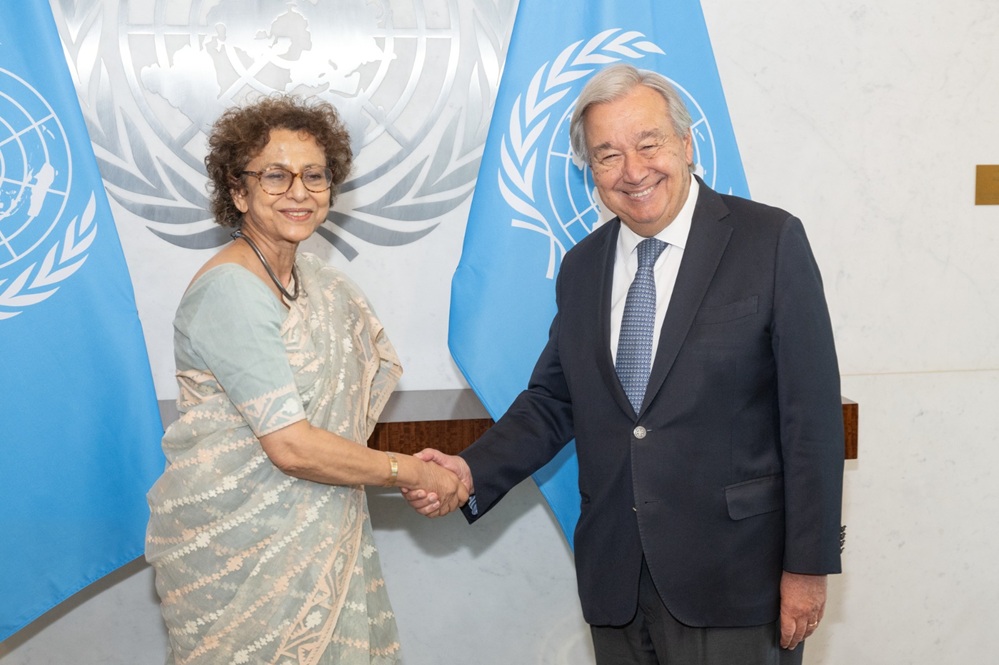
Shibbir Ahmed, UN, New York: Irene Zubaida Khan, a veteran international human rights advocate, has taken office as Bangladesh’s Permanent Representative to the United Nations in New York. Khan presented her credentials to United Nations Secretary-General António Guterres at UN Headquarters in New York on Friday, formally assuming her role as Bangladesh’s envoy to the world body.

She brings decades of experience in human rights, international law, refugee protection, the rule of law and sustainable development, including senior roles at the United Nations and other international organizations.

Before taking up her new role, Khan had served since 2020 as the UN Special Rapporteur on the promotion and protection of the right to freedom of opinion and expression. From 2001 to 2009, she served as Secretary-General of Amnesty International, becoming the first woman to lead the organization.

From 2012 to 2019, Khan served as Director-General of the International Development Law Organization (IDLO). Earlier in her career, she spent 21 years with the Office of the United Nations High Commissioner for Refugees (UNHCR), holding a number of senior positions including Chief of Mission in India and Deputy Director of the Division of International Protection.

Khan received the Sydney Peace Prize in 2006 and is the author of The Unheard Truth: Poverty and Human Rights. She studied law at the University of Manchester and Harvard Law School.


Govt Vows No Politically Motivated Detention: Shama

DHAKA: State Minister for Foreign Affairs Shama Obaed Islam has said the government is committed to protecting human rights and ensuring that no citizen is detained or imprisoned unjustly because of political affiliation or vendetta.

“The government will definitely ensure that no one is unjustly imprisoned or detained due to political vendetta,” she told journalists at the foreign ministry on Wednesday.

Shama said the government’s commitment to due process and fundamental rights extends to supporters of all political parties, including opposition parties and the Awami League, whose activities are currently banned.

“No party, be it the opposition party, Awami League, or any party, the current government will definitely ensure that no one is unjustly imprisoned or detained due to political vendetta,” she said.

The State Minister alleged that Bangladesh had experienced widespread human rights violations over the past 17 years, saying BNP leaders and activists were among the major victims.

“The kind of human rights that have been violated in Bangladesh in the last 17 years has never been violated in the history of Bangladesh,” she said.

“The biggest victim is the Bangladesh Nationalist Party, its leaders and activists,” she added.

Shama said the government would not allow a return to what she described as the country’s previous “fascist era” and would work to protect the fundamental rights of every citizen.

“We will never want the past fascist era to return now or in the future. We want all human rights to be ensured to every citizen,” she said.

She said the government has a responsibility to protect citizens’ rights and ensure that the justice system is not used for political revenge.

“Our government’s stand is that we are trying to protect human rights. We are responsible to the people,” she said.

Bangladesh policy guides foreign relations

Turning to foreign policy, Shama said Bangladesh’s approach is focused on protecting national interests while maintaining balanced and respectful relations with all countries.

“Our foreign policy is first and foremost a ‘Bangladesh policy’… with equal rights with everyone and maintaining our own interests with respect,” she said.

She said the elected government’s political mandate had strengthened Bangladesh’s position in negotiations with international partners.

“When Bangladesh is talking, the Prime Minister of Bangladesh is talking, then all the other stakeholders including China are listening to our words with more attention, more seriously,” she said.

“Now that Bangladesh is an elected government, we have a stronger position in our negotiation space,” she added.

Rohingya crisis requires political solution

On the Rohingya crisis, Shama said Bangladesh would use its strengthened diplomatic position to encourage greater international engagement and push for a lasting political solution.

“The matter is absolutely a political problem, it is a very sensitive matter and we need to solve this problem politically,” she said.

She said Bangladesh remains engaged in both official and unofficial communication with various stakeholders in Myanmar as part of efforts to resolve the crisis.

“We are trying to involve the international community more,” she said, referring to a high-level UN session on the Rohingya crisis scheduled for September, which Prime Minister Tarique Rahman is expected to attend.

Bangladesh will also explore whether greater involvement from the Muslim world could help increase pressure on Myanmar and create momentum towards a solution, she said.

According to Shama, the crisis has become increasingly complex since the massive influx of Rohingyas into Bangladesh began in 2017, particularly because of Myanmar’s changing political and security landscape.

She pointed to the emergence of the Arakan Army and other actors in Rakhine State, as well as growing security concerns along the Bangladesh-Myanmar border, including human smuggling and drug trafficking.

Shama said it was difficult to determine the exact number of Rohingyas currently living in Bangladesh because of continued arrivals and births in the camps.

“We don’t know the exact number right now, but it will definitely be over 1.3 million,” she said, adding that an estimated 30,000 children are born in the camps each year.

She said Chinese President Xi Jinping had expressed Beijing’s willingness to cooperate with Bangladesh in finding a solution to the Rohingya crisis during Prime Minister Tarique Rahman’s recent visit to China.

Shama also questioned the effectiveness of existing arrangements for resolving the crisis without stronger involvement from the United Nations and other major international stakeholders.

She said Bangladesh could gain additional diplomatic leverage from Foreign Minister Dr Khalilur Rahman’s upcoming role as President of the UN General Assembly.

“From that place, we have a power to speak for Bangladesh in the international community. We think that at least in the next year, we will be able to use this capacity a little better,” she said.

Shama reiterated that Bangladesh would continue to pursue a “Bangladesh policy” in its international relations, protecting national interests while maintaining ties with other countries on the basis of equality and mutual respect.