Awami League Protest in New York Over Death Sentences for 7 Leaders

New York Correspondent: The US Awami League and its affiliated organisations staged a protest rally and procession in New York on Tuesday evening against the death sentences handed down by Bangladesh’s International Crimes Tribunal-2 against seven Awami League and affiliated-organisation leaders, including Awami League General Secretary and former minister Obaidul Quader.

The protest was held at Diversity Plaza in Jackson Heights on Tuesday (September 15). Following the rally, protesters marched through nearby streets carrying banners and placards. Leaders and activists of the US Awami League, US Chhatra League, Volunteer League, Labour League, Mohila Awami League, New York State Awami League and New York Metropolitan Awami League took part in the programme.

Several national-level Awami League leaders and former lawmakers were also present, according to organisers. They included former Water Resources Minister and former Awami League Organising Secretary Enamul Haque Shamim, Awami League Publicity and Social Welfare Secretary Aminul Islam Amin, former State Minister and former lawmaker Mohammad Zahid Ahsan Russel, and former lawmaker and former Bangladesh Chhatra League General Secretary Nazrul Islam Babu.

US Awami League President Dr. Siddiqur Rahman and General Secretary Abdus Samad Azad, along with leaders from different levels of the organisation, also attended the programme.

The protesters carried banners and placards rejecting the tribunal’s verdict. The organisers described the cases against the party leaders as politically motivated and characterised the verdict as an act of political retaliation and a predetermined judicial process. These are the political claims of the US Awami League and the protesters.

At the rally, speakers expressed their opposition to the tribunal’s verdict and called for its cancellation. They also called for due legal process and justice, arguing that political disputes should not determine judicial outcomes.

Seven Sentenced to Death by Tribunal

Earlier on Tuesday, International Crimes Tribunal-2 sentenced seven people to death in a crimes-against-humanity case related to the July-August 2024 mass uprising in Bangladesh.

Those sentenced to death are Awami League General Secretary and former minister Obaidul Quader; Awami League Joint General Secretary AFM Bahauddin Nasim; former State Minister for Information and Broadcasting Mohammad Ali Arafat; Jubo League Chairman Sheikh Fazle Shams Parash; Jubo League General Secretary Md Mainul Hossain Khan Nikhil; Bangladesh Chhatra League President Md Saddam Hossain; and its General Secretary Sheikh Wali Asif Inan.

The three-member tribunal, headed by Justice Nazrul Islam Chowdhury, delivered the verdict on Tuesday. The seven accused were tried in absentia and remain at large, according to Bangladesh Sangbad Sangstha (BSS).

The prosecution had accused the seven of involvement in crimes against humanity during the July 2024 mass uprising, including murder, attempted murder, torture, incitement, conspiracy and other acts. The tribunal ruled that the charges against the accused had been proved beyond reasonable doubt. Chief Prosecutor Md Aminul Islam also said after the verdict that most of the charges had been proved beyond reasonable doubt.

The tribunal also ordered the confiscation of 50 percent of the movable and immovable properties of Obaidul Quader, AFM Bahauddin Nasim, Mohammad Ali Arafat, Sheikh Fazle Shams Parash and Mainul Hossain Khan Nikhil. It directed that proceeds from the sale of the confiscated properties be used to compensate people killed or injured during the July-August 2024 uprising or their families.

The defence had previously argued before the tribunal that the prosecution failed to prove the charges beyond reasonable doubt.

The New York protest came hours after the tribunal announced its verdict in Dhaka, bringing the latest political and judicial developments in Bangladesh into the streets of Jackson Heights, home to a large Bangladeshi-American community.
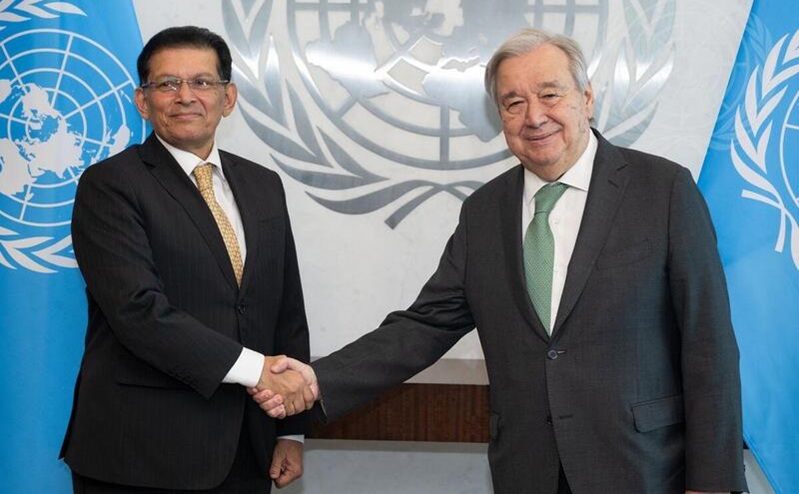


Saima Wazed Resigns as WHO Regional Director, Denies Allegations

NEW YORK: Saima Wazed has resigned as the World Health Organization’s (WHO) Regional Director for South-East Asia. According to her resignation letter seen by Reuters, she stepped down amid investigations by the WHO and Bangladeshi authorities into allegations of fraud and document forgery. Her resignation took effect immediately.

Wazed assumed the position of WHO Regional Director for South-East Asia in early 2024 for a five-year term. However, she had been on unpaid administrative leave since July 2025. Earlier, in March 2025, Bangladesh’s Anti-Corruption Commission filed a case against her over allegations of fraud and forgery.

According to the Reuters report, allegations against Wazed included financial irregularities related to a trip to China, providing inaccurate information concerning her educational qualifications, and the alleged illegal acquisition of land in Bangladesh. Wazed has denied the allegations.

A July 3, 2026 letter from her lawyers, seen by Reuters, said the allegation concerning expenses from her China trip did not involve travel fraud. Instead, they said an assistant had made an administrative error while processing the repayment of routine expenses. The amount involved was $901.

Responding to questions about her educational qualifications, Wazed said she had received an honorary doctorate in recognition of her work on autism in Bangladesh and had informed WHO Director-General Tedros Adhanom Ghebreyesus about it.

Regarding the land allegations, Wazed said in her resignation letter that she had acquired the property before joining the WHO. She also said she was entitled to the land under a Bangladeshi law applicable to members of the family of Bangladesh’s founding leader, Sheikh Mujibur Rahman.

In her resignation letter, Wazed further alleged that she had been prevented from effectively carrying out her responsibilities. She said the situation had destroyed her trust and confidence in the WHO leadership. She also said nearly a year without a salary had made her financial situation unsustainable.

The WHO told Reuters that a committee had recommended removing Wazed from her position one day before her resignation. The organization said her resignation would now be considered by the Regional Committee and the Executive Board. A WHO spokesperson said the process had been handled with fairness and appropriate procedures while protecting the organization’s interests and ability to fulfill its responsibilities.

The WHO is preparing to begin the process of selecting Wazed’s successor. Two Reuters sources said nominations are expected to be announced on October 12, applications are expected to be reviewed in December, and the election is planned for January 24. Until a new Regional Director is elected, Dr. Nilesh Buddh will serve in the role.

The Regional Director for WHO’s South-East Asia Region is one of the organization’s key leadership positions. The position involves overseeing the WHO’s response to disease outbreaks and emergencies and helping implement the organization’s policies in accordance with regional circumstances. Member states elect the Regional Director every five years. Bangladesh and India are among the countries in the region.


UN Calls for Independent Oversight of Bangladesh Security Forces

Shibbir Ahmed, UN, New York: The United Nations has called for the establishment of a strong and independent national institution to oversee the activities of Bangladesh’s security and law enforcement agencies. UN High Commissioner for Human Rights Volker Türk made the remarks on Monday, September 7, during the 63rd session of the UN Human Rights Council in Geneva, while addressing global human rights issues and developments in Bangladesh.

Türk reiterated the UN’s call for effective and independent oversight of law enforcement agencies in Bangladesh. He stressed the importance of ensuring accountability and providing mechanisms for independent investigations into allegations of human rights violations involving security and law enforcement personnel.

Recommendations Following the July-August 2024 Events

The UN’s latest remarks follow its fact-finding report on the human rights situation surrounding the July-August 2024 protests in Bangladesh. The UN Human Rights Office published its fact-finding report on February 12, 2025, containing a series of recommendations concerning accountability, institutional reform, independent investigations and civilian oversight.

The recommendations also called for strengthening the independence and effectiveness of Bangladesh’s National Human Rights Commission, including ensuring that it has the necessary authority and capacity to investigate allegations of human rights violations involving security forces.

Oversight, Not Direct UN Control

The UN’s call does not mean that the United Nations is seeking to directly control or supervise Bangladesh’s security forces. Rather, the recommendation calls for Bangladesh to establish an independent and effective national oversight mechanism capable of monitoring security and law enforcement agencies and independently investigating allegations of human rights abuses. The latest statement by the UN human rights chief is part of the organization’s continuing call for stronger accountability, institutional reform and human rights protections in Bangladesh.


Bangladesh Takes Helm of 81st UN General Assembly

Shibbir Ahmed, UNITED NATIONS, New York — Bangladesh is set to take a prominent role at the United Nations as Foreign Minister Khalilur Rahman assumes the presidency of the 81st session of the UN General Assembly, which opens in New York on September 8.

Rahman was elected President of the 81st session on June 2, defeating Cyprus’s candidate Andreas Kakouris in a closely contested vote. The election placed Bangladesh at the center of one of the UN’s most important diplomatic forums at a time of growing geopolitical tensions and challenges to multilateral cooperation.

The 81st session will run from September 8, 2026, through September 7, 2027. During his one-year term, Rahman will preside over the General Assembly’s deliberations and high-level diplomatic engagements involving representatives of the UN’s 193 member states.

A critical moment for multilateralism

The theme of the 81st session is “Restoring trust and reigniting global solidarity.” The theme reflects the UN’s effort to rebuild confidence in multilateral institutions and strengthen international cooperation at a time when conflicts, humanitarian crises, economic uncertainty and geopolitical rivalries are placing pressure on the international system.

The General Assembly remains the UN’s principal policymaking and representative body, bringing together all 193 member states. Its annual high-level debate provides a platform for world leaders to address major international challenges and outline their countries’ priorities.

Bangladesh’s diplomatic opportunity

Rahman’s election gives Bangladesh an important diplomatic platform on the global stage. As President of the General Assembly, he will be responsible for guiding the Assembly’s proceedings, facilitating negotiations and encouraging dialogue among member states. The position does not give the president executive authority over the United Nations, but it carries significant diplomatic and political visibility.

For Bangladesh, the presidency provides an opportunity to highlight issues that are important to developing countries, including sustainable development, climate change, poverty reduction, migration, global peace and security, and greater international cooperation.

The presidency also comes at a time when developing countries are pressing for a stronger voice in global decision-making and for greater access to financing for development and climate action.

World leaders prepare for high-level week

The opening of the 81st General Assembly will be followed later in September by the UN’s annual high-level week, when presidents, prime ministers and other senior leaders gather in New York. The high-level segment is scheduled for September 22–28, bringing world leaders together for discussions on global cooperation and some of the most pressing international challenges. The gathering is expected to focus attention on ongoing conflicts, humanitarian emergencies, development, climate change and efforts to strengthen the international system.

Bangladesh at the center of UN diplomacy

Bangladesh has maintained a longstanding and active role in the United Nations, particularly on issues involving peacekeeping, development and the interests of developing countries. Rahman’s election to preside over the 81st General Assembly gives Dhaka a high-profile opportunity to contribute to discussions on how the international community can address increasingly complex global challenges.

The presidency will also require Bangladesh to maintain a balance between competing positions among UN member states while ensuring that the General Assembly’s work proceeds effectively. With the 81st session beginning on September 8, attention will now turn to Rahman’s opening priorities and the issues he intends to place at the center of the Assembly’s agenda.

For Bangladesh, the presidency represents both a diplomatic achievement and a significant responsibility as the country takes the chair of the world’s largest multilateral forum for the next year.