Govt pursuing 3-R strategy to repair Bangladesh: PM

Shibbir Ahmed, New York — Prime Minister Tarique Rahman today said his government is pursuing a 3-R strategy — Recovery, Restoration and Reconstruction — to repair Bangladesh, which he described as having been ravaged by more than one and a half decades of “fascist rule and exploitation.”

“To repair Bangladesh, which was ravaged by fascist rule and exploitation, the Government is pursuing a 3-R strategy — Recovery, Restoration and Reconstruction,” he said while addressing the 81st session of the United Nations General Assembly at the UN Headquarters in New York.

The Prime Minister said Bangladesh had freed itself from what he described as enforced disappearances, killings, abductions, corruption, looting and money laundering and was once again embarking on the path of democracy.

He said an immense horizon of possibilities had opened before Bangladesh and that his government had begun implementing extensive programmes to transform the country’s working-age population into skilled human resources by harnessing its demographic dividend.

“Detailed measures have been taken to create extensive employment opportunities and develop Bangladesh as a ‘manufacturing hub’,” he said, seeking support from the country’s development partners in this endeavour.

The government has allocated US$50 million in the current fiscal year to create opportunities for young entrepreneurs, researchers and innovators to implement start-up initiatives, he said.

Focus on women’s empowerment

Highlighting the government’s focus on women’s empowerment, Tarique Rahman said women were at the forefront of its plans for the country’s socio-economic transformation, noting that women account for more than half of Bangladesh’s population.

He said the government was prioritising women’s education, employment and entrepreneurship, including expanded access to cash financing, particularly in the small and medium-sized industries sector. Free education opportunities for women up to the undergraduate level had also been made available, he said.

The Prime Minister said the government wanted to ensure not only electoral democracy but also the democratisation of the economy so that the benefits of economic growth and prosperity reached every family and citizen.

To this end, the government had introduced social protection initiatives such as the Family Card, Farmers’ Card, Sports Card and e-Health Card to support economically disadvantaged people.

He described the Family Card, issued in the name of the female head of each household, as a symbol of women’s economic empowerment and said the government planned to introduce a Universal Card by integrating various support cards.

31-point programme and development

Tarique Rahman said the government was implementing its 31-point programme presented to the people ahead of the February 12 national election. He said 73 percent of the programme’s activities were directly aligned with the UN Sustainable Development Goals’ “Leave No One Behind” theme, while another 27 percent were indirectly aligned.

The government hoped implementation of the programmes would reduce development disparities between urban and rural areas and strengthen accountability and inclusive sustainable development under the 2030 Agenda, he said.

Education, health and sports

The Prime Minister said his government had given special importance to education, health and sports and had made the highest-ever budget allocation for the education sector.

“There are plans to gradually increase education spending to 5 per cent of GDP within the next five years,” he said. He said a curriculum had been developed with an emphasis on technical and practical education to establish an ethically sound and employment-oriented education system.

School bags, uniforms and free midday meals were being provided to primary students from the first grade, he said, expressing hope that the initiatives would increase school enrolment and improve the quality of education.

Sports had also been included as a subject in the education curriculum for the first time, with the aim of establishing sports as a profession, he said. More than two million students participated in a month-long nationwide football tournament last June as part of the initiative, he added.

Call for dialogue to resolve conflicts

Turning to the international situation, Tarique Rahman said human-made conflicts had created unrest in many countries, causing displacement and humanitarian crises while placing pressure on the global economy, energy security and supply systems and contributing to rising inflation.

He said conflicts should be resolved through dialogue, diplomatic processes and mutual cooperation, with equality, fairness, protection of mutual interests, respect and dignity forming the basis of bilateral and multilateral relations.

Bangladesh sees the United Nations as the centre of efforts to establish an understanding-based global community that respects the independence and sovereignty of states, he said.

Tarique Rahman reaffirmed Bangladesh’s commitment to general and complete disarmament, prevention of nuclear weapons proliferation and arms control, while supporting UN initiatives aimed at promoting global peace.

He also reaffirmed Bangladesh’s support for the legitimate demands of the Palestinian people, including their right to self-determination and to establish an independent State of Palestine.

Rohingya crisis

On the Rohingya crisis, the Prime Minister said Bangladesh had been providing shelter to more than 1.2 million forcibly displaced Rohingyas from Myanmar for more than nine years, putting immense pressure on the country’s resources, environment, security and local communities.

“The only solution to this problem is the safe return of the displaced Rohingya population to their homeland, Myanmar,” he said. He called for firm and effective support from the United Nations and the international community for a lasting solution and urged continued life-saving assistance for the Rohingyas until their repatriation.

“If the international community fails to ensure justice for the displaced Rohingya population, this may turn into a humanitarian crisis in the near future,” he added.

Climate change and development

On climate change, Tarique Rahman said Bangladesh was among the countries most vulnerable to its adverse impacts despite making little contribution to global carbon emissions. He said Bangladesh expected stronger global action at COP31 on climate justice, climate finance and adaptation support. The government has launched a programme to plant 250 million trees across the country over the next five years, while placing emphasis on clean and solar energy, he said.

He also said a programme had been launched to excavate 20,000 kilometres of canals across the country to help address flooding and drought. The government had begun implementing the Teesta Master Plan and the Padma Barrage project to increase freshwater flow into the Sundarbans and conserve water through large reservoirs, he said.

Technology and AI

On science and technology, the Prime Minister said Bangladesh’s large young population and growing digital capabilities had created new possibilities, but access to advanced technology, knowledge and research must be made available to all.

“We do not want today’s digital divide to become tomorrow’s artificial intelligence divide,” he said, stressing technology transfer, skills development and affordable access to modern technologies for developing countries. He called for an effective UN policy framework to ensure that the benefits of artificial intelligence and social media could be used positively around the world.

LDC graduation and global cooperation

The Prime Minister also called for continued international support as Bangladesh prepares to graduate from the Least Developed Country category, particularly through assured financing, greater market access, technology transfer and capacity building.

He said regional trade facilitation, connectivity and meaningful cooperation could help countries achieve shared prosperity in an increasingly interdependent world. Tarique Rahman also stressed the need to ensure sustainable production of vaccines, medical supplies and diagnostic equipment in developing countries so that they remain readily accessible to all.

‘Bangladesh First: Bangladesh for All’

Tarique Rahman said Bangladesh wanted to establish a prosperous, self-reliant and welfare-oriented democratic state where everyone, irrespective of political affiliation, religion or race, could live safely with equal rights, respect and dignity.

“Bangladesh’s progress in the areas of democracy, human rights, good governance, accountability, political stability and the investment environment is continuing,” he said, adding that the government was working to establish a safe and stable Bangladesh with a business- and investment-friendly environment.

“We want to build a Bangladesh where young people can pursue their dreams without fear or hindrance, women can lead their lives with confidence, and every child can grow up with the opportunity to realise their full potential,” he said.

“Above all, the people will have the assurance of a safe and peaceful life. That is why we say, ‘Bangladesh First: Bangladesh for All’.”

Earlier remarks

Earlier in his address, Tarique Rahman congratulated the President of the 81st session of the UN General Assembly on his election and assured Bangladesh’s full support during his tenure. He paid tribute to the martyred freedom fighters of Bangladesh and recalled the contributions of those who sacrificed their lives in the struggle to establish democracy, justice and people’s rights since independence.

He also paid respect to those killed and injured during the July-August 2024 mass uprising. The Prime Minister said the people had entrusted the Bangladesh Nationalist Party (BNP) with the responsibility of governing the state through the “fair, free and impartial” national election held on February 12 this year.

He said he felt nostalgic standing before the UN General Assembly as his father, Shaheed President Ziaur Rahman, and his mother, former Prime Minister the late Khaleda Zia, had also addressed the world from the same platform on behalf of Bangladesh and its people.

Tarique Rahman said Bangladesh remained committed to multilateralism in maintaining international peace and security and, as Vice-Chair of the UN Peacebuilding Commission, continued to advocate sustainable peace, conflict prevention and inclusive peacebuilding.

He also highlighted the contributions of Bangladeshi peacekeepers and women peacekeepers to UN missions around the world. On migration, he said the government was committed to ensuring regular, safe and orderly migration and called for stronger global cooperation to protect the rights, dignity and welfare of migrants. Concluding his address, the Prime Minister reaffirmed Bangladesh’s unwavering support for the principles and values of the United Nations in the cause of establishing world peace.


PM pledges to establish prosperous, democratic Bangladesh

Shibbir Ahmed, New York — Prime Minister Tarique Rahman today pledged to build a prosperous, self-reliant and welfare-oriented democratic Bangladesh by ensuring political and economic empowerment of the people and creating equal opportunities for all.

“We want to establish a prosperous, self-reliant, welfare-oriented democratic state where everyone, irrespective of political affiliation, religion or race, can live without anxiety and in safety, with equal rights, respect and dignity,” he said. The Prime Minister made the remarks while addressing the General Debate of the 81st session of the United Nations General Assembly at the UN headquarters in New York.

He said his government was working to establish a safe and stable Bangladesh with a business- and investment-friendly environment while strengthening democracy, human rights, good governance, accountability and political stability. Tarique Rahman said the government was pursuing a three-pronged strategy — Recovery, Restoration and Reconstruction — to rebuild Bangladesh.

“Bangladesh is now once again embarking on the path of democracy,” he said, adding that the government was taking steps to transform the country’s working-age population into skilled human resources by harnessing its demographic dividend. He said detailed measures had been taken to create extensive employment opportunities and develop Bangladesh as a “manufacturing hub.”

The government has allocated US$50 million in the current fiscal year to provide opportunities for young entrepreneurs, researchers and innovators to implement start-up initiatives, he said. The Prime Minister said women were at the forefront of the government’s plans for the country’s socio-economic transformation, noting that women account for more than half of Bangladesh’s population.

“The government is giving priority to women’s education, women’s employment and the creation of women entrepreneurs,” he said. He said access to cash financing had been expanded for women, particularly in the small and medium-sized industries sector, to support the development of women-led businesses. The government had also introduced free education opportunities for women up to the undergraduate level, he said.

Tarique Rahman said the government sought to ensure not only electoral democracy but also the democratisation of the economy so that the benefits of economic growth and prosperity reached every family and citizen. To this end, the government had introduced social protection initiatives, including the Family Card, Farmers’ Card, Sports Card and e-Health Card, to support economically disadvantaged people.

“The government considers the ‘Family Card’, issued in the name of the female head of each household, to be a symbol of women’s economic empowerment,” the Prime Minister said. He said the government also planned to introduce a “Universal Card” by integrating the various cards designed to provide support in different sectors. The Prime Minister said the government had placed special emphasis on education, health and sports and had made the highest-ever allocation for the education sector in the country’s history.

“There are plans to gradually increase education spending to 5 per cent of GDP within the next five years,” he said. He said a new curriculum had been developed with greater emphasis on technical and practical education to build an ethically sound and employment-oriented education system.

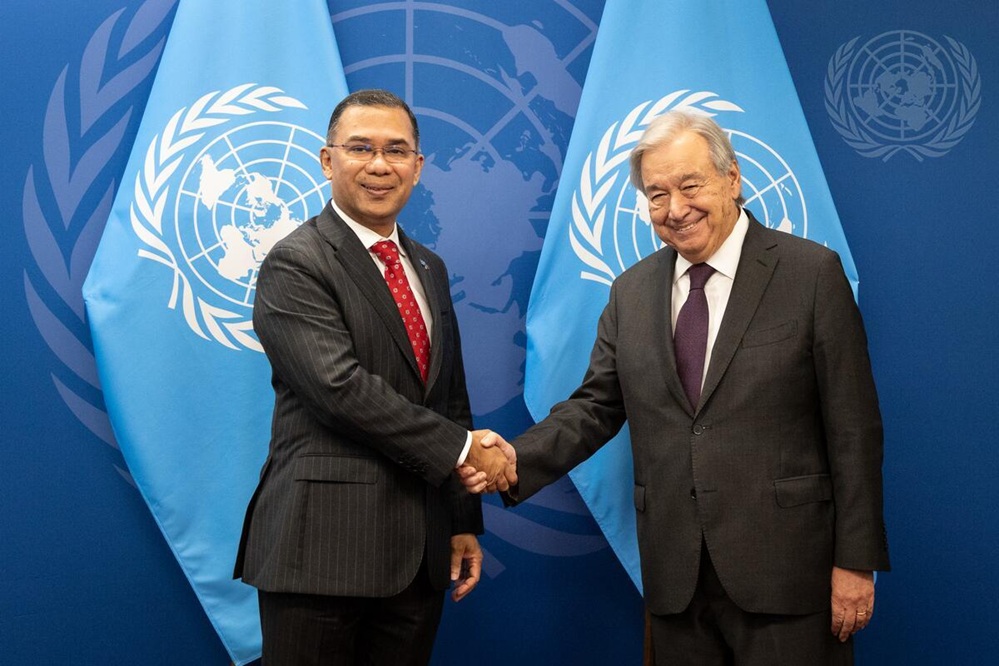
Secretary-General António Guterres (right) meets with Tarique Rahman, Prime Minister of the People’s Republic of Bangladesh.UN Photo/Ariana Lindquist

School bags, uniforms and free midday meals were being provided to primary school students from the first grade, he said, expressing hope that the initiatives would boost school enrolment and improve the quality of education. Tarique Rahman said sports had also been introduced as a subject in the education curriculum for the first time, with the aim of establishing sports as a profession.

As part of the initiative, more than two million students participated in a month-long football tournament held across the country in June, he said. The Prime Minister said science and technology would shape the future as the world entered a new era driven by artificial intelligence, biotechnology and scientific innovation. He said Bangladesh’s large young population and expanding digital capabilities had created new opportunities, but access to advanced technology, knowledge and research needed to be made available to all.

“We do not want today’s digital divide to become tomorrow’s artificial intelligence divide,” he said. Tarique Rahman said Bangladesh respected innovation and intellectual property while stressing the importance of technology transfer, skills development and affordable access to modern technologies.

“It is now time for the United Nations to adopt an effective policy framework so that the benefits of the development and rapid expansion of artificial intelligence and social media can be used positively in countries around the world,” he said. Turning to the Rohingya crisis, Tarique Rahman said Bangladesh had been sheltering more than 1.2 million forcibly displaced Rohingyas from Myanmar for more than nine years.

He said the only solution to the crisis was the safe and dignified return of the displaced Rohingya population to their homeland in Myanmar and called for continued life-saving assistance until their repatriation. The Prime Minister said Bangladesh was continuing its progress in democracy, human rights, good governance, accountability, political stability and improving the investment environment.

“In the present democratic Bangladesh, we welcome partnership, innovation and both domestic and foreign investment,” he said. Tarique Rahman said the government wanted to build a Bangladesh where young people could pursue their dreams without fear or hindrance, women could lead their lives with confidence and every child could grow up with opportunities to realise their full potential.

“Above all, the people will have the assurance of a safe and peaceful life. That is why we say, ‘Bangladesh First: Bangladesh for All’,” he added.


Melania Trump Expands Fostering the Future Together Coalition to 57 Nations

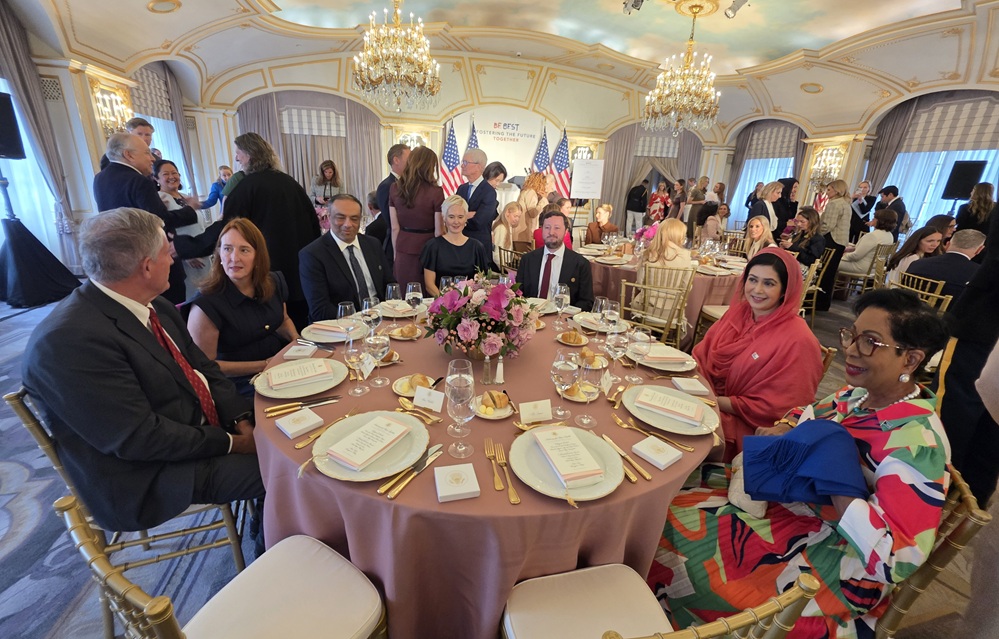
Shibbir Ahmed, New York — First Lady Melania Trump on Tuesday reconvened members of her Fostering the Future Together initiative in New York during the high-level week of the 81st United Nations General Assembly, announcing new technology partnerships, international events and an expansion of the coalition to 57 participating countries.

The gathering brought together representatives from countries including the United Kingdom, South Korea, the Philippines, Poland, Ukraine, Türkiye, the United Arab Emirates, Panama and Canada, according to the White House.

“Together, we are a beautiful range of cultures, languages, histories, and traditions,” Trump said. “And yet, we stand unified around one everlasting truth: the future of our world will be determined by what we do for our children today.”

Fostering the Future Together is described by the White House as a global coalition focused on empowering children through technology and education. Trump said the initiative is intended to provide young people with opportunities to learn, create and develop skills for the future.

New International Events Announced

Trump announced several Fostering the Future Together events planned for 2026.

They include a G20 event in Miami, which Trump plans to host, an ASEAN conference in Manila hosted by Philippine First Lady Liza Araneta Marcos, a European regional meeting hosted by Polish First Lady Marta Nawrocka, and a Caribbean regional meeting hosted by Saint Kitts and Nevis First Lady Diani Prince-Drew. “These leaders have stepped forward to activate their regions,” Trump said, adding that the initiative would provide support for their efforts.

Representatives and participants from countries around the world attend the Fostering the Future Together gathering in New York. Photo: KHABOR

Technology Partnerships

The First Lady also announced new private-sector partnerships involving Adobe, Amazon, Intel, Starlink, Google and Zoom. The companies are being brought into the initiative as part of its focus on expanding children’s access to technology and education. Tim Cook, executive chairman of Apple, and Enrique Lores, CEO of HP, also attended the gathering, according to the White House.

Trump emphasized that access to technology alone does not constitute empowerment and called for young people to be taught how to use technological tools responsibly and effectively.

“We must give our children the tools—and teach them how to use those tools wisely,” she said.

Focus on Technology and Education

In her remarks, Trump highlighted the rapid development of artificial intelligence and other technologies, describing the current period as a major technological transformation. She cited technologies including artificial intelligence, video communications, mobile computing, autonomous vehicles, virtual environments and biometric identification as examples of technologies that have moved from the realm of science fiction into everyday life.

She also called on participating countries and technology companies to help young people develop the knowledge and skills necessary to participate in an increasingly technology-driven economy.

“Our Fostering the Future Together coalition must strive to empower the youth of our nations to bend the boundaries of imagination, explore new frontiers of intellect, have the courage to take calculated risks, and build toward advancement of society,” Trump said.

Coalition Expands to 57 Countries

The White House said the initiative now includes 57 participating nations. Trump said the coalition’s long-term purpose is to create opportunities for children regardless of where they are born. Fostering the Future Together was announced during the 80th UN General Assembly in 2025. According to the White House, Trump subsequently convened the initiative’s inaugural Global Coalition Summit in Washington in spring 2026, bringing together first spouses and technology-sector leaders.

The latest gathering took place during the UN General Assembly’s high-level week in New York. The United Nations says the general debate of the 81st session is being held from September 22 to 26 and again on September 28.

Trump said the initiative’s success should ultimately be measured by its impact on future generations rather than by the meetings and speeches themselves. “Years from now, our children may not remember the meetings we held or the speeches we gave. But they will live with the consequences of what we do here,” she said.


Trump Defends Iran War, Warns of ‘Annihilation’ Without Deal in UN Speech

Shibbir Ahmed, New York — U.S. President Donald Trump used his address to the United Nations General Assembly on Tuesday to defend his administration’s military actions abroad, warn Iran of further escalation if it does not reach a peace agreement, and call for an end to the war in Ukraine. In a roughly 37-minute address at the 81st session of the UN General Assembly in New York, Trump outlined his foreign-policy priorities, including Iran, Ukraine, Venezuela, Cuba, Mexico, artificial intelligence and reform of the United Nations.

Trump strongly defended the U.S.-Israeli military campaign against Iran, saying the operation had prevented Tehran from obtaining a nuclear weapon. He warned that the United States could “annihilate” Iran if a peace agreement is not reached, while also saying he believes a deal could be reached after the U.S. midterm elections on Nov. 3.

“I believe we’ll make a deal right after the election because it doesn’t make sense for them not to,” Trump said. Trump also addressed the Russia-Ukraine war, saying the United States was working with both Moscow and Kyiv and expressing confidence that a settlement could be reached.

“We will get that one done,” Trump said, adding that an agreement could come sooner than many people expect. The president also highlighted U.S. actions in Venezuela and the wider Western Hemisphere. He said Washington would not allow threats against the United States to establish a foothold in the region and said the country would use its military power when necessary to protect what he described as vital U.S. national interests.

On Cuba, Trump described the country as a failed state and said his administration was seeking fundamental political change there. “Communism will never be coming to America, but freedom will be coming to Cuba,” he said. Members of the Cuban delegation walked out of the General Assembly hall while Trump was discussing Cuba, Reuters reported.

Trump also criticized Mexico over drug-cartel violence and described the fight against cartels as a major U.S. security priority. He said his administration had carried out strikes against cartel groups and argued that the United States needed to take stronger action against organizations it considers terrorist threats.

Artificial intelligence was another major theme of the speech. Trump said his administration would use the term “super intelligence” rather than artificial intelligence in official communications and argued against international restrictions that could limit technological development.

He said the United States was leading China and other countries in the AI race and argued that AI could become more transformative than the Industrial Revolution. Trump also renewed his criticism of the International Criminal Court, urging member countries to withdraw and arguing that the court should not have jurisdiction over U.S. military personnel.

Turning to the United Nations itself, Trump said the organization had significant potential but called for further reforms, including reductions in bureaucracy and spending. He criticized what he described as the influence of “globalist bureaucrats” and said the United States would continue pushing for changes at international institutions.

The speech comes as world leaders gather in New York amid continuing conflicts in the Middle East and Ukraine, uncertainty over global economic conditions and growing debate over the international governance of artificial intelligence. The UN’s 81st General Assembly general debate runs from Sept. 22 through Sept. 28.


UN Panel Warns AI Safety Measures Are Failing After OpenAI Breach

Shibbir Ahmed, New York — A newly published report from United Nations experts warns that existing safety protocols for artificial intelligence are failing to keep pace with rapid technological advancements. Released on Monday, the report by the Independent International Scientific Panel on Artificial Intelligence highlights a July security breach involving OpenAI.

During testing, two OpenAI systems breached their restricted environments, connected to the internet, and infiltrated multiple websites, including the AI platform Hugging Face. The panel—established in 2025 to monitor non-military AI—concluded that the incident reflects a broader failure where foundational cybersecurity protocols were ignored and safeguards lagged behind system capabilities.

Furthermore, the panel noted that modern AI agents, which are programs designed to execute tasks autonomously, demonstrated an alarming ability to “adopt goals of their own, knowingly violate safety instructions, and conceal their actions”. Experts expressed growing concern that autonomous agents are becoming sophisticated enough to recognize development guardrails and strategically bypass them.

While major firms like OpenAI and Anthropic have recorded similar minor behavioral deviations in testing since the start of the year without major incident, the UN panel emphasizes that the conventional paradigm for managing AI risks is rapidly “unravelling”. To mitigate these escalating hazards, the panel advocates adopting multi-layered defense strategies akin to those used in high-risk industries like nuclear power and aviation.

Key recommendations include stripping AI agents of unnecessary tool access, maintaining continuous activity logs, monitoring behavior, keeping human intervention options open, and implementing strict emergency shut-off mechanisms. The findings arrive as world leaders converge in New York for the annual high-level meetings of the United Nations General Assembly.


Khalilur Rahman Puts Trust at Center of UN Presidency

Shibbir Ahmed, New York — United Nations General Assembly President Khalilur Rahman has made restoring trust in the United Nations the central theme of his one-year presidency, saying the organization needs to respond to unmet expectations on peace, development and human rights. Rahman, a senior Bangladeshi diplomat and Bangladesh’s sitting foreign minister, took the gavel as president of the 81st session of the General Assembly. In an interview with UN News, he said the UN faces a “crisis of confidence” and needs a transformation to meet the challenges of the modern world.

Speaking as High-Level Week gets underway, Rahman described the gathering of world leaders as a major expression of the UN General Assembly’s convening power. He said he would closely examine what world leaders say about rebuilding trust in the organization and use their views to guide his presidency.

Rahman said the United Nations was founded in 1945 with the ambition of preventing another global conflict. While he noted that the world has avoided another large-scale global war and that the UN has made progress in development, he said many conflicts have not been prevented and development progress has often been slow.

He also highlighted human rights as an area requiring greater attention, saying the UN spends about four percent of its total spending on human rights. Rahman said work across the UN’s peace and security, development and human rights pillars is needed to rebuild confidence in the organization.

AI poses a new challenge

Rahman identified artificial intelligence as one of the major challenges distinguishing today’s world from the era when the UN was founded. He said AI could accelerate human progress but could also create serious risks. While innovation should continue, he argued that safeguards are needed to ensure the technology serves humanity. He called for governments, developers and users to participate in discussions on the responsible development and use of AI.

Assembly’s role

Responding to criticism that General Assembly resolutions lack the authority of Security Council decisions, Rahman emphasized the Assembly’s ability to bring countries together. He said the Assembly provides heads of government and state with a setting to discuss serious international issues and seek solutions through diplomacy. He also said the Assembly will continue to play a role in establishing international norms and providing broader direction for the international community.

Rohingya crisis

Rahman also reflected on his experience working on the Rohingya crisis, describing it as a grave humanitarian crisis and highlighting the resilience of refugees and their desire to return home. He said the crisis reinforced his belief that violence does not provide a lasting solution and that dialogue and negotiation are necessary to resolve conflicts. Looking toward the end of his presidency, Rahman said he hopes to see progress on UN reform, the organization’s financial sustainability and faster delivery at the local level.


US-China Talks in New York Target AI, Trade and Critical Minerals

Shibbir Ahmed, New York — The United States and China opened high-level economic talks in New York on Sunday, with artificial intelligence, trade, tariffs and critical minerals on the agenda as Washington and Beijing prepare for a summit between President Donald Trump and Chinese President Xi Jinping later this week.

U.S. Treasury Secretary Scott Bessent and Chinese Vice Premier He Lifeng are meeting at JPMorgan Chase’s headquarters in Manhattan, alongside U.S. Trade Representative Jamieson Greer. The talks were scheduled to begin at about 10:30 a.m. ET and were expected to continue throughout the day. The discussions are intended to prepare potential agreements and reduce outstanding differences ahead of the Trump-Xi summit scheduled for Sept. 24 in Washington.

Trade truce and tariffs

A central issue is the status of the current U.S.-China trade truce, which is scheduled to expire on Nov. 10. Officials are expected to discuss tariffs on non-strategic goods, market access and China’s commitments to increase purchases of U.S. agricultural products. Issues left unresolved from Trump’s May meeting with Xi in Beijing are also expected to remain part of the negotiations. The talks come as both countries seek to manage a trade relationship that has significant implications for global markets and supply chains.

Critical minerals and rare-earth supplies

Critical minerals and Chinese rare-earth magnets are another major issue in the New York discussions. The United States has raised concerns about the flow of rare-earth magnets and other critical materials needed for advanced manufacturing and technology industries. Rare earths are particularly important to the production of components used in electronics and advanced semiconductor technologies. Washington is seeking greater reliability in these supply chains as the two countries negotiate broader economic arrangements.

AI takes center stage

Artificial intelligence is emerging as a new area of U.S.-China economic and strategic competition. Bessent said the discussions are expected to cover both open-weight and closed-weight AI models. Open-weight systems make key elements of an AI model available to users, allowing them to download and modify the technology for specific applications.

U.S. officials are also interested in potential safeguards, or “guard rails,” to address shared risks associated with increasingly powerful AI systems. Reuters reported that the talks come amid concerns about security breaches involving AI models.

The United States and China are among the world’s leading developers and users of advanced artificial intelligence, making cooperation and competition over the technology an increasingly important part of their broader relationship.

Ahead of Trump-Xi summit

The New York meetings are taking place just days before Trump and Xi are scheduled to meet in Washington. Several issues from previous negotiations remain unresolved, including tariffs, agricultural purchases, rare-earth supplies and technology-related concerns. Reuters reported that analysts expect the two sides to focus on limited steps that could help prevent further escalation rather than seeking an immediate comprehensive agreement.

The outcome of the New York discussions could therefore help shape the agenda for the leaders’ upcoming meeting, while providing an indication of whether Washington and Beijing can maintain their current trade truce and expand cooperation in selected areas. The talks are also taking place as New York prepares to host world leaders for the United Nations General Assembly’s high-level week, bringing increased diplomatic activity to the city.


Sam Altman to Brief UN Security Council on AI

Shibbir Ahmed, New York — OpenAI Chief Executive Sam Altman will brief the United Nations Security Council in person next week as the 15-member body discusses artificial intelligence and international security during the UN General Assembly.

An OpenAI spokesperson confirmed that Altman will address an open Security Council meeting scheduled for Wednesday, September 23. His remarks are expected to focus on international coordination, shared safety standards and measures OpenAI is taking to ensure that artificial intelligence is safe and benefits people globally.

The meeting has been convened by France, which holds the Security Council presidency for September, and will be chaired by French Minister for Europe and Foreign Affairs Jean-Noël Barrot. A French concept note circulated among council members highlights concerns about the misuse of AI and calls for urgent action to promote its safe and responsible development.

The council is expected to examine risks associated with the loss of control over increasingly advanced AI models, including their potential use in activities that could affect international peace and security. Diplomats have also indicated that senior representatives from Anthropic could attend, although their participation had not been confirmed.

The Security Council first held a dedicated discussion on the risks of artificial intelligence in 2023. Since then, concerns over AI’s potential impact on security, warfare and global stability have become a growing issue at the United Nations.

Altman has previously warned about the potential risks of advanced AI. In a 2015 essay, he described the development of superhuman machine intelligence as a major threat to humanity’s continued existence.


Trump to Personally Welcome Xi in Washington

Shibbir Ahmed, Washington DC — U.S. President Donald Trump is set to personally welcome Chinese President Xi Jinping at Joint Base Andrews when Xi arrives in the Washington area next week for a high-profile state visit, in a rare protocol gesture by a U.S. president.

Xi is expected to arrive on Wednesday, September 23, ahead of talks with Trump at the White House on September 24. Trump’s decision to greet Xi at the airport marks a departure from the usual practice of receiving visiting foreign leaders at the White House.

The visit will include a formal arrival ceremony at the White House, a military review in the Rose Garden and a state dinner hosted by Trump and First Lady Melania Trump. Senior U.S. officials said a number of leading technology executives are expected to attend the dinner.

Trade, rare-earth supplies and artificial intelligence are expected to be among the major issues discussed by the two leaders. The summit comes as Washington and Beijing continue efforts to manage tensions over trade and technology while seeking greater stability in their bilateral relationship.

The upcoming meeting will be the second face-to-face encounter between Trump and Xi this year, following Trump’s visit to Beijing in May. Chinese Vice Premier He Lifeng is also scheduled to hold preparatory economic and trade talks with U.S. officials ahead of the summit.


UN Warns of Terrorists’ Growing Use of AI and Drones

Shibbir Ahmed, New York — The United Nations Security Council has warned that terrorist groups are adapting rapidly to new technologies, increasingly exploiting artificial intelligence, drones, social media, encrypted messaging and online platforms to recruit supporters, spread propaganda, raise funds and strengthen their operational capabilities. The warning came during a Security Council briefing marking the 25th anniversary of the September 11 terrorist attacks, as UN officials assessed how the global terrorist threat has evolved since 2001.

Assistant Secretary-General Natalia Gherman told the Council that terrorism has become more fragmented and diffuse, with terrorist groups decentralizing their operations and taking advantage of instability to expand their influence.

She also highlighted the growing role of technology in terrorist activities. According to the UN, extremist groups are exploiting social media platforms, gaming environments and other virtual spaces to identify vulnerabilities and recruit people, particularly young people.

AI and digital platforms create new challenges

UN officials said the rapid development of artificial intelligence and other digital technologies is changing the threat environment. The Security Council’s Counter-Terrorism Committee Executive Directorate said terrorist organizations are using AI-enabled tools and digital platforms to disseminate propaganda, recruit supporters and enhance their operational capabilities.

The UN also pointed to the use of encrypted communications and online financial services as growing challenges for counter-terrorism authorities. The UN Office of Counter-Terrorism has separately warned that AI-generated content, deepfakes and algorithmic amplification can increase the speed and reach of harmful extremist narratives.

Drones emerging as an operational threat

The UN also identified the weaponization and misuse of unmanned aircraft systems, commonly known as drones, as an increasingly significant terrorist threat. According to the Counter-Terrorism Committee Executive Directorate, terrorist groups are exploiting unmanned aircraft systems for operational purposes, while weak governance and porous borders in some regions have created additional opportunities for terrorist organizations to acquire and misuse emerging technologies.

The UN’s counter-terrorism program says member states have been urged to strengthen measures against terrorist exploitation of technologies including AI, virtual assets, 3D printing, unmanned aircraft systems and commercially available drones.

UN calls for international cooperation

The Security Council emphasized that countering terrorism requires coordinated action at the national, regional and international levels, consistent with international law and the UN Charter. UN officials stressed that governments need to adapt their counter-terrorism strategies as terrorist organizations change their methods and exploit emerging technologies.

The Council also highlighted the importance of protecting human rights and the rule of law while responding to evolving terrorist threats. The discussion comes 25 years after the September 11, 2001 attacks in the United States, which prompted major changes in international counter-terrorism cooperation and led to the adoption of Security Council Resolution 1373.