UN Biodiversity Summit COP17 Opens in Armenia Amid 2030 Nature Concerns

Shibbir Ahmed, New York – Nearly 200 countries are gathering in Armenia on Monday for crucial discussions on how to accelerate progress toward global nature protection targets, as governments face mounting pressure to deliver on a historic commitment to halt and reverse biodiversity loss by 2030. The United Nations conference, known as COP17, comes amid growing concerns that countries are falling behind on the goals agreed upon four years ago to protect and restore nature by the end of the decade.

Often described as the “Paris Agreement for nature,” the global biodiversity deal includes a landmark commitment to conserve 30 percent of the world’s land and oceans by 2030. However, progress toward many of its targets remains slow, with limited advances on some of the most challenging commitments, including reducing subsidies for fossil fuels and other environmentally harmful industries.

Speaking ahead of the formal negotiations, Armenian Prime Minister Nikol Pashinyan said on Friday that countries needed to acknowledge the gap between their commitments and actual progress.

“We must honestly acknowledge that, collectively, we have not moved forward at the necessary pace,” he said.

The summit is taking place at a time when public funding is under pressure and political attention is increasingly focused on conflicts, geopolitical tensions and the global energy crisis. Only a small number of world leaders, including United Nations Secretary-General António Guterres, attended a high-level session before the formal negotiations began. Most of the participating leaders were heads of state from neighboring Central Asian countries.

Despite the limited high-level attendance, Guterres stressed the importance of the conference, warning that humanity’s continuing “war” against nature threatens the planet’s habitability for future generations.

“We need more action, more speed and more goodwill,” he said. With the world halfway through the period leading to the 2030 targets, Guterres described the gathering in Yerevan as a critical moment for accountability.

“We must ask ourselves: Are we doing enough?” he said.

A United Nations assessment released ahead of COP17 found that progress was being made toward the 23 global biodiversity targets. However, the report warned that progress remained uneven and insufficient to achieve the goals by the 2030 deadline.

Financing is expected to emerge as one of the most contentious issues during the negotiations. The assessment highlighted a substantial funding gap for biodiversity conservation, with efforts to mobilize the necessary resources lagging far behind requirements.

Developed countries, including European nations and other wealthy economies, have financial responsibilities under international biodiversity commitments. However, they have also called on major emerging economies, including China, to contribute more toward conservation financing.

Discussions may increasingly focus on how private-sector investment can help bridge the funding gap as governments struggle to provide sufficient public resources. One of the summit’s priorities is expected to be encouraging corporations to contribute a portion of their profits to a United Nations fund intended to support nature conservation in developing countries, which currently has very limited resources.

Reforming government subsidies for extractive industries is another major issue expected to feature prominently at the summit. Guterres criticized governments for continuing to direct public money toward environmentally damaging activities despite their commitments to reform harmful subsidies. Referring to fossil fuels such as coal, oil and gas, he said: “Subsidizing fossil fuels is subsidizing suicide.”

He warned that fossil fuels are heating the planet and posing a serious threat to biodiversity. Environmental advocates argue that redirecting public funds away from harmful industries and toward conservation could help countries make faster progress toward their international commitments.

For Armenia, the mountainous country in the Caucasus region, COP17 represents one of the largest international events it has hosted. Thousands of delegates and visitors are expected to arrive over the next two weeks for discussions on biodiversity protection, conservation financing and implementation of global environmental commitments. Organizers have emphasized that the success of COP17 will depend not on announcing new promises, but on delivering concrete action to fulfill existing commitments.

Speaking on Friday, Adil Najam, Global President of WWF International, said the world already had the necessary vision for protecting nature.

“The world does not need a new vision. We have one. What we need now is to implement it,” he said. As negotiations begin, countries face growing pressure to translate their biodiversity commitments into measurable results before the 2030 deadline, with financing, accountability and the reform of harmful subsidies likely to remain central to the discussions.


COP17 Summit Focuses on 2030 Biodiversity Goals

Shibbir Ahmed, New York – The United Nations’ 17th Conference of the Parties to the Convention on Biological Diversity (COP17) is set to begin on Monday, October 19, in Armenia’s capital, Yerevan, bringing global attention to efforts to halt biodiversity loss and protect nature by 2030.

Running through October 30, the conference is expected to serve as a critical milestone in assessing global progress toward the ambitious targets set under the Kunming-Montreal Global Biodiversity Framework. World leaders will face growing pressure to demonstrate how far their countries have progressed in translating environmental commitments into concrete action.

UN Secretary-General António Guterres has repeatedly warned against humanity’s destructive impact on nature and called for urgent action to reverse biodiversity loss. The Yerevan conference is expected to place accountability, implementation and international cooperation at the centre of discussions.

Adopted in 2022, the Kunming-Montreal Global Biodiversity Framework provides a global roadmap for protecting and restoring nature. One of its most prominent goals is to conserve at least 30 percent of the world’s land, inland waters and marine areas by 2030, an objective widely known as the “30 by 30” target. The framework also calls for restoring degraded ecosystems, reducing pollution, reforming environmentally harmful subsidies and increasing financial resources for biodiversity conservation.

Under the agreement, countries have committed to mobilising at least $200 billion annually from public and private sources for biodiversity-related initiatives by 2030. It also sets a target of increasing international biodiversity finance for developing countries, which often face significant funding and technical constraints.

Despite growing international commitments, progress towards the 2030 biodiversity targets remains uneven, raising concerns about whether countries can meet their obligations within the remaining timeframe.

Assessments of conservation efforts indicate that current progress is insufficient to achieve the 30 by 30 target. Funding shortages, limited technical capacity, gaps in monitoring and data collection, and economic incentives that contribute to environmental damage continue to undermine conservation efforts.

According to a Reuters report, existing commitments and current progress could bring approximately 27 percent of the world’s land and inland waters under conservation by 2030. For marine areas, the projected figure is around 12 percent.

The gap between global commitments and implementation is expected to be a major focus of discussions in Yerevan, with delegates examining how governments can accelerate action and strengthen accountability.

Securing adequate funding for biodiversity protection is expected to be a key issue at COP17. The global target of mobilising $200 billion annually by 2030 will require stronger international cooperation, increased financial flows to developing countries and reforms to subsidies that harm nature.

Another important issue is the implementation of the Cali Fund, established to support the fair and equitable sharing of benefits arising from the commercial use of digital sequence information on genetic resources.

The initiative aims to ensure that a portion of the benefits generated through the use of such information contributes to biodiversity conservation, including in countries and communities that play an important role in protecting natural resources. Developing effective mechanisms to distribute these benefits fairly will be important in building trust and ensuring that conservation efforts receive sustainable financial support.

Turning Commitments into ActionCOP17 is expected to provide an opportunity for countries to assess progress, identify implementation gaps and determine what additional measures are needed to achieve the 2030 targets.

Astrid Schomaker, Executive Secretary of the Convention on Biological Diversity, has stressed the importance of coordinated international action to address existing shortcomings and accelerate implementation.

The conference will also test the willingness of governments to move beyond declarations and establish practical measures that can deliver measurable results. The outcome of COP17 could help shape international cooperation, biodiversity financing and accountability in the years leading up to 2030.

Ultimately, however, achieving the global biodiversity targets will depend on political commitment, adequate funding, effective monitoring and the ability of governments to translate promises into action before the deadline.


Guterres Calls for Permanent Ceasefire Three Years After October 7 Attacks

Shibbir Ahmed, New York — Three years after the Hamas-led attacks on Israel on Oct. 7, 2023, United Nations Secretary-General António Guterres condemned the killings and hostage-taking while calling for an end to the continuing suffering of both Israelis and Palestinians.

In a message marking the anniversary, Guterres said more than 1,200 Israelis and foreign nationals were killed in the attacks, in which civilians were targeted in their homes, communities and at a music festival. Another 251 people were abducted and taken hostage in Gaza, according to the United Nations.

“Nothing can justify these atrocities,” Guterres said, recalling meetings with Israeli families whose lives were devastated by the attacks. He also cited reports of torture, sexual violence and other mistreatment of hostages, as well as deaths in captivity and during the subsequent fighting.

Guterres also highlighted the extensive Palestinian civilian toll from the war that followed. According to UN agencies, more than 70,000 Palestinians, including about 20,000 children, have been killed, while more than 100,000 have been wounded. Nearly all of Gaza’s estimated 2.1 million residents have been displaced, and large parts of the territory have been destroyed.

“Civilians continue to endure intolerable conditions,” Guterres said, adding that their suffering “demands an end – now.”

The secretary-general said the ceasefire reached in October 2025 had brought some relief but had not yet delivered lasting security, sufficient humanitarian assistance or a credible path toward recovery and peace.

He urged all parties to fulfill their commitments and proceed to the next phase of the ceasefire under UN Security Council Resolution 2803. He also called for humanitarian aid to enter Gaza on a large scale and for the ceasefire to become permanent.

The UN humanitarian office, OCHA, said Israeli authorities had suspended the entry of cargo into Gaza on Monday and announced another suspension for Wednesday, citing security concerns related to the anniversary.

Guterres said the anniversary should serve not only as a day of mourning but also as an opportunity to pursue a different future in which Israelis and Palestinians can live together with their rights, dignity and aspirations respected.


Guterres Calls for End to US-Iran Conflict, Urges Return to Diplomacy

Shibbir Ahmed, New York — United Nations Secretary-General António Guterres on Tuesday called for an end to the ongoing conflict between the United States and Iran, urging all parties to step back from confrontation and return to diplomatic negotiations as the crisis continues to disrupt vital trade routes across the Middle East.

Speaking at a joint press appearance in Islamabad with Pakistan’s Deputy Prime Minister and Foreign Minister Mohammad Ishaq Dar, Guterres issued a direct appeal to the parties involved in the conflict.

“End the conflict. Return to diplomacy,” Guterres said, calling at the same time for the full restoration of navigational rights and freedoms in accordance with international law.

His remarks came at the beginning of a two-day official visit to Pakistan, where the UN chief is expected to discuss regional security, diplomacy, humanitarian issues and climate change.

The current crisis began in late February following joint U.S. and Israeli strikes against Iran. Tehran responded with attacks against targets in Gulf countries and Jordan and moved to restrict transit through the Strait of Hormuz, one of the world’s most strategically important maritime passages.

The waterway is a major route for international shipments of crude oil, liquefied natural gas and other commodities. Disruptions in the strait have created significant uncertainty for global shipping and energy markets.

Guterres said hundreds of ships and their crews have been stuck at sea for months as a result of the continuing crisis. The disruption has raised concerns well beyond the region, with the security of international shipping and the uninterrupted movement of energy supplies becoming central issues in the conflict.

The conflict has also contributed to fighting along Yemen’s Red Sea coast. Iran-backed Houthi forces are engaged in fighting with Yemeni government troops supported by Saudi Arabia over control of the strategically important Bab al-Mandab Strait. The waterway is a critical maritime passage linking the Red Sea with the Gulf of Aden and the wider international shipping network. The developments have added another layer to an already complex regional crisis, with several strategic waterways now affected by military tensions.

Guterres used his visit to Pakistan to recognize Islamabad’s efforts to facilitate dialogue between Washington and Tehran. He praised Pakistan’s role in helping establish conditions for negotiations and pointed specifically to the June 17 Islamabad Memorandum of Understanding, the subsequent ceasefire and the framework created for further talks.

The UN secretary-general described Pakistan’s role as significant and said the country’s efforts demonstrated the importance of mediation and diplomacy at a time of increasing international division.

“Every Pakistani should be proud of that pivotal role,” Guterres said. He also praised Pakistan as a country that has continued to support multilateral diplomacy and international cooperation.

Guterres also addressed the broader Middle East crisis, saying lasting peace in the region cannot be achieved without addressing the political rights of the Palestinian people. He said the right of the Palestinian people to self-determination remains an important element of any long-term regional peace effort.

The UN chief expressed hope that the Middle East could move toward greater peace and prosperity through dialogue and cooperation. His comments come as the region continues to face overlapping conflicts and humanitarian challenges.

During his remarks, Guterres also highlighted Pakistan’s longstanding contribution to United Nations peacekeeping. He paid tribute to more than 180 Pakistani peacekeepers who have died while serving in UN missions around the world. Guterres also referred to a recent Security Council resolution led by Pakistan and Denmark that strengthens accountability for crimes against UN peacekeepers.

According to the secretary-general, the resolution received support from 153 countries, making it the most widely co-sponsored Security Council resolution in the organization’s history. He also acknowledged the heavy toll of terrorist attacks on Pakistan and expressed solidarity with those affected.

Pakistan’s role in hosting millions of Afghans displaced by conflict and instability was another issue raised during the visit. Guterres said the United Nations would continue working with Pakistan to ensure that the return of Afghan refugees is voluntary, safe and dignified.

The issue remains sensitive as Pakistan manages the long-term humanitarian and security consequences of decades of conflict in neighboring Afghanistan.

Guterres also used his visit to highlight Pakistan’s vulnerability to climate change. Recalling his previous visit to the country during the devastating 2022 floods, he said Pakistan remains on the front lines of climate-related disasters despite contributing only a small share of global greenhouse-gas emissions.

He praised Pakistan’s involvement in establishing the Loss and Damage Fund and highlighted the country’s efforts to expand clean energy. The UN chief again urged developed countries to take the lead in significantly reducing global emissions during the current decade.

Guterres’ appeal comes as the United States-Iran conflict continues to create security and economic risks across the Middle East. The disruption of major maritime routes, the expansion of fighting into neighboring areas and the potential impact on global energy and trade have increased pressure for a diplomatic solution. From Islamabad, the UN secretary-general made clear that his preferred path forward is negotiation rather than further escalation.

“End the conflict. Return to diplomacy,” he said.

For Pakistan, meanwhile, the visit provides an opportunity to reinforce its role as a diplomatic channel between major powers while emphasizing its broader concerns over regional stability, humanitarian protection and climate security.


UN Faces Funding and Reform Crisis as New Leader Takes Charge

Shibbir Ahmed, New York — The United Nations is approaching a critical leadership transition as it confronts mounting financial pressure, deep divisions among major powers and growing demands for reform. The organization’s next secretary-general will inherit a UN struggling to maintain its influence over some of the world’s most serious conflicts while facing questions about its ability to meet expanding humanitarian and development needs.

The transition comes as the United Nations prepares for a new secretary-general to take office on January 1, 2027. The incoming leader will succeed António Guterres, who has spent nearly a decade at the helm of the organization and has repeatedly warned that the international system is under severe strain.

In a recent assessment, The Associated Press described the UN as facing a combination of financial difficulties, geopolitical divisions and questions over its relevance. The organization continues to play a major role in humanitarian assistance and international cooperation, but its ability to resolve major conflicts has often been constrained by disagreements among powerful member states.

One of the most immediate challenges is the United Nations’ financial position. The United States, historically the organization’s largest financial contributor, has accumulated substantial unpaid assessments. According to Congressional Research Service data, U.S. unpaid assessments stood at approximately $2.04 billion for the UN regular budget and $2.25 billion for peacekeeping as of April 30, 2026.

Washington has indicated that it intends to make payments toward its outstanding obligations. Reuters reported in August that the Trump administration had notified Congress of plans for a payment of $725 million toward U.S. debt to the United Nations. The issue nevertheless remains part of a broader dispute over the cost, structure and effectiveness of the international organization.

The financial pressure has consequences beyond the UN’s headquarters in New York. United Nations agencies and programs provide assistance to millions of people affected by conflict, displacement, hunger and natural disasters. Reduced or delayed funding can force agencies to scale back operations at a time when humanitarian needs are increasing in several regions.

The organization is also under pressure to reform its internal structure. Guterres has promoted the UN80 Initiative, an effort intended to make the United Nations more efficient, reduce duplication and strengthen accountability. The initiative has included organizational restructuring and reductions in posts as the UN seeks to operate with fewer resources.

But the most difficult reforms are political rather than administrative. For years, countries across Africa, Asia and Latin America have demanded changes to the UN Security Council, arguing that its current structure does not adequately reflect the modern international system.

The Security Council’s five permanent members—the United States, China, Russia, France and the United Kingdom—retain veto power over substantive decisions. African countries in particular have called for permanent representation on the council, while other governments have pressed for broader changes to the composition of the body.

Reforming the Security Council, however, remains extremely difficult. Any major change would require agreement among member states, including the existing permanent members whose own political interests can conflict with calls for a broader distribution of power.

The UN’s difficulties have become particularly visible during major international conflicts. The organization has remained heavily involved in humanitarian operations related to wars in Gaza, Ukraine and other regions, but disagreements among major powers have frequently limited the Security Council’s ability to take decisive action.

That gap between the UN’s humanitarian responsibilities and its political limitations has become one of the central challenges facing the organization. UN agencies continue to deliver food, medical assistance and other essential services, even as political divisions make it difficult for the wider organization to establish unified responses to conflicts.

The financial challenge is being compounded by a wider decline in international assistance. The UN’s own reform reporting has warned that international assistance fell sharply between 2024 and 2025, increasing pressure on humanitarian programs and development efforts.

Despite those difficulties, the United Nations remains a central institution for international cooperation. Its agencies continue to coordinate humanitarian relief, support refugees, assist developing countries and address global issues ranging from climate change to poverty and public health.

The organization has also continued efforts to provide emergency assistance to underfunded crises. UN officials have warned that financial resources alone are not sufficient, however, and that humanitarian operations also depend on security, political access and cooperation from governments and armed groups.

For the next secretary-general, the challenge will be to balance competing demands while restoring confidence in an institution facing unprecedented political fragmentation. The new leader will have to work simultaneously with Washington, Beijing, Moscow and other major powers while maintaining relationships with the broader UN membership.

The transition therefore represents more than a change in leadership. It is a test of whether the United Nations can adapt to a rapidly changing international system while retaining the principles on which it was founded.

Guterres has argued that the world does not need a weaker United Nations. The next secretary-general will face the task of demonstrating how the organization can become more effective at a time when its members are increasingly divided over money, power and the future of international cooperation.

For an organization created after World War II to prevent conflict and promote cooperation among nations, the coming years could prove decisive. Whether the UN emerges from its current difficulties stronger or weaker will ultimately depend not only on its next leader, but on whether its member states are prepared to provide the political support and financial resources necessary for reform.


UN General Assembly 2026: Leaders Discuss Global Crises, AI

Shibbir AHmed, New York — World leaders and senior officials are continuing high-level diplomatic discussions at the 81st United Nations General Assembly in New York, with conflicts, artificial intelligence, climate change, development and international cooperation remaining central issues.

The General Assembly’s high-level week, which runs through September 28, has brought together leaders and representatives from across the world to address major global challenges and debate the future of multilateral cooperation.

The General Debate is scheduled to continue on September 28, following several days of speeches and diplomatic meetings focused on international security, regional conflicts, economic development and emerging global challenges.

Artificial intelligence has emerged as an important issue during this year’s UN discussions. Secretary-General António Guterres has called for stronger international governance of AI and warned that technological developments are moving faster than existing global institutions can respond.

The UN has also placed conflicts and international diplomacy at the center of the General Assembly agenda as governments seek diplomatic approaches to ongoing crises, including tensions in the Middle East. The UN General Assembly’s 81st session is being chaired by Bangladesh’s Khalilur Rahman. The session’s theme is “Restoring trust, managing transformation: A United Nations that delivers for all.”

A major UN meeting taking place today, September 28, is commemorating the 25th anniversary of the adoption of the Durban Declaration and Programme of Action, which focuses on combating racism, racial discrimination, xenophobia and related intolerance.

The high-level week has also included meetings on climate action, sea-level rise and pandemic preparedness, reflecting the broad range of issues being addressed by the international community.

As the high-level portion of the General Assembly concludes, diplomatic attention remains focused on how governments can address conflicts, technological risks and other global challenges through international cooperation.


PM Tarique Rahman Returns Home from New York After UNGA Visit

DHAKA — Prime Minister Tarique Rahman returned home Sunday morning after concluding a five-day visit to New York, where he attended the 81st session of the United Nations General Assembly (UNGA), delivered his maiden address to the General Debate and held a series of high-level bilateral and multilateral meetings. An Emirates flight carrying the prime minister, his wife Dr. Zubaida Rahman and members of his entourage landed at Hazrat Shahjalal International Airport at 8:21 a.m., according to PM’s Deputy Press Secretary Hasan Shiplu.

Local Government, Rural Development and Cooperatives Minister Dr. Abdul Moyeen Khan, Chief Whip Nurul Islam Moni, Prime Minister’s Defence Adviser Brigadier General (retd.) AKM Shamsul Islam, Whip Miah Nuruddin Ahmad Apu, local MP SM Jahangir Hossain, Cabinet Secretary Nasimul Ghani and Prime Minister’s Principal Secretary ABM Abdus Sattar received the prime minister at the airport.

Tarique Rahman left Dhaka on September 21 and reached New York the same day after a stopover in Istanbul. He departed New York on September 25 and travelled through Dubai before returning to Dhaka. During his four working days in New York, the prime minister took part in 30 engagements, including 11 bilateral meetings, eight UNGA-related engagements and 11 institutional meetings. The prime minister and members of his delegation collectively represented Bangladesh at around 80 engagements, according to BSS.

A major highlight of the visit was Tarique Rahman’s first address to the UNGA General Debate on September 24. In his speech, he outlined Bangladesh’s positions on global peace and security, sustainable development, climate change, economic cooperation and humanitarian issues, while calling for conflicts to be resolved through dialogue, diplomacy and cooperation.

The prime minister held bilateral meetings with the leaders of Türkiye, Iran, Pakistan, Croatia, Haiti, Bhutan and Thailand. He also met the vice president of the Maldives, the crown prince of Kuwait, the UAE’s deputy prime minister and foreign minister, the Saudi foreign minister and Sweden’s foreign minister. The discussions covered bilateral relations, trade and investment, economic cooperation, manpower exports, energy security, regional and international issues and other areas of mutual interest.

The Rohingya crisis was another major issue during the visit. Tarique Rahman called for stronger international support for the safe, voluntary and dignified repatriation of Rohingyas to Myanmar and discussed the issue with UN Secretary-General António Guterres, UN Special Envoy on Myanmar Julie Bishop and UN High Commissioner for Refugees Barham Salih.

Climate change and the impact of rising sea levels also featured prominently in the prime minister’s engagements. He called for stronger global action to reduce emissions, greater access to climate finance and technology, and international cooperation to address climate-induced displacement and loss and damage. At a Bangladesh-Sweden-UNFPA high-level event on midwifery, Tarique Rahman outlined his government’s vision of a “Healthy Bangladesh,” with primary healthcare at the centre of health-sector reform. He said the government plans to recruit additional health workers and professional midwives while developing an integrated digital health system.

Economic diplomacy was also a significant part of the visit. At a breakfast meeting with Wall Street representatives hosted by JPMorgan Chase, the prime minister discussed Bangladesh’s economic prospects, investment opportunities and potential partnerships. During the visit, Biman Bangladesh Airlines also signed an agreement with Boeing for the purchase of 11 aircraft as Bangladesh plans to expand its aviation sector and open new international routes.

Tarique Rahman also held meetings with World Bank Group President Ajay Banga, Gates Foundation CEO Mark Suzman, International Peace Institute President and CEO Zeid Ra’ad Al Hussein and UN High Commissioner for Human Rights Volker Türk, among others. On September 22, Tarique Rahman and Dr. Zubaida Rahman attended a welcome breakfast hosted by UN Secretary-General António Guterres for world leaders and their spouses before attending the opening of the UNGA General Debate. They later attended a reception hosted by US President Donald Trump for leaders participating in the General Assembly.

Dr. Zubaida Rahman also took part in several high-level engagements during the visit, including the UN General Assembly’s Platform of Women Leaders, the First Spouses’ Dialogue and a high-level event focusing on maternal and child health and midwifery. The New York visit marked Tarique Rahman’s first participation in the UN General Assembly as prime minister and included a broad programme of diplomatic, economic, humanitarian and multilateral engagements.


Tarique Rahman Joins 81st UN General Assembly General Debate

Shibbir Ahmed, New York – Prime Minister Tarique Rahman today attended the high level general debate of the 81st session of the United Nations General Assembly (UNGA) at the UN Headquarters here. The Prime Minister, accompanied by his wife Dr Zubaida Rahman, joined the debate at the North Delegates’ Lounge of the UN Headquarters at 9:00am (New York time), said PM’s Assistant Press Secretary K M Nazmul Haque.

UN Secretary-General Antonio Guterres addressed it, chaired by the president of UNGA 81st session and Bangladesh Foreign Minister Dr Khalilur Rahman. Upon his arrival at the venue, the Prime Minister was accorded a formal welcome. He then joined other world leaders at the high-level discussions of the prestigious global forum. The 81st UNGA session is focusing on a range of major global issues, including climate change, resolution of global conflicts, achievement of the Sustainable Development Goals (SDGs) and international economic cooperation.

On the sidelines of the session, Prime Minister Tarique Rahman is expected to hold a number of bilateral meetings with heads of state and government and representatives of various international organisations.

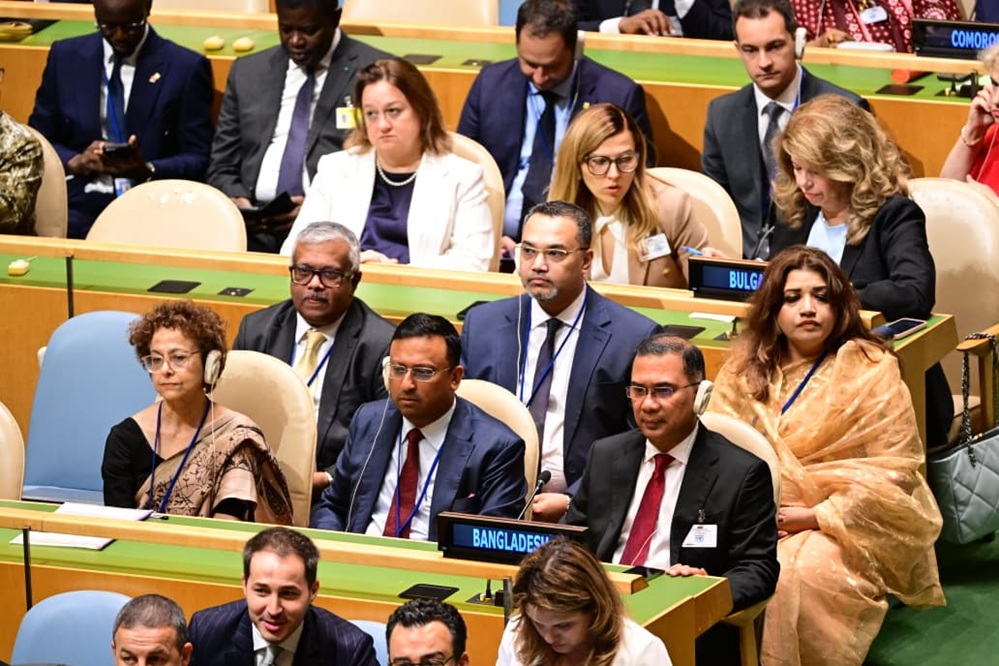
Prime Minister Tarique Rahman attended a high-level general debate of the 81st session of the UN General Assembly (UNGA) at the UN Headquarters. Photo: KHABOR

He will also deliver Bangladesh’s statement at the General Debate of the General Assembly, where he is expected to highlight global peacekeeping, climate justice and Bangladesh’s recent socio-economic development.

Foreign Affairs State Minister Humaiun Kobir, Shama Obaed Islam, Prime Minister’s Office spokesperson Mahdi Amin, senior government officials and Bangladesh’s Permanent Representative to the United Nations were also present during the session. The 81st session of the UN General Assembly formally commenced on September 8, while its General Debate began today.


Bachelet Withdraws From Race for UN Secretary-General

Shibbir Ahmed, New York — Former Chilean President Michelle Bachelet has withdrawn her candidacy to become the next Secretary-General of the United Nations, narrowing the field to seven candidates in the race to succeed António Guterres. Bachelet, 74, announced her decision in a video posted on Instagram. She said she would continue her international work after ending her campaign for the top UN post.

The two-time president of Chile and former UN High Commissioner for Human Rights had campaigned on issues including multilateralism and international law. Her withdrawal came after a third informal Security Council straw poll in which her support declined significantly.

Bachelet’s decision leaves seven candidates in contention to succeed Guterres, whose second five-year term is scheduled to end on December 31, 2026. The UN Security Council will eventually recommend one candidate to the 193-member General Assembly, which will formally appoint the next Secretary-General. The UN Secretary-General selection process is taking place as world leaders gather in New York for the opening of the high-level phase of the 81st General Assembly session.

Bachelet’s candidacy had initially been jointly nominated by Chile, Brazil and Mexico. Chile later withdrew its nomination in March 2026, while the United Nations subsequently recorded Bachelet as a candidate nominated by Brazil and Mexico. The selection process will continue as the Security Council considers the remaining candidates before sending a recommendation to the General Assembly.


Security Council Meets on United Nations Peacekeeping Operations

Shibbir Ahmed, New York — The United Nations Security Council met on September 18 to discuss the future of United Nations peacekeeping operations amid increasingly complex conflicts and growing challenges facing peace missions around the world. The meeting, the Council’s 10,226th, focused on the changing nature of UN peace operations and the need to ensure that missions remain effective, adaptable and capable of responding to evolving security threats. The meeting was formally listed as “United Nations peacekeeping operations.”

UN Secretary-General António Guterres told the Council that many UN peacekeeping missions are now operating in environments where peace remains elusive. He called for greater emphasis on peacemaking and for peace operations to adapt to the realities of modern conflicts.

The discussion comes as the United Nations undertakes a broader review of the future of all forms of peace operations. The review, led jointly by the Department of Peace Operations and the Department of Political and Peacebuilding Affairs, was submitted to the General Assembly and Security Council in August 2026.

According to the UN, today’s conflicts are increasingly protracted and internationalized, while peace agreements are becoming harder to achieve. Peace missions also face emerging challenges including the increased use of drones, advanced weapons technologies, threats to civilians and civilian infrastructure, and the involvement of a wider range of state and non-state actors.

The United Kingdom said peace operations must remain adaptable, effective and suited to the challenges they face. In a statement to the Council, UK Deputy Permanent Representative Kate Foster said Britain was prepared to work with the United Nations to strengthen the effectiveness of peace operations.

Pakistan’s Permanent Representative to the United Nations, Asim Iftikhar Ahmad, also addressed the Council, highlighting Pakistan’s longstanding contribution to UN peacekeeping. Pakistan has been among the major contributors of troops and personnel to UN peacekeeping missions for decades.

The Council’s discussion comes at a critical time for several UN missions. In Lebanon, for example, the UN Interim Force in Lebanon (UNIFIL) is preparing for a scheduled withdrawal by the end of 2026, with UN officials stressing the importance of a smooth transition and continued coordination with Lebanese authorities and other UN agencies.

The Security Council’s September 18 meeting formed part of its September programme of work, during which members also addressed issues including Sudan, Afghanistan, the Middle East, terrorism and non-proliferation.

The broader debate is expected to continue as UN member states consider how peace operations can become more focused, flexible and responsive while maintaining their mandates to support peace and security.