Zohran Mamdani Says November 4 Election Will Make History: Bangladeshi Diaspora Rally in New York

New York — Democratic candidate for New York City Mayor, Zohran Mamdani, has become one of the most talked-about figures in city politics ahead of the upcoming election. Calling for unity among Bangladeshi expatriates, Mamdani urged everyone to stay focused and resist misinformation campaigns.

“The upcoming November 4 election will make history,” said Mamdani. “We must not be distracted by confusion or propaganda. Only through unity can we win this battle at the ballot box.”

The remarks came on Monday evening at a community gathering jointly organized by the Jackson Heights Bangladeshi Business Association (JBBA) and Bangladeshis for Zohran at the Sanai Party Hall in Jackson Heights.

Mamdani reminded attendees of his earlier electoral success, “We defeated former Governor Andrew Cuomo’s son by a 13-point margin. Yet, he remains in the race as an independent. His goal is to block our progress, but together, we will achieve our mission.”

He further said, “Our vision is to make New York City a livable city for everyone. In this world’s most expensive metropolis, we must ensure fair opportunities for all — especially for hardworking immigrants.”

As the first Muslim candidate in New York City’s history, Mamdani emphasized the importance of collective action, “To turn this city into a city of dreams, we must stay united. Muslim and South Asian voters must come out and vote in large numbers.”

The event began with a welcome address from Abdus Sobhan, member-secretary of Bangladeshis for Zohran. JBBA President Giyas Ahmed presided over the meeting, which also featured speeches from Shahnewaz, Chairman of the Board of Trustees of the Bangladesh Society; Imam Shamsi Ali, Director of Jamaica Muslim Center; Fakrul Islam Delwar, founding president of the Jamaica Bangladesh Friends Society; and Tarek Hasan Khan, General Secretary of JBBA.

In the upcoming election, 33-year-old Zohran Mamdani faces his main rival, 67-year-old independent candidate Andrew Cuomo. Political observers suggest that current Democratic Mayor Eric Adams withdrew from the re-election race following a request from former President Donald Trump. Trump has labeled Mamdani a “socialist Democrat,” warning that if he wins, New York City could lose federal benefits.

Meanwhile, reports indicate that Adams stepped aside amid corruption investigations, allegedly hoping for a presidential pardon from Trump. Republican candidate Curtis Sliwa is also being urged to withdraw from the race, as mounting political pressure from Trump’s camp seeks to prevent Mamdani’s victory by any means.

New York City has nearly 200,000 registered Muslim voters and over 300,000 South Asian voters. Mamdani, who was born in Uganda in 1991, is gaining growing support from African-American, Hispanic, and young voters, according to immigrant community leaders.

In contrast, Andrew Cuomo has been accused of attempting to create divisions between Muslim and Hindu communities, campaigning in mosques and temples while emphasizing his experience.

Zohran Mamdani was born on October 18, 1991, in Uganda to a Muslim father, Mahmood Mamdani, originally from Gujarat, India, and a Punjabi Hindu mother, filmmaker Mira Nair. When he was five, the family moved to South Africa, and two years later, they immigrated to the United States.


India wants free, fair and inclusive election in Bangladesh: Misri

Indian Foreign Secretary Vikram Misri on Monday said they want to see a free, fair, inclusive, and participatory election in Bangladesh at the earliest possible time. The Indian Foreign Secretary said they are ready to work with the democratically elected government following the results of an inclusive and participatory election.

He made the remarks while interacting with the visiting delegation of Diplomatic Correspondents Association, Bangladesh (DCAB) at the Ministry of External Affairs (MEA), New Delhi. Senior officials of the MEA, DCAB President AKM Moinuddin, and General Secretary Md Arifuzzaman Mamun were present.

During nearly an hour-long interaction, the Indian Foreign Secretary responded to questions on bilateral issues, border issues, water sharing issues, and issues related to former prime minister Sheikh Hasina, who is staying in India. The foreign secretary acknowledged that some issues are natural in any relationship.


India: Ready to engage with any govt emerging through inclusive polls in Bangladesh

Reiterating that India firmly supports “free, fair, inclusive, and participatory elections” in Bangladesh at the earliest possible time, Indian Foreign Secretary Vikram Misri on Monday said that India will work with any government that emerges through the mandate of the people of Bangladesh. The Indian foreign secretary said they are ready to work with the democratically elected government following the results of an “inclusive and participatory” election.“We remain ready to engage with any government that emerges from these elections with a popular mandate,” he said while responding to a question during an interaction with members of the Diplomatic Correspondents Association, Bangladesh (DCAB) at India’s Ministry of External Affairs (MEA).

MEA Spokesperson Randhir Jaiswal, joint secretary (Bangladesh & Myanmar) B Shyam, DCAB President AKM Moinuddin, and General Secretary Md Arifuzzaman Mamun were also present.

During the nearly hour-long discussion, the Indian foreign secretary responded to questions on bilateral relations, border management, water-sharing issues, and matters concerning former prime minister Sheikh Hasina, who is currently staying in India.

The foreign secretary acknowledged that some issues exist, which is natural in any bilateral relationship. A 23-member DCAB delegation is currently visiting India at the invitation of the government of India. The foreign secretary said one important issue being closely watched not only in the region but also globally is the next steps in Bangladesh’s internal political process.

“We have all seen the announcements and statements regarding the next elections in Bangladesh. I understand that a time frame around February has been indicated in this regard,” he said.

He added that India is encouraged by the fact that Bangladeshi authorities themselves have spoken about a timeline for the elections and that India looks forward to their successful conduct.

“It will be a government elected with a popular mandate, and we will work with whichever government the people of Bangladesh choose to represent them,” Foreign Secretary Misri said.

Referring to India’s role in the region, the foreign secretary said that India has a significant stake in the peace, progress, stability, and development of Bangladesh.

“All of these issues are linked to regional stability, and we attach the highest importance to that — not just for ourselves but also because it serves our mutual interests,” he said.

When asked about the possibility of elections excluding a major political party, Misri said: “I obviously cannot get into the middle of decisions made by authorities in Bangladesh. The authorities, the people, and civil society in Bangladesh will have to make their own assessment of how these elections are viewed both domestically and internationally.”

He added that it is not only a matter of internal legitimacy but also one of external perception.

“These decisions will not just affect the present but will have implications in the medium to long term. Ultimately, it is for the people of Bangladesh to decide,” Misri said.

He noted that the elections will undoubtedly express a certain mandate.

“When it comes to the conditions shaping that mandate, India will not interfere. That is something for the people of Bangladesh to determine,” he said.

He also mentioned that even after the events of July and August last year, India has continued to work with the authorities in Dhaka, despite the unusual nature of the current political arrangement.

“That hasn’t prevented us from working with or engaging the authorities,” he said.

Misri noted that Prime Minister Narendra Modi was among the first leaders to congratulate Professor Muhammad when he assumed charge as the head of the interim government, followed by a series of subsequent engagements. When asked about Pakistan–Bangladesh relations, the foreign secretary said he would not comment on Bangladesh’s relations with a third country.

“I can only say that we value our relationship with Bangladesh. We have a stake in its peace, progress, stability, and development. All of these have a bearing on regional security and stability,” he said.

“We have had close discussions with the authorities in Bangladesh on these matters in the past, and I am sure we will continue to do so,” he added, expressing confidence that Bangladesh recognizes the importance of regional stability and security for all. The foreign secretary said the India–Bangladesh relationship is rooted in strong cultural, linguistic, religious, and historical ties.

“These are factors that continue to underpin our relationship. We have always approached it with a people-first mindset,” he said.

“This is a time-tested relationship — more than five decades old — and I am confident it will continue to flourish,” Misri added. He said India’s approach toward Bangladesh has always been pragmatic.

“We are no strangers to the momentous developments that have taken place in the region, the world, and in Bangladesh. Our pragmatic approach has guided our engagement with the authorities, including the interim government,” he said.

“The only point I would make is that for this engagement to be sustained and to serve as the basis for even stronger ties in the future, both sides need to work toward creating a conducive environment,” he noted. The foreign secretary concluded by emphasizing the importance of avoiding statements or actions that could harm the bilateral atmosphere.


Saudi Arabia allows Umrah for all visa holders

Saudi Arabia has announced that individuals holding any type of visa will now be permitted to perform Umrah. The Saudi Press Agency (SPA) reported the development on Sunday, citing the country’s Ministry of Hajj and Umrah.

According to the ministry, the decision aimed to make performing Umrah more accessible and convenient. The move is part of Saudi Vision 2030, which seeks to expand the kingdom’s religious tourism sector and enhance the overall quality of services for pilgrims.

The ministry stated that eligibility now extends to holders of personal and family visit visas, e-tourist visas, transit visas, work visas, and all other visa categories. The initiative is expected to enable Muslims worldwide to perform their religious rites in a peaceful and seamless manner.

The Ministry of Hajj and Umrah also announced the launch of a new digital platform called Nusuk Umrah, through which users can select Umrah packages, obtain necessary permits, and book related services. Pilgrims will also have the flexibility to choose their preferred schedules.

The ministry stated that these initiatives were undertaken under the directives of the Custodian of the Two Holy Mosques and the Crown Prince, so that Muslims can receive high-quality services in a safe and spiritual environment and enrich their Umrah experience.


Tarique tells BBC Bangla: It is time to return to Bangladesh

BNP Acting Chairman Tarique Rahman has said that although certain reasons have delayed his return to Bangladesh, the time has now come for him to do so. “I will return soon and be among the people during the election,” he said in an interview with BBC Bangla, published on Monday. Tarique Rahman said: “Physically, I may be in Britain, but mentally and emotionally, I have been in Bangladesh for the past 17 years.”

He added: “There will be a much-anticipated national election in the country, and how could I stay away at such a time? During the election, I will be with the people and among them.” The BNP acting chairman further said: “I do not see myself as the mastermind of the July uprising. No individual or party was its mastermind. The democracy-loving people of Bangladesh were, in fact, the true masterminds of the July uprising.”

“BNP has consistently maintained that the sooner the election is held, the sooner stability will return to the country,” he added.

Tarique Rahman also said: “BNP believes that if the national election had been held six months earlier, many crises could have been avoided. The government has, albeit belatedly, come to realize this.”

He further said: “We wanted the election to be held within December, but the interim government aims to hold it by February. We want to have faith that the government will take all necessary steps, step by step, to ensure the election is held.”

When asked whether BNP would contest the election individually or through seat-sharing within an alliance, Tarique Rahman said: “Around 64 political parties tried to resist the former autocratic regime from their respective positions. We have always tried to work collectively. The 31-point state reform agenda we presented was initially proposed by BNP alone in 2016 as part of our Vision 2020 plan. Later, it was developed further into 27 points and, after consultations with allied parties, finalized as 31 points.”

“Our aim has always been to rebuild the state inclusively, incorporating the opinions of all parties that stood with us in the movement,” he added.

Regarding Khaleda Zia’s possible role in the election, he said that if her physical condition allows, she will certainly play some part.

Asked whether Dhaka University Central Students’ Union) politics would influence national politics, he said: “From what we have seen, individuals like Manna Bhai, who was Ducsu VP twice and is far more experienced in politics than I am, have expressed their views clearly. Student politics should remain in its sphere, and national politics in its own.”

On Jamaat-e-Islami, Tarique Rahman said: “As long as any political party operates within the recognized laws and regulations of Bangladesh, it has the right to practice politics. BNP has always believed in multiparty democracy, and we wish to view the matter from that perspective.”

Speaking about the Awami League, he said: “If the party, as an organization, has committed any wrongdoing, it should face justice under the country’s laws. The law will determine the outcome.”


Hasina’s stay in India a legal matter requiring bilateral engagement: Misri

Explaining former prime minister Sheikh Hasina’s presence in India and its impacts on bilateral relations, Indian Foreign Secretary Vikram Misri on Monday said this is a “judicial legal process” and it requires “engagement and consultations” between the two governments.

“We are examining these issues. We look forward to working together with Bangladesh authorities on these issues,” he said while responding to a question during an interaction with the members of Diplomatic Correspondents Association, Bangladesh (DCAB) at the Indian Ministry of External Affairs.

Beyond that, the Indian foreign secretary said, he does not think it would be constructive to say anything further at this point. MEA Spokesperson Randhir Jaiswal, Joint Secretary (Bangladesh & Myanmar) B Shyam, DCAB President AKM Moinuddin and General Secretary Md Arifuzzaman Mamun were present.

Responding to a question, Foreign Secretary Misri said they should set aside the perception that they have a favourite or they are trying to engage with one set of people or ignore another set of people. He said they want the earliest possible expression of the mandate of people through which a democratically elected government will emerge.

Asked whether India is trying to reinstate Sheikh Hasina of Bangladesh Awami League, the Indian foreign secretary said they are only in favour of an early election in Bangladesh for an opportunity for the people of Bangladesh to express their mandate to the popularly elected government.

“We will deal with the government. We are prepared to deal with the government. I don’t think there is anything else to say with regards to that,” said the foreign secretary.

Foreign Affairs Adviser Md Touhid Hossain recently said Bangladesh is yet to receive any positive response from India regarding its request for former prime minister Sheikh Hasina’s extradition to face trial at home.

“There is no new information on this. Bangladesh has asked India to return Sheikh Hasina to face trial. There has been no positive response from India yet,” he told reporters in Dhaka recently. Touhid Hossain said Bangladesh is waiting for a response from New Delhi.

Responding to a question on whether the government will seek international assistance to bring Sheikh Hasina back to the country, the foreign affairs adviser said the government can seek assistance if it deems it necessary, adding: “However, I do not see any need at the moment.”

The foreign adviser said the government would continue to pursue the extradition of former prime minister Hasina, currently reported to be in India since August 5 last year. Bangladesh sent a diplomatic note (note verbale) to India in December last year, along with a set of supporting documents, formally requesting Hasina’s extradition. He said they want to see a free, fair, inclusive and participatory election in Bangladesh at the earliest possible time.

The Indian foreign secretary said they are ready to work with the democratically elected government following the results of an inclusive and participatory election. During nearly an hour of interaction, the Indian foreign secretary responded to questions on bilateral issues, border issues, water sharing issues and issues related to former prime minister Sheikh Hasina who is staying in India.

The foreign secretary acknowledged that there are some issues which are natural in any relationship. A 23-member delegation of the DCAB is currently visiting India at the invitation of the government of India.


Five British MPs Express ‘Deep Concern’ Over Bangladesh’s Human Rights Situation

London:  Five members of the British Parliament have expressed “deep concern” over what they described as a deteriorating human rights situation in Bangladesh. In an open letter published on Saturday in the Letters to the Editor section of the UK-based newspaper The Times, they urged the UK government, the United Nations, and the international community to take firm action on the issue.

The letter was signed by MPs Bob Blackman, Jas Athwal, Neil Coyle, Gurinder Singh, and Luke Akehurst. It was co-signed by Baroness Smith of Llanfaes, a member of the House of Lords, and Steven Powles, a criminal lawyer specializing in international crime, extradition, and human rights.

Under the headline “Rights of Bangladeshis,” the signatories expressed alarm at Bangladesh’s political and human rights environment more than a year after the formation of an interim government.

“We are deeply concerned by the worsening human rights situation in Bangladesh,” the letter stated.

“There are numerous credible reports of judicial failures, denial of bail, politically motivated arrests, the banning of certain parties from participating in upcoming elections, and growing violence against minority communities.”

The lawmakers called on the British government — particularly the Foreign Office — as well as the UN and international partners to pressure Bangladesh’s interim government to ensure justice, uphold civil liberties, and end impunity in accordance with international law.

They further urged the authorities to hold peaceful elections within a set timeframe and establish a stable civilian government, saying it was essential to restore trust and accountability in the country.


NYC Bangladeshi Leader Drops Support for Zohran Mamdani Over Prostitution Policy

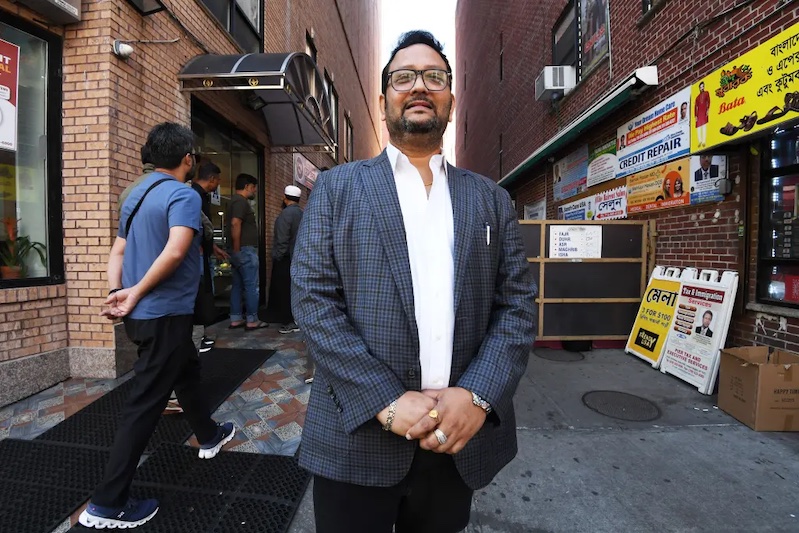
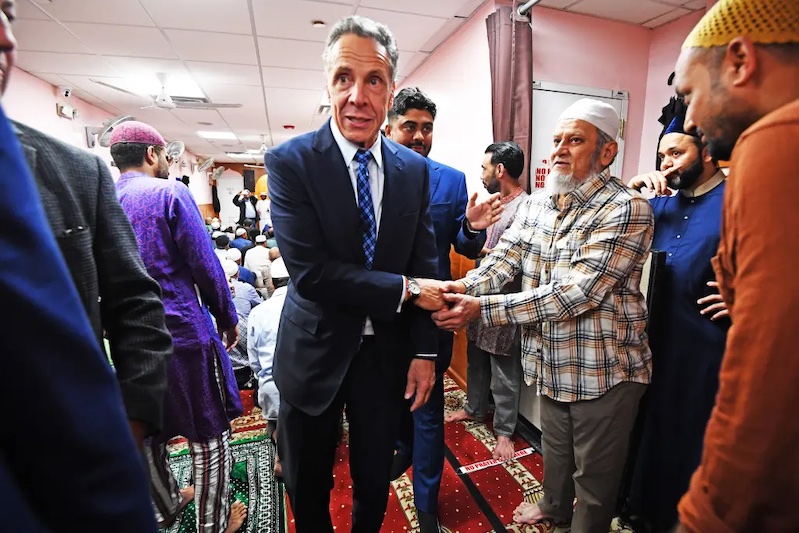
New York: Queens-based Bangladeshi business leader Fahad Solaiman has withdrawn his support for mayoral candidate Zohran Mamdani, citing the lawmaker’s stance on decriminalizing prostitution. Solaiman, a resident near Roosevelt Avenue, told The Post that backing prostitution equates to supporting human trafficking. He urged his mosque community to instead support former Governor Andrew Cuomo, who is running as an independent candidate.

Bangladeshi business leader Fahad Solaiman

“After sunset, you can’t walk down Roosevelt Avenue without seeing prostitutes,” Solaiman said after Friday prayers at Darul Hidaya Mosque.

Once a Mamdani supporter for his views on Palestine, Solaiman said he now sees the assemblyman as “a hypocrite.”

Mamdani, who co-sponsored a state bill to decriminalize sex work among consenting adults, has recently avoided detailed comments on the issue. Local mosque leaders joined Solaiman in endorsing Cuomo, who trails Mamdani by about 20 points in recent polls.

“We’re proud to support Andrew Cuomo to unite our city,” said Imam Qazi Qayyoon.

Mamdani’s campaign did not respond to a request for comment.


Bangladesh win by seven wickets

Opener Rubaiya Haider Jhelik marked her WODI debut with a match-winning half-century as Bangladesh beat Pakistan by seven wickets in their opening ICC Women’s World Cup fixture in Colombo on Thursday. The Tigresses produced a clinical all-round display at the R Premadasa Stadium to begin their World Cup campaign on a high.

Bangladesh’s bowlers set the tone early, with pacer Marufa Akter striking twice in the very first over, removing Omaima Sohail and Sidra Amin. Spinners Shorna Akter (3-5) and Nahida Akter (2-19) then tightened the grip, helping bowl out Pakistan for just 129 runs in 38.3 overs after they had opted to bat first.

In reply, debutant Jhelik stole the spotlight with an unbeaten 54 off 77 balls, laced with eight boundaries. She forged a vital 62-run third-wicket partnership with skipper Nigar Sultana Joty (23 off 44), before Sobhana Mostary’s quickfire 24 off 19 balls, featuring six fours, sealed the chase. Bangladesh reached 131-3 in 31.1 overs to clinch a comprehensive victory.


Trump says not winning Nobel would be insult to US

President Donald Trump said Tuesday it would be an “insult” to the United States if he does not receive the Nobel Peace Prize for his self-proclaimed role in solving multiple wars. Trump, who has long sought the prize which will be unveiled on October 10, made the latest push for his case a day after he announced a peace plan to end the war in Gaza.

“Will you get the Nobel Prize? Absolutely not. They’ll give it to some guy that didn’t do a damn thing,” Trump said during a speech before hundreds of top US military officers. “It’d be a big insult to our country, I will tell you that. I don’t want it, I want the country to get it,” he added.

“It should get it, because there’s never been anything like it.” Republican Trump has long been irked by the fact that Democrat Barack Obama won the prize in 2009. In his Tuesday speech Trump repeated his recent claim that he has solved seven wars since his return to office in January.

Trump said that if the Gaza plan he unveiled alongside Israeli Prime Minister Benjamin Netanyahu at the White House on Monday works out, “we’ll have eight, eight in eight months. That’s pretty good.”

Hamas has yet to respond to the plan. But the chances of Trump winning the Nobel Peace Prize this year are regarded as close to zero in Oslo, where the prize is based.

“It’s completely unthinkable,” Oeivind Stenersen, a historian who has conducted research and cowritten a book on the Nobel Peace Prize. The Norwegian Nobel Committee has also insisted it cannot be swayed by Trump’s campaigning for the prize.

“Of course, we do notice that there is a lot of media attention towards particular candidates,” the secretary of the committee, Kristian Berg Harpviken, told AFP recently. “But that really has no impact on the discussions that are going on in the committee.”

Trump’s administration recently listed the seven wars it said he has ended as being between Cambodia and Thailand; Kosovo and Serbia; the Democratic Republic of Congo and Rwanda; Pakistan and India; Israel and Iran; Egypt and Ethiopia; and Armenia and Azerbaijan.

But while Trump has been quick to claim credit for some, for example announcing a ceasefire between nuclear-armed Delhi and Islamabad in May, many of the claims are partial or inaccurate.