Saudi Arabia Attacks Raise Fears of Regional War

RIYADH, Saudi Arabia — A series of deadly attacks attributed to Yemen’s Iran-aligned Houthi movement has intensified security concerns across the Middle East, prompting Saudi Arabia to reinforce its response, suspend operations at its main airport in Riyadh, and assess the risk of a wider regional conflict.

Saudi Arabia faced renewed missile and drone threats on Monday, October 12, following attacks on King Khalid International Airport that killed civilians and disrupted air travel. The escalation comes amid the broader conflict involving the United States and Iran, raising concerns about the security of Gulf states, international aviation, and critical energy and shipping routes.

Saudi authorities reported that an attack on Riyadh’s King Khalid International Airport on Sunday killed one person and injured 11 others. The victim was identified as a Pakistani national. The incident followed a deadly strike on Saturday that killed 12 people and injured more than 300, according to reporting by international news organizations. An Indian national subsequently died from injuries sustained in Saturday’s attack, bringing the reported death toll from that incident to 13.

The attacks targeted the airport complex serving domestic passengers, raising serious concerns about civilian safety and the vulnerability of critical transportation infrastructure. The Houthis claimed responsibility for the strikes, according to Reuters and other media reports.

Saudi authorities extended the suspension of operations at Riyadh’s international airport as officials assessed damage and reviewed security arrangements. The disruption has affected airlines operating between Saudi Arabia and destinations in Europe and Asia. Aviation analytics firm Cirium estimated that approximately 60% of scheduled flights across Saudi Arabia could be cancelled on Monday, while cancellations at Riyadh airport were particularly severe.

The US Federal Aviation Administration also advised American airlines to exercise caution when flying to or over Saudi Arabia. Several international carriers suspended or adjusted services, reflecting the growing operational risks associated with the attacks.

The repeated attacks have increased pressure on the Saudi government to strengthen its defenses and respond to the Houthi campaign. Saudi-led coalition forces have reported renewed missile and drone activity, while Saudi forces have intensified strikes against Houthi positions in Yemen. However, the effectiveness of further military action remains uncertain, and continued exchanges could increase the danger to civilians on both sides.

The Associated Press reported that Saudi Arabia has opened an investigation into how its air defenses failed to prevent the deadly airport attack. The incident has raised questions about the ability of existing defense systems to protect major civilian facilities against coordinated drone and missile strikes.

Turkey, Pakistan, Egypt and Saudi Arabia condemned the attacks in a joint statement, describing them as a dangerous escalation and calling for an immediate halt to the strikes. The four countries expressed support for Saudi Arabia’s efforts to counter the threats and prevent further attacks. Their response reflects concern that continued violence could threaten regional stability and international peace and security.

The United Arab Emirates has also called for stronger cooperation among Gulf states on security and defense. UAE presidential adviser Anwar Gargash warned that attacks against Saudi Arabia undermine the security of the wider Gulf region.

Despite Iran’s longstanding support for the Houthi movement, Tehran has offered to help facilitate dialogue between the Houthis and Saudi Arabia. Iranian Foreign Ministry spokesperson Esmaeil Baghaei said Monday that Tehran was prepared to assist efforts to bring the parties into talks. Whether this offer can lead to a meaningful reduction in violence remains unclear.

The diplomatic development comes as Saudi Arabia confronts renewed attacks and considers its military options. The situation presents a difficult challenge for regional governments seeking to protect critical infrastructure without triggering a broader confrontation.

The conflict also threatens important international trade routes. The Bab el-Mandeb Strait, near Yemen’s coastline, is a strategic passage linking the Red Sea with the Gulf of Aden and the wider Indian Ocean. Any disruption to shipping through the strait could affect the movement of oil, fuel and other commercial goods. The attacks have also raised concerns about Saudi energy infrastructure, a particularly significant issue for one of the world’s largest oil-producing countries.

A wider conflict involving additional regional or international forces could compound existing pressures on energy markets and maritime commerce. However, the scale of any future disruption will depend on developments on the ground and whether the attacks continue.

US President Donald Trump has said Washington is considering joining Saudi Arabia in strikes against the Houthis. As of Monday’s reporting, there was no confirmed announcement that the United States had begun direct military operations against the group in response to the latest airport attacks. Any American intervention could significantly change the conflict’s trajectory. It could increase military pressure on the Houthis, but it could also prompt further retaliation against Saudi infrastructure or international shipping. The possibility of a wider confrontation involving Saudi Arabia, the Houthis, Iran and the United States remains a major concern for regional security officials.

The attacks on Riyadh’s airport represent a serious escalation because they have caused substantial civilian casualties, disrupted international aviation and increased pressure for a military response. Saudi Arabia now faces the challenge of protecting its population and infrastructure while avoiding a conflict that could spread across the region. Diplomatic efforts, including Iran’s offer to mediate, may provide an avenue for de-escalation, but no agreement to halt the attacks has been confirmed in the reporting cited here. The central question is whether regional governments can contain the confrontation before further strikes or outside military intervention turn it into a broader Middle East war.


UAE airline Etihad cancels flights to Riyadh until next week

DUBAI – The UAE’s national carrier Etihad Airways announced on Monday that it was cancelling all flights to and from Riyadh until next week due to “regional disruption”. “All flights between Abu Dhabi and Riyadh have been cancelled until Monday 19 October,” read a post on the airline’s official website. It added that several upcoming flights to Dammam and Jeddah this week were also cancelled.


PM seeks Canadian cooperation in energy, health, agriculture

Prime Minister Tarique Rahman met a Canadian delegation led by Secretary of State for International Development Randeep Sarai at the Prime Minister’s Office in Dhaka. Photo: PMO
DHAKA – Prime Minister Tarique Rahman today sought Canadian cooperation in education, health, energy and agriculture, alongside food security, technical education and climate financing, to strengthen bilateral ties and expand development cooperation.

He made the call when a delegation led by Canada’s Secretary of State for International Development Randeep Sarai paid a courtesy call on him at the Prime Minister’s Office at the Secretariat here, said PM’s Deputy Press Secretary Shahadat Shadhin. During the meeting, the two sides discussed strengthening bilateral relations, expanding economic cooperation and exploring new avenues for strategic partnership, alongside the Rohingya crisis and other development priorities.

The Prime Minister said Bangladesh looked forward to cooperation from friendly countries like Canada in key sectors, including health and education. On energy, the Canadian side expressed interest in supporting Bangladesh’s energy supply, particularly in oil and liquefied natural gas (LNG).

In health and skills development, Canada expressed interest in expanding cooperation in technical and vocational education and training, including nursing education. The Canadian side also indicated interest in supporting nursing training institutions and developing skilled nurses, building on its existing activities in the sector.

In agriculture, the discussions covered cooperation in pulses and oilseeds, food security and data-driven agricultural planning. The Canadian side also briefed the prime minister on its ongoing activities through the International Maize and Wheat Improvement Center (CIMMYT).

Tarique Rahman outlined the government’s plan to introduce Farmer Cards to provide farmers with fertilisers, seeds and other essential agricultural inputs, saying, “The initiative would also help build a comprehensive database of farmers, enabling better agricultural planning and more effective delivery of government support.”

On the Rohingya crisis, the Prime Minister said Bangladesh was hosting around 1.3 million Rohingyas and that their prolonged presence was putting considerable pressure on the country’s economy and environment.

“While humanitarian assistance to the Rohingyas is important, their safe, voluntary and dignified repatriation is the only sustainable solution to the crisis. The crisis originated in Myanmar, and its solution also lies in Myanmar,” the premier said.

Canada’s Secretary of State for International Development agreed on the importance of peaceful, safe and dignified return of the Rohingyas. The meeting also discussed renewable energy, canal excavation, tree plantation and climate financing. Sarai said Canada was interested in providing C$13 billion in climate financing globally over the next five years, noting that Bangladesh could benefit from the initiative.

Canada also expressed interest in supporting feasibility studies for development projects in Bangladesh. The discussions also covered the government’s Family Card initiative and poverty reduction. Referring to World Bank estimates, the prime minister said better-targeted social assistance, including through the Family Card, could help lift an additional 28.5 Lakhs people out of poverty.

He stressed the importance of promoting economic self-reliance through income generation and employment opportunities alongside social protection programmes. Sarai praised the contributions of Bangladeshis and Canadians of Bangladeshi origin living in Canada, highlighting their initiative, skills and positive outlook, noting that two Canadians of Bangladeshi origin were serving as members of the Canadian Parliament.

At the end of the meeting, Sarai invited the Prime Minister to visit Canada. State Minister for Foreign Affairs Shama Obaed Islam, Prime Minister’s Adviser on Education, Expatriates’ Welfare and Overseas Employment Mahdi Amin, Press Secretary AAM Saleh Shibly and other relevant officials were present. Canadian High Commissioner to Bangladesh Ajit Singh and other senior Canadian officials also attended the meeting.


President calls for ending child marriage, violence against girls

DHAKA- President Mirza Fakhrul Islam Alamgir today called for raising social awareness to prevent child marriage, child abuse and violence against girls and eliminate all forms of discrimination against them. “Today’s girls are the future of the nation and a valuable human resource with immense potential,” he said in a message issued on the eve of National Girl Child Day 2026, to be observed across the country tomorrow.

Expressing satisfaction over the nationwide observance under the theme“No More Child Marriage, Girls Will Conquer the World”, the President extended his sincere love and affection to all girl children in the country. He said ensuring proper education, good health, skills development and security would enable every girl to become an asset to her family, society and the country.

However, discrimination, violence, insecurity and child marriage continue to impede their progress, he added.The President stressed the need to ensure equal opportunities for every girl to grow up in a safe environment, receive quality education, enjoy good health and develop her talents.

He said the incumbent government had undertaken various initiatives to ensure education, healthcare, nutrition, social security and protection for women and girls. Initiatives were also underway to reconstitute child marriage prevention committees and expand the number of adolescent clubs across the country while making their activities more effective, he added.

Emphasising the importance of family and societal support alongside government initiatives, the President called for creating a safe and supportive environment for girls, respecting their opinions and ensuring opportunities for education and skills development.

He said ensuring a supportive and non-discriminatory environment for girls would accelerate Bangladesh’s journey towards becoming a modern, humane and prosperous nation. In his message, the President called for a collective commitment from the state and society to protect every girl’s rights, dignity and safety and ensure the fullest development of her dreams, aspirations and potential.


PM invites Marubeni to invest in IT, fertilizer and energy sectors

DHAKA – Prime Minister Tarique Rahman today invited Japanese business conglomerate Marubeni Corporation to invest in Bangladesh’s information technology (IT), fertiliser and energy sectors, highlighting his government’s moves to harness the country’s economic potential and attract domestic and foreign investment.

The Premier made the invitation when a high-level delegation led by Marubeni Corporation President and CEO Masayuki Omoto paid a courtesy call on him at his office at the Bangladesh Secretariat this morning, said his Deputy Press Secretary Shahadat Shadhin.

During the meeting, the prime minister highlighted the longstanding business ties between Bangladesh and Marubeni in jute products and stressed the need to expand the existing relationship and strengthen cooperation in new sectors, Shadhin said.

The discussions covered investment opportunities in information technology (IT), artificial intelligence (AI), cybersecurity, fertiliser and energy, as well as the possibility of establishing a second Karnaphuli Fertilizer Company Limited (KAFCO) plant in Bangladesh. The two sides also discussed the potential of Bangladesh’s IT sector, the development of skilled human resources and the country’s prospects for becoming an international service hub.

Tarique Rahman highlighted the government’s plan to enhance the skills of Bangladeshi engineering graduates in IT and cybersecurity. Bangladesh could emerge as a major international service hub by leveraging its skilled workforce, technological capabilities and competitive service offerings, the meeting observed. The possibility of launching an AI-powered data centre in Bangladesh within the next 12 months also came up for discussion, along with potential investment and technological cooperation from Marubeni in the project.

The meeting also discussed expanding the use of modern technologies and AI in agriculture to improve agricultural production and management, including through Marubeni’s potential investment and technical assistance. On fertiliser production, the two sides discussed expanding Marubeni’s existing investment in KAFCO and the possibility of setting up a second KAFCO plant in the country. Marubeni expressed interest in the proposal, Shadhin
said.

The meeting also expressed optimism that the Economic Partnership Agreement (EPA) between Bangladesh and Japan, once implemented, would further strengthen trade and investment ties between the two countries. State Minister for Foreign Affairs Shama Obaed Islam, Prime Minister’s Adviser on Information and Technology Rehan Asif Asad and Special Assistant to the Prime Minister Dr. Md Shakirul Islam Khan were present. Marubeni was represented by its Chief Executive Officer for Southwest Asia Susumu Wakamori and the company’s Country Head in Bangladesh Manabu Sugawara.


India Detains Protesters Ahead of Election Chief Demonstration

NEW DELHI — Indian authorities detained protesters, opposition figures and journalists in Delhi ahead of a demonstration demanding the resignation of the country’s election chief, according to a Reuters report. Security restrictions were imposed in parts of the capital ahead of the protest, which centers on allegations concerning revisions to voter lists and the independence of India’s electoral process.

Opposition figures and critics have alleged that changes to voter rolls could unfairly benefit the ruling Bharatiya Janata Party (BJP). The Election Commission has disputed criticism of its electoral procedures. The protest adds to tensions over electoral transparency and the role of India’s election authorities, an issue with implications for public confidence in the country’s democratic institutions.

The allegations remain contested, and claims of political interference should be assessed against documentary evidence and responses from the Election Commission and the government. The developments have drawn attention to the balance between maintaining public order and protecting freedom of expression, peaceful assembly and press freedom in the world’s most populous country.


Trump Says Nobel Prize Is ‘Discredited’

Shibbir Ahmed, Washington DC — U.S. President Donald Trump has claimed he should have received the Nobel Peace Prize, calling the award “forever discredited” after former International Criminal Court judge Navi Pillay was named this year’s laureate. In a Truth Social post Friday following a rally in Syracuse, New York, Trump repeated his claim that he had “settled eight Wars” and said he was close to resolving two more conflicts involving Iran and Russia’s war against Ukraine.

“The United States of America, represented by me, as your President, should have received the Nobel Peace Prize, but didn’t,” Trump wrote. He also criticized Norway over the decision and questioned Pillay’s qualifications, accusing her of being hostile toward Israel.

Pillay, a South African jurist, previously served as a judge at the International Criminal Court and as the United Nations high commissioner for human rights. She also chaired a UN commission that concluded Israel had committed genocide in Gaza, a finding strongly rejected by the Israeli government.

Trump argued that international organizations had played no role in the conflicts he says he helped resolve. Pillay previously joked that she might share the prize with Trump after learning of the award.

Last year, Venezuelan opposition leader María Corina Machado presented Trump with her Nobel Peace Prize medal. However, the Norwegian Nobel Committee clarified that presenting the physical medal does not transfer the award or laureate status to another person. The committee has emphasized that the Nobel Peace Prize remains officially linked to the individual or organization selected by the committee.


PM Backs KUET Waste-to-Fuel Project

DHAKA — Prime Minister Tarique Rahman has assured researchers of government support for a project to produce fuel oil from human waste, sewage, kitchen waste and agricultural residues. The prime minister gave the assurance on Saturday after viewing a demonstration of the technology at his office in Tejgaon, according to his Deputy Press Secretary Md Suzauddhowla (Sujan Mahmud).

Khulna University of Engineering and Technology (KUET) Professor Dr Md Khalekuzzaman briefed the prime minister on the research, its progress and the prospects for commercial production. The researchers have been developing the technology for nearly a decade using Hydrothermal Liquefaction (HTL), a process that converts wet organic waste into biocrude under high temperature and pressure.

Laboratory tests have reportedly achieved biocrude yields of 50 to 55 percent, with further progress in producing diesel-rich biocrude. The next step is to establish a pilot plant capable of processing one to three tonnes of waste daily to evaluate production efficiency, costs and commercial viability. The proposed facility is estimated to cost Tk 100 crore to Tk 120 crore.

According to the researchers, successful commercial-scale implementation could eventually replace 10 to 15 percent of Bangladesh’s imported crude oil and save an estimated Tk 6,500 crore to Tk 13,000 crore in foreign exchange annually.

However, the researchers acknowledged that these projections depend on successful scale-up and assessments of the technology’s economic viability. They said the project could help reduce fuel import dependence, improve waste management, curb environmental pollution and create opportunities for a domestic fuel industry.

Power and Energy Minister Iqbal Hassan Mahmood Tuku, State Minister Aninda Islam Amit, University Grants Commission member Professor Dr Abdullah-Al-Mamun, KUET Vice-Chancellor Professor Muhammad Masud and Bangladesh Petroleum Corporation Chairman Dr Md Rafiqul Islam were also present at the demonstration.


New York Labor League President Khokon Dies at 58; Body Sent to Bangladesh

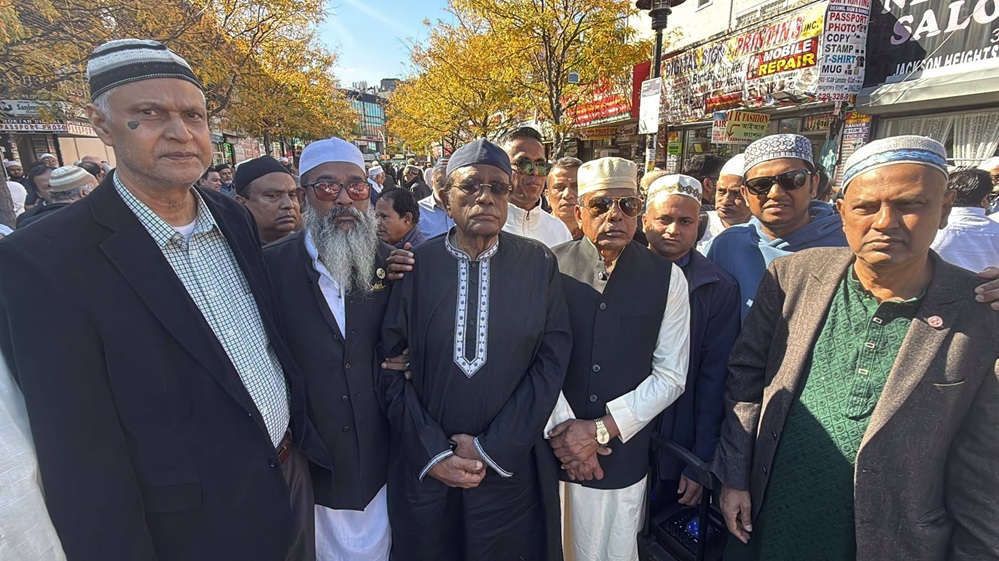
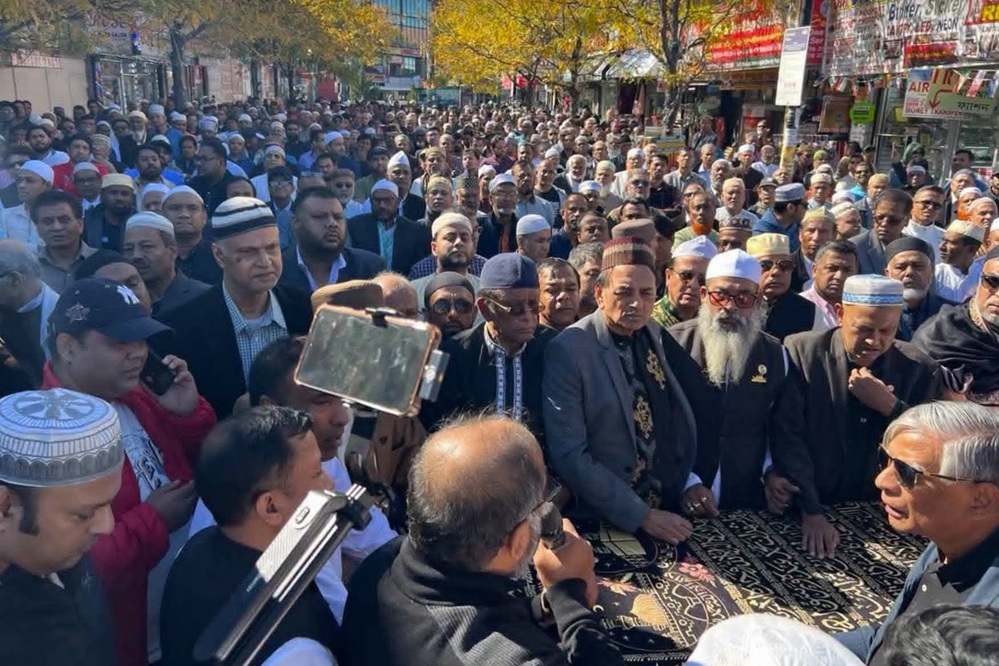
Shibbir Ahmed, New York — Kazi Azizul Haque Khokon, 58, president of the United States Labor League, was remembered with tears, prayers and heartfelt tributes as hundreds of Bangladeshi expatriates from across the political spectrum gathered to pay their final respects to the community leader in New York City.

Thousands of worshippers and mourners attended his funeral prayers after Jumu’ah on October 9 at Diversity Plaza in Jackson Heights, Queens. Community members, political leaders and longtime acquaintances gathered to bid farewell to Khokon, whose death had left many in the Bangladeshi diaspora in mourning.

Khokon reportedly suffered a cardiac emergency while traveling by bus to work on October 3. When he could not be located, a report was filed with police. Friends and political associates searched for him before his body was found at Bellevue’s morgue on the evening of October 7.

Originally from Magura, Bangladesh, Khokon came to the United States in 1992. According to people familiar with his circumstances, he had not obtained permanent immigration status and spent his years in the country living as a bachelor.

Before the funeral prayers, Jewel Ahmed, secretary of the U.S. Labor League, appealed to anyone who had outstanding financial matters with Khokon to contact him. Hossain Rana, an Awami League leader and one of the owners of Obosor Book Corner, where Khokon worked in Jackson Heights, also asked anyone who believed Khokon had wronged them to forgive him.

Ataur Rahman Selim, president of the Bangladesh Society, prayed for the forgiveness of Khokon’s soul and said the organization was taking responsibility for the funeral arrangements and the costs associated with sending his body to Bangladesh.

The funeral drew a broad cross-section of the Bangladeshi-American political and community leadership. Those attending included Moin Chowdhury, a Democratic Party district leader-at-large and attorney; Siddiqur Rahman, president of the U.S. Awami League; General Secretary Abdus Samad Azad; spokesperson Dr. Masudul Hasan; Awami League leader Engineer Mohammad Ali Siddiqui; Haji Enam; Misbah Ahmed; Rafiqul Rahman and Imdad Chowdhury, president and general secretary of the New York City Awami League, respectively.

Also present were Mujibur Rahman Mia, president of the State Awami League and a freedom fighter; General Secretary Shaheen Azmal; Abdur Rahim Badsha, chief adviser to the U.S. Labor League; H.M. Iqbal and Syed Kibria Zaman, president and general secretary of the Swechchhasebak League; former president Nuruzzaman Sardar; Momtaz Shahnaz, president of the Women’s Awami League; Shahahana Rahman, an executive committee member of the U.S. Awami League; former member of parliament Nazrul Islam Babu; Mahmud Hasan and Hridoy Mia, president and general secretary of the U.S. Chhatra League; Harun Bhuiyan and Fahad Solaiman, president and general secretary of the JBBBA; and Mahiyuddin Dewan and Mohammad Ali, senior vice president and general secretary of the Bangladesh Society, among others.

Following the funeral prayers, a vehicle carrying Khokon’s coffin departed for John F. Kennedy International Airport. His body was scheduled to leave for Dhaka on an Emirates flight that night, according to the information provided by community representatives.

Meanwhile, members of the Awami League and affiliated organizations gathered at Nabanna Party Hall on the evening of October 8 in response to a call from the Labor League. They reportedly raised approximately $10,000 to assist with arrangements related to Khokon’s death and support his family.

Jewel Ahmed and Dr. Masudul Hasan said the collected funds, along with cash reportedly found in Khokon’s pocket, would be sent to his brothers and sisters in Magura. Khokon’s funeral brought together political colleagues, community leaders and expatriates from different backgrounds, reflecting the connections he had built during his decades in the United States. As his body was prepared for its final journey to Bangladesh, members of the community offered prayers and expressed condolences to his family.


US Imposes New Sanctions on International Criminal Court, Warns of Further Action

Shibbir Ahmed, Washington DC — The United States has announced new sanctions-related measures against the International Criminal Court (ICC), with President Donald Trump’s administration warning that it will continue efforts to restrict the court’s activities unless its concerns are addressed.

In a statement explaining the decision, the administration said the measures were intended to protect American citizens, military personnel, and political leaders from what it considers the ICC’s unlawful assertion of jurisdiction over US nationals.

The administration emphasized that the United States is not a party to the Rome Statute, the treaty establishing the ICC, and rejects the court’s authority to prosecute Americans. It specifically cited concerns involving US servicemembers, Border Patrol agents, and elected officials responsible for national security.

According to the statement, Washington intends to prohibit certain transactions with the court and restrict its access to resources. The administration also warned that it could expand its efforts to dismantle the institution if the ICC and its member states fail to address American concerns.

The administration said it had given the court and its member states more than a year to respond to its demands. It argued that neither the court nor its member states had taken sufficient steps to resolve the dispute.

The latest action was taken under Section 1(a)(ii)(A) of Executive Order 14203, issued by President Trump on February 6, 2025. The US Treasury Department’s Office of Foreign Assets Control also announced related measures and general licenses permitting certain transactions involving the court. <Cite refs={[“turn378094search0″,”turn378094search1”]}/>

Despite the sanctions, the administration said it remained open to a diplomatic solution. It called on countries that are parties to the ICC to engage in discussions aimed at addressing Washington’s objections, warning that additional measures could follow if negotiations fail.

The ICC, based in The Hague, Netherlands, prosecutes individuals accused of genocide, war crimes, crimes against humanity, and the crime of aggression under the conditions established by its founding treaty.

The United States has long opposed the court’s jurisdiction over American nationals, arguing that the country has not consented to the Rome Statute. The dispute has intensified amid broader disagreements over the court’s investigations and legal actions involving US interests and allies.

The ICC has previously condemned US sanctions targeting its judges and officials, describing such measures as threats to judicial independence and the international rule of law. The court has maintained that it will continue carrying out its mandate to pursue accountability for serious international crimes and provide justice for victims. <Cite refs={[“turn378094search4″,”turn378094news8”]}/>

The latest US measures are expected to further strain relations between Washington and countries supporting the ICC, while raising renewed questions about the court’s financial operations, international cooperation, and the limits of its jurisdiction.