Global Poverty Rises to 1.2 Billion, UN Report Warns
Shibbir Ahmed, New York — The number of people living in acute multidimensional poverty has risen to 1.2 billion for the first time since the global index was launched in 2010, according to a new United Nations report, highlighting the continuing struggle of millions of families to access basic necessities. The findings were published on October 12 in the 2026 Global Multidimensional Poverty Index (MPI), prepared by the United Nations Development Programme (UNDP) and the Oxford Poverty and Human Development Initiative (OPHI) at the University of Oxford.
The report estimates that 1.2 billion people across 108 developing countries are experiencing overlapping deprivations in health, education and living standards. This represents 18.9 percent of the 6.3 billion people covered by the study. The number is 51.5 million higher than in the previous update on a comparable basis, marking the first increase recorded since the index was introduced in 2010.
Children account for more than half of those living in multidimensional poverty. The report estimates that approximately 617 million children are affected, while 83 percent of all people experiencing multidimensional poverty live in rural areas. The findings underscore how poverty extends beyond household income. Families may face several disadvantages simultaneously, including inadequate nutrition, limited access to education, unsafe drinking water, poor sanitation and a lack of electricity.
UNDP Administrator Alexander De Croo described the increase as a wake-up call for the international community, stressing that millions of people continue to endure hardships that reinforce one another. The report also highlights the importance of coordinated policies that address health, education and living conditions together rather than treating poverty as an income problem alone.
Despite the overall increase, the report points to examples of meaningful progress. Among 89 countries with data suitable for measuring trends, 33 reduced their multidimensional poverty index values by at least half in fewer than 15 years. The latest update also found mixed results among the 13 countries with newly updated estimates. Some countries recorded significant improvements, demonstrating that sustained policy efforts can reduce deprivation even in challenging circumstances.
The index uses household survey data to measure disadvantages across health, education and living standards. A person is classified as multidimensionally poor when their household experiences deprivation in at least one-third of the index’s weighted indicators. The findings reinforce the urgency of achieving the United Nations Sustainable Development Goal of substantially reducing poverty in all its forms by 2030. The report calls attention to the need for targeted investment, stronger public services and coordinated action to ensure that vulnerable communities are not left behind.
Bangladesh Mass Arrests Raise Human Rights Concerns, Says Human Rights Watch
Shibbir Ahmed, New York – International human rights organization Human Rights Watch (HRW) has raised concerns over the mass detention of opposition political activists in Bangladesh, warning of growing threats to political freedoms and human rights. In a report published on October 5, HRW said police detained approximately 290 people attending a meeting of the Jatiya Samajtantrik Dal (JSD), a left-wing political party, in Dhaka on September 26.
According to the report written by Elaine Pearson, HRW’s Asia director, members of the ruling Bangladesh Nationalist Party’s (BNP) youth wing, Jubo Dal, alleged that the gathering was a secret meeting of the banned Awami League. The report said a court remanded 27 of those detained to custody over allegations that they had chanted “Joy Bangla,” a slogan associated with the Awami League.
The JSD was part of the 14-party alliance led by the Awami League, which governed Bangladesh from 2009 until 2024. The Sheikh Hasina government fell following student-led protests in 2024, during which hundreds of people were killed by security forces, according to the HRW report.
HRW also reported that police detained 12 Awami League activists in Barisal on September 26 over allegations that they had held a secret meeting to plan sabotage. Two days later, another 15 people were arrested in Dhaka under Bangladesh’s 2009 Anti-Terrorism Act on similar allegations. According to the report, those detained said they had gathered to mark former Prime Minister Sheikh Hasina’s birthday.
The report noted that serious human rights violations occurred during Hasina’s rule, including extrajudicial killings, enforced disappearances, torture and arbitrary detention of political opponents. The BNP also faced severe repression while it was in opposition. However, HRW stressed that past human rights abuses do not justify similar violations by the current government.
The organization expressed concern over the arbitrary detention of perceived Awami League supporters and the rollback of human rights safeguards proposed by the interim government.
International human rights law protects freedom of expression and association. According to HRW, violations committed under a previous government cannot justify restrictions on the same rights under a new administration. The report underscores continuing concerns over the protection of political freedoms, due process and the rule of law in Bangladesh.
JFK Airport Protest Against Dr. Yunus Over Bangladesh Politics
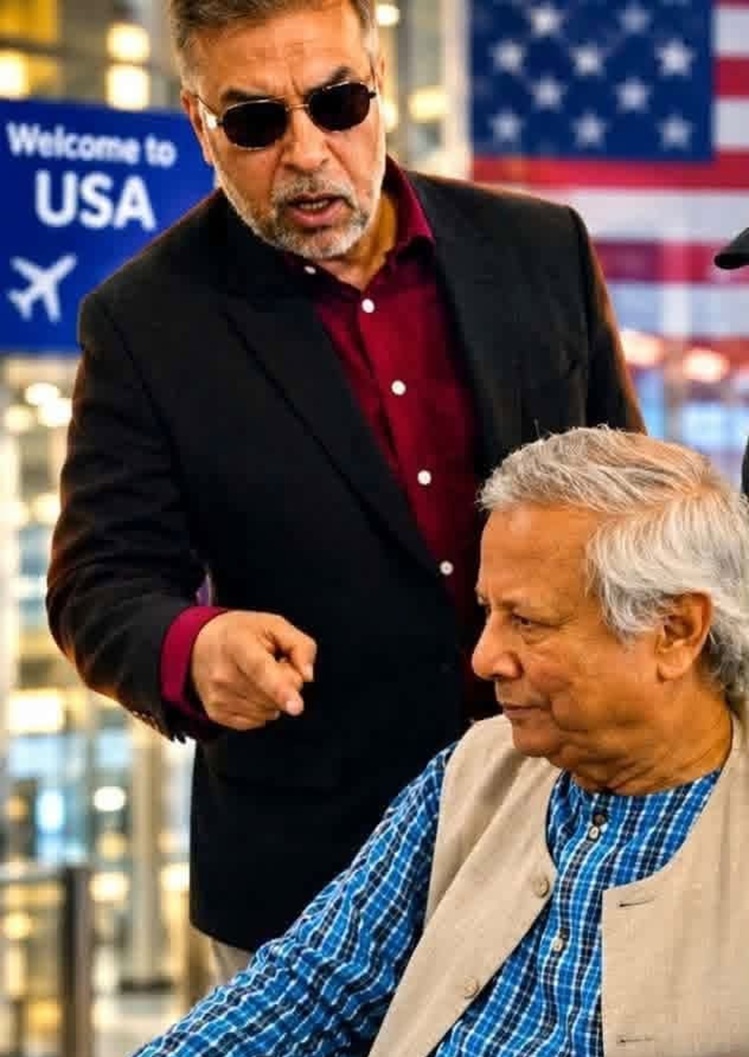
NEW YORK: Activists affiliated with the Awami League have claimed that they staged a protest against Dr. Muhammad Yunus at John F. Kennedy International Airport in New York on October 12, expressing anger over Bangladesh’s political situation and the restrictions imposed on their party’s political activities. In a social media post accompanying a video, the activists claimed that a group led by Imdad Chowdhury, general secretary of the New York Metropolitan Awami League, confronted Yunus at the airport.
According to the post, other participants included Mizan Chowdhury, general secretary of the US Jubo League; Sakhawat Hossain Chanchal, vice president of the New York Metropolitan Awami League; Tanvir Kaisar, general secretary of the Jackson Heights Awami League; and Jubo League leader Sagor.
The post raised several allegations concerning Bangladesh’s political environment, including claims of political repression, mob violence, police killings, attacks on opposition activists, arrests, assaults, killings, torture, and vandalism and looting of homes and businesses. These allegations reflect the protesters’ claims and have not been independently verified in connection with the airport incident.
The activists also expressed anger over the ban on the Awami League’s political activities and questioned the purpose of Yunus’s visit to the United States. According to the social media account, they sought answers from him about Bangladesh’s political situation. The post further claimed that Yunus left the area quickly with his associates without responding to their questions. The circumstances of the encounter could not be independently established from the account provided.
Dr. Muhammad Yunus assumed leadership of Bangladesh’s interim government after Sheikh Hasina’s government fell in August 2024 following a student-led mass uprising. The political transition prompted discussions about democratic reform, accountability, judicial independence, and investigations into alleged human rights violations committed under the previous administration.
At the same time, the interim government faced criticism over political violence, retaliatory attacks, arrests, and law enforcement practices. Following the change of government, cases were filed against numerous Awami League leaders and activists, and several were arrested. Concerns were also raised about alleged politically motivated harassment, arbitrary detention, and the need to uphold due process.
These developments have placed political accountability and human rights protection at the center of Bangladesh’s ongoing political debate. Ensuring justice for past abuses while protecting the legal rights and security of citizens regardless of political affiliation remains a significant challenge.
Imdad Chowdhury confronts Dr. Muhammad Yunus at New York’s JFK International Airport, raising questions about Bangladesh’s political situation and the ban on Awami League activities, according to a social media post accompanying the video.
On May 11, 2025, Yunus’s interim government announced a decision to prohibit all activities of the Awami League under the Anti-Terrorism Act. The government said the measure was taken in the interest of national security while legal proceedings concerning serious allegations against the party were underway. Allegations of involvement in deaths during the 2024 uprising were among the issues cited in the context of the decision.
The Awami League rejected the ban, calling it unacceptable. The decision triggered debate over the party’s ability to conduct public political activities, maintain its organizational structure, and participate in the country’s political process.
The restrictions also raised broader questions about political pluralism, freedom of association, and the distinction between prosecuting individuals accused of crimes and restricting the activities of an entire political organization.
Human Rights Watch’s World Report 2026 raised concerns about arrests under the interim government, including the detention of thousands of people described as political opponents. The report discussed the detention of Awami League leaders, members, and supporters, difficulties in obtaining bail, and the importance of ensuring due process. The broader human rights debate has focused on whether arrests are based on credible evidence and whether detainees receive fair treatment under the law. Human rights advocates have emphasized that allegations of criminal conduct should be investigated individually and adjudicated through independent legal proceedings.
Concerns have also persisted over mob attacks, harassment of political opponents, and obstruction of political meetings and demonstrations. Public humiliation, physical assaults, and organized pressure intended to silence political activity pose challenges to the rule of law and the protection of civil liberties.
In a July 2025 assessment, Human Rights Watch said retaliatory violence and human rights violations had continued following the fall of Sheikh Hasina’s government. The organization cited attacks on Hindu homes in Rangpur and clashes in Gopalganj in which five people were killed. It also expressed concern over the detention of people considered supporters of the Awami League following the Gopalganj violence.
These incidents underscored the risks of political retaliation during periods of transition. Human rights advocates have stressed that allegations against individuals or groups should be addressed through impartial investigations, credible evidence, and fair judicial proceedings rather than collective punishment.
Bangladesh’s political landscape has continued to evolve following the February 2026 national election. As a result, scrutiny of the interim government’s decisions has increasingly intersected with questions about political rights, arrests, and freedom of expression under the current administration.
In an October 5, 2026, report, Human Rights Watch said police took approximately 290 people into custody from a meeting of a left-wing political party in Dhaka. According to the report, authorities alleged that those detained had attended a clandestine meeting of the banned Awami League. The organization also reported that 27 of the detainees were subsequently sent to court custody.
The reported incident renewed concerns about the use of mass detention in cases involving alleged political affiliation or participation in gatherings associated with a banned party. Human rights advocates argue that accountability for abuses committed under previous administrations must go hand in hand with protections against arbitrary detention and politically motivated restrictions under the current government. Political affiliation alone should not determine a person’s right to freedom, a fair hearing, or peaceful political participation.
Bangladesh’s political divisions have also become increasingly visible among expatriate communities in the United States. Political rallies, competing slogans, and allegations of confrontations involving supporters of rival parties have highlighted tensions within the Bangladeshi diaspora, particularly in New York.
The claimed October 12 protest against Yunus at JFK Airport is another example of how developments in Bangladesh continue to shape political activism among expatriate Awami League supporters.
The airport incident also highlights the competing narratives surrounding Bangladesh’s political transition. Supporters of the former ruling party have raised concerns about political exclusion and alleged repression, while the authorities have cited accountability for serious alleged crimes as a justification for restrictions and legal proceedings.
The claims surrounding the airport encounter, however, should be distinguished from independently established facts about the incident and the broader political allegations.
Bangladesh’s political future will depend in part on whether the country can pursue accountability for past human rights violations while safeguarding political freedoms, public safety, and the rule of law. Allegations of crimes should be investigated impartially, with individuals held accountable on the basis of evidence and through fair legal proceedings. At the same time, political identity should not be grounds for collective punishment, arbitrary detention, or violence.
As Bangladesh continues to navigate the consequences of the 2024 political upheaval and the subsequent transition of power, ensuring equal protection under the law and meaningful political participation remains essential to restoring public confidence in democratic institutions.
Mass arrests in Bangladesh raise concerns over political repression
Elaine Pearson – The mass arrest of attendees at a meeting of a small left-wing political party in Dhaka on September 26 marks the latest reported incident raising concerns about civil and political rights in Bangladesh.
Police took approximately 290 supporters of the Jatiya Samajtantrik Dal (JSD) into custody after members of the ruling Bangladesh Nationalist Party’s (BNP) youth wing, Jubo Dal, alleged that the gathering was a “secret” meeting of the banned Awami League, led by former Prime Minister Sheikh Hasina. A court subsequently remanded 27 of those arrested to custody over allegations that they had chanted “Joy Bangla,” or “Victory to Bengal,” a slogan associated with the Awami League.
The JSD was part of a 14-party alliance led by the Awami League, which governed Bangladesh from 2009 until 2024. That government was toppled following student-led protests in which hundreds of people were killed by security forces.
The BNP, now in power, faced severe repression during the Awami League’s tenure. However, since taking office following the February elections, the BNP government has also targeted people perceived as political opponents. Hundreds of Awami League members are reportedly in jail, many without formal charges.
Police have repeatedly raided gatherings allegedly involving Awami League supporters. On September 26, the same day as the JSD meeting in Dhaka, police in Barisal detained 12 Awami League activists accused of holding a “secret” meeting to “plan sabotage.” Two days later, another 15 people were arrested in Dhaka under the Anti-Terrorism Act of 2009 on similar allegations. Those detained in both cases said they had gathered to commemorate Hasina’s birthday.
During Hasina’s rule, Bangladesh experienced widespread and serious human rights violations, including extrajudicial killings, enforced disappearances, torture, and the arbitrary detention of political opponents.
The BNP came to power promising to restore human rights and uphold the rule of law. Yet its reported use of arbitrary detention against perceived opponents, alongside the rollback of human rights safeguards proposed by the interim government, raises questions about its commitment to those promises.
International human rights law protects freedom of expression and freedom of association. These rights apply to everyone, regardless of political affiliation. Past abuses committed under the Awami League government cannot justify similar violations by the BNP government today.
Bangladesh’s political history offers repeated warnings about the consequences of suppressing dissent. Protecting civil liberties, ensuring due process, and allowing peaceful political participation are essential to preventing another cycle of repression. Political accountability must apply to every government, regardless of which party holds power.
———————
Elaine Pearson, HRW, London
Smit Machchhar Represents India, Not the Cockroaches!
Sitangshu Guha – The so-called “cockroaches” first took to the streets demanding education reform. Their demand had some merit, and the government eventually conceded. The education minister resigned, but that concession only emboldened the protesters.
This time, however, they have joined a movement demanding the resignation of the Chief Election Commissioner. That is a misguided step. Meanwhile, the movement’s leading figure has reportedly faced public humiliation at the hands of a crowd in Bombay. If the movement continues along this path, other leaders could soon find themselves facing similar public hostility, including the possibility of being pelted with rotten eggs.
The public, the argument goes, is beginning to recognize that the movement’s ultimate objective is not education reform but the destabilization of the government. Had its leaders instead congratulated Smit Machchhar and called for a nationwide day of celebration, they might have earned the goodwill and support of millions across India.
The movement appears to seek a political upheaval similar to what occurred in Bangladesh. Yet, in my assessment, Bangladesh’s recent political upheaval was not a genuine revolution but a seizure of power by Islamist forces, followed by national decline and widespread hardship over the subsequent two years.
India’s younger generation, however, is sufficiently educated and politically discerning to reject such an outcome. India has weathered comparable movements before, and its federal structure remains a significant safeguard against the concentration of power.
Power in India is distributed among multiple institutions and levels of government. Its political system does not lend itself easily to unchecked autocracy. Elections remain the principal constitutional mechanism for transferring power. India’s electoral system enjoys international recognition, while its judiciary and media serve as important pillars of democratic accountability.
Although these institutions are not beyond criticism, they provide essential checks and balances. No government should be able to exercise unrestrained power by circumventing them.
The protesters, in my view, have failed to maintain the transparency and impartiality they claim to represent. Their movement raises questions about whether they are being used by other political forces to advance a broader agenda. Those forces, according to this argument, include the Left, Islamist groups, anti-Hindu political elements, and sidelined leaders who have lost power and are eager to regain it.
Anti-Hindu politics, I contend, has lost much of its former appeal in India, and political forces associated with it may face further setbacks in future elections. The Left and Islamist groups may appear ideologically opposed, but they can sometimes find common ground in their opposition to the ruling establishment.
India’s enemies, the argument goes, are not necessarily all outside its borders. Some domestic political actors may also undermine national interests while taking advantage of the freedoms afforded by democracy.
One contradiction is particularly striking: while many around the world are celebrating Smit Machchhar, some participants in the movement appear reluctant to congratulate him. The reason, I suspect, is political calculation. They may fear that praising the pilot would also require them to acknowledge the role of his Muslim co-pilot, potentially complicating their efforts to retain the support of particular voting constituencies.
The Government of India, or the ruling party, could organize a nationwide, two-day celebration in honor of Smit Machchhar. Such an event would recognize his achievement and provide an opportunity for citizens across the country to express their pride. Smit Machchhar represents India—not the so-called cockroaches or the political forces that support them.
Let me make one point clear: I am not an Indian citizen; I live in the United States. Readers are free to agree or disagree with my views. Nevertheless, I believe that those who opposed Operation Sindoor, raised slogans such as “Kashmir Mange Azadi,” or used the derogatory expression “Hinduism is Gandha Dharma” should face serious scrutiny when their political positions are assessed. In my view, such rhetoric raises legitimate questions about their commitment to India’s national interests.
India is the world’s largest democracy, and I sincerely hope it continues to prosper. But defending democracy also requires safeguarding the integrity of the electoral process.
Illegal immigrants and infiltrators should not be permitted to vote simply by virtue of being present in the country. In this context, the Special Intensive Revision (SIR) of electoral rolls and the National Register of Citizens (NRC) are, in my view, important instruments for addressing concerns about voter eligibility and national security. Their implementation, however, must be consistent with the law and the rights of eligible citizens.
India’s democratic strength lies in its institutions, its constitutional framework, and the participation of its people. Political movements should contribute to strengthening those foundations—not weakening them. Smit Machchhar represents India. India deserves a democracy that is strong, secure, and free.
———————————————- Sitangshu Guha, New York E. guhasb@gmail.com
30 Nations Condemn Iran Over RAF Fairford Incident
Shibbir Ahmed, Washington DC — The United States, the United Kingdom and 28 partner countries have jointly condemned what they describe as Iran-linked hostile activities, while backing Britain’s attribution of Iran’s involvement in an incident at Royal Air Force (RAF) Fairford on September 27. In a joint statement released Monday, the 30 governments said they recognized the United Kingdom’s attribution of Iran’s involvement in the incident. The statement also cited Britain’s assessment that the event demonstrated the Islamic Revolutionary Guard Corps (IRGC)’s continued willingness to project hostile activity beyond Iran’s borders through covert networks and proxy actors.
The statement was issued by the governments of the United States, the United Kingdom, Australia, Austria, Belgium, Bulgaria, Canada, Croatia, the Czech Republic, Denmark, Estonia, Finland, France, Germany, Greece, Hungary, Ireland, Latvia, Lithuania, Luxembourg, the Netherlands, New Zealand, Norway, Portugal, Romania, Slovakia, Slovenia, Spain and Sweden.
The governments condemned what they characterized as Iran’s use of violent attacks and other hostile activities, including lethal plotting, arson, sabotage, cyberattacks and other forms of hybrid operations against their countries and partners.
The joint statement linked the RAF Fairford incident to a broader series of recent attacks across Europe targeting Jewish communities, Iranian journalists and U.S. interests. According to the statement, the attacks were claimed by Harakat Ashab al-Yamin al-Islamiya (HAYI). The governments cited these developments as part of their broader concerns about threats and hostile activities allegedly carried out through proxies or other means.
The statement did not provide further operational details about the September 27 incident at RAF Fairford, identify suspects, or outline the evidence supporting the British attribution. Those details would require confirmation from official investigative sources.
The 30 governments warned that attempts to threaten, silence, intimidate, harass, harm or coerce people within their territories would not be tolerated, regardless of whether the activities were conducted directly or through proxies. They pledged to coordinate efforts to identify, investigate and disrupt hostile activities, prosecute those responsible where appropriate, and strengthen cooperation to protect their communities and national sovereignty.
The statement also emphasized the importance of improving national resilience, strengthening international coordination and ensuring accountability for those responsible for hostile acts. Although the governments issued a strong collective warning, the statement did not announce specific new sanctions, arrests or military measures against Iran.
The joint declaration underscores the signatories’ stated concern about alleged covert operations, threats against journalists and attacks affecting Jewish communities and U.S. interests in Europe. The reference to the IRGC is particularly significant because the statement attributes the alleged broader pattern of hostile activity to Iran’s capacity to operate beyond its borders through covert networks and proxy actors.
The declaration represents a coordinated diplomatic position among the participating governments. However, the specific circumstances of the RAF Fairford incident, the evidence behind the attribution and any potential legal or diplomatic consequences remain matters requiring further official clarification.
Mamdani Skips NYC Columbus Day Parade Amid Backlash
Shibbir Ahmed, New York — New York City Mayor Zohran Mamdani skipped Manhattan’s annual Columbus Day Parade on Monday, drawing criticism from some Italian-American leaders and paradegoers who viewed his absence as a sign of disrespect toward their community and its cultural heritage.
The 82nd annual parade proceeded along Fifth Avenue, celebrating Italian-American history, culture and contributions to the United States. Mamdani was not expected to attend, breaking with a tradition long observed by many previous New York City mayors. The mayor’s absence has reignited debate over the relationship between Christopher Columbus’s historical legacy and the celebration of Italian-American identity in New York City.
Mamdani did not attend Monday’s Manhattan parade, despite releasing a video over the weekend marking Italian-American Heritage Month. In the video, the mayor highlighted the contributions of Italian-American figures, including former New York City Mayor Fiorello La Guardia and Congressman Vito Marcantonio. He described Italian-American history as an important part of New York City’s broader story.
However, the video did not mention Christopher Columbus, whose role as the central historical figure associated with the holiday remains controversial. Mamdani has previously criticized Columbus, arguing that his legacy includes the mistreatment and displacement of Indigenous peoples. During his time as a state assemblyman in 2020, he posted a photograph of himself making an obscene gesture toward a Columbus statue and called for its removal.
Some Italian-American community leaders criticized the mayor’s decision, arguing that the parade represents more than the historical figure of Columbus. They say the annual event is an opportunity to celebrate Italian-American culture, recognize the achievements of generations of immigrants and honor their contributions to the city.
Angelo Vivolo, chairman of the Columbus Heritage Coalition, was among the community figures who objected to Mamdani’s absence, according to reporting by the New York Post. Other critics argued that the mayor, as the city’s chief elected official, should make an effort to participate in major cultural celebrations even when he disagrees with aspects of their historical symbolism.
Former mayoral candidate Curtis Sliwa also criticized the decision, while other political figures and paradegoers expressed disappointment. The criticism reflects a broader debate over whether a mayor’s attendance at a cultural event should be understood as recognition of a community’s heritage, endorsement of the event’s historical namesake, or both.
New York City’s Columbus Day Parade is one of the country’s major celebrations of Italian-American heritage. The annual event brings together cultural organizations, marching bands, community groups and public officials along Fifth Avenue. Organizers said this year’s parade would include more than 100 participating groups and several bands. Investor and philanthropist Ray Dalio was named grand marshal, with his son, Matt Dalio, representing him at the event.
For many Italian-American families, the parade is a longstanding tradition associated with family history, community pride and the experience of earlier generations of immigrants. At the same time, Columbus’s historical treatment of Indigenous peoples has led many Americans to question whether he should remain the central symbol of the holiday. Some communities instead emphasize Indigenous Peoples’ Day, which recognizes Indigenous history, culture and survival. The competing perspectives have made Columbus Day celebrations a recurring source of political and cultural disagreement.
Monday’s absence follows Mamdani’s decision not to participate in New York City’s Israel Day Parade earlier this year. At that time, the mayor said he had made his position clear during his campaign and argued that his personal attendance should not determine whether participants could gather safely. His administration provided security measures for the event, and NYPD Commissioner Jessica Tisch attended.
Mamdani’s approach to public parades has therefore become part of a wider discussion about how mayors balance personal political views, cultural representation and their responsibility to serve residents with different backgrounds and beliefs.
The Columbus Day Parade controversy presents a challenge for an administration that has emphasized inclusion and the contributions of immigrant communities. Supporters of Mamdani’s position may view his absence as consistent with his longstanding criticism of Columbus and his refusal to endorse celebrations centered on a figure associated with colonial violence.
Critics, however, argue that the mayor could have attended to recognize Italian-American residents without endorsing every aspect of Columbus’s historical legacy. His decision has also drawn attention to a broader question facing New York City’s leadership: how to acknowledge the historical concerns of different communities while ensuring that residents feel represented by City Hall.
The dispute does not, by itself, establish how Italian-American voters as a whole view the mayor. The criticism reported so far comes from particular leaders, political figures and paradegoers.
Mamdani’s absence is likely to remain a subject of debate as the city continues to navigate disagreements over historical commemorations, immigration and cultural identity. The mayor has publicly recognized Italian-American Heritage Month and highlighted Italian-American public figures, but critics say those gestures do not replace participation in the community’s longstanding parade. Whether the controversy leads to further dialogue between City Hall and Italian-American organizations remains to be seen.
For now, Mamdani’s decision to skip the Columbus Day Parade has exposed a continuing divide over how New York City should celebrate Italian-American heritage while confronting the contested history of Christopher Columbus.
Mamdani Orders NYPD Use-of-Force Review
Shibbir Ahmed, New York — New York City Mayor Zohran Mamdani on Monday ordered a comprehensive review of the New York Police Department’s (NYPD) use-of-force policies and practices, marking the first such review in a decade as his administration introduces new measures aimed at strengthening police accountability. The announcement follows renewed scrutiny of the NYPD after an officer facing disciplinary charges related to the 2024 fatal shooting of 19-year-old Win Rozario retired before a disciplinary trial could take place.
The administration said the review would take place over the coming months and include public engagement with communities across New York City. The new measures also include additional funding for independent police oversight, changes to disciplinary procedures and greater transparency for families affected by serious police incidents.
“When the government uses force against a New Yorker, the standard for accountability must be at its highest,” Mamdani said in a statement released by City Hall. The mayor said the review would examine whether police policies provide officers with appropriate guidance and training while ensuring that force is used lawfully and only when necessary.
The reforms follow the death of Win Rozario, a 19-year-old Queens resident who was fatally shot by NYPD officers during a mental health crisis in March 2024. According to reporting by CBS New York, Rozario called 911 while experiencing a mental health crisis. Responding officers encountered him inside his family’s home, where body-camera footage showed him approaching officers with a pair of scissors as police deployed Tasers before firing their weapons.
The shooting prompted protests and renewed debate over police responses to people experiencing mental health emergencies. One of the officers involved later faced disciplinary charges brought by the Civilian Complaint Review Board, the city agency responsible for investigating allegations of misconduct by NYPD officers.
However, the officer retired with a disability pension before the disciplinary trial could proceed, preventing the case from reaching a final disciplinary determination. City Hall said the retirement exposed weaknesses in the procedures used to manage disciplinary cases involving officers who leave the department before their cases are resolved. The administration’s new measures are intended to reduce the likelihood of similar cases ending without a completed disciplinary process.
A central component of Mamdani’s announcement is an additional $2.6 million for the Office of the Inspector General for the NYPD. The independent oversight office examines police policies, practices and procedures and makes recommendations intended to improve the department’s performance and accountability. According to the mayor’s office, the additional funding will restore staffing to a historic peak and triple the office’s current headcount.
The administration said the expanded resources would strengthen the office’s ability to investigate policies and practices that could undermine accountability in cases involving police misconduct. The funding increase comes amid broader debate over how New York City should balance police oversight, officer accountability and public safety.
The administration also announced changes intended to help ensure that disciplinary proceedings are completed before officers retire. The NYPD has implemented a new notification system designed to prioritize the resolution of disciplinary cases before an officer leaves the department. The city will also formalize the department’s practice of notifying the New York State Division of Criminal Justice Services when an officer retires with pending disciplinary charges.
The department will submit relevant personnel information for decertification when applicable, a process intended to help prevent officers facing serious unresolved disciplinary matters from avoiding scrutiny by moving to another law enforcement agency in New York State.
The reforms do not mean that every officer facing allegations will automatically be barred from future employment. Their effect will depend on the circumstances of individual cases and the applicable state rules. The administration also said the NYPD would maintain full and timely compliance with the state’s STAT Act, which requires reporting data related to deaths involving police.
Another element of the reforms concerns communication with the public and families following incidents in which people are killed or seriously injured during encounters with police.
The NYPD will standardize and formalize its procedures for sharing information after critical incidents, according to City Hall. The changes include providing final reports from the department’s Force Investigation Division to families or their representatives who request them.
The administration said the measures are intended to make it easier for affected families to understand how the city investigates serious incidents and reaches conclusions about police conduct. Greater access to information could also help address concerns that families have raised about delays or a lack of clarity following police-involved deaths.
The announcement comes as Mamdani faces pressure from some progressive supporters to pursue more substantial changes to the NYPD. During his mayoral campaign, Mamdani advocated shifting some responsibilities away from police officers and toward mental health professionals, particularly in situations involving people experiencing mental health crises.
The implementation of those proposals has drawn scrutiny from supporters who want faster action. Mamdani has also faced criticism over his decision to retain Police Commissioner Jessica Tisch, who served in the previous administration.
Recent criticism intensified after a separate shooting involving federal immigration officers in New York City. Some progressive allies have called for stronger changes to the city’s public safety leadership. The mayor’s latest announcement addresses several accountability concerns, although it does not itself represent a wholesale restructuring of the NYPD.
Police union representatives criticized the announcement, arguing that the city should also address concerns about the fairness and effectiveness of the civilian complaint process. Patrick Hendry, president of the Police Benevolent Association, said the proposed changes would not improve public safety and characterized them as an attempt to satisfy the mayor’s progressive supporters.
Other police union representatives also questioned the administration’s approach, arguing that officers need support and that oversight bodies must be held accountable for their own procedures. The criticism highlights a continuing divide over how the city should address allegations of police misconduct while maintaining effective law enforcement.
The administration, meanwhile, says the reforms are intended to ensure that serious allegations receive appropriate scrutiny and that disciplinary cases are not left unresolved because an officer retires.
The comprehensive review of NYPD use-of-force policies is expected to take place over the coming months, with community engagement forming part of the process. The review will examine existing policies and practices, while the administration’s new oversight measures are intended to improve the handling of disciplinary proceedings and communication following serious incidents.
The announcement does not establish the outcome of the review or specify which use-of-force policies will ultimately change. Its impact will depend on the recommendations that emerge, how the NYPD implements them and whether the changes address concerns raised by families, community organizations, oversight officials and police representatives.
For New Yorkers, the central questions are whether the review leads to clearer rules governing police use of force, more consistent disciplinary procedures and greater transparency when serious incidents occur.
Mamdani’s announcement marks a new phase in the city’s debate over police accountability, with the coming months likely to determine whether the review produces substantive changes to NYPD policies and practices.
Iran Reviews US Hormuz Proposal as Oil Risks Rise
DUBAI — Iran is reviewing Washington’s response to its proposal to reopen the strategically important Strait of Hormuz and says it will communicate its position through intermediaries once the review is complete, as stalled negotiations and escalating Middle East tensions continue to threaten global energy security. Iranian Foreign Ministry spokesperson Esmaeil Baghaei said Monday that Tehran was still examining the US response and remained in contact with Washington through intermediaries. His remarks indicate that diplomatic channels remain open, although major disagreements over the conditions for reopening the waterway and resuming negotiations have yet to be resolved.
The diplomatic impasse comes as oil prices remain elevated amid attacks on shipping and Saudi infrastructure. The Strait of Hormuz is one of the world’s most important energy transit routes, connecting the Persian Gulf with international markets through the Gulf of Oman.
Iran submitted its proposal in mid-September as part of efforts to end the conflict and restore maritime traffic through the Strait of Hormuz. Baghaei said Tehran would send its response to Washington through intermediaries after completing its review. He did not provide a specific timeline for the decision.
Iran’s security leadership has argued that Washington’s response does not adequately address seven conditions Tehran has outlined for reopening the waterway and returning to negotiations.
A central disagreement concerns the order in which the two sides should address outstanding issues. Washington wants Iran’s nuclear programme included at the beginning of negotiations, while Tehran argues that reopening the strait and restoring maritime security should take priority. The disagreement has complicated diplomatic efforts despite continued exchanges of messages between the two sides.
The Strait of Hormuz is a narrow maritime passage linking the Persian Gulf to the Gulf of Oman and the Arabian Sea. Before the current conflict, approximately one-fifth of global oil and liquefied natural gas trade passed through the waterway.
Its importance extends well beyond the Middle East. Major energy-importing economies in Asia, as well as markets in Europe, depend on uninterrupted shipments of oil and natural gas from Gulf producers. Disruptions to the route can increase shipping costs, delay deliveries and create uncertainty for refiners, energy companies and governments planning fuel supplies.
The continuing confrontation has already affected maritime traffic and energy exports. Even a partial recovery in shipping would depend on vessels being able to transit the strait safely and consistently.
Energy markets have reacted to the latest developments in the Middle East, including attacks on Saudi Arabia and incidents involving commercial shipping. Brent crude futures rose to $106.76 a barrel on October 11, while US West Texas Intermediate crude reached $93.69, according to Reuters. Prices were supported by concerns about the security of Gulf energy infrastructure and maritime routes.
Higher oil prices can increase transportation and manufacturing costs, place pressure on household fuel bills and complicate efforts by central banks to control inflation. However, prices also depend on factors beyond the Strait of Hormuz, including global demand, available inventories, production decisions and developments in other oil-producing regions. The longer maritime uncertainty persists, the more difficult it becomes for energy markets to assess the reliability of supplies from the Gulf.
Qatar and Pakistan are among the countries involved in efforts to facilitate communication between Washington and Tehran. Their diplomatic role reflects wider regional concerns about the economic and security consequences of a prolonged confrontation. A negotiated arrangement could potentially restore maritime traffic while creating a framework for addressing other outstanding disputes.
The negotiations nevertheless face substantial obstacles. The United States and Iran disagree on the sequencing of discussions, the conditions for reopening the waterway and the broader issues that should be included in a settlement. Neither side has publicly confirmed a final agreement to resolve the current impasse.
The Hormuz negotiations are unfolding alongside a separate escalation involving Saudi Arabia and Yemen’s Iran-aligned Houthi movement. Recent attacks on Riyadh have disrupted aviation and heightened concerns about the security of civilian infrastructure. Saudi Arabia has been considering its military response, while Washington has weighed whether to become more directly involved in operations against the Houthis.
The overlapping crises are increasing pressure on regional governments to strengthen defenses and prevent further disruption to international trade. Although the Houthi conflict and the US-Iran negotiations are distinct issues, both affect regional stability and the security of important maritime routes. Iran has reiterated that dialogue should be used to resolve the dispute involving Saudi Arabia and the Houthis, while continuing to review Washington’s response to its Hormuz proposal.
The immediate question is whether Iran will formally respond to the US proposal and whether that response can restart substantive negotiations. A breakthrough could help restore confidence in maritime transport and reduce some of the uncertainty affecting oil markets. Failure to reach an understanding could prolong disruptions and increase pressure on governments, shipping companies and energy producers.
Even if an agreement on reopening the strait emerges, a lasting resolution would depend on implementation, reliable maritime security arrangements and progress on the wider issues dividing Washington and Tehran.
For now, Iran says its review is continuing, and no final agreement has been announced. The outcome of the negotiations could have significant consequences for Middle East security, international shipping and the stability of global energy supplies.
Trump Weighs US Action Against Yemen’s Houthis
Shibbir Ahmed, Washington DC — US President Donald Trump is weighing whether the United States should join Saudi Arabia in military strikes against Yemen’s Iran-aligned Houthi movement, as a series of missile and drone attacks on Saudi territory intensifies concerns about a wider Middle East conflict.
Trump said on Saturday, October 10, that Washington was evaluating whether to participate in Saudi strikes against the Houthis following attacks on King Khalid International Airport in Riyadh and other Saudi targets. As of Monday, no US decision to launch direct strikes against the group had been confirmed in the reporting available.
The escalating confrontation presents a growing challenge for Washington and Riyadh, which are seeking to counter Houthi military advances near the strategically important Red Sea shipping corridor while protecting Saudi airports, military facilities and energy infrastructure.
Trump’s comments followed renewed Houthi attacks on Saudi Arabia, including a deadly strike targeting Riyadh’s airport complex. Asked whether the United States might join Saudi military operations, Trump said Washington would consider the possibility and make a decision after reviewing the latest developments. The administration’s next steps could have significant implications for the conflict. Direct American strikes would expand Washington’s military role in Yemen at a time when the United States is already involved in a broader confrontation with Iran.
For now, the distinction between considering military intervention and authorizing an attack remains important. No confirmed announcement of new US strikes against the Houthis had emerged in the reporting reviewed for this article.
Saudi Arabia has faced an intensifying campaign of missile and drone attacks attributed to the Houthis, who have claimed responsibility for strikes against Saudi airports and other infrastructure. The attacks have disrupted aviation operations and heightened concerns about the vulnerability of critical civilian facilities. A deadly strike on Riyadh’s King Khalid International Airport has prompted Saudi authorities to investigate how the country’s air-defense systems failed to prevent the attack.
Saudi Arabia has also conducted airstrikes against Houthi positions in Yemen, including reported operations in al-Jawf province. Despite the Saudi-led campaign, the Houthis have continued to threaten Saudi infrastructure. The repeated attacks have increased pressure on the Saudi government to strengthen its defenses and seek additional military support from its international partners.
The conflict is closely linked to the struggle for control and security along Yemen’s Red Sea coastline, particularly near the Bab el-Mandeb Strait. The narrow waterway connects the Red Sea with the Gulf of Aden and serves as an important passage for international shipping, including commercial goods and energy supplies moving between Europe and Asia.
Saudi Arabia has supported Yemeni government-aligned forces seeking to reverse recent Houthi advances near the shipping corridor. The Saudi-led coalition has provided air support as its partners attempt to regain territory. However, military gains have been uneven, and the Houthis continue to pose a threat to shipping and regional infrastructure. A broader confrontation could increase risks for commercial vessels, raise shipping and insurance costs, and place additional pressure on global energy markets.
Saudi Arabia’s renewed involvement in Yemen’s civil war reflects concerns that Houthi advances could strengthen the group’s ability to threaten the kingdom and important regional trade routes. Riyadh must balance the need to protect its territory against the risks of a prolonged military campaign. Continued airstrikes could weaken Houthi capabilities, but they may also provoke additional retaliation against airports, oil facilities and other strategic targets.
The Associated Press has reported that Saudi authorities are examining the failure of air defenses to stop the deadly attack on Riyadh airport. The incident has intensified questions about the kingdom’s ability to defend its infrastructure against coordinated missile and drone attacks. The possibility of expanded American assistance has therefore become an important issue for Saudi security planners.
Amid the escalation, Iran has offered to facilitate dialogue between Saudi Arabia and the Houthis. Iranian Foreign Ministry spokesperson Esmaeil Baghaei said on Monday that Tehran remained willing to help facilitate discussions between the parties. The offer presents a potential diplomatic avenue even as the conflict intensifies. Iran has longstanding ties with the Houthi movement, while Saudi Arabia views the group’s military activities as a direct security threat. Whether Tehran can help produce a meaningful reduction in violence remains uncertain. No agreement to halt the attacks was confirmed in the reporting available on Monday.
The United Arab Emirates has called for renewed cooperation among Gulf countries on regional security and defense following the attacks on Saudi Arabia. UAE presidential adviser Anwar Gargash warned that attacks against the kingdom threaten the security of the wider Gulf region.
The appeal reflects concerns that individual countries may struggle to counter increasingly sophisticated missile and drone threats without closer regional coordination. Saudi Arabia and the UAE have previously cooperated in Yemen, although they have also supported different factions within the broader anti-Houthi coalition. If Washington authorizes direct strikes against the Houthis, the decision could reshape the military and diplomatic dynamics of the conflict. Potential consequences include
American involvement could increase pressure on Houthi forces but also trigger retaliation against US or allied interests. Further escalation could endanger vessels operating near the Bab el-Mandeb Strait and surrounding waters. Continued attacks on Saudi facilities could affect confidence in regional energy security. Regional governments may face increased pressure to negotiate a halt to attacks before the conflict expands further.
The actual consequences would depend on the scope of any US operation, the response from the Houthis and Iran, and whether diplomatic channels remain open. The immediate focus is on whether Trump authorizes direct US military action, whether Saudi Arabia can improve its defenses against incoming attacks, and whether Iran’s offer to mediate leads to substantive negotiations.
Saudi Arabia faces continued security threats, while the United States must weigh the potential benefits of military intervention against the possibility of a broader and more difficult conflict.
For now, Washington’s position remains under consideration rather than a confirmed decision to launch strikes. The coming days could prove significant for regional security, the future of Yemen’s conflict and the safety of one of the world’s most important maritime trade corridors.