Bangladesh, China Ready to Launch Diplomacy and Defense Dialogue

DHAKA – Bangladesh and China today discussed launching a State Minister-level Diplomacy and Defense Dialogue alongside an early Foreign Minister-level Strategic Dialogue as the two countries seek to further deepen their strategic partnership. The issue was discussed when Chinese Ambassador to Bangladesh Yao Wen paid a courtesy call on State Minister for Foreign Affairs Humaiun Kobir at the foreign ministry here, according to a ministry press release.

During the meeting, Kobir described China as a “trusted friend and valued strategic partner” of Bangladesh and reaffirmed Dhaka’s commitment to the One-China Principle. He expressed satisfaction over the renewed momentum in bilateral relations and the elevation of the ties to a “China-Bangladesh Community with a Shared Future” following Prime Minister Tarique Rahman’s recent visit to China.

The two sides discussed a wide range of issues of mutual interest, including cooperation on the Teesta River Comprehensive Management and Restoration and the early launching of the Foreign Minister-level Strategic Dialogue.

They also discussed beginning the State Minister-level Diplomacy and Defense Dialogue, initiating the process for exporting Bangladeshi jackfruit and guava to China, the China-Bangladesh-Myanmar Economic Corridor and cooperation on the Rohingya issue.

Ambassador Yao congratulated Kobir on assuming office and sought his support to further advance the longstanding and close relationship between the two countries.

He also conveyed felicitations from China’s Executive Deputy Foreign Minister to the state minister. The Chinese envoy briefed Kobir on progress regarding outcomes of the prime minister’s recent China visit, including the groundbreaking of the China Economic and Industrial Zone (CEIZ) and signing of a commercial contract for modernisation of Mongla Port.

Possible cooperation on establishing a Mongla Export Processing Zone (EPZ) also featured in the discussion. Yao said the CEIZ is expected to attract around 30 Chinese companies with approximately US$500 million in investment, potentially creating an estimated 100,000 jobs for Bangladeshis.

The ambassador also briefed the state minister on upcoming high-level exchanges and visits, including planned visits to Bangladesh by the Vice President of the China International Development Cooperation Agency (CIDCA), the Minister of the International Department of the Central Committee of the Communist Party of China (IDCPC), and the Executive Vice Governor of Yunnan Province. Yao also invited Kobir to visit China in October this year.


Criminals involved in enforced disappearances should be brought to justice: President

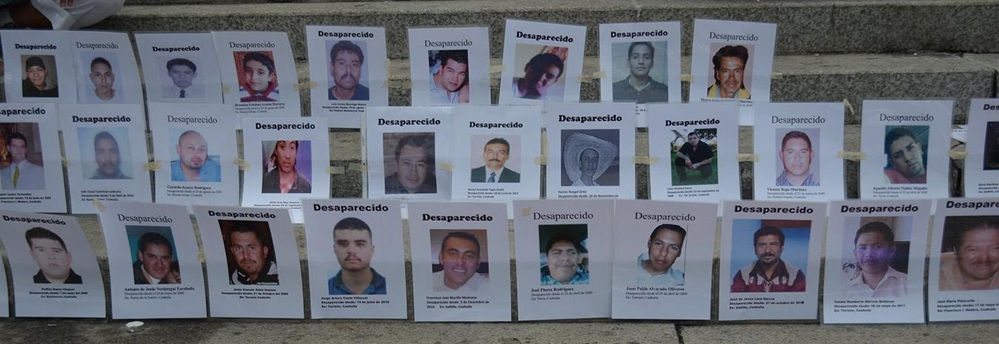
DHAKA – President Mirza Fakhrul Islam Alamgir has said all criminals involved in enforced disappearances should be brought to justice, no matter how powerful they are. “There would be no more ‘Aynaghar’ in independent Bangladesh and every criminal involved in enforced disappearance must receive the maximum punishment under the law,” he said.

The President said this while addressing an event today marking the International Day of the Victims of Enforced Disappearances-2026 as the chief guest. Organized by the Ministry of Liberation War Affairs, the discussion was held at the Bangladesh-China Friendship Conference Centre here this morning.

The president said during the past one and a half decades under the fascist government, the unbearable grip of enforced disappearance and secret detention centre ‘Aynaghar’ had weighed heavily on Bangladesh.

“Those who protested against injustice, expressed dissent, or remained vocal on the streets to demand democratic rights were picked up to silence them and were subjected to enforced disappearance and killings. Yet, the state institutions subservient to the fascists continued to deny those heinous crimes,” he added.

Mirza Fakhrul said in the backdrop of mass uprising of unarmed students and people the fascist ruler was forced to flee the country. Now, reparation measures must be taken instead of revenge, and the real criminals must be brought under law.

The President noted that all scopes of returning fascism to this country would be permanently closed. He said enforced disappearance is not merely taking away a person. It takes away the smiles, peace, dreams, and economic and social well-being of their beloved ones.

“It is a heinous violation of human rights. The constitution of country has guaranteed rights of every citizen to live, enjoy liberty anf getting protection of law. Through enforced disappearances and killings, all these rights are violated at once,” he noted.

“I believe the state’s responsibility will not end merely by punishing the criminals,” he said, urging the government to stand beside the victims and families of enforced disappearance by ensuring their dignity, social security, healthcare, education, livelihood, and rehabilitation. The President said establishment of culture of enforced disappearance and killing is a deeply painful and humiliating chapter in our national history.

He mentioned the incidents of enforced disappearance during the fascist regime including Ilias Ali, Chowdhury Alam, Sajedul Islam, incumbent home minister Salahuddin Ahmed, Barrister Arman and retired Lieutenant General Azmi saying countless dissents, officials, writers, journalists, social workers, and even housewives and ordinary citizens were subjected to disappearance.

The President said former Prime Minister Begum Khaleda Zia had always been vocal against enforced disappearances and killings by the fascist government. Many leaders of BNP, Jamaat-e-Islami, social entities, media, civil society members, and people from all walks of life fell victim of enforced disappearance and killings during the fascist regime, he said. The president also remembered Sanjida Islam Tulee, convener of Mayer Dak, who had been vocal against enforced disappearances during the fascist era.

“We want a Bangladesh where there will be political differences, but no political vengeance. There will have freedom of expression, but no culture of fear. There will have law and order, but no injustice in the name of law. The state will have power, but that power will remain under the control of the Constitution and the law,” he said.

“Alongside economic growth, the true picture of a state’s development and success is reflected on how it practices democratic, how much it’s based on justice and humanity and how much safe its citizens lives,” he said.

Liberation War Affairs Minister Ahmed Aazam Khan presided over the event while Home Minister Salahuddin Ahmed, Law Minister Md. Asaduzzaman and State Minister for the Ministry of Liberation War Affairs Ishraque Hossain were present as special guests. Victims of enforced disappearances also lawmakers Humam Quader Chowdhury, Anisur Rahaman, Tahsina Rushdir, Sanjida Islam, Mir Ahmad Binquasem spoke on the occasion and demanded a fair trial of the incidents of enforced disappearances.


Meta Reaches $1 Billion Texas Settlement Over Child Safety

AUSTIN, Texas — Meta Platforms, the parent company of Facebook and Instagram, has agreed to pay more than $1 billion to the state of Texas and implement new protections for children and teenagers on its platforms as part of a major settlement over online child safety.

The settlement was announced by Texas Attorney General Ken Paxton on Aug. 26. Under the agreement, Meta will provide more than $1 billion to Texas, with the funds directed toward youth mental-health services, crisis resources, digital-literacy programs, after-school initiatives and grants for Texas schools.

The agreement also requires Meta to introduce a range of new safeguards for younger users on Facebook and Instagram.

Among the measures outlined by the Texas Attorney General’s Office are stricter age-assurance requirements, a default two-hour daily usage limit for teenagers, and notifications that will be disabled by default during school hours unless a parent changes the setting. Likes and reactions will also be hidden by default for younger users to reduce social comparison.

Meta will additionally introduce a nighttime access mode designed to restrict notifications and certain other features for children during specified nighttime hours. The company will continue measures aimed at limiting age-inappropriate content and supporting parental supervision.

Texas Calls Settlement a Major Win

Paxton described the agreement as a major step toward strengthening online protections for children. “This is a historic settlement and a major win for the safety of Texas children,” Paxton said in announcing the deal.

The Texas settlement follows allegations that Meta’s platforms failed to adequately protect children and teenagers online. The agreement resolves the state’s case against the company without requiring Meta to admit wrongdoing.

Separate From Multistate Meta Settlement

The Texas agreement should not be confused with a separate, much larger settlement Meta reached with dozens of other states over allegations involving Facebook and Instagram’s impact on young users.

That multistate agreement is worth up to roughly $17 billion and involves 29 states, according to Reuters. It includes measures such as limits on children’s daily usage, restrictions on nighttime access and additional safety protections. Meta has denied wrongdoing.

Texas was not part of that multistate case and negotiated its own agreement with Meta. The two settlements nevertheless represent a major escalation in efforts by U.S. states to hold social-media companies accountable for the safety and well-being of young users.

More Changes Ahead for Teen Social Media

The Texas agreement comes as lawmakers, state attorneys general and families across the United States continue to scrutinize the effects of social-media platforms on children. Meta’s new requirements in Texas are expected to affect how teenagers use Facebook and Instagram, including how much time they spend on the platforms and when they receive notifications.

Paxton’s office said the settlement is part of its broader effort to strengthen protections for children online. The Texas Attorney General is also scheduled to take TikTok to trial in the fall of 2026 in a separate case involving allegations related to child safety.

The agreements involving Meta could ultimately become an important test of how far state governments can go in requiring technology companies to change the design and operation of social-media platforms to protect minors.


UN Urges Action to End Enforced Disappearances on International Day

Shibbir Ahmed, UNITED NATIONS, NY — The United Nations is marking the International Day of the Victims of Enforced Disappearances on Sunday with renewed calls for governments to address the fate of missing people, protect victims and their families, and ensure truth and justice for those affected by enforced disappearance.

The annual observance, held on August 30, highlights the continuing suffering of people whose relatives have disappeared after being arrested, detained or otherwise taken into state custody while authorities deny or conceal their whereabouts.

UN human rights experts said the impact of enforced disappearance extends far beyond the individual victim. Families can be left for years without information about what happened to their loved ones, while communities can suffer social and economic consequences. The UN has described enforced disappearance as a serious human-rights violation that can also be used to spread fear throughout society.

The 2026 observance is particularly significant because it marks 20 years since the adoption of the International Convention for the Protection of All Persons from Enforced Disappearance. The convention was adopted by the UN General Assembly in 2006 and established an international legal framework aimed at preventing enforced disappearances and protecting people from the practice.

The UN Committee on Enforced Disappearances and the Working Group on Enforced or Involuntary Disappearances have used this year’s observance to renew attention to victims and their families and to the need for effective measures to prevent disappearances and clarify the fate of those who remain missing.

A Continuing Global Human Rights Challenge

Enforced disappearance occurs when people are arrested, detained or abducted by, or with the authorization, support or acquiescence of state authorities, followed by a refusal to acknowledge the person’s detention or to provide information about their whereabouts.

The consequences can continue for decades. Families may remain uncertain whether their relatives are alive or dead, while the lack of information can prevent them from obtaining justice, reparations and other forms of support.

The UN has repeatedly stressed that resolving cases of enforced disappearance requires credible investigations, accountability and access to information for families.

The International Day also serves as a reminder of the broader obligations of governments under international human-rights law to prevent enforced disappearance and investigate allegations when they occur.

Twenty Years of the UN Convention

The International Convention for the Protection of All Persons from Enforced Disappearance was adopted on December 20, 2006. It entered into force in 2010 and created the Committee on Enforced Disappearances to monitor implementation by states parties.

The convention recognizes the right of every person not to be subjected to enforced disappearance and calls on states to take measures to prevent the practice and ensure accountability. Two decades after its adoption, the UN continues to call for stronger implementation of the convention and greater protection for victims and their families.

The UN’s message on August 30 remains clear: families searching for missing relatives should not be left without answers, and enforced disappearance must not be allowed to remain a tool of fear, impunity or denial.


Trump Awards Congressional Space Medal of Honor to Artemis II Crew

Shibbir Ahmed, HOUSTON, Texas — President Donald Trump awarded the Congressional Space Medal of Honor to the four astronauts of NASA’s Artemis II mission Friday, honoring their historic journey around the Moon and their contribution to the future of human space exploration.

Trump presented the medals to NASA astronauts Reid Wiseman, Victor Glover and Christina Koch, along with Canadian Space Agency astronaut Jeremy Hansen, during a ceremony at NASA’s Johnson Space Center in Houston. NASA confirmed that the four astronauts received the nation’s highest space honor for their service during the Artemis II mission.

The Artemis II crew made history earlier this year by becoming the first humans in more than five decades to travel around the Moon. During the mission, the astronauts traveled farther from Earth than any humans had previously gone, testing NASA’s Orion spacecraft and the Space Launch System ahead of future crewed lunar missions.

The crew consisted of Mission Commander Reid Wiseman, Pilot Victor Glover, Mission Specialist Christina Koch and Canadian Space Agency Mission Specialist Jeremy Hansen.

During the ceremony, Wiseman emphasized that the achievement belonged not only to the four astronauts but also to their families, NASA teams and the international community that supported the mission.

The Congressional Space Medal of Honor was authorized by Congress in 1969 to recognize astronauts whose exceptional service and achievements have made significant contributions to the welfare of the nation and humanity.

Trump Announces U.S. Space Academy

The medal ceremony was also accompanied by another major announcement about America’s future in space. Trump signed an executive order establishing a commission to develop the nation’s first U.S. Space Academy, according to NASA. The proposed institution is intended to help develop the next generation of space professionals and support the growing needs of NASA, the U.S. Space Force and the civilian space industry.

NASA Administrator Jared Isaacman is set to chair the commission responsible for developing the framework for the new academy. The initiative is part of the administration’s broader effort to strengthen U.S. leadership in space.

The White House described the Artemis II crew as pioneers whose mission demonstrated the United States’ continued commitment to human space exploration. The White House also released video of Trump presenting the Congressional Space Medal of Honor to the crew.

The Artemis II mission is expected to serve as a foundation for subsequent Artemis missions aimed at returning astronauts to the lunar surface and establishing a sustained human presence around and on the Moon.


Irene Khan Takes Office as Bangladesh’s UN Representative

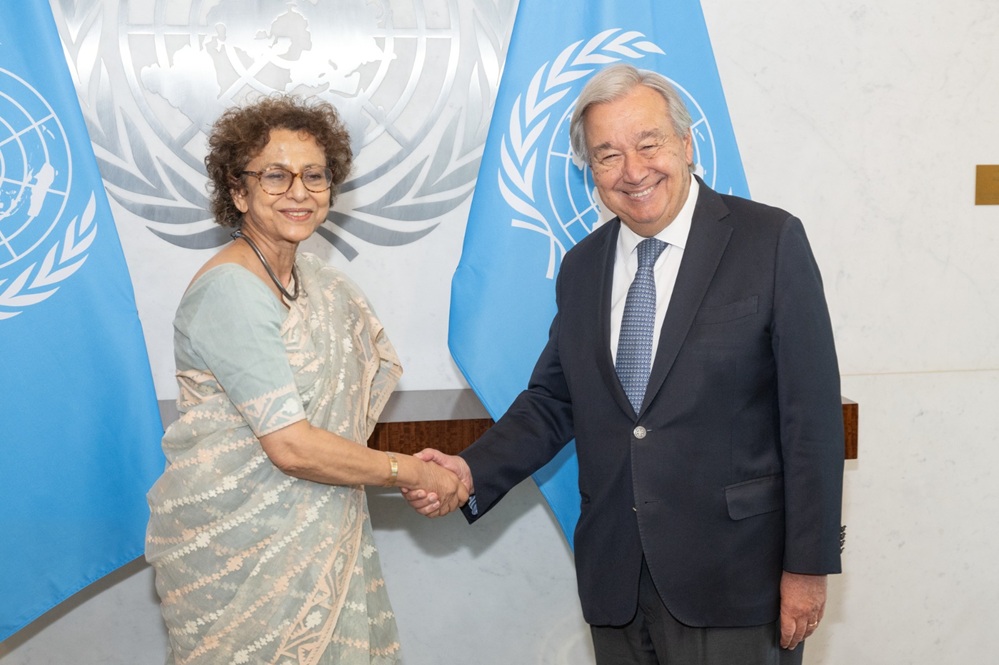
Shibbir Ahmed, UN, New York: Irene Zubaida Khan, a veteran international human rights advocate, has taken office as Bangladesh’s Permanent Representative to the United Nations in New York. Khan presented her credentials to United Nations Secretary-General António Guterres at UN Headquarters in New York on Friday, formally assuming her role as Bangladesh’s envoy to the world body.

She brings decades of experience in human rights, international law, refugee protection, the rule of law and sustainable development, including senior roles at the United Nations and other international organizations.

Before taking up her new role, Khan had served since 2020 as the UN Special Rapporteur on the promotion and protection of the right to freedom of opinion and expression. From 2001 to 2009, she served as Secretary-General of Amnesty International, becoming the first woman to lead the organization.

From 2012 to 2019, Khan served as Director-General of the International Development Law Organization (IDLO). Earlier in her career, she spent 21 years with the Office of the United Nations High Commissioner for Refugees (UNHCR), holding a number of senior positions including Chief of Mission in India and Deputy Director of the Division of International Protection.

Khan received the Sydney Peace Prize in 2006 and is the author of The Unheard Truth: Poverty and Human Rights. She studied law at the University of Manchester and Harvard Law School.


Trump Signs Executive Order to Develop United States Space Academy

Shibbir Ahmed, WASHINGTON, D.C. — President Donald J. Trump has signed an executive order establishing a Presidential Commission to develop plans for a proposed United States Space Academy, a NASA-led federal academy designed to train future leaders in space exploration, national security, science and technology. The order describes space as a critical domain for U.S. national security, economic growth, scientific discovery and technological innovation. It calls for greater opportunities to educate and develop the next generation of astronauts, scientists, engineers, operators, entrepreneurs, civil servants and military personnel.

The executive order does not immediately establish the academy as a fully operational federal institution. Instead, it creates a commission that will develop recommendations for its structure, curriculum, admissions, location and implementation.

NASA Administrator to Chair Commission

Under the order, the NASA Administrator will serve as chair of the Presidential Commission on the United States Space Academy. The Assistant to the President for Science and Technology and the Assistant to the President for Economic Policy will serve as vice chairs, while the NASA Deputy Administrator will serve as executive director.

The commission will also include senior officials or their designees from the Department of War, the White House, the Office of Management and Budget, the National Security Council and the Department of the Air Force. The chair may invite additional federal employees to participate in the commission.

Commission Given 120 Days

The commission has been directed to submit a report to the President within 120 days of the executive order. The report will recommend how the proposed academy should be organized and governed, including its legal authority, accreditation and relationship with federal agencies. The commission must specifically evaluate the possibility of establishing the Space Academy within NASA.

Curriculum and Leadership Training

The proposed academy is envisioned as an institution combining rigorous technical education with leadership development, discipline and public service. The commission will recommend potential degree programs, experiential training and leadership-development programs. According to the order, the goal is to develop a professional corps of leaders capable of advancing U.S. interests across the space domain.

Military and Federal Service Could Be Required

The commission will also examine whether graduates should be subject to service obligations. Those recommendations must address potential service in the U.S. Armed Forces as well as civilian federal service. The order does not establish a specific service requirement. Instead, it directs the commission to determine how such obligations could work and under what conditions they would be fulfilled.

Admission Requirements Under Review

The commission will recommend prerequisites for applicants, including possible requirements involving U.S. citizenship, Security clearances, Government employment and Military status. The final admission requirements have not yet been established.

Location Has Not Been Selected

The permanent location of the proposed Space Academy also remains undecided. The commission will develop a process for selecting a physical location appropriate to the academy’s eventual governance structure. The commission is also directed to identify opportunities for pilot programs, partnerships and other initiatives that could advance the academy’s objectives before its permanent establishment.

Congressional Action May Be Needed

The commission must identify any legislation necessary to implement its recommendations. After the President approves the commission’s recommendations, and after any required legislative action, the NASA Administrator will coordinate with other federal agencies to implement the plan, subject to existing law and available funding.

The executive order therefore represents the beginning of a process to establish the United States Space Academy rather than the immediate creation of a fully operational academy. The administration says the initiative is intended to strengthen the U.S. space workforce and ensure that the country continues to lead in space exploration, technology and national security.


FBI Watchlist Entry Leads to Visa Revocation for Iraqi National

WASHINGTON, D.C., August 28, 2026: The U.S. Department of State has revoked the visa of Iraqi national Taif Sami Mohammed Al Shakarchi following her placement on the Federal Bureau of Investigation’s terrorism watchlist, the department said Friday.

Al Shakarchi was previously honored by the Biden administration with the International Women of Courage Award in 2022 for her work against corruption and advocacy for gender equity.

The award was presented by then-Secretary of State Antony Blinken and former First Lady Jill Biden. The State Department said the award recognizes women around the world who demonstrate exceptional courage, strength and leadership in advancing peace, justice, human rights, gender equality and the empowerment of women and girls.

According to the State Department, Al Shakarchi’s U.S. visa was revoked after she was placed on the FBI’s terrorism watchlist. She is no longer in the United States.

Al Shakarchi served as Iraq’s finance minister from 2022 until July 2026, according to recent reports. The circumstances surrounding her placement on the FBI watchlist have not been publicly detailed by U.S. authorities.

The State Department framed the visa revocation as part of the Trump administration’s broader national security and immigration policies.

“Under President Trump and Secretary of State Marco Rubio, suspected terrorists will never be allowed to remain in the United States,” the department said.

The FBI maintains terrorism-related watchlists and publicly identifies certain individuals through its terrorism and most-wanted programs, although placement on a watchlist does not necessarily mean that an individual has been publicly charged with a crime.

The State Department did not provide further details about the information or circumstances that led to Al Shakarchi’s placement on the terrorism watchlist.


U.S. Sanctions Target Iranian Bank Official, Financial Network

Shibbir Ahmed, WASHINGTON, D.C. — August 28, 2026: The United States has imposed new sanctions targeting Iran’s financial network, including a senior official at Iran’s Bank Melli branch in Dubai, as Washington intensifies economic pressure on the Iranian regime. The latest measures were announced Friday under the Trump administration’s continuing “Operation Economic Outcast” campaign.

The U.S. government sanctioned Reza Mohammad Taeedi, manager of Bank Melli’s Dubai branch, accusing the Iranian bank of serving as a key financial hub for Iran’s armed forces. According to the U.S. government, Bank Melli has provided financial support to Iran’s Islamic Revolutionary Guard Corps-Qods Force (IRGC-QF) and the Ministry of Defense and Armed Forces Logistics, both of which are already under U.S. sanctions.

Washington also imposed sanctions on a Hong Kong-based company that it says helped designated Iranian individuals and entities gain access to the international financial system. Separately, the U.S. Department of the Treasury’s Financial Crimes Enforcement Network (FinCEN) proposed a rule that would cut Banque Misr UAE off from correspondent banking access to U.S. financial institutions. Treasury officials said Banque Misr UAE represents a critical channel through which the Iranian regime can access U.S. dollars.

“The latest action intensifies our pressure campaign against Iran,” the U.S. government said in its statement. Washington accused the Iranian regime of prioritizing what it described as malign activities over the needs of the Iranian people and said it would continue targeting individuals and entities involved in illicit financial activities on behalf of Iran.

The sanctions also specifically target individuals working for Iranian banks outside Iran, signaling an effort by Washington to disrupt the regime’s financial operations beyond the country’s borders.

The sanctions were imposed under Executive Order 13224, as amended, a U.S. counterterrorism authority, and Executive Order 13902, which targets individuals and entities operating in Iran’s financial sector.

FinCEN’s proposed action against Banque Misr UAE was taken under Section 311 of the USA PATRIOT Act, which gives the U.S. government authority to take special measures against foreign financial institutions or jurisdictions considered to pose money-laundering or other financial risks. The U.S. Treasury Department said additional details on the sanctions and proposed financial restrictions are available in its related enforcement announcement.


China-Bangladesh sign MoU to strengthen vocational education, training

DHAKA: A Memorandum of Understanding (MoU) has been signed to establish the ‘China-Bangladesh Vocational Education, Training and Research Center’. The MoU was signed today at the ‘China-Bangladesh Education Exchange Conference’ organized by the Jiangxi Provincial Government and Jiangxi Science and Technology Normal University of China.

Secretary of the Technical and Madrasa Education Division Md. Daud Mia signed the MoU on behalf of Bangladesh, while Professor Zheng Pengwu of Jiangxi Science and Technology Normal University signed it on behalf of China.

Education Minister Dr. A N M Ehsanul Hoque Milonand Prime Minister’s Adviser on Education Dr. Mahdi Amin were present at the event. Three major cooperation platforms were formally inaugurated at the conference. Education Minister and Deputy Director of the Jiangxi Provincial Department of Education Fan Honghui jointly inaugurated the ‘China-Bangladesh Vocational Teacher Training Center’.

Prime Minister’s Adviser on Education Mahdi Amin and Professor Pei Hongwei of the university inaugurated the ‘Bangladesh Vocational Education Research Center’, while Secretary Md. Daud Mia and Professor Zheng Pengwu inaugurated the ‘Bangladesh Chinese Language Skill Development’ Center.

Addressing the conference, Education Minister said, “The young population of Bangladesh is the country’s greatest strength. Through quality technical education and modern technological training, they can be transformed into a world-class skilled workforce.”

He added that with China’s modern experience and technical assistance, Bangladesh’s education sector will reach new heights. “Technical and vocational education must remain closely aligned with the real needs of industry and employment,” he said.

He called for stronger Bangladesh-China cooperation in curriculum development, teacher training, institutional partnerships, modern technology, practical education and employment-oriented education.

Mahdi Amin said, “Today’s signing of the MoU marks the beginning of a new chapter in Bangladesh-China cooperation in technical education. Our main objective is to transform education into skills, skills into employment, and employment into economic opportunities.”

Representatives of 19 universities, technical institutions and industries from Jiangxi Province attended the conference, where both sides pledged to build a sustainable partnership through industry-education linkages, teacher training, joint research and student exchanges.