Bangladesh, US discuss boosting trade and investment

DHAKA: Bangladesh and the United States discussed ways to increase US investment, expand bilateral trade and create a more business-friendly environment during a meeting between Commerce Minister Khandker Abdul Muktadir and US Ambassador to Bangladesh Brent T. Christensen. The meeting was held Monday at the Federation of Bangladesh Chambers of Commerce and Industry (FBCCI) office in Dhaka. The two sides discussed expanding bilateral trade, cooperation in the energy sector and recent policy reforms, according to information released following the meeting.

US ambassador stresses transparency in major projects

During the meeting, Ambassador Christensen highlighted the importance of maintaining a transparent and competitive environment for major infrastructure projects. Speaking about a floating liquefied natural gas (LNG) terminal, or FSRU project, the ambassador said greater transparency and open competition would help strengthen the confidence of foreign investors.

He also said US companies are interested in working in Bangladesh and emphasized the importance of ensuring fair opportunities for competition. Commerce Minister Khandker Abdul Muktadir welcomed US investors and said proposals from US companies demonstrating the ability to deliver an FSRU within the shortest possible timeframe would receive priority consideration.

Import policy also discussed

The meeting also covered Bangladesh’s new import policy. The US ambassador welcomed several positive changes in the new policy but said some provisions could be made more business-friendly. The commerce minister said the import policy is an ongoing process and that necessary reforms are being reviewed regularly in line with market conditions and economic realities.

The two sides also discussed the removal of an earlier requirement for foreign companies to appoint local agents when purchasing strategic equipment. The minister said allowing direct engagement with manufacturers has improved transparency in the procurement process and reduced the influence of intermediaries.

Energy cooperation

Energy cooperation was another key issue discussed at the meeting. Ambassador Christensen described Bangladesh’s agreement with international energy supplier Gunvor as a positive development. The commerce minister said the government would continue to give the highest priority to protecting Bangladesh’s national interests in all such arrangements.

Officials from Bangladesh’s Ministry of Industries, Ministry of Commerce and the US Embassy also attended the meeting. Both sides expressed hope that regular discussions would help further strengthen the commercial relationship between Bangladesh and the United States.


Russia Strikes Kyiv After U.S. Envoys Leav

KYIV, Ukraine: Russia launched a major wave of missile and drone strikes against Kyiv early Tuesday, killing three people and injuring 19, shortly after U.S. peace envoys Jared Kushner and Steve Witkoff concluded their visit to Ukraine. The attacks marked a renewed escalation in Russia’s air campaign against the Ukrainian capital following a brief pause during the U.S. envoys’ diplomatic mission.

Multiple areas of Kyiv were hit, damaging residential buildings, a school, a clinic and a television channel, according to Ukrainian officials. Fires broke out across the city as emergency crews responded to the strikes. Ukraine’s air force said it intercepted most of the incoming cruise missiles and also shot down two ballistic missiles, but several weapons still struck targets in the capital.

The renewed attack came shortly after Kushner and Witkoff met Ukrainian President Volodymyr Zelenskyy as part of Washington’s efforts to revive negotiations aimed at ending Russia’s war in Ukraine.

The U.S. envoys had also traveled to Moscow for talks with Russian President Vladimir Putin. Although the diplomatic effort has generated discussion about a possible new round of negotiations, no major breakthrough has been announced.

Peace efforts under pressure

The timing of the latest Russian strikes has raised fresh questions about the prospects for a ceasefire and renewed peace negotiations. Zelenskyy said the U.S. envoys had brought what he described as promising ideas for the next stage of negotiations. Ukraine and its Western partners are considering further discussions on issues including energy infrastructure, grain shipments and prisoner exchanges.

But the renewed attacks underline the continuing gap between diplomatic efforts and the military situation on the ground. Beyond Kyiv, Russian drones also struck areas including Sumy and Zaporizhzhia, while missile attacks were reported in Odesa. Ukrainian officials said civilian and critical infrastructure was damaged.

Russia said its forces were targeting military and logistical facilities, while Ukrainian authorities condemned the strikes and called for greater international support for the country’s air-defense capabilities.

Ukraine seeks more air defenses

The latest barrage has renewed concerns in Kyiv about shortages of advanced missile-interception systems, particularly as Ukraine prepares for another winter under continued Russian attacks. Ukrainian officials have urged the United States and European allies to provide additional air-defense systems and other military support.

The strikes came at a particularly sensitive moment for Washington’s diplomatic initiative. While U.S. officials continue to explore ways to bring Russia and Ukraine back to negotiations, the latest escalation demonstrates how fragile the situation remains. For now, diplomacy and military escalation are unfolding simultaneously, with no clear sign of an immediate ceasefire.


Oil Prices Surge Toward $100 as Middle East Tensions Intensify

Shibbir Ahmed, NEW YORK: Oil prices surged toward $100 a barrel on Tuesday as escalating violence in the Middle East raised fresh concerns about global energy supplies. Brent crude futures climbed as high as $99.46 a barrel, the highest level since July 24, before easing slightly. U.S. West Texas Intermediate crude also rose sharply, reaching $94.73 a barrel, its highest level since June 8.

The latest surge came after Iran-backed Houthi forces launched attacks on several southern Saudi Arabian cities and energy facilities. The attacks injured at least 73 people and sparked fires at Saudi energy sites, adding to concerns about disruptions to oil production and exports. At around 0956 GMT, Brent was trading at about $98.39 a barrel, up 1.43%, while WTI stood at approximately $93.73, up 2.46%, according to Reuters.

Growing supply concerns

Investors are increasingly concerned that continued attacks on energy infrastructure could further tighten global oil supplies. The situation is particularly sensitive because the conflict is unfolding across the Gulf region and around critical shipping routes. Any prolonged disruption to oil production or transportation could have consequences for fuel prices, inflation and economic growth worldwide. Iran has also threatened what it described as “economic warfare” against the United States, adding another layer of uncertainty to already volatile energy markets.

Markets under pressure

The rise in oil prices is also affecting global financial markets. Higher energy costs are raising concerns about inflation and increasing pressure on central banks as they assess interest-rate policy. U.S. stock futures were lower in early trading Tuesday, while Asian markets also faced pressure amid rising geopolitical tensions and higher energy costs.

Analysts are watching closely to see whether Brent can break above the $100-a-barrel threshold. Reuters reported that although supply disruptions are significant, alternative export routes, rising production outside OPEC and weaker demand are helping prevent prices from moving decisively above $100 for now.

For consumers and businesses, a sustained rise in crude prices could translate into higher gasoline, diesel, transportation and production costs in the weeks ahead. With fighting continuing and energy infrastructure increasingly caught in the conflict, global markets remain highly sensitive to developments across the Middle East.


Houthis Attack Four Saudi Cities, 73 Wounded in Major Escalation

CAIRO/DUBAI — Iran-backed Houthi forces attacked four cities in southern Saudi Arabia on Tuesday, wounding 73 people and setting fires at energy facilities in what officials described as a major escalation of the expanding Middle East conflict. The attacks targeted the Saudi cities of Abha, Khamis Mushait, Jazan and Najran, according to Saudi authorities. Women and children were among those injured.

The strikes also affected energy-related infrastructure. Fires were reported at several sites, including facilities linked to Saudi oil giant Aramco, while some energy operations were temporarily disrupted. Saudi authorities said the attacks targeted civilian and economic sites and vowed to take measures to protect the kingdom’s security and sovereignty.

The Houthis, meanwhile, claimed responsibility for the attacks and said they had targeted Saudi energy infrastructure using drones and ballistic missiles. Houthi military spokesman Yahya Saree said the operation was carried out in response to recent Saudi attacks in Yemen. The escalation comes as tensions across the Middle East have intensified, threatening to draw additional regional actors into the conflict.

Oil prices surge

The attacks immediately affected global energy markets. Brent crude rose to around $98 a barrel on Tuesday, while U.S. West Texas Intermediate crude climbed above $93 a barrel. Brent had earlier approached the $100 mark, reaching its highest level since July 24.

Analysts are increasingly concerned that attacks on Gulf energy infrastructure and disruptions to major shipping routes could further tighten global oil supplies. Saudi Arabia is the world’s largest oil exporter, making any sustained disruption to its energy infrastructure a major concern for global markets.

Risk of wider regional escalation

The latest attacks add another dangerous dimension to the conflict. The Houthis control large parts of northern Yemen and have previously targeted shipping and regional infrastructure. The strategic importance of the Red Sea has increased as disruptions elsewhere in the region have affected traditional energy-export routes. Any prolonged attacks on Saudi energy facilities or shipping lanes could have consequences well beyond the Middle East.

Saudi officials have vowed a response, raising fears that the latest attacks could trigger another cycle of retaliation between Riyadh-backed forces and the Houthis.The escalation also comes amid heightened tensions involving Iran and the United States, increasing concerns that the conflict could spread across multiple fronts. For global energy markets, the key question now is whether the attacks remain limited or develop into a sustained campaign against Gulf oil infrastructure.


81st UN General Assembly Opens in New York Amid Global Crises

Shibbir Ahmed, UN, NEW YORK — The 81st session of the United Nations General Assembly officially opens Tuesday in New York, bringing together the world’s nations at a time of intensifying conflicts, humanitarian crises, economic uncertainty and growing pressure on the multilateral system. The ordinary session will run from September 8, 2026, through September 7, 2027, according to the United Nations. Bangladesh’s Khalilur Rahman is serving as president of the 81st General Assembly session.

The theme of this year’s session is “Restoring Trust, Managing Transformation: A United Nations That Delivers for All.” The theme reflects growing international concern over the ability of multilateral institutions to respond effectively to war, humanitarian emergencies, climate change, inequality and rapid technological change.

The opening of the session comes as the international community faces multiple major crises, including ongoing armed conflicts and humanitarian emergencies. The General Assembly is expected to provide a major diplomatic forum for member states to discuss peace and security, sustainable development, human rights and international cooperation.

Khalilur Rahman, who was elected president of the 81st session in June, has outlined six major priorities for his presidency: peace and security, sustainable development, climate resilience, human rights and humanitarian protection, inclusive innovation and renewed multilateralism.

His vision also places emphasis on strengthening the United Nations’ ability to deliver practical results and rebuilding confidence in the multilateral system. The opening session is only the beginning of an intense period of diplomacy at UN Headquarters. The General Assembly’s high-level general debate is scheduled for later in September, when heads of state and government from around the world are expected to gather in New York.

The United Nations says the 81st session will also address major issues including peace and security, sustainable development, climate action, human rights, artificial intelligence and reform of the UN system. With the world facing deep geopolitical divisions, the 81st General Assembly is set to test whether nations can rebuild trust and find common ground through multilateral diplomacy.


President calls for resolving all outstanding issues with India

DHAKA – President Mirza Fakhrul Islam Alamgir today laid emphasis on quick resolving the outstanding issues between Bangladesh and India through discussions to further strengthen and sustain the existing relations between the two countries. “Mutual trust and confidence between the peoples of the two countries would increase further if matters of mutual interest were resolved through fair and mutually acceptable solutions,” he said.

He made the remarks when Indian High Commissioner to Bangladesh Dinesh Trivedi paid a courtesy call on the President at Bangabhaban here this morning. President’s Press Secretary Md Sarwar Alam said during a briefing after the meeting. The President urged India to take effective measures to ensure a fair share of the waters of common rivers, including the Ganges and the Teesta.

Indian High Commissioner to Bangladesh Dinesh Trivedi informed the President that his government was taking positive measures in this regard. The President said Bangladesh attaches special importance to its relations with India as its closest neighbour and an important trade and development partner. President Alamgir said Bangladesh is interested in building a respectful, forward-looking, mutually respectful and mutually beneficial partnership with India while upholding sovereign equality, national interests and dignity, and the welfare of the people.

During the meeting, the Indian High Commissioner congratulated Mirza Fakhrul Islam Alamgir on assuming office as President. Mentioning that India attaches great importance to its relations with Bangladesh, High Commissioner Trivedi reiterated his country’s commitment to further expanding cooperation between the two countries in various fields, including bilateral relations.

He said his country is keen to further consolidate, improve and strengthen relations between the two countries based on mutual respect, trust and cooperation. The President thanked the High Commissioner for his congratulations and requested him to convey his sincere gratitude and greetings to the President of India.

“There is immense scope for further expanding cooperation in various fields, including trade, water resources management, technology, connectivity, culture and people-to-people relations between the two countries,” the president said.

India and Bangladesh can work more closely to achieve common peace, development and prosperity by utilizing the capabilities and potential of the peoples of both countries, he added. The Indian High Commissioner expressed hope that the two countries would continue to work together and sought the President’s cooperation in discharging his responsibilities.

The President wished him a successful tenure and expressed hope that relations between the two countries would become more fruitful, positive and people-oriented in his tenure. Senior officials from the President’s Office, the Ministry of Foreign Affairs and the Indian High Commission were present during the meeting.


Russia Deepens Role in Myanmar’s Dawei Deep-Sea Port Project

Shibbir Ahmed, New York — Russia is deepening its involvement in Myanmar’s long-delayed Dawei deep-sea port and special economic zone project, as the two countries seek to revive the strategic development in the country’s southern Tanintharyi Region.

The Dawei project, which includes a deep-sea port, industrial zone and major energy facilities, has returned to the center of Myanmar-Russia economic cooperation after years of delays over financing and implementation.

During a meeting in Vladivostok on September 1, Myanmar Vice President U Nyo Saw and Russian Deputy Prime Minister Yury Trutnev discussed the Dawei project along with energy, trade and tourism cooperation. No new financing agreement, project value or construction timetable was announced following the meeting.

Russia’s interest in Dawei has become more concrete in recent months. In June, Myanmar’s Launglon Economic Development Company and Russia’s state-controlled Inter RAO signed a memorandum of understanding for a power plant linked to the Dawei deep-sea port project.

At a Russia-Myanmar business forum in Moscow in August, Russian Economic Development Minister Maxim Reshetnikov said Moscow was seeking majority stakes for Russian companies investing in projects within the Dawei special economic zone during the investment payback period. The planned development includes a deep-water port, a 660-megawatt power plant, an oil refinery and industrial and warehouse facilities.

Strategic location

Dawei is located on Myanmar’s Andaman Sea coast in Tanintharyi Region. Supporters of the project say its location could provide an alternative trade route between the Indian Ocean and Southeast Asia, potentially reducing dependence on the Strait of Malacca.

Myanmar officials have promoted the project as a potential gateway linking the Indian Ocean with Thailand and other parts of the region. The proposed transport connections could eventually link Dawei with Thailand’s eastern economic areas and the wider Southern Economic Corridor.

The project was originally developed with Thai participation but stalled after difficulties securing financing and implementing the required infrastructure. Myanmar’s official port authority records show that the earlier agreement with Italian-Thai Development was terminated after the developer failed to secure the required funding.

Military campaign around project area

The renewed push to revive Dawei has coincided with an intensified military campaign in areas surrounding the proposed development. Reuters reported in August that Myanmar’s military had deployed hundreds of troops to clear areas designated for the Russia-backed Dawei special economic zone. The operation involved fighting with local resistance groups and the displacement of civilians.

Human rights organization Fortify Rights separately reported allegations of killings, torture and forced displacement during military operations around the project area. The organization said the operations were taking place against the backdrop of accelerating Myanmar-Russia cooperation over Dawei.

Despite renewed political support from Moscow and Naypyidaw, major questions remain over financing, security and the feasibility of completing the multibillion-dollar project amid Myanmar’s continuing conflict.

If successfully revived, Dawei could become one of the most strategically significant infrastructure projects on Myanmar’s Andaman Sea coast, with potential implications for trade routes connecting Southeast Asia and the Indian Ocean.


UN Calls for Independent Oversight of Bangladesh Security Forces

Shibbir Ahmed, UN, New York: The United Nations has called for the establishment of a strong and independent national institution to oversee the activities of Bangladesh’s security and law enforcement agencies. UN High Commissioner for Human Rights Volker Türk made the remarks on Monday, September 7, during the 63rd session of the UN Human Rights Council in Geneva, while addressing global human rights issues and developments in Bangladesh.

Türk reiterated the UN’s call for effective and independent oversight of law enforcement agencies in Bangladesh. He stressed the importance of ensuring accountability and providing mechanisms for independent investigations into allegations of human rights violations involving security and law enforcement personnel.

Recommendations Following the July-August 2024 Events

The UN’s latest remarks follow its fact-finding report on the human rights situation surrounding the July-August 2024 protests in Bangladesh. The UN Human Rights Office published its fact-finding report on February 12, 2025, containing a series of recommendations concerning accountability, institutional reform, independent investigations and civilian oversight.

The recommendations also called for strengthening the independence and effectiveness of Bangladesh’s National Human Rights Commission, including ensuring that it has the necessary authority and capacity to investigate allegations of human rights violations involving security forces.

Oversight, Not Direct UN Control

The UN’s call does not mean that the United Nations is seeking to directly control or supervise Bangladesh’s security forces. Rather, the recommendation calls for Bangladesh to establish an independent and effective national oversight mechanism capable of monitoring security and law enforcement agencies and independently investigating allegations of human rights abuses. The latest statement by the UN human rights chief is part of the organization’s continuing call for stronger accountability, institutional reform and human rights protections in Bangladesh.


U.S. Immigration Policy Tightens: What Should Bangladeshis Do?

Orpi Ahmed: For Bangladeshis living in the United States, immigration policy is no longer an issue limited to lawyers or immigration experts. It is an important reality for families, workers, business owners, students, new immigrants and Bangladeshis planning to come to the United States in the future. In recent times, the U.S. immigration system has shown a clear trend toward stricter enforcement, increased scrutiny and stronger emphasis on immigration law enforcement. As a result, Bangladeshi expatriates now need to be more aware, cautious and committed to complying with the law than ever before.

At the beginning of 2026, the U.S. Department of State temporarily suspended the issuance of immigrant visas to nationals of 75 countries, including Bangladesh. However, on August 21, 2026, a federal court in New York declared the policy unlawful. According to the current information from the Department of State, the suspension is no longer in effect following the court order. At the same time, the department has indicated that the financial self-sufficiency of immigrants and the likelihood of their reliance on U.S. public benefits are receiving greater scrutiny.

This means there is no reason to assume that everything has returned completely to normal. Rather, immigration applications may face greater scrutiny regarding documentation, financial capacity, applicant information and overall eligibility.

In this reality, the first responsibility of Bangladeshi expatriates is to have a clear understanding of their immigration status. They should know whether they are lawful permanent residents, whether they are in the United States on valid employment visas, when their visas or other immigration documents expire, whether an application is pending, and whether they have any matter before an immigration authority or court.

Many immigrants who have lived in the United States for years may begin to take their status for granted. But even a minor mistake under immigration law can sometimes lead to serious consequences. Therefore, it is important to regularly check the validity and status of visas, green cards, employment authorization, applications, court documents and other important records.

The second important issue is to avoid providing false or inaccurate information on any immigration application or government form. Intentionally withholding information, providing a false address, using fraudulent documents or submitting inconsistent information can create serious legal problems in the future.

In an era of social media and extensive online communication, inconsistencies between information provided by an applicant in different places can also raise questions. Therefore, before submitting any application, all information should be carefully reviewed and verified. Where necessary, applicants should seek advice from a qualified immigration attorney.

The third issue is the need to remain cautious about misleading advice. Many Bangladeshi expatriates obtain immigration-related information from friends, social media or unlicensed advisers. But U.S. immigration law is highly complex and changes frequently. A strategy that works in one person’s case does not necessarily apply to another person’s circumstances.

Therefore, before making an important immigration decision, it is advisable to consult a qualified immigration attorney or a recognized legal assistance organization. This is particularly important in cases involving detention, removal notices, court proceedings, asylum applications, green-card issues or citizenship matters.

There is also growing concern over detention and deportation. In a recent case, the United States used for the first time a special “Alien Terrorist Removal Court,” established many years ago but never previously used, to deport an Afghan lawful permanent resident. The case was not a specific action against Bangladeshis, but it demonstrates how seriously U.S. authorities are approaching immigration enforcement.

At the same time, U.S. courts are also defining the limits of various immigration policies adopted by the administration. Recently, the Fourth Circuit Court of Appeals ruled that a policy requiring certain immigrants to be detained without bond hearings was unlawful. With federal courts taking differing positions on immigration detention policies, some issues could eventually reach the Supreme Court.

This means that while immigration enforcement is becoming stricter, awareness of legal rights is equally important. If a Bangladeshi expatriate comes into contact with immigration authorities, they should not make decisions out of fear or panic. They should have a basic understanding of their legal status, rights and the procedures that may apply to their situation.

Families also need to be prepared. Particularly in families where the immigration status of a parent or guardian is uncertain, important documents, children’s school and health information, and emergency contact details should be kept in a secure and accessible place. Family members should also know whom to contact in an emergency.

Employment-related matters require caution as well. Individuals holding employment-based visas should comply with the terms of their visas, employment authorization requirements and applicable rules governing their employment. Before changing jobs, changing locations or making any major employment-related decision, they should make sure they understand the relevant immigration requirements.

Similarly, those who wish to apply for U.S. citizenship after obtaining permanent residence should prepare carefully for the naturalization process. Citizenship is not merely a status or privilege; it also involves long-term legal and civic responsibilities. Applicants should therefore make sure their immigration history, tax-related matters and required documents are in order before applying.

Another major responsibility for the Bangladeshi community is to promote awareness about reliable information. Immigration-related rumors can spread rapidly. People should not assume that everything they see on social media is true. Official information from the U.S. Department of State, Department of Homeland Security, U.S. Citizenship and Immigration Services and the courts should be given priority.

During periods of immigration-policy changes, exaggerated claims such as “all Bangladeshis will be deported,” “all visas have been suspended” or “everyone will be arrested under the new rules” can spread quickly. Such rumors do more than create fear; they can sometimes lead people to make harmful legal decisions.

Bangladeshi organizations, community leaders, mosques, social institutions and the media can also play an important role in this regard. Regular awareness programs on immigration law, dissemination of reliable information and guidance on where to obtain legitimate legal assistance can help protect the community from misinformation.

Most importantly, Bangladeshis living in the United States need to remember that complying with the law and knowing one’s rights are equally important. It is not enough to be aware of tougher enforcement. People must also understand their legal protections and what steps they should take when facing an immigration-related issue.

Under the current circumstances, several matters are particularly important for Bangladeshi expatriates: regularly reviewing their immigration status; keeping track of the expiration dates of important documents; providing accurate information on government forms; fulfilling tax and other legal obligations; never ignoring an official notice or court document; and seeking assistance from a qualified immigration attorney when necessary.

Another point deserves particular emphasis: awareness, not fear, is the strongest form of protection. It is wrong to make rushed decisions out of panic simply because immigration enforcement is becoming stricter. At the same time, it would be equally unwise to underestimate the changing situation.

The Bangladeshi community in the United States is now an important and established community. Its economic contributions, businesses, professional achievements and social engagement continue to grow. Therefore, creating greater awareness of immigration policies and legal rights among Bangladeshis is not merely an individual responsibility; it is a matter of concern for the entire community.

Ultimately, U.S. immigration policy is constantly evolving, and every policy decision does not apply to everyone in the same way. One person’s experience cannot determine another person’s future. Therefore, rather than rumors, rely on official information; rather than assumptions, seek legal advice; and rather than fear, prepare.

At a time of increasingly strict immigration enforcement, the safest approach is to understand the law, comply with it and seek appropriate legal assistance when necessary. For every Bangladeshi living in the United States, the most important responsibility now is to remain informed about their own and their family’s immigration status and to take prompt and appropriate action whenever circumstances change.

— Journalist, Elmhurst, New York
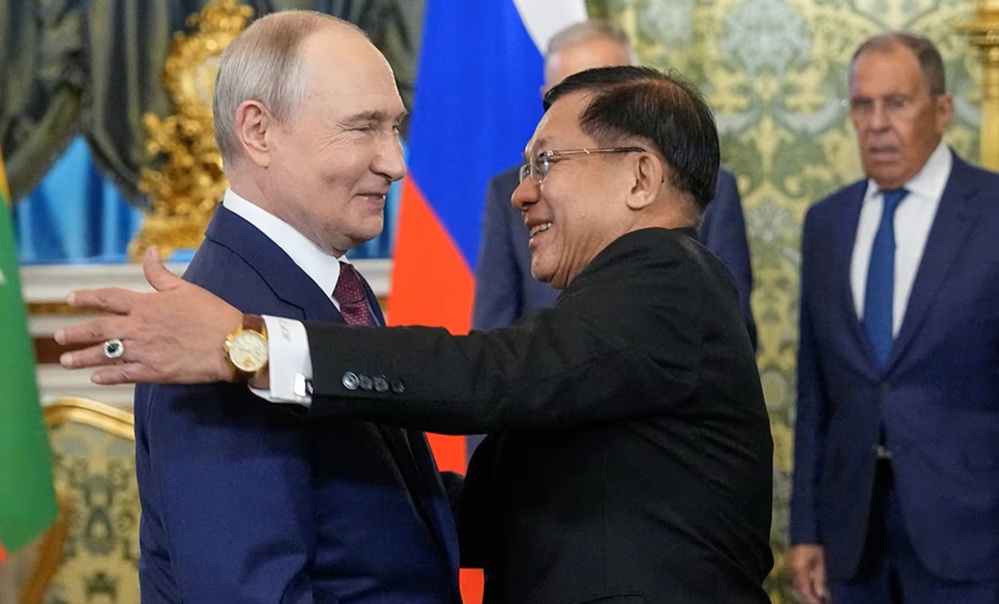


41st FOBANA Convention 2027 to Be Held in New York; Atiq Chairman Rahim Secretary

FLORIDA: The 41st Convention of the Federation of Bangladeshi Associations in North America (FOBANA), one of the largest organizations representing Bangladeshi communities in North America, will be held in New York next year. The Bangladesh League of America, New York, one of the oldest Bangladeshi organizations in the United States, has been selected as the host organization for the 2027 convention.

The announcement came during FOBANA’s Annual General Meeting held in Florida, where a new Executive Committee was elected for the next two years. Atiquer Rahman Atiq was elected Chairman of the new committee, while Ziaul Haque Zia and Aminul Jilani Collins were elected Vice Chairmen. Nehal Rahim was elected General Secretary. Md. Shahabuddin and Imran Jony Alam were elected Joint Secretaries, while Shahedul Islam Anjan was elected Treasurer.

The election of the new leadership is expected to bring renewed momentum to FOBANA’s organizational activities over the next two years. With the 41st FOBANA Convention scheduled to take place in New York in 2027, the new leadership will face significant organizational responsibilities in preparing for the major gathering of Bangladeshi Americans and their families from across North America.

Meanwhile, the 40th FOBANA Convention was held in Orlando, Florida, from September 4 to 6, bringing together Bangladeshi community members from different states across the United States and Canada. The three-day convention was held at the Holiday Inn Resort Kissimmee by the Parks in Kissimmee, Florida, featuring cultural programs, music, discussions, business networking, youth activities, women’s leadership programs and community recognition events.

The three-day convention officially began on Friday, September 4. Registration and exhibition activities began at 4 p.m., followed by a cultural parade and flag ceremony at 6 p.m. A business and leadership discussion was held at 8 p.m., bringing together business leaders and community representatives.

The opening events highlighted FOBANA’s four-decade journey, the unity of the North American Bangladeshi community, preservation of Bangladeshi culture and heritage, and the importance of engaging younger generations in community activities. FOBANA Convention President Mohammad Shamim Mridha emphasized the importance of unity and cooperation among Bangladeshi Americans. Convention Convener Anwar Hossain Sentu expressed appreciation to members of the community for their support in organizing the event. FOBANA Executive Committee Chairman Zahid Hasan and Executive Secretary Nehal Rahim also spoke about the convention, organizational activities and the future direction of FOBANA.

Saturday, September 5, was one of the busiest days of the convention. A Youth Innovation Summit was held at 10 a.m., focusing on youth leadership, innovation, technology, entrepreneurship and the future role of the younger generation within the North American Bangladeshi community. A Women in Leadership program followed at 1 p.m., bringing together Bangladeshi women from different professional and community backgrounds to discuss leadership, social engagement and their contributions to community development.

The major attraction of the evening was the cultural concert featuring popular Bangladeshi performers. According to the organizers’ published list, the participating artists included Imran Mahmudul, Dinat Jahan Munni, Protic Hassan, Dilshad Nahar Kona, Arzeen Kamal, Annana Yeasmin Ankon and Rafiq Ahmed Milton.

Actor Sazu Khadem, actress Pori Moni, singer Sania Sultana Liza and actress Srabasti Tinny were also promoted as participants or special guests of the convention. The performances of the popular artists turned Saturday night into a vibrant celebration of Bangladeshi music and culture, drawing enthusiastic participation from the Bangladeshi-American community.

Sunday, September 6, marked the final day of the three-day convention. The Community Awards ceremony was held at 11 a.m., recognizing individuals for their contributions to the Bangladeshi community. A vendor and business showcase was held at 2 p.m., giving participating entrepreneurs and service providers an opportunity to highlight their businesses and activities.

The convention concluded with a farewell luncheon at 4 p.m. One of the notable recognitions of the convention went to musician Nafeez Al Amin, who received a special award for his contribution to Bangla rock music. The recognition highlighted his contribution to the development and promotion of Bangla rock music.

The participation of well-known Bangladeshi artists was one of the major attractions of the 40th FOBANA Convention. Performances by Imran Mahmudul, Dinat Jahan Munni, Protic Hassan, Dilshad Nahar Kona, Arzeen Kamal, Annana Yeasmin Ankon and Rafiq Ahmed Milton generated considerable interest among attendees. Their performances brought the sound and atmosphere of Bangladesh to the diaspora, featuring contemporary Bangladeshi music and popular cultural performances. The presence of actors and other cultural personalities added another dimension to the three-day celebration. Direct interaction between artists and members of the audience further enhanced the festive atmosphere.

The 40th FOBANA Convention carried special significance as the organization marked four decades of its journey. For four decades, FOBANA has served as a platform for cultural connection, community networking and engagement among Bangladeshi communities across North America, while helping younger generations maintain ties with Bangladeshi culture and heritage. The return of the convention to Orlando after a long interval generated considerable enthusiasm among the local Bangladeshi community.

The host committee was led by President Mohammad Shamim Mridha, Convener Anwar Hossain Sentu, Member Secretary Russel Miah, Executive Member Secretary Murad Hossain, Chief Coordinator Nazim Ullah Liton and Event Management Convener A.K.M. Hossain Hitu, along with other committee members. The three-day gathering combined cultural activities with business discussions, leadership programs, youth initiatives, women’s leadership activities, community engagement and recognition programs.

The 40th FOBANA Convention in Orlando ultimately became a vibrant gathering of Bangladeshi Americans, celebrating music, culture, community and heritage while strengthening connections among Bangladeshis living across North America. With New York selected as the host city for the 41st FOBANA Convention in 2027 and a new executive leadership team now in place, attention is already turning toward the next chapter of FOBANA’s journey.