Iran Captures U.S. Underwater Drone in Strait of Hormuz

SHibbir Ahmed, WASHINGTON DC — Iran’s Islamic Revolutionary Guard Corps (IRGC) says it has captured a U.S. unmanned underwater vehicle near the entrance to the Strait of Hormuz, in the latest development in the escalating confrontation between Tehran and Washington.

Iranian state media identified the vessel as a Dive-LD, a large autonomous underwater vehicle manufactured by California-based defense company Anduril. The approximately 19-foot (5.8-meter) unmanned submersible is designed for missions including seabed mapping, mine detection, intelligence gathering and inspection of underwater infrastructure. The IRGC described the operation as a complex intelligence and military mission and claimed that Iranian forces had “trapped” one of the most advanced unmanned submarines operated by the United States.

However, the U.S. military gave a significantly different account of the incident. A Pentagon spokesperson acknowledged that a U.S. underwater drone had been lost, but said the vehicle had malfunctioned more than a day earlier while surveying regional waters in support of ongoing operations. According to the Pentagon, the drone was an older model and did not carry classified sonar or radar equipment or collect sensitive data.

Anduril also confirmed the loss of one of its underwater vehicles and emphasized that the Dive-LD was designed to operate in dangerous environments where losing the vehicle was considered a possibility.

Reuters said it could not independently verify Iran’s claim that it had captured the vehicle through a deliberate intelligence operation. The Dive-LD can reportedly operate for up to 10 days and is designed to reach depths of approximately 6,000 meters (19,700 feet). The system is part of the U.S. military’s growing use of autonomous underwater and surface vessels for surveillance, mine detection and other missions without putting American personnel directly at risk.

The incident comes as tensions around the Strait of Hormuz continue to rise. Commercial shipping through the strategic waterway has fallen sharply amid the ongoing U.S.-Iran confrontation, while oil prices have climbed above $100 a barrel amid fears of further disruption to global energy supplies.


Khalilur Rahman Puts UN Reform at Top of Presidency Agenda

Shibbir Ahmed, United Nations, New York: Bangladesh’s Foreign Minister Dr. Khalilur Rahman has assumed the presidency of the 81st session of the United Nations General Assembly, pledging to prioritize dialogue, cooperation, rebuilding trust and meaningful reform of the world body. Speaking to reporters at UN Headquarters in New York on Tuesday ahead of the formal opening of the 81st session, Rahman said the multilateral system is facing unprecedented pressure and a growing deficit of trust.

Against this backdrop, he stressed the importance of finding common ground among countries despite their differences and pursuing solutions through dialogue and cooperation. According to the United Nations, Rahman was elected president of the General Assembly on June 2, 2026, and formally took office on September 8. He will preside over the 193-member General Assembly for the next year. The theme of the 81st session is “Restoring Trust, Managing Transformation: A United Nations That Delivers for All.”

Rahman acknowledged that many international disputes cannot be resolved quickly. However, he said disagreements should not prevent countries from identifying areas of common interest and working together. He said his presidency would remain firmly grounded in the UN Charter and the mandates entrusted to the organization by its member states. He also emphasized that global challenges can be addressed more effectively when countries work collectively and seek solutions through dialogue rather than confrontation.

UN Reform a Key Priority

Meaningful reform of the United Nations will be one of the central priorities of Rahman’s presidency. He said deeper reform is necessary to make the world body more effective and better prepared to respond to the challenges of the future. According to Rahman, public confidence in the United Nations has declined, making it necessary to strengthen the organization not only for the present but also for the generations ahead.

His broader agenda for the 81st session includes peace and security, progress toward the Sustainable Development Goals, climate and environmental protection, human rights, governance of emerging technologies including artificial intelligence, and reform of the United Nations. Rahman also pledged continued support for UN Secretary-General António Guterres’ reform efforts.

Giving Greater Space to Voices Beyond Governments

Rahman also called for greater participation in UN affairs by civil society, the media, academics, industry and innovation communities. Referring to the opening words of the UN Charter, “We the peoples of the United Nations,” he said the organization should not be viewed solely as an institution of member states.

He stressed the need to create greater opportunities for people from different sectors to contribute their views and participate in the work of the United Nations. While “Restoring Trust, Managing Transformation” remains the central theme of his presidency, Rahman said making the United Nations fit for the future would also be a major objective.

Pledge to Keep Rohingya Voices Heard

Responding to a question about how the United Nations can represent stateless populations, particularly the Rohingya, Rahman said the concept of “the peoples of the United Nations” should not be restricted by nationality or legal status.

Drawing on his previous experience as Bangladesh’s High Representative on Rohingya Issues, he said he had witnessed firsthand the suffering of forcibly displaced Rohingyas and their strong desire to return to their homeland.

Recalling a visit by UN Secretary-General António Guterres to the Rohingya refugee camps in Bangladesh, Rahman said refugees had repeatedly expressed their desire to return home. He said Bangladesh had helped bring the voices of the Rohingya to the United Nations and pledged to continue raising their concerns during his presidency.

Dialogue During High-Level Week

Rahman described the presence of world leaders at the upcoming high-level week as an important opportunity to promote dialogue and diplomacy. The General Debate of the 81st General Assembly is scheduled to take place from September 22 to 28, bringing together heads of state and government and senior representatives from around the world.

Rahman expressed hope that world leaders would use their addresses to emphasize dialogue and diplomacy as means of resolving conflicts and reaffirm their commitments to development, human well-being and human rights. He said the presidency would review the priorities outlined by world leaders and seek areas that could form the basis of a common agenda.

“I Will Be President for All Countries”

Rahman emphasized that, as president of the General Assembly, he would represent all member states, regardless of whether they supported his election. He also addressed the selection of the next UN secretary-general, saying he would remain faithful to the process established by the UN Charter.

Under the Charter, the Security Council recommends a candidate for secretary-general and the General Assembly makes the appointment. Rahman said he would work closely with member states and the president of the Security Council to facilitate the process and ensure a smooth transition of leadership.

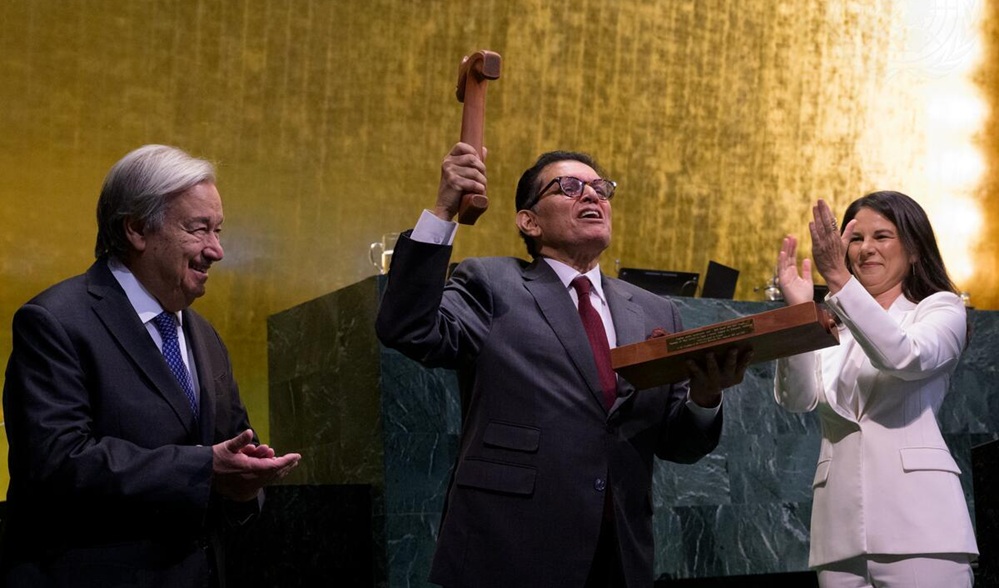
The 80th session of the General Assembly concluded at UN Headquarters on September 8, followed by Rahman’s formal assumption of the presidency of the 81st session. His election marks Bangladesh’s return to the presidency of the General Assembly after four decades. Former Bangladeshi Foreign Minister Humayun Rashid Choudhury presided over the 41st session in 1986-87.

Rahman, who first attended the United Nations as a member of Bangladesh’s delegation in 1985, described his return to the organization four decades later as a remarkable moment, while noting how dramatically the world has changed during the intervening years.

As president of the 81st session, Rahman will seek to promote dialogue in a deeply divided world, rebuild confidence in multilateralism and help make the United Nations more effective in confronting the challenges of the future.


Iran Strikes U.S. Base in Jordan as Hormuz Crisis Deepens

TEHRAN — Iran’s Islamic Revolutionary Guard Corps said Wednesday that it launched a missile attack against a U.S.-linked military base in Jordan, escalating tensions after American forces destroyed five Iranian oil tankers. The latest exchange marks another sharp escalation in the six-month-old U.S.-Iran war, with the conflict increasingly threatening regional security and global energy supplies.

Iran said its missile strike targeted the Al-Azraq air base in Jordan, which hosts U.S. military assets. Iranian state media reported that the operation damaged maintenance and repair facilities, aircraft deployment areas and shelters. Those damage claims could not immediately be independently verified. Jordan’s military said it intercepted 18 ballistic missiles launched from Iran toward the kingdom. No casualties were immediately reported.

The Iranian attack came after U.S. forces destroyed five Iranian oil tankers on Tuesday. The U.S. military said the crews were ordered to abandon the vessels before they were struck. The operation followed an Iranian attack targeting a U.S. Navy warship. Iranian officials had previously warned that American military bases in the region would be targeted if Washington attacked Iranian oil tankers.

Iran has also threatened to target oil tankers operating near U.S.-allied Kuwait and Bahrain. The threats have heightened fears of further disruption to commercial shipping across the Persian Gulf and the Strait of Hormuz.

The strategic waterway has become a major flashpoint in the conflict. Shipping through the Strait of Hormuz has fallen sharply, raising concerns about global oil and gas supplies. Reuters reported Wednesday that only six commodity vessels transited the strait on Tuesday, well below the recent average.

The escalation has also pushed oil prices higher. Brent crude approached $100 a barrel on Wednesday, while U.S. West Texas Intermediate crude traded above $94 a barrel as markets assessed the risk of further supply disruptions.

U.S. Secretary of State Marco Rubio has warned that Washington will continue responding to Iranian attacks. The latest U.S. strikes on Iranian tankers were described by American officials as retaliation for attacks on U.S. naval forces.

Iranian state media also claimed that the Revolutionary Guard had attacked two U.S. destroyers with ballistic missiles. The claim had not been independently confirmed by the U.S. military and should be treated as an Iranian claim.

The latest confrontation comes as both sides remain locked in a wider struggle over control of the Strait of Hormuz, a vital route for global energy shipments. With Iran threatening further attacks on shipping and U.S. forces continuing operations against Iranian assets, concerns are growing that the conflict could expand further across the Middle East and place additional pressure on global energy markets.


Trump Changes Defense Production Act Powers, Expands Energy Authority

Shibbir Ahmed, Washington DC: President Donald Trump has issued a new executive order changing how certain authorities under the Defense Production Act are delegated, giving both the Interior and Energy secretaries independent authority over energy-related matters.

The White House announced the order on September 8, saying it amends an earlier executive order governing national defense resource preparedness and updates delegations of presidential authority under the Defense Production Act.

Under the new order, the Secretary of the Interior and the Secretary of Energy may independently exercise delegated authority over forms of energy under their respective purviews. Previously, those responsibilities were delegated to the Energy secretary.

The order also establishes a process for resolving disputes between the two departments. Energy-related disputes will generally be referred first to the National Energy Dominance Council. If a matter involves national defense infrastructure or military operations, it will also be referred to the National Security Council, with coordination involving the Department of War.

Trump’s order further gives the Interior, Commerce and Energy secretaries independent authority to exercise certain presidential powers under the Defense Production Act.

The changes are part of the administration’s broader effort to reorganize federal authority over energy resources and strengthen coordination between energy policy and national security.

The Defense Production Act gives the president broad powers to support national defense by influencing the production, allocation and distribution of critical resources. The law has also been used to strengthen domestic supply chains for strategically important materials and industries.

The White House said the latest order must be implemented in accordance with applicable law and subject to the availability of appropriated funds. The administration previously adjusted Defense Production Act delegations in March, when Trump gave the Energy secretary independent authority alongside the Commerce secretary over certain powers under the law.


Trump Honors 9/11 Victims and First Responders

Shibbir Ahmed, Washington DC: President Donald Trump honored the victims of the September 11, 2001, terrorist attacks and the first responders who risked their lives to save others as the United States prepares to mark the 25th anniversary of the tragedy.

Trump held a remembrance ceremony Tuesday at the Ellipse outside the White House, bringing together firefighters, police officers, first responders, Gold Star families and representatives of the Tunnel to Towers Foundation.

A 21-foot steel beam recovered from the wreckage of the World Trade Center’s South Tower was displayed during the ceremony. The beam is part of the Tunnel to Towers Foundation’s “Steel Across America” initiative, which is taking pieces of the World Trade Center to communities across the country. Trump paid tribute to the nearly 3,000 people who were killed in the attacks and reaffirmed the nation’s commitment to remembering those who lost their lives.

The president also posthumously awarded the Presidential Medal of Freedom to Welles Crowther, who helped save numerous people during the attacks and became known as the “Man in the Red Bandana.” Members of Crowther’s family accepted the nation’s highest civilian honor on his behalf.

Trump also announced that a new U.S. Coast Guard fast-response cutter would be named after Jeffrey Palazzo, a New York firefighter and Coast Guard reservist who was killed in the September 11 attacks.

The White House said Trump and Vice President JD Vance will visit sites connected to the September 11 attacks on Friday, the 25th anniversary, to honor the victims and meet with their families.

On September 11, 2001, al-Qaeda terrorists hijacked four commercial airplanes. Two planes were flown into the World Trade Center towers in New York, another struck the Pentagon, and the fourth crashed in Pennsylvania after passengers attempted to regain control of the aircraft.

Nearly 3,000 people were killed in the attacks, which profoundly changed U.S. national security policy and shaped American foreign policy for decades. The anniversary ceremony comes as the country continues to remember the victims, first responders and ordinary Americans whose actions on that day became part of the history of the United States.


Trump Bans Some Canadian Imports as Trade War Escalates

Shibbir Ahmed, Washington DC: President Donald Trump has ordered new restrictions blocking the import of certain Canadian products into the United States, escalating the growing trade dispute between Washington and Ottawa.

Under proclamations issued on September 8, 2026, the United States will prohibit imports of specified Canadian dairy products, alcoholic beverages and motor vehicles, with the new restrictions taking effect September 29. The White House said the measures are intended to respond to what it describes as continued Canadian discrimination against U.S. commerce.

The move comes as Canada has imposed retaliatory tariffs on about $20 billion worth of U.S. goods, with duties ranging from 15% to 50%. The measures mark another major escalation in the trade dispute between the two longtime allies.

The latest U.S. action goes beyond tariffs by completely excluding certain Canadian products from the U.S. market. The White House says that if any part of the import ban is invalidated, the previously imposed 50% tariff would apply instead to the affected products.

The dispute has also widened beyond tariffs. Trump has threatened additional action against Canadian companies, including aircraft manufacturer Bombardier, while Canada has signaled that it intends to diversify its trade relationships and reduce its dependence on the U.S. market.

The escalating measures are raising concerns about the future of the United States-Mexico-Canada Agreement (USMCA) and the economic relationship between the two countries.


UN Chief Urges Israel to Leave Lebanon Amid Nabatieh Escalation

Shibbir Ahmed, UN, New York: United Nations Secretary-General António Guterres has called for an immediate cessation of hostilities in southern Lebanon and urged Israel to withdraw its forces from Lebanese territory as Israeli military operations intensify in and around Nabatieh.

In a statement issued on Tuesday by his spokesperson, Stéphane Dujarric, Guterres said he was deeply concerned about the escalating Israeli military operations and condemned the mounting civilian casualties, including women and children killed and injured in the attacks. The UN chief also expressed alarm over the displacement caused by evacuation orders and the widespread destruction reported across Nabatieh District.

According to the UN humanitarian affairs office, OCHA, around 5,000 families, or approximately 20,000 people, fled Nabatieh District last week. Healthcare services in the area are also facing increasing pressure as the conflict intensifies. Guterres was particularly concerned by reports of Israeli strikes affecting hospitals, healthcare workers and public institutions, as well as restrictions on humanitarian access.

He stressed that all parties must comply with their obligations under international law, including international humanitarian law, and emphasized that civilians and civilian infrastructure must be protected at all times.

“Civilians and civilian objects must be protected at all times, and attacks directed against them are unacceptable,” the UN chief said. Guterres called for an immediate end to the hostilities, urged Israel to withdraw its forces from Lebanese territory and called on all sides to respect Lebanon’s sovereignty and territorial integrity. He also urged the parties to fulfil their obligations under UN Security Council Resolution 1701, adopted in 2006 to help establish a lasting cessation of hostilities between Israel and Hezbollah.

Meanwhile, the UN Interim Force in Lebanon, UNIFIL, reported a sharp increase in Israeli military activity between Thursday and Monday, including ground operations, projectile fire, airstrikes and violations of Lebanese airspace.

UNIFIL detected 528 projectiles fired by the Israel Defense Forces during that period. On Sunday alone, the peacekeeping mission recorded 62 Israeli airspace violations, among the highest daily totals since June. UNIFIL also reported airstrikes in both sectors of its area of operations and north of the Litani River. For the first time since June 21, the mission also detected one projectile fired by Hezbollah on Sunday.

The UN said the deteriorating security situation is further worsening humanitarian conditions in southern Lebanon. UNIFIL facilitated 13 humanitarian missions between Thursday and Monday in coordination with OCHA, all in its western sector. The Secretary-General said the United Nations remains committed to supporting efforts to end the violence, protect civilians and advance a lasting solution to the conflict.


‘This Is Not 1945’: Bangladesh’s Khalilur Rahman Opens UNGA 81

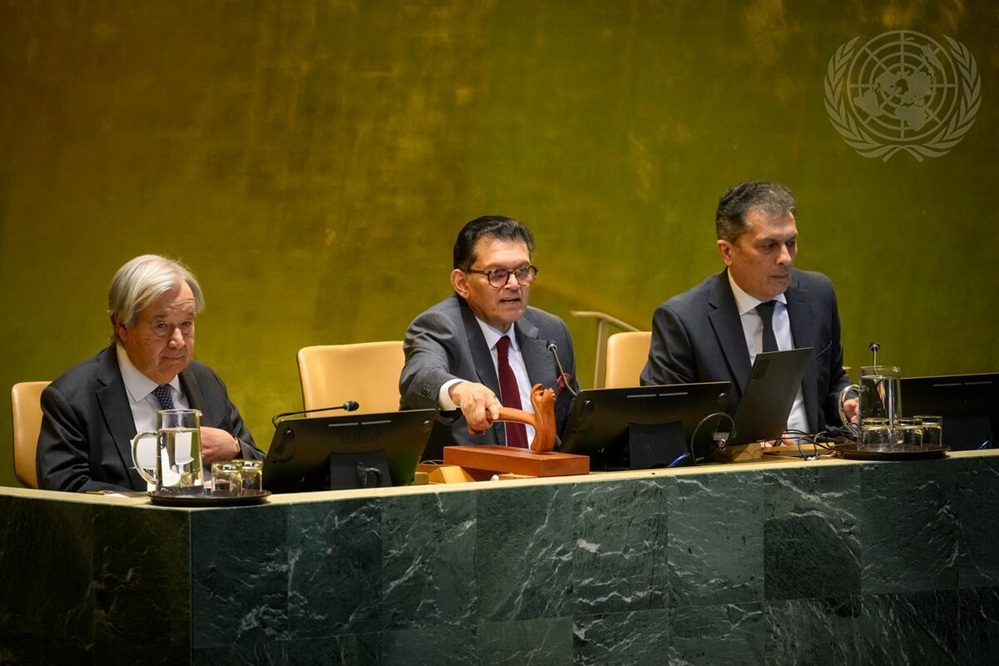
Shibbir Ahmed, UN, New York: The United Nations General Assembly opened its 81st session on Tuesday at United Nations Headquarters in New York, with Bangladesh’s veteran diplomat Khalilur Rahman taking over as president and calling for renewed global trust in the international organization amid wars, humanitarian crises, climate change and deepening geopolitical divisions.

Rahman formally assumed the presidency after receiving the traditional Icelandic wooden gavel from outgoing General Assembly President Annalena Baerbock. In his opening remarks, he said the United Nations must adapt to the realities of a rapidly changing world and become more responsive to the needs and expectations of people across the globe.

“We must make the United Nations fit for the future,” Rahman said, stressing the importance of listening to civil society and giving greater space to voices outside governments and traditional diplomatic institutions.

“We have a situation where trust is in deficit. This is not 1945. This is the 81st session. The world has moved on. The Organization must move on, and I’ll help that process,” he said.

Rahman has placed restoring trust and managing global transformation at the center of his presidency. His agenda includes strengthening international peace and security, accelerating progress toward the 2030 Sustainable Development Goals, addressing climate change, protecting human rights, supporting refugees and migrants, promoting responsible technological development and advancing reform of the United Nations and the broader multilateral system.
The new session begins at a time of heightened international tensions, with conflicts in several regions, growing humanitarian emergencies, geopolitical rivalries, persistent poverty and inequality, and increasing concerns over climate-related disasters. The risk of nuclear escalation has also added to concerns about international peace and security.

United Nations Secretary-General António Guterres, speaking at the opening of the session, said rebuilding confidence in the multilateral system had become one of the defining challenges of the current era.

“Rebuilding trust in the multilateral system is the defining challenge of our time,” Guterres said, arguing that international cooperation remains essential at a moment when the world is confronting crises that cannot be effectively addressed by individual countries acting alone.

Guterres said institutions across the multilateral system, including the Security Council and international financial institutions, are under growing pressure to respond to the realities of the present day. He warned that international law and human rights are too often violated with impunity, while geopolitical mistrust and suspicion continue to prevent the international community from reaching effective solutions.

Despite those difficulties, Guterres said he remained hopeful about the ability of the General Assembly to contribute to a better future. Through diplomacy, dialogue and cooperation, he said, countries can work to rebuild trust and goodwill and help ensure that future generations inherit a more peaceful and sustainable world.

The opening of the 81st session also marked the conclusion of Baerbock’s term as president of the General Assembly. Addressing member states at the final meeting of the 80th session, she defended the continuing importance of the United Nations despite criticism of its shortcomings.

Baerbock said she was more convinced than ever of the importance and necessity of the organization. She pointed to the work of United Nations agencies and peacekeeping missions around the world as evidence of the practical impact of the international body.

She cited the role of the United Nations Children’s Fund in helping millions of children and the contribution of peacekeepers to protecting civilians in conflict-affected areas. Baerbock also warned that the positive work of the United Nations often receives less public attention than negative developments, particularly in an environment where divisive and hateful content can spread rapidly.

Climate change and sustainable development are expected to remain major issues during the new session. Rahman has called for stronger international efforts to build climate resilience and protect the environment, while also accelerating progress toward the 2030 Sustainable Development Goals.

The new president has emphasized the need to ensure that development reaches vulnerable populations and that no country is excluded from international efforts to address poverty, inequality, education, health, food security and other development challenges.

Human rights and humanitarian action are also central to the new presidency. Continuing conflicts and instability have displaced millions of people, increasing pressure on the international community to protect refugees and migrants and provide assistance to populations affected by war and persecution.

The rapid development of artificial intelligence and other emerging technologies is another issue expected to receive greater attention. Rahman has called for technological innovation that is inclusive and responsibly governed, with appropriate safeguards to protect people and future generations.

United Nations reform is also expected to feature prominently during the 81st session. The international political and economic landscape has changed substantially since the organization was established in 1945, prompting continued debate over whether its institutions adequately reflect the realities of the contemporary world.

Questions surrounding representation, inclusiveness and the effectiveness of international decision-making have become increasingly important, particularly for developing countries seeking a greater voice in global affairs.

Another major diplomatic issue during the coming year will be the selection of the next United Nations secretary-general. Guterres is scheduled to complete his term, with his successor expected to take office in January 2027.

Rahman brings extensive diplomatic experience to the presidency of the General Assembly. He previously served as foreign minister of Bangladesh and held senior positions including national security adviser and high representative for the Rohingya issue in Bangladesh’s interim government. He has also held senior positions within the United Nations system and was a founding member of East West University in Dhaka.

His assumption of the presidency gives Bangladesh a prominent role in one of the international community’s most representative forums at a particularly challenging moment for multilateral diplomacy.

As the 81st session begins, the central challenge for the General Assembly will be whether countries can overcome deep political divisions and rebuild confidence in international cooperation. For Rahman, the task is rooted in a simple premise: the world has changed significantly since 1945, and the United Nations must evolve with it.


US Sanctions 36 Individuals and Entities, Including 27 Iranian Airlines

Shibbir Ahmed | Washington, DC: The United States has imposed sweeping new sanctions targeting Iran’s aviation sector, placing 36 individuals and entities—including 27 Iranian airlines—under sanctions. The US Treasury Department announced the measures on Tuesday, saying the action was taken under “Operation Economic Outcast” to increase pressure on Iran’s aviation industry, aircraft procurement activities and related networks.

US authorities allege that the sanctioned individuals and entities were involved in procuring and transferring aircraft, aviation technology and other sensitive equipment for Iran. They are also accused of supporting Iranian aviation networks used to transport weapons, personnel and illicit cargo.

27 Iranian Airlines Sanctioned

The Treasury Department’s Office of Foreign Assets Control (OFAC) designated 27 Iranian airlines for operating in Iran’s aviation sector. The airlines include Air Shiraz, Asa Jet Airline, ATA Airlines, Atlas Aviation Group, Ava Airlines, Chabahar Airlines, Fly Kish Airlines, Iran Air Tour, Iran Aseman Airlines, Kish Airlines, Karun Airlines, Qeshm Air, Saha Airlines, Sepehran Airlines, Taban Airlines, Varesh Airlines and Zagros Airlines, among others. According to Washington, the latest measures represent one of the most significant sanctions actions against Iran’s commercial aviation sector in recent years.

Mahan Air Support Network Also Targeted

The United States also imposed sanctions on several companies and individuals in third countries accused of supporting Mahan Air, an Iranian airline that is already under US sanctions. According to the Treasury Department, intermediaries based in the United Arab Emirates and Türkiye played a role in transferring US-made or US-controlled aircraft to Mahan Air.

US authorities said that at least three Boeing 777 aircraft were transferred to Mahan Air through a network during the summer of 2026. The United States alleges that several companies based in the UAE and Oman were involved in the network.

Aviation Authorizations Suspended

Alongside the new sanctions, OFAC suspended three previously issued authorizations related to aviation operations involving Iran. The authorizations had permitted, under certain circumstances, the use of Iranian airspace and the operation of US-origin or US-controlled commercial aircraft in Iran by non-US airlines. US authorities said aviation safety-related matters would continue to be considered separately on a case-by-case basis.

Warning to Financial Institutions

The Financial Crimes Enforcement Network (FinCEN) also issued a separate alert to financial institutions. The agency urged banks and other financial institutions to increase scrutiny of suspicious transactions linked to Iran’s efforts to procure commercial aircraft and aircraft parts.

The Treasury Department alleges that Iran has used intermediaries and front companies across Europe, the Middle East, Africa and Asia to obtain aircraft, aviation components and dual-use technologies while concealing their ultimate destination.

Part of ‘Operation Economic Outcast’

The latest sanctions are part of the United States’ “Operation Economic Outcast,” an initiative announced in August aimed at increasing pressure on financial networks and revenue streams linked to the Iranian government.

The Treasury Department said assets and interests belonging to sanctioned individuals and entities that fall under US jurisdiction will be blocked. US citizens and companies are generally prohibited from engaging in financial or commercial transactions with those designated.

Foreign companies and financial institutions could also face the risk of US sanctions for engaging in significant transactions with sanctioned individuals or entities. US authorities said the latest measures are intended to further isolate Iran’s aviation sector from the international financial system.


Bangladesh, US discuss boosting trade and investment

DHAKA: Bangladesh and the United States discussed ways to increase US investment, expand bilateral trade and create a more business-friendly environment during a meeting between Commerce Minister Khandker Abdul Muktadir and US Ambassador to Bangladesh Brent T. Christensen. The meeting was held Monday at the Federation of Bangladesh Chambers of Commerce and Industry (FBCCI) office in Dhaka. The two sides discussed expanding bilateral trade, cooperation in the energy sector and recent policy reforms, according to information released following the meeting.

US ambassador stresses transparency in major projects

During the meeting, Ambassador Christensen highlighted the importance of maintaining a transparent and competitive environment for major infrastructure projects. Speaking about a floating liquefied natural gas (LNG) terminal, or FSRU project, the ambassador said greater transparency and open competition would help strengthen the confidence of foreign investors.

He also said US companies are interested in working in Bangladesh and emphasized the importance of ensuring fair opportunities for competition. Commerce Minister Khandker Abdul Muktadir welcomed US investors and said proposals from US companies demonstrating the ability to deliver an FSRU within the shortest possible timeframe would receive priority consideration.

Import policy also discussed

The meeting also covered Bangladesh’s new import policy. The US ambassador welcomed several positive changes in the new policy but said some provisions could be made more business-friendly. The commerce minister said the import policy is an ongoing process and that necessary reforms are being reviewed regularly in line with market conditions and economic realities.

The two sides also discussed the removal of an earlier requirement for foreign companies to appoint local agents when purchasing strategic equipment. The minister said allowing direct engagement with manufacturers has improved transparency in the procurement process and reduced the influence of intermediaries.

Energy cooperation

Energy cooperation was another key issue discussed at the meeting. Ambassador Christensen described Bangladesh’s agreement with international energy supplier Gunvor as a positive development. The commerce minister said the government would continue to give the highest priority to protecting Bangladesh’s national interests in all such arrangements.

Officials from Bangladesh’s Ministry of Industries, Ministry of Commerce and the US Embassy also attended the meeting. Both sides expressed hope that regular discussions would help further strengthen the commercial relationship between Bangladesh and the United States.