Off-Duty NYPD Stabbed During Attempted Robbery in Bronx

Md. Mashiur Rahman Majumder, New York — An off-duty NYPD detective was stabbed several times during what authorities described as an apparent attempted robbery in the Norwood section of the Bronx on Friday afternoon. The incident happened shortly before 2 p.m. near Rochambeau Avenue and East 206th Street, according to police and local reports. The detective was taken to Jacobi Medical Center for treatment and was reported to be in stable condition.

New York City Mayor Zohran Mamdani said preliminary information indicated that the detective was attacked during an attempted robbery. Mamdani and NYPD Commissioner Jessica Tisch visited the detective and his family at Jacobi Hospital following the incident. Authorities said the investigation remained active Friday evening. Reports indicated that two suspects fled the scene on e-bikes or scooters after the attack. Police circulated images of the suspects as investigators worked to identify and locate them.

Sources familiar with the investigation told local media that the detective is assigned to the NYPD’s 44th Precinct. Additional reports said the suspects approached the officer as he was near his vehicle and attempted to rob him before the confrontation turned violent.

The detective sustained multiple injuries and was transported by emergency medical personnel to Jacobi Medical Center. Officials did not initially release his identity publicly through the NYPD, while the investigation into the circumstances of the attack continued.

The incident also led the NYPD to cancel a previously scheduled briefing at One Police Plaza where Commissioner Tisch and Mayor Mamdani were expected to discuss the city’s quarterly crime statistics.

Police continued searching for the suspects as investigators gathered evidence from the scene. No final determination had been announced regarding the identities or motives of those responsible beyond the preliminary robbery information. The investigation remains ongoing.


GOP Faces Immigration Balancing Act Ahead of 2026 Midterms

Shibbir Ahmed, Washington DC — Republicans are navigating an increasingly complicated political debate over immigration as the 2026 midterm elections approach, with some GOP candidates seeking to distance themselves from aspects of the Trump administration’s enforcement policies while other Republicans continue to emphasize border security. Immigration has been a central issue for the Republican Party during President Donald Trump’s administration. However, recent reporting and polling suggest that the issue is not carrying the same level of attention among voters that it did during the 2024 presidential election cycle.

An Axios report published October 1 said immigration had fallen behind the cost of living as a leading concern among voters. The report also noted that polling on which party voters trust more to handle immigration has produced differing results. The changing political environment has created challenges for Republican candidates in competitive races. Several GOP lawmakers have publicly sought to distinguish their campaigns from some of the administration’s immigration enforcement measures.

Among them is Rep. Maria Elvira Salazar, R-Fla., who said in a September campaign advertisement that some of the administration’s immigration enforcement efforts had “gone too far.” Her position has become an example of the differing approaches emerging within the Republican Party as candidates prepare for November’s elections. Other Republican candidates have similarly faced pressure to address concerns about immigration enforcement while maintaining the party’s longstanding emphasis on border security.

White House border czar Tom Homan has criticized Republicans who are distancing themselves from Immigration and Customs Enforcement operations. According to the Washington Examiner, Homan urged Republican lawmakers and candidates to engage directly with ICE and address their concerns. The debate comes as the Trump administration continues to defend its immigration record. The White House has argued that stricter enforcement has reduced illegal immigration and increased border security.

For Republican candidates, immigration therefore presents competing political considerations: maintaining support among voters who prioritize border enforcement while addressing concerns among voters who oppose or question particular enforcement practices. The issue is also intersecting with broader voter concerns about the economy and the cost of living. Recent reporting suggests that those economic issues are receiving greater attention from voters as the midterm elections draw closer.

With the November 2026 elections approaching, Republican candidates are continuing to shape their immigration messages around the political and demographic circumstances of their individual districts and states. The evolving debate illustrates how immigration remains an important issue within the Republican Party while candidates differ over how prominently to feature the Trump administration’s enforcement policies in their campaigns.


UN Warns Gaza Faces Severe Humanitarian Risks Ahead of Winter

Shibbir Ahmed, New York — The United Nations is warning of serious humanitarian and health risks in Gaza as winter approaches, with millions of Palestinians facing inadequate shelter, shortages of essential medical supplies and the growing threat of flooding. The UN World Health Organization (WHO) said on October 2 that repeated delays in bringing lifesaving medicines, prosthetics and other medical supplies into Gaza are putting people in urgent need of care at risk. WHO said almost 2 million people need shelter to protect them from cold weather and flooding, while humanitarian organizations continue to face difficulties bringing winterization and shelter supplies into the territory.

According to the UN Office for the Coordination of Humanitarian Affairs (OCHA), funding shortages and restrictions are severely limiting preparations for the rainy season. A recent OCHA assessment identified 451 displacement sites at high risk of flooding, hosting an estimated 464,402 people. WHO’s representative for the Occupied Palestinian Territory said that, as of October 2, no hospital in Gaza was fully functional, citing chronic shortages of medicines and medical supplies. WHO said large quantities of medical supplies have been waiting for clearance for a median of 74 days, creating significant delays in delivering healthcare assistance.

The UN has called for the unimpeded and predictable entry of humanitarian and health supplies at scale, as well as a system allowing aid to enter through multiple crossings. WHO officials also called for clearer procedures for the approval of humanitarian shipments to reduce delays and rejected consignments. The winter preparations come as Gaza continues to face severe infrastructure and humanitarian challenges. An OCHA report published in September said shortages of cancer medicines, chemotherapy and radiotherapy supplies, dialysis materials, insulin and other essential items were disrupting lifesaving health services.

The UN has also warned that damaged infrastructure and overcrowded displacement sites are increasing the risks associated with heavy rain and flooding. Earlier OCHA reporting said humanitarian efforts to prepare for winter were being constrained by funding shortages, restrictions on supplies entering Gaza and shortages of fuel, engine oil, spare parts and heavy machinery.

A UN report issued in September similarly called for urgent action to restore essential services in Gaza, including electricity, water, sanitation, waste management and healthcare. It described winterization as an urgent priority because shelter needs remain extensive while essential supplies and services remain severely constrained.

The UN’s latest warnings underscore the scale of the challenge facing humanitarian agencies as winter approaches, particularly for displaced families living in damaged buildings, tents and other inadequate shelters.


Govt moving ahead to implement promises made to people: PM

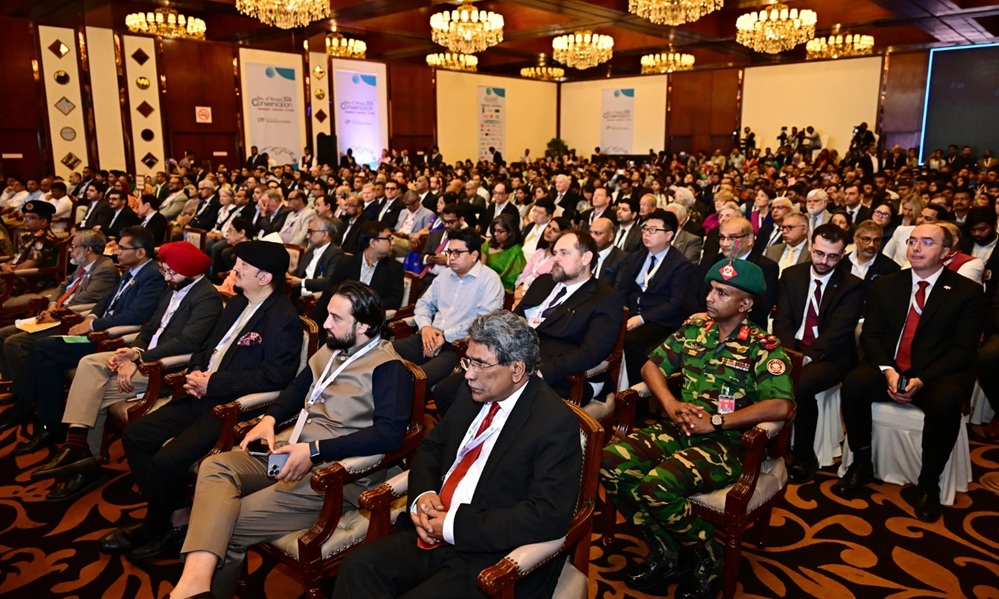
DHAKA – Prime Minister Tarique Rahman today said the new government, having received a strong mandate from the people, is moving ahead with a clear action plan to fulfill its commitments over the next five years. “Our priorities are to protect national interests, maintain policy continuity, ensure economic stability and carry out institutional reforms. We are now moving directly from commitments to implementation,” he said.

The prime minister was addressing the inaugural session of the three-day international conference ‘Bay of Bengal Conversation (BOBC) 2026’, organised by the Centre for Governance Studies (CGS), at Pan Pacific Sonargaon Hotel here this morning. This year’s BOBC is being held under the theme “Fragments, Frontiers and Futures: Navigating Power, Technology and Trust in a World Rewritten”. Around 200 speakers, more than 300 delegates and over 1,000 participants from more than 100 countries are taking part in the conference, which is being held from October 3 to 5.

Former Serbian President Boris Tadic, former Maldivian President Mohamed Nasheed and former Malian Prime Minister Moussa Mara, among others, are participating in the conference along with former and incumbent state officials, diplomats, policymakers, researchers, business leaders, technologists and experts from different countries. The prime minister said the government has taken initiatives to make Bangladesh an attractive investment destination and transform the country into a strong hub for production and investment.

“We want to create extensive employment opportunities in production, services, exports and all other sectors,” he said. Emphasising the need for policy certainty for investors, the prime minister said continuity in long-term policies would provide them with the necessary assurance. He said the government’s social protection programmes had been designed to give priority to the most disadvantaged people.

Under the Family Card initiative, financial assistance will reach the hands of mothers in every family, beginning with the poorest and most marginalised communities, he said. The Farmers Card will connect farmers with government incentives, agricultural services and markets, while the Health Card will ensure access to healthcare for all, he said, adding that ultimately the Universal Card would bring integrated government services under one umbrella.

Mentioning the government’s pledge to take healthcare to people’s doorsteps, the prime minister said the government is working to recruit 100,000 health workers, around 80 percent of whom will be women. They will provide primary healthcare, health advice and necessary referral services at the grassroots level, he said, adding that the government is also giving special attention to maternal and child health.

On education reform, the prime minister said education should not be limited to obtaining certificates but should prepare students for real life. “We are working to ensure a joyful learning environment,” he said. He said culture, sports, values and ethics would have an important place in the curriculum to help build children’s character. Students would be given the opportunity to learn a third language, while technical and vocational education would be expanded alongside general education.

The government has taken initiatives to provide free uniforms, schoolbags, midday meals and stipends from the first grade, while expanding free education for girls up to the graduate level, he said. Describing the country’s large young population as one of the key drivers of national progress, the prime minister said skills development and suitable employment opportunities were essential to harnessing the demographic advantage.

“The government is focusing on improving language skills, creating employment opportunities, technological transformation and wider use of artificial intelligence. We are supporting innovation, entrepreneurship and start-ups. We want our young people to compete on the global stage and transform brain drain into brain circulation,” he said Describing agriculture as a mainstay of the economy, Tarique Rahman said access to technology, irrigation, agricultural finance and markets are being made easier.

He said support would be provided to fisheries, livestock and rural entrepreneurs, while agricultural processing and agro-product export industries needed to be developed as a complement to food security.

“A strong rural economy can build a strong Bangladesh,” the prime minister said. Highlighting the importance of water security, he said the government has planned to excavate 20,000 kilometres of canals and waterways over the next five years. The Padma Barrage project is being advanced and a master plan for the Teesta is being prepared for water conservation and management, he said, adding that these initiatives would support agriculture while strengthening climate resilience.

On environmental protection, Tarique Rahman said 250 million trees would be planted over the next five years. He said Bangladesh is also expanding solar power use, promoting waste recycling and taking a leading role in establishing environment-friendly green factories.

“Of the world’s top 100 LEED-certified factories, 53 are now in Bangladesh,” he said. The prime minister said developing clean and environment- friendly cities could reduce waste, strengthen climate resilience and further dynamise the national economy. Stressing institutional reforms, he said strong state institutions were essential for development. “We are strengthening institutional transparency and accountability. Human rights, democratic values and freedom of expression must be protected,” he said.

Emphasising equal application of the rule of law to every citizen, the prime minister said an institutional culture would be developed in which state institutions would genuinely remain dedicated to serving the people of Bangladesh. On the Rohingya crisis, he said Bangladesh was still hosting around 1.2 million Rohingya refugees. “Our main objective is to ensure their swift, voluntary, safe, dignified and sustainable repatriation to Myanmar,” he said.
Calling for continued political support and international financing from the global community, he said the root causes of the crisis must also be addressed. “The crisis originated in Myanmar and its solution must also be found in Myanmar,” he said. Referring to the Bay of Bengal as one of the major pillars of Bangladesh’s future economic potential, Tarique Rahman said the Bay had been shaping Bangladesh’s destiny for generations.

Given Bangladesh’s geographic and strategic location, he said, the country had opportunities to become more deeply connected with the world through seaports, waterways and the coastal economy. There is immense potential in shipping, fisheries, tourism, energy and regional supply chains, he said. The prime minister said deeper bilateral and multilateral engagement was needed to transform the region’s shared geography into shared prosperity.

“Cooperation can be further expanded in trade, energy, education, technology, climate and maritime sectors. New markets can be opened and more opportunities can be created for young people. We can build stronger cooperative relations based on equality, fairness and justice,” he said. Stating that Bangladesh believes in dialogue, partnership and mutual respect, Tarique Rahman said the country would continue to work positively with all its regional and global partners while safeguarding national interests and sovereignty. “Because peace and harmony are the foundations of shared prosperity and development,” he said.

The prime minister called for transforming the Bay of Bengal region into an area where every state could prosper together, benefit equally and extend meaningful cooperation to its citizens.

“Bangladesh is fully prepared to play its rightful role in this regard,” he said. The five thematic pillars of this year’s BOBC are geopolitics, security and strategic competition, artificial intelligence, cyberspace and information power, trade, connectivity and strategic growth, and climate, resilience and human security.



America-Bangladesh Press Club Marks 18th Anniversary in New York

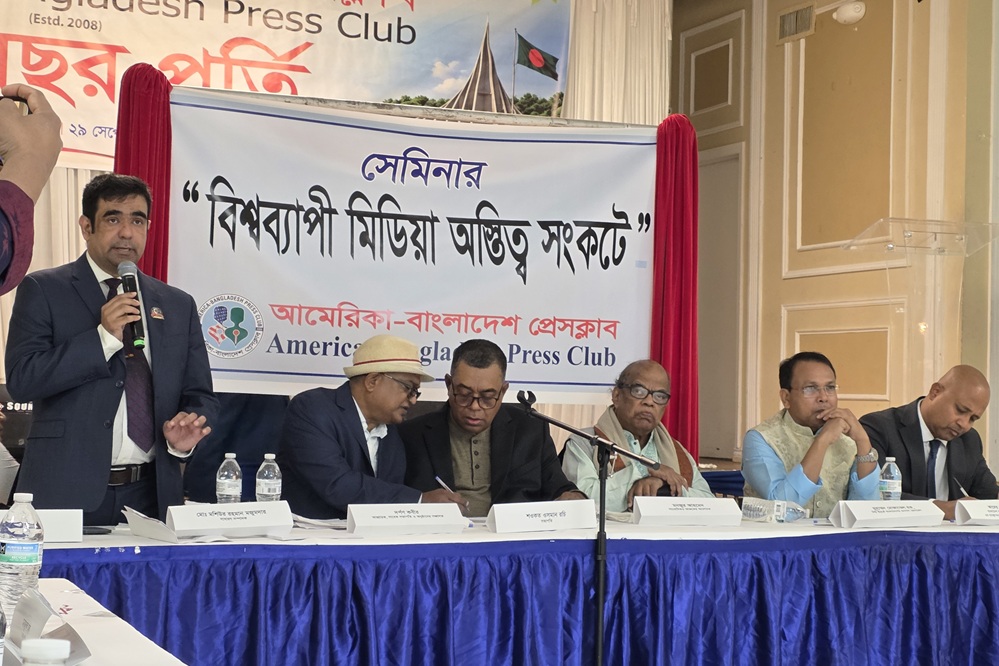
Md. Mashiur Rahman Majumder, New York — The America-Bangladesh Press Club marked its 18th anniversary with a seminar, publication of a commemorative magazine, awards and a cultural program in New York. The event was held Tuesday, September 29, at the Gulshan Terrace auditorium in Woodside. The seminar focused on the theme “The Global Media Crisis: Challenges to Media Survival,” bringing together journalists, editors, academics and diplomats to discuss the changing media landscape in Bangladesh, the United States and around the world.

Speakers examined the challenges facing Bangladesh’s media, the professional experiences of Bangladeshi journalists living in the United States, and the impact of social media, artificial intelligence and changing audience habits on traditional journalism. Several speakers emphasized the importance of responsible, objective and investigative journalism. They also discussed concerns over political favoritism, misinformation and declining public trust in news organizations.

The seminar was chaired by America-Bangladesh Press Club President Shawkat Osman Rachi and moderated by former club president Darpan Kabir. Guests included Gholam Mortuza, Press Minister at the Bangladesh Embassy in Washington, D.C.; Mohammad Mozammel Haque, Consul General of Bangladesh in New York; and veteran journalist Manzur Ahmed. Panelists included veteran journalist Saeed Tarek; journalist Moinuddin Naser; Bangladesh Patrika editor Dr. Wazed A. Khan; Janmabhumi editor Ratan Talukdar; Prothom Alo North America editor Ibrahim Chowdhury; Probash editor and former Press Club president Mohammad Sayeed; and Shoeb Ahmed Bhuiyan, a lecturer at Columbia University.

Press Club General Secretary Mashiur Rahman Majumder delivered the welcome address. Treasurer Mallika Khan Muna, Vice President Mohammad Manzurul Haque and Joint General Secretary Abu Bakar Siddiq also delivered congratulatory remarks. During the seminar, moderator Darpan Kabir read an article titled “How Is Bangladesh’s Media Doing?” by Matiur Rahman Chowdhury, editor-in-chief of Manab Zamin. Panelists subsequently discussed various aspects of the article and the broader challenges facing journalism.

Veteran journalist Manzur Ahmed said that when media outlets engage in misinformation, propaganda or attempts to conceal the truth, audiences will turn to social media and other alternative sources for information. Such practices, he said, can undermine the credibility of mainstream media. He also stressed the importance of journalists developing strong news-writing skills and maintaining a habit of reading and learning, noting concerns over the decline of traditional reporting skills.

Bangladesh Embassy Press Minister Gholam Mortuza discussed the role of media owners and editors in the challenges facing Bangladesh’s media. He said political favoritism has contributed to a loss of public confidence in some media organizations. Consul General Mohammad Mozammel Haque said audiences want accurate information and objective journalism. He noted that social media has become an important source of information in today’s media environment.

Veteran journalist Saeed Tarek said journalism in Bangladesh has changed significantly from the 1960s and 1970s. He pointed to the challenges created by social media and also noted that financial difficulties, including problems with journalists receiving regular salaries, can affect responsible journalism.

Dr. Wazed A. Khan said the media industry is facing challenges worldwide as audience behavior continues to change. He highlighted the growing influence of social media and artificial intelligence on print and electronic media and emphasized the responsibility of professional news organizations to verify information and counter misinformation.

Journalist Moinuddin Naser stressed the importance of integrity in journalism, saying honesty must remain a fundamental principle of the profession. Shoeb Ahmed Bhuiyan said responsible journalism becomes difficult when journalists become overly aligned with those in power. He also noted that a country’s economic conditions can have an impact on its media industry and broader society.

Probash editor Mohammad Sayeed said Bangla-language media outlets in the diaspora play an important role in building community connections and maintaining ties between Bangladesh and expatriate Bangladeshis. He also pointed to declining readership and challenges facing community newspapers abroad.

Ibrahim Chowdhury, editor of Prothom Alo North America, said the media crisis is not new and has appeared in different forms over time. He cautioned against attributing the current challenges solely to artificial intelligence or technology, saying changes in technology, audience behavior, news consumption and media business models have all contributed to the transformation of journalism.

Janmabhumi editor Ratan Talukdar said media challenges existed in the past and will continue in the future. He emphasized the importance of remaining vigilant to prevent false information from being presented as news. Following the seminar, organizers cut a cake to mark the Press Club’s 18th anniversary. The commemorative publication “Alokbartika”, released to mark the club’s milestone, was also unveiled during the event. Publication editor Tofazzal Liton delivered remarks on the occasion.

The America-Bangladesh Press Club also honored singer M.A. Soaib and actress Moushumi with special commemorative awards. Renowned singer Rathindranath Roy presented the award to M.A. Soaib, while Press Minister Gholam Mortuza and Consul General Mohammad Mozammel Haque presented the award to actress Moushumi.

Guests were welcomed with roses by representatives of the Press Club. The evening concluded with a cultural program featuring musical performances by M.A. Soaib and Tina Russell. Community leaders, journalists, businesspeople, cultural figures and Press Club members attended the anniversary celebration with their families.


Bengal Club Celebrates Channel i Anniversary in Atlantic City

Subrata Chowdhury, Atlantic City — The Bengal Club in Atlantic City, New Jersey, celebrated the anniversary of Bangladesh’s popular satellite television network Channel i with a festive gathering featuring cake cutting, music and community camaraderie. The celebration was held Friday night, October 2, at the Bengal Club auditorium, where members of the Bangladeshi-American community gathered to mark the occasion.

Channel i’s New Jersey correspondent and journalist Subrata Chowdhury attended the event as a special guest. Bengal Club officials presented him with a floral tribute as a gesture of congratulations on the occasion of Channel i’s anniversary. Community leaders and organizers, including Shahru Raja Chowdhury, Anisur Rahman and Md. Kaiser, delivered congratulatory remarks during the program.

Speakers highlighted Channel i’s longstanding role in connecting Bangladeshis at home and abroad with the country’s news, culture and traditions. They noted that the channel has continued to serve as a link between Bangladesh and Bangladeshi communities living in different parts of the world. The evening also featured musical performances by Helal Hasan and Masum Baul, along with greetings, conversations and informal gatherings among attendees.

S

The celebration concluded with cake cutting and expressions of goodwill from members of the Bangladeshi community. Participants wished Channel i continued success and growth in the years ahead and praised its contribution to promoting Bangladeshi culture and heritage among expatriate communities.


California Recognizes Eid al-Fitr and Eid al-Adha as State Holidays

SACRAMENTO, Calif. — California has officially recognized Eid al-Fitr and Eid al-Adha as state holidays after Governor Gavin Newsom signed Assembly Bill 2017 into law on September 27, 2026.  The legislation, known as the California Eid State Holiday Act, adds the two major Islamic holidays to California’s list of state holidays. The law was authored by Assemblymember Matt Haney and was approved by the governor as Chapter 571, Statutes of 2026.

Eid al-Fitr marks the end of Ramadan, the Islamic holy month of fasting. Eid al-Adha, observed on the 10th day of Dhu al-Hijjah in the Islamic lunar calendar, is one of the two major Islamic festivals. Under the new law, K-12 public schools and community colleges may close for Eid al-Fitr and Eid al-Adha through locally negotiated agreements. Students observing either holiday are also entitled to an excused absence under the provisions of the law.

The legislation also allows eligible state and school employees to use existing holiday credits or leave time to observe the two Islamic holidays. However, the law does not require every private employer to close or provide a paid holiday to all workers. It also does not make the two Eids judicial holidays.

The legislation does not designate the month of Ramadan itself as a state holiday. Instead, it formally recognizes the two Eids that occur in the Islamic calendar. California Governor Gavin Newsom announced the signing of AB 2017 as part of a legislative update on September 27.


US, Japan Extend Science Pact Indefinitely

TOKYO — The United States and Japan have extended their bilateral science and technology cooperation agreement indefinitely, reinforcing their long-term partnership in research, development and emerging technologies. The two countries signed a protocol in Tokyo on October 2 to extend and amend the U.S.-Japan Agreement on Cooperation in Research and Development in Science and Technology, commonly known as the U.S.-Japan Science and Technology Agreement.

Michael Kratsios, Assistant to the President and Director of the White House Office of Science and Technology Policy, signed the protocol on behalf of the United States. Japan was represented by Foreign Minister Toshimitsu Motegi. First signed in 1988, the agreement provides a legally binding framework for scientific cooperation between the two governments. Over the decades, it has helped establish extensive links between American and Japanese scientific communities.

The new protocol extends the agreement indefinitely and updates its framework to support continued cooperation in science and technology, with particular attention to critical and emerging technologies. The United States said the extension reflects the longstanding cooperation between the two countries and is intended to help sustain and strengthen collaboration that can benefit people in both nations.

The agreement also aims to support what the two governments describe as a secure and trusted innovation ecosystem while promoting continued research and development cooperation. The indefinite extension underscores Washington and Tokyo’s intention to maintain science and technology cooperation as a long-term component of their broader bilateral relationship.


US, Italy Lead ISIS Coalition Meeting on Iraq, Syria

ROME — Italy and the United States co-chaired a meeting of the Global Coalition to Defeat ISIS/Daesh in Rome on October 1, bringing together political directors and senior diplomatic officials to discuss counterterrorism efforts in Iraq and Syria. Coalition partners congratulated Iraq and Syria on what they described as progress in degrading ISIS/Daesh and reaffirmed their commitment to preventing the group from rebuilding its capabilities.

The meeting came as the mandate of Operation Inherent Resolve (OIR) in Iraq has ended. Coalition participants described the conclusion of the mission’s mandate as reflecting the combined efforts of coalition members and the Iraqi government’s commitment to preventing an ISIS resurgence.

In Syria, coalition members welcomed what they described as cooperation from authorities in Damascus in confronting the ISIS threat. Participants said lasting security in both Iraq and Syria would depend on strengthening inclusive and sovereign state institutions capable of representing and protecting all communities.

The coalition also reaffirmed its role in supporting stability in Iraq and Syria. Participants said international assistance should focus on strengthening the two countries’ capacity to conduct counterterrorism operations while addressing grievances and divisions that ISIS has historically exploited.

Coalition members expressed readiness to work with the Iraqi and Syrian governments on those priorities. They also announced commitments totaling more than $75 million to support counterterrorism needs in Syria, increase detention capacity, maintain health and sanitation services, and assist displaced and detained populations in both countries.

The Syrian government outlined its key counterterrorism priorities and areas where it needs international assistance, while Iraq reaffirmed its continuing leadership role in efforts to defeat ISIS/Daesh.

The meeting reflects the coalition’s continuing emphasis on counterterrorism cooperation and partner capacity-building beyond major battlefield operations. The United States has previously described the Global Coalition’s work as extending beyond military operations to areas including counterterrorism financing, foreign terrorist fighters, stabilization and preventing the resurgence of ISIS.


US Targets Hamas Financing Network

Shibbir Ahmed, Washington DC — The United States on Friday imposed sanctions on a Hamas military operative in Gaza and a France-based fundraising network that U.S. authorities said used sham charities and cryptocurrency to raise nearly $2 million for the Palestinian militant group. The action, announced by the U.S. Department of the Treasury on October 2, targets what Washington described as part of Hamas’s international financial support network. The U.S. Department of State said the measures were aimed at disrupting efforts to raise and transfer funds to Hamas through charitable and humanitarian structures.

According to the State Department, the France-based network used purported charitable organizations and cryptocurrency to collect nearly $2 million for Hamas in recent years. The action was coordinated among the State Department, Treasury Department and Federal Bureau of Investigation (FBI).

The State Department said the measures demonstrate the U.S. commitment to dismantling Hamas’s international financing networks and restricting the group’s access to resources that Washington says can support terrorist activities. The department said the United States would continue working with partner governments, including France, to identify individuals and organizations involved in raising or transferring funds to Hamas.

The measures also seek to protect legitimate humanitarian assistance to civilians in Gaza, according to the State Department, which said humanitarian aid should be delivered through organizations that can ensure the assistance reaches its intended recipients. The sanctions were issued under Executive Order 13224, as amended by Executive Order 13886, the primary U.S. counterterrorism sanctions authority. Under the action, property and interests in property belonging to designated persons that are in the United States or under the control of U.S. persons are subject to blocking restrictions.

The U.S. State Department designated Hamas under Executive Order 13224 on October 31, 2001. Hamas is also designated by the United States as a Foreign Terrorist Organization under Section 219 of the Immigration and Nationality Act. The Treasury Department’s action comes alongside a Justice Department investigation into a broader Hamas financing network. U.S. authorities announced charges and arrests involving individuals accused of raising and transferring funds to Hamas, including activity involving the United States and France.

The U.S. government said disrupting Hamas’s international financing channels remains part of its broader effort to restrict the group’s ability to obtain funds and maintain its operations. The action also highlights increased cooperation between U.S. agencies and foreign partners in tracing financial flows involving Hamas and identifying organizations that authorities allege have been used to conceal terrorist financing as charitable activity. U.S. officials said they would continue working with international partners to target financial networks supporting Hamas while seeking to preserve legitimate humanitarian assistance for Palestinian civilians.