US, Partners Reaffirm UN Restrictions on Iran One Year After Snapback

Shibbir Ahmed, Washington DC  — The United States and dozens of partner countries have reaffirmed their commitment to implementing United Nations restrictions on Iran, one year after a series of UN Security Council resolutions were restored through the so-called “snapback” mechanism. In a joint statement issued October 2, the countries participating in the Proliferation Security Initiative (PSI) said they would continue implementing the obligations contained in six UN Security Council resolutions that returned into force on September 27, 2025.

The resolutions are UNSCR 1696 (2006), 1737 (2006), 1747 (2007), 1803 (2008), 1835 (2008) and 1929 (2010). According to the statement, France, Germany and the United Kingdom initiated the snapback process in response to what they described as Iran’s “persistent and significant non-performance” of its nuclear commitments under the Joint Comprehensive Plan of Action (JCPOA).

The United States and its PSI partners said they remain committed to preventing the supply, sale or transfer to Iran of materials, equipment, goods and technology that could contribute to proliferation-sensitive nuclear activities or the development of nuclear-weapons delivery systems. They also reaffirmed restrictions on the supply, sale or transfer of arms and related materiel to or from Iran.

The participating countries said they would strengthen their domestic legal authorities and capabilities to address proliferation-sensitive activities involving Iran. Their commitments include preventing direct or indirect transfers of items that could contribute to weapons of mass destruction and their means of delivery, including unmanned aerial vehicles (UAVs), as well as materials covered by the reinstated UN arms restrictions.

The countries also pledged to improve information-sharing among PSI partners concerning Iran’s proliferation activities and to review national legal authorities where necessary to ensure that enforcement measures remain effective. They further committed to taking appropriate actions in support of interdiction efforts involving Iran’s proliferation-related activities. The joint statement welcomed national-level efforts to implement the reinstated UN obligations and cited activities linked to Operation Economic Outcast as supporting the broader objective of preventing Iran from acquiring a nuclear weapon.

The participating states called on all UN member countries to implement the reinstated resolutions and said they would continue coordinating counterproliferation efforts to prevent Iran from undertaking activities prohibited under the resolutions, including efforts related to its nuclear and ballistic missile programs. They also urged Tehran to return to compliance with its nonproliferation obligations, cooperate fully with the International Atomic Energy Agency (IAEA), and address what the signatories described as international concerns over Iran’s nuclear activities.

The snapback process began in August 2025, when France, Germany and the United Kingdom notified the UN Security Council that they considered Iran to be in significant non-performance of its JCPOA commitments. The process culminated on September 27, 2025, when the six earlier Security Council resolutions returned into force.

The status and legality of the snapback have been disputed by Iran, which has argued that the mechanism was invalid and that the states invoking it lacked the authority to restore the earlier resolutions. The dispute has remained part of the broader international debate over the future of the JCPOA and Iran’s nuclear program. The October 2 statement was signed by a broad group of PSI-endorsing countries, including the United States, Canada, France, Germany, the United Kingdom, Japan, Australia, Israel, South Korea and numerous European and other partner states.


UNHCR Warns 5.8 Million Refugee Children Were Out of School in 2025

Shibbir Ahmed, New York — Some 5.8 million refugee children — nearly half of all school-aged refugee children worldwide — were out of school in 2025, the United Nations refugee agency UNHCR said Friday, warning that funding cuts could threaten hard-won progress in refugee education. According to UNHCR’s latest education report, an estimated 13.1 million refugee children of school age were living around the world in 2025. Of those, 44 percent were not enrolled in school.

The agency said the growing pressure on humanitarian and development funding risks reversing progress made in recent years and could leave more refugee children without access to education. The challenge becomes particularly severe as refugee children move from primary to secondary education. UNHCR said access to education declines significantly at the secondary level, with poverty, protection concerns and other barriers affecting children and adolescents, particularly girls.

Despite the overall challenges, UNHCR reported some progress in higher education. Refugee enrolment in tertiary education reached a record 11 percent in 2025, up from 9 percent in 2024, with more than 450,000 refugees enrolled in higher education.

UNHCR said the progress remains uneven. In low-income and conflict-affected countries, only about 2 percent of refugees were enrolled in higher education, compared with 13 percent of nationals, according to the agency’s report. The agency is calling on governments, international organisations and development partners to protect funding for refugee education and strengthen national education systems in countries hosting refugees.

UNHCR High Commissioner Barham Salih said education provides refugees with opportunities for greater self-reliance and warned that funding reductions could undermine years of investment. The report was highlighted during the UN Geneva press briefing on October 2, where UNHCR presented its latest findings on refugee education.

The report comes as humanitarian agencies face increasing financial pressure and competing global crises. UNHCR has warned that reductions in humanitarian funding are already affecting assistance and protection services for forcibly displaced people.


Global Food Prices Hit Nearly Four-Year High, FAO Says

Shibbir Ahmed, New York — Global food prices rose to their highest level in nearly four years in September, driven by transportation disruptions, adverse weather conditions and higher prices for several major food commodities, the United Nations Food and Agriculture Organization (FAO) said Friday. The FAO Food Price Index averaged 136.0 points in September, up 1.5 percent from August and 5.8 percent from a year earlier. The September reading was the highest since November 2022, according to FAO data.

FAO said disruptions affecting shipping through the Black Sea and Strait of Hormuz, combined with weather-related concerns, have put additional pressure on energy, transportation and agricultural commodity markets.

“We are seeing a persistent and increasingly broad based build up in global commodity prices,” FAO Chief Economist Maximo Torero said, citing shipping disruptions and climate-related shocks. He warned that if the pressures continue, they could eventually feed through to consumer food prices, particularly in countries dependent on imported food and energy.

Cereal prices rise sharply

The FAO Cereal Price Index increased 5.1 percent from August and was 17.2 percent higher than in September 2025. Global wheat prices rose 6.3 percent during September, reaching their highest level since August 2023. FAO attributed the increase partly to logistical constraints in the Black Sea region and dry weather in parts of North America ahead of winter wheat planting. Global maize prices climbed 5.6 percent from August, reflecting lower-than-expected U.S. yields, reduced export availability in Brazil and continued disruptions to Black Sea trade.

Sugar prices jump

Sugar was another major contributor to the September increase. The FAO Sugar Price Index rose 6.1 percent from August amid expectations of tighter global supplies during the 2026/27 season. FAO cited weaker production prospects in Thailand, below-normal rainfall in India, strengthening El Niño conditions, heavy rainfall in Brazil’s Centre-South region and reduced sugar-beet planting in the European Union.

Vegetable oil prices also increased, with the FAO Vegetable Oil Price Index rising 0.9 percent, mainly because of stronger palm oil prices and concerns about dry weather affecting production in Southeast Asia. Not all food commodities increased. The FAO Meat Price Index declined 1.1 percent, while the dairy index fell slightly by 0.1 percent.

Global cereal outlook

FAO forecasts global cereal production in 2026 at 2.979 billion tonnes, down 2.1 percent from 2025 but still the second-largest harvest on record. The agency also lowered its forecast for global cereal trade in 2026/27 by 3.5 percent from the previous year’s record level, citing constraints on wheat and maize exports, particularly because of Black Sea shipping disruptions.

FAO said strengthening El Niño conditions are adding further uncertainty to agricultural production, particularly rice production in South and Southeast Asia. The latest figures underscore the sensitivity of global food markets to weather conditions, shipping disruptions and geopolitical developments affecting major agricultural trade routes.


UN Urges U.S. to Take Further Action Over Marshall Islands Nuclear Legacy

Shibbir Ahmed, New York — The United Nations has called on the United States to take further steps to address the long-term health, environmental and human rights consequences of its nuclear weapons testing program in the Marshall Islands. A report presented to the UN Human Rights Council in Geneva on Thursday said Washington should provide additional healthcare support to people affected by the tests and release classified records related to the nuclear testing program. The report said the consequences of the tests continue to affect Marshallese communities decades after the testing ended.

The United States conducted 67 nuclear weapons tests in the Marshall Islands between 1946 and 1958. One of the most powerful tests, known as Castle Bravo, was carried out at Bikini Atoll in 1954.

According to the UN human rights office, the human cost of the testing program has been severe and long-lasting. The report pointed to continuing health problems, displacement from contaminated areas and social stigma faced by people exposed to radiation.

UN Deputy High Commissioner for Human Rights Awa Dabo told the Human Rights Council that the consequences of the nuclear testing program remain a continuing issue for the Marshallese people.

The UN report called for effective remedies, including healthcare and access to information concerning the nuclear legacy. Marshall Islands representatives have also urged the international community to help address unresolved claims and the continuing effects of nuclear contamination.

The Marshall Islands has repeatedly raised concerns over the long-term consequences of the U.S. testing program, including damage to communities, traditional lands and public health. A previous UN human rights report also documented barriers to the full realization of the rights of people affected by the nuclear legacy.

Washington, however, has previously maintained that it has fulfilled its responsibilities under agreements with the Marshall Islands. The U.S. government has said the 1986 Compact of Free Association and related agreements constituted a full settlement of claims arising from the nuclear testing program. It has also said that more than $600 million has been provided to affected communities and that various health, environmental and other assistance programs remain in place.

The latest UN call comes as the Marshall Islands continues to seek greater international attention to the health, environmental and human rights consequences of the nuclear tests. The dispute over how much remains to be done reflects a longstanding difference between Washington’s position that its obligations have been addressed and calls from Marshallese representatives and UN human rights officials for additional measures.


Iranian Delegation Leaves New York Early Amid US-Iran Tensions

Shibbir Ahmed, New York — U.S. Secretary of State Marco Rubio ordered Iranian Foreign Minister Abbas Araghchi and his delegation to leave New York earlier than scheduled, according to two U.S. officials familiar with the matter, adding a new dimension to ongoing diplomatic tensions between Washington and Tehran. Iranian President Masoud Pezeshkian left New York last week after delivering his address to the United Nations General Assembly. Araghchi, however, remained in the city as efforts continued toward indirect discussions with the United States on reopening the Strait of Hormuz, ending the ongoing conflict and restarting negotiations over Iran’s nuclear program.

According to U.S. officials, weekend meetings involving Iranian and Qatari mediators produced little progress. Rubio subsequently instructed the Iranian delegation on Monday to leave New York immediately. One U.S. official said the delegation had remained in the country after the high-level UN meetings had ended and was no longer expected to stay. Araghchi and members of his delegation left New York early Tuesday and were expected to travel back to Iran via Doha, Qatar.

Iran, however, rejected the U.S. account. Iran’s permanent mission to the United Nations said the delegation had not been ordered to leave or expelled from the United States. The mission said its departure schedule had been arranged in advance and had been communicated to the U.S. State Department on September 17.

The Iranian mission also accused Washington of spreading what it described as “baseless” reports following the lack of progress in the negotiations. The conflicting accounts have highlighted the differences between Washington and Tehran over the circumstances surrounding the delegation’s departure.

Indirect discussions between the United States and Iran have continued with Qatar playing a mediating role. Key issues remain unresolved, including the reopening of the Strait of Hormuz, sanctions, frozen Iranian assets, the ongoing conflict and Iran’s nuclear program.

The departure of the Iranian delegation comes as diplomatic contacts between Washington and Tehran continue, but the two sides have yet to reach an agreement aimed at resolving the broader conflict and their longstanding disputes.


U.S. Treasury Targets A7 Network Over Iran Sanctions Evasion

Shibbir Ahmed, Washington DC —  The U.S. Department of the Treasury announced a broad set of actions Thursday targeting the A7 Network, a shadow banking network that Treasury says has ties to Russia and has been used by Iran and other illicit actors to evade sanctions and move funds through the international financial system. The measures were announced as part of Operation Economic Outcast and involve both the Treasury Department’s Financial Crimes Enforcement Network (FinCEN) and the Office of Foreign Assets Control (OFAC).

FinCEN issued a notice of proposed rulemaking that would prohibit certain financial transactions involving the A7 Network’s Sub-Agents. The agency also released an alert outlining indicators that financial institutions can use to identify and report potentially suspicious activity associated with the network. Separately, OFAC designated the A7 Network as a significant transnational criminal organization.

Treasury Targets A7 Network’s Financial Structure

According to Treasury, the A7 Network was created and backed by individuals already subject to U.S. sanctions. The department said the network established a global network of companies, referred to as Sub-Agents, to disguise payments connected to sanctioned sectors and individuals as routine commercial transactions. Treasury said the network has been used by Iran, including the Islamic Revolutionary Guard Corps (IRGC), as well as other illicit financial actors.

The latest measures build on Treasury’s August 14, 2025, designation of several A7-related entities, including A7 LLC and Old Vector LLC. Treasury officials said the broader action is intended to disrupt the network’s ability to provide financial services that facilitate sanctions evasion.

Billions in Transactions Identified

FinCEN said its investigation found that A7 Network Sub-Agents processed more than $17 billion between January 2025 and June 2026. Treasury said the network allegedly used third-country companies, falsified trade documentation, manipulated import-export records and misleading descriptions of goods to make sanctioned or illicit payments appear to be legitimate commercial transactions.

According to Treasury, the A7 Network claimed that by January 2026 it was processing more than 2,000 transactions a day, with total transaction volume exceeding 7.5 trillion Russian rubles. Treasury estimated the value at approximately $91.5 billion, equivalent to about 13% of Russia’s 2025 foreign trade transactions.

Alleged Links to Iranian Oil and Weapons Procurement

Treasury also said A7 Network Sub-Agents were used in transactions connected to Iranian oil sales and weapons procurement. One Sub-Agent, according to the department, transacted directly with entities associated with Iran’s so-called shadow fleet—a network of tankers, shipping companies and front companies used to transport and sell Iranian oil in violation of sanctions.

Treasury said the Sub-Agent and a related company received nearly $140 million from entities involved in Iranian sanctions-evasion activity. In a separate case cited by Treasury, another A7 Sub-Agent transferred approximately $1.6 million to a company linked to Iranian sanctions evasion and weapons procurement.

FinCEN Issues Alert to Financial Institutions

FinCEN’s new alert provides financial institutions with indicators designed to help identify potentially suspicious transactions associated with the A7 Network. The agency said the network uses foreign companies to gain access to international payment systems and facilitate the movement of funds. The proposed FinCEN rule was issued under Section 9714(a) of the Combating Russian Money Laundering Act. The public will have 30 days to submit comments after the notice is published in the Federal Register.

OFAC Designates A7 as Significant Transnational Criminal Organization

OFAC’s designation places the A7 Network under U.S. sanctions as a significant transnational criminal organization. Treasury identified Ilan Mironovich Shor, whom it described as a sanctioned and convicted fraudster, as the leader of the network. The department said the network operates through a group of Sub-Agent companies that allegedly disguise illicit transactions as legitimate trade.

Treasury also alleged that the network has provided financial support to Iran’s IRGC and Iranian proxy groups, including Hamas. The department said the A7 Network has also been linked to Nobitex, an Iranian digital-asset exchange designated by OFAC in June 2026, and has facilitated transactions associated with North Korean cryptocurrency exchange hacks and other illicit activities.

A7A5 Token Included in Sanctions Action

Treasury said the A7A5 token, a ruble-backed digital token issued by Old Vector LLC, is part of the A7 Network and is subject to U.S. blocking sanctions. According to OFAC, the token was created to facilitate international transactions while helping network participants evade sanctions and generate revenue for sanctioned infrastructure providers.

Potential Consequences for U.S. and Foreign Persons

Following OFAC’s action, property and interests in property belonging to the A7 Network that are located in the United States or controlled by U.S. persons are blocked and must be reported to OFAC. U.S. persons are generally prohibited from conducting transactions involving blocked property unless specifically authorized by OFAC or otherwise exempt.

Treasury warned that violations of U.S. sanctions can result in civil or criminal penalties. OFAC can also impose civil penalties on a strict-liability basis. The department further warned that non-U.S. persons may face sanctions exposure if they cause U.S. persons to violate sanctions or engage in activities designed to evade U.S. sanctions. The latest measures represent an expanded U.S. effort to disrupt financial networks that authorities say facilitate sanctions evasion and illicit finance involving Iran, Russia and other actors.


White House Accord Sets New Safety Rules for Super Intelligence

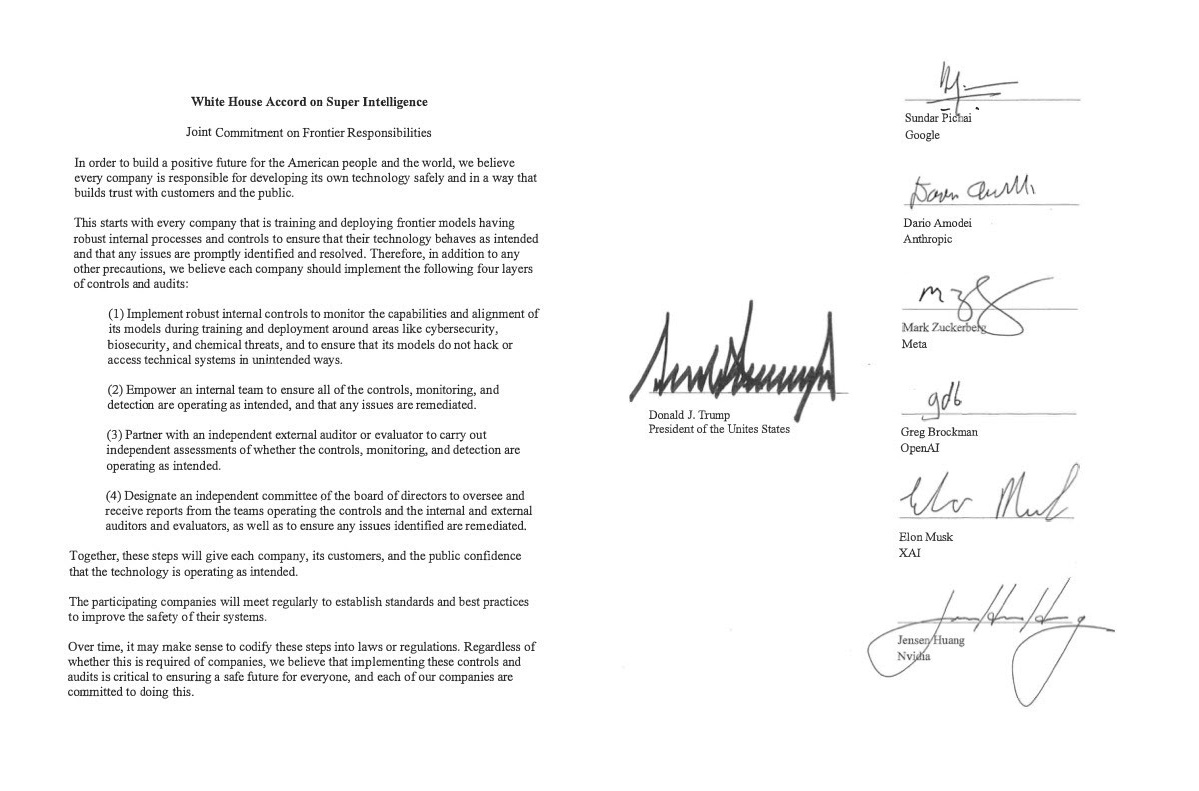
Shibbir Ahmed, Washington DC  — The White House has unveiled an accord with leading technology companies outlining a voluntary framework for strengthening safeguards around the development and deployment of advanced artificial intelligence systems. Titled the “White House Accord on Super Intelligence: Joint Commitment on Frontier Responsibilities,” the agreement calls on companies developing and deploying frontier AI models to establish robust internal controls, independent evaluations and board-level oversight.

The accord says companies have a responsibility to develop their technologies safely and in a manner that builds trust among customers and the public. It identifies four layers of controls and audits that participating companies should implement.

The first layer involves internal controls designed to monitor the capabilities and alignment of AI models during both training and deployment. The controls would cover risks involving cybersecurity, biosecurity and chemical threats, while also seeking to prevent AI systems from accessing or hacking technical systems in unintended ways.

The second layer calls for companies to establish dedicated internal teams responsible for ensuring that safety controls, monitoring and detection systems are functioning as intended. Those teams would also be responsible for ensuring that identified problems are addressed.

The third layer involves independent external auditors or evaluators. These outside reviewers would assess whether a company’s controls, monitoring and detection mechanisms are operating properly.

White House Accord on Super Intelligence — Joint Commitment on Frontier Responsibilities . Photo WH

The fourth layer would place responsibility at the board level, with companies designating an independent board committee to oversee the safety framework and receive reports from internal teams and external auditors. The committee would also monitor the remediation of problems identified through the oversight process.

According to the accord, the four-layer system is intended to provide companies, their customers and the public with greater confidence that advanced AI technologies are operating as intended. Participating companies are also expected to meet regularly to develop common standards and best practices aimed at improving the safety of their systems.

The document leaves open the possibility that the measures could eventually become part of formal government regulation. It states that, over time, it may be appropriate to codify the safeguards into laws or regulations, while emphasizing that the companies are committed to implementing the controls regardless of whether they are legally required.

The agreement was released following a White House meeting with leading technology executives on September 29. Reporting on the accord identifies Google CEO Sundar Pichai, Meta CEO Mark Zuckerberg, Anthropic CEO Dario Amodei, OpenAI President Greg Brockman, xAI CEO Elon Musk and Nvidia CEO Jensen Huang among the participating executives.

The accord focuses specifically on governance, monitoring and auditing of increasingly capable AI systems, rather than establishing detailed technical standards or specific implementation deadlines.


UNGA President Khalilur Rahman Calls Nuclear Disarmament a Top Priority

Shibbir Ahmed, New York — United Nations General Assembly President Dr. Khalilur Rahman called for urgent action to reduce nuclear risks and eliminate nuclear weapons, declaring that nuclear disarmament must remain the world’s highest disarmament priority. Speaking Tuesday at a high-level plenary meeting at UN Headquarters in New York to commemorate the International Day for the Total Elimination of Nuclear Weapons, Rahman warned that the global nuclear threat remains serious and is being compounded by growing geopolitical tensions and emerging technologies.

“The starting point must be a simple truth, reaffirmed in the Pact for the Future: a nuclear war cannot be won and must never be fought,” Rahman said.

He noted that the global nuclear inventory stood at more than 12,000 warheads as of January 2026, with an estimated 2,100 to 2,200 maintained on high operational alert. He also warned that, for the first time since the end of the Cold War, the global stockpile is expected to grow again as new warheads enter arsenals faster than older ones are dismantled.

Growing nuclear risks

Rahman said new technologies, including artificial intelligence, cyber capabilities and advanced delivery systems, are creating additional uncertainty around nuclear command, control and decision-making. He also pointed to the expiration of the New START treaty on February 5, 2026, saying that, for the first time since 1972, there are no binding limits on strategic nuclear arsenals.

The 2026 Review Conference of the Nuclear Non-Proliferation Treaty also ended without a consensus outcome, marking the third consecutive Review Conference to do so, according to Rahman.

“These are not abstract diplomatic setbacks,” Rahman said. “They increase the risks of arms racing, escalation, and catastrophic miscalculation.”

Four areas for action

Rahman called for action on four fronts: restoring dialogue and safeguards, strengthening the international nuclear non-proliferation system, reducing and ultimately eliminating nuclear arsenals, and mobilizing the public around nuclear disarmament. He urged nuclear powers to return to negotiations and establish frameworks that provide verifiable limits, transparency and predictability. He also called for stronger crisis communication and measures to reduce nuclear risks.

The General Assembly president reaffirmed the importance of the Nuclear Non-Proliferation Treaty and the role of the International Atomic Energy Agency in safeguards and verification. He also called on states that have not signed or ratified the Comprehensive Nuclear-Test-Ban Treaty to do so and urged all countries to maintain the moratorium on nuclear weapons testing.

‘Highest disarmament priority’

Rahman said nuclear-weapon states should take concrete, transparent, verifiable and irreversible steps toward disarmament, including reducing the role of nuclear weapons in security doctrines and lowering their operational readiness.

He also highlighted the role of survivors, civil society, young people, scientists and educators in keeping the human consequences of nuclear weapons at the center of international discussions. Despite the continuing risks, Rahman pointed to progress in nuclear disarmament, noting that the global inventory has fallen from roughly 70,000 warheads in 1986 to about 12,000 today.

“If the United Nations is to get back to basics – to prevent the scourge of war – then nuclear disarmament must remain our highest disarmament priority, just as it was at the birth of this Organization,” Rahman said. He urged governments to restore safeguards, reduce nuclear risks and work toward a world free of nuclear weapons.


UN Condemns Deadly Myanmar Airstrike, Urges Halt to Deportations

Shibbir Ahmed, New York — The United Nations has strongly condemned an airstrike in Myanmar’s Rakhine State that reportedly killed at least 50 people at a busy market and urged authorities to halt the deportation of Myanmar nationals from Malaysia. According to the UN, forces from Myanmar’s military junta reportedly struck Kyauktaw township around midday Monday, when more than 200 shops were operating. Women and children were among those killed, while at least 58 people were injured, many critically. The death toll is expected to rise.

UN High Commissioner for Human Rights Volker Türk said the attack raised serious concerns over respect for international humanitarian law. He also highlighted continuing abuses against the Rohingya by both Myanmar’s military and the Arakan Army.

UN urges Malaysia to halt deportations

The airstrike came as Malaysia began implementing a plan to deport some 5,000 Myanmar nationals. Malaysia has said the returns would be voluntary, following an agreement reportedly reached with Myanmar’s military rulers. The UN refugee agency, UNHCR, said it had not been involved in identifying those being returned and noted that some of the people were reportedly being held in detention centers.

Mr. Türk called on Malaysia to immediately halt the deportation process, warning that conditions in Myanmar remain “far from safe and sustainable.” UN Secretary-General António Guterres also called for a halt to the reported return of around 1,500 people. UNHCR stressed that no one should be returned to a place where they face a risk of persecution or torture.

UN releases emergency funds for drought-hit Africa

Meanwhile, UN relief chief Tom Fletcher has released millions of dollars from the Central Emergency Response Fund to prepare for the worsening effects of El Niño-driven drought in South Sudan, Zimbabwe and Chad. South Sudan will receive $6 million for early action, including food, health, nutrition, protection, water and sanitation services. More than 10 million people in the country already need humanitarian assistance.

Zimbabwe will receive $4 million for anticipatory measures, while $3.6 million will support 350,000 people in Chad ahead of worsening dry conditions. The funding will also support early warning systems, cash assistance, livestock feed, malnutrition services and disease surveillance.

Israeli fire reported near UN sites in Gaza

In Gaza, the UN humanitarian office, OCHA, said Israeli fire had been reported near UN facilities and humanitarian convoys on several occasions in recent days. No casualties were reported, but the UN stressed that civilians, aid workers and humanitarian operations must be protected. Humanitarian operations have continued, with protection partners providing mental-health support and other services to about 13,000 Palestinians during the third week of September.

Aid agencies also distributed food parcels, adult diapers, assistive devices and hygiene supplies to displaced families. UNRWA said 1,394 Palestinians had been killed since the faltering October 2025 ceasefire, citing local health authorities, while about 94 percent of the population requires shelter assistance.

Settler attacks continue in West Bank

OCHA also reported continuing settler attacks in the occupied West Bank. Several houses were damaged in Jalud, in the Nablus governorate, while a water network serving Palestinians in Tubas was vandalized and vehicles carrying water and produce were seized. OCHA said it has recorded more than 1,600 settler attacks so far this year—an average of 6.7 attacks a day, compared with five a day in 2025. More than 4,300 Palestinians have been displaced.


Trump Launches America.gov as Unified Digital Gateway to U.S. Government Services

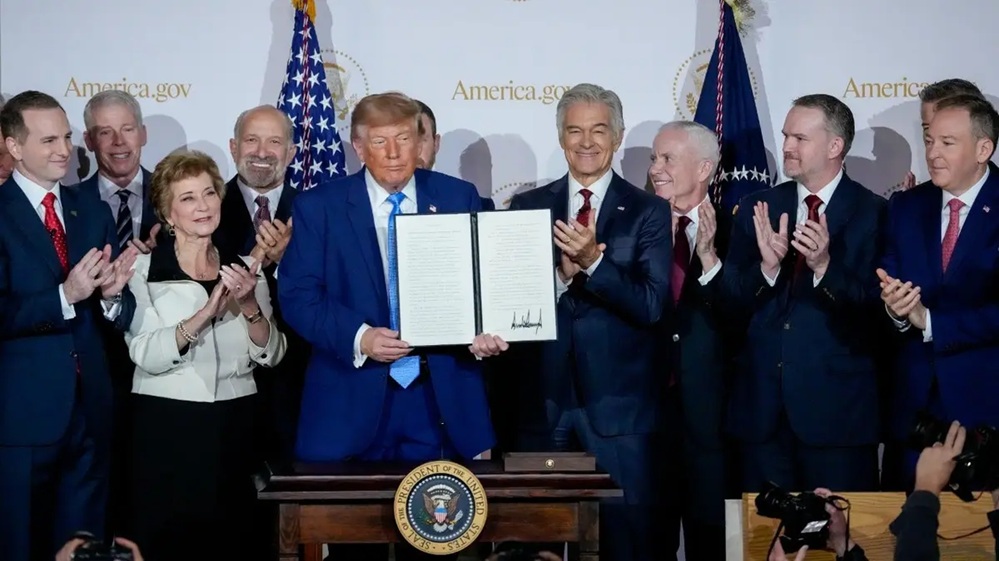
Shibbir Ahmed, Washington DC — President Donald Trump on Tuesday launched America.gov, a new digital platform designed to provide Americans with a single entry point to federal government information and services, as the administration seeks to simplify how people interact with the U.S. government. The platform was unveiled September 29 in Washington alongside an executive order directing the establishment of America.gov as a unified digital “front door” for Americans seeking federal information and covered online services.

The administration says America.gov uses artificial intelligence and information drawn from government websites to help users find answers and navigate federal services through a conversational interface. The U.S. General Services Administration said America.gov combines information from more than 29,000 government websites with AI-enhanced search technology, allowing users to find information and guidance without having to navigate a fragmented network of individual agency websites.

The executive order says Americans have traditionally been required to search across multiple federal agencies, interpret government terminology, provide the same information repeatedly and verify their identities through different systems. America.gov is intended to change that process by providing a single digital point of entry through which users can communicate in plain language, receive information and, where authorized and technically available, complete federal government transactions.

AI-powered access to federal services

The new platform is designed to allow users to describe what they need rather than determine which federal agency is responsible for providing the service. The GSA said the platform can help users find information about government benefits, passport services, Social Security and other federal needs. The administration’s executive order directs federal agencies to identify qualifying online services and integrate them with America.gov in a secure and privacy-preserving manner.

President Donald Trump holds up the executive order establishing America.gov during its launch event in Washington, D.C., on September 29, 2026. Administration officials joined the president at the event. Photo: WH

The order also calls for the integration of Login.gov as the authentication service for America.gov. Under the plan, agencies will continue to maintain control over their own records, systems, statutory responsibilities and decision-making authority. The order specifically states that the unified access system is not intended to create a centralized federal system of records about Americans. Privacy protections are also included in the order, including data minimization, secure authentication, auditable authorization and disclosure practices consistent with federal law.

Passport services among planned features

Secretary of State Marco Rubio said at the launch event that the State Department is partnering with America.gov to overhaul the passport application experience. Rubio announced that, beginning next year, Americans will be able to apply for their first U.S. passport entirely online. Applicants will be able to sign in through Login.gov, use information already held by the government where available, submit a photograph from a phone or other device, make a payment and track the status of the application. Rubio said the administration’s goal is for the vast majority of Americans to be able to apply for a passport or passport card through America.gov by the end of 2027.

Agencies given 90 days for implementation guidance

The executive order directs the Office of Management and Budget to issue implementation guidance to federal agencies within 90 days. Agencies will then be required to identify covered services, integrate those services with America.gov where appropriate and provide usage and performance information to the General Services Administration and OMB. The order defines covered services generally as public-facing federal services that serve more than 100,000 users during a 12-month period and can be accessed or applied for online. The order excludes Internal Revenue Service tax filing services, as well as services provided by the Department of War and elements of the Intelligence Community.

Existing government services will remain available

The administration says America.gov is intended to provide an additional, simplified way to access federal services rather than eliminate existing methods. The executive order specifically preserves existing lawful methods of obtaining government services, including in-person, telephone, mail and agency-specific digital services. That means Americans will not be required to use America.gov as the sole method of interacting with the federal government.

New passport design planned for 2028

Rubio also unveiled the planned design of a new U.S. passport expected in 2028. The redesigned passport features the American eagle and the Great Seal and includes artwork depicting major moments in U.S. history. Rubio said the new passport will visually represent 250 years of American history, with imagery ranging from the Revolutionary era and westward expansion to aviation, the raising of the American flag at Iwo Jima and the Artemis space program. The State Department also plans to change how the passport is packaged and delivered.

America.gov represents broader government technology push

The launch comes as the Trump administration expands its focus on artificial intelligence and digital technology as tools for government services. The new website is currently centered on AI-assisted information access, while additional transaction capabilities are expected to be introduced as federal agencies integrate their services with the platform.

The administration has described America.gov as a fundamental shift toward organizing government services around the needs of citizens rather than around the structure of federal agencies. For Americans, the intended result is a single digital starting point for finding federal information, understanding available services and eventually completing more government transactions online.