U.S. Plans Weekly Sanctions on Iran as Military Tensions Escalate

Shibbir Ahmed, WASHINGTON DC — The United States is preparing to intensify economic pressure on Iran with a new campaign of weekly secondary sanctions, Treasury Secretary Scott Bessent said Monday, as military tensions between Washington and Tehran sharply escalated.

Bessent told Reuters that the U.S. Treasury Department is expected to announce new secondary sanctions every week, beginning with measures targeting banks and financial institutions that help Iran maintain access to international markets.

The planned measures are designed to further restrict Iran’s access to the global financial system and increase pressure on institutions and countries that continue doing business with Tehran. The announcement comes as the United States and Iran have entered their most serious period of renewed hostilities in weeks.

U.S. forces struck two Iranian launchers on Larak Island on Sunday after American forces identified what U.S. officials said were preparations by Iran’s Islamic Revolutionary Guard Corps to launch rockets carrying sea mines into the Strait of Hormuz.

Iran responded by launching missiles toward U.S. military bases in Jordan, according to U.S. and Iranian officials. The attacks marked the first direct exchange of fire between the two sides in about a month. President Donald Trump on Monday warned that the United States would respond forcefully to Iran’s attacks. The latest escalation has raised concerns about a wider regional conflict, particularly because of the strategic importance of the Strait of Hormuz, a critical route for global oil shipments.

Financial Pressure on Iran

The planned sanctions would expand the use of so-called secondary sanctions, which can penalize foreign companies, banks and other institutions that conduct certain business with Iran even when those entities are not based in the United States.

Bessent said the campaign would initially focus on banks and could increasingly target institutions that help Iran move money through the international financial system. The Treasury secretary’s announcement represents a further expansion of the administration’s economic campaign against Tehran.

The United States has already broadened the range of Iranian economic activities that could expose foreign businesses to secondary sanctions, including sectors such as digital assets, gold, technology, aviation and shipping.

Last week, the Treasury Department launched what it described as an unprecedented campaign against Iranian financial networks, targeting channels used by Tehran to generate revenue, evade sanctions and finance activities opposed by Washington.

Military Tensions Add to Economic Pressure

The new sanctions strategy comes as diplomatic and military tensions continue to worsen. The U.S. military said its strike on Larak Island was aimed at preventing Iran from deploying sea mines in the Strait of Hormuz. Iran has rejected the U.S. justification and warned that it would respond to further attacks.

Following the Iranian missile launches toward U.S. forces in Jordan, Trump said the United States would respond strongly. Reuters reported that the exchange of attacks represents a renewed escalation after a period in which the two sides had avoided direct military confrontation.

The conflict has also affected global energy markets. Brent crude oil futures settled more than 2.5% higher on Monday after the latest U.S.-Iran military exchanges, reflecting renewed concerns over the security of oil shipments through the Strait of Hormuz.

Pressure on Iran’s Financial Lifelines

The Trump administration has increasingly focused on Iran’s financial networks as part of its broader strategy to weaken Tehran’s ability to fund its government, military and regional activities.

The planned weekly sanctions would represent a significant escalation because foreign financial institutions could face increasing pressure to choose between maintaining business relationships with Iran and retaining access to the U.S.-dominated international financial system.

For Iran, the measures could further complicate access to foreign currency, international banking services and overseas trade. For the United States and its allies, however, the strategy carries its own risks, particularly if increased economic pressure contributes to further military escalation or disruption of global energy supplies.

With the United States preparing additional sanctions and military tensions rising, the coming days could determine whether the latest confrontation remains limited or develops into a broader regional crisis.

Trump Announces Drug-Price Deals With 9 More Pharmaceutical Companies

Shibbir Ahmed, WASHINGTON DC — President Donald Trump on Monday announced new agreements with nine pharmaceutical manufacturers aimed at lowering prescription drug prices for Americans, expanding his administration’s effort to tie U.S. drug prices to the lower prices paid in other developed countries.

The White House said the agreements bring the total number of pharmaceutical manufacturers participating in the administration’s Most-Favored-Nation (MFN) drug-pricing program to 26, covering about 89% of the branded-drug market.

The nine companies joining the latest agreements are Alcon, Astellas Pharma, BeOne Medicines, BridgeBio, CSL, Kyowa Kirin, Sun Pharma, Teva Pharmaceuticals and UCB.

Under the agreements, the companies will provide MFN pricing to state Medicaid programs across the United States on eligible medicines. The White House said the deals cover drugs used to treat a range of serious and chronic conditions, including hemophilia, Parkinson’s disease, macular degeneration, glaucoma, liver disease, skin conditions and cancer.

The administration’s MFN strategy seeks to align prices paid in the United States with the lowest prices paid by comparable developed nations.

$19.6 Billion U.S. Manufacturing Investment

The new agreements also include commitments to strengthen pharmaceutical manufacturing in the United States. According to the White House, the nine companies have collectively committed to invest at least $19.6 billion in U.S. manufacturing in the near term.

Several companies have additionally agreed to provide active pharmaceutical ingredients to the federal government’s Strategic Active Pharmaceutical Ingredients Reserve, which is intended to strengthen domestic pharmaceutical supply chains and reduce dependence on foreign sources.

UCB, for example, will contribute 163 tons of levetiracetam, a drug used to control and prevent seizures. Sun Pharma will contribute supplies of the antibiotics clindamycin and doxycycline, while Teva will provide metronidazole and amlodipine. Astellas will contribute tacrolimus, an immunosuppressant used to help prevent organ rejection following transplants.

Administration Projects Major Savings

The White House says patients have already saved more than $700 million through TrumpRx, the administration’s prescription-drug discount platform, since its launch in February.

The administration also says more than 500,000 seniors have saved a combined $216 million since July through a program offering certain GLP-1 obesity medicines for $50 a month to seniors without coverage for those drugs.

The White House’s Council of Economic Advisers estimates that the administration’s broader MFN agreements could generate approximately $600 billion in savings over the next decade. That figure is an administration estimate rather than an independently verified projection.

Part of Trump’s Broader Drug-Pricing Push

Trump ordered his administration in May 2025 to pursue Most-Favored-Nation pricing for prescription medicines, seeking to bring U.S. prices closer to those paid in other developed countries.

The administration subsequently reached agreements with major pharmaceutical manufacturers, including Pfizer, AstraZeneca, Eli Lilly, Novo Nordisk, Amgen, Bristol Myers Squibb, Merck, Novartis, Sanofi and others.

Trump launched TrumpRx.gov in February 2026 as part of the administration’s effort to make lower-priced medicines available directly to American consumers through participating manufacturers and pharmacies.

Reuters reported Monday that the latest agreements include a mix of international pharmaceutical companies and smaller biotechnology firms, expanding the program beyond the large drugmakers that participated in earlier rounds.

The new agreements come as prescription-drug affordability remains a major issue for American consumers and as the Trump administration prepares for the November midterm elections.

The White House is also calling on Congress to advance what it describes as the “Great Healthcare Plan,” which the administration says would seek to lower drug prices and insurance premiums while increasing price transparency.

For Americans, the practical impact of Monday’s agreements will depend on which medicines receive the new pricing arrangements, when the lower prices take effect and how the discounts are implemented through Medicaid and participating drug programs. The White House announcement marks the latest and one of the largest expansions of Trump’s MFN drug-pricing initiative since it began in 2025.


9/11 at 25: New ‘In Their Honor’ Exhibition Unveiled in New York

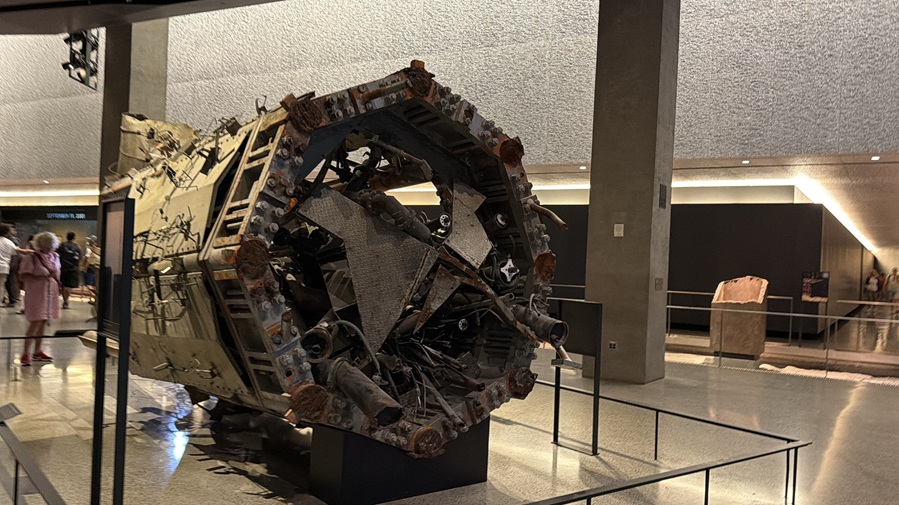
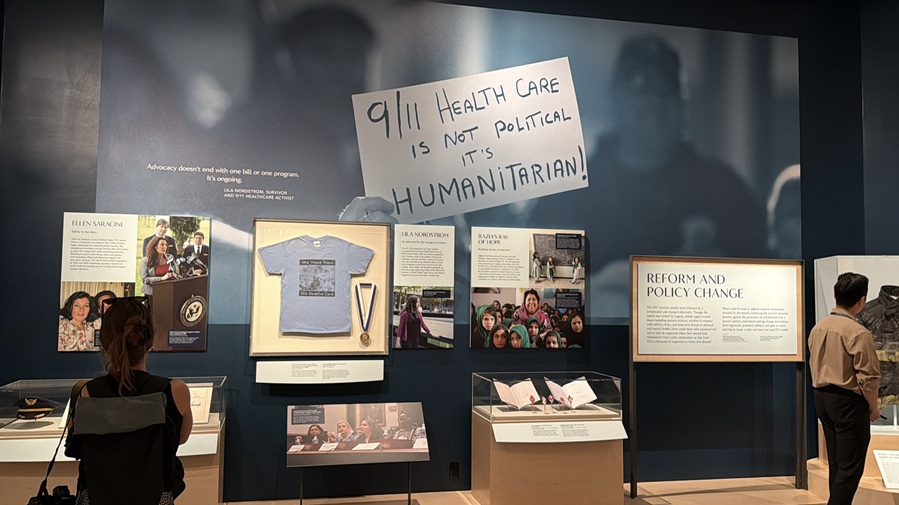
Shibbir Ahmed, NEW YORK — The 9/11 Memorial & Museum on 31St August Monday unveiled a new exhibition highlighting the enduring legacy of service inspired by the September 11 attacks, as New York prepares to mark the 25th anniversary of the tragedy. Titled “In Their Honor: 25 Years of 9/11-Inspired Service,” the exhibition offers a look at how individuals and communities transformed the aftermath of the attacks into acts of service and public commitment.

The exhibition was previewed for members of the media during a briefing at the 9/11 Memorial & Museum in Lower Manhattan. It will open to the public on September 12, 2026, one day after the 25th anniversary of the attacks.

The afternoon program began with remarks from Beth Hillman, President and CEO of the 9/11 Memorial & Museum, followed by comments from 9/11 family member Logan Miller and Noah Rauch, Senior Vice President of Education and Public Programming.

The museum’s new exhibition comes as New York and the nation prepare for a major commemoration of the nearly 3,000 people killed in the September 11, 2001 terrorist attacks. The exhibition focuses on the continuing impact of September 11 beyond the immediate loss of life, emphasizing the service and civic engagement that emerged in the years following the attacks.

Museum officials said the exhibition explores the ways people responded to the attacks through service, volunteering and efforts to help others, demonstrating how the legacy of September 11 continues to shape communities a quarter-century later.

Monday’s media program also included a guided preview of the exhibition, giving journalists an early look before its public opening. The museum is also preparing for the 25th-anniversary commemoration on September 11, which will bring families of victims, survivors, first responders and government and community leaders together at the World Trade Center site.

As the anniversary approaches, the museum’s programming is placing particular emphasis not only on remembering those who were killed, but also on the long-term consequences of the attacks and the continuing acts of service inspired by their memory.

The 25th anniversary will mark a quarter-century since the attacks on the World Trade Center, the Pentagon and United Airlines Flight 93. For many families and survivors, the anniversary remains both a day of remembrance and an opportunity to reflect on how the events of September 11 have shaped the lives of subsequent generations. The “In Their Honor” exhibition will open to visitors at the 9/11 Memorial & Museum on September 12.


Trump Announces Historic $65B-Barrel Venezuela Oil Deal

Shibbir Ahmed, WASHINGTON DC — U.S. President Donald Trump has announced what he called the “biggest oil deal in world history,” saying the United States has secured majority control of more than 65 billion barrels of proven Venezuelan oil reserves through partnerships with private businesses. The agreement places Venezuela’s vast oil resources at the center of a new U.S.-Venezuela energy relationship and could reshape the global oil market.

Trump said Secretary of State Marco Rubio and Secretary of War Pete Hegseth worked with Venezuelan interim President Delcy Rodríguez to finalize the agreement. Trump also said the arrangement would come at no cost to American taxpayers. The agreement reportedly covers the development of 17 strategic Venezuelan oil fields with a proven potential of about 65 billion barrels. The plan also includes expansion into eight additional oil blocks.

25-Year Energy Agreement

Rodríguez said Sunday that the broader energy agreement will remain in effect for 25 years and is designed to significantly increase Venezuela’s oil production. The initial target is approximately 1.5 million barrels per day, compared with current production of around 1.25 million barrels per day. Venezuela holds the world’s largest proven oil reserves but has struggled for years with declining production, damaged infrastructure and sanctions.

Rodríguez said Venezuela would retain sovereignty over its natural resources while using the agreement to attract investment and rebuild its oil industry. She estimated that the agreement could generate approximately $209 billion in revenue for the Venezuelan government, based on an assumed oil price of $65 a barrel.

What Does the U.S. Actually Control?

Despite Trump’s description of the agreement, the 65 billion barrels should not be interpreted as the United States simply acquiring 65 billion barrels of oil. The agreement concerns control and development rights over oil reserves through public-private partnerships. Reuters reported that Trump provided few details when he first announced the agreement, saying the U.S. had secured majority control of more than 65 billion barrels of proven Venezuelan reserves through a partnership with private business.

Other reports indicate that the structure could give a U.S.-linked joint venture a majority share of production from the fields, while Venezuela continues to assert ownership and sovereignty over its natural resources. The precise financial and legal structure of the agreement remains an important issue as additional details emerge.

Billions of Dollars in Investment

Reviving Venezuela’s oil sector will require substantial investment. Much of the country’s energy infrastructure has deteriorated after years of underinvestment, economic turmoil and sanctions. The agreement is expected to bring major American private-sector involvement into Venezuela’s oil industry, with companies including Chevron positioned to participate in the new framework.

For Washington, the deal could provide greater access to one of the world’s largest petroleum reserves while potentially increasing global oil supplies. For Caracas, the agreement represents an opportunity to rebuild its energy industry, increase production and generate badly needed government revenue.

Global Energy Implications

The scale of the agreement makes it significant well beyond Venezuela and the United States. A sustained increase in Venezuelan production could add substantial heavy crude supplies to international markets and strengthen the country’s position as a major global energy producer. The deal could also deepen U.S. influence over Venezuela’s economy and energy sector, raising questions about sovereignty, investment, environmental concerns and the future balance of power in Latin America’s oil industry.

For now, the agreement represents one of the most consequential developments in the global oil market in years — and its ultimate impact will depend on how quickly Venezuela’s damaged infrastructure can be rebuilt and production expanded.


Meta Reaches $1 Billion Texas Settlement Over Child Safety

AUSTIN, Texas — Meta Platforms, the parent company of Facebook and Instagram, has agreed to pay more than $1 billion to the state of Texas and implement new protections for children and teenagers on its platforms as part of a major settlement over online child safety.

The settlement was announced by Texas Attorney General Ken Paxton on Aug. 26. Under the agreement, Meta will provide more than $1 billion to Texas, with the funds directed toward youth mental-health services, crisis resources, digital-literacy programs, after-school initiatives and grants for Texas schools.

The agreement also requires Meta to introduce a range of new safeguards for younger users on Facebook and Instagram.

Among the measures outlined by the Texas Attorney General’s Office are stricter age-assurance requirements, a default two-hour daily usage limit for teenagers, and notifications that will be disabled by default during school hours unless a parent changes the setting. Likes and reactions will also be hidden by default for younger users to reduce social comparison.

Meta will additionally introduce a nighttime access mode designed to restrict notifications and certain other features for children during specified nighttime hours. The company will continue measures aimed at limiting age-inappropriate content and supporting parental supervision.

Texas Calls Settlement a Major Win

Paxton described the agreement as a major step toward strengthening online protections for children. “This is a historic settlement and a major win for the safety of Texas children,” Paxton said in announcing the deal.

The Texas settlement follows allegations that Meta’s platforms failed to adequately protect children and teenagers online. The agreement resolves the state’s case against the company without requiring Meta to admit wrongdoing.

Separate From Multistate Meta Settlement

The Texas agreement should not be confused with a separate, much larger settlement Meta reached with dozens of other states over allegations involving Facebook and Instagram’s impact on young users.

That multistate agreement is worth up to roughly $17 billion and involves 29 states, according to Reuters. It includes measures such as limits on children’s daily usage, restrictions on nighttime access and additional safety protections. Meta has denied wrongdoing.

Texas was not part of that multistate case and negotiated its own agreement with Meta. The two settlements nevertheless represent a major escalation in efforts by U.S. states to hold social-media companies accountable for the safety and well-being of young users.

More Changes Ahead for Teen Social Media

The Texas agreement comes as lawmakers, state attorneys general and families across the United States continue to scrutinize the effects of social-media platforms on children. Meta’s new requirements in Texas are expected to affect how teenagers use Facebook and Instagram, including how much time they spend on the platforms and when they receive notifications.

Paxton’s office said the settlement is part of its broader effort to strengthen protections for children online. The Texas Attorney General is also scheduled to take TikTok to trial in the fall of 2026 in a separate case involving allegations related to child safety.

The agreements involving Meta could ultimately become an important test of how far state governments can go in requiring technology companies to change the design and operation of social-media platforms to protect minors.


UN Urges Action to End Enforced Disappearances on International Day

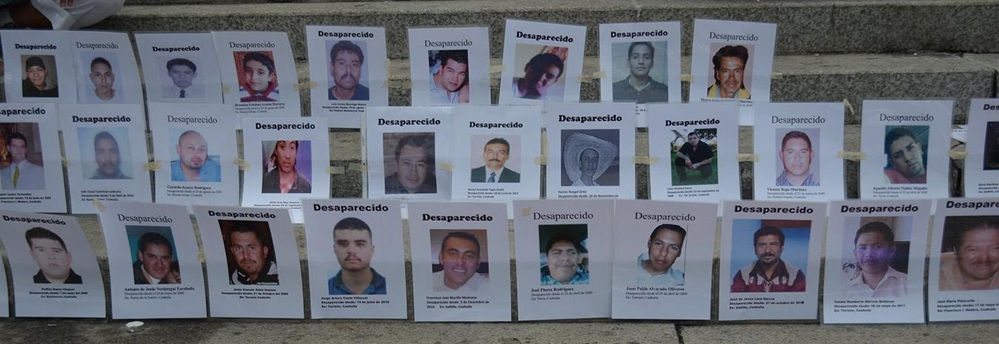
Shibbir Ahmed, UNITED NATIONS, NY — The United Nations is marking the International Day of the Victims of Enforced Disappearances on Sunday with renewed calls for governments to address the fate of missing people, protect victims and their families, and ensure truth and justice for those affected by enforced disappearance.

The annual observance, held on August 30, highlights the continuing suffering of people whose relatives have disappeared after being arrested, detained or otherwise taken into state custody while authorities deny or conceal their whereabouts.

UN human rights experts said the impact of enforced disappearance extends far beyond the individual victim. Families can be left for years without information about what happened to their loved ones, while communities can suffer social and economic consequences. The UN has described enforced disappearance as a serious human-rights violation that can also be used to spread fear throughout society.

The 2026 observance is particularly significant because it marks 20 years since the adoption of the International Convention for the Protection of All Persons from Enforced Disappearance. The convention was adopted by the UN General Assembly in 2006 and established an international legal framework aimed at preventing enforced disappearances and protecting people from the practice.

The UN Committee on Enforced Disappearances and the Working Group on Enforced or Involuntary Disappearances have used this year’s observance to renew attention to victims and their families and to the need for effective measures to prevent disappearances and clarify the fate of those who remain missing.

A Continuing Global Human Rights Challenge

Enforced disappearance occurs when people are arrested, detained or abducted by, or with the authorization, support or acquiescence of state authorities, followed by a refusal to acknowledge the person’s detention or to provide information about their whereabouts.

The consequences can continue for decades. Families may remain uncertain whether their relatives are alive or dead, while the lack of information can prevent them from obtaining justice, reparations and other forms of support.

The UN has repeatedly stressed that resolving cases of enforced disappearance requires credible investigations, accountability and access to information for families.

The International Day also serves as a reminder of the broader obligations of governments under international human-rights law to prevent enforced disappearance and investigate allegations when they occur.

Twenty Years of the UN Convention

The International Convention for the Protection of All Persons from Enforced Disappearance was adopted on December 20, 2006. It entered into force in 2010 and created the Committee on Enforced Disappearances to monitor implementation by states parties.

The convention recognizes the right of every person not to be subjected to enforced disappearance and calls on states to take measures to prevent the practice and ensure accountability. Two decades after its adoption, the UN continues to call for stronger implementation of the convention and greater protection for victims and their families.

The UN’s message on August 30 remains clear: families searching for missing relatives should not be left without answers, and enforced disappearance must not be allowed to remain a tool of fear, impunity or denial.


Trump Awards Congressional Space Medal of Honor to Artemis II Crew

Shibbir Ahmed, HOUSTON, Texas — President Donald Trump awarded the Congressional Space Medal of Honor to the four astronauts of NASA’s Artemis II mission Friday, honoring their historic journey around the Moon and their contribution to the future of human space exploration.

Trump presented the medals to NASA astronauts Reid Wiseman, Victor Glover and Christina Koch, along with Canadian Space Agency astronaut Jeremy Hansen, during a ceremony at NASA’s Johnson Space Center in Houston. NASA confirmed that the four astronauts received the nation’s highest space honor for their service during the Artemis II mission.

The Artemis II crew made history earlier this year by becoming the first humans in more than five decades to travel around the Moon. During the mission, the astronauts traveled farther from Earth than any humans had previously gone, testing NASA’s Orion spacecraft and the Space Launch System ahead of future crewed lunar missions.

The crew consisted of Mission Commander Reid Wiseman, Pilot Victor Glover, Mission Specialist Christina Koch and Canadian Space Agency Mission Specialist Jeremy Hansen.

During the ceremony, Wiseman emphasized that the achievement belonged not only to the four astronauts but also to their families, NASA teams and the international community that supported the mission.

The Congressional Space Medal of Honor was authorized by Congress in 1969 to recognize astronauts whose exceptional service and achievements have made significant contributions to the welfare of the nation and humanity.

Trump Announces U.S. Space Academy

The medal ceremony was also accompanied by another major announcement about America’s future in space. Trump signed an executive order establishing a commission to develop the nation’s first U.S. Space Academy, according to NASA. The proposed institution is intended to help develop the next generation of space professionals and support the growing needs of NASA, the U.S. Space Force and the civilian space industry.

NASA Administrator Jared Isaacman is set to chair the commission responsible for developing the framework for the new academy. The initiative is part of the administration’s broader effort to strengthen U.S. leadership in space.

The White House described the Artemis II crew as pioneers whose mission demonstrated the United States’ continued commitment to human space exploration. The White House also released video of Trump presenting the Congressional Space Medal of Honor to the crew.

The Artemis II mission is expected to serve as a foundation for subsequent Artemis missions aimed at returning astronauts to the lunar surface and establishing a sustained human presence around and on the Moon.


Irene Khan Takes Office as Bangladesh’s UN Representative

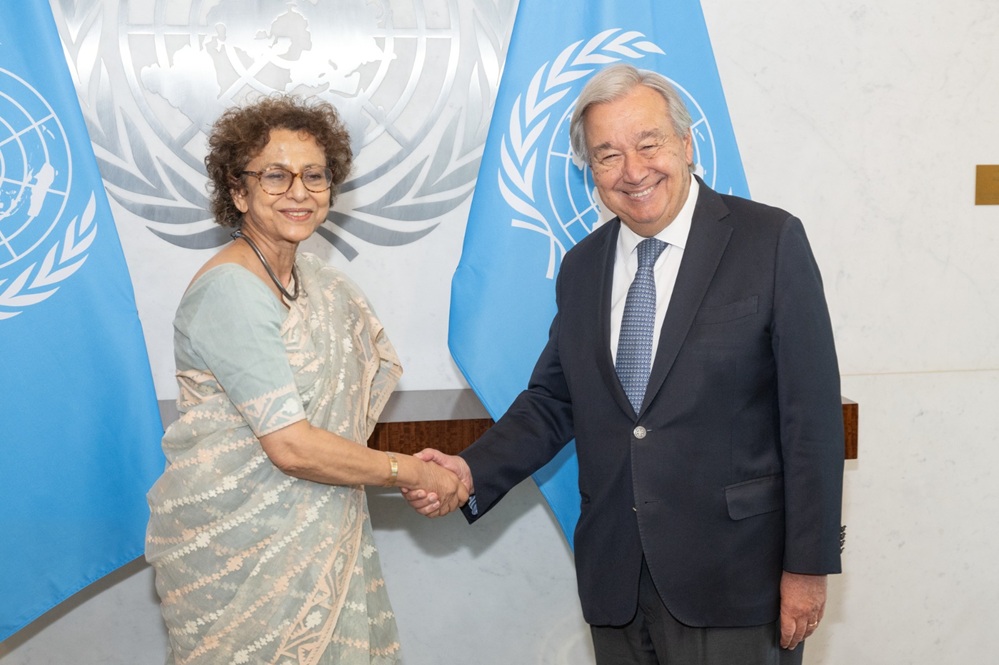
Shibbir Ahmed, UN, New York: Irene Zubaida Khan, a veteran international human rights advocate, has taken office as Bangladesh’s Permanent Representative to the United Nations in New York. Khan presented her credentials to United Nations Secretary-General António Guterres at UN Headquarters in New York on Friday, formally assuming her role as Bangladesh’s envoy to the world body.

She brings decades of experience in human rights, international law, refugee protection, the rule of law and sustainable development, including senior roles at the United Nations and other international organizations.

Before taking up her new role, Khan had served since 2020 as the UN Special Rapporteur on the promotion and protection of the right to freedom of opinion and expression. From 2001 to 2009, she served as Secretary-General of Amnesty International, becoming the first woman to lead the organization.

From 2012 to 2019, Khan served as Director-General of the International Development Law Organization (IDLO). Earlier in her career, she spent 21 years with the Office of the United Nations High Commissioner for Refugees (UNHCR), holding a number of senior positions including Chief of Mission in India and Deputy Director of the Division of International Protection.

Khan received the Sydney Peace Prize in 2006 and is the author of The Unheard Truth: Poverty and Human Rights. She studied law at the University of Manchester and Harvard Law School.


Trump Signs Executive Order to Develop United States Space Academy

Shibbir Ahmed, WASHINGTON, D.C. — President Donald J. Trump has signed an executive order establishing a Presidential Commission to develop plans for a proposed United States Space Academy, a NASA-led federal academy designed to train future leaders in space exploration, national security, science and technology. The order describes space as a critical domain for U.S. national security, economic growth, scientific discovery and technological innovation. It calls for greater opportunities to educate and develop the next generation of astronauts, scientists, engineers, operators, entrepreneurs, civil servants and military personnel.

The executive order does not immediately establish the academy as a fully operational federal institution. Instead, it creates a commission that will develop recommendations for its structure, curriculum, admissions, location and implementation.

NASA Administrator to Chair Commission

Under the order, the NASA Administrator will serve as chair of the Presidential Commission on the United States Space Academy. The Assistant to the President for Science and Technology and the Assistant to the President for Economic Policy will serve as vice chairs, while the NASA Deputy Administrator will serve as executive director.

The commission will also include senior officials or their designees from the Department of War, the White House, the Office of Management and Budget, the National Security Council and the Department of the Air Force. The chair may invite additional federal employees to participate in the commission.

Commission Given 120 Days

The commission has been directed to submit a report to the President within 120 days of the executive order. The report will recommend how the proposed academy should be organized and governed, including its legal authority, accreditation and relationship with federal agencies. The commission must specifically evaluate the possibility of establishing the Space Academy within NASA.

Curriculum and Leadership Training

The proposed academy is envisioned as an institution combining rigorous technical education with leadership development, discipline and public service. The commission will recommend potential degree programs, experiential training and leadership-development programs. According to the order, the goal is to develop a professional corps of leaders capable of advancing U.S. interests across the space domain.

Military and Federal Service Could Be Required

The commission will also examine whether graduates should be subject to service obligations. Those recommendations must address potential service in the U.S. Armed Forces as well as civilian federal service. The order does not establish a specific service requirement. Instead, it directs the commission to determine how such obligations could work and under what conditions they would be fulfilled.

Admission Requirements Under Review

The commission will recommend prerequisites for applicants, including possible requirements involving U.S. citizenship, Security clearances, Government employment and Military status. The final admission requirements have not yet been established.

Location Has Not Been Selected

The permanent location of the proposed Space Academy also remains undecided. The commission will develop a process for selecting a physical location appropriate to the academy’s eventual governance structure. The commission is also directed to identify opportunities for pilot programs, partnerships and other initiatives that could advance the academy’s objectives before its permanent establishment.

Congressional Action May Be Needed

The commission must identify any legislation necessary to implement its recommendations. After the President approves the commission’s recommendations, and after any required legislative action, the NASA Administrator will coordinate with other federal agencies to implement the plan, subject to existing law and available funding.

The executive order therefore represents the beginning of a process to establish the United States Space Academy rather than the immediate creation of a fully operational academy. The administration says the initiative is intended to strengthen the U.S. space workforce and ensure that the country continues to lead in space exploration, technology and national security.


FBI Watchlist Entry Leads to Visa Revocation for Iraqi National

WASHINGTON, D.C., August 28, 2026: The U.S. Department of State has revoked the visa of Iraqi national Taif Sami Mohammed Al Shakarchi following her placement on the Federal Bureau of Investigation’s terrorism watchlist, the department said Friday.

Al Shakarchi was previously honored by the Biden administration with the International Women of Courage Award in 2022 for her work against corruption and advocacy for gender equity.

The award was presented by then-Secretary of State Antony Blinken and former First Lady Jill Biden. The State Department said the award recognizes women around the world who demonstrate exceptional courage, strength and leadership in advancing peace, justice, human rights, gender equality and the empowerment of women and girls.

According to the State Department, Al Shakarchi’s U.S. visa was revoked after she was placed on the FBI’s terrorism watchlist. She is no longer in the United States.

Al Shakarchi served as Iraq’s finance minister from 2022 until July 2026, according to recent reports. The circumstances surrounding her placement on the FBI watchlist have not been publicly detailed by U.S. authorities.

The State Department framed the visa revocation as part of the Trump administration’s broader national security and immigration policies.

“Under President Trump and Secretary of State Marco Rubio, suspected terrorists will never be allowed to remain in the United States,” the department said.

The FBI maintains terrorism-related watchlists and publicly identifies certain individuals through its terrorism and most-wanted programs, although placement on a watchlist does not necessarily mean that an individual has been publicly charged with a crime.

The State Department did not provide further details about the information or circumstances that led to Al Shakarchi’s placement on the terrorism watchlist.