UN Chief Urges Israel to Leave Lebanon Amid Nabatieh Escalation

Shibbir Ahmed, UN, New York: United Nations Secretary-General António Guterres has called for an immediate cessation of hostilities in southern Lebanon and urged Israel to withdraw its forces from Lebanese territory as Israeli military operations intensify in and around Nabatieh.

In a statement issued on Tuesday by his spokesperson, Stéphane Dujarric, Guterres said he was deeply concerned about the escalating Israeli military operations and condemned the mounting civilian casualties, including women and children killed and injured in the attacks. The UN chief also expressed alarm over the displacement caused by evacuation orders and the widespread destruction reported across Nabatieh District.

According to the UN humanitarian affairs office, OCHA, around 5,000 families, or approximately 20,000 people, fled Nabatieh District last week. Healthcare services in the area are also facing increasing pressure as the conflict intensifies. Guterres was particularly concerned by reports of Israeli strikes affecting hospitals, healthcare workers and public institutions, as well as restrictions on humanitarian access.

He stressed that all parties must comply with their obligations under international law, including international humanitarian law, and emphasized that civilians and civilian infrastructure must be protected at all times.

“Civilians and civilian objects must be protected at all times, and attacks directed against them are unacceptable,” the UN chief said. Guterres called for an immediate end to the hostilities, urged Israel to withdraw its forces from Lebanese territory and called on all sides to respect Lebanon’s sovereignty and territorial integrity. He also urged the parties to fulfil their obligations under UN Security Council Resolution 1701, adopted in 2006 to help establish a lasting cessation of hostilities between Israel and Hezbollah.

Meanwhile, the UN Interim Force in Lebanon, UNIFIL, reported a sharp increase in Israeli military activity between Thursday and Monday, including ground operations, projectile fire, airstrikes and violations of Lebanese airspace.

UNIFIL detected 528 projectiles fired by the Israel Defense Forces during that period. On Sunday alone, the peacekeeping mission recorded 62 Israeli airspace violations, among the highest daily totals since June. UNIFIL also reported airstrikes in both sectors of its area of operations and north of the Litani River. For the first time since June 21, the mission also detected one projectile fired by Hezbollah on Sunday.

The UN said the deteriorating security situation is further worsening humanitarian conditions in southern Lebanon. UNIFIL facilitated 13 humanitarian missions between Thursday and Monday in coordination with OCHA, all in its western sector. The Secretary-General said the United Nations remains committed to supporting efforts to end the violence, protect civilians and advance a lasting solution to the conflict.


‘This Is Not 1945’: Bangladesh’s Khalilur Rahman Opens UNGA 81

Shibbir Ahmed, UN, New York: The United Nations General Assembly opened its 81st session on Tuesday at United Nations Headquarters in New York, with Bangladesh’s veteran diplomat Khalilur Rahman taking over as president and calling for renewed global trust in the international organization amid wars, humanitarian crises, climate change and deepening geopolitical divisions.

Rahman formally assumed the presidency after receiving the traditional Icelandic wooden gavel from outgoing General Assembly President Annalena Baerbock. In his opening remarks, he said the United Nations must adapt to the realities of a rapidly changing world and become more responsive to the needs and expectations of people across the globe.

“We must make the United Nations fit for the future,” Rahman said, stressing the importance of listening to civil society and giving greater space to voices outside governments and traditional diplomatic institutions.

“We have a situation where trust is in deficit. This is not 1945. This is the 81st session. The world has moved on. The Organization must move on, and I’ll help that process,” he said.

Rahman has placed restoring trust and managing global transformation at the center of his presidency. His agenda includes strengthening international peace and security, accelerating progress toward the 2030 Sustainable Development Goals, addressing climate change, protecting human rights, supporting refugees and migrants, promoting responsible technological development and advancing reform of the United Nations and the broader multilateral system.

The new session begins at a time of heightened international tensions, with conflicts in several regions, growing humanitarian emergencies, geopolitical rivalries, persistent poverty and inequality, and increasing concerns over climate-related disasters. The risk of nuclear escalation has also added to concerns about international peace and security.

United Nations Secretary-General António Guterres, speaking at the opening of the session, said rebuilding confidence in the multilateral system had become one of the defining challenges of the current era.

“Rebuilding trust in the multilateral system is the defining challenge of our time,” Guterres said, arguing that international cooperation remains essential at a moment when the world is confronting crises that cannot be effectively addressed by individual countries acting alone.

Guterres said institutions across the multilateral system, including the Security Council and international financial institutions, are under growing pressure to respond to the realities of the present day. He warned that international law and human rights are too often violated with impunity, while geopolitical mistrust and suspicion continue to prevent the international community from reaching effective solutions.

Despite those difficulties, Guterres said he remained hopeful about the ability of the General Assembly to contribute to a better future. Through diplomacy, dialogue and cooperation, he said, countries can work to rebuild trust and goodwill and help ensure that future generations inherit a more peaceful and sustainable world.

The opening of the 81st session also marked the conclusion of Baerbock’s term as president of the General Assembly. Addressing member states at the final meeting of the 80th session, she defended the continuing importance of the United Nations despite criticism of its shortcomings.

Baerbock said she was more convinced than ever of the importance and necessity of the organization. She pointed to the work of United Nations agencies and peacekeeping missions around the world as evidence of the practical impact of the international body.

She cited the role of the United Nations Children’s Fund in helping millions of children and the contribution of peacekeepers to protecting civilians in conflict-affected areas. Baerbock also warned that the positive work of the United Nations often receives less public attention than negative developments, particularly in an environment where divisive and hateful content can spread rapidly.

Climate change and sustainable development are expected to remain major issues during the new session. Rahman has called for stronger international efforts to build climate resilience and protect the environment, while also accelerating progress toward the 2030 Sustainable Development Goals.

The new president has emphasized the need to ensure that development reaches vulnerable populations and that no country is excluded from international efforts to address poverty, inequality, education, health, food security and other development challenges.

Human rights and humanitarian action are also central to the new presidency. Continuing conflicts and instability have displaced millions of people, increasing pressure on the international community to protect refugees and migrants and provide assistance to populations affected by war and persecution.

The rapid development of artificial intelligence and other emerging technologies is another issue expected to receive greater attention. Rahman has called for technological innovation that is inclusive and responsibly governed, with appropriate safeguards to protect people and future generations.

United Nations reform is also expected to feature prominently during the 81st session. The international political and economic landscape has changed substantially since the organization was established in 1945, prompting continued debate over whether its institutions adequately reflect the realities of the contemporary world.

Questions surrounding representation, inclusiveness and the effectiveness of international decision-making have become increasingly important, particularly for developing countries seeking a greater voice in global affairs.

Another major diplomatic issue during the coming year will be the selection of the next United Nations secretary-general. Guterres is scheduled to complete his term, with his successor expected to take office in January 2027.

Rahman brings extensive diplomatic experience to the presidency of the General Assembly. He previously served as foreign minister of Bangladesh and held senior positions including national security adviser and high representative for the Rohingya issue in Bangladesh’s interim government. He has also held senior positions within the United Nations system and was a founding member of East West University in Dhaka.

His assumption of the presidency gives Bangladesh a prominent role in one of the international community’s most representative forums at a particularly challenging moment for multilateral diplomacy.

As the 81st session begins, the central challenge for the General Assembly will be whether countries can overcome deep political divisions and rebuild confidence in international cooperation. For Rahman, the task is rooted in a simple premise: the world has changed significantly since 1945, and the United Nations must evolve with it.

US Sanctions 36 Individuals and Entities, Including 27 Iranian Airlines

Shibbir Ahmed | Washington, DC: The United States has imposed sweeping new sanctions targeting Iran’s aviation sector, placing 36 individuals and entities—including 27 Iranian airlines—under sanctions. The US Treasury Department announced the measures on Tuesday, saying the action was taken under “Operation Economic Outcast” to increase pressure on Iran’s aviation industry, aircraft procurement activities and related networks.

US authorities allege that the sanctioned individuals and entities were involved in procuring and transferring aircraft, aviation technology and other sensitive equipment for Iran. They are also accused of supporting Iranian aviation networks used to transport weapons, personnel and illicit cargo.

27 Iranian Airlines Sanctioned

The Treasury Department’s Office of Foreign Assets Control (OFAC) designated 27 Iranian airlines for operating in Iran’s aviation sector. The airlines include Air Shiraz, Asa Jet Airline, ATA Airlines, Atlas Aviation Group, Ava Airlines, Chabahar Airlines, Fly Kish Airlines, Iran Air Tour, Iran Aseman Airlines, Kish Airlines, Karun Airlines, Qeshm Air, Saha Airlines, Sepehran Airlines, Taban Airlines, Varesh Airlines and Zagros Airlines, among others. According to Washington, the latest measures represent one of the most significant sanctions actions against Iran’s commercial aviation sector in recent years.

Mahan Air Support Network Also Targeted

The United States also imposed sanctions on several companies and individuals in third countries accused of supporting Mahan Air, an Iranian airline that is already under US sanctions. According to the Treasury Department, intermediaries based in the United Arab Emirates and Türkiye played a role in transferring US-made or US-controlled aircraft to Mahan Air.

US authorities said that at least three Boeing 777 aircraft were transferred to Mahan Air through a network during the summer of 2026. The United States alleges that several companies based in the UAE and Oman were involved in the network.

Aviation Authorizations Suspended

Alongside the new sanctions, OFAC suspended three previously issued authorizations related to aviation operations involving Iran. The authorizations had permitted, under certain circumstances, the use of Iranian airspace and the operation of US-origin or US-controlled commercial aircraft in Iran by non-US airlines. US authorities said aviation safety-related matters would continue to be considered separately on a case-by-case basis.

Warning to Financial Institutions

The Financial Crimes Enforcement Network (FinCEN) also issued a separate alert to financial institutions. The agency urged banks and other financial institutions to increase scrutiny of suspicious transactions linked to Iran’s efforts to procure commercial aircraft and aircraft parts.

The Treasury Department alleges that Iran has used intermediaries and front companies across Europe, the Middle East, Africa and Asia to obtain aircraft, aviation components and dual-use technologies while concealing their ultimate destination.

Part of ‘Operation Economic Outcast’

The latest sanctions are part of the United States’ “Operation Economic Outcast,” an initiative announced in August aimed at increasing pressure on financial networks and revenue streams linked to the Iranian government.

The Treasury Department said assets and interests belonging to sanctioned individuals and entities that fall under US jurisdiction will be blocked. US citizens and companies are generally prohibited from engaging in financial or commercial transactions with those designated.

Foreign companies and financial institutions could also face the risk of US sanctions for engaging in significant transactions with sanctioned individuals or entities. US authorities said the latest measures are intended to further isolate Iran’s aviation sector from the international financial system.


Russia Strikes Kyiv After U.S. Envoys Leav

KYIV, Ukraine: Russia launched a major wave of missile and drone strikes against Kyiv early Tuesday, killing three people and injuring 19, shortly after U.S. peace envoys Jared Kushner and Steve Witkoff concluded their visit to Ukraine. The attacks marked a renewed escalation in Russia’s air campaign against the Ukrainian capital following a brief pause during the U.S. envoys’ diplomatic mission.

Multiple areas of Kyiv were hit, damaging residential buildings, a school, a clinic and a television channel, according to Ukrainian officials. Fires broke out across the city as emergency crews responded to the strikes. Ukraine’s air force said it intercepted most of the incoming cruise missiles and also shot down two ballistic missiles, but several weapons still struck targets in the capital.

The renewed attack came shortly after Kushner and Witkoff met Ukrainian President Volodymyr Zelenskyy as part of Washington’s efforts to revive negotiations aimed at ending Russia’s war in Ukraine.

The U.S. envoys had also traveled to Moscow for talks with Russian President Vladimir Putin. Although the diplomatic effort has generated discussion about a possible new round of negotiations, no major breakthrough has been announced.

Peace efforts under pressure

The timing of the latest Russian strikes has raised fresh questions about the prospects for a ceasefire and renewed peace negotiations. Zelenskyy said the U.S. envoys had brought what he described as promising ideas for the next stage of negotiations. Ukraine and its Western partners are considering further discussions on issues including energy infrastructure, grain shipments and prisoner exchanges.

But the renewed attacks underline the continuing gap between diplomatic efforts and the military situation on the ground. Beyond Kyiv, Russian drones also struck areas including Sumy and Zaporizhzhia, while missile attacks were reported in Odesa. Ukrainian officials said civilian and critical infrastructure was damaged.

Russia said its forces were targeting military and logistical facilities, while Ukrainian authorities condemned the strikes and called for greater international support for the country’s air-defense capabilities.

Ukraine seeks more air defenses

The latest barrage has renewed concerns in Kyiv about shortages of advanced missile-interception systems, particularly as Ukraine prepares for another winter under continued Russian attacks. Ukrainian officials have urged the United States and European allies to provide additional air-defense systems and other military support.

The strikes came at a particularly sensitive moment for Washington’s diplomatic initiative. While U.S. officials continue to explore ways to bring Russia and Ukraine back to negotiations, the latest escalation demonstrates how fragile the situation remains. For now, diplomacy and military escalation are unfolding simultaneously, with no clear sign of an immediate ceasefire.


Oil Prices Surge Toward $100 as Middle East Tensions Intensify

Shibbir Ahmed, NEW YORK: Oil prices surged toward $100 a barrel on Tuesday as escalating violence in the Middle East raised fresh concerns about global energy supplies. Brent crude futures climbed as high as $99.46 a barrel, the highest level since July 24, before easing slightly. U.S. West Texas Intermediate crude also rose sharply, reaching $94.73 a barrel, its highest level since June 8.

The latest surge came after Iran-backed Houthi forces launched attacks on several southern Saudi Arabian cities and energy facilities. The attacks injured at least 73 people and sparked fires at Saudi energy sites, adding to concerns about disruptions to oil production and exports. At around 0956 GMT, Brent was trading at about $98.39 a barrel, up 1.43%, while WTI stood at approximately $93.73, up 2.46%, according to Reuters.

Growing supply concerns

Investors are increasingly concerned that continued attacks on energy infrastructure could further tighten global oil supplies. The situation is particularly sensitive because the conflict is unfolding across the Gulf region and around critical shipping routes. Any prolonged disruption to oil production or transportation could have consequences for fuel prices, inflation and economic growth worldwide. Iran has also threatened what it described as “economic warfare” against the United States, adding another layer of uncertainty to already volatile energy markets.

Markets under pressure

The rise in oil prices is also affecting global financial markets. Higher energy costs are raising concerns about inflation and increasing pressure on central banks as they assess interest-rate policy. U.S. stock futures were lower in early trading Tuesday, while Asian markets also faced pressure amid rising geopolitical tensions and higher energy costs.

Analysts are watching closely to see whether Brent can break above the $100-a-barrel threshold. Reuters reported that although supply disruptions are significant, alternative export routes, rising production outside OPEC and weaker demand are helping prevent prices from moving decisively above $100 for now.

For consumers and businesses, a sustained rise in crude prices could translate into higher gasoline, diesel, transportation and production costs in the weeks ahead. With fighting continuing and energy infrastructure increasingly caught in the conflict, global markets remain highly sensitive to developments across the Middle East.


Houthis Attack Four Saudi Cities, 73 Wounded in Major Escalation

CAIRO/DUBAI — Iran-backed Houthi forces attacked four cities in southern Saudi Arabia on Tuesday, wounding 73 people and setting fires at energy facilities in what officials described as a major escalation of the expanding Middle East conflict. The attacks targeted the Saudi cities of Abha, Khamis Mushait, Jazan and Najran, according to Saudi authorities. Women and children were among those injured.

The strikes also affected energy-related infrastructure. Fires were reported at several sites, including facilities linked to Saudi oil giant Aramco, while some energy operations were temporarily disrupted. Saudi authorities said the attacks targeted civilian and economic sites and vowed to take measures to protect the kingdom’s security and sovereignty.

The Houthis, meanwhile, claimed responsibility for the attacks and said they had targeted Saudi energy infrastructure using drones and ballistic missiles. Houthi military spokesman Yahya Saree said the operation was carried out in response to recent Saudi attacks in Yemen. The escalation comes as tensions across the Middle East have intensified, threatening to draw additional regional actors into the conflict.

Oil prices surge

The attacks immediately affected global energy markets. Brent crude rose to around $98 a barrel on Tuesday, while U.S. West Texas Intermediate crude climbed above $93 a barrel. Brent had earlier approached the $100 mark, reaching its highest level since July 24.

Analysts are increasingly concerned that attacks on Gulf energy infrastructure and disruptions to major shipping routes could further tighten global oil supplies. Saudi Arabia is the world’s largest oil exporter, making any sustained disruption to its energy infrastructure a major concern for global markets.

Risk of wider regional escalation

The latest attacks add another dangerous dimension to the conflict. The Houthis control large parts of northern Yemen and have previously targeted shipping and regional infrastructure. The strategic importance of the Red Sea has increased as disruptions elsewhere in the region have affected traditional energy-export routes. Any prolonged attacks on Saudi energy facilities or shipping lanes could have consequences well beyond the Middle East.

Saudi officials have vowed a response, raising fears that the latest attacks could trigger another cycle of retaliation between Riyadh-backed forces and the Houthis.The escalation also comes amid heightened tensions involving Iran and the United States, increasing concerns that the conflict could spread across multiple fronts. For global energy markets, the key question now is whether the attacks remain limited or develop into a sustained campaign against Gulf oil infrastructure.


81st UN General Assembly Opens in New York Amid Global Crises

Shibbir Ahmed, UN, NEW YORK — The 81st session of the United Nations General Assembly officially opens Tuesday in New York, bringing together the world’s nations at a time of intensifying conflicts, humanitarian crises, economic uncertainty and growing pressure on the multilateral system. The ordinary session will run from September 8, 2026, through September 7, 2027, according to the United Nations. Bangladesh’s Khalilur Rahman is serving as president of the 81st General Assembly session.

The theme of this year’s session is “Restoring Trust, Managing Transformation: A United Nations That Delivers for All.” The theme reflects growing international concern over the ability of multilateral institutions to respond effectively to war, humanitarian emergencies, climate change, inequality and rapid technological change.

The opening of the session comes as the international community faces multiple major crises, including ongoing armed conflicts and humanitarian emergencies. The General Assembly is expected to provide a major diplomatic forum for member states to discuss peace and security, sustainable development, human rights and international cooperation.

Khalilur Rahman, who was elected president of the 81st session in June, has outlined six major priorities for his presidency: peace and security, sustainable development, climate resilience, human rights and humanitarian protection, inclusive innovation and renewed multilateralism.

His vision also places emphasis on strengthening the United Nations’ ability to deliver practical results and rebuilding confidence in the multilateral system. The opening session is only the beginning of an intense period of diplomacy at UN Headquarters. The General Assembly’s high-level general debate is scheduled for later in September, when heads of state and government from around the world are expected to gather in New York.

The United Nations says the 81st session will also address major issues including peace and security, sustainable development, climate action, human rights, artificial intelligence and reform of the UN system. With the world facing deep geopolitical divisions, the 81st General Assembly is set to test whether nations can rebuild trust and find common ground through multilateral diplomacy.


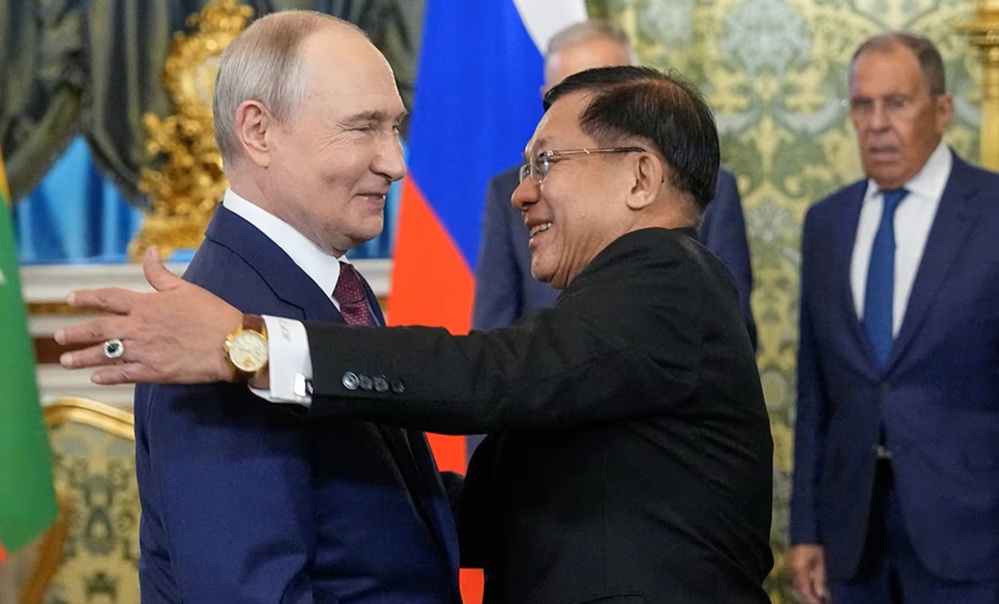
Russia Deepens Role in Myanmar’s Dawei Deep-Sea Port Project

Shibbir Ahmed, New York — Russia is deepening its involvement in Myanmar’s long-delayed Dawei deep-sea port and special economic zone project, as the two countries seek to revive the strategic development in the country’s southern Tanintharyi Region.

The Dawei project, which includes a deep-sea port, industrial zone and major energy facilities, has returned to the center of Myanmar-Russia economic cooperation after years of delays over financing and implementation.

During a meeting in Vladivostok on September 1, Myanmar Vice President U Nyo Saw and Russian Deputy Prime Minister Yury Trutnev discussed the Dawei project along with energy, trade and tourism cooperation. No new financing agreement, project value or construction timetable was announced following the meeting.

Russia’s interest in Dawei has become more concrete in recent months. In June, Myanmar’s Launglon Economic Development Company and Russia’s state-controlled Inter RAO signed a memorandum of understanding for a power plant linked to the Dawei deep-sea port project.

At a Russia-Myanmar business forum in Moscow in August, Russian Economic Development Minister Maxim Reshetnikov said Moscow was seeking majority stakes for Russian companies investing in projects within the Dawei special economic zone during the investment payback period. The planned development includes a deep-water port, a 660-megawatt power plant, an oil refinery and industrial and warehouse facilities.

Strategic location

Dawei is located on Myanmar’s Andaman Sea coast in Tanintharyi Region. Supporters of the project say its location could provide an alternative trade route between the Indian Ocean and Southeast Asia, potentially reducing dependence on the Strait of Malacca.

Myanmar officials have promoted the project as a potential gateway linking the Indian Ocean with Thailand and other parts of the region. The proposed transport connections could eventually link Dawei with Thailand’s eastern economic areas and the wider Southern Economic Corridor.

The project was originally developed with Thai participation but stalled after difficulties securing financing and implementing the required infrastructure. Myanmar’s official port authority records show that the earlier agreement with Italian-Thai Development was terminated after the developer failed to secure the required funding.

Military campaign around project area

The renewed push to revive Dawei has coincided with an intensified military campaign in areas surrounding the proposed development. Reuters reported in August that Myanmar’s military had deployed hundreds of troops to clear areas designated for the Russia-backed Dawei special economic zone. The operation involved fighting with local resistance groups and the displacement of civilians.

Human rights organization Fortify Rights separately reported allegations of killings, torture and forced displacement during military operations around the project area. The organization said the operations were taking place against the backdrop of accelerating Myanmar-Russia cooperation over Dawei.

Despite renewed political support from Moscow and Naypyidaw, major questions remain over financing, security and the feasibility of completing the multibillion-dollar project amid Myanmar’s continuing conflict.

If successfully revived, Dawei could become one of the most strategically significant infrastructure projects on Myanmar’s Andaman Sea coast, with potential implications for trade routes connecting Southeast Asia and the Indian Ocean.


UN Calls for Independent Oversight of Bangladesh Security Forces

Shibbir Ahmed, UN, New York: The United Nations has called for the establishment of a strong and independent national institution to oversee the activities of Bangladesh’s security and law enforcement agencies. UN High Commissioner for Human Rights Volker Türk made the remarks on Monday, September 7, during the 63rd session of the UN Human Rights Council in Geneva, while addressing global human rights issues and developments in Bangladesh.

Türk reiterated the UN’s call for effective and independent oversight of law enforcement agencies in Bangladesh. He stressed the importance of ensuring accountability and providing mechanisms for independent investigations into allegations of human rights violations involving security and law enforcement personnel.

Recommendations Following the July-August 2024 Events

The UN’s latest remarks follow its fact-finding report on the human rights situation surrounding the July-August 2024 protests in Bangladesh. The UN Human Rights Office published its fact-finding report on February 12, 2025, containing a series of recommendations concerning accountability, institutional reform, independent investigations and civilian oversight.

The recommendations also called for strengthening the independence and effectiveness of Bangladesh’s National Human Rights Commission, including ensuring that it has the necessary authority and capacity to investigate allegations of human rights violations involving security forces.

Oversight, Not Direct UN Control

The UN’s call does not mean that the United Nations is seeking to directly control or supervise Bangladesh’s security forces. Rather, the recommendation calls for Bangladesh to establish an independent and effective national oversight mechanism capable of monitoring security and law enforcement agencies and independently investigating allegations of human rights abuses. The latest statement by the UN human rights chief is part of the organization’s continuing call for stronger accountability, institutional reform and human rights protections in Bangladesh.


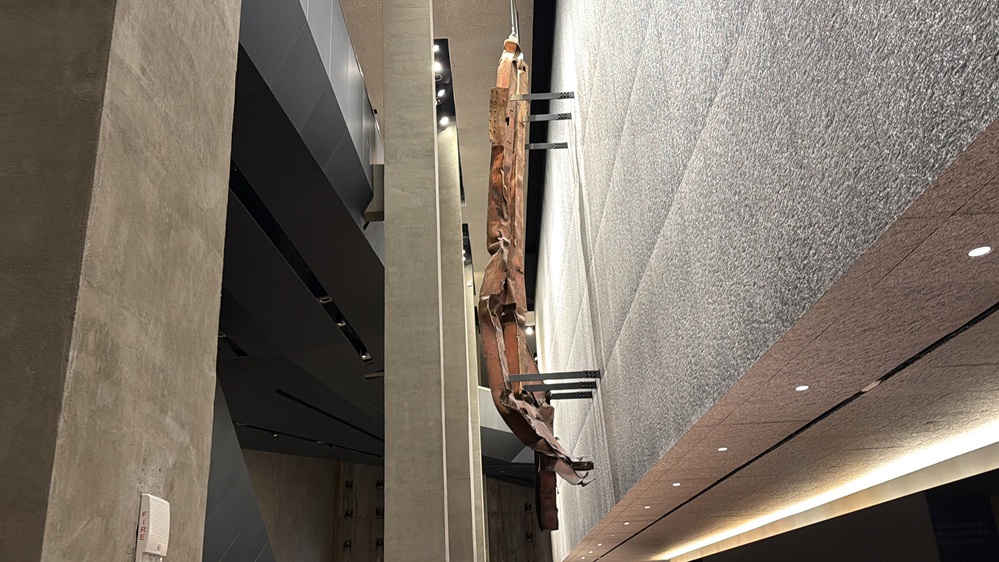
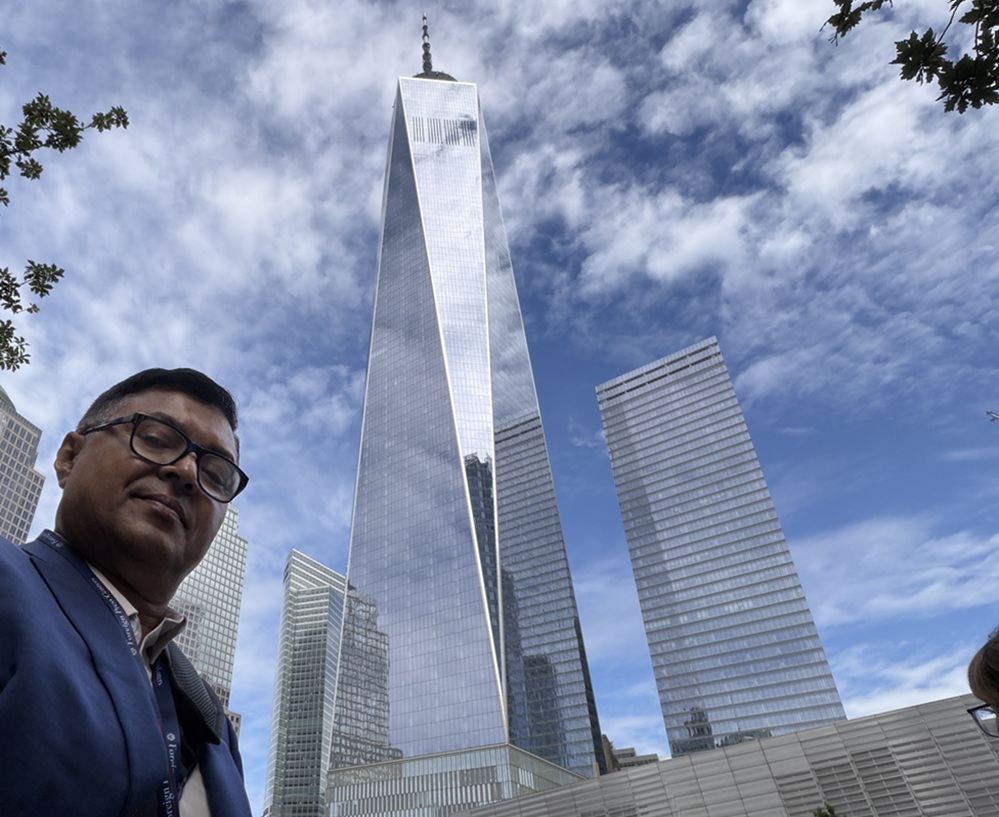
25 Years After 9/11: How America Will Remember the Attacks From New York to Washington

Shibbir Ahmed, New York: Twenty-five years have passed since the devastating terrorist attacks of September 11, 2001. A quarter-century later, the loss of nearly 3,000 lives, the sacrifice of thousands of first responders, and the attacks’ lasting health and social consequences remain deeply embedded in the American memory. This year, New York, Washington and Pennsylvania will mark the 25th anniversary of 9/11 with a series of commemorations and public events.

Main Commemoration in New York

The main 9/11 commemoration will take place Friday at the 9/11 Memorial Plaza in Lower Manhattan, with family members of the victims participating in the ceremony. The program will begin at 8:40 a.m. and is primarily a private gathering for victims’ families, although the ceremony will be streamed live online.

Family members will read the names of those killed in the 2001 attacks as well as victims of the 1993 World Trade Center bombing. Moments of silence will mark several key moments of the attacks, including the aircraft impacts, the collapse of the Twin Towers, the attack on the Pentagon and the crash of Flight 93.

A special moment of silence will also honor those who died in the years following the attacks from 9/11-related illnesses. Vice President JD Vance and other administration officials are expected to attend the New York commemoration. President Donald Trump, meanwhile, will mark the 25th anniversary at the Pentagon instead of attending the New York ceremony.

First Moment of Silence at 8:46 a.m.

At 8:46 a.m. on September 11, 2001, the first hijacked aircraft, American Airlines Flight 11, struck the North Tower of the World Trade Center. The moment will be marked with the first moment of silence during the New York commemoration.

The ceremony will also remember the impact of the second aircraft on the South Tower, the collapse of both towers, the attack on the Pentagon and the crash of Flight 93 in Pennsylvania.

A total of 2,753 people were killed in New York, while 184 people died at the Pentagon in Arlington, Virginia. Another 40 passengers and crew members were killed when United Airlines Flight 93 crashed in Pennsylvania.

New Exhibition at the 9/11 Museum

For the 25th anniversary, the National September 11 Memorial & Museum in New York is launching a new exhibition titled “In Their Honor: 25 Years of 9/11-Inspired Service.”

Opening to the public on September 12, the exhibition will highlight stories of service, sacrifice and humanity over the 25 years since the attacks. It explores how individuals and communities transformed grief into public service and acts of compassion.

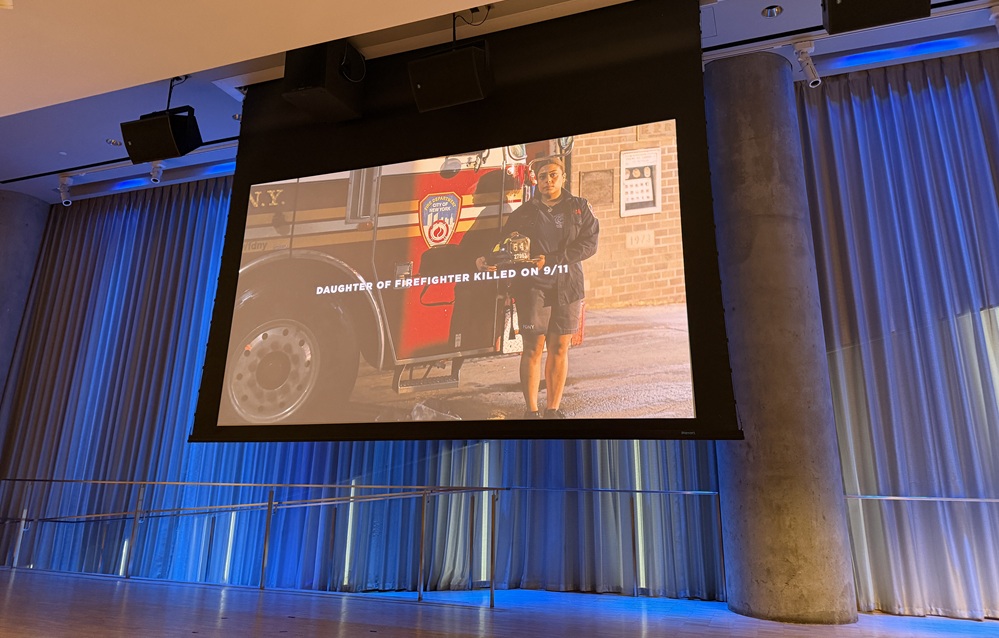
The museum is also introducing a new digital educational experience designed to help a new generation understand the history of 9/11 and its long-term impact. According to the museum, nearly 100 million Americans were either not yet born or were too young to remember the attacks. Connecting this generation with the history and legacy of 9/11 is one of the major goals of this year’s anniversary programs.

Trump to Mark Anniversary at Pentagon

In Arlington, Virginia, President Donald Trump is expected to attend and speak at the 25th anniversary commemoration at the Pentagon Memorial. The Pentagon was the third major target of the September 11 attacks. At 9:37 a.m., American Airlines Flight 77 struck the Pentagon. A total of 184 people were killed, including people inside the building as well as passengers and crew members aboard the aircraft. Vice President Vance will attend the main commemoration in New York.

Pennsylvania Also to Hold Commemorations

At the Flight 93 National Memorial in Pennsylvania, a commemorative ceremony will take place Friday from 8:30 a.m. to 10:30 a.m. The names of the 40 passengers and crew members aboard Flight 93 will be read, followed by the ringing of the Bells of Remembrance. A second ceremony will take place from 1 p.m. to 2:30 p.m., featuring additional commemorative activities and a public wreath-laying ceremony at the memorial.

New York’s Nighttime “Tribute in Light”

After a full day of remembrance, New York’s skyline will once again be illuminated by the historic Tribute in Light—two powerful beams of light representing the Twin Towers destroyed in the attacks. For the 25th anniversary, a special program titled “9/11 Tribute in Light: Live from Lower Manhattan” is scheduled to air nationally beginning at 8 p.m. on major television networks and other platforms.

The program will connect audiences across the country with the commemoration in New York and the annual Tribute in Light, bringing the day of remembrance to a national audience.

New Initiative in New York City

As part of this year’s 25th anniversary observance, New York City is officially recognizing September 11 as a Day of Remembrance and Service. The administration of Mayor Zohran Mamdani is emphasizing citywide remembrance, moments of silence, educational programs and volunteer service.

The city has also established a new Continuity and Mission Assurance Team, aimed at ensuring that essential city government operations and services can continue during emergencies while strengthening preparedness and coordination among city agencies.

25 Years Later, the Memory of 9/11 Endures

Twenty-five years later, 9/11 remains far more than a historical event. It continues to shape the security, politics, foreign policy and public health of New York, Washington and the United States as a whole.

This year’s commemorations are therefore not limited to honoring those who were killed. They also recognize first responders, rescue workers, survivors, families who lost loved ones and a new generation born after the attacks. A quarter-century later, the message remains the same: Never Forget.