Melania Trump Expands Fostering the Future Together Coalition to 57 Nations

Shibbir Ahmed, New York — First Lady Melania Trump on Tuesday reconvened members of her Fostering the Future Together initiative in New York during the high-level week of the 81st United Nations General Assembly, announcing new technology partnerships, international events and an expansion of the coalition to 57 participating countries.

The gathering brought together representatives from countries including the United Kingdom, South Korea, the Philippines, Poland, Ukraine, Türkiye, the United Arab Emirates, Panama and Canada, according to the White House.

“Together, we are a beautiful range of cultures, languages, histories, and traditions,” Trump said. “And yet, we stand unified around one everlasting truth: the future of our world will be determined by what we do for our children today.”

Fostering the Future Together is described by the White House as a global coalition focused on empowering children through technology and education. Trump said the initiative is intended to provide young people with opportunities to learn, create and develop skills for the future.

New International Events Announced

Trump announced several Fostering the Future Together events planned for 2026.

They include a G20 event in Miami, which Trump plans to host, an ASEAN conference in Manila hosted by Philippine First Lady Liza Araneta Marcos, a European regional meeting hosted by Polish First Lady Marta Nawrocka, and a Caribbean regional meeting hosted by Saint Kitts and Nevis First Lady Diani Prince-Drew. “These leaders have stepped forward to activate their regions,” Trump said, adding that the initiative would provide support for their efforts.
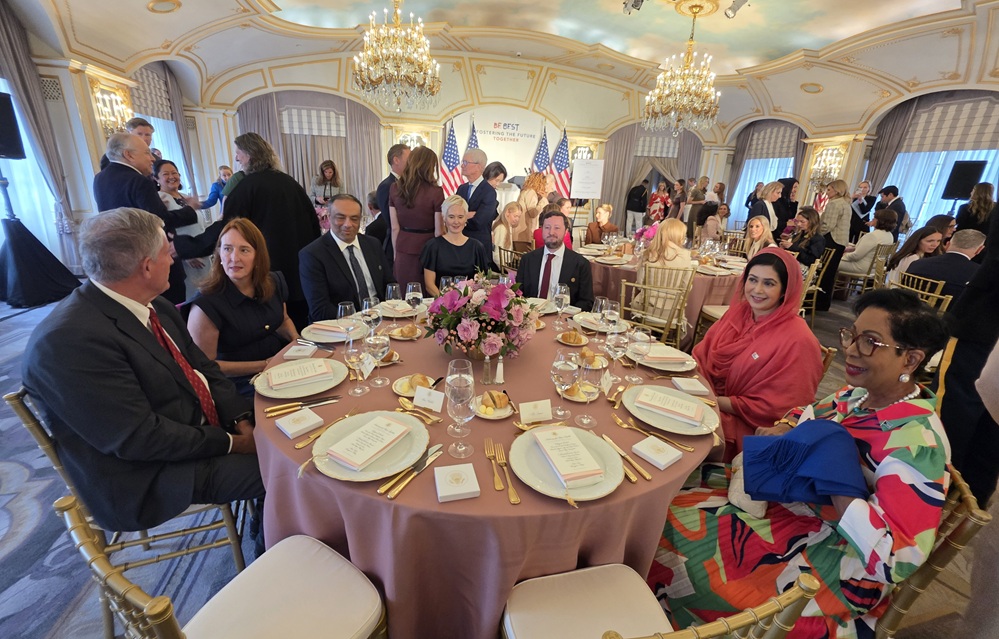
Representatives and participants from countries around the world attend the Fostering the Future Together gathering in New York. Photo: KHABOR

Technology Partnerships

The First Lady also announced new private-sector partnerships involving Adobe, Amazon, Intel, Starlink, Google and Zoom. The companies are being brought into the initiative as part of its focus on expanding children’s access to technology and education. Tim Cook, executive chairman of Apple, and Enrique Lores, CEO of HP, also attended the gathering, according to the White House.

Trump emphasized that access to technology alone does not constitute empowerment and called for young people to be taught how to use technological tools responsibly and effectively.

“We must give our children the tools—and teach them how to use those tools wisely,” she said.

Focus on Technology and Education

In her remarks, Trump highlighted the rapid development of artificial intelligence and other technologies, describing the current period as a major technological transformation. She cited technologies including artificial intelligence, video communications, mobile computing, autonomous vehicles, virtual environments and biometric identification as examples of technologies that have moved from the realm of science fiction into everyday life.

She also called on participating countries and technology companies to help young people develop the knowledge and skills necessary to participate in an increasingly technology-driven economy.

“Our Fostering the Future Together coalition must strive to empower the youth of our nations to bend the boundaries of imagination, explore new frontiers of intellect, have the courage to take calculated risks, and build toward advancement of society,” Trump said.

Coalition Expands to 57 Countries

The White House said the initiative now includes 57 participating nations. Trump said the coalition’s long-term purpose is to create opportunities for children regardless of where they are born. Fostering the Future Together was announced during the 80th UN General Assembly in 2025. According to the White House, Trump subsequently convened the initiative’s inaugural Global Coalition Summit in Washington in spring 2026, bringing together first spouses and technology-sector leaders.

The latest gathering took place during the UN General Assembly’s high-level week in New York. The United Nations says the general debate of the 81st session is being held from September 22 to 26 and again on September 28.

Trump said the initiative’s success should ultimately be measured by its impact on future generations rather than by the meetings and speeches themselves. “Years from now, our children may not remember the meetings we held or the speeches we gave. But they will live with the consequences of what we do here,” she said.
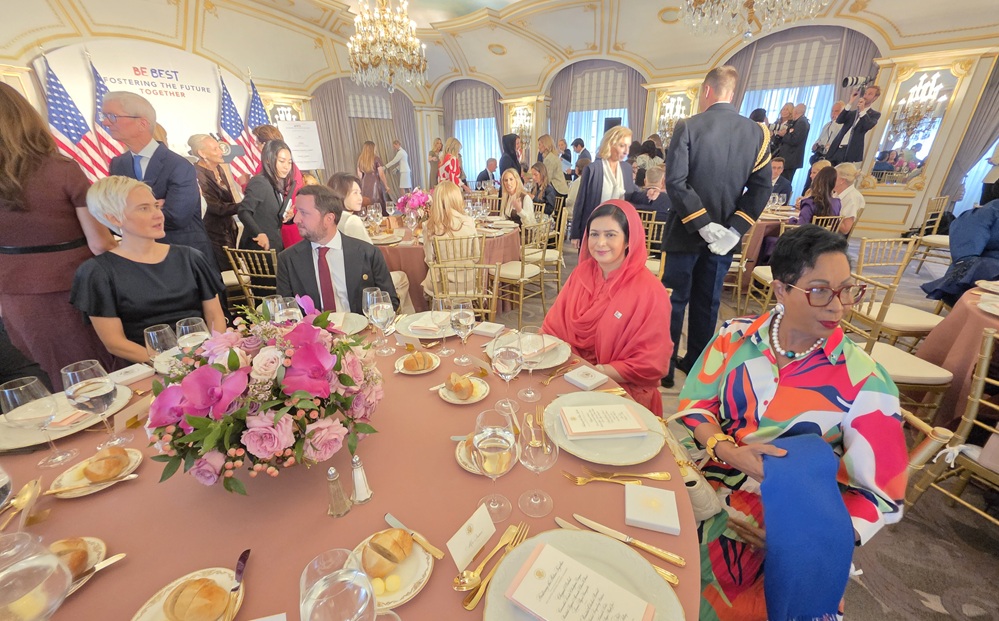


Zubaida Rahman Attends Melania Trump’s ‘Fostering the Future Together’ Event in New York

Shibbir Ahmed — Dr. Zubaida Rahman, wife of Bangladesh Prime Minister Tarique Rahman, attended U.S. First Lady Melania Trump’s “Fostering the Future Together” gathering Tuesday at The St. Regis New York, joining an international group focused on children’s education, technology, digital skills and online safety. Dr. Zubaida Rahman attended the Manhattan event at the invitation of Melania Trump, highlighting Bangladesh’s continuing engagement with the international initiative as the United States hosts a new gathering of participating First Spouses and leaders during the 81st session of the United Nations General Assembly.

The event brought together international participants and private-sector partners to discuss ways to expand opportunities for children through education, technology and responsible digital innovation. Melania Trump has made children’s education, digital literacy, artificial intelligence and online safety central themes of the Fostering the Future Together initiative.

For Bangladesh, Dr. Zubaida’s participation marks a continuation of her involvement in the initiative. She previously took part in the inaugural Fostering the Future Together: Global Coalition Summit in Washington, D.C., in March 2026, also at Melania Trump’s invitation. The two-day summit brought together First Ladies and spouses of leaders from more than 45 countries.

During the March summit, Dr. Zubaida addressed issues surrounding children’s welfare, education, healthcare and the responsible use of technology. She highlighted Bangladesh’s initiatives related to family support, education and healthcare and emphasized the potential of artificial intelligence and digital learning to help reduce educational disparities.

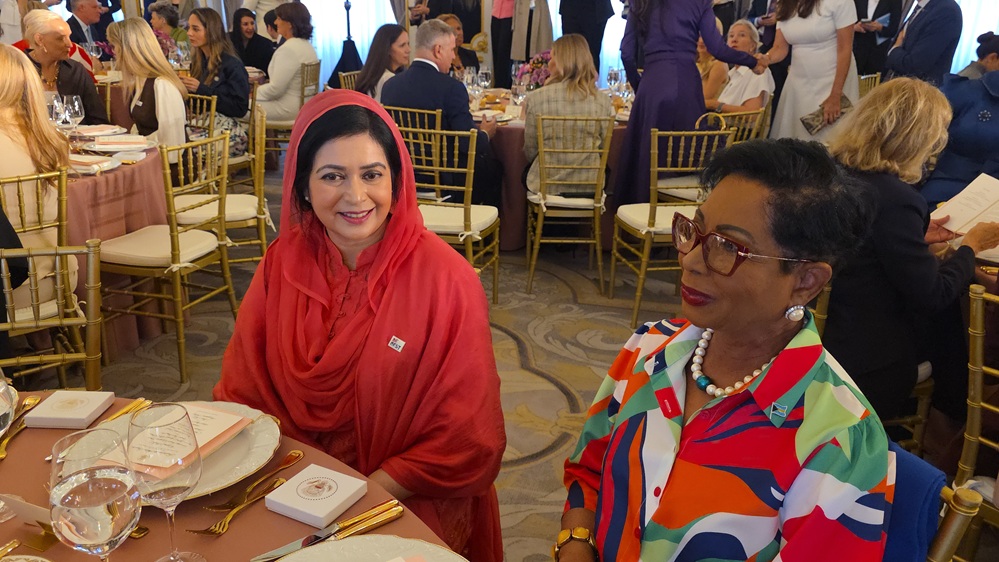
Dr. Zubaida Rahman, wife of Bangladesh Prime Minister Tarique Rahman, attends U.S. First Lady Melania Trump’s “Fostering the Future Together” event at The St. Regis New York on Tuesday, September 22, 2026. Photo: KHABOR

She also met Melania Trump during the Washington summit. According to reports from the March event, the two discussed cooperation on initiatives aimed at improving children’s welfare.

Dr. Zubaida’s presence in New York comes as she accompanies Prime Minister Tarique Rahman during his visit to the United States for the 81st UN General Assembly. The prime minister and his wife arrived in New York on September 22, with Zubaida traveling as part of his delegation.

The New York gathering also reflects the expansion of Melania Trump’s initiative beyond its inaugural Washington summit. The coalition has increasingly focused on partnerships involving education technology, artificial intelligence, digital skills and online protection, with governments, First Spouses and private-sector organizations participating in the effort.

For Bangladesh, Dr. Zubaida Rahman’s participation in both the March Washington summit and Tuesday’s New York gathering places the country within an international dialogue centered on the future, education and well-being of children.


Melania Trump Brings First Spouses and Tech Leaders Together in New York

Shibbir Ahmed, New York — U.S. First Lady Melania Trump on Tuesday brought together representatives of 57 nations and technology-sector leaders at The St. Regis New York to expand her Fostering the Future Together initiative, unveiling new private-sector partnerships and plans for a series of international events focused on children’s education, technology and online safety.

The gathering took place during the 81st United Nations General Assembly and marked the latest expansion of a coalition that seeks to use technology and education to help children learn, grow and prepare for the digital future. The Office of the First Lady said the event would welcome new member nations, announce strategic partnerships with technology companies and present the initiative’s 2026 international events calendar.

Melania Trump: “Choose our children first”

In her remarks, Melania Trump emphasized the importance of giving children access to education and technology while ensuring that technological development serves their long-term interests.

“True empowerment begins by giving a child the confidence to believe that their mind has value,” Trump said. “It means giving children the freedom to imagine a world beyond the one they know today.”

She said the coalition’s work is focused on using technology to create educational opportunities for young people and to equip them for a rapidly changing world. The First Lady also highlighted the new partnerships with major technology companies and the investments being made to expand access to educational technology and artificial intelligence.

Fostering the Future Together is organized around four principal areas: AI in Education, EdTech Tools, Online Protection and Digital Skills. The White House says participating First Spouses and equivalent leaders work with their governments to identify technologies that can support children, educators and parents while protecting young people from online dangers.

Trump also announced plans for a series of Fostering the Future Together conferences around the world. She said the initiative’s first G20 event will be held in Miami in December. Concluding her remarks, Trump urged the participating leaders to turn their discussions into practical action.

“Let history say at the moment of extraordinary possibility, leaders from around the world came together to foster the future together and chose our children first,” she said.

Michael Waltz and Charity Wallace among speakers

The event’s listed speakers were Melania Trump, U.S. Ambassador to the United Nations Michael Waltz, and U.S. Special Envoy for Best Future Generations Charity Wallace. Waltz praised Trump’s work on the initiative, saying she was focused on turning the coalition’s goals into concrete action rather than advocacy alone. Wallace has also played a central role in coordinating the U.S. government’s work with the initiative. On Monday, she hosted a State Department announcement unveiling seven new technology-sector partnerships connected to Fostering the Future Together.

Seven new technology partnerships

The State Department announced Monday that Adobe, Amazon, Google, Intel, N50, Starlink and Zoom had established new partnerships through Fostering the Future Together. The partnerships involve more than 15 countries and are intended to expand educational and technological access and opportunities for children and young people.

The new commitments include $4 million from Google to expand its Google AI Educator Series and $2.75 million in new Zoom grants connected to its AI for Good initiative. Other commitments involve AI education, digital literacy, coding, internet connectivity and technology training. The initiative’s four pillars—AI in education, EdTech tools, online protection and digital skills—form the framework for the new partnerships.

First Spouses from around the world

The New York gathering brought together representatives of the coalition’s 57 member nations. The State Department said the coalition includes First Spouses from countries including France, Poland, the United Arab Emirates, Panama, the Philippines, St. Kitts and Nevis, Israel, Morocco, Kenya, Türkiye and the Republic of Korea.

Among the international participants specifically identified in reporting on the New York gathering was Mirabela Grădinaru, partner of Romanian President Nicușor Dan. Romanian media reported that she attended Melania Trump’s event and met Rachel Ruto, First Lady of Kenya. The gathering included First Ladies and First Gentlemen from several countries, government officials and technology-company representatives.

The 57-nation figure refers to the coalition’s participating First Spouses or equivalent leaders; it should not be interpreted as a publicly verified name-by-name attendance list for every individual at the St. Regis event.

From 45 nations to 57

Fostering the Future Together has expanded considerably since its inaugural global coalition summit in Washington in March. The White House says Melania Trump brought together First Spouses from 45 countries for the March 24–25 summit, where participants discussed four areas: EdTech tools, AI in education, online safety and digital literacy.

The coalition was originally launched by Melania Trump during the 80th UN General Assembly in New York on September 23, 2025. Its stated mission is to help children flourish in the digital era by combining education, innovation and responsible technology use while protecting children online.

Bangladesh’s Connection to the Initiative

Bangladesh was represented at Tuesday’s gathering in Manhattan, New York, with Dr. Zubaida Rahman, wife of Bangladesh Prime Minister Tarique Rahman, attending the Fostering the Future Together event at the invitation of U.S. First Lady Melania Trump.

Dr. Zubaida Rahman, wife of Bangladesh Prime Minister Tarique Rahman, attends U.S. First Lady Melania Trump’s “Fostering the Future Together” event at The St. Regis New York on Tuesday, September 22, 2026. Photo: KHABOR

Dr. Zubaida Rahman’s participation highlights Bangladesh’s engagement with the international initiative, which brings together First Spouses and leaders from participating countries to advance children’s education, technology, digital skills and online safety.

Zubaida previously participated in the inaugural Fostering the Future Together Global Coalition Summit in Washington, D.C., in March 2026, where she addressed issues including children’s education, healthcare, artificial intelligence and the safe use of technology. She attended that summit at Melania Trump’s invitation. Her participation in Tuesday’s New York gathering further highlights Bangladesh’s involvement in the coalition’s international efforts focused on the future and well-being of children.

A broader international technology effort

The New York meeting reflects the coalition’s increasingly public-private approach, bringing governments and technology companies together around children’s education and digital development. The White House says First Spouses and equivalent leaders work with their national governments to assess available technologies and explore ways to implement them in education, train teachers and parents, and develop new learning environments.

The initiative now has 57 member nations and a growing network of private-sector partners. With additional international conferences planned and a G20 event scheduled for Miami in December, Melania Trump’s coalition is moving beyond its initial summit toward a broader program of international cooperation on children’s education, technology and online protection.


Trump Defends Iran War, Warns of ‘Annihilation’ Without Deal in UN Speech

Shibbir Ahmed, New York — U.S. President Donald Trump used his address to the United Nations General Assembly on Tuesday to defend his administration’s military actions abroad, warn Iran of further escalation if it does not reach a peace agreement, and call for an end to the war in Ukraine. In a roughly 37-minute address at the 81st session of the UN General Assembly in New York, Trump outlined his foreign-policy priorities, including Iran, Ukraine, Venezuela, Cuba, Mexico, artificial intelligence and reform of the United Nations.

Trump strongly defended the U.S.-Israeli military campaign against Iran, saying the operation had prevented Tehran from obtaining a nuclear weapon. He warned that the United States could “annihilate” Iran if a peace agreement is not reached, while also saying he believes a deal could be reached after the U.S. midterm elections on Nov. 3.

“I believe we’ll make a deal right after the election because it doesn’t make sense for them not to,” Trump said. Trump also addressed the Russia-Ukraine war, saying the United States was working with both Moscow and Kyiv and expressing confidence that a settlement could be reached.

“We will get that one done,” Trump said, adding that an agreement could come sooner than many people expect. The president also highlighted U.S. actions in Venezuela and the wider Western Hemisphere. He said Washington would not allow threats against the United States to establish a foothold in the region and said the country would use its military power when necessary to protect what he described as vital U.S. national interests.

On Cuba, Trump described the country as a failed state and said his administration was seeking fundamental political change there. “Communism will never be coming to America, but freedom will be coming to Cuba,” he said. Members of the Cuban delegation walked out of the General Assembly hall while Trump was discussing Cuba, Reuters reported.

Trump also criticized Mexico over drug-cartel violence and described the fight against cartels as a major U.S. security priority. He said his administration had carried out strikes against cartel groups and argued that the United States needed to take stronger action against organizations it considers terrorist threats.

Artificial intelligence was another major theme of the speech. Trump said his administration would use the term “super intelligence” rather than artificial intelligence in official communications and argued against international restrictions that could limit technological development.

He said the United States was leading China and other countries in the AI race and argued that AI could become more transformative than the Industrial Revolution. Trump also renewed his criticism of the International Criminal Court, urging member countries to withdraw and arguing that the court should not have jurisdiction over U.S. military personnel.

Turning to the United Nations itself, Trump said the organization had significant potential but called for further reforms, including reductions in bureaucracy and spending. He criticized what he described as the influence of “globalist bureaucrats” and said the United States would continue pushing for changes at international institutions.

The speech comes as world leaders gather in New York amid continuing conflicts in the Middle East and Ukraine, uncertainty over global economic conditions and growing debate over the international governance of artificial intelligence. The UN’s 81st General Assembly general debate runs from Sept. 22 through Sept. 28.


Melania Trump Expands Global Coalition for Children at UN General Assembly

Shibbir Ahmed, New York — U.S. First Lady Melania Trump on Tuesday announced an expansion of her Fostering the Future Together initiative, bringing together representatives from 57 countries and unveiling new international events and private-sector technology partnerships focused on children’s education and access to technology. The announcement came during the 81st United Nations General Assembly in New York, where Trump reconvened members of the coalition and welcomed representatives from countries including the United Kingdom, South Korea, the Philippines, Poland, Ukraine, Türkiye, the United Arab Emirates, Panama and Canada.

“Together, we are a beautiful range of cultures, languages, histories, and traditions. And yet, we stand unified around one everlasting truth: the future of our world will be determined by what we do for our children today,” Trump said.

Fostering the Future Together was launched by Trump during the 80th UN General Assembly in September 2025 as a global coalition aimed at promoting children’s education, technology access and digital safety. The White House says the initiative focuses on the use of advanced technology, including artificial intelligence, to support children, educators and parents while addressing online risks.

The coalition held its inaugural two-day global summit in Washington in March, bringing together first spouses or equivalent leaders from 45 countries and technology-sector representatives. The White House described the gathering as the largest international assembly of its kind hosted by a U.S. first lady at the White House.

At Tuesday’s event, Trump announced several upcoming regional and international gatherings. They include a G20 event to be hosted by Trump in Miami in December, an ASEAN conference hosted by Philippine First Lady Liza Araneta Marcos in Manila, a European regional meeting hosted by Polish First Lady Marta Nawrocka, and a Caribbean regional meeting hosted by Saint Kitts and Nevis First Lady Diani Prince-Drew.

“When nations speak with one voice, the world listens. Our collective influence is profound. Together, we can open doors, move markets, shape policy. And most importantly, we can change lives for the better,” Trump said.

The initiative is also expanding its cooperation with the technology sector. The U.S. State Department said Monday that seven technology companies — Adobe, Amazon, Google, Intel, N50, Starlink and Zoom — had announced partnerships involving more than 15 countries to expand educational and technological opportunities for children and young people.

Amazon separately said it is supporting the coalition with AI-powered learning tools and digital-skills initiatives for students. Trump said access to technology by itself was not enough and called for children to be taught how to use new technologies responsibly.

“Access alone is not empowerment. We must give our children the tools—and teach them how to use those tools wisely,” she said. She cited artificial intelligence, video communications, mobile computing, self-driving vehicles, virtual environments and biometric identification as examples of technologies that are increasingly part of everyday life.

The coalition’s stated focus includes four areas: AI in education, education technology, online protection and digital skills, according to the State Department. Trump urged participating first spouses and leaders to work together despite differences among their countries. “Years from now, our children may not remember the meetings we held or the speeches we gave. But they will live with the consequences of what we do here,” she said.

She added that the coalition should seek to help young people expand their imagination, explore new areas of knowledge, take calculated risks and contribute to the advancement of society. The White House says Fostering the Future Together has no membership fees and that participating countries are responsible for any indirect costs associated with their own engagements, including travel.


Trump Praises NYC Mayor Zohran Mamdani in New York Meeting

Shibbir Ahmed, New York — President Donald Trump offered high praise for New York City Mayor Zohran Mamdani on Monday, putting aside past political hostility during a closed-door meeting at Gracie Mansion. The roughly one-hour meeting focused on key municipal challenges, including federal immigration policies and a massive proposed affordable housing project.

The encounter marked a striking shift from the bitter rhetoric of the mayoral campaign, when Trump heavily criticized Mamdani. However, following their third face-to-face meeting—and the first hosted on the mayor’s turf ahead of the United Nations General Assembly—the two leaders struck a remarkably cordial tone.

Speaking to reporters at a joint press conference on the lawn of the mayor’s official residence, Trump expressed optimism about the city’s leadership. “Hopefully, you’re going to be a great mayor,” Trump said, addressing Mamdani directly. “I can say you’re going to be a great mayor, and you’re off to a start. … He’s certainly got potential, great potential.”

For his part, Mayor Mamdani acknowledged their clear political differences, particularly regarding federal immigration enforcement, but emphasized his commitment to pragmatic cooperation. Mamdani noted that he voiced his strong stance on keeping immigrant New Yorkers safe, while also advancing discussions on a major proposal to construct 12,000 new homes above a Queens rail yard.

“The president and I have been very frank about the many disagreements we have,” Mamdani told reporters, while affirming that maintaining open channels of communication remains essential for delivering results for the city. The meeting also touched on broader national matters, with Trump addressing media policy questions during the appearance.


US Imposes Visa Restrictions on 32 Linked to Prince Group Scam Network

Shibbir Ahmed, Washington DC — The U.S. Department of State announced Monday that it is taking steps to impose visa restrictions on 32 individuals accused of being responsible for or complicit in defrauding Americans through cybercrime, cyber-enabled crime and related activities. The State Department said the majority of those targeted are affiliated with the Prince Group Transnational Criminal Organization (TCO), which has been the subject of multiple U.S. sanctions actions over its alleged role in scam operations targeting Americans.

Under the latest action, any valid U.S. visas held by the individuals have been revoked. The State Department said the restrictions are being imposed under Section 212(a)(3)(C) of the Immigration and Nationality Act.

The department said cybercriminal networks scam Americans out of tens of billions of dollars each year. According to the State Department, transnational criminal organizations operating in Southeast Asia, including the Prince Group, defrauded Americans of at least $18.2 billion in 2025 through cyber-enabled scams.

US Expands Action Against Prince Group

The visa restrictions add to a series of U.S. government actions targeting the Prince Group and other Southeast Asian scam networks. The Department of the Treasury’s Office of Foreign Assets Control designated the Prince Group as a Transnational Criminal Organization in October 2025, imposing sanctions on 146 associated individuals and entities. Treasury said the organization operated scam compounds and cyberfraud operations targeting victims in the United States and elsewhere.

Treasury expanded its action against the Prince Group on June 23, 2026, sanctioning nine individuals and 26 entities linked to the organization, including individuals described as leaders, investors in scam compounds and operators of front companies. Treasury said the June action built on its October 2025 designation and was intended to disrupt financial networks connected to scam operations and money laundering.

Visa Restrictions Target Individuals Connected to Cybercrime

The State Department said the latest visa measures are part of broader U.S. efforts to use immigration and other authorities against individuals connected to cybercrime and fraud affecting Americans. The department said those subject to the restrictions will be denied entry to the United States, while previously issued valid visas have been revoked. The action comes as U.S. agencies continue coordinating efforts to disrupt overseas scam networks, financial channels and other infrastructure used to target American victims.

In October 2025, Treasury described the Prince Group as a Cambodia-based transnational criminal organization whose network included scam compounds and businesses involved in online investment scams and money laundering. Treasury said the network had targeted U.S. citizens and others worldwide.

The latest State Department action represents the use of visa restrictions alongside financial sanctions and other enforcement measures aimed at individuals and networks accused of participating in cyber-enabled fraud against Americans.


Melania Trump’s Fostering the Future Together Secures 7 New Tech Partnerships

Shibbir Ahmed, New York — First Lady Melania Trump’s Fostering the Future Together (FTFT) initiative has secured seven new technology-sector partnerships aimed at expanding access to education, digital skills and technology for children and young people around the world. The new partnerships were announced Monday on the margins of the 81st United Nations General Assembly (UNGA) at an event hosted by Charity Wallace, Special Envoy for Best Future Generations at the U.S. Department of State.

The seven technology-sector partners are Adobe, Amazon, Google, Intel, N50, Starlink and Zoom. Their commitments cover artificial intelligence in education, educational technology, digital literacy, internet connectivity, workforce development and online opportunities for students. The mission of Fostering the Future Together is to empower children through technology and education. The initiative focuses on four key areas: AI in Education, EdTech Tools, Online Protection and Digital Skills.

Adobe Expands AI-Powered Education Tools

Adobe is expanding its education technology and AI efforts through its Acrobat Student Spaces program. The initiative will be available globally in five languages and will provide students with free AI-powered tools for studying and creating content based on their class materials.

Amazon Expands Student AI and Technology Training

Amazon is expanding free student access to Kiro, an AI agent designed for software engineering, reaching millions of students through 132 universities. Participating institutions include universities in Romania, Japan, Malaysia, South Korea and France. Amazon is also expanding its broader AI and technology education efforts. Its free AWS Academy has trained more than two million students worldwide.

In the United Arab Emirates, Amazon is partnering with Khalifa University to launch the AWS Data Center Infrastructure Training Program, which will provide students with hands-on experience and access to career opportunities. Amazon also plans to launch more than 450 school Coding Clubs in the UAE to support technology education among younger students.

Google Commits $4 Million for AI Educator Training

Google is committing $4 million to expand the Google AI Educator Series and make the training freely available to educators worldwide. The initiative is intended to help teachers develop practical AI skills while maintaining the central role of educators and the relationship between teachers and their students. Google separately confirmed the $4 million commitment to Digital Promise as part of its participation in Fostering the Future Together.

Intel Expands AI and Digital Literacy Programs

Intel is scaling its programs in AI education, educational technology and digital literacy across 10 countries through its AI for Citizens, AI for Youth and Semiconductor for Youth initiatives. The company is highlighting a major AI PC deployment in Panama, alongside new or expanded partnerships in Egypt, Ghana, Israel, Kenya, Malaysia, Poland, South Korea, the UAE and Vietnam.

N50 Launches AI Education Pilot in Uganda

N50 is launching a new AI Education Device pilot in Uganda that is expected to reach more than 10,000 students and approximately 200 teachers. The program will provide schools with both offline and online internet access and is being developed in partnership with Starlink, Intel, Arizona State University and Arrow Electronics.

Starlink Expands Internet Access in Papua New Guinea

Starlink is working with the Government of Papua New Guinea and the National Information and Communications Technology Authority (NICTA) to expand fast and reliable internet access across the country. The effort builds on $30 million in U.S. support announced during the U.S.-Papua New Guinea Strategic Partnership Dialogue.

Zoom Announces $2.75 Million in New Grants

Zoom, through its Zoom Cares program, is set to announce $2.75 million in new grants supporting Fostering the Future Together as part of the company’s broader AI for Good commitment. The grants will focus on education, workforce development and nonprofit AI readiness, with funding directed toward nonprofits operating in FTFT countries across Europe, Africa, Latin America and the Asia-Pacific region.

Global Public-Private Partnership

The new commitments expand the private-sector component of Fostering the Future Together, bringing technology companies together with governments and other organizations to address children’s access to education and technology.

The initiative was launched by Melania Trump during the 80th UN General Assembly in September 2025. Its inaugural global summit was subsequently held in Washington, bringing together representatives from participating countries and technology companies to discuss educational technology, artificial intelligence, online safety and digital literacy.

The White House says 57 member nations have joined the broader initiative, including France, Poland, the United Arab Emirates, Panama, the Philippines, St. Kitts and Nevis, Israel, Morocco, Kenya, Türkiye and the Republic of Korea.

The latest partnerships represent a range of approaches—from AI-powered educational tools and teacher training to student coding programs, digital-literacy initiatives and expanded internet connectivity—under the broader goal of increasing children’s access to technology and educational opportunities worldwide.


CNN, MS NOW and Politico Sue Trump Administration Over White House Press Access

Shibbir Ahmed, Washington DC — CNN, MS NOW and Politico have filed a federal lawsuit against President Donald Trump’s administration, challenging the decision to bar their journalists from the White House. The three news organizations filed the lawsuit Monday in the U.S. District Court for the District of Columbia, arguing that the administration’s action violates constitutional protections for freedom of the press. They are seeking an emergency order that would restore their journalists’ access to the White House while the case proceeds.

The dispute began after the White House announced Friday that journalists from CNN, MS NOW and Politico would no longer be allowed on White House grounds. Their reporters were subsequently denied entry and had their press credentials disabled or confiscated. In their legal challenge, the three organizations argue that their access was revoked because the administration objected to their reporting. They also argue that the government acted without adequate notice or due process and violated their First Amendment rights.

President Trump has defended the restrictions, saying the administration is targeting what he describes as “fake news” rather than the free press. The White House has argued that the outlets can continue reporting on the administration even though their access to the White House has been restricted.

The case has also affected the White House press pool. CNN had been scheduled to provide video coverage for the television pool during Trump’s trip to New York for the United Nations General Assembly. The pool subsequently announced that it would not provide replacement coverage after CNN was prevented from carrying out its assignment.

Other major television networks, including ABC, CBS, NBC and Fox, have suspended their participation in the White House video pool in response to the dispute, according to Reuters. The lawsuit now places the dispute over White House press access before a federal court, which could determine whether the administration can exclude the three news organizations under the circumstances at issue.


US, Japan, South Korea Reaffirm North Korea Denuclearization Commitment

Shibbir Ahmed, New York — The United States, Japan and South Korea have reaffirmed their commitment to the complete denuclearization of North Korea while calling for the resumption of dialogue with Pyongyang.

U.S. Secretary of State Marco Rubio, Japanese Foreign Minister Toshimitsu Motegi and South Korean Foreign Minister Cho Hyun met in New York on the sidelines of the United Nations General Assembly High-Level Week. In a joint statement released September 21, the three countries also pledged to strengthen cooperation on regional security, economic resilience and emerging technologies.

The three ministers reiterated their opposition to support that generates revenue for North Korea’s nuclear and ballistic missile programs, in line with relevant UN Security Council resolutions. At the same time, they said the path to dialogue remains open and called on Pyongyang to return to negotiations.

Washington, Tokyo and Seoul also welcomed international efforts to monitor North Korea’s violations and evasion of UN sanctions. They highlighted cooperation against North Korean cyber threats and activities involving North Korean IT workers. The statement also addressed humanitarian issues, including abductees, detainees, unrepatriated prisoners of war and separated families.

Focus on Economic Security

Economic security was another major topic of the trilateral meeting. The three countries said they would work to strengthen free and transparent trade and protect critical supply chains. They agreed to enhance their trilateral Supply Chain Early Warning System and welcomed a new consultation mechanism on economic security.

The countries also discussed energy security, including greater regional cooperation and increased oil stockpiles. They said they would advance implementation of a July 7 trilateral agreement aimed at accelerating small modular reactor deployments while maintaining nuclear safety, security and nonproliferation standards. The three governments further pledged cooperation in artificial intelligence, quantum technology, digital infrastructure, biotechnology and semiconductors.

Taiwan Strait and Regional Security

The United States reiterated its defense commitments to Japan and South Korea, including extended deterrence commitments. The three ministers also stressed the importance of peace and stability across the Taiwan Strait. They called for peaceful resolution of cross-Strait issues and opposed unilateral attempts to change the status quo.

They also reaffirmed support for freedom of navigation and overflight and lawful commerce in the Indo-Pacific and globally, consistent with international law and the UN Convention on the Law of the Sea.

The statement also announced trilateral cooperation with the UN Office on Drugs and Crime to combat organized crime, particularly scam centers in Southeast Asia. The three countries agreed to continue cooperation on maritime security, law enforcement, disaster relief and Arctic issues. The ministers concluded by committing to continue trilateral meetings and strengthen cooperation at regional and global levels.