Bangladesh, US discuss boosting trade and investment

DHAKA: Bangladesh and the United States discussed ways to increase US investment, expand bilateral trade and create a more business-friendly environment during a meeting between Commerce Minister Khandker Abdul Muktadir and US Ambassador to Bangladesh Brent T. Christensen. The meeting was held Monday at the Federation of Bangladesh Chambers of Commerce and Industry (FBCCI) office in Dhaka. The two sides discussed expanding bilateral trade, cooperation in the energy sector and recent policy reforms, according to information released following the meeting.

US ambassador stresses transparency in major projects

During the meeting, Ambassador Christensen highlighted the importance of maintaining a transparent and competitive environment for major infrastructure projects. Speaking about a floating liquefied natural gas (LNG) terminal, or FSRU project, the ambassador said greater transparency and open competition would help strengthen the confidence of foreign investors.

He also said US companies are interested in working in Bangladesh and emphasized the importance of ensuring fair opportunities for competition. Commerce Minister Khandker Abdul Muktadir welcomed US investors and said proposals from US companies demonstrating the ability to deliver an FSRU within the shortest possible timeframe would receive priority consideration.

Import policy also discussed

The meeting also covered Bangladesh’s new import policy. The US ambassador welcomed several positive changes in the new policy but said some provisions could be made more business-friendly. The commerce minister said the import policy is an ongoing process and that necessary reforms are being reviewed regularly in line with market conditions and economic realities.

The two sides also discussed the removal of an earlier requirement for foreign companies to appoint local agents when purchasing strategic equipment. The minister said allowing direct engagement with manufacturers has improved transparency in the procurement process and reduced the influence of intermediaries.

Energy cooperation

Energy cooperation was another key issue discussed at the meeting. Ambassador Christensen described Bangladesh’s agreement with international energy supplier Gunvor as a positive development. The commerce minister said the government would continue to give the highest priority to protecting Bangladesh’s national interests in all such arrangements.

Officials from Bangladesh’s Ministry of Industries, Ministry of Commerce and the US Embassy also attended the meeting. Both sides expressed hope that regular discussions would help further strengthen the commercial relationship between Bangladesh and the United States.


25 Years After 9/11: How America Will Remember the Attacks From New York to Washington

Shibbir Ahmed, New York: Twenty-five years have passed since the devastating terrorist attacks of September 11, 2001. A quarter-century later, the loss of nearly 3,000 lives, the sacrifice of thousands of first responders, and the attacks’ lasting health and social consequences remain deeply embedded in the American memory. This year, New York, Washington and Pennsylvania will mark the 25th anniversary of 9/11 with a series of commemorations and public events.

Main Commemoration in New York

The main 9/11 commemoration will take place Friday at the 9/11 Memorial Plaza in Lower Manhattan, with family members of the victims participating in the ceremony. The program will begin at 8:40 a.m. and is primarily a private gathering for victims’ families, although the ceremony will be streamed live online.

Family members will read the names of those killed in the 2001 attacks as well as victims of the 1993 World Trade Center bombing. Moments of silence will mark several key moments of the attacks, including the aircraft impacts, the collapse of the Twin Towers, the attack on the Pentagon and the crash of Flight 93.
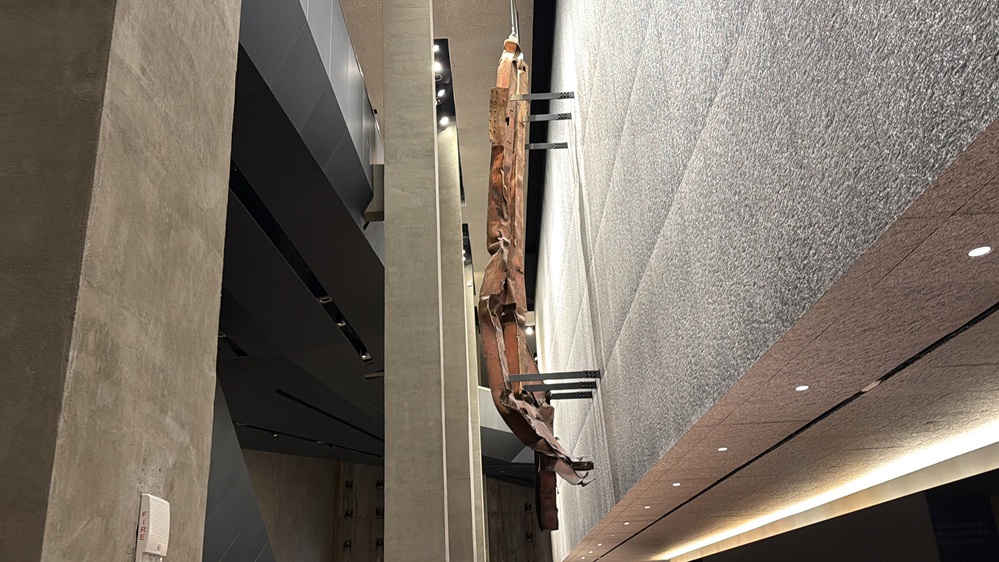
A special moment of silence will also honor those who died in the years following the attacks from 9/11-related illnesses. Vice President JD Vance and other administration officials are expected to attend the New York commemoration. President Donald Trump, meanwhile, will mark the 25th anniversary at the Pentagon instead of attending the New York ceremony.

First Moment of Silence at 8:46 a.m.

At 8:46 a.m. on September 11, 2001, the first hijacked aircraft, American Airlines Flight 11, struck the North Tower of the World Trade Center. The moment will be marked with the first moment of silence during the New York commemoration.

The ceremony will also remember the impact of the second aircraft on the South Tower, the collapse of both towers, the attack on the Pentagon and the crash of Flight 93 in Pennsylvania.

A total of 2,753 people were killed in New York, while 184 people died at the Pentagon in Arlington, Virginia. Another 40 passengers and crew members were killed when United Airlines Flight 93 crashed in Pennsylvania.

New Exhibition at the 9/11 Museum

For the 25th anniversary, the National September 11 Memorial & Museum in New York is launching a new exhibition titled “In Their Honor: 25 Years of 9/11-Inspired Service.”

Opening to the public on September 12, the exhibition will highlight stories of service, sacrifice and humanity over the 25 years since the attacks. It explores how individuals and communities transformed grief into public service and acts of compassion.
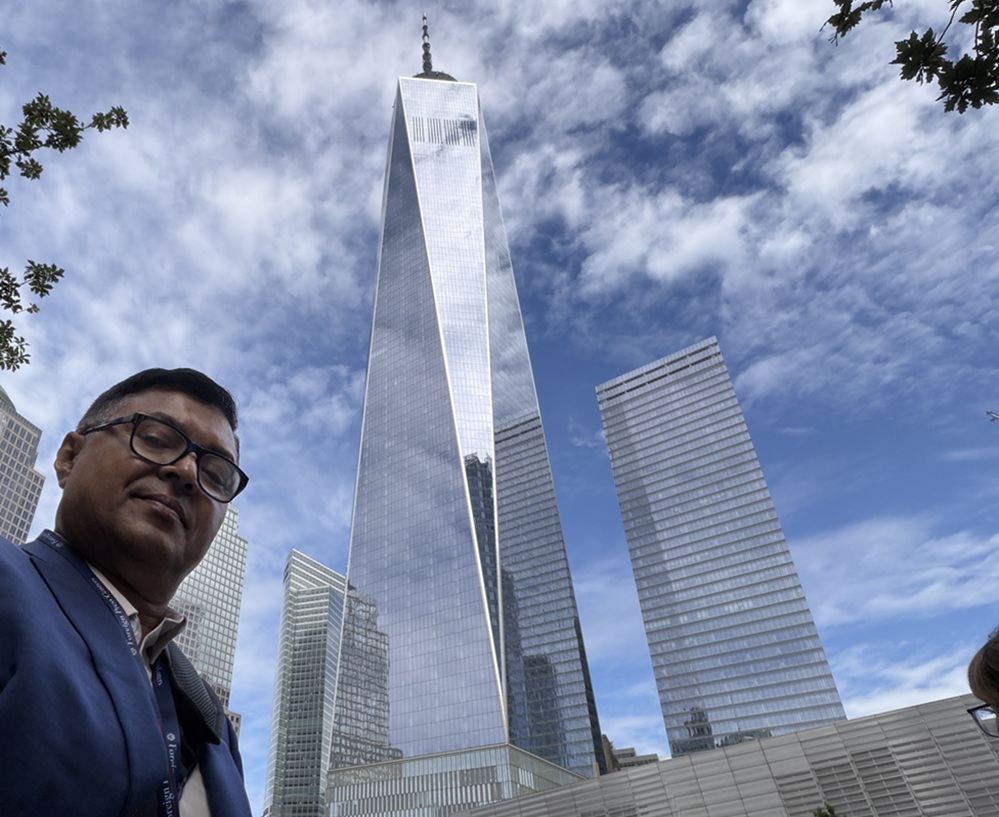
The museum is also introducing a new digital educational experience designed to help a new generation understand the history of 9/11 and its long-term impact. According to the museum, nearly 100 million Americans were either not yet born or were too young to remember the attacks. Connecting this generation with the history and legacy of 9/11 is one of the major goals of this year’s anniversary programs.

Trump to Mark Anniversary at Pentagon

In Arlington, Virginia, President Donald Trump is expected to attend and speak at the 25th anniversary commemoration at the Pentagon Memorial. The Pentagon was the third major target of the September 11 attacks. At 9:37 a.m., American Airlines Flight 77 struck the Pentagon. A total of 184 people were killed, including people inside the building as well as passengers and crew members aboard the aircraft. Vice President Vance will attend the main commemoration in New York.

Pennsylvania Also to Hold Commemorations

At the Flight 93 National Memorial in Pennsylvania, a commemorative ceremony will take place Friday from 8:30 a.m. to 10:30 a.m. The names of the 40 passengers and crew members aboard Flight 93 will be read, followed by the ringing of the Bells of Remembrance. A second ceremony will take place from 1 p.m. to 2:30 p.m., featuring additional commemorative activities and a public wreath-laying ceremony at the memorial.

New York’s Nighttime “Tribute in Light”

After a full day of remembrance, New York’s skyline will once again be illuminated by the historic Tribute in Light—two powerful beams of light representing the Twin Towers destroyed in the attacks. For the 25th anniversary, a special program titled “9/11 Tribute in Light: Live from Lower Manhattan” is scheduled to air nationally beginning at 8 p.m. on major television networks and other platforms.
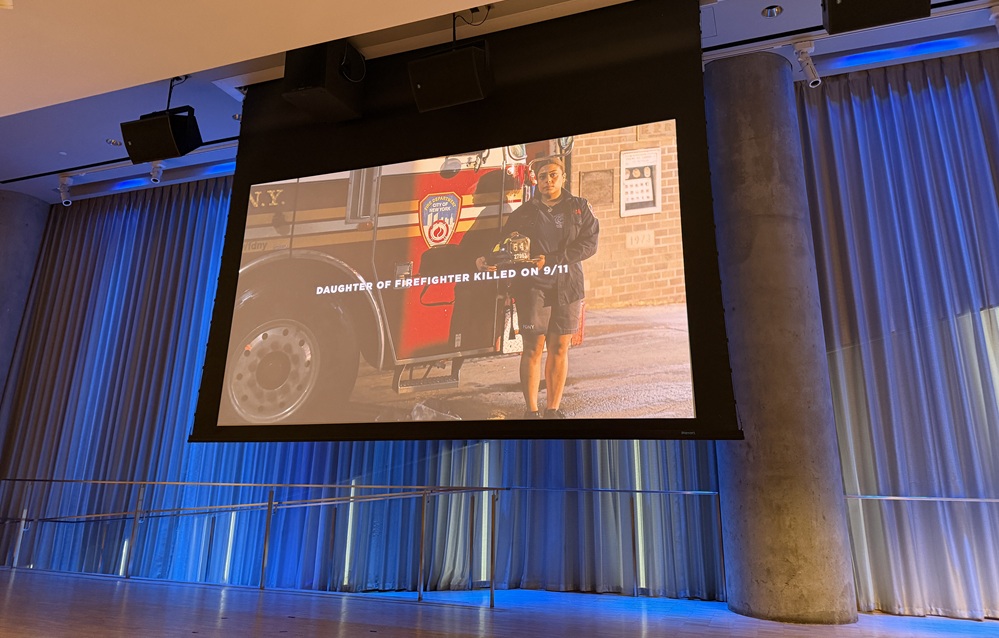
The program will connect audiences across the country with the commemoration in New York and the annual Tribute in Light, bringing the day of remembrance to a national audience.

New Initiative in New York City

As part of this year’s 25th anniversary observance, New York City is officially recognizing September 11 as a Day of Remembrance and Service. The administration of Mayor Zohran Mamdani is emphasizing citywide remembrance, moments of silence, educational programs and volunteer service.

The city has also established a new Continuity and Mission Assurance Team, aimed at ensuring that essential city government operations and services can continue during emergencies while strengthening preparedness and coordination among city agencies.

25 Years Later, the Memory of 9/11 Endures

Twenty-five years later, 9/11 remains far more than a historical event. It continues to shape the security, politics, foreign policy and public health of New York, Washington and the United States as a whole.

This year’s commemorations are therefore not limited to honoring those who were killed. They also recognize first responders, rescue workers, survivors, families who lost loved ones and a new generation born after the attacks. A quarter-century later, the message remains the same: Never Forget.



Keisha Lance Bottoms Proposes Local Grocery Tax Relief in Georgia

ATLANTA — Democratic candidate for Georgia governor Keisha Lance Bottoms has proposed allowing cities and counties to suspend or eliminate local sales taxes on groceries and several essential household products as part of her plan to address rising living costs. Bottoms announced the proposal Wednesday at Al Huda Groceries in Lawrenceville, where she said local governments should have greater flexibility to provide tax relief on essential purchases.

Under the proposal, local governments would be allowed to suspend or eliminate sales taxes on groceries, baby formula, feminine hygiene products and diapers. The plan would also allow local jurisdictions to use temporary tax relief during periods when families face increased financial pressure.

Sheikh Rahman opens Lawrenceville event

Georgia State Sen. Sheikh Rahman, D-Lawrenceville, opened the event where Bottoms unveiled the proposal. Rahman said the cost of living is putting pressure on Georgia families and contrasted Bottoms’ focus on household expenses with the priorities of Gov. Brian Kemp and Republican gubernatorial nominee Rick Jackson.

“Things are tough for everyone,” Rahman said, according to Capitol Beat/WABE, arguing that Bottoms would prioritize families as governor. Rahman represents Georgia’s 5th Senate District, which includes parts of Gwinnett County.

Georgia already exempts groceries from state sales tax

Georgia does not impose the state’s general sales tax on groceries, but local sales taxes can still apply to grocery purchases. Bottoms’ proposal would give cities and counties the option to suspend or eliminate those local taxes. The proposal would require approval by the Georgia General Assembly before local governments could receive the additional authority.

Bottoms also said her administration would provide a $250 million state-funded backstop to help local governments that participate in the program adjust to the loss of sales-tax revenue. She described the funding as temporary assistance for local governments as they adjust their budgets.

Cost of living becomes campaign issue

Affordability has become a major issue in Georgia’s 2026 gubernatorial campaign. Republican nominee Rick Jackson has separately proposed eliminating the state sales tax on residential electricity as part of his approach to lowering household expenses. Bottoms’ grocery proposal focuses specifically on giving local governments the option to reduce taxes on food and other family necessities.

The proposal’s implementation would ultimately depend on action by the state legislature and decisions by individual cities and counties. For now, Bottoms is presenting the plan as part of her broader campaign focus on household affordability, while supporters and opponents are expected to debate its potential effect on local government revenues and budgets.


U.S.-Iran Clash Near Strait of Hormuz, Oil Tankers Hit

WASHINGTON DC — The United States and Iran exchanged attacks around the strategically vital Strait of Hormuz, sharply escalating tensions after the U.S. military struck three Iranian oil tankers following Iranian missile attacks on American Navy vessels.

The U.S. Central Command said American forces targeted three Iranian crude-oil carriers on Saturday after Iran’s Islamic Revolutionary Guard Corps launched ballistic missiles toward two U.S. Navy ships. No American personnel were reported injured in the attacks.

The strikes targeted vessels including a tanker near Iran’s Kharg Island, a major hub for the country’s oil exports. The escalation has raised fresh concerns about the security of commercial shipping through the Strait of Hormuz, one of the world’s most important energy corridors.

Iran subsequently claimed that its forces struck an unmanned U.S. vessel attempting to enter the Strait of Hormuz. The United States had not immediately confirmed the Iranian claim, according to The Associated Press.

Iranian authorities have also threatened further action against vessels they consider to be using unauthorized routes in the region. The exchange of attacks comes as military tensions between Washington and Tehran continue to intensify following the collapse of an earlier ceasefire.

The Strait of Hormuz is a critical global energy chokepoint, and disruption there could have consequences far beyond the Middle East. Shipping traffic through the waterway has already fallen significantly amid the conflict, while oil markets remain highly sensitive to developments in the region.

The latest confrontation also comes as OPEC+ prepares to meet Sunday. The group is expected to maintain its current oil-production policy amid continuing disruption to energy exports through the Strait of Hormuz.

The situation remains fluid, with both sides issuing competing claims about attacks on vessels. Independent confirmation of some Iranian military claims was not immediately available.


Central Park Adapts to Climate Change While Helping Cool New York City

NEW YORK — As climate change brings hotter temperatures and more frequent extreme weather to New York City, Central Park is taking on an increasingly important role in helping the city adapt. The vast green space in the heart of Manhattan is more than a destination for recreation. Its trees, lawns, vegetation and water features help moderate temperatures and provide relief from the heat of the surrounding city.

The effects of a changing climate are becoming increasingly visible across New York, including higher temperatures and growing pressure on urban infrastructure. In this environment, parks such as Central Park are becoming an important part of the city’s climate-resilience efforts, according to the United Nations.

Urban green spaces can help reduce the “heat island” effect created when buildings, roads and other paved surfaces absorb and retain heat. Trees and vegetation provide shade while also releasing moisture into the atmosphere, helping cool the surrounding environment.

Central Park also offers other environmental benefits. Its natural landscape can help absorb rainfall, support biodiversity and provide residents with access to nature in one of the world’s most densely populated cities.

For New Yorkers, these benefits can become particularly important during periods of extreme heat. The park provides cooler spaces where people can escape some of the intense temperatures found in heavily built-up neighborhoods.

But adapting the park itself to a changing climate is also becoming necessary. Maintaining trees and vegetation, protecting natural areas and managing water resources are increasingly important as temperatures rise and weather patterns become less predictable.

Central Park therefore represents a broader lesson for cities around the world: protecting and expanding urban nature can be both a climate-adaptation strategy and an investment in public health and quality of life.

As New York continues to confront the effects of climate change, the park’s role is evolving. What was once primarily designed as a place for recreation and escape from the city is increasingly functioning as part of the city’s natural infrastructure — helping New York remain more livable as the climate changes.


Putin Orders Halt in Strikes on Kyiv During Trump Envoys’ Visit

MOSCOW — Russian President Vladimir Putin has ordered a three-day halt in Russian strikes on Kyiv as U.S. President Donald Trump’s envoys prepare to visit the Ukrainian capital, the Kremlin said Saturday. Kremlin spokesman Dmitry Peskov said Putin had ordered Russian forces not to strike Kyiv for three days beginning at midnight. The temporary pause is linked to the visit of U.S. envoys Steve Witkoff and Jared Kushner, who are seeking to revive diplomatic efforts to end the Russia-Ukraine war.

“The Russian president and commander in chief has given the order not to strike Kyiv for three days from midnight tonight,” Peskov said, according to Russian state media.

Witkoff and Kushner arrived in Moscow on Saturday and were scheduled to meet Putin before traveling to Kyiv on Sunday. Their visit is part of a renewed diplomatic effort by the Trump administration to push Russia and Ukraine toward an agreement to end the more than four-year war.

The announcement of the temporary halt comes after Russia carried out attacks across Ukraine, including strikes targeting areas around Kyiv. Ukrainian authorities have continued to report Russian missile and drone attacks as the conflict remains active.

The Kremlin’s decision to pause strikes on Kyiv appears intended to facilitate the U.S. delegation’s planned visit and meetings in the Ukrainian capital. The latest diplomatic push comes amid continued disagreements between Moscow and Kyiv over territory, security guarantees and Ukraine’s future relationship with NATO.

Trump has repeatedly said he wants to bring the war to an end, while his administration has stepped up high-level contacts with both Russian and Ukrainian officials. The outcome of Witkoff and Kushner’s meetings in Moscow and Kyiv could determine whether the latest diplomatic initiative develops into broader peace negotiations between Russia and Ukraine.


Trump Envoys Arrive in Moscow for Russia-Ukraine Peace Push

MOSCOW — U.S. President Donald Trump’s envoys Steve Witkoff and Jared Kushner arrived in Moscow on Saturday as part of a renewed diplomatic effort to end the Russia-Ukraine war. The two U.S. representatives met Russian President Vladimir Putin at the Kremlin for talks focused on efforts to find a possible path toward ending the conflict. Putin described the situation in Ukraine as difficult and complex, while praising Trump’s efforts to seek a diplomatic solution to the war.

Trump has said his envoys are carrying a proposal aimed at bringing an end to the conflict. The latest diplomatic initiative comes as Washington continues to push Moscow and Kyiv toward negotiations despite major disagreements between the two sides. Witkoff and Kushner are also expected to travel to Kyiv on Sunday for talks with Ukrainian President Volodymyr Zelenskyy.

As part of the diplomatic effort, Russia announced a temporary 72-hour pause in strikes on Kyiv during the visit, according to reports. Zelenskyy has also agreed to suspend Ukrainian strikes on Moscow during the talks.

However, fighting continues in other parts of Ukraine, and significant differences remain between Moscow and Kyiv over issues including territory, security guarantees and Ukraine’s future relationship with NATO. The latest meetings represent one of the most significant diplomatic efforts by the Trump administration to advance negotiations since returning to the White House. The outcome of the Moscow and Kyiv meetings could determine whether the latest peace initiative develops into broader negotiations between Russia and Ukraine.


U.S. Strikes 3 Iranian Oil Tankers After Missile Attacks on Navy Ships

WASHINGTON — The United States military said Saturday that it struck three Iranian crude-oil tankers after Iran’s Islamic Revolutionary Guard Corps (IRGC) launched ballistic missiles toward two U.S. Navy warships operating in the region. U.S. Central Command (CENTCOM) said a U.S. aircraft carrier and a guided-missile destroyer successfully evaded multiple Iranian attacks. No American personnel were injured, according to the command.

CENTCOM said U.S. forces permanently disabled the M/T Downy off the coast of Iran’s Kharg Island and the M/T Stark 1 near Jask. American forces also destroyed the unladen M/T Kylo, also known as the Noxen, in the Gulf of Oman after the crew was directed to abandon the vessel, according to CENTCOM. The U.S. military said the three tankers were part of what it described as a multibillion-dollar “shadow network” allegedly used to finance the IRGC and its regional proxies.

“Let the message to the IRGC be clear,” CENTCOM Commander Adm. Brad Cooper said. “If you shoot at two of our ships, we will impose an even higher economic cost.” Cooper added that the United States would continue defending its forces and, if necessary, could target Iran’s oil fleet.

Iran condemns the strikes

Iran has condemned the U.S. attacks and warned that continued attacks on Iranian vessels could lead to further military retaliation. The strikes represent a significant escalation in the confrontation between Washington and Tehran, particularly because they directly target Iranian oil shipping. One of the attacks occurred near Kharg Island, Iran’s major oil-export hub.

The latest exchange of fire also raises concerns about the security of commercial shipping and energy supplies in and around the Strait of Hormuz, one of the world’s most strategically important oil-shipping routes.


Judge Tightens Restrictions on Trump’s Proposed 250-Foot Washington Arch

WASHINGTON DC— A federal judge has tightened restrictions on the Trump administration’s plans to build a 250-foot triumphal arch near Arlington National Cemetery, ordering the administration to provide at least 48 hours’ notice before carrying out activity at the proposed site.

U.S. District Judge Tanya Chutkan issued the order Friday as a legal battle continues over the proposed monument, which the administration plans to build near Washington’s Memorial Circle on Columbia Island, close to Arlington National Cemetery.

The order allows an exception for work specifically intended to identify underground archaeological or cultural resources, as required under federal historic-preservation law. The ruling came a day after the Interior Department announced plans to move forward with excavation work at the site despite ongoing legal challenges and the lack of final approval from a federal planning authority.

Administration plans excavation

The Interior Department has said the initial work is intended to assess what may be beneath the site rather than begin construction of the arch. According to court filings, the government plans to dig four test pits beginning on or after September 21 to determine whether archaeological or cultural materials are present. The government says the site would be restored by October 31.

Judge Chutkan’s latest order requires the administration to notify the court at least 48 hours before engaging in activity at the location, except for efforts specifically related to archaeological assessment.

The judge had previously questioned the administration’s authority to build the monument. Under an earlier consent order, the government also agreed to provide 14 days’ notice before beginning actual construction.

Veterans and historian challenge project

The proposed arch has become the center of a legal dispute involving three military veterans and an architectural historian. The plaintiffs argue that the administration does not have sufficient legal authority to build the structure and that congressional approval is required.

The Trump administration has argued that a 1925 law authorizing a now-defunct commission to construct Arlington Memorial Bridge also provides congressional authorization for the arch. Opponents dispute that interpretation.

Proposed monument would reshape Washington skyline

The proposed structure, known as the Great Triumphal Arch and Military Observation Deck, would stand about 250 feet, or 76 meters, tall. The administration has presented the project as a monument honoring American veterans. Critics, however, say the structure could disrupt historic views between the Lincoln Memorial and Arlington House and would alter the character of Washington’s monumental landscape.

The project has received some preliminary approvals but still faces questions over final authorization. The National Capital Planning Commission has not granted final approval, according to reporting on the legal dispute.

The court battle is part of a broader controversy surrounding President Donald Trump’s efforts to reshape Washington’s architectural landscape, including major changes at the White House and other prominent sites. For now, the judge’s order puts another legal hurdle in the path of the proposed arch and requires the administration to notify the court before moving forward with most activity at the site.


Trump Calls Iran Conflict ‘Small Potatoes’ as 18 US Service Members Killed

Shibbir AHmed, WASHINGTON DC — President Donald Trump has described the ongoing U.S. military conflict with Iran as “small potatoes,” downplaying the scale of a confrontation that has continued for months and resulted in the deaths of 18 U.S. service members.

Speaking to reporters in the Oval Office on Friday, Trump said he preferred to describe the situation as a “military conflict” rather than a war, echoing Vice President JD Vance’s argument that the fighting does not meet the definition of a conventional war.

Trump said U.S. military operations have largely involved intermittent airstrikes and emphasized that American ground troops have not been engaged in sustained combat. He compared the current casualties with those suffered in previous major U.S. wars. The president’s comments came as tensions with Tehran remain high and the United States continues military operations against Iranian targets.

Trump threatens further strike

Trump also warned that the United States could strike Iran’s Pickaxe Mountain, a deeply buried nuclear facility, if Washington determines that Iran is moving equipment or taking other action at the site. The president said the United States could act against the facility “quite soon,” adding another potential escalation point in the conflict.

The conflict began on February 28 and has involved repeated U.S. military strikes against Iranian targets, while Iran has retaliated with attacks against U.S. and allied positions in the region. According to reporting cited by AP, the conflict has killed 18 U.S. service members and cost the United States more than $37.5 billion.

Trump says Iran will not obtain nuclear weapons

Trump reiterated that Iran will not be allowed to acquire nuclear weapons under his administration. The comments come amid continuing concerns over Iran’s nuclear infrastructure and the possibility that further U.S. strikes could broaden the conflict.

Trump has repeatedly sought to portray the U.S. military campaign as limited, while the continuing casualties, financial costs and regional consequences have kept the conflict at the center of U.S. foreign-policy and domestic political debate.

Vice President Vance has also defended the administration’s decision not to characterize the confrontation as a traditional war, pointing to the nature of the military operations and the absence of sustained U.S. ground combat.

Trump’s remarks are likely to intensify debate over the administration’s Iran strategy as the conflict continues and the United States approaches the 2026 midterm elections.