‘The Unfinished Memoirs’ Not Banned, Yet UPL Outlet Locked in Banglabazar

DHAKA: A controversy has emerged after the Banglabazar sales outlet of University Press Limited (UPL) was locked and two of its employees were taken to a police outpost following a dispute over the sale of Sheikh Mujibur Rahman’s The Unfinished Memoirs. UPL says the book is not banned and that it has received no government or court order restricting its sale. A senior police official has also said there is no restriction on the sale of the book.

According to a statement issued by UPL, two men went to the publisher’s Banglabazar outlet at around 5:30pm on September 28, 2026, and asked to buy The Unfinished Memoirs. After the employees produced the book, the men objected to its sale and claimed that the book was banned.

According to UPL, the men were told that the book was not banned. They nevertheless created a disturbance and gathered people around the outlet. At one point, the shutter of the sales outlet was pulled down and locked. Two UPL employees, Aminul Islam and Humayun Kabir, were also taken to the Faridabad Police Outpost. They were later released. Faridabad Police Outpost in-charge Shuvo Baroi said the matter had been settled between the two sides and the sales outlet was subsequently reopened.

No government order or court directive banning the book has been publicly identified. UPL has also said that it is not aware of any government or court decision banning the book. The publisher said any decision to ban a book must follow a specific legal process and that it would comply if a competent authority formally imposed such a restriction.

A senior official of the Lalbagh division, speaking on condition of anonymity, said The Unfinished Memoirs is not banned and there is no restriction on its sale. The official also said that if the employees had been released on the condition that they would no longer sell the book, such a condition would not have been appropriate.

Sutrapur Police Station Officer-in-Charge Matiur Rahman said the two UPL employees were not taken to the police station but to the Faridabad Police Outpost, from where they were later released. He also said that The Unfinished Memoirs had not been reprinted after 2024. According to him, the employees were released on the condition that the book would no longer be sold. He also said no complaint had been filed with the police station over the incident.

UPL said it has faced pressure over different books during different governments. The publisher, however, said it had not compromised its professional standards and publishing policies. It also said that expert assessment is taken into consideration when publishing or marketing books.

According to UPL, The Unfinished Memoirs is an important book for understanding Bangladesh’s history and the context of the Liberation War. The publisher said it would comply with the law if a competent government authority or court formally banned the book through due process.

Following the incident, the Bangladesh Legal Aid and Services Trust (BLAST) called for an investigation. The organisation said several individuals behaved aggressively at UPL’s Banglabazar showroom on September 28 while demanding that the sale of the book be stopped. They allegedly pulled down the shutter and harassed two sales employees. BLAST also called for an investigation into the role of police over allegations that the employees were taken to and detained at the police outpost. It also called for the safety of UPL employees, publishers and booksellers to be ensured.

BLAST said that anyone who disagrees with, objects to or criticises the content of a book has the right to express those views peacefully, reasonably and through lawful means. No individual or group should obstruct the publication, circulation or sale of a book through threats, pressure or force, it said. Any decision to ban, withdraw or restrict a publication should be based on a clear legal basis and follow due process, according to the organisation.

The incident has raised questions about what legal basis an individual or group would have to demand that the sale of a book be stopped if the book has not been formally banned. Questions have also been raised over why the two UPL employees were taken to the police outpost and whether any condition was imposed on their release preventing them from selling the book. It remains unclear whether those who claimed that the book was banned were acting on the basis of any government notification, court order or other legal document.

Writer Asif Bin Ali has analysed the incident in one of his articles as an example of how the circulation of a book can be obstructed without a formal ban. He argues that even when a book remains legally available, publishers or sellers may stop stocking or selling it because of pressure or fear of possible trouble, potentially creating a situation of self-censorship. This is the writer’s analysis and not the finding of any government investigation.

The Unfinished Memoirs is an autobiographical work by Sheikh Mujibur Rahman. UPL was involved in publishing the Bengali edition, which was first published in 2012. Recent reports say the book was last reprinted in 2024. Based on publicly available information, no government order or court directive banning The Unfinished Memoirs has so far been identified.


Off-Duty NYPD Stabbed During Attempted Robbery in Bronx

Md. Mashiur Rahman Majumder, New York — An off-duty NYPD detective was stabbed several times during what authorities described as an apparent attempted robbery in the Norwood section of the Bronx on Friday afternoon. The incident happened shortly before 2 p.m. near Rochambeau Avenue and East 206th Street, according to police and local reports. The detective was taken to Jacobi Medical Center for treatment and was reported to be in stable condition.

New York City Mayor Zohran Mamdani said preliminary information indicated that the detective was attacked during an attempted robbery. Mamdani and NYPD Commissioner Jessica Tisch visited the detective and his family at Jacobi Hospital following the incident. Authorities said the investigation remained active Friday evening. Reports indicated that two suspects fled the scene on e-bikes or scooters after the attack. Police circulated images of the suspects as investigators worked to identify and locate them.

Sources familiar with the investigation told local media that the detective is assigned to the NYPD’s 44th Precinct. Additional reports said the suspects approached the officer as he was near his vehicle and attempted to rob him before the confrontation turned violent.

The detective sustained multiple injuries and was transported by emergency medical personnel to Jacobi Medical Center. Officials did not initially release his identity publicly through the NYPD, while the investigation into the circumstances of the attack continued.

The incident also led the NYPD to cancel a previously scheduled briefing at One Police Plaza where Commissioner Tisch and Mayor Mamdani were expected to discuss the city’s quarterly crime statistics.

Police continued searching for the suspects as investigators gathered evidence from the scene. No final determination had been announced regarding the identities or motives of those responsible beyond the preliminary robbery information. The investigation remains ongoing.


Govt moving ahead to implement promises made to people: PM

DHAKA – Prime Minister Tarique Rahman today said the new government, having received a strong mandate from the people, is moving ahead with a clear action plan to fulfill its commitments over the next five years. “Our priorities are to protect national interests, maintain policy continuity, ensure economic stability and carry out institutional reforms. We are now moving directly from commitments to implementation,” he said.

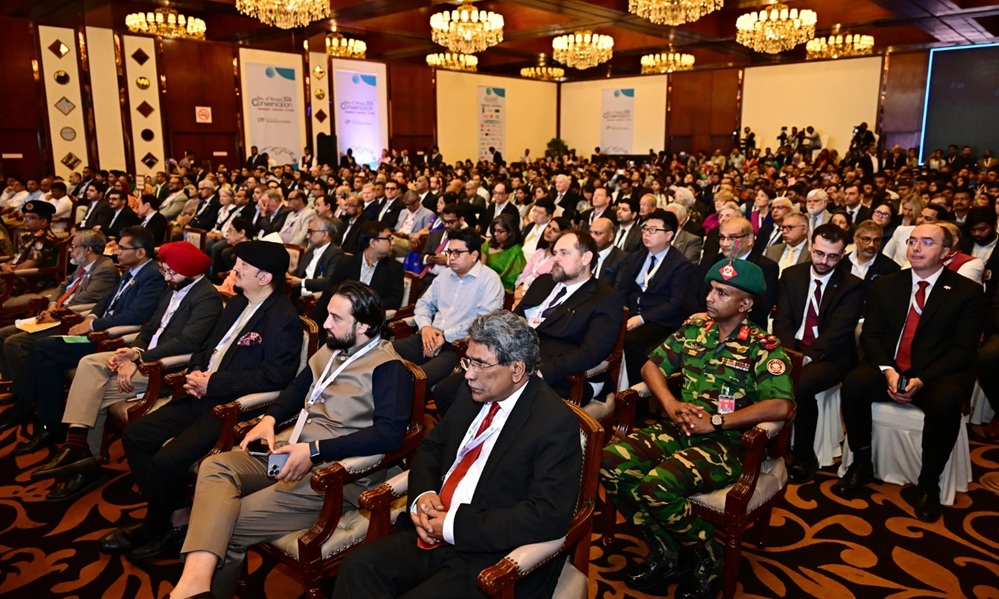
The prime minister was addressing the inaugural session of the three-day international conference ‘Bay of Bengal Conversation (BOBC) 2026’, organised by the Centre for Governance Studies (CGS), at Pan Pacific Sonargaon Hotel here this morning. This year’s BOBC is being held under the theme “Fragments, Frontiers and Futures: Navigating Power, Technology and Trust in a World Rewritten”. Around 200 speakers, more than 300 delegates and over 1,000 participants from more than 100 countries are taking part in the conference, which is being held from October 3 to 5.

Former Serbian President Boris Tadic, former Maldivian President Mohamed Nasheed and former Malian Prime Minister Moussa Mara, among others, are participating in the conference along with former and incumbent state officials, diplomats, policymakers, researchers, business leaders, technologists and experts from different countries. The prime minister said the government has taken initiatives to make Bangladesh an attractive investment destination and transform the country into a strong hub for production and investment.

“We want to create extensive employment opportunities in production, services, exports and all other sectors,” he said. Emphasising the need for policy certainty for investors, the prime minister said continuity in long-term policies would provide them with the necessary assurance. He said the government’s social protection programmes had been designed to give priority to the most disadvantaged people.

Under the Family Card initiative, financial assistance will reach the hands of mothers in every family, beginning with the poorest and most marginalised communities, he said. The Farmers Card will connect farmers with government incentives, agricultural services and markets, while the Health Card will ensure access to healthcare for all, he said, adding that ultimately the Universal Card would bring integrated government services under one umbrella.

Mentioning the government’s pledge to take healthcare to people’s doorsteps, the prime minister said the government is working to recruit 100,000 health workers, around 80 percent of whom will be women. They will provide primary healthcare, health advice and necessary referral services at the grassroots level, he said, adding that the government is also giving special attention to maternal and child health.

On education reform, the prime minister said education should not be limited to obtaining certificates but should prepare students for real life. “We are working to ensure a joyful learning environment,” he said. He said culture, sports, values and ethics would have an important place in the curriculum to help build children’s character. Students would be given the opportunity to learn a third language, while technical and vocational education would be expanded alongside general education.

The government has taken initiatives to provide free uniforms, schoolbags, midday meals and stipends from the first grade, while expanding free education for girls up to the graduate level, he said. Describing the country’s large young population as one of the key drivers of national progress, the prime minister said skills development and suitable employment opportunities were essential to harnessing the demographic advantage.

“The government is focusing on improving language skills, creating employment opportunities, technological transformation and wider use of artificial intelligence. We are supporting innovation, entrepreneurship and start-ups. We want our young people to compete on the global stage and transform brain drain into brain circulation,” he said Describing agriculture as a mainstay of the economy, Tarique Rahman said access to technology, irrigation, agricultural finance and markets are being made easier.

He said support would be provided to fisheries, livestock and rural entrepreneurs, while agricultural processing and agro-product export industries needed to be developed as a complement to food security.

“A strong rural economy can build a strong Bangladesh,” the prime minister said. Highlighting the importance of water security, he said the government has planned to excavate 20,000 kilometres of canals and waterways over the next five years. The Padma Barrage project is being advanced and a master plan for the Teesta is being prepared for water conservation and management, he said, adding that these initiatives would support agriculture while strengthening climate resilience.

On environmental protection, Tarique Rahman said 250 million trees would be planted over the next five years. He said Bangladesh is also expanding solar power use, promoting waste recycling and taking a leading role in establishing environment-friendly green factories.

“Of the world’s top 100 LEED-certified factories, 53 are now in Bangladesh,” he said. The prime minister said developing clean and environment- friendly cities could reduce waste, strengthen climate resilience and further dynamise the national economy. Stressing institutional reforms, he said strong state institutions were essential for development. “We are strengthening institutional transparency and accountability. Human rights, democratic values and freedom of expression must be protected,” he said.

Emphasising equal application of the rule of law to every citizen, the prime minister said an institutional culture would be developed in which state institutions would genuinely remain dedicated to serving the people of Bangladesh. On the Rohingya crisis, he said Bangladesh was still hosting around 1.2 million Rohingya refugees. “Our main objective is to ensure their swift, voluntary, safe, dignified and sustainable repatriation to Myanmar,” he said.

Calling for continued political support and international financing from the global community, he said the root causes of the crisis must also be addressed. “The crisis originated in Myanmar and its solution must also be found in Myanmar,” he said. Referring to the Bay of Bengal as one of the major pillars of Bangladesh’s future economic potential, Tarique Rahman said the Bay had been shaping Bangladesh’s destiny for generations.

Given Bangladesh’s geographic and strategic location, he said, the country had opportunities to become more deeply connected with the world through seaports, waterways and the coastal economy. There is immense potential in shipping, fisheries, tourism, energy and regional supply chains, he said. The prime minister said deeper bilateral and multilateral engagement was needed to transform the region’s shared geography into shared prosperity.

“Cooperation can be further expanded in trade, energy, education, technology, climate and maritime sectors. New markets can be opened and more opportunities can be created for young people. We can build stronger cooperative relations based on equality, fairness and justice,” he said. Stating that Bangladesh believes in dialogue, partnership and mutual respect, Tarique Rahman said the country would continue to work positively with all its regional and global partners while safeguarding national interests and sovereignty. “Because peace and harmony are the foundations of shared prosperity and development,” he said.

The prime minister called for transforming the Bay of Bengal region into an area where every state could prosper together, benefit equally and extend meaningful cooperation to its citizens.

“Bangladesh is fully prepared to play its rightful role in this regard,” he said. The five thematic pillars of this year’s BOBC are geopolitics, security and strategic competition, artificial intelligence, cyberspace and information power, trade, connectivity and strategic growth, and climate, resilience and human security.


Bangladesh Intensifies Crime Drives, Rules Out New ‘Operation Clean Heart’

DHAKA — The Bangladesh government has said it has not taken any formal decision to launch a new nationwide joint operation similar to the controversial “Operation Clean Heart” of 2002, while coordinated law-enforcement drives against crime, extortion and drug-related activities are set to continue and intensify.

Home Minister Salahuddin Ahmed said on Thursday that ongoing operations involving police, Border Guard Bangladesh (BGB), the Special Response Battalion (SRB) and Ansar are part of the regular law-enforcement process.

“There is no formal decision to conduct a joint operation,” the minister said, adding that coordinated activities to combat terrorism, extortion and drugs would be strengthened further. The minister made the remarks after unveiling the foundation plaque for the new headquarters of the Bangladesh Ansar and Village Defence Party in Tejgaon, Dhaka.

His comments came amid growing discussion over whether the government might undertake a large-scale security campaign following reports of extortion, land grabbing and other criminal activities in different parts of the country.

Salahuddin also ruled out plans for a special operation modeled on the 2002 “Operation Clean Heart.” He said the government was not considering establishing a separate joint force for such a campaign and described the ongoing coordination among law-enforcement agencies as part of their regular activities.

Alleged Criminal Networks

Recent media reports have also highlighted an alleged list of people involved in extortion and land or property grabbing in Dhaka. A report published by The Daily Inqilab said a list reportedly prepared by the Dhaka Metropolitan Police identified 1,536 people allegedly involved in land grabbing, footpath occupation and extortion. The report said 1,252 were identified as active extortionists and 278 as alleged patrons or facilitators. It further claimed that 230 of the 278 alleged patrons were current or former leaders or activists of the BNP or its affiliated organisations.

Those figures have not been independently established here as an official DMP publication, and political affiliations mentioned in such reports should be treated as allegations rather than established findings.

Law-Enforcement Operations to Continue

The government says police and other security agencies will continue working together against extortion, drugs, terrorism and other crimes. Salahuddin said law-enforcement personnel found negligent in their duties or involved in criminal activities could face departmental and legal action, including criminal cases where allegations are proved. The current approach therefore involves strengthening coordination among existing agencies rather than announcing a new operation under the name “Operation Clean Heart.”

The original Operation Clean Heart was launched in October 2002 and involved the military in a nationwide anti-crime campaign. Human Rights Watch later documented allegations of deaths in custody and other human-rights abuses associated with the operation. The government’s latest position, however, is that no new campaign modeled on that operation has been approved.


Joy Urges West to Address Bangladesh Political Rights

LONDON — Sajeeb Wazed Joy, son and former adviser to ousted prime minister Sheikh Hasina, has urged Western governments to speak out over political detentions and the exclusion of the Awami League from Bangladesh’s political process, warning that continued silence could contribute to instability and affect Western economic and security interests.

Joy made the remarks by video link on September 29 at a London seminar organised by the Global Centre for Democratic Governance at One Great George Street. The event focused on democracy, human rights and the rule of law in Bangladesh.

During his address, Joy accused Britain and other Western governments of overlooking alleged abuses while maintaining commercial ties with Bangladesh. He alleged that politicians and journalists had been detained for extended periods without due process and questioned the legitimacy of an election in which the Awami League was excluded. His comments covered developments since Sheikh Hasina left office in August 2024.

Bangladesh’s interim government banned Awami League activities in May 2025 pending proceedings before the International Crimes Tribunal related to the suppression of the 2024 uprising. The authorities said the measure was aimed at protecting national security and people involved in the proceedings.

The February 2026 parliamentary election received a generally positive assessment from international observers, although concerns remained over political inclusion. The Commonwealth’s final report described the election as peaceful, orderly and transparent while also highlighting the consequences of the Awami League’s exclusion and continuing concerns over media freedom and political participation.

Human Rights Watch, meanwhile, reported in July 2025 that many arrests of people perceived to be Awami League supporters appeared arbitrary and politically motivated. The organisation also said that some forms of repression associated with Hasina’s government, including widespread enforced disappearances, appeared to have ended.

Joy also blamed the military for five deaths during unrest in Gopalganj in July 2025. Human Rights Watch likewise reported five deaths in clashes involving security forces and Awami League supporters. The military said at the time that its personnel had acted in self-defence after warnings were ignored and troops came under attack. The competing accounts leave questions over the precise circumstances and responsibility for the deaths.

Joy also raised concerns about Bangladesh’s ability to finance aircraft purchases and imported gas, while claiming that domestic investment had effectively stopped. Available economic data, however, provide a more mixed picture. Boeing announced on September 23 that Biman Bangladesh Airlines had ordered 11 additional aircraft, bringing the airline’s total orders during 2026 to 25. The announcement confirms the aircraft purchases but does not establish whether Bangladesh has missed contractual payments or demonstrate its ability to meet all future financial obligations.

Similarly, available investment data do not support a literal claim that domestic investment has stopped. A January 2026 economic review by the Centre for Policy Dialogue estimated private investment at 22.48 percent of GDP in fiscal year 2025, compared with 23.96 percent a year earlier.

Bangladesh nevertheless continues to face significant economic challenges. The International Monetary Fund has highlighted fiscal constraints, stress in the banking sector and persistent inflation. In its assessment, the IMF projected economic growth of 3.5 percent for fiscal year 2027 and called for reforms to increase government revenue and strengthen the banking sector.

Joy concluded his remarks by warning of renewed political confrontation and security risks. He also urged Bangladeshis living abroad to engage with their elected representatives and encourage them to raise issues involving human rights, democratic participation and political inclusion in Bangladesh.


bdnews24 Editor-in-Chief Toufique Imrose Khalidi Dies at 59

Dhaka: The voice behind one of Bangladesh’s most consequential journeys into digital journalism has fallen silent. Toufique Imrose Khalidi, editor-in-chief of bdnews24.com, has died at the age of 59. He was taken to St Bartholomew’s Hospital in London on Thursday night after suffering a brain haemorrhage. Doctors pronounced him dead at 2:23pm local time on Friday. Khalidi had been in London on a private visit, his family said, when he suddenly fell ill. His death came just three weeks before bdnews24.com was due to celebrate its 20th anniversary on Oct 23 — an occasion he had been actively planning.

“We were preparing to celebrate our 20th anniversary on Oct 23. Toufique bhai himself was planning everything. Overall, he was incredibly energised and enthusiastic. But everything ended three weeks before that. This is an irreparable loss for us,” a bdnews24.com spokesperson said. The date for bringing Khalidi’s body back to Bangladesh has not yet been decided. His family will announce the time and place of the funeral prayers and burial once arrangements have been finalised. President Mirza Fakhrul Islam Alamgir expressed deep sorrow over Khalidi’s death, describing him as a pioneer in the development of online and digital journalism in Bangladesh.

“Toufique Imrose Khalidi was a pioneer in the development of online and digital journalism in the country. With his death, the country has lost an experienced, gracious and distinguished media personality. His contribution to journalism and the media will be remembered for a long time,” he said in a condolence message. Recalling his personal memories of Khalidi with deep respect, the president added, “Toufique Imrose Khalidi’s death is extremely painful for me.”

Khalidi was born on Jun 14, 1967. He earned a Bachelor’s degree in English Literature from the Dhaka University in 1987, studying political science and international relations as subsidiary subjects. Khalidi would go on to complete a Master’s in English Literature from the same university. He started in population research in 1987 and worked for Save the Children Fund (UK) before entering journalism.

Khalidi worked at a number of publications over the course of a lengthy journalistic career. He was the assistant editor at the Sunday Express from 1989 to 1991, a diplomatic correspondent at The Daily Star from 1991 to 1993, a senior correspondent at The Financial Express from 1993 to 1995, and then as assistant editor and lead writer at the publication while also covering major events as special correspondent.

From 1996 to 1997, he worked for Paris-based Europe, a quarterly journal published by Journalists in Europe Foundation in Paris. He was the assistant editor and head of the Business and Economy Desk at The Daily Star from 1997 to 1998. From 1999 to 2000, he was the news editor of the English daily’s Weekend Edition. During this time, he was also the joint news editor at the newspaper.

Khalidi joined the BBC World Service in 2000 and worked as a producer and presenter of news and current affairs programmes in addition to producing reports and features on business and economic issues until 2005. He was also the anchor of a monthly debate programme.

In July 2006, he became the editor-in-chief and managing director of bdnews24.com, also serving as the director and stakeholder of its owning company Bangladesh News 24 Hours Ltd. Following the takeover by Khalidi, BDNEWS relaunched as Bangladesh’s first free online newspaper and was rebranded as bdnews24.com.


Bangladesh Police Launches Cyber Police Unit for AI-Era Policing

DHAKA — Bangladesh Police has launched a dedicated Cyber Police Unit to strengthen cybercrime investigations, digital security and technology-driven policing as criminal activities increasingly evolve in the era of artificial intelligence. Home Minister Salahuddin Ahmed formally inaugurated the specialised unit at the Hall of Pride at Police Headquarters on Thursday.

Speaking at a press briefing after the inauguration, the home minister said the rapid development of artificial intelligence and changing patterns of crime require law enforcement agencies to move beyond conventional policing and adopt technology- and knowledge-based approaches.

“In the era of artificial intelligence, the nature of crime is changing rapidly. Our policing system must evolve accordingly. The Cyber Police Unit is a major step towards transforming Bangladesh Police into a modern, technology-driven and knowledge-based force,” he said.

The new unit represents a major institutional step toward establishing a technology-led policing framework capable of responding to increasingly sophisticated cyber and digital crimes. The Cyber Police Unit will be headed by an Additional Inspector General of Police (Additional IGP). Mohammad Iqbal Hossain has initially been assigned to lead the unit.

At the divisional level, deputy inspectors general (DIGs) and additional DIGs will oversee cyber-policing activities. At the district level, superintendents of police (SPs) or designated senior officers will be responsible for cyber-related operations.

Dedicated sub-inspectors, assistant sub-inspectors and constables will also be deployed at police stations to provide cyber-related services and assist with investigations. According to the approved organisational structure, the unit will have a total strength of 4,592 personnel. Initially, experienced and trained members of the existing police force will be deployed, while additional recruitment will be carried out to fill the remaining positions.

The government is also creating a specialised technical workforce within the unit through contractual and outsourced recruitment of professionals with expertise in cyber security and digital investigations. The unit plans to recruit specialists in areas including system analysis, financial data analysis, cyber security, network administration, dark-web analysis, cryptocurrency analysis, malware analysis, social-media analysis, emergency response and disaster recovery. These specialists will be recruited under separate competitive remuneration arrangements.

IT-trained members of the regular police force will receive priority for deployment to the unit, while senior officers and technical specialists will undergo advanced training both in Bangladesh and abroad. A modern digital forensic laboratory is also being established under the Cyber Police Unit. The facility will be equipped with advanced technology and specialised tools for cyber investigations.

The laboratory is expected to support investigations involving financial crimes, money laundering, social-media-related offences, misinformation, drug-related crimes and extremist activities conducted through digital platforms. The home minister said the new structure would also bring together cyber-investigation activities that had previously been carried out separately by different police units.

“Cyber investigations were previously carried out in a fragmented manner across different units. The new Cyber Police Unit will bring these activities under a single, coordinated framework, helping us improve investigative efficiency, technological capability and institutional coordination,” he said.

Salahuddin Ahmed expressed hope that the specialised unit would strengthen Bangladesh’s capacity to prevent and investigate cybercrime and address the misuse of cyberspace. Senior Secretary of the Ministry of Home Affairs Manzur Morshed Chowdhury, Inspector General of Police Md Ali Hossain Fakir, and other senior police officials attended the briefing.


Bangladesh Extends Bir Muktijoddha Enlistment Deadline to October 7

DHAKA — The Ministry of Liberation War Affairs has extended the deadline for submitting applications for fresh gazette enlistment as Bir Muktijoddha (Valiant Freedom Fighter) to October 7, 2026. According to a gazette notification issued Thursday, eligible individuals can submit their applications for enlistment within the extended deadline. The ministry said no new applications will be accepted after October 7.

A memorandum issued by the ministry’s Gazette Branch requested its Information and Communication Technology (ICT) Branch to take necessary steps to publish the public notice on the ministry’s website. The memorandum was signed by Under Secretary Haridas Thakur.

The ministry said applications for enlistment as Bir Muktijoddha had previously been received at various times, followed by verification processes. Under the prescribed procedure, applications are considered for gazette enlistment after verification of an applicant’s role during the Liberation War, along with relevant documents and other supporting information.

The ministry said there are provisions for verifying applications through the National Freedom Fighters Council and the relevant administrative authorities. The extension provides applicants additional time to submit their applications before the process closes for new submissions.


Iranian Delegation Leaves New York Early Amid US-Iran Tensions

Shibbir Ahmed, New York — U.S. Secretary of State Marco Rubio ordered Iranian Foreign Minister Abbas Araghchi and his delegation to leave New York earlier than scheduled, according to two U.S. officials familiar with the matter, adding a new dimension to ongoing diplomatic tensions between Washington and Tehran. Iranian President Masoud Pezeshkian left New York last week after delivering his address to the United Nations General Assembly. Araghchi, however, remained in the city as efforts continued toward indirect discussions with the United States on reopening the Strait of Hormuz, ending the ongoing conflict and restarting negotiations over Iran’s nuclear program.

According to U.S. officials, weekend meetings involving Iranian and Qatari mediators produced little progress. Rubio subsequently instructed the Iranian delegation on Monday to leave New York immediately. One U.S. official said the delegation had remained in the country after the high-level UN meetings had ended and was no longer expected to stay. Araghchi and members of his delegation left New York early Tuesday and were expected to travel back to Iran via Doha, Qatar.

Iran, however, rejected the U.S. account. Iran’s permanent mission to the United Nations said the delegation had not been ordered to leave or expelled from the United States. The mission said its departure schedule had been arranged in advance and had been communicated to the U.S. State Department on September 17.

The Iranian mission also accused Washington of spreading what it described as “baseless” reports following the lack of progress in the negotiations. The conflicting accounts have highlighted the differences between Washington and Tehran over the circumstances surrounding the delegation’s departure.

Indirect discussions between the United States and Iran have continued with Qatar playing a mediating role. Key issues remain unresolved, including the reopening of the Strait of Hormuz, sanctions, frozen Iranian assets, the ongoing conflict and Iran’s nuclear program.

The departure of the Iranian delegation comes as diplomatic contacts between Washington and Tehran continue, but the two sides have yet to reach an agreement aimed at resolving the broader conflict and their longstanding disputes.


Ferdousi Ahmed’s reserved seat declared vacant

DHAKA- Reserved women’s seat-23 of the 13th Jatiya Sangsad has been declared vacant following the resignation of law maker Ferdousi Ahmed. Jatiya Sangsad Speaker Hafiz Uddin Ahmad Bir Bikram told reporters this afternoon that the lawmaker from reserved women’s seat-23 came to his office and submitted her resignation in writing.

“According to the provisions of the Constitution, the seat became vacant immediately after her resignation,” he said. The Speaker added, “We have sent it for publication in the gazette. Immediately after receiving the gazette, we will inform the Election Commission, and the resignation will take effect from today.”

Meanwhile, a notification signed by Parliament Secretariat Secretary Barrister Md Golam Sarwar Bhuiyan today said that the reserved Women’s seat-23 in the 13th Jatiya Sangsad had fallen vacant following the resignation of Ferdousi Ahmed. The notification said the seat fell vacant on the same date in accordance with Article 67(2) of the Constitution of the People’s Republic of Bangladesh.