Govt Vows No Politically Motivated Detention: Shama

DHAKA: State Minister for Foreign Affairs Shama Obaed Islam has said the government is committed to protecting human rights and ensuring that no citizen is detained or imprisoned unjustly because of political affiliation or vendetta.

“The government will definitely ensure that no one is unjustly imprisoned or detained due to political vendetta,” she told journalists at the foreign ministry on Wednesday.

Shama said the government’s commitment to due process and fundamental rights extends to supporters of all political parties, including opposition parties and the Awami League, whose activities are currently banned.

“No party, be it the opposition party, Awami League, or any party, the current government will definitely ensure that no one is unjustly imprisoned or detained due to political vendetta,” she said.

The State Minister alleged that Bangladesh had experienced widespread human rights violations over the past 17 years, saying BNP leaders and activists were among the major victims.

“The kind of human rights that have been violated in Bangladesh in the last 17 years has never been violated in the history of Bangladesh,” she said.

“The biggest victim is the Bangladesh Nationalist Party, its leaders and activists,” she added.

Shama said the government would not allow a return to what she described as the country’s previous “fascist era” and would work to protect the fundamental rights of every citizen.

“We will never want the past fascist era to return now or in the future. We want all human rights to be ensured to every citizen,” she said.

She said the government has a responsibility to protect citizens’ rights and ensure that the justice system is not used for political revenge.

“Our government’s stand is that we are trying to protect human rights. We are responsible to the people,” she said.

Bangladesh policy guides foreign relations

Turning to foreign policy, Shama said Bangladesh’s approach is focused on protecting national interests while maintaining balanced and respectful relations with all countries.

“Our foreign policy is first and foremost a ‘Bangladesh policy’… with equal rights with everyone and maintaining our own interests with respect,” she said.

She said the elected government’s political mandate had strengthened Bangladesh’s position in negotiations with international partners.

“When Bangladesh is talking, the Prime Minister of Bangladesh is talking, then all the other stakeholders including China are listening to our words with more attention, more seriously,” she said.

“Now that Bangladesh is an elected government, we have a stronger position in our negotiation space,” she added.

Rohingya crisis requires political solution

On the Rohingya crisis, Shama said Bangladesh would use its strengthened diplomatic position to encourage greater international engagement and push for a lasting political solution.

“The matter is absolutely a political problem, it is a very sensitive matter and we need to solve this problem politically,” she said.

She said Bangladesh remains engaged in both official and unofficial communication with various stakeholders in Myanmar as part of efforts to resolve the crisis.

“We are trying to involve the international community more,” she said, referring to a high-level UN session on the Rohingya crisis scheduled for September, which Prime Minister Tarique Rahman is expected to attend.

Bangladesh will also explore whether greater involvement from the Muslim world could help increase pressure on Myanmar and create momentum towards a solution, she said.

According to Shama, the crisis has become increasingly complex since the massive influx of Rohingyas into Bangladesh began in 2017, particularly because of Myanmar’s changing political and security landscape.

She pointed to the emergence of the Arakan Army and other actors in Rakhine State, as well as growing security concerns along the Bangladesh-Myanmar border, including human smuggling and drug trafficking.

Shama said it was difficult to determine the exact number of Rohingyas currently living in Bangladesh because of continued arrivals and births in the camps.

“We don’t know the exact number right now, but it will definitely be over 1.3 million,” she said, adding that an estimated 30,000 children are born in the camps each year.

She said Chinese President Xi Jinping had expressed Beijing’s willingness to cooperate with Bangladesh in finding a solution to the Rohingya crisis during Prime Minister Tarique Rahman’s recent visit to China.

Shama also questioned the effectiveness of existing arrangements for resolving the crisis without stronger involvement from the United Nations and other major international stakeholders.

She said Bangladesh could gain additional diplomatic leverage from Foreign Minister Dr Khalilur Rahman’s upcoming role as President of the UN General Assembly.

“From that place, we have a power to speak for Bangladesh in the international community. We think that at least in the next year, we will be able to use this capacity a little better,” she said.

Shama reiterated that Bangladesh would continue to pursue a “Bangladesh policy” in its international relations, protecting national interests while maintaining ties with other countries on the basis of equality and mutual respect.

Bangladesh Plans $2.14 Billion Purchase of 20 Chinese J-10CE Fighter Jets

DHAKA, Bangladesh: Bangladesh has prepared a draft agreement to negotiate the purchase of 20 Chinese J-10CE multirole fighter jets at an estimated cost of $2.14 billion, as the government moves ahead with a major plan to modernize the Bangladesh Air Force. Government sources said the proposed acquisition would be financed over eight fiscal years, with the procurement process expected to run from the current 2026–27 fiscal year through 2034–35.

Ten of the aircraft are planned to meet existing operational requirements, while the remaining 10 would be used to establish a new fighter squadron within the Bangladesh Air Force. The development was disclosed after Prime Minister’s Information Adviser Zahed Ur Rahman said Tuesday that the government was advancing the process of purchasing J-10 fighter aircraft from China.

$2.14 billion procurement plan

According to documents cited by government sources, each J-10CE is estimated to cost about $62.7 million. At an exchange rate of Tk123 to the U.S. dollar, that would put the price of each aircraft at roughly Tk7.71 billion. The 20 aircraft would cost approximately $1.256 billion, while additional expenditure would cover pilot and technical training, transportation and operational equipment.

The broader procurement package is estimated at approximately $2.14 billion, according to the documents. Bangladesh initially expected the procurement to be completed during the 2025–26 and 2026–27 fiscal years. More recent government documents, however, indicate that payments and implementation would continue through 2034–35. Defense sources said Bangladesh is seeking to receive six J-10 aircraft by 2027, with the remaining 14 aircraft delivered in phases.

Government-to-government purchase

The proposed purchase would be conducted either through a government-to-government arrangement with China or through direct negotiations with China National Aero-Technology Import & Export Corporation (CATIC), according to the documents. A committee formed to negotiate the purchase of J-10 aircraft and attack helicopters has already prepared a draft agreement and forwarded it to the Armed Forces Division.

The Bangladesh Air Force is currently evaluating the technical and financial proposals associated with the procurement. The modernization program also includes plans to acquire anti-drone systems, long-range radar, electronic warfare systems and passive defense systems.

New fighter squadron and air force infrastructure

Under the proposed acquisition plan, Bangladesh would establish a new multirole combat aircraft unit. The government is also working on restructuring elements of the country’s air warfare and field infrastructure, while some activities related to establishing an aerospace research and development complex are underway.

Documents also indicate that Bangladesh is pursuing land acquisition for the establishment of a full-fledged air base in Bogura, aimed at expanding Bangladesh Air Force flight and operational capabilities in the country’s northern and northwestern regions.

Why Bangladesh is considering the J-10CE

Bangladesh has been seeking to modernize its fighter fleet for several years. The country’s existing combat aircraft are aging, raising concerns over their ability to meet modern air-defense requirements. The J-10CE has attracted additional attention in Bangladesh following the May 2025 India-Pakistan conflict, when Pakistan deployed Chinese-made J-10C-series aircraft.

Pakistan claimed that its J-10s were used to shoot down several Indian aircraft, including Rafale fighters. India acknowledged losing aircraft during the conflict but did not publicly confirm the number or the specific aircraft involved.

International reporting has also examined India’s reported loss of Rafale aircraft during the fighting. The precise number and circumstances surrounding those losses remain subject to differing accounts. The conflict nevertheless drew international attention to the capabilities of China’s J-10C/J-10CE family of fighter aircraft.

J-10CE versus Rafale

The J-10CE is the export version of China’s J-10C and is designed as a multirole combat aircraft, capable of performing both air-to-air and air-to-ground missions. Bangladesh currently operates fighter aircraft primarily focused on air-defense missions, while the proposed J-10CE acquisition would provide a broader multirole capability.

The J-10CE is capable of supersonic flight and is designed for high maneuverability and modern aerial combat. Its advanced radar, electronic systems and weapons integration are among the features that have attracted interest from potential foreign buyers. The aircraft is generally considered a 4.5-generation fighter, while France’s Rafale is also widely classified in the 4.5-generation category.

Bangladesh has considered Western fighters

Bangladesh’s interest in modern fighter aircraft predates the current J-10CE proposal. Since 2016, Dhaka has considered a number of options for modernizing its combat fleet, including France’s Rafale, the European Eurofighter Typhoon and U.S.-made F-16 aircraft. French President Emmanuel Macron also promoted the Rafale during his September 2023 visit to Dhaka. The decision to pursue the J-10CE therefore represents a significant shift toward a Chinese platform for Bangladesh’s next-generation multirole fighter capability.

Broader military modernization

The fighter procurement is part of a wider effort to strengthen Bangladesh’s defense capabilities. According to the government, procurement initiatives are also underway for attack helicopters, VIP helicopters and unmanned aerial vehicle systems.

The proposed J-10CE deal would be one of Bangladesh’s largest military acquisitions and would further deepen the country’s longstanding defense relationship with China. For now, the procurement remains subject to negotiations, technical and financial evaluation and the necessary government approvals.


Canada Escalates Trade Fight With New Tariffs on U.S. Goods

Shibbir Ahmed, New York: Canada is escalating its trade fight with the United States, announcing new retaliatory tariffs of up to 50 percent on hundreds of American products as tensions between the two longtime allies continue to worsen.

The Canadian government said Tuesday that the new measures will target approximately $20 billion worth of U.S. imports and will take effect on September 8. The tariffs are being imposed in response to new U.S. tariffs on Canadian goods that took effect after trade negotiations between the two countries broke down.

The Canadian counter-tariffs will range from 15 percent to 50 percent, depending on the product. Items affected include steel, aluminum, dairy products, seafood, furniture, clothing, electronics, machinery and other American-made goods.

Canada strikes back

The move represents a significant escalation in the dispute between Washington and Ottawa. The United States recently imposed a 50 percent tariff on $27.6 billion of Canadian goods, effective August 22. Canada said its response was designed to match the value of the new American measures while protecting Canadian businesses and workers.

Canadian Finance Minister François-Philippe Champagne said the government is taking targeted action while providing support to companies and workers affected by the trade conflict. Canada has also announced measures to help businesses maintain liquidity and adjust to the changing trade environment.

Hundreds of U.S. products targeted

According to the Canadian government, the new tariffs will cover products selected from categories targeted by recent U.S. trade measures. The rates will be 15 percent, 25 percent or 50 percent, depending on the product. The measures are expected to affect about 4.5 percent of Canada’s imports from the United States, based on 2024 trade figures.

Canadian officials say the government wants to protect domestic industries while keeping pressure on Washington to reconsider its tariff policies. The government has also introduced a support package for Canadian businesses and workers affected by the dispute, including financial assistance intended to help companies manage higher costs and disruptions to supply chains.

Growing economic pressure

The escalating tariff battle threatens to raise costs for businesses and consumers on both sides of the border. American industries that rely heavily on the Canadian market could face reduced exports, while Canadian companies dependent on U.S. goods may encounter higher costs. Economists have also warned that prolonged tariffs could disrupt North American supply chains and increase prices.

The dispute is particularly significant because Canada and the United States maintain one of the world’s largest bilateral trading relationships. The latest escalation comes as President Donald Trump continues to criticize Canada over trade and other political issues. Trump has also threatened additional tariffs on Canadian automobiles, adding to uncertainty for manufacturers and workers on both sides of the border.

Relations reach a new low

The latest tariff measures come after negotiations between Washington and Ottawa failed to produce an agreement. Canadian Prime Minister Mark Carney has indicated that Canada remains willing to return to negotiations, but Ottawa has also made clear that it is prepared to defend Canadian economic interests.

The worsening dispute has created uncertainty for businesses, farmers, manufacturers and exporters throughout North America. With Canada’s new tariffs scheduled to take effect September 8, pressure is now building on both governments to find a way to prevent the trade conflict from becoming even more damaging. The latest measures mark another major step in the deepening U.S.-Canada trade dispute and raise fresh concerns about prices, jobs and supply chains across North America.


UN, Red Cross Warn of ‘Moral Red Line’ Over Autonomous Weapons

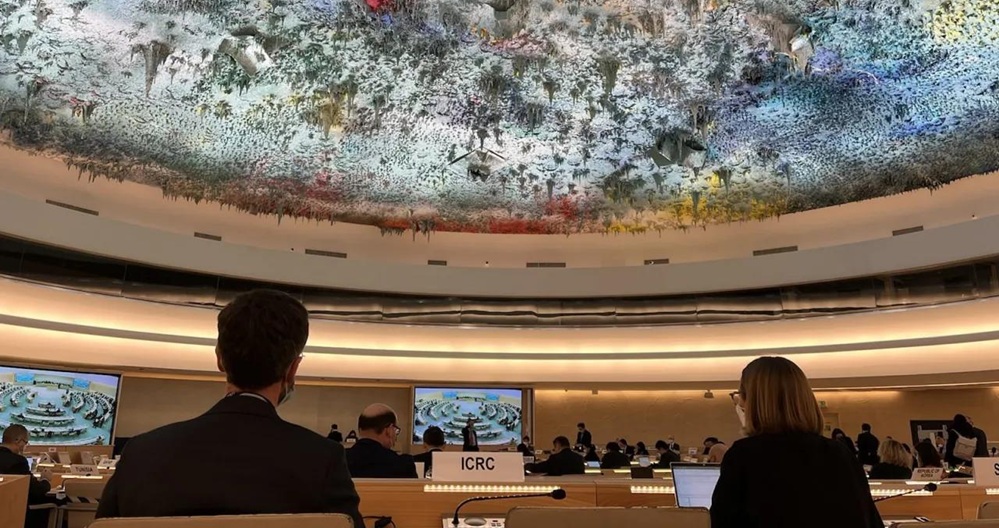
Shibbir Ahmed, New York: The United Nations and the International Committee of the Red Cross on Tuesday issued a renewed and urgent call for international rules governing autonomous weapons, warning that the world is dangerously close to a point where machines could autonomously target human beings.

UN Secretary-General António Guterres and International Committee of the Red Cross President Mirjana Spoljaric said governments must act urgently to prevent weapons from making life-and-death decisions without meaningful human control.

“We are now dangerously close to crossing a moral red line: the autonomous targeting of humans by machines,” the two leaders said in a joint appeal issued in Geneva on August 25. They called for negotiations to begin immediately on a legally binding international instrument establishing clear prohibitions and restrictions on autonomous weapon systems.

Risks are increasing

The UN and Red Cross said their fundamental concerns have remained unchanged since they first called for specific restrictions three years ago, but the risks have intensified as weapons technology has advanced rapidly.

Autonomous weapons are systems capable of selecting and engaging targets with limited or no direct human intervention. The growing use of artificial intelligence in military technology has raised concerns that machines could eventually determine independently who should be attacked.

The organizations stressed that autonomous weapons are not a distant possibility. A race toward greater autonomy in weapons systems is already underway, while international regulations have not kept pace with technological development.

Human judgment must remain central

A major concern is whether autonomous systems can reliably distinguish between combatants and civilians, particularly in complex battlefield conditions. Humanitarian organizations have also warned about the difficulty of determining responsibility when an autonomous system makes a fatal error. If a machine independently selects and attacks a person, questions could arise over who should be held legally responsible for the consequences.

At a Geneva briefing, the UN Office for Disarmament Affairs emphasized that some decisions should never be removed from human hands — particularly the decision over whether another human being lives or dies.

International talks have made limited progress

Governments have been discussing autonomous weapons under the United Nations framework since 2014. Important groundwork has been established through the UN General Assembly and the Group of Governmental Experts working under the Convention on Certain Conventional Weapons.

However, negotiations have struggled to keep pace with rapidly advancing technology. The UN and Red Cross now want governments to move beyond discussions and establish concrete international rules. The renewed appeal comes ahead of further international discussions in Geneva and a major review conference scheduled for November.

Growing use of artificial intelligence in warfare

Concerns have increased as artificial intelligence-assisted and semi-autonomous weapons have become more prominent in modern conflicts, including in Ukraine, Sudan, Gaza, Iran and the Gulf region. Some fully autonomous defensive systems are already in military use, including systems designed to intercept incoming missiles. However, there is currently no confirmed evidence that fully autonomous weapons have been used to deliberately target humans without human involvement.

The UN and Red Cross argue that governments should establish safeguards before technology reaches a point where machines can independently make decisions over human life.

“This year must mark a turning point,” the two organizations said, urging governments to show political determination and move toward decisive international action.


Big Relief for Bangladeshis Waiting for Family-Based Green Cards in the U.S.

Shibbir Ahmed, Washington, D.C.: Bangladeshis waiting for family-based green cards in the United States have received a major boost. The U.S. Department of State’s August 2026 Visa Bulletin shows significant movement in the F2A family-sponsored category, which covers spouses and unmarried children under the age of 21 of U.S. lawful permanent residents, or green card holders.

According to the August Visa Bulletin, the F2A Final Action Date advanced from January 1, 2025, to July 22, 2026 for countries in the “All Chargeability Areas Except Those Listed” category. Bangladesh falls under this group.

The dramatic movement is particularly significant for Bangladeshis who have been waiting for their family-based immigrant visas or green cards through a spouse or parent who is a lawful permanent resident of the United States.

Applicants whose priority dates are earlier than the applicable cutoff date may become eligible for immigrant visa issuance or adjustment of status, depending on their individual circumstances and the applicable U.S. immigration process. However, reaching the cutoff date does not automatically guarantee approval of a green card. Applicants must still meet all other immigration requirements.

The Visa Bulletin is used by the U.S. government to determine when immigrant visa numbers are available in numerically limited family-sponsored and employment-based categories. The Final Action Date indicates which applicants may be eligible for final visa issuance based on their priority dates.

The latest movement is especially significant because the F2A category had been substantially behind current dates for an extended period. The July 2026 Visa Bulletin had listed the F2A Final Action Date for the same group of countries as January 1, 2025, making the subsequent advance to July 22, 2026 a major development for eligible applicants.

Immigration experts caution, however, that visa bulletin dates can change from month to month. Dates can move forward, remain unchanged or, in some circumstances, move backward depending on demand and the availability of immigrant visa numbers.

The development does not mean that every family-based green card applicant will benefit equally. The F2A category is specifically for spouses and unmarried children under 21 of permanent residents. Other family-sponsored categories—including F1, F2B, F3 and F4—have different cutoff dates and may experience different levels of movement.

For Bangladeshis with pending family-based immigration cases, immigration officials and attorneys generally advise applicants to check their priority dates, visa category and the latest Visa Bulletin carefully before taking any action.

The significant F2A advancement could bring relief to many families who have been separated while waiting for their immigration cases to become current. For eligible applicants whose priority dates fall before the new cutoff date, the development could represent an important step forward in their path toward permanent residence in the United States.


Supreme Court Clears Path for Trump’s Mail-Voting Restrictions Ahead of Midterms

Shibbir Ahmed, WASHINGTON DC: The U.S. Supreme Court on Monday cleared a judicial obstacle that had blocked parts of President Donald Trump’s executive order seeking to tighten restrictions on mail-in voting ahead of the November midterm elections.

In a 6–3 decision, the justices granted the Trump administration’s emergency request to suspend a lower-court injunction that had prevented the administration from moving forward with key portions of the order. The court’s three liberal justices dissented.

The ruling, however, did not determine whether Trump’s entire executive order is lawful or constitutional. Instead, the justices concluded that the states challenging the order had brought their case prematurely with respect to certain provisions. The decision leaves the door open for further legal challenges as the November election approaches.

Trump’s executive order, issued in March, directs the Department of Homeland Security to compile lists of eligible U.S. citizens in each state and provide those lists to state authorities before federal elections. It also directs the Justice Department to prioritize investigations and prosecutions of state and local election officials who issue federal ballots to people deemed ineligible to vote.

The order further directs the U.S. Postal Service to develop new rules governing mail-in and absentee ballots, including new envelope markings and tracking requirements. It seeks to limit the delivery of ballots to voters included on state-specific lists.

A separate nationwide injunction blocking the Postal Service from enforcing some of the new requirements remains in effect, meaning the Supreme Court’s decision does not immediately put every provision of Trump’s mail-voting plan into force.

The case was brought by 23 states and the District of Columbia, which argued that the federal government was improperly interfering with the states’ authority to administer elections. The states also warned that implementing major changes to mail voting so close to the midterm elections could disrupt election administration and potentially disenfranchise voters.

The timing of the decision is particularly significant. Military and overseas ballots for the November elections are expected to begin going out in early September, leaving election officials with limited time to adjust their systems to any new federal requirements.

Voting-rights advocates and Democratic officials have criticized the Supreme Court’s decision, warning that the administration’s proposed changes could create confusion and restrict access to mail voting. Supporters of Trump’s order argue that the measures are necessary to strengthen election integrity and ensure that only eligible voters receive federal ballots.

The legal battle is not over. Additional challenges are expected as the administration moves to implement the order and as states prepare for the November midterm elections, which will determine control of Congress.


Promoting the Saree on the World Stage at New York’s Times Square: ‘Saree Goes Global’

Shibbir Ahmed, New York: Once again, the rich heritage, beauty, and cultural diversity of the saree were showcased on the world stage at New York City’s iconic Times Square, one of the world’s busiest and most recognizable urban destinations. On Sunday, August 23, the third annual ‘Saree Goes Global USA 2026’ event was held at Father Duffy Square in Times Square.

The event, held from 11 a.m. to 2 p.m. local time, brought together participants from various U.S. states as well as different parts of the world. Women dressed in sarees of different colors, designs, and styles took part in the Saree Walkathon and ramp walk. The program also featured music, dance, and other cultural performances.

The event was organized by New York-based Uma Global in partnership with the Consulate General of India in New York. Organizers said the primary objective of the event is to present the saree not merely as a garment, but as a global symbol of heritage, culture, art, unity, and women’s empowerment.

The presence of women from different countries dressed in colorful sarees transformed the bustling Times Square area into a vibrant celebration of culture. Through various types of sarees, traditional textiles, and intricate designs, the event highlighted the rich history of South Asian weaving, textiles, and craftsmanship.

Dr. Deepti Jain, founder of the ‘Saree Goes Global’ movement, has been leading the initiative. Dr. Rita Kakati-Shah, president of New York-based Uma Global, has also played an important role in organizing the event. Through their efforts, the initiative seeks not only to introduce the saree to people around the world but also to preserve the heritage of weavers and artisans and promote international recognition of their craftsmanship.

The ‘Saree Goes Global’ event at Times Square has now entered its third year. Previous editions have attracted participants from countries and regions including India, Bangladesh, the United Kingdom, the United States, Nepal, Sri Lanka, Malaysia, Singapore, and the West Indies. The second edition in 2025 brought together participants from Bangladesh and other countries, turning Times Square into a vibrant showcase of cultural diversity.

More than 500 women participated in the inaugural event in 2024. Women from at least nine countries, including Bangladesh, gathered at Times Square wearing sarees and showcased their respective cultures and traditions through music, dance, and the Saree Walkathon.

According to the organizers, the saree has no geographical boundaries. It is a cultural heritage passed down from generation to generation and has the power to bring people from different countries and cultures together. Hosting the event at a globally renowned location such as Times Square provides an important platform for taking that heritage to an international audience.

Through ‘Saree Goes Global,’ the organizers are therefore promoting more than just a traditional garment. The initiative also carries messages of women’s identity and empowerment, cultural diversity, traditional craftsmanship, and harmony among people around the world.


U.S. Proposes Nationwide Arms Embargo on Sudan, China and Russia Object at UN

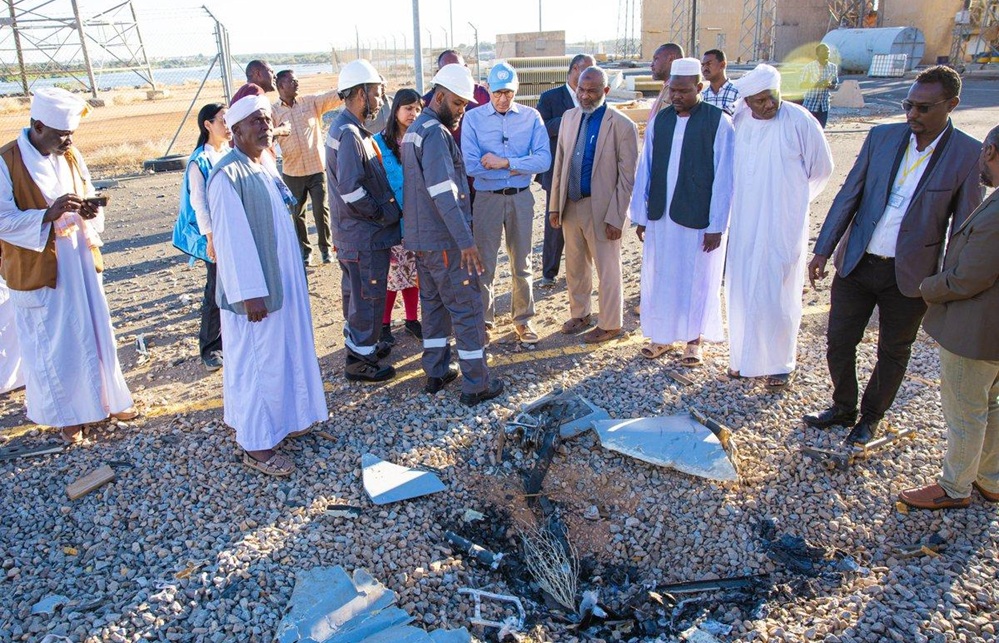
Shibbir Ahmed, United Nations Headquarters, New York: The United States has proposed expanding the arms embargo to cover the entire territory of Sudan as part of efforts to increase pressure on the parties involved in the country’s ongoing civil war. In a draft resolution presented to the United Nations Security Council on Monday, Washington called for extending the existing arms restrictions beyond Darfur to the whole of Sudan, including measures aimed at stopping the transfer of drones and other weapons and military equipment.

The U.S. initiative is intended to prevent foreign military assistance from reaching the parties involved in the Sudan conflict and to pressure them to return to the negotiating table. U.S. officials have argued that military, financial and political support from outside countries has contributed to prolonging the war.

The proposal, however, has exposed divisions within the Security Council. China and Russia, both permanent members of the council, have raised objections to the U.S. initiative. As permanent members, both countries have veto power. Britain and France, meanwhile, have supported the U.S. proposal. Denmark, which holds the Security Council presidency this August, has also backed the initiative.

Sudan has been engulfed in a devastating conflict between the Sudanese Armed Forces and the paramilitary Rapid Support Forces (RSF) since April 2023. According to the United Nations, the fighting has displaced millions of people and created a severe humanitarian crisis across large parts of the country. The protection of civilians and the need to end the conflict were also key issues raised during Monday’s Security Council meeting.

UN political and peacebuilding chief Rosemary DiCarlo warned the Security Council that the conflict in Sudan is worsening and that the warring parties continue to rely on military solutions. She called for stronger international action to help bring an end to the fighting.

If adopted, the U.S. proposal would pave the way for an international arms embargo covering the entire territory of Sudan, including restrictions on the supply of weapons, ammunition and military equipment. Preventing the transfer of modern military technologies, including drones, is also a key objective of the initiative.

However, opposition from China and Russia has created uncertainty over whether the proposal can secure enough support in the Security Council. The U.S. initiative has therefore emerged as a major point of diplomatic tension at the United Nations as international efforts continue to end Sudan’s devastating war.


Trump Labels Strait of Hormuz ‘New U.S. Territory’ as Iran Rejects Claim

Shibbir Ahmed, New York: U.S. President Donald Trump has posted a map on social media labeling the strategically important Strait of Hormuz as “New U.S. Territory,” escalating an already tense confrontation with Iran over the vital shipping route.

Trump shared the map on his Truth Social account on Tuesday, August 18, without providing additional explanation. The post came days after he said he intended to declare the Strait of Hormuz a U.S. territory.

The move immediately drew a sharp response from Tehran. Iranian Deputy Foreign Minister Kazem Gharibabadi dismissed Trump’s claim as a “delusion” and warned that it would either be corrected or challenged by Iran.

The dispute comes as the United States and Iran remain locked in a confrontation over the future of the waterway, which is one of the world’s most important energy and shipping corridors.

Trump Doubles Down on Hormuz Claim

Trump had first suggested last week that the United States could take control of the Strait of Hormuz. On Monday, he told reporters at the White House that making the waterway part of the United States was, in his words, a “great idea.”

His latest social media post went a step further by displaying a map with the strait marked as “New U.S. Territory.”

The Strait of Hormuz lies between Iran and Oman and connects the Persian Gulf with the Gulf of Oman and the Arabian Sea. It is a critical passage for global energy shipments.

Trump’s move has raised questions about the legal and diplomatic implications of any attempt by Washington to claim sovereignty over the waterway.

International law recognizes territorial waters in the Strait as belonging to the coastal states, principally Iran and Oman. A U.S. declaration alone would not establish American sovereignty over the waterway.

Iran Rejects Trump’s Claim

Iran has strongly rejected Trump’s statements about the strait. Iranian Deputy Foreign Minister Kazem Gharibabadi responded directly to Trump’s map, calling the U.S. president’s claim a “delusion.”

He said the claim would either be corrected or that Iran would take steps to correct what he described as Trump’s mistaken view. Iranian officials have repeatedly insisted that the Strait of Hormuz remains under the control and sovereignty of the countries bordering it.

Iranian Parliament Speaker Mohammad Bagher Ghalibaf said Tuesday that the strait would remain closed until the United States accepts Tehran’s demands. Those demands include lifting the U.S. blockade, releasing frozen Iranian assets, ending the oil embargo and stopping military operations against Iran.

Trump Says No Talks Are Underway

Trump’s territorial claim came at the same time as he said there were no negotiations currently taking place with Iran. In a Truth Social post Tuesday, Trump said there were “no talks or conversations” underway or scheduled with Tehran and declared that the U.S. naval blockade remained in force.

The statement appeared to contradict reports from the previous day suggesting that back-channel contacts between U.S. and Iranian officials had taken place. The breakdown in diplomacy comes after a 60-day negotiating period failed to produce a comprehensive agreement between Washington and Tehran.

A Strategic Global Waterway

The Strait of Hormuz is one of the most strategically important waterways in the world. Approximately one-fifth of global oil shipments pass through the strait, making any prolonged disruption a major threat to international energy markets and global economic stability.

Shipping through the waterway has already fallen sharply because of the conflict and security concerns. Major shipping companies have avoided the route, while insurers and energy traders face growing uncertainty over whether commercial vessels can safely transit the area.

A vessel was also reportedly struck by an unknown projectile while transiting the Strait of Hormuz on Tuesday, according to an alert from the United Kingdom Maritime Trade Operations center. The incident caused damage to the vessel’s engine room and resulted in a crew casualty.

Iran Strikes Back With California Map

Iran responded to Trump’s provocative map with a provocative image of its own. An official Iranian social media account associated with Iran’s consulate in Hyderabad posted a map of the United States highlighting California and labeling it “NEW TERRITORY OF ISLAMIC REPUBLIC OF IRAN.”

The post appeared to be a direct satirical response to Trump’s depiction of the Strait of Hormuz as U.S. territory. California is also home to a large Iranian-American community. The exchange of maps underscores the increasingly confrontational rhetoric between Washington and Tehran.

What Would a U.S. Territorial Claim Mean?

Trump’s post does not itself change the legal status of the Strait of Hormuz. The waterway passes through territorial waters associated with Iran and Oman, and its international navigation regime is governed by international maritime law.

Any attempt by the United States to formally claim sovereignty over the strait would therefore have major legal and diplomatic consequences and could trigger opposition from Iran, Oman and other regional states. The dispute also risks complicating efforts to keep one of the world’s most important shipping routes open to international commerce.

Regional Tensions Continue to Rise

The confrontation is also placing pressure on U.S. relations with other Gulf countries. The United Arab Emirates announced Wednesday that it had suspended financial and economic transactions with Iran following what it said were Iranian missile launches toward maritime areas. Iran denied the allegation.

Iranian military officials have separately warned Gulf states against assisting U.S. military operations. The developments indicate that the dispute over Hormuz is increasingly affecting countries beyond the United States and Iran.

Global Energy Security at Risk

The latest escalation has significant implications for the global economy. If shipping through the Strait of Hormuz remains severely restricted, oil and gas supplies from the Persian Gulf could be disrupted, putting upward pressure on energy prices.

Higher energy prices could increase inflation, raise transportation and manufacturing costs and put additional pressure on economies across Asia, Europe and other energy-importing regions. For China, India, Japan, South Korea and European economies that rely heavily on Gulf energy supplies, prolonged disruption could have particularly serious consequences.

A New Flashpoint in the U.S.-Iran Conflict

Trump’s “New U.S. Territory” map represents another escalation in the increasingly bitter confrontation between Washington and Tehran. While the post does not establish any change in sovereignty, it has added a new territorial dimension to an already dangerous dispute over the future of the Strait of Hormuz.

Iran has rejected the claim, while commercial shipping remains severely disrupted and diplomatic efforts remain stalled. The coming days could determine whether the dispute remains primarily a war of rhetoric or develops into a broader confrontation over control of one of the world’s most important strategic waterways.

For the international community, the stakes are enormous. The Strait of Hormuz is not only a regional waterway—it is a critical artery for global energy supplies, international trade and economic stability.


U.S. Business Delegation in Dhaka Signals Growing Investment Interest in Bangladesh

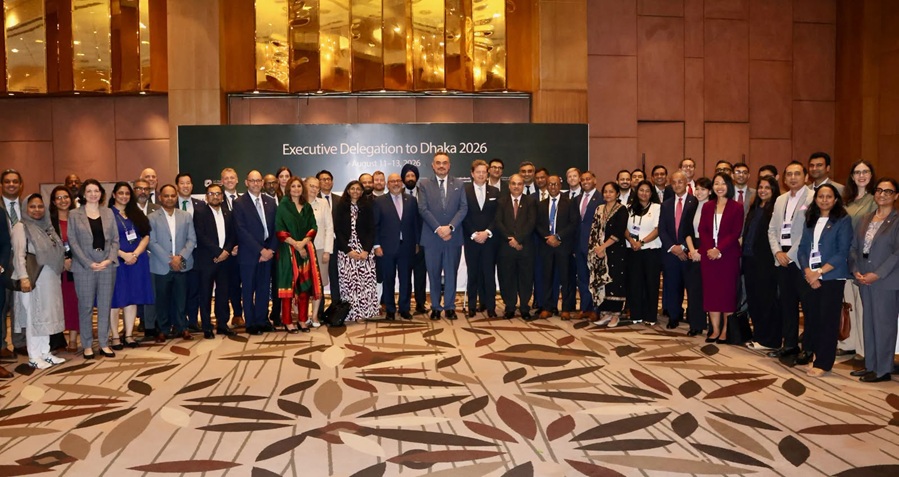
Shibbir Ahmed: A high-level U.S. business delegation representing 25 American companies has arrived in Dhaka to explore new investment opportunities in Bangladesh, highlighting growing interest among leading U.S. businesses in the country’s energy, technology, agriculture, and financial sectors.

The executive delegation of the U.S.-Bangladesh Business Council (USBBC) arrived in Dhaka on August 11 and participated in meetings and business programs through August 13. Representatives of major American companies, including Chevron, Excelerate Energy, Visa, and Mastercard, were among those taking part in the visit.

The delegation’s visit is being viewed as an important initiative to deepen the longstanding economic relationship between Bangladesh and the United States, which spans more than five decades.

U.S. Ambassador to Bangladesh Brent T. Christensen welcomed the delegation to Dhaka, saying that leading American companies from the energy, technology, agriculture, and finance sectors had come to explore opportunities and build on more than 50 years of U.S.-Bangladesh economic ties.

Focus on Trade and Investment

The delegation’s primary objective is to explore new investment opportunities and potential business partnerships in Bangladesh. Energy, infrastructure, technology, digital services, healthcare, agriculture, and financial services are among the sectors attracting particular attention from U.S. businesses.

During meetings with Bangladeshi officials, representatives of the U.S. business community discussed ways to expand bilateral trade and investment and strengthen private-sector cooperation.

The delegation also met with Bangladesh’s Foreign Affairs Adviser Humayun Kabir, with discussions focusing on expanding economic relations and creating greater opportunities for U.S. investment in areas including industry, infrastructure, energy, technology, the digital economy, and healthcare.

Atul Keshap, President of the U.S.-Bangladesh Business Council and a former U.S. ambassador, also emphasized the potential for expanding business cooperation between the two countries.

$5 Billion Investment Goal

The U.S. business delegation’s visit comes as the American Chamber of Commerce in Bangladesh (AmCham) has set an ambitious target for mobilizing additional U.S. investment in Bangladesh.

AmCham has said it aims to help mobilize up to $5 billion in additional U.S. investment over the next five years, involving existing member companies as well as potential new American investors.

The investment target was discussed during an August 11 meeting between Prime Minister Tarique Rahman and an AmCham executive delegation.

The discussions also covered measures to improve Bangladesh’s investment climate, including reforms related to taxation, value-added tax, customs procedures, and other issues affecting businesses.

AmCham has said that its member companies have already invested more than $5 billion in Bangladesh. If the new investment target is achieved, the U.S. corporate presence in Bangladesh could expand significantly.

Energy and Technology Attract Strong Interest

The participation of companies such as Chevron and Excelerate Energy underscores the importance of Bangladesh’s energy sector to American investors.

Bangladesh has growing demand for reliable energy and infrastructure, creating potential opportunities for U.S. companies with expertise in energy production, liquefied natural gas, infrastructure, and related technologies.

The participation of global financial technology companies such as Visa and Mastercard also points to growing interest in Bangladesh’s rapidly developing digital economy and financial-services sector.

With a large population, expanding consumer market, growing digital economy, and increasing demand for infrastructure and energy, Bangladesh offers a range of potential opportunities for international investors.

New Opportunities Following the Trade Agreement

The U.S. business delegation’s visit comes several months after Bangladesh and the United States signed the Agreement on Reciprocal Trade earlier this year.

The agreement created a new framework for expanding bilateral trade and improving market access between the two countries.

Against this backdrop, the business delegation’s visit can be viewed as more than a routine commercial engagement. It represents an effort to translate recent progress in government-to-government economic relations into concrete investment, business partnerships, and private-sector cooperation.

For Bangladesh, increased U.S. investment could bring more than capital. New investments could also contribute to technology transfer, skills development, employment generation, and greater integration into global supply chains.

For American companies, Bangladesh represents a large and evolving South Asian market with opportunities in manufacturing, energy, digital services, financial technology, infrastructure, and consumer-oriented businesses.

A New Chapter in Economic Relations?

For more than five decades, Bangladesh-U.S. economic relations have been strongly associated with trade, particularly Bangladesh’s ready-made garment exports to the American market. Recent developments, however, suggest that the economic relationship could be entering a broader phase.

The visit by U.S. Special Envoy Sergio Gor to Bangladesh earlier this month, followed by the arrival of the high-level U.S. business delegation and AmCham’s $5 billion investment target, indicates growing engagement not only between the two governments but also between the private sectors of both countries.

The challenge now will be turning growing investor interest into actual projects. To attract and retain more U.S. investment, Bangladesh will need to maintain policy stability, improve transparency, streamline regulatory procedures, strengthen infrastructure, and ensure a more predictable business environment.

The latest U.S. business delegation’s visit therefore represents both an opportunity and a test for Bangladesh. Whether the growing interest of American companies can be converted into long-term investment, new jobs, technology partnerships, and expanded trade will be an important measure of the next phase of Bangladesh-U.S. economic relations.