Bangladesh Gripped by Fear of Missing Children, Its Future Generation Slipping Away!

Shibbir Ahmed: The greatest asset of an independent nation is its children. Today’s children are not merely the sons and daughters of individual families—they are tomorrow’s citizens, workforce, leaders, and the future of the state. The dreams that take shape in a child’s eyes are, in many ways, the first sketches of a nation’s future.

But when those very children begin disappearing one after another, the question is no longer limited to an individual family. It becomes a question of national security, social responsibility, and our collective conscience.

In Bangladesh, the growing number of general diaries, or G.D.s, filed over missing children has recently created renewed concern. According to data from Police Headquarters cited in recent reports, 15,917 G.D.s concerning missing children were filed across the country during the first seven months of 2026. That works out to an average of more than 75 reports a day, or roughly one missing-child report every 20 to 21 minutes.

The figure is undoubtedly alarming. But one important distinction must be made: **15,917 is the number of missing-child-related G.D.s, not the number of children who are necessarily still missing.** It would be wrong to interpret the figure as proof that 15,917 children remain missing.

Government and police officials have acknowledged that a G.D. does not necessarily tell us the final outcome of a case. Many children return home after going missing, but their families may not go back to the police station to report the child’s return or formally update the original G.D. As a result, a missing-child case may remain in police records even after the child has returned home. Recent reporting has also highlighted the absence of a regularly published, consolidated national record showing how many children were rescued, returned home, remained missing, or became victims of other crimes. And this is where the deepest part of the crisis lies.

The more important question is not simply how many children have gone missing—but how many have returned, and how many have not?

If the state does not have an accurate, coordinated and regularly updated answer to that question, then the true picture of the missing-child crisis remains unclear. And when a crisis cannot be accurately measured, it becomes extremely difficult to design an effective national strategy to confront it.

A child who disappears leaves behind a family whose suffering cannot be measured by statistics. A mother stands outside a police station holding a photograph of her child. A father searches street after street. Every unfamiliar phone call becomes a moment of hope—and sometimes a source of unbearable fear. The slightest sound at the door can make a parent think: perhaps my child has finally come home. Days pass. Nights pass. The waiting remains. There is no statistic capable of measuring such waiting.

Does Missing Always Mean Abduction?

Every missing-child case is not the same. A child may become separated from family members in a crowded fair, shopping center, railway station or bus terminal. A teenager may leave home voluntarily because of family conflict, hurt feelings, misunderstanding or excessive discipline. In other cases, however, serious crimes such as abduction or trafficking may be involved.

Therefore, it would be wrong to place every missing-child case in the same category. But it would be equally dangerous to dismiss a case as ordinary at the outset.

When a child moves beyond the immediate control of the family, the first few hours can be critical. Information about where the child went, whom the child contacted, which route the child took, or who may have come into contact with the child needs to be collected and analyzed as quickly as possible.

Technology can be one of the state’s most powerful tools in this effort. CCTV footage, mobile communication data, digital investigation, transportation surveillance, and the coordinated use of government databases can significantly improve the chances of locating a missing child. But technology can only be effective when information is connected.

Bangladesh has already taken a step in this direction. Police launched **MUN Alert—Missing Urgent Notification—on January 13, 2026**, to help identify and recover missing or abducted children more quickly. The system allows cases to be reported around the clock and facilitates the rapid dissemination of information, including a child’s photograph and last known location. Police have said the system is intended to verify reports, assess risk and issue emergency alerts when necessary. However, it has not yet been fully integrated with the missing-child information maintained at individual police stations. That gap must be closed.

The Dark World of Trafficking

One of the most frightening possibilities surrounding missing children is human trafficking. Bangladesh has long faced serious trafficking risks, and women and children remain particularly vulnerable. The U.S. Department of State’s Trafficking in Persons reporting has documented trafficking investigations and continuing challenges in Bangladesh, while UNICEF has highlighted the country’s position as a source, transit and destination country for trafficking in women and children.

Poverty, family instability, social vulnerability, child marriage, unsafe migration and displacement can all increase a child’s exposure to exploitation. A trafficker does not always need an elaborate scheme to lure a child. A mobile phone, a small amount of money, a promise of employment, food, or even the trust of a familiar person can become the beginning of a trap.

And once a child falls under the control of a criminal network, finding that child can become far more difficult. But there is another important point that must not be ignored: missing does not automatically mean trafficking.

Police have said there is currently no evidence establishing a direct link between all of the 15,917 missing-child-related G.D.s and child trafficking. At the same time, the possibility of trafficking cannot simply be dismissed in individual cases.

This distinction matters. If we label every missing child a trafficking victim without evidence, we distort the facts. But if we fail to investigate trafficking as a possible explanation in appropriate cases, we may allow serious crimes to disappear behind incomplete records.

Child trafficking is not merely a story about crossing international borders. Children can also face different forms of exploitation within the country itself. Therefore, missing-child cases should not be viewed merely as isolated law-and-order incidents. They must also be examined in the broader context of human trafficking, child labor, sexual exploitation, organized begging and other forms of criminal exploitation.

The Greatest Weakness—Fragmented Information

One of the most urgent steps Bangladesh needs is a genuinely integrated national information system for missing children. The moment a child is reported missing, essential information—including the child’s name, age, photograph, physical description, last known location, clothing, family contact information and circumstances surrounding the disappearance—should be securely recorded in a centralized system.

When the child is found or returns home, that information should be updated immediately in the same system. Police, the Criminal Investigation Department, the Police Bureau of Investigation, Border Guard Bangladesh, hospitals, morgues, social services and other relevant child-protection institutions should have an effective mechanism for sharing appropriate information.

This is not merely a technological issue. It is an issue of governance. A missing-child case should have a beginning, a middle and an end. It should not simply become a G.D. number sitting in a police register.

The final outcome should be recorded—whether the child was rescued, returned home independently, found elsewhere, abducted, identified as a trafficking victim, or remains missing. Experts have specifically called for such an outcome-based system, including better coordination among police records, hospitals, morgues and other relevant institutions.

At the same time, children’s privacy and personal information must be protected. Technology should be used to find a missing child—not to expose that child to another danger. A system designed to protect children must therefore include strong safeguards for their identity and personal data.

Faster Alerts, Faster Rescue

Bangladesh needs an even stronger mechanism for rapidly alerting the public when a child goes missing. Several countries use emergency child-alert systems that can quickly distribute a missing child’s photograph and identifying information to large numbers of people when authorities determine that an emergency alert is warranted.

Bangladesh has already begun moving in that direction through MUN Alert. The next step should be to make the system broader, faster and better integrated with existing police, child-protection and emergency-response mechanisms.

A missing child’s photograph circulating on social media should not depend solely on the desperate efforts of family members. Wherever appropriate, verified information should become part of a coordinated official response.

The media also has an important role to play. But that role must be exercised responsibly. Publishing a child’s photograph, identity or family information must never expose the child to further danger. News organizations need clear guidelines to ensure that efforts to locate a child do not compromise the child’s safety, dignity or future.

Families Cannot Escape Responsibility Either

The state carries the greatest responsibility—but families and society also have important roles to play. In crowded fairs, markets, railway stations, bus terminals or large public gatherings, young children should never be allowed to disappear from their guardians’ sight, even for a moment. Children should have access to emergency contact information and should receive age-appropriate safety education.

For adolescents, however, safety means more than supervision. It also means communication. Why does a teenager want to leave home? Why does he or she feel afraid to speak with parents? Why can a young person not share personal problems with family members? These questions must be addressed.

Only discipline cannot keep a child safe. Trust, friendship, communication and emotional support are also essential parts of child safety.

The State Must Know Who Came Home—and Who Did Not

One of the most important reforms Bangladesh can undertake is the establishment of a complete missing-to-recovery information cycle. A GD is the beginning. It cannot be the end. After a child goes missing, the system should record the progress of the search, the actions taken by investigators, whether the child has been found, how the child was found and, where necessary, what protection, counseling or rehabilitation was provided afterward.

Such a system would not only improve statistical transparency. It would also make it possible to identify where children are most frequently reported missing, which age groups are most vulnerable, which regions face greater risks and what circumstances repeatedly appear in these cases.

There is another issue that cannot be ignored: unidentified bodies. If a missing child’s body is later recovered but the identity cannot be established, and there is no effective system linking missing-child records with unidentified-body records from hospitals and morgues, a family’s search may remain unresolved for years. Experts have therefore called for compatible databases and a national-level matching mechanism. Then the state would not merely count numbers. It would see the human beings behind those numbers.

The Ultimate Measure of Development Is the Safety of Children

A nation’s development cannot be measured simply by the number of bridges, roads, flyovers, skyscrapers or the size of its GDP. One important measure of how developed a state truly is lies in how safely it can raise its children. For a mother who cannot send her child to school without fear, for a father who remains anxious every moment his child is away from home, or for a family that spends day after day waiting for reliable information after a child disappears—the meaning of development is different.

For them, development means their child will return home before evening. Development means hearing a familiar little hand knock on the door after school. Development means never having to stand outside a police station holding a photograph of their child. The figure of 15,917 missing-child-related G.D.s is alarming enough to demand our attention. But more than alarming us, it should force us to ask harder questions.

Because behind every G.D. is the possibility of a child in distress, a family in anguish, a story that remains unfinished and a future placed at risk. We must not limit the discussion to numbers.

We must ask How many children have returned? How many have not? Where did they disappear? Why did they disappear? And, most importantly— How prepared is the state to bring them home? Protecting Bangladesh’s future generation is not an act of charity. It is a fundamental responsibility of the state. A child who goes missing is not merely someone’s son or daughter. That child belongs to Bangladesh.

Protecting that child’s safe childhood means protecting the future of Bangladesh. Our children must never become mere statistics of disappearance. They must return to their homes, reclaim their childhoods, and allow Bangladesh to reclaim its future.

—The author is a journalist based in Jackson Heights, New York.


End Of An Era: Lionel Messi Retires From International Football

BUENOS AIRES — Argentina captain Lionel Messi has officially announced his retirement from international football, bringing a definitive close to a legendary 21-year career with La Albiceleste. The 39-year-old icon shared the emotional news via social media, revealing that he originally penned his farewell letter on July 21—just two days after Argentina’s heartbreaking 1–0 extra-time defeat to Spain in the 2026 FIFA World Cup final. While he initially contemplated making the announcement then, he delayed the public statement following the passing of his father, Jorge Messi, in August.

“After all this time since the final, and after thinking about it a lot, I want to tell everyone that I’m retiring from the national team,” Messi wrote. “It was a decision that hurt—and still hurts deep down—but I understand that the time has come. I’ve given everything I had; I have nothing left to give, and besides, there are some great young players coming up who deserve to be here.”

A Storied Legacy of Redemption and Glory

Messi walks away as a national hero and the heartbeat of modern Argentine football. After years of near-misses and heavy scrutiny early in his career—which famously included a brief, short-lived international retirement in 2016—Messi authored one of the greatest redemption arcs in sports history.

He finishes his international career holding virtually every major record for his country, racking up 125 goals in 207 record-breaking appearances. His major trophy haul includes the 2022 FIFA World Cup, back-to-back Copa América titles in 2021 and 2024, and an Olympic gold medal in 2008.

His crowning achievement came in Qatar in 2022, when he dragged Argentina to global glory, cementing his status alongside Diego Maradona. Even in his final international tournament this past summer, Messi dazzled with eight goals and four assists, guiding the defending champions all the way to the World Cup final before falling narrowly to Spain.

“Now I’ll Be One of You”

In his farewell message, Messi expressed profound gratitude to the fans, his family, and his teammates who shared the journey with him.

“Thank you for all the love during these 20 years. I’m going to miss hearing you from the inside,” Messi said. “Now I’ll be one of you, always supporting from the outside, in the good times and even more in the bad ones. … Thank you, God, for making me Argentine. Vamos Argentina!”

With his international chapter officially closed, Messi will turn his full focus toward his club career with Inter Miami in MLS, leaving the football world to reflect on the departure of one of the greatest artists the sport has ever seen.


U.S. Plans Weekly Sanctions on Iran as Military Tensions Escalate

Shibbir Ahmed, WASHINGTON DC — The United States is preparing to intensify economic pressure on Iran with a new campaign of weekly secondary sanctions, Treasury Secretary Scott Bessent said Monday, as military tensions between Washington and Tehran sharply escalated.

Bessent told Reuters that the U.S. Treasury Department is expected to announce new secondary sanctions every week, beginning with measures targeting banks and financial institutions that help Iran maintain access to international markets.

The planned measures are designed to further restrict Iran’s access to the global financial system and increase pressure on institutions and countries that continue doing business with Tehran. The announcement comes as the United States and Iran have entered their most serious period of renewed hostilities in weeks.

U.S. forces struck two Iranian launchers on Larak Island on Sunday after American forces identified what U.S. officials said were preparations by Iran’s Islamic Revolutionary Guard Corps to launch rockets carrying sea mines into the Strait of Hormuz.

Iran responded by launching missiles toward U.S. military bases in Jordan, according to U.S. and Iranian officials. The attacks marked the first direct exchange of fire between the two sides in about a month. President Donald Trump on Monday warned that the United States would respond forcefully to Iran’s attacks. The latest escalation has raised concerns about a wider regional conflict, particularly because of the strategic importance of the Strait of Hormuz, a critical route for global oil shipments.

Financial Pressure on Iran

The planned sanctions would expand the use of so-called secondary sanctions, which can penalize foreign companies, banks and other institutions that conduct certain business with Iran even when those entities are not based in the United States.

Bessent said the campaign would initially focus on banks and could increasingly target institutions that help Iran move money through the international financial system. The Treasury secretary’s announcement represents a further expansion of the administration’s economic campaign against Tehran.

The United States has already broadened the range of Iranian economic activities that could expose foreign businesses to secondary sanctions, including sectors such as digital assets, gold, technology, aviation and shipping.

Last week, the Treasury Department launched what it described as an unprecedented campaign against Iranian financial networks, targeting channels used by Tehran to generate revenue, evade sanctions and finance activities opposed by Washington.

Military Tensions Add to Economic Pressure

The new sanctions strategy comes as diplomatic and military tensions continue to worsen. The U.S. military said its strike on Larak Island was aimed at preventing Iran from deploying sea mines in the Strait of Hormuz. Iran has rejected the U.S. justification and warned that it would respond to further attacks.

Following the Iranian missile launches toward U.S. forces in Jordan, Trump said the United States would respond strongly. Reuters reported that the exchange of attacks represents a renewed escalation after a period in which the two sides had avoided direct military confrontation.

The conflict has also affected global energy markets. Brent crude oil futures settled more than 2.5% higher on Monday after the latest U.S.-Iran military exchanges, reflecting renewed concerns over the security of oil shipments through the Strait of Hormuz.

Pressure on Iran’s Financial Lifelines

The Trump administration has increasingly focused on Iran’s financial networks as part of its broader strategy to weaken Tehran’s ability to fund its government, military and regional activities.

The planned weekly sanctions would represent a significant escalation because foreign financial institutions could face increasing pressure to choose between maintaining business relationships with Iran and retaining access to the U.S.-dominated international financial system.

For Iran, the measures could further complicate access to foreign currency, international banking services and overseas trade. For the United States and its allies, however, the strategy carries its own risks, particularly if increased economic pressure contributes to further military escalation or disruption of global energy supplies.

With the United States preparing additional sanctions and military tensions rising, the coming days could determine whether the latest confrontation remains limited or develops into a broader regional crisis.


UN Urges Action to End Enforced Disappearances on International Day

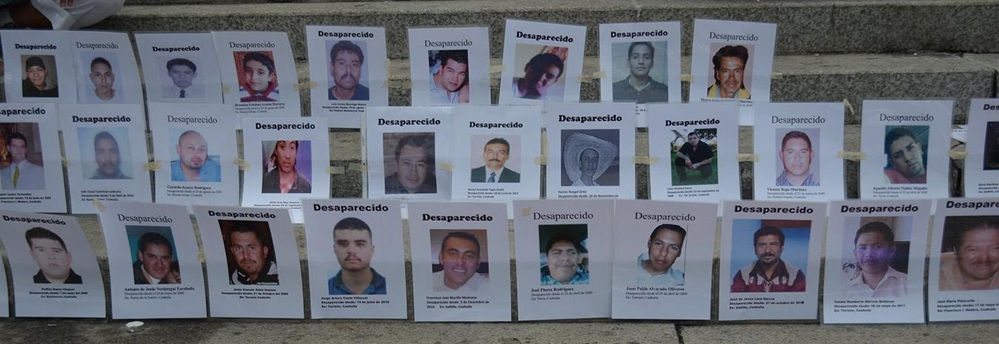
Shibbir Ahmed, UNITED NATIONS, NY — The United Nations is marking the International Day of the Victims of Enforced Disappearances on Sunday with renewed calls for governments to address the fate of missing people, protect victims and their families, and ensure truth and justice for those affected by enforced disappearance.

The annual observance, held on August 30, highlights the continuing suffering of people whose relatives have disappeared after being arrested, detained or otherwise taken into state custody while authorities deny or conceal their whereabouts.

UN human rights experts said the impact of enforced disappearance extends far beyond the individual victim. Families can be left for years without information about what happened to their loved ones, while communities can suffer social and economic consequences. The UN has described enforced disappearance as a serious human-rights violation that can also be used to spread fear throughout society.

The 2026 observance is particularly significant because it marks 20 years since the adoption of the International Convention for the Protection of All Persons from Enforced Disappearance. The convention was adopted by the UN General Assembly in 2006 and established an international legal framework aimed at preventing enforced disappearances and protecting people from the practice.

The UN Committee on Enforced Disappearances and the Working Group on Enforced or Involuntary Disappearances have used this year’s observance to renew attention to victims and their families and to the need for effective measures to prevent disappearances and clarify the fate of those who remain missing.

A Continuing Global Human Rights Challenge

Enforced disappearance occurs when people are arrested, detained or abducted by, or with the authorization, support or acquiescence of state authorities, followed by a refusal to acknowledge the person’s detention or to provide information about their whereabouts.

The consequences can continue for decades. Families may remain uncertain whether their relatives are alive or dead, while the lack of information can prevent them from obtaining justice, reparations and other forms of support.

The UN has repeatedly stressed that resolving cases of enforced disappearance requires credible investigations, accountability and access to information for families.

The International Day also serves as a reminder of the broader obligations of governments under international human-rights law to prevent enforced disappearance and investigate allegations when they occur.

Twenty Years of the UN Convention

The International Convention for the Protection of All Persons from Enforced Disappearance was adopted on December 20, 2006. It entered into force in 2010 and created the Committee on Enforced Disappearances to monitor implementation by states parties.

The convention recognizes the right of every person not to be subjected to enforced disappearance and calls on states to take measures to prevent the practice and ensure accountability. Two decades after its adoption, the UN continues to call for stronger implementation of the convention and greater protection for victims and their families.

The UN’s message on August 30 remains clear: families searching for missing relatives should not be left without answers, and enforced disappearance must not be allowed to remain a tool of fear, impunity or denial.


Trump Awards Congressional Space Medal of Honor to Artemis II Crew

Shibbir Ahmed, HOUSTON, Texas — President Donald Trump awarded the Congressional Space Medal of Honor to the four astronauts of NASA’s Artemis II mission Friday, honoring their historic journey around the Moon and their contribution to the future of human space exploration.

Trump presented the medals to NASA astronauts Reid Wiseman, Victor Glover and Christina Koch, along with Canadian Space Agency astronaut Jeremy Hansen, during a ceremony at NASA’s Johnson Space Center in Houston. NASA confirmed that the four astronauts received the nation’s highest space honor for their service during the Artemis II mission.

The Artemis II crew made history earlier this year by becoming the first humans in more than five decades to travel around the Moon. During the mission, the astronauts traveled farther from Earth than any humans had previously gone, testing NASA’s Orion spacecraft and the Space Launch System ahead of future crewed lunar missions.

The crew consisted of Mission Commander Reid Wiseman, Pilot Victor Glover, Mission Specialist Christina Koch and Canadian Space Agency Mission Specialist Jeremy Hansen.

During the ceremony, Wiseman emphasized that the achievement belonged not only to the four astronauts but also to their families, NASA teams and the international community that supported the mission.

The Congressional Space Medal of Honor was authorized by Congress in 1969 to recognize astronauts whose exceptional service and achievements have made significant contributions to the welfare of the nation and humanity.

Trump Announces U.S. Space Academy

The medal ceremony was also accompanied by another major announcement about America’s future in space. Trump signed an executive order establishing a commission to develop the nation’s first U.S. Space Academy, according to NASA. The proposed institution is intended to help develop the next generation of space professionals and support the growing needs of NASA, the U.S. Space Force and the civilian space industry.

NASA Administrator Jared Isaacman is set to chair the commission responsible for developing the framework for the new academy. The initiative is part of the administration’s broader effort to strengthen U.S. leadership in space.

The White House described the Artemis II crew as pioneers whose mission demonstrated the United States’ continued commitment to human space exploration. The White House also released video of Trump presenting the Congressional Space Medal of Honor to the crew.

The Artemis II mission is expected to serve as a foundation for subsequent Artemis missions aimed at returning astronauts to the lunar surface and establishing a sustained human presence around and on the Moon.


FBI Watchlist Entry Leads to Visa Revocation for Iraqi National

WASHINGTON, D.C., August 28, 2026: The U.S. Department of State has revoked the visa of Iraqi national Taif Sami Mohammed Al Shakarchi following her placement on the Federal Bureau of Investigation’s terrorism watchlist, the department said Friday.

Al Shakarchi was previously honored by the Biden administration with the International Women of Courage Award in 2022 for her work against corruption and advocacy for gender equity.

The award was presented by then-Secretary of State Antony Blinken and former First Lady Jill Biden. The State Department said the award recognizes women around the world who demonstrate exceptional courage, strength and leadership in advancing peace, justice, human rights, gender equality and the empowerment of women and girls.

According to the State Department, Al Shakarchi’s U.S. visa was revoked after she was placed on the FBI’s terrorism watchlist. She is no longer in the United States.

Al Shakarchi served as Iraq’s finance minister from 2022 until July 2026, according to recent reports. The circumstances surrounding her placement on the FBI watchlist have not been publicly detailed by U.S. authorities.

The State Department framed the visa revocation as part of the Trump administration’s broader national security and immigration policies.

“Under President Trump and Secretary of State Marco Rubio, suspected terrorists will never be allowed to remain in the United States,” the department said.

The FBI maintains terrorism-related watchlists and publicly identifies certain individuals through its terrorism and most-wanted programs, although placement on a watchlist does not necessarily mean that an individual has been publicly charged with a crime.

The State Department did not provide further details about the information or circumstances that led to Al Shakarchi’s placement on the terrorism watchlist.


Gen Z Trump Voters Show Growing Doubts Ahead of 2026 Midterms

Shibbir Ahmed, Washington DC: A growing number of young voters who supported President Donald Trump in the 2024 election are expressing doubts about their decision, raising questions about whether Trump’s support among younger Americans could become a factor in the 2026 midterm elections.

Recent polling cited in political analysis shows that Gen Z Trump voters are among the least confident in their 2024 vote. About 31 percent say they are very confident they made the right choice, while 10 percent say they regret their vote.

The findings suggest that some of the younger voters who helped Trump make significant gains among Gen Z, particularly young men, are becoming more skeptical of his presidency. However, the data does not indicate that Gen Z Trump voters have broadly switched to the Democratic Party.

Doubts growing among young Trump voters

According to research from More in Common, Gen Z Trump voters are more skeptical of Trump’s performance and character than older Trump supporters. About 54 percent of Gen Z Trump voters say Trump has acted more corruptly in office than recent presidents. In addition, 24 percent say they believe Trump is motivated by personal gain, while 73 percent say his decisions are influenced by political or financial interests. The survey also found that 40 percent of Gen Z Trump voters believe the MAGA movement is dying out, while 41 percent say Trump’s best days are behind him.

Midterm elections could provide an important test

The growing doubts among some young Trump voters could become politically significant as the United States approaches the 2026 midterm elections. Yet the same polling shows that dissatisfaction does not automatically translate into support for Democrats.

About 69 percent of Gen Z Trump voters say they plan to vote only for Republican candidates in the midterms. That figure is close to the broader Trump voter coalition, in which about 71 percent say they plan to vote exclusively Republican. The numbers indicate that while some young Trump supporters may be reconsidering their 2024 vote, many remain aligned with the Republican Party.

Economic concerns remain important

Economic pressures are also playing a role in the changing attitudes of younger voters. Earlier polling and political analysis have pointed to concerns about inflation, jobs, living costs and financial security among voters under 30. Some young voters who supported Trump because they believed his policies would improve their economic situation are now questioning whether those expectations have been fulfilled. The shift could be particularly important among young men, who moved significantly toward Trump in the 2024 presidential election.

A warning sign for Republicans

The emerging dissatisfaction among Gen Z Trump voters does not necessarily mean a major Democratic realignment is underway. Instead, it suggests that younger voters could become a more competitive and unpredictable voting bloc in the 2026 midterms.

For Republicans, the challenge will be maintaining the support Trump gained among younger voters while addressing concerns over the economy, political leadership and the direction of the MAGA movement.

For Democrats, the data presents an opportunity—but not a guarantee. Winning back young voters will require more than simply opposition to Trump, particularly because many Gen Z voters remain skeptical of both major political parties.

As the midterm campaign intensifies, the attitudes of young voters who supported Trump in 2024 could become an important indicator of whether his coalition remains intact or begins to fracture.


538 Dead, Nearly 1,000 Missing in Devastating Floods and Landslides in Nepal

Shibbir Ahmed, United Nations, New York: The death toll from devastating flash floods and landslides in Nepal has risen to 538, while nearly 1,000 people remain missing. Many of those missing are believed to be tourists. Search and rescue operations and relief efforts continue across the disaster-hit areas.

On Friday, citing figures from the Government of Nepal, the UN Office for the Coordination of Humanitarian Affairs (OCHA) said nearly 3,750 people had been rescued following the disaster. Rescue teams are continuing efforts to reach people stranded in various parts of Nepal’s Rasuwa, Nuwakot and Dhading districts.

According to the latest update issued Friday by Nepal’s Ministry of Foreign Affairs, 538 bodies have so far been recovered from the flood-affected areas. The ministry also said that among 632 foreign nationals from 33 countries, 121 have been located or accounted for, while 511 remain missing. The figures are expected to change as search and rescue operations continue.

Glacier Collapse Believed to Have Triggered Disaster

A devastating flash flood struck the Bhote Koshi River area of Nepal on August 26. The disaster is believed to have been triggered by a glacier collapse and subsequent landslide, sending huge amounts of water, rocks, mud and debris rapidly down mountain waterways.

Entire communities were destroyed by the powerful floodwaters, while roads, bridges, hydropower facilities and other critical infrastructure suffered extensive damage. Rasuwa is among the worst-affected districts. Rescue operations have been particularly challenging because of the mountainous terrain, damaged roads and disrupted communications.

Tibet Also Severely Affected

China’s Tibet Autonomous Region, on the other side of the Nepal-China border, has also been severely affected by the disaster. According to authorities there, around 560 people remain missing. Officials fear the number of casualties and missing people could rise as search operations continue in both Nepal and Tibet.

Renewed Flood Threat

The situation became even more dangerous after a new water reservoir or lake formed in the mountainous region following the initial flooding. On Friday, rising water levels raised fears of another flood, temporarily disrupting rescue operations in some areas. Rescue efforts resumed after the immediate threat was brought under control. Nepalese authorities continue to monitor river levels and the risk of further flooding downstream.

UN Supports Relief Efforts

UN agencies are working to deliver emergency food, medical supplies, tents and other assistance to communities affected by the disaster. The United Nations said it is providing medical supplies sufficient for around 10,000 people for three months, along with emergency food rations, tents and logistical support. Satellite imagery is also being used to assess and monitor the affected areas.

Lila Pieters Yahia, the UN Resident Coordinator in Nepal, visited the disaster zone. She described the rescue of an entire family as an extremely emotional moment. Her visit was cut short after a renewed flood alert was issued.

Risk of Disease Outbreaks

The World Health Organization (WHO) has warned of an increased risk of infectious diseases following the disaster. WHO spokesperson Tarik Jašarević said that when disasters of this scale cause displacement and overcrowding, while disrupting water, sanitation and health services, the risk of infectious diseases can increase significantly.

Dozens of Schools Destroyed

The UN Children’s Fund (UNICEF) said 18 schools have been completely destroyed and another 20 have been damaged by the floods. Dozens more schools located near riverbanks remain at high risk. As a result, an estimated 10,000 school-aged children in the affected areas need support to continue their education.

‘The Impact Is Truly Immense’

Kamal Kishore, head of the UN Office for Disaster Risk Reduction (UNDRR), highlighted the extraordinary scale of the disaster. He said that, in living memory, such a major mountain hazard event had not been seen for a very long time.

The disaster has had an immense impact on lives and livelihoods, as well as buildings, bridges, infrastructure, hydropower projects and power generation facilities, he said. Kishore added that authorities and humanitarian agencies are still trying to understand the full extent of the damage.

He described the current situation as involving both extremely high risk and significant uncertainty, stressing that the emergency itself is not yet completely over. The UN said the disaster has once again highlighted the fragility of mountain ecosystems and the challenges of establishing effective early-warning systems in mountainous environments.

More Than 93,000 People Affected

The International Federation of Red Cross and Red Crescent Societies (IFRC) said it is “very, very concerned” about the possibility of a secondary flood. According to the organization, at least 93,000 people have been affected by the disaster and are in urgent need of assistance.

Nepal’s Ministry of Foreign Affairs said security and disaster-management agencies are operating at full capacity to support search and rescue, medical assistance, evacuation and relief operations in the affected areas.

Region Has Faced Major Disasters Before

The disaster-hit region has experienced major natural disasters in the past. In April 2015, a magnitude 7.8 earthquake struck Nepal, killing more than 8,800 people. Last October, torrential rains triggered flash floods and landslides across parts of eastern and central Nepal, affecting more than 30,000 people.

The latest disaster is being viewed as one of the most severe natural disasters to hit Nepal in recent years. The death toll and number of missing people could change as search and rescue operations continue.


UN Secretary-General Mourns Loss of Life in Devastating Nepal Floods

Shibbir Ahmed, UN, NEW YORK: United Nations Secretary-General António Guterres has expressed deep sadness over the loss of life and widespread destruction caused by severe flooding in Nepal and China, extending his condolences to the families of those who died and solidarity to all those affected. According to a statement issued by his spokesperson, Guterres said he was saddened by reports of deaths and people still missing following the devastating floods.

The UN chief also wished those injured a speedy recovery and commended emergency responders working to save lives and assist communities affected by the disaster. The catastrophic flooding struck areas along the Nepal-China border after a massive ice and rock collapse in the Himalayas triggered torrents of water, mud and debris. The disaster swept through communities, damaging homes, roads, bridges and other critical infrastructure.

Nepali authorities have reported hundreds of deaths and hundreds of people still missing, while Chinese authorities have also reported fatalities and hundreds missing in Tibet. The figures continue to change as rescue teams reach affected areas. Guterres reiterated the United Nations’ readiness to provide further support to the relief and recovery efforts.

UN teams and humanitarian partners are mobilizing personnel and emergency supplies to assist communities affected by the floods, while working with the Government of Nepal to assess the scale of the disaster and determine urgent needs.

Rescue operations are continuing in difficult conditions, with damaged roads and bridges making access to several affected areas extremely challenging. Thousands of Nepalese army and police personnel have been deployed for search-and-rescue operations, while helicopters are being used to deliver emergency supplies and evacuate survivors.

The disaster has also affected foreign nationals, including tourists and religious pilgrims traveling in the Himalayan region. Nepalese authorities have reported hundreds of foreign nationals among those missing. The United Nations said it remains in close contact with the authorities and humanitarian partners as relief operations continue.


Democratic-Led States Sue Over Trump’s Mail-Voting Order

Shibbir Ahmed, Washington, D.C.: Nearly two dozen Democratic-led states have filed a new lawsuit challenging President Donald Trump’s executive order seeking to restrict mail-in voting. The lawsuit was filed against the U.S. Postal Service (USPS).

The legal action seeks to block the Trump administration’s new rules governing mail-in ballots before the midterm elections scheduled for November. Under the new rules, envelopes containing mail-in ballots must meet specific design and barcode standards, while states would also be required to provide USPS with lists of eligible voters.

The states argue that the new USPS rules interfere with their constitutional authority over elections. They also warn that implementing changes so close to the midterm elections could create significant administrative and logistical challenges for voters and election officials.

In an earlier case involving the same issue, the U.S. Supreme Court ruled in favor of the Trump administration. However, the court did not make a final determination on whether Trump’s order itself was lawful. Instead, it lifted a lower-court injunction after finding that the earlier lawsuit had been filed prematurely.

The new lawsuit involves 23 states, the District of Columbia, and the governor of Pennsylvania. The case was filed in a federal court in Massachusetts. The Trump administration, meanwhile, says the new rules are intended to strengthen the security of mail-in voting. The states, however, are concerned that the new requirements could disrupt the mail-voting process during the November elections.

The key issue: With the 2026 midterm elections approaching, a new legal battle has emerged between the Trump administration and Democratic-led states over control of mail-in voting. The dispute could eventually return to the Supreme Court.