U.S. Business Delegation in Dhaka Signals Growing Investment Interest in Bangladesh

Shibbir Ahmed: A high-level U.S. business delegation representing 25 American companies has arrived in Dhaka to explore new investment opportunities in Bangladesh, highlighting growing interest among leading U.S. businesses in the country’s energy, technology, agriculture, and financial sectors.

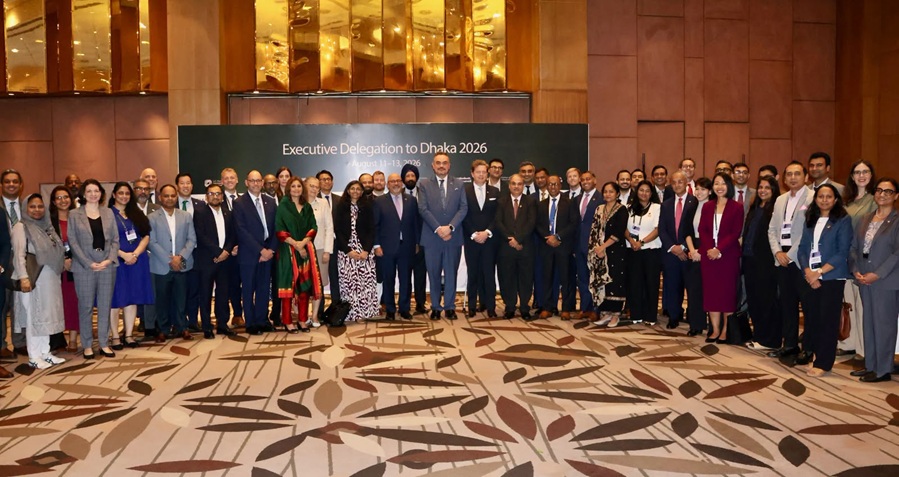
The executive delegation of the U.S.-Bangladesh Business Council (USBBC) arrived in Dhaka on August 11 and participated in meetings and business programs through August 13. Representatives of major American companies, including Chevron, Excelerate Energy, Visa, and Mastercard, were among those taking part in the visit.

The delegation’s visit is being viewed as an important initiative to deepen the longstanding economic relationship between Bangladesh and the United States, which spans more than five decades.

U.S. Ambassador to Bangladesh Brent T. Christensen welcomed the delegation to Dhaka, saying that leading American companies from the energy, technology, agriculture, and finance sectors had come to explore opportunities and build on more than 50 years of U.S.-Bangladesh economic ties.

Focus on Trade and Investment

The delegation’s primary objective is to explore new investment opportunities and potential business partnerships in Bangladesh. Energy, infrastructure, technology, digital services, healthcare, agriculture, and financial services are among the sectors attracting particular attention from U.S. businesses.

During meetings with Bangladeshi officials, representatives of the U.S. business community discussed ways to expand bilateral trade and investment and strengthen private-sector cooperation.

The delegation also met with Bangladesh’s Foreign Affairs Adviser Humayun Kabir, with discussions focusing on expanding economic relations and creating greater opportunities for U.S. investment in areas including industry, infrastructure, energy, technology, the digital economy, and healthcare.

Atul Keshap, President of the U.S.-Bangladesh Business Council and a former U.S. ambassador, also emphasized the potential for expanding business cooperation between the two countries.

$5 Billion Investment Goal

The U.S. business delegation’s visit comes as the American Chamber of Commerce in Bangladesh (AmCham) has set an ambitious target for mobilizing additional U.S. investment in Bangladesh.

AmCham has said it aims to help mobilize up to $5 billion in additional U.S. investment over the next five years, involving existing member companies as well as potential new American investors.

The investment target was discussed during an August 11 meeting between Prime Minister Tarique Rahman and an AmCham executive delegation.

The discussions also covered measures to improve Bangladesh’s investment climate, including reforms related to taxation, value-added tax, customs procedures, and other issues affecting businesses.

AmCham has said that its member companies have already invested more than $5 billion in Bangladesh. If the new investment target is achieved, the U.S. corporate presence in Bangladesh could expand significantly.

Energy and Technology Attract Strong Interest

The participation of companies such as Chevron and Excelerate Energy underscores the importance of Bangladesh’s energy sector to American investors.

Bangladesh has growing demand for reliable energy and infrastructure, creating potential opportunities for U.S. companies with expertise in energy production, liquefied natural gas, infrastructure, and related technologies.

The participation of global financial technology companies such as Visa and Mastercard also points to growing interest in Bangladesh’s rapidly developing digital economy and financial-services sector.

With a large population, expanding consumer market, growing digital economy, and increasing demand for infrastructure and energy, Bangladesh offers a range of potential opportunities for international investors.

New Opportunities Following the Trade Agreement

The U.S. business delegation’s visit comes several months after Bangladesh and the United States signed the Agreement on Reciprocal Trade earlier this year.

The agreement created a new framework for expanding bilateral trade and improving market access between the two countries.

Against this backdrop, the business delegation’s visit can be viewed as more than a routine commercial engagement. It represents an effort to translate recent progress in government-to-government economic relations into concrete investment, business partnerships, and private-sector cooperation.
For Bangladesh, increased U.S. investment could bring more than capital. New investments could also contribute to technology transfer, skills development, employment generation, and greater integration into global supply chains.

For American companies, Bangladesh represents a large and evolving South Asian market with opportunities in manufacturing, energy, digital services, financial technology, infrastructure, and consumer-oriented businesses.

A New Chapter in Economic Relations?

For more than five decades, Bangladesh-U.S. economic relations have been strongly associated with trade, particularly Bangladesh’s ready-made garment exports to the American market. Recent developments, however, suggest that the economic relationship could be entering a broader phase.

The visit by U.S. Special Envoy Sergio Gor to Bangladesh earlier this month, followed by the arrival of the high-level U.S. business delegation and AmCham’s $5 billion investment target, indicates growing engagement not only between the two governments but also between the private sectors of both countries.

The challenge now will be turning growing investor interest into actual projects. To attract and retain more U.S. investment, Bangladesh will need to maintain policy stability, improve transparency, streamline regulatory procedures, strengthen infrastructure, and ensure a more predictable business environment.

The latest U.S. business delegation’s visit therefore represents both an opportunity and a test for Bangladesh. Whether the growing interest of American companies can be converted into long-term investment, new jobs, technology partnerships, and expanded trade will be an important measure of the next phase of Bangladesh-U.S. economic relations.


Bangladesh-U.S. Relations Gain New Momentum as Washington Deepens Economic and Strategic Engagement

Shibbir Ahmed, Washington, D.C.: Bangladesh-U.S. bilateral relations appear to be entering a new phase, with growing engagement on trade and investment alongside broader discussions on strategic cooperation, regional security, and the Rohingya crisis. The two countries’ trade agreement earlier this year and the recent visit to Bangladesh by U.S. Special Envoy for South and Central Asia Sergio Gor have brought renewed attention to the economic and strategic dimensions of the relationship.

Gor visited Bangladesh from July 30 to August 1. Following the visit, the U.S. Embassy in Dhaka said the trip underscored the breadth and depth of the Bangladesh-U.S. relationship and reaffirmed Washington’s commitment to strengthening bilateral strategic and economic ties.

Renewed Interest in Investment

During a meeting with Sergio Gor, Bangladesh Prime Minister Tarique Rahman called for greater U.S. investment and stronger economic engagement between the two countries. The discussions covered trade, investment, the Rohingya crisis, and a range of issues of mutual interest.

Gor expressed a positive assessment of Bangladesh’s political and economic stability. He pointed to recent positive developments in the country and suggested that changes in the U.S. travel advisory could send a favorable message to American investors about Bangladesh as an investment destination.

The two sides also discussed potential U.S. investment in Bangladesh and opportunities for financing through the U.S. International Development Finance Corporation (DFC). The possibility of a future visit to Bangladesh by a delegation from the U.S.-Bangladesh Business Council was also discussed.

If these initiatives translate into concrete projects, they could expand opportunities for U.S. companies in areas such as infrastructure, energy, technology, manufacturing, and other emerging sectors.

A New Framework for Trade Relations

One of the most significant recent developments in Bangladesh-U.S. economic relations has been the signing of the Agreement on Reciprocal Trade (ART) earlier this year. Signed on February 9, 2026, the agreement seeks to expand market access and provide a new framework for bilateral trade. According to information from the Office of the U.S. Trade Representative, Bangladesh has committed to providing various market-access benefits for U.S. industrial and agricultural products, including machinery, medical equipment, information and communications technology products, energy-related products, and agricultural goods.

For Bangladesh, access to the U.S. market, export opportunities, and increased American investment remain important economic priorities. Against this backdrop, Gor’s visit can also be viewed as part of the broader effort to translate the commitments of the February trade agreement into deeper commercial and investment ties.

Strategic Importance Beyond Economics

Bangladesh’s geographic position also adds a strategic dimension to its relationship with the United States. Located along the Bay of Bengal and within the broader Indo-Pacific region, Bangladesh has increasing economic and geopolitical significance.

During Gor’s visit, discussions extended beyond trade and investment to issues related to regional cooperation and security. There are also opportunities for expanding bilateral cooperation in areas such as technology, investment, and security.

Recent international analyses have highlighted the growing strategic engagement between Washington and Dhaka. Bangladesh’s expanding economic relationship with China, changing dynamics with India, and the broader competition among major powers in the Bay of Bengal have all contributed to increased international attention toward Bangladesh.

However, viewing Bangladesh-U.S. relations solely through the lens of competition with China or India would overlook the broader interests shaping the bilateral relationship. Trade, investment, security, technology, and humanitarian cooperation all have their own significance in the relationship.

Rohingya Crisis Remains a Major Area of Cooperation

The Rohingya crisis remains another important pillar of Bangladesh-U.S. relations. During his Bangladesh visit, Sergio Gor visited a Rohingya refugee camp in Ukhia, Cox’s Bazar. Rohingya representatives called for continued international support for a safe, voluntary, sustainable, and dignified repatriation process.

Bangladesh has hosted a large Rohingya refugee population since hundreds of thousands fled violence in Myanmar. The country has repeatedly sought stronger international support for humanitarian assistance and a sustainable solution to the crisis. The United States remains an important humanitarian partner for Bangladesh on the Rohingya issue. As a result, humanitarian cooperation continues to complement the broader economic and strategic relationship between the two countries.

Why Bangladesh Matters More to Washington

Bangladesh is one of South Asia’s major economies, with a large consumer market and a substantial workforce. Its manufacturing base, particularly the ready-made garment sector, along with its growing services and technology sectors, offers opportunities for foreign investors.

For the United States, Bangladesh is an important trading partner and a potentially significant market for American companies. For Bangladesh, the United States remains one of its most important export destinations.

This creates a degree of economic interdependence between the two countries. Washington has an interest in expanding trade and investment opportunities in Bangladesh, while Dhaka is seeking greater access to the U.S. market, more American investment, technology cooperation, and stronger economic partnerships. Bangladesh’s location along the Bay of Bengal and its role in the wider Indo-Pacific further enhance its importance.

Implementation Will Be the Real Test

Despite the recent diplomatic momentum, the key question is whether political engagement and economic agreements will translate into measurable long-term results. The implementation of commitments under the Reciprocal Trade Agreement, the level of interest shown by U.S. companies in new investments in Bangladesh, and the future trajectory of bilateral trade will help determine the next phase of the relationship.

At the same time, Bangladesh will need to maintain a balanced foreign policy while protecting its economic interests and managing relations with major powers, including the United States, China, and India.

Recent developments suggest that Bangladesh-U.S. relations are no longer limited to traditional trade or garment exports. Trade, investment, technology, humanitarian cooperation, regional security, and Indo-Pacific geopolitics are increasingly shaping a broader and more multidimensional partnership.

Sergio Gor’s visit and the Reciprocal Trade Agreement signed earlier this year are two significant indicators of this evolving relationship. The next challenge will be turning the current diplomatic and economic momentum into sustained, mutually beneficial partnership.


Security heightened nationwide ahead of August 5: Home Minister

DHAKA: Home Minister Salahuddin Ahmed today said the government has placed law enforcement and security agencies on high alert ahead of August 5 to ensure public safety and maintain law and order across the country

“All necessary measures have been taken to ensure a peaceful and secure environment across the country ahead of August 5,” he said while speaking to journalists at the Home Ministry in Bangladesh Secretariat here.

The heightened security measures are part of routine precautionary steps taken in view of the significance of the day and prevailing security considerations, he said.

Ahmed said the Home Ministry has issued specific directives to police and other security agencies to strengthen vigilance and remain fully prepared to respond to any untoward situation.

As part of the instructions, police vehicles have been directed not to remain unattended, while security personnel have been advised to maintain continuous vigilance to ensure uninterrupted monitoring and rapid response capability.

Ahmed said a high-level coordination meeting involving the government, law enforcement agencies and relevant stakeholders will be held to review the overall security situation and finalize necessary arrangements for August 5.

The minister also referred to the recent recovery of bomb-like objects in Motijheel and Ashulia, describing the incidents as attempts to create panic and disrupt social harmony.

He said a coordinated investigation is underway to identify those responsible and determine whether there are any links between the incidents.

Ahmed added that intelligence and law enforcement agencies are closely monitoring the activities of banned organizations and certain groups operating from abroad.

Further details will be disclosed once the ongoing investigations are completed, he said.


Shakib Khan, Bubly and Hridi Haq Honored at New York Bengali Film Festival

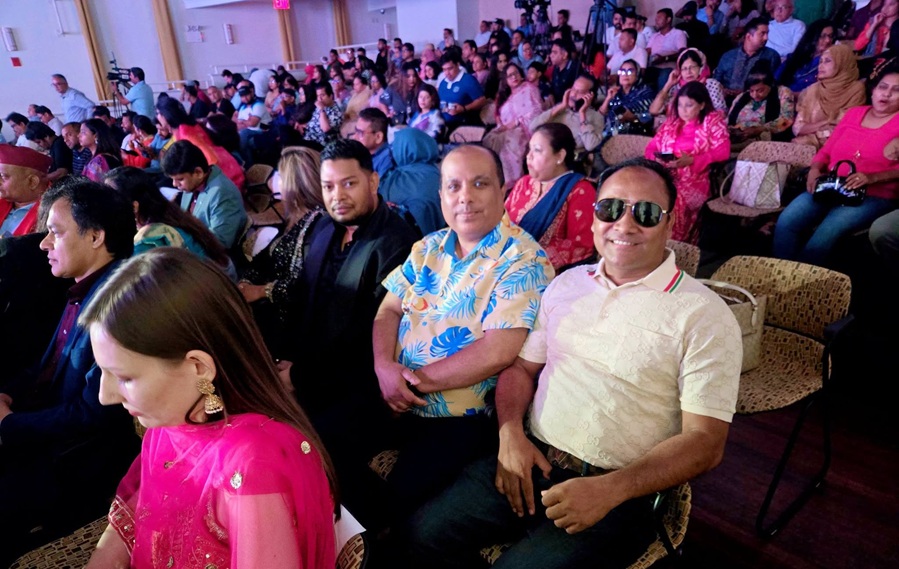
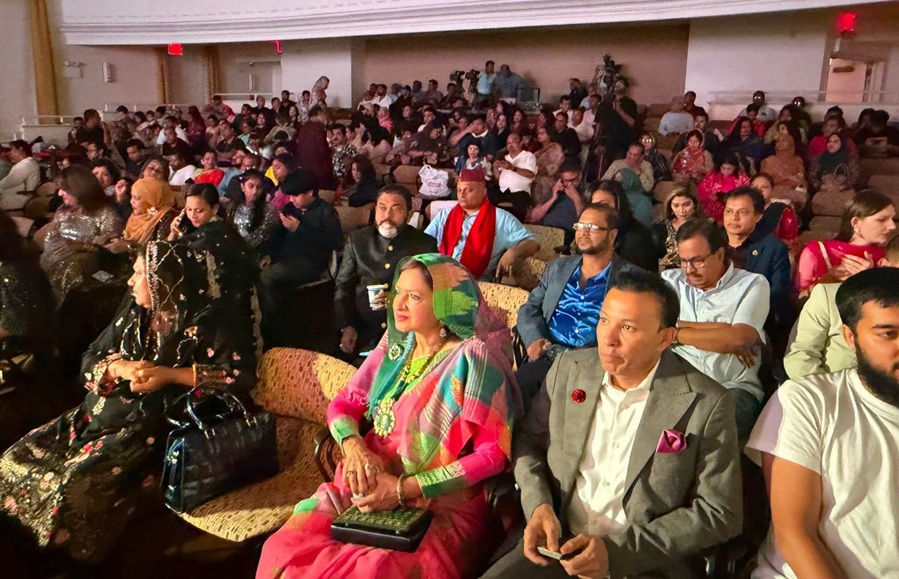
New York: The first-ever New York Bengali Film Festival concluded successfully after a four-day celebration of Bengali cinema, drawing enthusiastic participation from the Bangladeshi diaspora and local film enthusiasts. Held at the Jamaica Performing Arts Center, the festival featured a vibrant showcase of films, cultural performances and an awards ceremony.

The festival was jointly organized by Priyojon Films and Lemon Studio, with support from the American Bangladeshi Producers Association. All County Home Care served as one of the event’s principal sponsors.

During the first three days, audiences enjoyed a diverse selection of short films, documentaries and feature films by filmmakers from Bangladesh and North America. The strong turnout reflected the continued passion of expatriate Bangladeshis for Bengali cinema despite living abroad.

The closing ceremony featured a red carpet reception, cultural performances and an awards presentation attended by prominent Bangladeshi entertainment personalities, including actors Zayed Khan, Kazi Maruf, Emon, Sojol and Bindu, as well as popular singer Pratik Hasan. Members of the Bangladeshi community in New York welcomed the opportunity to meet their favorite artists in person.

The festival recognized outstanding achievements in Bengali cinema from 2023 to 2025 across multiple categories.

Actor Shakib Khan won the Best Actor award for his performance in Priyotoma, while Shabnam Bubly was named Best Actress for Deyaler Desh. Hridi Haq received the Best Director award for 1971 Shei Shob Din.

Among the other major winners, Chanchal Chowdhury received the Best Supporting Actor award for Toofan, while Sanjida Preeti won Best Supporting Actress for 1971 Shei Shob Din. Kacher Manush Dure Thuiya, directed by Shihab Shaheen, was named Best Web Film.

Other award recipients included Mamunun Emon (Maya), Afsana Ara Bindu (Unish 20), child actors Kazi Arisha (Green Card) and Nairita Hasin Roudromoyi (Jongli), singers Balam, Pritom Hasan and Avanti Sithi, story writer Dr. Enamul Haque, screenwriters Nazim Ud Daula and Raihan Rafi, cinematographers Suman Sarkar and Sahel Rony, editors Simit Roy Antor and Kamruzzaman Rony, sound recordist Ripon Nath, lyricists Asif Iqbal and Someshwar Oli, composer Prince Mahmud, and music director Imon Saha.

In the film categories, Lost won Best Short Film, while Songs for a Country was named Best Documentary.

Veteran actor Ahmed Sharif received the festival’s Lifetime Achievement Award in recognition of his outstanding contribution to Bengali cinema. Special honors were also presented to Bioscope Films, Star Cineplex, and the streaming platform Chorki for their contributions to the growth and promotion of the Bangladeshi film industry.

According to the organizers, the festival aims not only to screen films but also to strengthen the connection between the younger Bangladeshi diaspora and Bengali cinema while expanding the global reach of Bangladesh’s film industry.

Following the overwhelming success of its inaugural edition, organizers, filmmakers and audiences expressed optimism that next year’s festival will be even larger, with broader international participation and greater opportunities to showcase Bengali cinema on the world stage.


Bangladesh reaffirms multilateral commitment during U.S. Army War College visit

Shibbir Ahmed, UN, New York: Bangladesh has reaffirmed its commitment to multilateralism, UN peacekeeping and international cooperation during a visit by a delegation from the United States Army War College to the Permanent Mission of Bangladesh to the United Nations today.

Welcoming the delegation Bangladesh’s Permanent Representative to the United Nations Ambassador Salahuddin Noman Chowdhury underscored the country’s longstanding engagement with the UN, rooted in its constitutional commitment to international peace and security. He noted that Bangladesh remains one of the largest contributors to UN Peacekeeping Operations, with Bangladeshi peacekeepers serving with distinction in some of the world’s most challenging conflict zones.

The Ambassador briefed the delegation on the activities of Bangladesh’s Permanent Mission including its engagement to build on its legacies in peacekeeping, sustainable development, women empowerment and climate justice. Reaffirming Bangladesh’s strong support for the United Nations, Ambassador Chowdhury stressed that dialogue, compromise and consensus-building remain essential to addressing contemporary global challenges and strengthening international cooperation.


Bangladesh calls for stronger global cooperation on safe migration at UN forum

Shibbir Ahmed, UN, New York: Bangladesh called for stronger global cooperation to curb irregular migration, protect migrant rights and ensure fair recruitment, decent work and fair wages for migrant workers.

Speaking at the General Debate of the Second International Migration Review Forum at United Nations Headquarters, Expatriates’ Welfare and Overseas Employment Minister Ariful Haque Choudhury said Bangladesh was strengthening accountability and expanding migrants’ access to justice through a “whole-of-government and whole-of-society” approach.
He said the country had formed a Migration Compact Taskforce and adopted a National Action Plan for 2026–2030 to advance safe, orderly and regular migration under the United Nations Global Compact for Migration (GCM).

The minister said Bangladesh had fulfilled seven of its 10 commitments made at the first review forum, submitted six new pledges and joined two regional initiatives, while presenting its first Voluntary National Review on GCM implementation. Describing climate change as a growing reason of migration, he called for predictable financing and technical support for climate-affected countries. He reaffirmed Bangladesh’s commitment to working with partners to promote safe migration and dignified return and reintegration of migrants.


Security tightened at all airports, including Dhaka Airport

Dhaka: Security has been beefed up at all airports across the country, including Hazrat Shahjalal International Airport, following an intelligence alert over possible extremist attacks on key installations. Airport sources confirmed on Monday that surveillance has been intensified at sensitive points, particularly at Shahjalal International Airport. A warning letter issued by the Bangladesh Police headquarters prompted authorities to take immediate precautionary measures.

Following the alert, the Civil Aviation Authority of Bangladesh issued a high-level warning, instructing all law enforcement units operating at airports to strengthen security arrangements. Officials said additional personnel—both in uniform and plain clothes—have been deployed, while intelligence monitoring has been increased. Security checks at all arrival and departure points have also been tightened, with instructions to report any suspicious activity immediately.

A senior official at the airport said that although no specific threat has been identified, precautionary steps have been taken in advance. “Instructions have been given to strengthen security at all airports. This is part of our routine preparedness as well,” the official said.

He added that airports with limited nighttime operations have also been instructed to enhance security during night hours, and strict monitoring is being ensured at all entry points to prevent any lapse. The alert follows intelligence information suggesting that a banned extremist outfit may be planning coordinated attacks on key state installations.

According to an internal letter issued by police headquarters and signed by DIG (Confidential) Kamrul Ahsan, several individuals linked to the outfit have recently been in regular contact, raising concerns of a potential threat.

The letter also mentioned that two dismissed army personnel were reportedly in communication with a detained extremist suspect, Istiak Ahmed Sami, also known by aliases Abu Bakkar and Abu Mohammad. Potential targets listed in the alert include the Jatiya Sangsad Bhaban, as well as police and military installations, places of worship, entertainment venues and other key infrastructure.

Law enforcement officials said the group may attempt to carry out attacks using various methods, prompting heightened concern over national security. In response, police headquarters has directed all relevant agencies to strengthen security in vulnerable areas, enhance surveillance and improve intelligence coordination to prevent any potential incidents.


Narendra Modi talks to Tarique over phone, reaffirms India’s support

Indian prime minister Narendra Modi on Friday talked to Bangladesh Nationalist Party chairman Tarique Rahman on the phone about his party’s decisive victory in the national polls held on Thursday. ‘Delighted to speak with Mr Tarique Rahman. I congratulated him on the remarkable victory in the Bangladesh elections,’ Modi said in a statement shared on his social media handle ‘X’.

He said that he had conveyed his best wishes and support in his endeavour to fulfil the aspirations of the people of Bangladesh. ‘As two close neighbours with deep-rooted historical and cultural ties, I reaffirmed India’s continued commitment to the peace, progress, and prosperity of both our peoples,’ Modi said in the statement.

Earlier in the day, the Indian prime minister conveyed congratulations to BNP chairman Tarique Rahman on his party’s decisive victory in the 13th Jatiya Sangsad election. ‘I convey my warm congratulations to Mr Tarique Rahman on leading BNP to a decisive victory in the parliamentary elections in Bangladesh. This victory shows the trust of the people of Bangladesh in your leadership,’ said Modi in another statement shared on ‘X’.

He said India would continue to stand in support of a democratic, progressive and inclusive Bangladesh. ‘I look forward to working with you to strengthen our multifaceted relations and advance our common development goals,’ he said.


China congratulates BNP on taking lead in JS polls

China has congratulated Bangladesh Nationalist Party on taking the lead in the 13th Jatiya Sangsad election held on Thursday. In a message, China also congratulated the people of the country for the smooth and successful JS polls.

‘Congratulations to the people of Bangladesh on the smooth and successful 13th National Parliamentary Election and to the Bangladesh Nationalist Party for taking the lead in the election. We look forward to working together with the new government of Bangladesh and writing new chapters of China-Bangladesh relations,’ said the message shared by the Chinese embassy in Dhaka on Friday.


US congratulates Tarique Rahman on historic victory

The United States has congratulated Bangladesh Nationalist Party (BNP) Chairman Tarique Rahman for the party’s historic victory in the 13th National Parliament Election.

“Congratulations to the people of Bangladesh on a successful election and to the Bangladesh Nationalist Party and Tarique Rahman on your historic victory,” US Embassy in Dhaka said in its official Facebook post this morning.

“The United States looks forward to working with you (Tarique Rahman) to realize shared goals of prosperity and security for both our countries,” it added.