Celebratory procession at DU sings anti-razakar song

A group of left-leaning students of Dhaka University staged a celebratory procession, dancing to the song titled Razakar Al-Badar Kichui Rabe Nare, on the Dhaka University campus on Friday. The procession began at the Teachers-Students Centre, led by a truck equipped with a music box, a day after the Bangladesh Nationalist Party won a decisive victory defeating Bangladesh Jamaat-e-Islami in the 13th Jatiya Sangsad elections. It paraded through Jagannath Hall, VC Chatwar, Hall Para, Dhaka University Central Students’ Union and Madhu’s Canteen before concluding at the TSC.

Event organiser cultural activist Faria Motin Ilalala told New Age that although a significant number of people in the country voted for Jamaat, the majority of the country’s people still upheld the spirit of the War of Independence.

‘When we took these anti-razakar songs to the streets, we have witnessed public enthusiasm, which claim that people no longer care about the Liberation War are baseless,’ Faria noted.

Our existence is rooted in the Liberation War, she added, mentioning, ‘This programme does not support the BNP; rather, it has been organised to inform the next generation about the history of the Liberation War.’

She also said that their message to the BNP was that whatever role the party played in the coming days, they would remain prepared to criticise and protest any actions reminiscent of past governments.

Another organiser Anamul Hasan Onoy, a student of the political science department, said that anti-Bangladesh Jamaat forces had been attempting to revive their old anti-Liberation War politics over the past one and a half years ahead of the election.

‘We saw how recognised war criminals’ photos were displayed at the TSC and how they were being idealised. We witnessed their aggressiveness and rhetoric,’ he said.

He added that through the election, the country’s people had resisted anti-1971 forces. ‘Although Jamaat is now effectively in the opposition, it is an alarming matter for Bangladesh.’

As part of strengthening our stance against the anti-1971 agenda and preparing to consign them to their final political grave, we have staged this programme, he mentioned.Bangladesh cultural tours


Who will be in the BNP cabinet?

Tanvir Hasan: After securing a sweeping majority in the 13th National Parliamentary Election, the Bangladesh Nationalist Party is preparing to form the new government. The government has already published the official gazette listing the elected members of parliament. According to Article 148 of the Constitution, elected representatives must take oath within three days of the publication of the official results. The elected members of the 13th National Parliamentary Election will take their oaths on Tuesday, and the cabinet will also take their oaths later that day. Election Commission Secretary Akhtar Ahmed confirmed the schedule at a press briefing on Saturday.

Party sources say Tarique Rahman is set to assume office as Prime Minister after the government is formed. Alongside experienced politicians, the party plans to assign key responsibilities to younger and highly educated leaders. A blend of senior and new leadership is expected in important ministries such as Home Affairs, Law, Finance, and Foreign Affairs.

Several BNP policymakers have indicated that the cabinet will not be overly large. It is expected to consist of between 32 and 42 members. BNP Chairperson Tarique Rahman has already begun consultations with senior leaders regarding the formation of the cabinet. However, the allocation of specific ministries will be known only after the oath ceremony.

BNP Standing Committee member Salahuddin Ahmed said the nation will need to wait a little longer to see the final shape of the cabinet.

For the post of Foreign Minister, BNP Joint Secretary General Humayun Kabir is being discussed, given his active role in strengthening the party’s international relations. Dr Reza Kibria is being considered for the position of Finance Minister. He previously served as a senior economist at the International Monetary Fund.

Amir Khasru Mahmud Chowdhury is being considered for the Commerce Ministry, a position he held in the past. BNP Secretary General Mirza Fakhrul Islam Alamgir is being discussed for the Local Government Ministry. He previously served as State Minister for Agriculture and later for Civil Aviation and Tourism.

Former Attorney General and senior Supreme Court lawyer Md Asaduzzaman is being mentioned for the Law Ministry. Salahuddin Ahmed is also in discussion for the Home Ministry, while Mirza Abbas is being considered for the Road Transport and Bridges Ministry.

Dr AZM Zahid Hossain is likely to take charge of the Health Ministry, and Ruhul Kabir Rizvi is being discussed for the Information Ministry. Other names reportedly under consideration include Nazrul Islam Khan, Dr Abdul Moyeen Khan, Gayeshwar Chandra Roy, Major (Retd.) Hafiz Uddin Ahmed, Iqbal Hasan Mahmud Tuku, Selima Rahman, Andaleeve Rahman Partho, Mizanur Rahman Minu and Shama Obayed, among others.

There is also speculation that the presidency may see a change after the new government is formed. Senior Standing Committee member Dr Khandaker Mosharraf Hossain is being discussed for the post. However, if Mirza Fakhrul Islam Alamgir is nominated for president, a major reshuffle in the cabinet could follow.

Other figures being discussed include Ashrafuddin Nizam, Zonayed Saki, Ishraq Hossain, Abdul Awal Mintoo, Andaleeve Rahman Partho, Nitai Roy Chowdhury, Kazi Shah Mofazzal Hossain Kaikobad, Shahid Uddin Chowdhury Anee, Anindya Islam Amit, Khandaker Abdul Muktadir, Ariful Haque Chowdhury, Osman Faruque, Bobby Hajjaj, Hummam Quader Chowdhury, Nayab Yusuf, Zahir Uddin Swapan, Barrister Farzana Sharmeen Putul, Nurul Haq Nur, Naoshad Zamir, Mir Helal, Asadul Habib Dulu, Ali Asghar Lobby, Ruhul Quddus Talukder Dulu, and Md Shariful Alam.

Ultimately, the final composition of the cabinet will depend on the decision of the party’s Standing Committee and Chairperson Tarique Rahman. As Prime Minister, he may revise the final list at any time, according to party insiders. The newly elected MPs will be sworn in Tuesday morning by Chief Election Commissioner AMM Nasir Uddin, while President Md Sahabuddin will administer the oath to the cabinet members in the afternoon.

Under the Constitution, the President will appoint as Prime Minister the parliamentary leader of the party that secures a majority in the National Parliament. As per convention, after the elected members are sworn in at the Parliament Secretariat, both the ruling party and the opposition will hold separate meetings to elect their parliamentary leaders.

The elected parliamentary leader of the majority party or alliance will then pay a courtesy call on the President at Bangabhaban. During that meeting, the President will formally invite the leader to form the government.

Following this invitation, the Prime Minister-designate will submit the names of ministers, state ministers, and deputy ministers to the President. The President will immediately forward the list to the Cabinet Division, which will complete preparations for the oath ceremony at the earliest possible time.

The Cabinet Secretary will personally call each designated cabinet member, inviting them to attend the oath ceremony at Bangabhaban. Official vehicles will also be sent to their residences. Sources said the Cabinet Division has already collected the names and personal phone numbers of the newly elected MPs. New folders and flags have been procured for the oath ceremony, and official vehicles have been made ready for the incoming cabinet members.


We all are free from today: Tarique Rahman

BNP Chairman Tarique Rahman today said that the people of the country are now free from today. He said that pro-democracy people of the country have once again made the BNP victorious; and described this victory as a win for Bangladesh and for democracy, pledging to build a safe, humane, and democratic Bangladesh in the days ahead.

“Alhamdulillah, this victory belongs to Bangladesh. This victory belongs to democracy. This victory belongs to the people who yearn for democracy. From today, we are all free.”

Tarique Rahman made the remarks at a post-election press conference held in the Ballroom of the InterContinental Hotel in the city today. BNP Chairman said the people have paved the way for establishing democracy in the country by overcoming all obstacles. However, he noted that their journey must begin amidst a fragile economy left behind by fascism, dysfunctional constitutional and statutory institutions, and a weak law and order situation.

“After more than one and a half decades, a parliament and government accountable to the people are set to be established through direct voting. Everyone to remain united so that no anti-democratic force can re-establish fascism in the country or turn Bangladesh into a subservient state,” he said.

Tarique Rahman extended heartfelt congratulations to the 51 political parties that participated in the election, including Jamaat-e-Islami, NCP, Islami Andolan Bangladesh, Jamiat Ulema-e-Islam, and Ganadhikar Parishad.

“In a democratic state and politics, political parties are essentially the lighthouses of democracy. If the government and the opposition each play a responsible role from their respective positions, democracy will undoubtedly become institutionalized,” he said.

Calling upon every democratic political party that participated in the election to share their ideas for nation-building, he stated, “Our paths and opinions may be different, but we are all united for the sake of the country. I believe national unity is our strength, and division is our weakness.”

He specially thanked the interim government and the Election Commission for successfully holding a peaceful, free, fair, and impartial election, dispelling all public doubts. Tarique Rahman also praised the role of all election-related officials, the armed forces, law enforcement agencies, and domestic and international media and observers.

Tarique Rahman expressed deep respect for those who were martyred or injured in the movement to establish democracy over this long period from the Liberation War of 1971 to the war to protect the freedom of the country and its people in 2024. He prayed for salvation of their departed souls. He also mentioned that the absence of the uncompromising leader and former Prime Miniter Begum Khaleda Zia weighs heavily on the party during this joyous moment.

He said, “In anticipation of such a democratic time for establishing people’s rights in the state and politics, she fought uncompromisingly against fascism. She never compromised with autocracy or fascism.”

Referring to BNP’s 31 point ‘roadmap for state repair’, he said, through consultations with other parties and the public, BNP has formulated its election manifesto. Highlighting BNP’s signature to the July Charter, Tarique Rahman assured that every commitment made to the people will be implemented in phases. BNP chairman said his party didn’t bring out any victory processions even after an absolute victory to maintain peace and order, but celebrating the triumph by offering gratitude to Allah.

He asserted, “My statement is clear: peace and order must be maintained at any cost. No injustice or illegal activities will be tolerated.”

He further said, “Regardless of party, opinion, religion, or caste, attacks by the powerful on the weak will not be accepted under any pretext. Justice will be the ideal. If the rule of law is not established, all our efforts will go in vain.”

He urged everyone to be cautious so that any misunderstandings arising from electoral competition do not turn into revenge or retaliation. While appealing to the pro-democracy people, the BNP Chairman said, “Just as we played role in the struggle to establish democracy, let us now each to play our part from our respective positions to build Bangladesh as a safe and humane state by controlling corruption, maintaining law and order, and ensuring accountability to the people.”

Concluding his speech, the BNP Chairman Tarique Rahman once again congratulated and thanked all democratic forces, expatriate Bangladeshis, and the freedom-loving people across the country for the victory.

BNP Secretary General Mirza Fakhrul Islam Alamgir, Standing Committee Member Mirza Abbas, Amir Khasru Mahmud Chowdhury, Dr Khandakar Mosarrof Hossain, Nazrul Islam Khan, Gayeshwar Chandra Roy, Major (retd) Hafiz Uddin, Dr Abdul Moyeen Khan, Selima Rahman, Salahuddin Ahmed, Sultan Salauddin Mahmud Tuku,among others were present during the press conference.

Journalists from the local and foreign media joined the press conference. After concluding the written speech Tarique Rahman answered different questions from the journalists.


Tarique Rahman: Law and order must be maintained at any cost

Tarique Rahman, chairman of the Bangladesh Nationalist Party (BNP), on Saturday called for maintaining law and order “at any cost” and sought cooperation from all in building a safe and humane Bangladesh. “We need everyone’s cooperation to build a safe and humane Bangladesh. This time, everyone must play a responsible role in rebuilding the country. No injustice can be done to anyone on any excuse. Law and order must be maintained at any cost,” Tarique said.

He made the remarks at an official press briefing in the afternoon at Hotel InterContinental in the capital after securing an absolute majority in the election. Tarique said the freedom-loving people of the country had made BNP victorious, describing the outcome as “the victory of the people.”

“From today, everyone is free. Congratulations to all. With the participation of all, the journey of a fascism-free state has begun in the country,” the BNP chairman said. He noted that besides BNP, Bangladesh Jamaat-e-Islami, NCP and Islami Andolon Bangladesh also participated in the election, which he described as peaceful. “Everyone’s thoughts are important in building the country. We will build the country based on everyone’s opinions,” Tarique said.

The BNP chairman thanked the Election Commission and congratulated the administration and all election officials. “Without your cooperation, such a beautiful election would not have been possible,” he added. BNP Secretary General Mirza Fakhrul Islam Alamgir and other top party leaders were present at the press conference. Representatives of allied parties of the simultaneous movement and distinguished citizens were also in attendance.

Although it was a press briefing, a festive atmosphere prevailed as newly elected members of parliament from across the country and well-wishers gathered at the venue. Representatives of foreign media were also present.


BNP clinches landslide victory with two-thirds majority in national polls

Bangladesh Nationalist Party (BNP) clinched a landslide victory with over two-thirds majority in the 13th general elections held on Thursday amid festivity allowing the BNP-led alliance to form the next government. The massive victory has paved the way for BNP Chairman Tarique Rahman to lead the government as the Prime Minister for the first time.

The Election Commission (EC) announced the unofficial results of 297 parliamentary seats out of the 299 where elections were held in a free and fair manner. It, however, postponed announcement of results in two seats – Chattogram-2 and Chattogram-4. However, voting in Sherpur-3 constituency was postponed due to death of a Jamaat-e-Islami candidate. According to the unofficial results, the BNP bagged 209 seats alone while its alliance partners Gano Odhikar Parishad one, Bangladesh Jatiya Party (BJP) one and Gano Sanghati Andalon one.

Bangladesh Jamaat-e-Islami secured 68 seats alone emerging as the main opposition party while its alliance partners National Citizen Party (NCP) won six seats, Bangladesh Khilafat Majlis two and Khelafat Majlish one. Islami Andolon Bangladesh bagged one seat and independent candidates won in seven constituencies. Meanwhile, the United States of America (USA), China, India and Pakistan congratulated Bangladesh Nationalist Party (BNP) Chairman Tarique Rahman for the party’s historic landslide victory in the 13th National Parliament Election.

According to the Election Commission, the voter turnout in the parliamentary polls was recorded 59.44 percent while it was 60.26 in the referendum. The referendum witnessed 4,80,74,429 ‘Yes’ votes and 2,25,65,627 ‘No’ votes. Foreign observers and independent polls monitoring groups said the election was held in a free, fair and peaceful manner, maintaining the world standard.

Earlier, voting began at 7:30 am across 42,779 polling centres in 299 constituencies nationwide. A total of 12,77,11,793 voters were registered to cast their ballots, including 6,48,25,361 males, 6,28,85,200 females, and 1,232 from the third gender. A total of 50 political parties contested the polls with 2,028 candidates including 273 independent, while BNP fielded the highest number of candidates of 291. Besides, a total of 83 female candidates contested the polls.

According to the EC, some 800,000 officials, apart from those involved in maintaining security and law and order, were on election duties. They included 69 returning officers, 598 assistant returning officers, 42,779 presiding officers, 247,482 assistant presiding officers and 4,95,964 polling officers. Besides, About 15,000 officials are engaged in postal voting duties.

EC officials earlier said that of the security personnel deployed, 103,000 were army troops, 8,500 navy sailors and airmen, alongside 37,453 paramilitary BGB soldiers and 3,585 paramilitary Coast Guard members. The number of policemen on poll duty was 187,603, while RAB personnel number was 9,349. The highest number of law enforcement personnel was drawn from Ansar, with personnel numbering 5,67,868.

Some 55,454 observers from 81 local organizations monitored the elections while the number of foreign poll monitors was 394. Nearly 200 foreign journalists arrived in Bangladesh to observe the elections and the referendum. Of the international observers, 80 represent various international organizations, while the rest come from different countries, including independent European observers.


Fakhrul criticizes Jamaat’s role in 1971 Liberation War

BNP Secretary General Mirza Fakhrul Islam Alamgir on Thursday criticised Jamaat-e-Islami over its role during Bangladesh’s 1971 Liberation War, saying the party must clarify its position on the country’s independence.

“Jamaat leaders are currently making statements in television talk shows, online platforms and newspapers, but they should first explain their position during the country’s struggle for independence,” said Fakhrul while addressing a rally at Farabari High School ground in Thakurgaon.

“Where were you in 1971? Whose side were you on?” the BNP leader asked. He also alleged that Jamaat-e-Islami had assisted the Pakistani occupation forces during the Liberation War and attempted to obstruct Bangladesh’s independence.

There is no scope to forget about 1971 and just as the people would not forget 2024, when the country regained its democratic system, he added. The country achieved independence through the Liberation War and that history must never be erased, said the BNP leader. After 15 long years, the country now has a real opportunity to hold a fair, free and credible election, he said.

The interim government currently in charge and those who are elected through votes will form the government—that is their objective, he said. If people participate spontaneously and cast their votes, the election would become historic and widely acceptable, he hoped.

Referring to his political future, Fakhrul said this might be his last election, and pledged to establish an airport and a medical college in Thakurgaon, if elected, along with creating employment opportunities to reduce unemployment.

He also said the female voters of the district will be given training under the guidance of Tarique Rahman so that they can earn from home. “We must train our women and youth and create jobs by making them skilled and educated.”


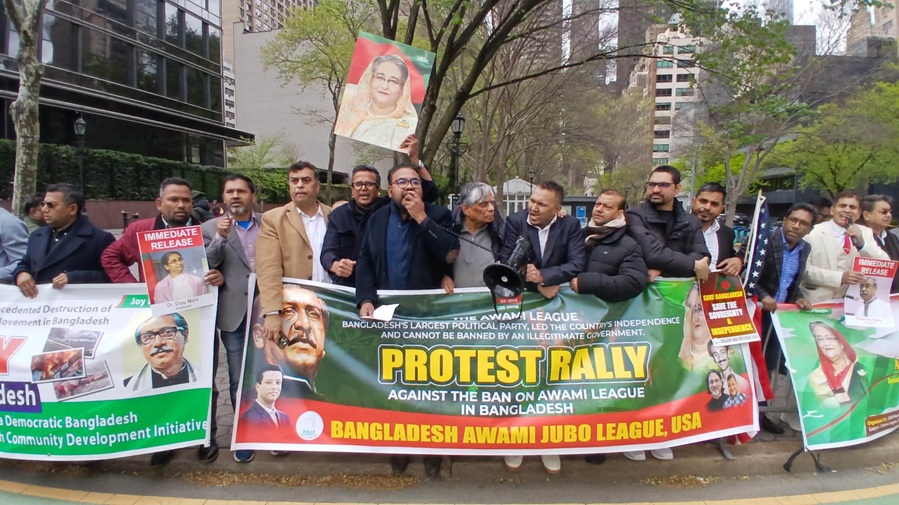
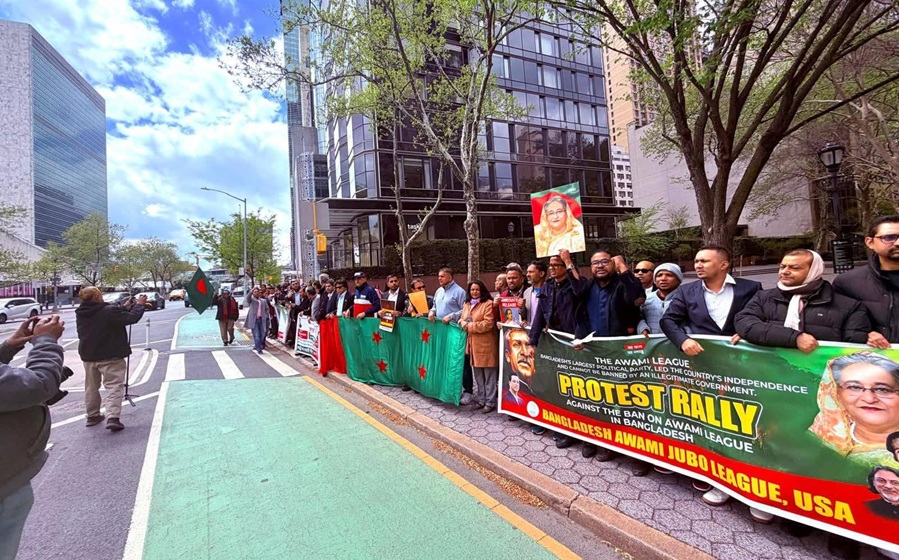
Banning Awami League is not democracy, but ‘authoritarianism’: Hasina to The Print

Sheikh Hasina has launched a stinging political broadside against the interim government, accusing Chief Advisor Muhammad Yunus of replacing constitutional rule with what she calls “authoritarianism dressed up as transition” by sidelining her party Awami League ahead of the Feb 12 general elections.

In a wide-ranging written interview with ThePrint, the former prime minister said the suspension of the Awami League from political activity has hollowed out the electoral process, leaving tens of millions of voters effectively “disenfranchised”.

“You cannot ban the country’s oldest and most popular political party and then claim democratic legitimacy. That is not reform; it is authoritarianism dressed up as transition,” Hasina told ThePrint.

Although Yunus has insisted the Awami League has not been banned but merely “suspended from political activities”, Hasina dismissed the distinction as hollow.

“That is a distinction without meaning,” she said, arguing that a party that “can not campaign, organise or contest elections” is, in effect, barred from political life.

Bangladesh is scheduled to vote on Feb 12, but Hasina said the exclusion of her party has already poisoned the process.

“Elections held under such conditions cannot be considered free, fair or legitimate,” she wrote to ThePrint.

“Voters must be free to elect the party of their choosing and not be excluded from participating or coerced by door-to-door activists into voting for the BNP or [Jamaat-e-Islami] under threats of violence or destruction,” ThePrint quoted her as adding. She accused the interim government of deliberately clearing the field because it feared defeat.

“The interim government knows that if we were allowed to contest these elections, we would command overwhelming support. That is why we have been banned,” Hasina said.

“Let us not forget that Yunus himself has never received a single vote from the people of Bangladesh, and yet he has rewritten our country’s legal framework to legitimise his unlawful actions,” she was quoted in the report. The Awami League governed Bangladesh from 2009 until Hasina’s removal in August 2024, shaping nearly a decade and a half of the country’s political life. Now, as the February vote approaches, Bangladesh is heading into an election without the party that led the 1971 independence struggle and dominated post-independence politics.

Violence engulfed Bangladesh in mid-2024, when student-led protests over public sector job quotas spiralled into a nationwide revolt against her government. According to the interim authorities, roughly 1,400 people were killed as unrest spread across the country. Hasina told ThePrint she “regrets” every life lost but rejected claims that her government had provoked the bloodshed.

“We welcomed the legitimate protests led by the students and allowed them to proceed peacefully. We listened to their demands, and we addressed these, overturning the public sector job quotas that were the source of their frustration,” she wrote. She claimed the turning point came when the demonstrations were overtaken by forces working to bring her down.

“What we could not have foreseen was the turning point when extremist elements hijacked the protests. This was no longer a spontaneous and peaceful student movement, but a violent mob organised and directed by Yunus that sought violence, attacked police stations and destroyed state infrastructure,” Hasina told ThePrint.

“Like any legitimate government, our actions were guided by the instinct to protect our country’s institutions and prevent any loss of life,” she added.

On Aug 5, 2024, as violence intensified in Dhaka, Hasina fled her official residence, Ganabhaban, ending her 15 years in power. She has remained in India since then, a fact that has become a sensitive fault line in India-Bangladesh relations.

ThePrint reported that one of Hasina’s sharpest accusations against Yunus centres on the judicial inquiry she had set up to investigate the deaths during the protests — and which was scrapped almost immediately after the interim government took power.

“My principal frustration is that Yunus dissolved that inquiry immediately upon taking power, no doubt because he knew that it would expose the meticulous plan he orchestrated,” she wrote to ThePrint.

“That decision alone raises serious questions as to the motivations behind the protests and his seizure of power, including the matter of foreign involvement. Those questions deserve impartial investigation.”

Since her removal, the International Crimes Tribunal (ICT) has sentenced Hasina and her home minister Asaduzzaman Khan Kamal to death for crimes against humanity, citing her government’s attempts to suppress the 2024 unrest. Under Yunus, the Awami League’s organisational backbone has also been dismantled. Its student wing, Bangladesh Chhatra League, was banned under anti-terrorism legislation — a law originally enacted under Hasina’s government in 2009 and amended in 2025 before being used against her party.

Hasina told ThePrint that Bangladesh is now sliding into chaos under an unelected administration that lacks the authority or will to control violence.

“Law and order cannot be maintained through fear or selective enforcement,” she wrote, calling for a swift return to “constitutional governance” and elections “held with the participation of all parties”.

Her warning comes after two days of unrest in December, triggered by the killing of Sharif Osman bin Hadi, a prospective candidate for parliament who was shot in Dhaka on Dec 12 and later died on Dec 18 while under treatment in Singapore. Protests spiralled into riots that saw the offices of Prothom Alo and The Daily Star set ablaze.

“The violence we are witnessing is the direct result of an unelected administration that lacks any popular mandate and has allowed our politics to be usurped by extremist factions,” Hasina told ThePrint.

“Instead of delivering ‘reform’, the interim government has elevated radical groups to positions of power, established rule by mob justice, and suppressed legitimate political voices,” she was quoted as saying.

“In Bangladesh today, there is no semblance of law and order,” she added.

“The Yunus government has routinely failed to act decisively against violence. Indeed, it has actively emboldened extremists who seek to spread their hardline ideology through daily acts of brutality, repressing any trace of pluralism in our society and dismissing any diversity of thought by labelling any dissenting voice as a political enemy,” she said according to ThePrint.

The December unrest included the lynching of Dipu Chandra Das, a Hindu man in Mymensingh, sparking protests in India and renewed concern over the safety of Bangladesh’s minorities. Hindus account for about 8 percent of the population. India has repeatedly urged Dhaka to do more to protect minorities since Hasina’s fall.

Yunus has argued the violence is largely political or criminal rather than communal, saying only 71 of 645 incidents against minorities in 2025 had communal elements, according to ThePrint. Hasina, however, sees a deeper ideological shift.

“Bangladesh was founded on secularism, pluralism and democratic values. The rehabilitation of Jamaat-e-Islami and other extremist factions threatens the very fabric of our nation,” she wrote to ThePrint.

“When radical groups are allowed back into mainstream politics, they do not moderate the state. They seek to reshape it in their own image and remove any trace of pluralism,” she added. Jamaat has re-entered mainstream politics since Yunus lifted the ban on its activities, while its student wing Islami Chhatra Shibir has won university elections across several campuses.

Hasina also accused the interim government of tolerating what she called a systematic attempt to rewrite Bangladesh’s past — including the vandalism and demolition of her father Sheikh Mujibur Rahman’s historic home at Dhanmondi 32.

“What we are seeing today is the deliberate erosion of historical truth,” she wrote to ThePrint. “Extremist and revisionist forces have tried hard to dilute the reality of our hard-won independence from Pakistan in 1971, blurring the distinction between victim and aggressor.”

“This truth may be inconvenient to the interim government, which wishes to paint the Awami League as enemies of the state, but it is a truth nonetheless,” she added.

“A nation that forgets the price of its freedom becomes vulnerable to those who once denied it. Preserving the truth of our Liberation War is not about politics. It is about safeguarding our identity and sovereignty.”

As Bangladesh moves towards its most uncertain election in decades, February now looms as a reckoning — not only over who governs, but over what kind of state the country is becoming.


Hasina blasts Yunus as ‘murderous fascist’

Sheikh Hasina has delivered her first public address in India since her overthrow, calling Chief Advisor Muhammad Yunus a “murderous fascist” and accusing his interim government of plunging the country into “terror and lawlessness”. The ousted prime minister spoke via an audio message to a packed hall at the Foreign Correspondents’ Club in New Delhi.

The event titled “Save Democracy in Bangladesh” was attended by former ministers from her Awami League government and members of the diaspora, as per NDTV. Hasina, who was sentenced to death by the International Crimes Tribunal over allegations that she ordered the killing of 1,400 people to suppress protests in Bangladesh, is described by her opponents as a “corrupt, fascist, autocrat”.

She is also accused of trying to perpetrate power by manipulating three general elections and overseeing extrajudicial killings, enforced disappearances, and holding political opponents in secret jails. She accused Yunus of running an “illegal, violent” administration and repeatedly described him as a “usurper”, “money launderer”, and “power-hungry traitor”.

“Bangladesh stands today at the edge of an abyss,” Hasina said at the outset, invoking the Liberation War and the legacy of her father, independence hero Bangabandhu Sheikh Mujibur Rahman.

She said the country had been reduced to “a vast prison, an execution ground, a valley of death”, with human rights trampled, press freedom extinguished, and violence against women and minorities rampant. The Awami League chief said her removal from office on Aug 5, 2024 was the result of a “meticulously engineered conspiracy” that had plunged the nation into what she described as an age of fear.

“From that day, democracy has gone into exile,” Hasina said, warning that life and property no longer enjoyed protection as law and order had collapsed nationwide. She painted a picture of a country gripped by “mob” violence, looting, and extortion, stretching from the capital to rural areas, and blamed extremist groups and foreign interests for what she described as the systematic destruction of the state.

The sharpest criticism was directed at Nobel laureate Yunus personally. The Grameen Bank founder assumed office on Aug 8, 2024 to lead the interim government, shortly after the July Uprising forced the fall of the Awami League administration. Hasina accused him of bleeding the country dry and pushing Bangladesh towards a wider regional conflict by allegedly handing over national resources and strategic interests to foreign powers.

“By betraying the nation, the murderous fascist Yunus is pushing our beloved motherland towards disaster,” she said. Calling the address both a warning and a rallying call, Hasina urged “all democratic, progressive and non-communal forces of the pro-Liberation camp” to unite in restoring the constitution, which she said had been written “in the blood of martyrs”.

She also portrayed the Awami League as the “only legitimate guardian” of Bangladesh’s democratic and pluralist traditions, describing it as the country’s oldest political party and one deeply embedded in its political and cultural foundations. Hasina outlined five demands she said were essential to restoring stability. The first was the removal of what she called the “illegal Yunus administration” to create conditions for free and fair elections. “Bangladesh will never see a credible election while this clique remains in power,” she said.

Her second demand focused on ending daily violence and restoring public order, arguing that economic recovery and basic civic services depended on stability. The third called for firm guarantees to protect religious minorities, women, and vulnerable groups from targeted attacks.

Fourth, she demanded an end to what she described as politically motivated legal action against journalists, Awami League leaders, and opposition figures, calling for the judiciary to be restored as an impartial institution.

Her final demand urged the United Nations to conduct “a fresh and impartial investigation” into events over the past year.

“The international community stands with you,” Hasina told supporters, adding that the interim authorities had failed to listen to the will of the people.

Earlier, in an interview with NDTV, Hasina said Bangladesh was sliding towards authoritarian rule and extremist influence.

Speaking from India, she recounted the events surrounding her ouster, the destruction of her family’s historic residence, and what she described as state-backed attacks on minorities and democratic institutions. She urged Bangladeshis not to lose hope, calling on them to join what she described as a struggle to reclaim democracy and restore constitutional rule.


Is Hasina era over? Joy says ‘possibly, yes’

Sajeeb Wazed Joy, the son of ousted prime minister Sheikh Hasina, says his mother had intended to retire from politics after serving out her term before she was overthrown by the July Uprising. He made the remarks to Al Jazeera English in a video interview published on Thursday. Asked if Hasina had planned to retire from politics or if she meant to re-enter politics if she had the chance to return to Bangladesh, Joy said:

“No, she is old. My mother’s elderly. This was going to be her last term anyway. She wanted to retire.”

The interviewer then asked if this spelled the end of the Hasina era.

Joy answered, “Possibly, yes…”

However, he added that the Awami League still intended to go on.

“Awami League is a political party,” he said. “It’s the oldest party. It’s been around for 70 years. It’s, it will continue with or without her. She… No one lives forever.”

Asked about the Awami League’s brutal response to nationwide protests in July 2024, Joy said:

“If you’ve listened to my statements online, I have said again and again the Awami League mishandled the protests. Our government mishandled the protests.”

When the interviewer pushed back, stating that the word “mishandle” was downplaying the killings of hundreds of protesters by security forces, he responded:

“If my mother had been willing to kill protesters, she would still be in power. You look at what’s happening in Iran right now. Are they able to do anything? No. My mother… my mother stated… my mother’s statement again and again, and to me, our, my conversation that day was: ‘They are marching on the prime minister’s residence, our special security force and uh, the prime minister’s guards are ready to defend her, but if we, if that happens, hundreds will die. I don’t want their blood on my hands.’”

“That is what my mother said. During that time, hundreds of police officers were killed. Hundreds of our activists were killed as well.”

Following the July Uprising, reporting from Al Jazeera and the BBC analysed and verified audio recordings in which Hasina is heard to authorise the use of lethal force against protesters. In the clip, she is heard saying: “I’ve issued an open order, now they will use lethal weapons and shoot wherever they find them.”

Joy claims the clip was taken out of context.

“I have put that full clip on my Facebook page,” he said. “She says she orders the arrests of protesters and lethal force to protect property and life against militants. There were militants involved in [the protests]. There are videos online of civilians with weapons…”

The interviewer then states a search of Joy’s social media pages had not found any such clip and asked him to share it. Joy said he would.

Joy also denied that the order had authorised lethal force broadly. He said Hasina’s orders was intended “for violent protesters, armed protesters, terrorists. Not for unarmed protesters… in any country would the government… what happens if there are armed protesters shooting at people and shooting at police? What would they do?”

Asked about specific deaths, such as those of 25-year-old Abu Sayed, 12-year-old Zobaid Hossain Imon, and 25-year-old Mir Rahman Mugdho, he said:

“It was a very violent situation. There were police officers who used excessive force. Our government term, suspended many police officers during that time. We formed a judicial committee to investigate. Why weren’t those investigations continued?”

He added that Hasina had met Abu Sayed’s family after the killing as well as the families of others killed, promising them full investigations into their deaths and accountability for those responsible.

However, Joy also disputed the findings of multiple investigations and watchdogs that put the death toll of the July Uprising around 1,400. He claimed the UN report that determined the toll had blamed deaths after the fall of the Awami League government on its actions.

Asked whether Hasina and the Awami League are unwilling to take accountability for the killings and abuses of state power, he responded, “No, that is not what I’m saying at all. What I’m saying is this. We did not grant immunity to anyone. We wanted justice for everyone. Anyone who was responsible for any deaths…”

When asked if Hasina would be held accountable if she was responsible, Joy said:

“My mother did not order any killings. My mother did not want any deaths.”

‘IF YOU BACK SOMEONE INTO A CORNER, WHAT WILL THEY DO?’

As the upcoming general election looms closer, the Awami League have come out in opposition to the polls and to their ban from contesting them.

Some of Joy’s own words on the matter have been described as incendiary. In a previous interview, he said: “We will not allow elections without the Awami League to go ahead. We will do whatever it takes. If the governments crack down on our protests, then it’s going to lead to violence.”

Asked about this aggressive stance, Joy said: “When you push someone into a corner, what else… what’s going to happen? We don’t want violence. We’re not even being allowed to protest. So what violence is the Awami League committing right now? … What I’m saying is if you back someone into a corner, you do not leave them any options; what are they going to do?”

The interviewer then asked whether this rhetoric and its violent implications were not the very justification the interim government was using to ban the Awami League as a violent threat.

Joy said, “I did not threaten violence. I said that if you suppress the protests with violence, of course there will be violence. I did not ask my protesters to attack.”

“Look, if we had the ability to conduct killings in Bangladesh right now, do you think this regime would still be standing? No. Right now the Awami League… we do not have the violent, uh, personnel, if you will, that perhaps some other organisations have…”

He also disputed allegations that the Awami League was involved in the killing of Inqilab Moncho convener Sharif Osman Hadi.

“I don’t know who the shooter is,” he said. “There have been many names that have been floated.”

“Again, do you see the Awami League out on the streets in Bangladesh? That’s not even happening. We have tens of thousands behind bars. Every time we’ve tried to protest, they’ve just arrested everybody. So, the Awami League is not involved in any violence whatsoever. Our campaign now is asking people not to vote in these rigged elections. That’s what we’re doing.”


The Bengali people saw who they are in 1971

BNP Chairman Tarique Rahman has bashed Jamaat-e-Islami and the party’ recent activities during the launch of the election campaign at a rally at the Alia Madrasa ground in Sylhet. He called a member of the audience to the stage and said, “You have been to the Kaaba Sharif. Who owns the Kaaba Sharif?” The man responded, “Allah.”

Tarique then said, “We are all Muslims. Who is the owner of this world that we see in this day and age?” The man again responded, “Allah.”

“Who is the owner of the sun and the stars that we see?” Tarique asked, and the answer came “Allah.”

The BNP Chairman asked, “Who is the owner of heaven?”

“Allah.”

“Who is the owner of hell?”

“Allah,” the man said, as the crowd chanted in unison, “Allah, Allah.”

Then Tarique said: “You all bore witness that the owner of hell is Allah; the owner of heaven is Allah; the owner of this world is Allah; the owner of the Kaaba is Allah. Brother, does anyone else have the power to give away what is owned by Allah? No. So, before the election, if a party says, ‘We will give you this, we will give you that,’ doesn’t that mean ‘I will sell you tickets?’”

“If they speak of things that are not owned by humans – isn’t that ‘Shirk’? If they speak of something that is owned by Allah, which only Allah has control over? Only Allah has rights over everything – Allah has rights above all.

“That is why they are cheating you already. Then think how they will cheat you after the election.”

The BNP chairman said, “They are not only deceiving the people, they are making those who are Muslims commit ‘Shirk’. We seek refuge in Allah.”

“Dear brothers and sisters, this country, this country, this beloved motherland, was liberated at the cost of the lives of millions of people during the war in 1971. We saw what roles people played during the liberation of this motherland. We saw who played a role in hundreds and thousands of our brothers being martyred. The honour of hundreds of thousands of the mothers and sisters of this country was defiled. The people of Bangladesh already know them.”

Tarique said, “We have to unite against this apostacy, this rashness, this lie. We have to take back Bangladesh.

“We have freed the country from tyranny, now we have to establish human rights. Just establishing the right to vote and speak is not enough; we have to make arrangements to empower people and raise them onto their own feet. We have to make arrangements so that every person in Bangladesh can eat properly and live well. We have to make arrangements so that every person can walk safely on the streets. That is what it means to take back Bangladesh.”