Central Park Adapts to Climate Change While Helping Cool New York City

NEW YORK — As climate change brings hotter temperatures and more frequent extreme weather to New York City, Central Park is taking on an increasingly important role in helping the city adapt. The vast green space in the heart of Manhattan is more than a destination for recreation. Its trees, lawns, vegetation and water features help moderate temperatures and provide relief from the heat of the surrounding city.

The effects of a changing climate are becoming increasingly visible across New York, including higher temperatures and growing pressure on urban infrastructure. In this environment, parks such as Central Park are becoming an important part of the city’s climate-resilience efforts, according to the United Nations.

Urban green spaces can help reduce the “heat island” effect created when buildings, roads and other paved surfaces absorb and retain heat. Trees and vegetation provide shade while also releasing moisture into the atmosphere, helping cool the surrounding environment.

Central Park also offers other environmental benefits. Its natural landscape can help absorb rainfall, support biodiversity and provide residents with access to nature in one of the world’s most densely populated cities.

For New Yorkers, these benefits can become particularly important during periods of extreme heat. The park provides cooler spaces where people can escape some of the intense temperatures found in heavily built-up neighborhoods.

But adapting the park itself to a changing climate is also becoming necessary. Maintaining trees and vegetation, protecting natural areas and managing water resources are increasingly important as temperatures rise and weather patterns become less predictable.

Central Park therefore represents a broader lesson for cities around the world: protecting and expanding urban nature can be both a climate-adaptation strategy and an investment in public health and quality of life.

As New York continues to confront the effects of climate change, the park’s role is evolving. What was once primarily designed as a place for recreation and escape from the city is increasingly functioning as part of the city’s natural infrastructure — helping New York remain more livable as the climate changes.
Bangladesh Takes Helm of 81st UN General Assembly

Shibbir Ahmed, New York — Bangladesh is set to take a prominent role at the United Nations as Foreign Minister Khalilur Rahman assumes the presidency of the 81st session of the UN General Assembly, which opens in New York on September 8.

Rahman was elected President of the 81st session on June 2, defeating Cyprus’s candidate Andreas Kakouris in a closely contested vote. The election placed Bangladesh at the center of one of the UN’s most important diplomatic forums at a time of growing geopolitical tensions and challenges to multilateral cooperation.

The 81st session will run from September 8, 2026, through September 7, 2027. During his one-year term, Rahman will preside over the General Assembly’s deliberations and high-level diplomatic engagements involving representatives of the UN’s 193 member states.

A critical moment for multilateralism

The theme of the 81st session is “Restoring trust and reigniting global solidarity.” The theme reflects the UN’s effort to rebuild confidence in multilateral institutions and strengthen international cooperation at a time when conflicts, humanitarian crises, economic uncertainty and geopolitical rivalries are placing pressure on the international system.

The General Assembly remains the UN’s principal policymaking and representative body, bringing together all 193 member states. Its annual high-level debate provides a platform for world leaders to address major international challenges and outline their countries’ priorities.

Bangladesh’s diplomatic opportunity

Rahman’s election gives Bangladesh an important diplomatic platform on the global stage. As President of the General Assembly, he will be responsible for guiding the Assembly’s proceedings, facilitating negotiations and encouraging dialogue among member states. The position does not give the president executive authority over the United Nations, but it carries significant diplomatic and political visibility.

For Bangladesh, the presidency provides an opportunity to highlight issues that are important to developing countries, including sustainable development, climate change, poverty reduction, migration, global peace and security, and greater international cooperation.

The presidency also comes at a time when developing countries are pressing for a stronger voice in global decision-making and for greater access to financing for development and climate action.

World leaders prepare for high-level week

The opening of the 81st General Assembly will be followed later in September by the UN’s annual high-level week, when presidents, prime ministers and other senior leaders gather in New York. The high-level segment is scheduled for September 22–28, bringing world leaders together for discussions on global cooperation and some of the most pressing international challenges. The gathering is expected to focus attention on ongoing conflicts, humanitarian emergencies, development, climate change and efforts to strengthen the international system.

Bangladesh at the center of UN diplomacy

Bangladesh has maintained a longstanding and active role in the United Nations, particularly on issues involving peacekeeping, development and the interests of developing countries. Rahman’s election to preside over the 81st General Assembly gives Dhaka a high-profile opportunity to contribute to discussions on how the international community can address increasingly complex global challenges.

The presidency will also require Bangladesh to maintain a balance between competing positions among UN member states while ensuring that the General Assembly’s work proceeds effectively. With the 81st session beginning on September 8, attention will now turn to Rahman’s opening priorities and the issues he intends to place at the center of the Assembly’s agenda.

For Bangladesh, the presidency represents both a diplomatic achievement and a significant responsibility as the country takes the chair of the world’s largest multilateral forum for the next year.


Nepal Floods Highlight Urgent Need for Global Climate Action: GCF Chief

Shibbir Ahmed, United Nations, New York: The devastating floods in Nepal and recent wildfires in Europe should serve as a wake-up call for the world to take more urgent action against the growing risks of climate change, said Mafalda Duarte, Executive Director of the Green Climate Fund (GCF).

In an interview with Agence France-Presse (AFP) in Palau, Duarte said climate change was receiving less urgency in global politics than other major crises. While the international community has demonstrated the ability to mobilise large amounts of funding quickly in response to wars, conflicts and other emergencies, climate-related challenges have not received a similar response, she said.

Duarte warned that the world is moving closer to several climate “tipping points”, beyond which reversing environmental damage could become increasingly difficult or even impossible.

“We can mobilise money quickly when we choose to respond to an emergency,” Duarte said, stressing that climate change should be treated with the same sense of urgency.

She cited Nepal’s recent floods, along with heatwaves and wildfires in Europe, as examples of the increasingly widespread impacts of climate change. According to Duarte, climate-related disasters are no longer confined to developing countries. Both developed and developing nations are increasingly facing the consequences of a changing climate.

Growing Concern Over Nepal Disaster

The recent floods and landslides in Nepal’s Himalayan region have caused extensive destruction and raised fresh concerns about the vulnerability of mountain communities to extreme weather events. The disaster occurred in the Himalayan region near the Nepal-China border, with sudden flows of water and large amounts of debris affecting several areas.

Nepal’s Prime Minister Balendra Shah has also described the disaster as a serious warning about the growing risks associated with climate change and called for stronger international action to support countries vulnerable to climate-related disasters.

Experts say rising global temperatures are contributing to changes in Himalayan glaciers, snow cover and other environmental conditions, potentially increasing the risks of floods, landslides and glacier-related disasters. However, determining the precise contribution of climate change to any individual disaster requires further scientific analysis.

Concerns Over Climate Finance

The Green Climate Fund provides financial support to developing countries for climate adaptation, resilience and efforts to reduce greenhouse-gas emissions. According to the BSS/AFP report, the fund has invested about $19 billion across 134 developing countries.

However, concerns remain over the future of international climate finance. The report said the United States withdrew from the fund in January, while Britain halved its contribution in May. Duarte stressed that climate-vulnerable countries need faster and more accessible financing to prepare for and respond to the growing impacts of climate change.

Pacific Region Sees Increased Investment

Duarte is currently in Palau, where leaders of Pacific island nations are attending their annual summit. For many of these small island states, climate change represents a major threat to their security, economies and long-term survival. The Green Climate Fund has increased its investment in the Pacific region significantly. Over the past three years, its investment there has doubled to around $1 billion.

Duarte acknowledged that accessing climate finance remains difficult for many small island nations. She said efforts were under way to streamline the process, with the average approval period now taking about nine months.

Tina Stege, the climate envoy of the Marshall Islands, has also called for faster and more tangible progress on climate finance. She expressed frustration over the limited funding available through the separate United Nations-backed “loss and damage” mechanism, which is intended to help vulnerable developing countries address the impacts of climate-related disasters.

Duarte said there was still time to act on climate change, but the window for effective action was narrowing. She urged governments and the international community to move faster, increase climate financing and work together to address the growing risks posed by a warming planet.


9/11 at 25: New ‘In Their Honor’ Exhibition Unveiled in New York

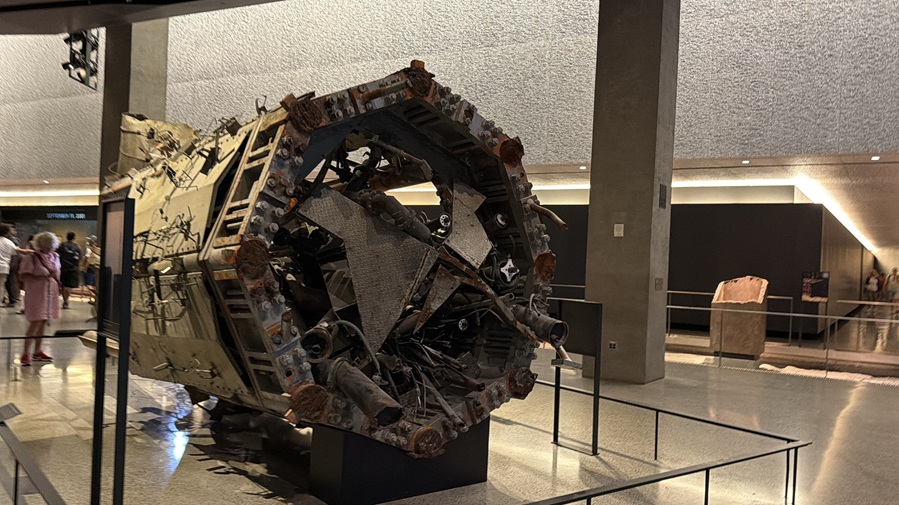
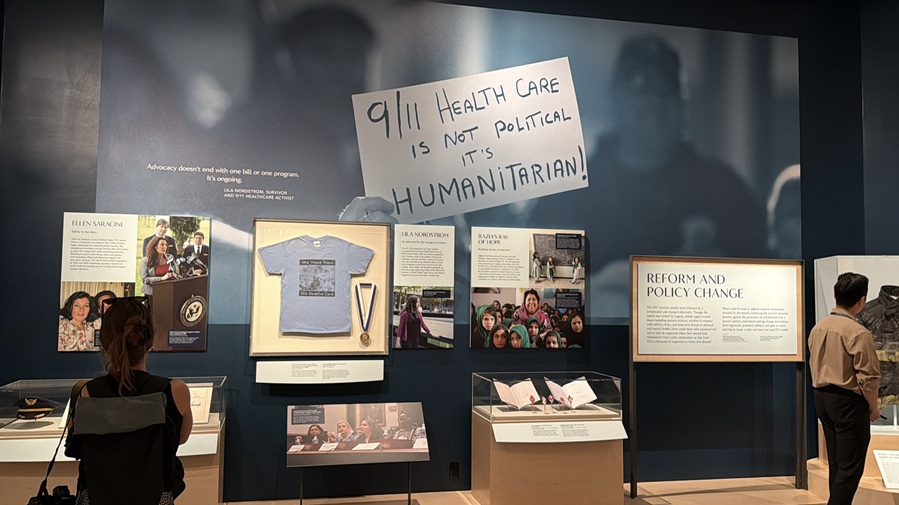
Shibbir Ahmed, NEW YORK — The 9/11 Memorial & Museum on 31St August Monday unveiled a new exhibition highlighting the enduring legacy of service inspired by the September 11 attacks, as New York prepares to mark the 25th anniversary of the tragedy. Titled “In Their Honor: 25 Years of 9/11-Inspired Service,” the exhibition offers a look at how individuals and communities transformed the aftermath of the attacks into acts of service and public commitment.

The exhibition was previewed for members of the media during a briefing at the 9/11 Memorial & Museum in Lower Manhattan. It will open to the public on September 12, 2026, one day after the 25th anniversary of the attacks.

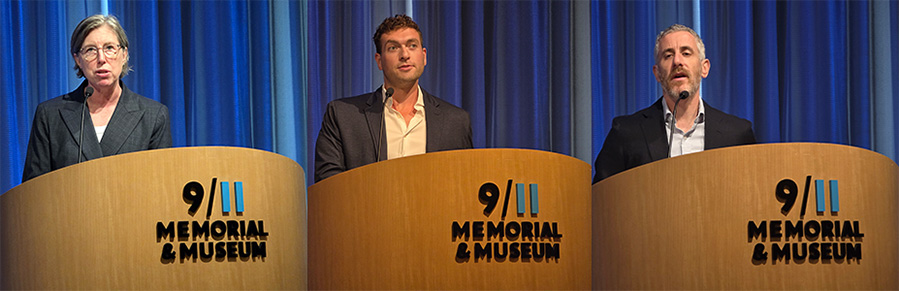
The afternoon program began with remarks from Beth Hillman, President and CEO of the 9/11 Memorial & Museum, followed by comments from 9/11 family member Logan Miller and Noah Rauch, Senior Vice President of Education and Public Programming.

The museum’s new exhibition comes as New York and the nation prepare for a major commemoration of the nearly 3,000 people killed in the September 11, 2001 terrorist attacks. The exhibition focuses on the continuing impact of September 11 beyond the immediate loss of life, emphasizing the service and civic engagement that emerged in the years following the attacks.

Museum officials said the exhibition explores the ways people responded to the attacks through service, volunteering and efforts to help others, demonstrating how the legacy of September 11 continues to shape communities a quarter-century later.

Monday’s media program also included a guided preview of the exhibition, giving journalists an early look before its public opening. The museum is also preparing for the 25th-anniversary commemoration on September 11, which will bring families of victims, survivors, first responders and government and community leaders together at the World Trade Center site.

As the anniversary approaches, the museum’s programming is placing particular emphasis not only on remembering those who were killed, but also on the long-term consequences of the attacks and the continuing acts of service inspired by their memory.

The 25th anniversary will mark a quarter-century since the attacks on the World Trade Center, the Pentagon and United Airlines Flight 93. For many families and survivors, the anniversary remains both a day of remembrance and an opportunity to reflect on how the events of September 11 have shaped the lives of subsequent generations. The “In Their Honor” exhibition will open to visitors at the 9/11 Memorial & Museum on September 12.


UN Urges Action to End Enforced Disappearances on International Day

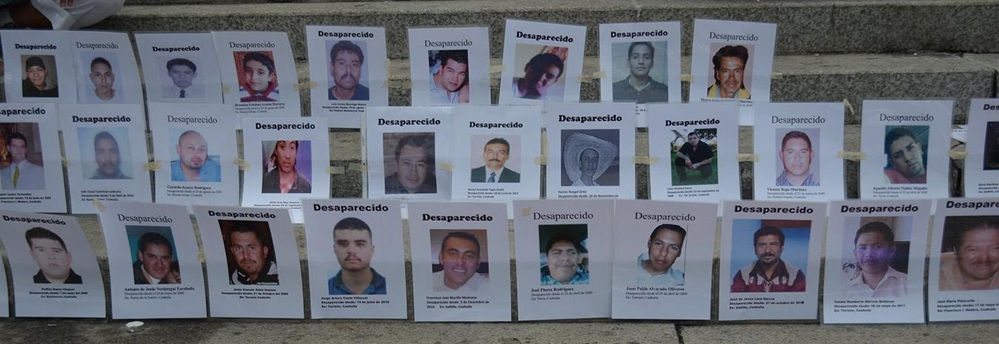
Shibbir Ahmed, UNITED NATIONS, NY — The United Nations is marking the International Day of the Victims of Enforced Disappearances on Sunday with renewed calls for governments to address the fate of missing people, protect victims and their families, and ensure truth and justice for those affected by enforced disappearance.

The annual observance, held on August 30, highlights the continuing suffering of people whose relatives have disappeared after being arrested, detained or otherwise taken into state custody while authorities deny or conceal their whereabouts.

UN human rights experts said the impact of enforced disappearance extends far beyond the individual victim. Families can be left for years without information about what happened to their loved ones, while communities can suffer social and economic consequences. The UN has described enforced disappearance as a serious human-rights violation that can also be used to spread fear throughout society.

The 2026 observance is particularly significant because it marks 20 years since the adoption of the International Convention for the Protection of All Persons from Enforced Disappearance. The convention was adopted by the UN General Assembly in 2006 and established an international legal framework aimed at preventing enforced disappearances and protecting people from the practice.

The UN Committee on Enforced Disappearances and the Working Group on Enforced or Involuntary Disappearances have used this year’s observance to renew attention to victims and their families and to the need for effective measures to prevent disappearances and clarify the fate of those who remain missing.

A Continuing Global Human Rights Challenge

Enforced disappearance occurs when people are arrested, detained or abducted by, or with the authorization, support or acquiescence of state authorities, followed by a refusal to acknowledge the person’s detention or to provide information about their whereabouts.

The consequences can continue for decades. Families may remain uncertain whether their relatives are alive or dead, while the lack of information can prevent them from obtaining justice, reparations and other forms of support.

The UN has repeatedly stressed that resolving cases of enforced disappearance requires credible investigations, accountability and access to information for families.

The International Day also serves as a reminder of the broader obligations of governments under international human-rights law to prevent enforced disappearance and investigate allegations when they occur.

Twenty Years of the UN Convention

The International Convention for the Protection of All Persons from Enforced Disappearance was adopted on December 20, 2006. It entered into force in 2010 and created the Committee on Enforced Disappearances to monitor implementation by states parties.

The convention recognizes the right of every person not to be subjected to enforced disappearance and calls on states to take measures to prevent the practice and ensure accountability. Two decades after its adoption, the UN continues to call for stronger implementation of the convention and greater protection for victims and their families.

The UN’s message on August 30 remains clear: families searching for missing relatives should not be left without answers, and enforced disappearance must not be allowed to remain a tool of fear, impunity or denial.


Irene Khan Takes Office as Bangladesh’s UN Representative

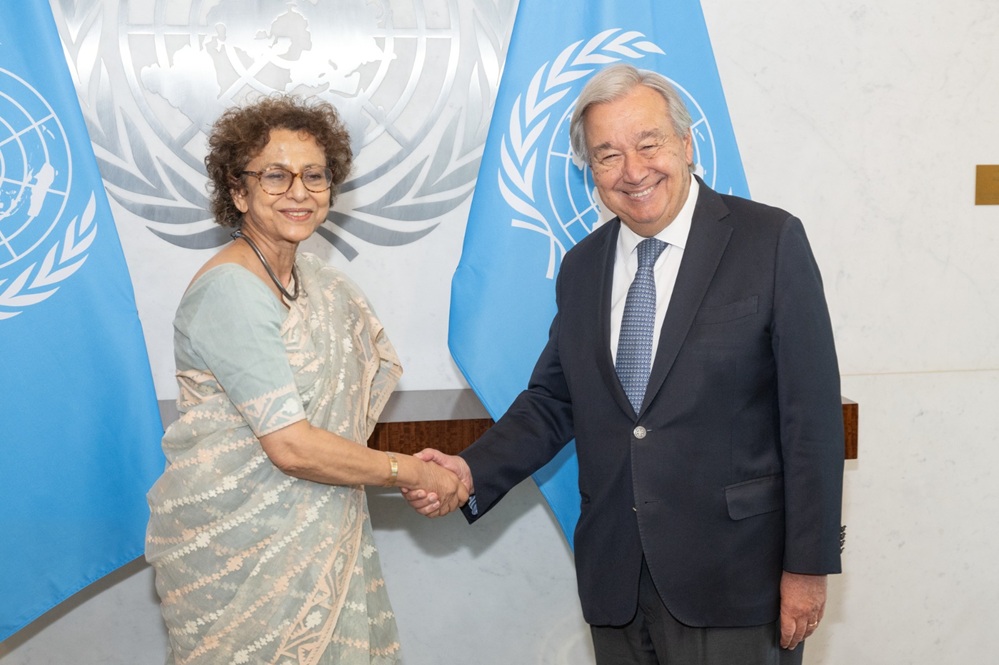
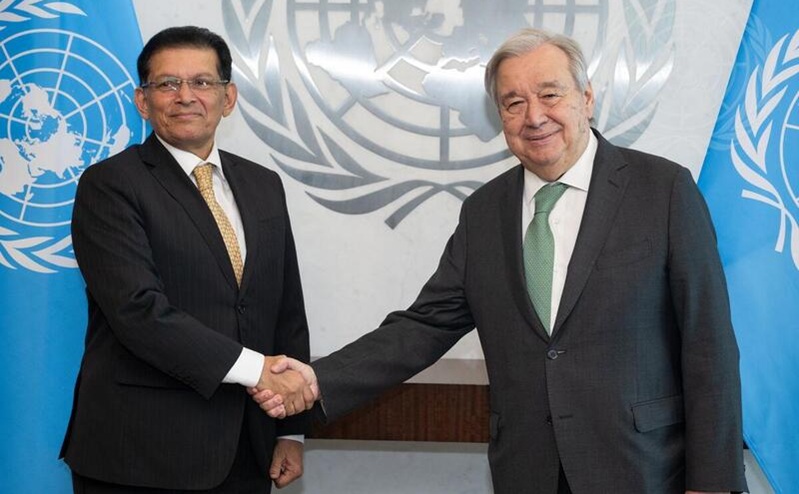
Shibbir Ahmed, UN, New York: Irene Zubaida Khan, a veteran international human rights advocate, has taken office as Bangladesh’s Permanent Representative to the United Nations in New York. Khan presented her credentials to United Nations Secretary-General António Guterres at UN Headquarters in New York on Friday, formally assuming her role as Bangladesh’s envoy to the world body.

She brings decades of experience in human rights, international law, refugee protection, the rule of law and sustainable development, including senior roles at the United Nations and other international organizations.

Before taking up her new role, Khan had served since 2020 as the UN Special Rapporteur on the promotion and protection of the right to freedom of opinion and expression. From 2001 to 2009, she served as Secretary-General of Amnesty International, becoming the first woman to lead the organization.

From 2012 to 2019, Khan served as Director-General of the International Development Law Organization (IDLO). Earlier in her career, she spent 21 years with the Office of the United Nations High Commissioner for Refugees (UNHCR), holding a number of senior positions including Chief of Mission in India and Deputy Director of the Division of International Protection.

Khan received the Sydney Peace Prize in 2006 and is the author of The Unheard Truth: Poverty and Human Rights. She studied law at the University of Manchester and Harvard Law School.


Promoting the Saree on the World Stage at New York’s Times Square: ‘Saree Goes Global’

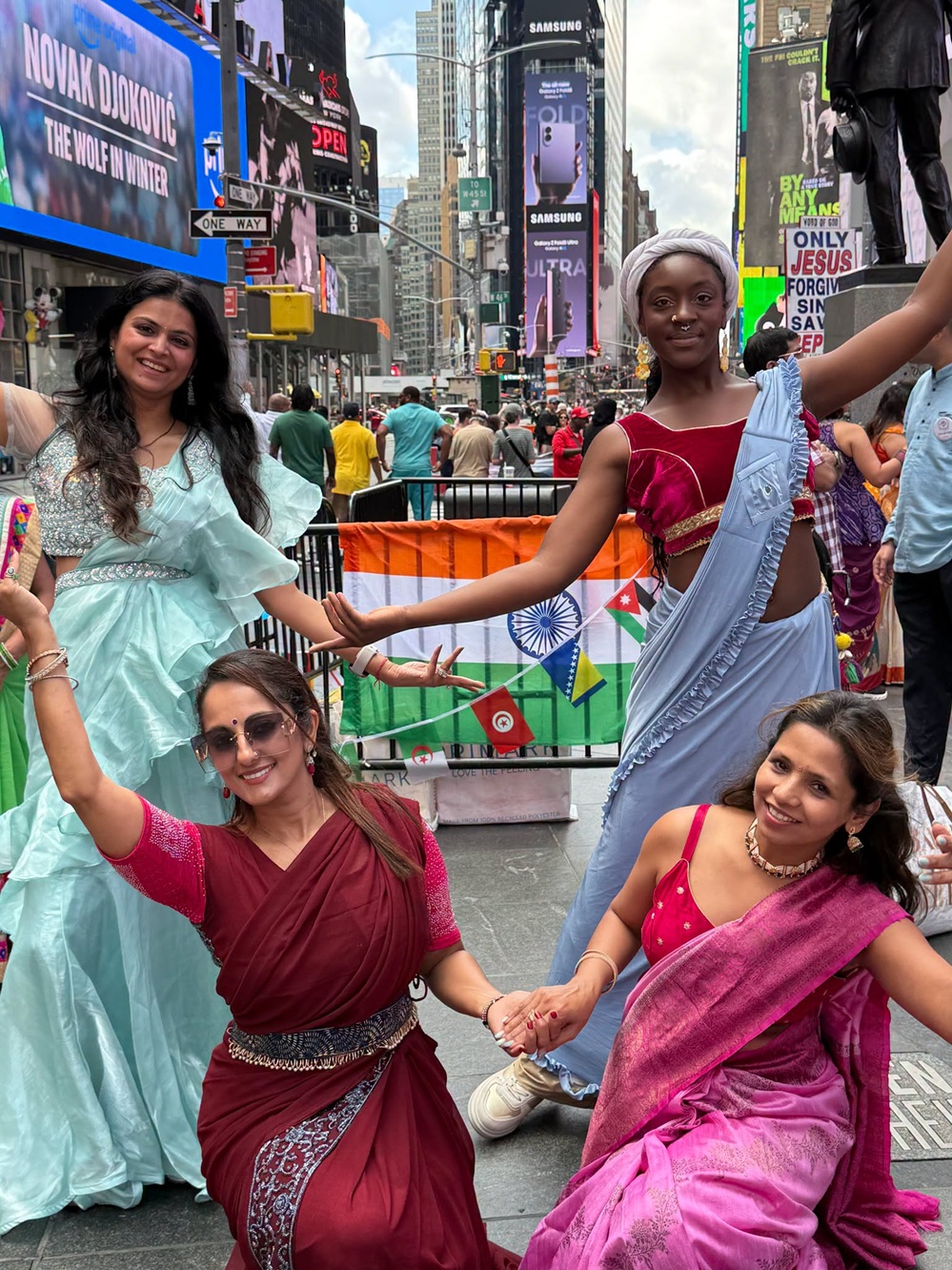
Shibbir Ahmed, New York: Once again, the rich heritage, beauty, and cultural diversity of the saree were showcased on the world stage at New York City’s iconic Times Square, one of the world’s busiest and most recognizable urban destinations. On Sunday, August 23, the third annual ‘Saree Goes Global USA 2026’ event was held at Father Duffy Square in Times Square.

The event, held from 11 a.m. to 2 p.m. local time, brought together participants from various U.S. states as well as different parts of the world. Women dressed in sarees of different colors, designs, and styles took part in the Saree Walkathon and ramp walk. The program also featured music, dance, and other cultural performances.

The event was organized by New York-based Uma Global in partnership with the Consulate General of India in New York. Organizers said the primary objective of the event is to present the saree not merely as a garment, but as a global symbol of heritage, culture, art, unity, and women’s empowerment.

The presence of women from different countries dressed in colorful sarees transformed the bustling Times Square area into a vibrant celebration of culture. Through various types of sarees, traditional textiles, and intricate designs, the event highlighted the rich history of South Asian weaving, textiles, and craftsmanship.

Dr. Deepti Jain, founder of the ‘Saree Goes Global’ movement, has been leading the initiative. Dr. Rita Kakati-Shah, president of New York-based Uma Global, has also played an important role in organizing the event. Through their efforts, the initiative seeks not only to introduce the saree to people around the world but also to preserve the heritage of weavers and artisans and promote international recognition of their craftsmanship.

The ‘Saree Goes Global’ event at Times Square has now entered its third year. Previous editions have attracted participants from countries and regions including India, Bangladesh, the United Kingdom, the United States, Nepal, Sri Lanka, Malaysia, Singapore, and the West Indies. The second edition in 2025 brought together participants from Bangladesh and other countries, turning Times Square into a vibrant showcase of cultural diversity.

More than 500 women participated in the inaugural event in 2024. Women from at least nine countries, including Bangladesh, gathered at Times Square wearing sarees and showcased their respective cultures and traditions through music, dance, and the Saree Walkathon.

According to the organizers, the saree has no geographical boundaries. It is a cultural heritage passed down from generation to generation and has the power to bring people from different countries and cultures together. Hosting the event at a globally renowned location such as Times Square provides an important platform for taking that heritage to an international audience.

Through ‘Saree Goes Global,’ the organizers are therefore promoting more than just a traditional garment. The initiative also carries messages of women’s identity and empowerment, cultural diversity, traditional craftsmanship, and harmony among people around the world.


U.S. Proposes Nationwide Arms Embargo on Sudan, China and Russia Object at UN

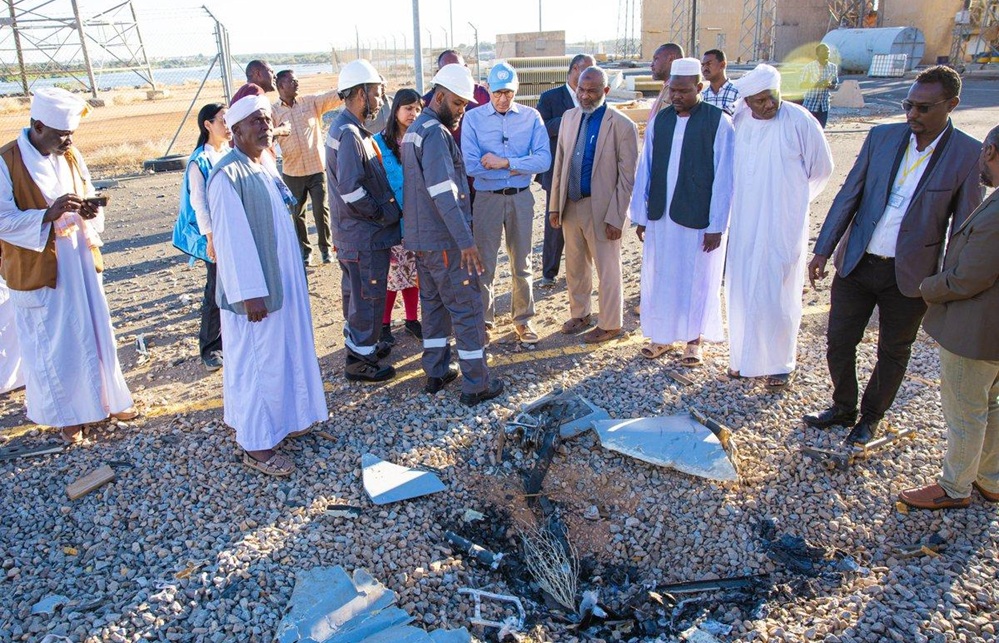
Shibbir Ahmed, United Nations Headquarters, New York: The United States has proposed expanding the arms embargo to cover the entire territory of Sudan as part of efforts to increase pressure on the parties involved in the country’s ongoing civil war. In a draft resolution presented to the United Nations Security Council on Monday, Washington called for extending the existing arms restrictions beyond Darfur to the whole of Sudan, including measures aimed at stopping the transfer of drones and other weapons and military equipment.

The U.S. initiative is intended to prevent foreign military assistance from reaching the parties involved in the Sudan conflict and to pressure them to return to the negotiating table. U.S. officials have argued that military, financial and political support from outside countries has contributed to prolonging the war.

The proposal, however, has exposed divisions within the Security Council. China and Russia, both permanent members of the council, have raised objections to the U.S. initiative. As permanent members, both countries have veto power. Britain and France, meanwhile, have supported the U.S. proposal. Denmark, which holds the Security Council presidency this August, has also backed the initiative.

Sudan has been engulfed in a devastating conflict between the Sudanese Armed Forces and the paramilitary Rapid Support Forces (RSF) since April 2023. According to the United Nations, the fighting has displaced millions of people and created a severe humanitarian crisis across large parts of the country. The protection of civilians and the need to end the conflict were also key issues raised during Monday’s Security Council meeting.

UN political and peacebuilding chief Rosemary DiCarlo warned the Security Council that the conflict in Sudan is worsening and that the warring parties continue to rely on military solutions. She called for stronger international action to help bring an end to the fighting.

If adopted, the U.S. proposal would pave the way for an international arms embargo covering the entire territory of Sudan, including restrictions on the supply of weapons, ammunition and military equipment. Preventing the transfer of modern military technologies, including drones, is also a key objective of the initiative.

However, opposition from China and Russia has created uncertainty over whether the proposal can secure enough support in the Security Council. The U.S. initiative has therefore emerged as a major point of diplomatic tension at the United Nations as international efforts continue to end Sudan’s devastating war.


44th ‘India Day Parade’ 2026 Held in Grand Celebration in New York

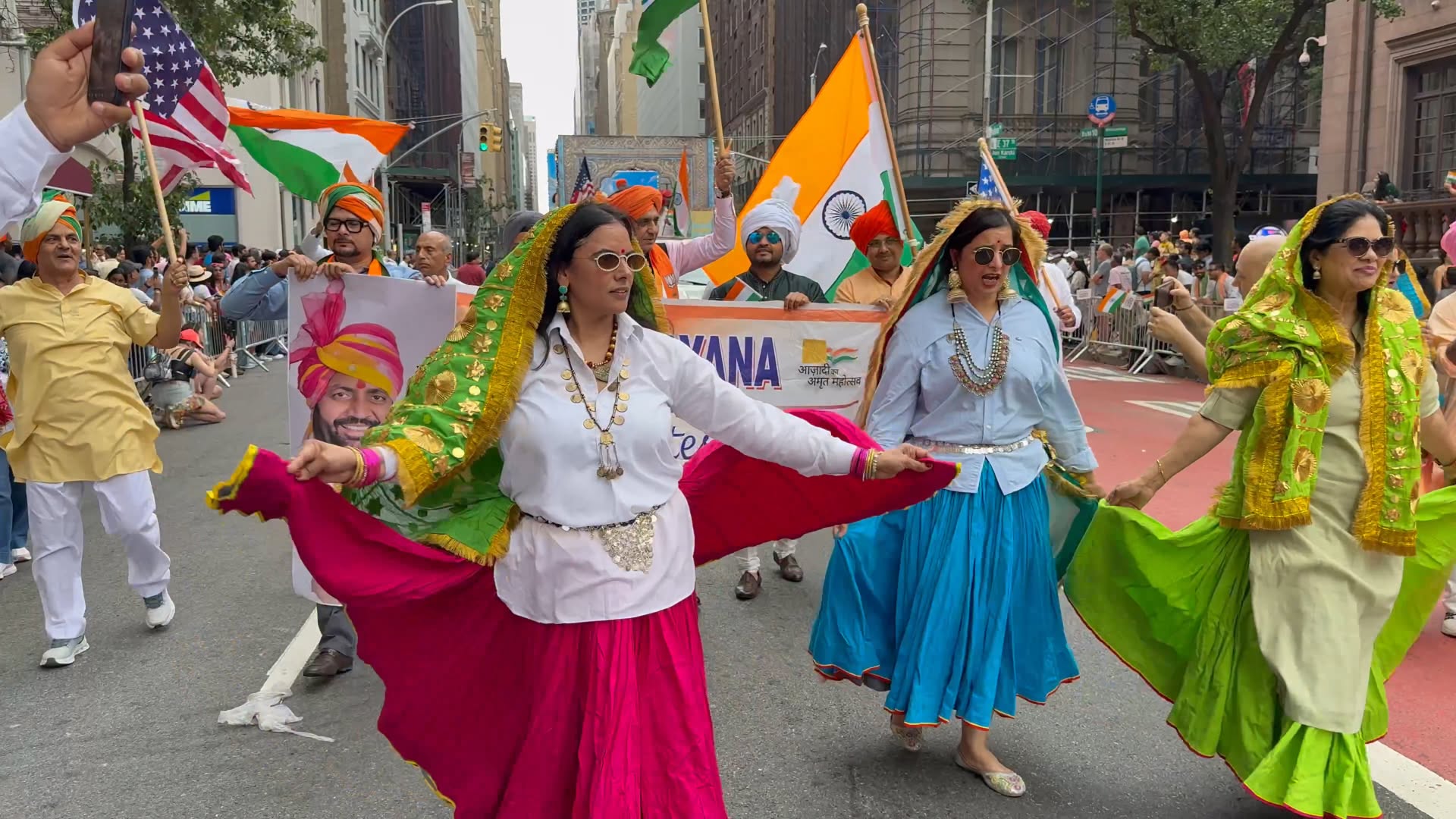
Shibbir Ahmed, New York: The 44th annual ‘India Day Parade’ was held in Manhattan, New York, on Sunday, August 16, as part of celebrations marking India’s 80th Independence Day. The grand parade along Madison Avenue showcased the rich culture, heritage, and diversity of India. Thousands of people participated in the parade, while large crowds gathered along both sides of the avenue to enjoy the festivities.

Organized by the Federation of Indian Associations (FIA), this year’s parade carried the theme ‘Harmony in Heritage.’ According to the organizers, the event is one of the largest celebrations of Indian culture in the United States.

The parade began around noon on Madison Avenue. The procession came alive with the participation of various cultural and social organizations, business groups, regional associations, marching bands, and dance troupes. According to information released by the organizers, more than 40 colorful floats and over 50 marching groups took part in this year’s celebration.

Floats decorated in the three colors of the Indian national flag—saffron, white, and green—made their way along Madison Avenue. Traditional clothing, dance, music, and cultural performances representing different Indian states and regions showcased the country’s remarkable cultural diversity. Indian-Americans of all ages, from children and teenagers to senior members of the community, participated in the parade.

New York Governor Kathy Hochul, along with elected officials, political leaders, business leaders, and community representatives, attended the parade. Governor Hochul joined the opening ceremony and participated in the procession alongside other distinguished guests.

Indian film and entertainment personalities were also among the major attractions of this year’s parade. Actress Pooja Hegde was one of the special guests. Cast members and performers from the popular Indian television show ‘Taarak Mehta Ka Ooltah Chashmah’ also took part in the parade, drawing enthusiastic responses from spectators.

The parade created a festive atmosphere throughout Madison Avenue and the surrounding areas. Large crowds lined the streets, many holding Indian flags and cheering as the procession passed by. The participation of children and young people was particularly notable.

For New York’s Indian-American community, the India Day Parade is more than a celebration of India’s Independence Day. It is also an important occasion for preserving and passing on Indian culture and heritage to younger generations living in the diaspora. At the same time, the parade highlights the contributions of Indian-Americans to the multicultural society of the United States.

According to organizers, the celebrations extended beyond the parade, with food, cultural, and entertainment programs taking place throughout the day. Food vendors, cultural performances, and community booths were set up around Madison Avenue, adding to the festive atmosphere.

The weekend-long India Day celebrations began on Saturday with the hoisting of the Indian national flag at Times Square and a special lighting of the Empire State Building in the colors of the Indian flag. Sunday’s grand parade brought the weekend’s celebrations to a colorful conclusion.

The 44th ‘India Day Parade’ in the heart of Manhattan once again highlighted India’s culture, heritage, and the unity of the Indian diaspora. Under the theme ‘Harmony in Heritage,’ this year’s celebration also emphasized the strong cultural ties between India and the United States.

Note: There are slight differences among reports regarding the parade route. According to official FIA information, the route ran along Madison Avenue from East 38th Street to East 27th Street. NBC New York described the route as covering 13 blocks between East 39th Street and East 26th Street.


Helping Hand Foundation Executive Member Alamgir Hossain Supports Humanitarian Efforts in Bogura

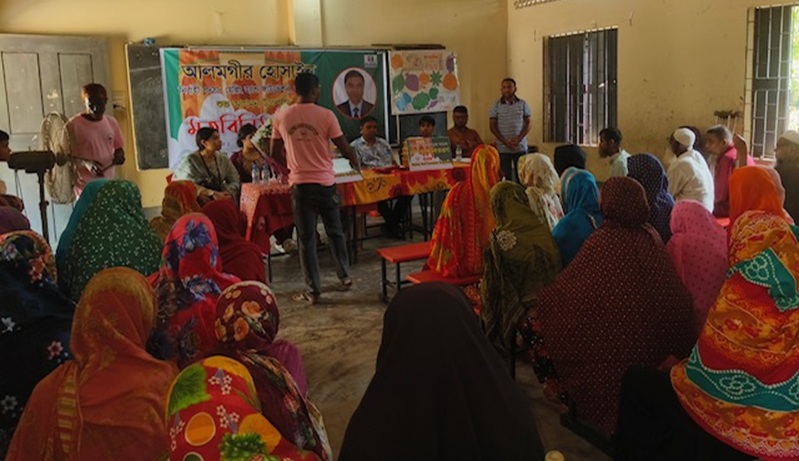
BOGURA CORRESPONDENT: Alamgir Hossain, an executive member of the Helping Hand Foundation and a Bangladeshi expatriate living in the United States, recently visited Bogura to observe the foundation’s humanitarian activities and meet people who have benefited from its various support programs.

Arriving in Bogura from Dhaka, Hossain, accompanied by his family members, toured several of the foundation’s ongoing initiatives and spoke directly with beneficiaries. He also followed up with people who had previously received assistance from the organization, including financial support, sewing machines, and help with house construction.

During the visit, Hossain personally distributed clothing and cash assistance among beneficiaries. He also listened to their experiences and learned about their current living conditions and the impact of the support they had received from the foundation.

Hossain was accompanied by his wife, one son, and two daughters. Together, they visited several of the foundation’s humanitarian initiatives aimed at supporting underprivileged and disadvantaged people in Bogura.

Foundation officials said the Helping Hand Foundation has been carrying out a range of programs not only to provide immediate humanitarian assistance but also to improve the livelihoods and living standards of disadvantaged people.

They described Hossain’s visit and his direct involvement in the assistance programs as a positive and encouraging development, particularly because he continues to remain connected with the foundation’s activities while living abroad.

At the conclusion of the visit, foundation representatives expressed their gratitude to Alamgir Hossain and his family for their support and participation. They said they hope such humanitarian initiatives will continue in the future for the welfare of vulnerable and underprivileged communities.