UN Chief Deeply Regrets US Visa Denial to Mahmoud Abbas

Shibbir Ahmed, New York: United Nations Secretary-General António Guterres has expressed “deep regret” over the United States’ decision to deny a visa to Palestinian Authority President Mahmoud Abbas for the second consecutive year, preventing him from attending the upcoming UN General Assembly in person. UN spokesperson Stéphane Dujarric said Friday that Guterres was concerned about the impact of the decision on the ability of the State of Palestine to participate fully in the work of the United Nations.

“The full participation of all delegations in the work of the Organization is essential to its proper functioning,” Dujarric said in a statement. The U.S. State Department announced that visas would not be issued to Abbas and other Palestinian officials seeking to attend the high-level UN General Assembly session, which begins in New York on Tuesday. Members of the Palestinian mission to the United Nations will continue to participate.

Guterres has urged the United States, as the host country, to ensure that visas are issued to members of all delegations in accordance with its obligations. Dujarric said the secretary-general would continue engaging with U.S. authorities on the issue.

Abbas to Address UNGA Virtually

The U.S. decision marks the second consecutive year that Abbas has been unable to attend the General Assembly in person. Last year, he addressed the gathering by video after the Trump administration denied visas to members of the Palestinian delegation. On Thursday, the UN General Assembly voted 152-3 to allow Abbas to address this year’s high-level debate virtually. The United States, Israel and Paraguay voted against the measure, while four countries abstained.

US Cites Palestinian Policies

Washington has defended the visa restrictions by citing what it describes as the Palestinian Authority’s failure to meet commitments related to peace efforts and reforms. The U.S. State Department has also cited Palestinian efforts to pursue the Israeli-Palestinian conflict through international institutions, including the International Criminal Court (ICC) and the International Court of Justice (ICJ). Washington has argued that such moves seek to bypass negotiations through international legal and diplomatic mechanisms.

The United States and Israel have also criticized the Palestinian Authority’s former policy of providing payments to families of imprisoned or killed Palestinians, including individuals accused of carrying out attacks against Israelis. The Palestinian Authority has since reformed the system, saying assistance would be based on families’ financial needs rather than political affiliation or prisoner status.

Continuing Tensions Over Palestinian Representation

The visa dispute comes amid continuing tensions over Palestinian representation at the United Nations and the broader Israeli-Palestinian conflict. The United States has opposed efforts to internationalize the conflict through international courts and has also disagreed with the position of the majority of UN member states that recognized Palestine at the United Nations last year. According to AFP, 142 UN member states recognized a Palestinian state in 2025.

Despite the visa restrictions, Palestinian diplomats accredited to the United Nations will continue to represent the State of Palestine at UN meetings, while Abbas is expected to address the General Assembly remotely. Guterres has maintained that the participation of all delegations is important to the functioning of the United Nations and said he would continue discussions with Washington over the issue.


UN Warns of Terrorists’ Growing Use of AI and Drones

Shibbir Ahmed, New York — The United Nations Security Council has warned that terrorist groups are adapting rapidly to new technologies, increasingly exploiting artificial intelligence, drones, social media, encrypted messaging and online platforms to recruit supporters, spread propaganda, raise funds and strengthen their operational capabilities. The warning came during a Security Council briefing marking the 25th anniversary of the September 11 terrorist attacks, as UN officials assessed how the global terrorist threat has evolved since 2001.

Assistant Secretary-General Natalia Gherman told the Council that terrorism has become more fragmented and diffuse, with terrorist groups decentralizing their operations and taking advantage of instability to expand their influence.

She also highlighted the growing role of technology in terrorist activities. According to the UN, extremist groups are exploiting social media platforms, gaming environments and other virtual spaces to identify vulnerabilities and recruit people, particularly young people.

AI and digital platforms create new challenges

UN officials said the rapid development of artificial intelligence and other digital technologies is changing the threat environment. The Security Council’s Counter-Terrorism Committee Executive Directorate said terrorist organizations are using AI-enabled tools and digital platforms to disseminate propaganda, recruit supporters and enhance their operational capabilities.

The UN also pointed to the use of encrypted communications and online financial services as growing challenges for counter-terrorism authorities. The UN Office of Counter-Terrorism has separately warned that AI-generated content, deepfakes and algorithmic amplification can increase the speed and reach of harmful extremist narratives.

Drones emerging as an operational threat

The UN also identified the weaponization and misuse of unmanned aircraft systems, commonly known as drones, as an increasingly significant terrorist threat. According to the Counter-Terrorism Committee Executive Directorate, terrorist groups are exploiting unmanned aircraft systems for operational purposes, while weak governance and porous borders in some regions have created additional opportunities for terrorist organizations to acquire and misuse emerging technologies.

The UN’s counter-terrorism program says member states have been urged to strengthen measures against terrorist exploitation of technologies including AI, virtual assets, 3D printing, unmanned aircraft systems and commercially available drones.

UN calls for international cooperation

The Security Council emphasized that countering terrorism requires coordinated action at the national, regional and international levels, consistent with international law and the UN Charter. UN officials stressed that governments need to adapt their counter-terrorism strategies as terrorist organizations change their methods and exploit emerging technologies.

The Council also highlighted the importance of protecting human rights and the rule of law while responding to evolving terrorist threats. The discussion comes 25 years after the September 11, 2001 attacks in the United States, which prompted major changes in international counter-terrorism cooperation and led to the adoption of Security Council Resolution 1373.


America Marks 25 Years Since 9/11

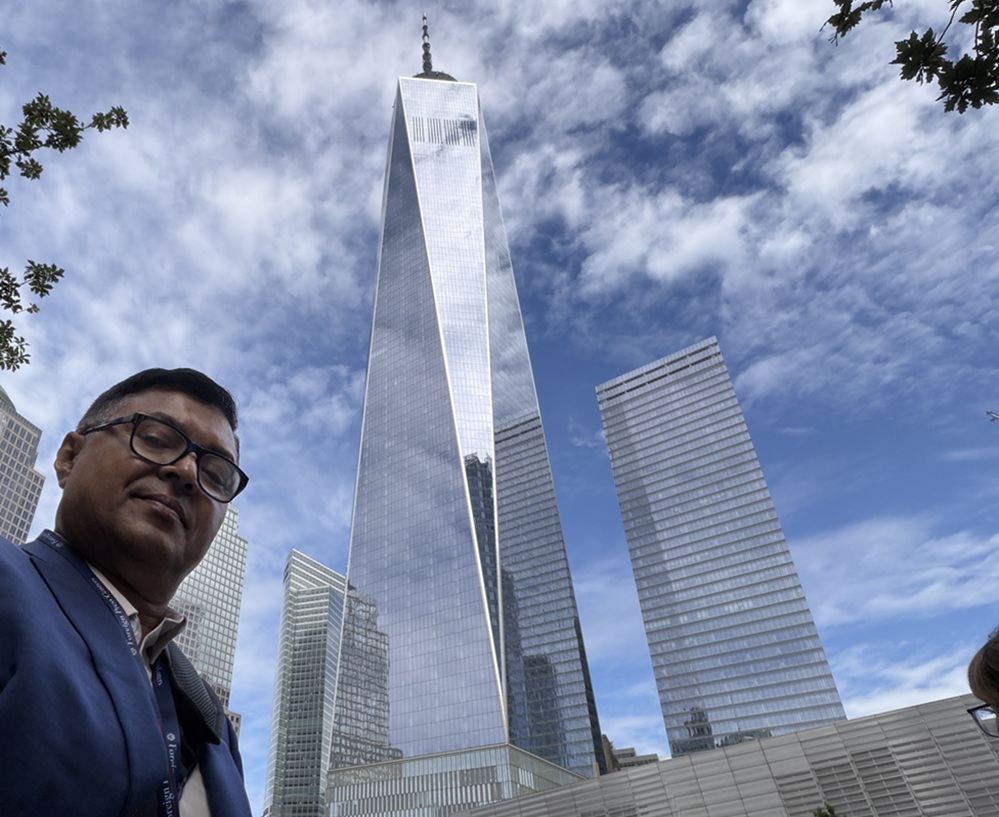
Shibbir Ahmed, Ground Zero, New York — The United States on Friday marked the 25th anniversary of the September 11, 2001, terrorist attacks with memorial ceremonies in New York, Virginia and Pennsylvania, while the release of newly declassified CIA intelligence records renewed attention on what U.S. officials knew about al-Qaida and Osama bin Laden before the attacks. Nearly 3,000 people were killed when 19 al-Qaida hijackers seized four commercial passenger aircraft and carried out coordinated attacks on the World Trade Center in New York and the Pentagon in Virginia. United Airlines Flight 93 crashed near Shanksville, Pennsylvania, after passengers attempted to regain control of the aircraft.

At Ground Zero in Lower Manhattan, relatives of victims gathered for the annual memorial ceremony and read the names of those killed. The observance began with a moment of silence at 8:46 a.m., the time American Airlines Flight 11 struck the World Trade Center’s North Tower. Vice President JD Vance attended the New York ceremony alongside former Presidents Bill Clinton, George W. Bush, Barack Obama and Joe Biden. The gathering brought together current and former national leaders as families commemorated those who died a quarter-century ago.

The ceremony included additional moments of silence marking the attacks on the South Tower, the Pentagon and Flight 93. This year, organizers also included a seventh moment of silence for people who subsequently died from illnesses associated with exposure to toxic materials at the World Trade Center site.

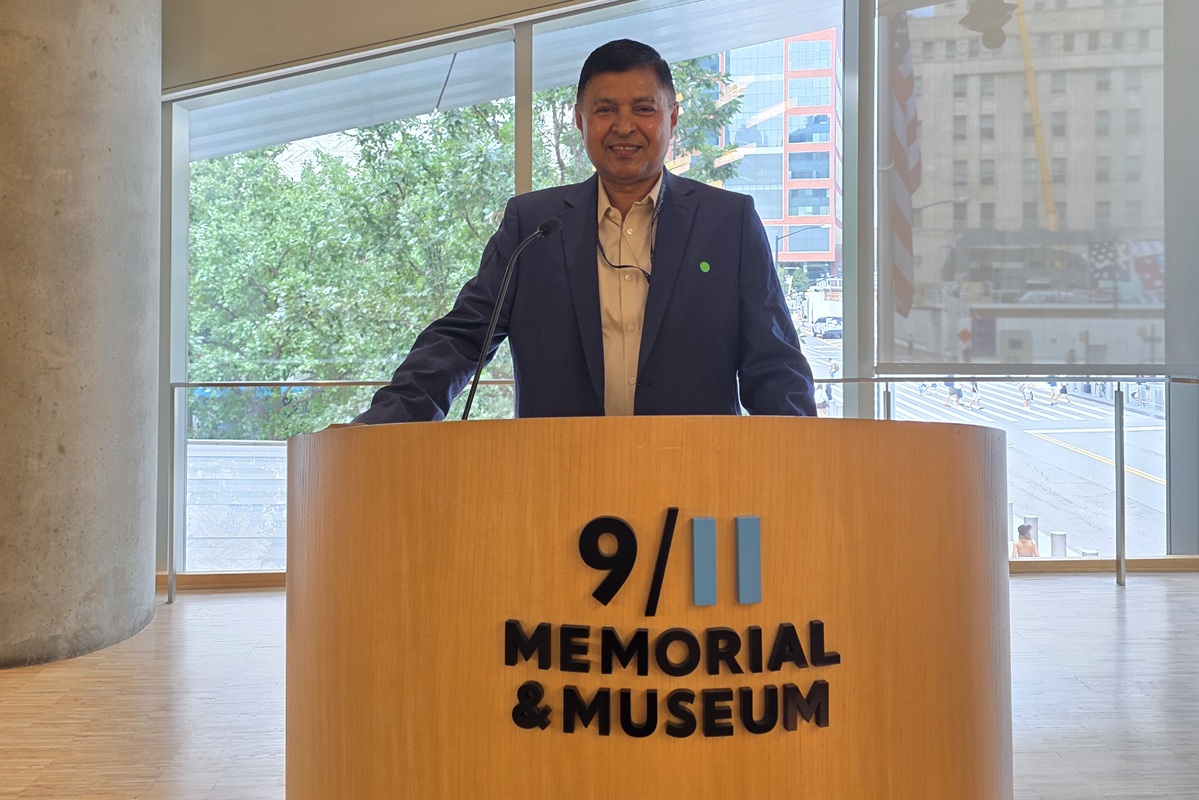
The 9/11 Memorial & Museum said the commemoration remains centered on the victims and their families, with the names of those killed read during the ceremony. The annual Tribute in Light is also scheduled to illuminate the New York skyline Friday evening.

Trump Attends Pentagon Ceremony

President Donald Trump marked the anniversary at the Pentagon in Arlington, Virginia, where American Airlines Flight 77 crashed after being hijacked. The attack killed 184 people at the Pentagon and aboard the aircraft. Trump attended the ceremony with First Lady Melania Trump and Defense Secretary Pete Hegseth. Senior military and government officials also participated in the remembrance.

The Pentagon ceremony focused on the victims and the military personnel, civilian employees and others who lost their lives in the attack. Trump and Hegseth also linked the events of September 11 to current U.S. national-security policy and the country’s military role overseas. Arlington County and other communities in Virginia also held local commemorations honoring residents, first responders and others connected to the Pentagon attack.

Flight 93 Remembered in Pennsylvania

In Shanksville, Pennsylvania, families and visitors gathered at the Flight 93 National Memorial to commemorate the 40 passengers and crew members who died when the hijacked aircraft crashed into a field. The passengers had learned through telephone calls that other hijacked aircraft had struck the World Trade Center and the Pentagon and attempted to take control of Flight 93. The plane crashed before reaching its intended target. The Pennsylvania observance included the reading of the passengers’ and crew members’ names and a wreath-laying ceremony.

CIA releases 71 intelligence reports

The 25th anniversary also brought a significant new development in Washington. The Central Intelligence Agency released 71 intelligence reports related to the period before and immediately after the September 11 attacks. The collection includes 70 reports prepared before the attacks and one report dated September 12, 2001. The documents were prepared for the President’s Daily Brief and were provided to Presidents Bill Clinton and George W. Bush and senior administration officials.

The documents show that U.S. intelligence agencies had been tracking bin Laden and al-Qaida for years before the attacks. A February 1998 report warned about bin Laden’s interest in obtaining chemical, biological and nuclear materials. Other reports discussed his growing network, his activities in Afghanistan and the Taliban’s reluctance to surrender him.

A September 1998 intelligence report described a possible al-Qaida plan involving an explosive-laden aircraft and identified Washington as a preferred target. Later reports discussed possible hijackings and surveillance of locations in the United States.

An August 2001 President’s Daily Brief, already publicly known as “Bin Ladin Determined To Strike in US,” warned of suspicious activity in the United States consistent with preparations for hijackings or other attacks. The newly released collection provides additional surrounding intelligence records from that period.

The documents remain partly redacted, and officials said the release does not fundamentally overturn the established historical account of the attacks. Instead, the records provide additional detail about the intelligence available to U.S. officials before September 11.

The 9/11 Commission previously concluded that failures involving intelligence sharing, management, policy and the ability to interpret the available information contributed to the government’s inability to prevent the attacks.

New records revive questions about Ground Zero exposure

In New York, the anniversary has also brought renewed attention to the long-term health consequences of the attacks. Thousands of firefighters, police officers, emergency workers, construction workers, residents and others who were exposed to the dust and debris around the World Trade Center site have developed illnesses associated with the disaster.

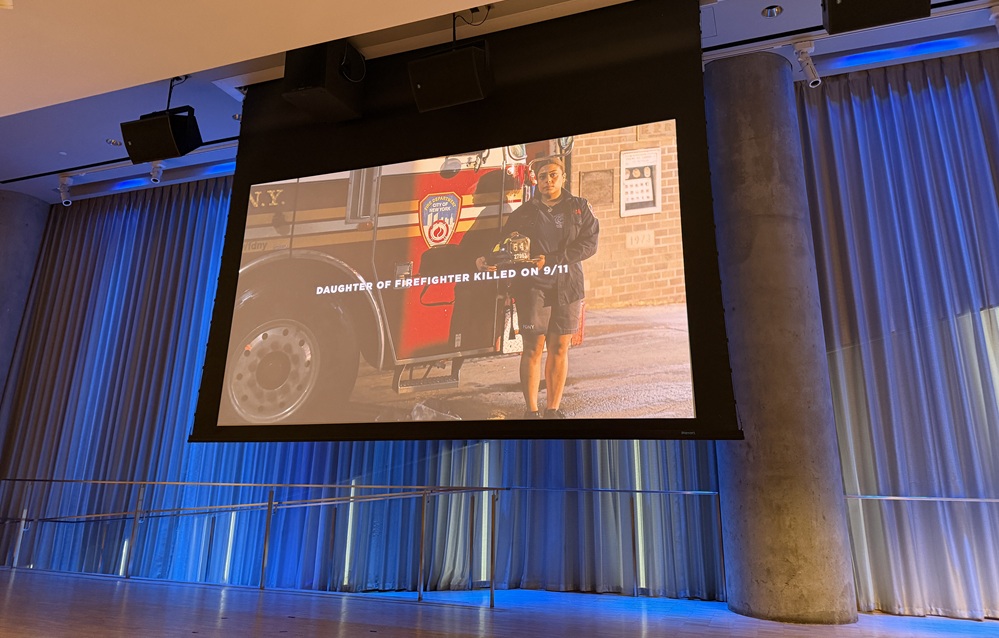
The FDNY has continued adding the names of members who died from illnesses linked to their work at Ground Zero. More than 600 firefighters have died from 9/11-related illnesses, according to department figures cited in anniversary coverage.

The city has also begun releasing large collections of records concerning its response to the World Trade Center disaster, including documents related to air quality and the handling of information about environmental hazards after the attacks. The records have renewed questions about what officials knew about the risks in Lower Manhattan and when that information was communicated to residents and workers.

A continuing national security legacy

The attacks prompted major changes in U.S. national security policy. Congress created the Department of Homeland Security, federal agencies expanded counterterrorism operations and intelligence-sharing systems were reorganized. Airport security procedures were substantially expanded, while Congress approved new surveillance authorities.

The attacks also led to the U.S. military campaign in Afghanistan against al-Qaida and the Taliban. The United States later invaded Iraq in 2003, beginning two wars that became central to American foreign policy for the following two decades.

The wars resulted in the deaths of thousands of U.S. military personnel and large numbers of civilians in Afghanistan and Iraq. The post-9/11 period also produced prolonged debates over detention, interrogation, surveillance, civil liberties and the balance between national security and individual rights.

Impact on Muslim and South Asian Americans

The attacks also had significant consequences for Muslim, Arab and South Asian communities across the United States. In the years following September 11, members of those communities faced hate crimes, discrimination, profiling and increased scrutiny. At the same time, Muslim and South Asian Americans have become an increasingly visible part of American civic, political and professional life. The 25th anniversary has therefore prompted communities across the country to remember both the victims of the attacks and the broader social consequences that followed.

Texas and communities across the country

The anniversary was not limited to New York, Virginia and Pennsylvania. Communities across the United States held ceremonies, vigils, memorial services and events honoring victims and first responders. In Houston, an interfaith remembrance brought together volunteers who read the names of those killed on September 11 alongside names associated with the wars in Afghanistan and Iraq. The event reflected a broader effort in some communities to discuss both the attacks and the consequences of the U.S. response. Other communities organized stair climbs, flag displays and local memorial ceremonies, often focusing on residents who died in the attacks or first responders who later became ill.

A 25-year transition

The anniversary comes as the United States enters a period in which a growing portion of the population has no personal memory of September 11. People born after the attacks now make up a significant share of the American population. For victims’ relatives, survivors and first responders, however, the events remain personal rather than historical. At Ground Zero, in Arlington and at Shanksville, the ceremonies continued to place individual victims at the center of the commemoration.

The newly released intelligence documents added another dimension to this year’s anniversary by providing additional evidence of the warnings available to U.S. officials before the attacks.

The records do not offer a simple explanation for why the attacks were not prevented. They instead add to an extensive historical record showing that U.S. agencies had identified bin Laden and al-Qaida as serious threats but failed to translate available intelligence into effective action against the specific plot.

Twenty-five years after September 11, the United States is therefore commemorating the victims while continuing to examine the decisions, intelligence failures, policies and human consequences associated with the attacks and their aftermath.
25 Years After 9/11: Victims’ Names Read at Ground Zero

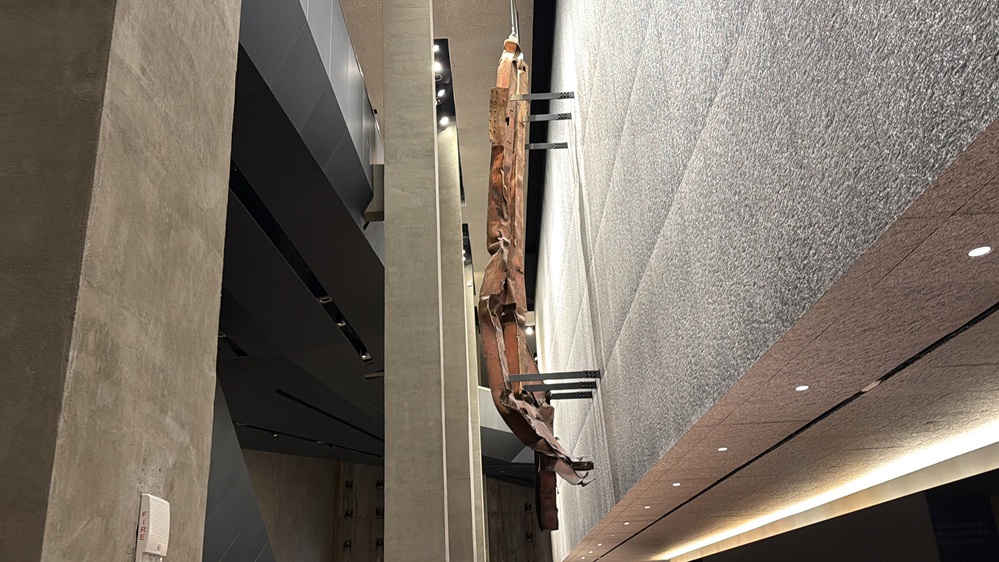
Shibbir Ahmed, New York: The United States is marking the 25th anniversary of the September 11, 2001, terrorist attacks on Friday, with memorial ceremonies taking place across the country. In New York, victims’ relatives are gathering at the World Trade Center site to remember those who were killed in the attacks, while moments of silence mark key points in the timeline of that morning.

At the 9/11 Memorial in Lower Manhattan, family members are reading the names of their loved ones who died in the attacks. This year’s commemoration also includes a new moment of silence honoring people who were exposed to toxic dust and debris after the collapse of the World Trade Center and later died from related illnesses.

On September 11, 2001, al-Qaida terrorists hijacked four commercial airplanes. Two planes crashed into the World Trade Center towers in New York, one struck the Pentagon near Washington and the fourth crashed in a field near Shanksville, Pennsylvania, after passengers and crew members fought the hijackers. A total of 2,977 people were killed in the attacks.

The consequences of the attacks have continued long after that day. Thousands of firefighters, police officers, emergency workers, volunteers and others who worked at or around Ground Zero were exposed to toxic substances. More than 600 New York City firefighters have since died from illnesses related to their 9/11 exposure, according to figures cited by Reuters.

Memorial ceremonies are also being held at the Pentagon and at the Flight 93 National Memorial near Shanksville. President Donald Trump is attending the Pentagon observance, while Vice President JD Vance and all four living former presidents are attending the New York commemoration, according to Reuters and the Associated Press.

New York also held commemorative events ahead of Friday’s anniversary. On Wednesday night, a special drone installation titled “2,977 Lights Over New York Harbor” illuminated the sky above New York Harbor. The display featured 2,977 lights, representing each person killed in the 2001 attacks, before forming the outline of the Twin Towers at full architectural scale. Organizers said the project was developed in collaboration with 9/11 family members, survivors and first responders.

The city’s commemoration will continue Friday evening with the annual “Tribute in Light.” Two powerful beams of light will rise from Lower Manhattan, creating a symbolic representation of the Twin Towers and honoring those who died in the attacks. The 9/11 Memorial has scheduled the installation from Friday evening through early Saturday morning.

Twenty-five years later, the anniversary remains more than a remembrance of those who died on September 11, 2001. It also reflects the continuing grief of victims’ families, the sacrifices of first responders and the lasting health consequences faced by thousands of people who worked at Ground Zero.

For New York and the nation, the 25th anniversary is a moment to remember the lives lost, honor those who responded and preserve the history of a day that profoundly changed the United States.


9/11 at 25: America Remembers the Fallen, Honors Their Legacy

Shibbir Ahmed, New York — The National September 11 Memorial & Museum will mark the 25th anniversary of the September 11, 2001 terrorist attacks with its annual commemoration ceremony in Lower Manhattan, bringing together victims’ families to remember the nearly 3,000 people killed in the 2001 attacks and the 1993 World Trade Center bombing.

Family members will read aloud the names of the 2,983 men, women and children who lost their lives in the two attacks during the ceremony at the 9/11 Memorial. This year’s ceremony will include a new moment of silence honoring people who have died from illnesses or injuries linked to the September 11 attacks and their aftermath.

Seven moments of silence will be observed during the commemoration. They will mark the moments when the World Trade Center towers were struck and collapsed, as well as the attacks on the Pentagon and the crash of Flight 93. The additional moment of silence will follow the reading of the names and will become a permanent part of the annual ceremony.

The memorial said hundreds of thousands of people participated in rescue, recovery and relief operations following the attacks in New York City, Arlington, Virginia, and Somerset County, Pennsylvania. Many responders and civilians were exposed to hazardous materials and toxins at Ground Zero, contributing to chronic illnesses and deaths in the years since the attacks.

The 25th anniversary comes as more than 100 million Americans are too young to have a personal memory of September 11, according to the 9/11 Memorial & Museum. The institution said its education programs have reached more than 20 million students as it works to preserve the history and lessons of the attacks for younger generations.

The annual Anniversary Digital Learning Experience will allow students and teachers around the world to commemorate the anniversary through a 30-minute film featuring first-person accounts of the attacks and their aftermath, followed by a live chat with museum staff.

The museum is also continuing its Never Forget Fund campaign, which supports 9/11 education and efforts to preserve the memory of those who were killed. Chairman Michael R. Bloomberg is matching donations to the fund dollar-for-dollar, up to $25 million.

The annual Tribute in Light installation will return at dusk on September 11, illuminating the New York City skyline with two beams of light representing the footprints of the World Trade Center towers. The lights will remain visible overnight before fading at dawn on September 12.

For the first time, the Tribute in Light will also be featured in a live national broadcast. At 8 p.m. Eastern Time, the 9/11 Memorial & Museum, in partnership with Disney Entertainment Television, will present a one-hour special, “9/11 Tribute in Light: Live from Lower Manhattan.”

The program will be hosted by David Muir, Robin Roberts and Diane Sawyer and will feature performances by Lainey Wilson, Cyndi Lauper and John Ondrasik of Five For Fighting.

The museum will also open a new exhibition, “In Their Honor: 25 Years of 9/11-Inspired Service,” on September 12. The exhibition will explore the continuing legacy of service inspired by the attacks through firsthand accounts, artifacts and multimedia presentations.

Musical performances during the anniversary commemoration will include Grammy-winning cellist Yo-Yo Ma, Jennifer Nettles and the Brooklyn Youth Chorus, along with musicians from the Orchestra of St. Luke’s, Musica Reginae and The Harlem Chamber Players.

The 9/11 Memorial & Museum said it is also inviting journalists who covered the attacks and their aftermath to record and share their personal experiences as part of an effort to preserve the memories of those who witnessed one of the defining events of the 21st century.

The 25th anniversary commemoration is intended not only to remember those killed on September 11, 2001, and February 26, 1993, but also to preserve the stories of courage, service, resilience and compassion that emerged in the aftermath of the attacks.


‘This Is Not 1945’: Bangladesh’s Khalilur Rahman Opens UNGA 81

Shibbir Ahmed, UN, New York: The United Nations General Assembly opened its 81st session on Tuesday at United Nations Headquarters in New York, with Bangladesh’s veteran diplomat Khalilur Rahman taking over as president and calling for renewed global trust in the international organization amid wars, humanitarian crises, climate change and deepening geopolitical divisions.

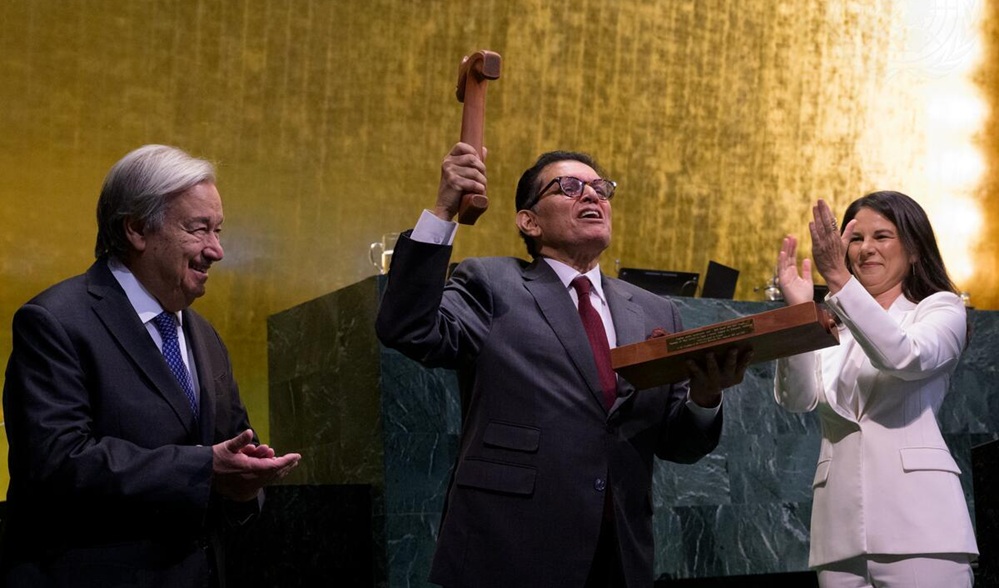
Rahman formally assumed the presidency after receiving the traditional Icelandic wooden gavel from outgoing General Assembly President Annalena Baerbock. In his opening remarks, he said the United Nations must adapt to the realities of a rapidly changing world and become more responsive to the needs and expectations of people across the globe.

“We must make the United Nations fit for the future,” Rahman said, stressing the importance of listening to civil society and giving greater space to voices outside governments and traditional diplomatic institutions.

“We have a situation where trust is in deficit. This is not 1945. This is the 81st session. The world has moved on. The Organization must move on, and I’ll help that process,” he said.

Rahman has placed restoring trust and managing global transformation at the center of his presidency. His agenda includes strengthening international peace and security, accelerating progress toward the 2030 Sustainable Development Goals, addressing climate change, protecting human rights, supporting refugees and migrants, promoting responsible technological development and advancing reform of the United Nations and the broader multilateral system.

The new session begins at a time of heightened international tensions, with conflicts in several regions, growing humanitarian emergencies, geopolitical rivalries, persistent poverty and inequality, and increasing concerns over climate-related disasters. The risk of nuclear escalation has also added to concerns about international peace and security.

United Nations Secretary-General António Guterres, speaking at the opening of the session, said rebuilding confidence in the multilateral system had become one of the defining challenges of the current era.

“Rebuilding trust in the multilateral system is the defining challenge of our time,” Guterres said, arguing that international cooperation remains essential at a moment when the world is confronting crises that cannot be effectively addressed by individual countries acting alone.

Guterres said institutions across the multilateral system, including the Security Council and international financial institutions, are under growing pressure to respond to the realities of the present day. He warned that international law and human rights are too often violated with impunity, while geopolitical mistrust and suspicion continue to prevent the international community from reaching effective solutions.

Despite those difficulties, Guterres said he remained hopeful about the ability of the General Assembly to contribute to a better future. Through diplomacy, dialogue and cooperation, he said, countries can work to rebuild trust and goodwill and help ensure that future generations inherit a more peaceful and sustainable world.

The opening of the 81st session also marked the conclusion of Baerbock’s term as president of the General Assembly. Addressing member states at the final meeting of the 80th session, she defended the continuing importance of the United Nations despite criticism of its shortcomings.

Baerbock said she was more convinced than ever of the importance and necessity of the organization. She pointed to the work of United Nations agencies and peacekeeping missions around the world as evidence of the practical impact of the international body.

She cited the role of the United Nations Children’s Fund in helping millions of children and the contribution of peacekeepers to protecting civilians in conflict-affected areas. Baerbock also warned that the positive work of the United Nations often receives less public attention than negative developments, particularly in an environment where divisive and hateful content can spread rapidly.

Climate change and sustainable development are expected to remain major issues during the new session. Rahman has called for stronger international efforts to build climate resilience and protect the environment, while also accelerating progress toward the 2030 Sustainable Development Goals.

The new president has emphasized the need to ensure that development reaches vulnerable populations and that no country is excluded from international efforts to address poverty, inequality, education, health, food security and other development challenges.

Human rights and humanitarian action are also central to the new presidency. Continuing conflicts and instability have displaced millions of people, increasing pressure on the international community to protect refugees and migrants and provide assistance to populations affected by war and persecution.

The rapid development of artificial intelligence and other emerging technologies is another issue expected to receive greater attention. Rahman has called for technological innovation that is inclusive and responsibly governed, with appropriate safeguards to protect people and future generations.

United Nations reform is also expected to feature prominently during the 81st session. The international political and economic landscape has changed substantially since the organization was established in 1945, prompting continued debate over whether its institutions adequately reflect the realities of the contemporary world.

Questions surrounding representation, inclusiveness and the effectiveness of international decision-making have become increasingly important, particularly for developing countries seeking a greater voice in global affairs.

Another major diplomatic issue during the coming year will be the selection of the next United Nations secretary-general. Guterres is scheduled to complete his term, with his successor expected to take office in January 2027.

Rahman brings extensive diplomatic experience to the presidency of the General Assembly. He previously served as foreign minister of Bangladesh and held senior positions including national security adviser and high representative for the Rohingya issue in Bangladesh’s interim government. He has also held senior positions within the United Nations system and was a founding member of East West University in Dhaka.

His assumption of the presidency gives Bangladesh a prominent role in one of the international community’s most representative forums at a particularly challenging moment for multilateral diplomacy.

As the 81st session begins, the central challenge for the General Assembly will be whether countries can overcome deep political divisions and rebuild confidence in international cooperation. For Rahman, the task is rooted in a simple premise: the world has changed significantly since 1945, and the United Nations must evolve with it.


81st UN General Assembly Opens in New York Amid Global Crises

Shibbir Ahmed, UN, NEW YORK — The 81st session of the United Nations General Assembly officially opens Tuesday in New York, bringing together the world’s nations at a time of intensifying conflicts, humanitarian crises, economic uncertainty and growing pressure on the multilateral system. The ordinary session will run from September 8, 2026, through September 7, 2027, according to the United Nations. Bangladesh’s Khalilur Rahman is serving as president of the 81st General Assembly session.

The theme of this year’s session is “Restoring Trust, Managing Transformation: A United Nations That Delivers for All.” The theme reflects growing international concern over the ability of multilateral institutions to respond effectively to war, humanitarian emergencies, climate change, inequality and rapid technological change.

The opening of the session comes as the international community faces multiple major crises, including ongoing armed conflicts and humanitarian emergencies. The General Assembly is expected to provide a major diplomatic forum for member states to discuss peace and security, sustainable development, human rights and international cooperation.

Khalilur Rahman, who was elected president of the 81st session in June, has outlined six major priorities for his presidency: peace and security, sustainable development, climate resilience, human rights and humanitarian protection, inclusive innovation and renewed multilateralism.

His vision also places emphasis on strengthening the United Nations’ ability to deliver practical results and rebuilding confidence in the multilateral system. The opening session is only the beginning of an intense period of diplomacy at UN Headquarters. The General Assembly’s high-level general debate is scheduled for later in September, when heads of state and government from around the world are expected to gather in New York.

The United Nations says the 81st session will also address major issues including peace and security, sustainable development, climate action, human rights, artificial intelligence and reform of the UN system. With the world facing deep geopolitical divisions, the 81st General Assembly is set to test whether nations can rebuild trust and find common ground through multilateral diplomacy.


Bangladesh Society of New York Election Draws Community Attention

New York Correspondent: The upcoming election of the Bangladesh Society of New York, one of the largest organizations representing Bangladeshi immigrants in the United States, has become a major topic of discussion within New York’s Bangladeshi community. The election is scheduled for October 25, with approximately 35,000 members expected to be eligible to vote.

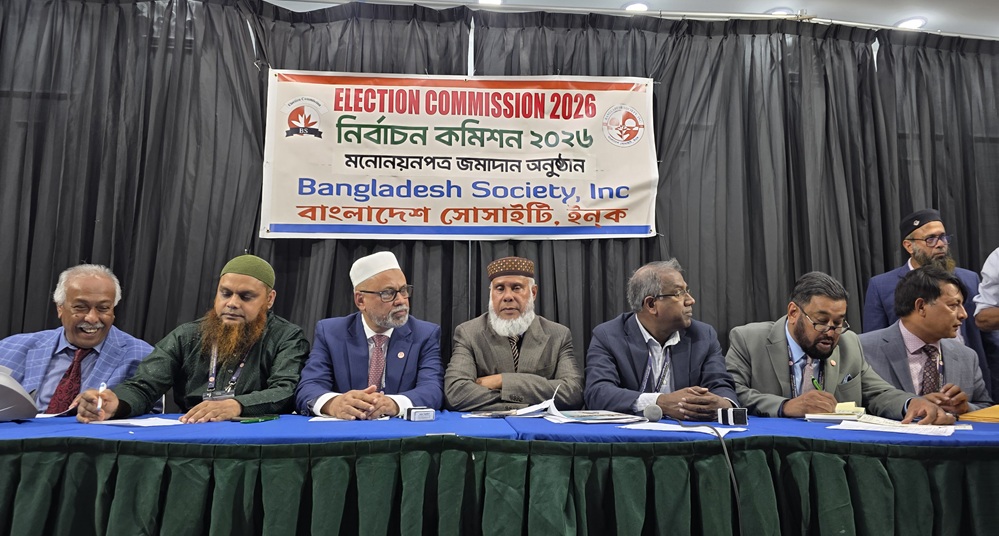
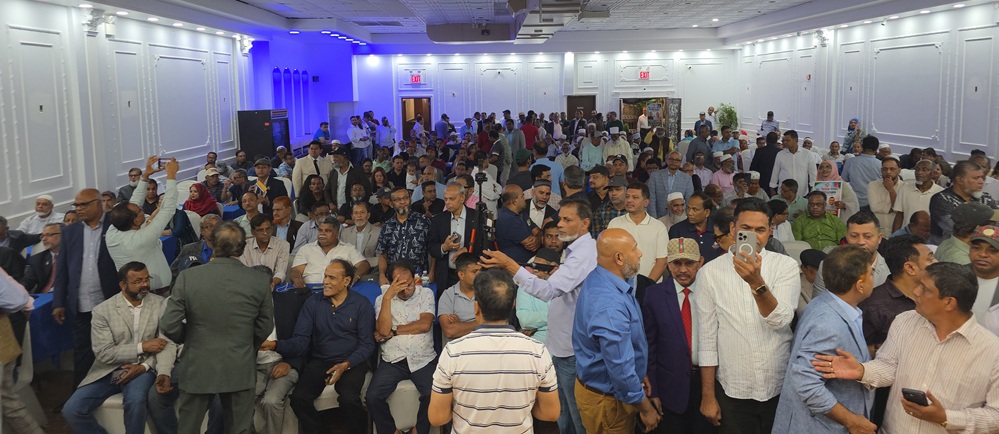
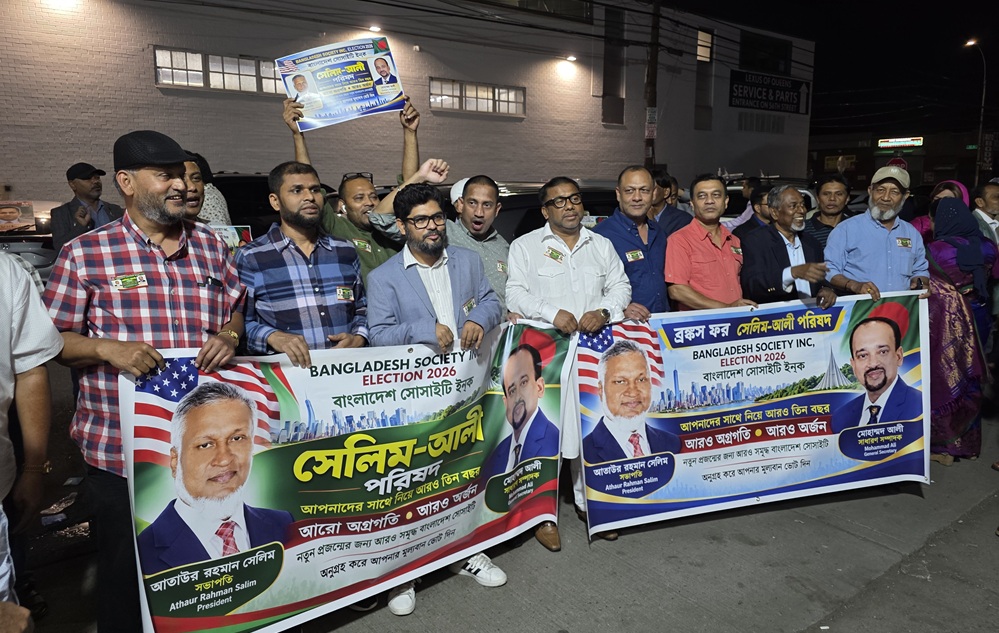
Candidates submitted their nomination papers on Sunday, September 6, at Queens Palace in Queens amid a festive atmosphere. More than a thousand supporters and activists attended the event, carrying banners and posters supporting their respective candidates and panels. Supporters also chanted slogans in favor of their preferred candidates.

The election is shaping up as a competitive contest between two major camps. The current president of the Bangladesh Society, Ataur Rahman Selim, and General Secretary Mohammad Ali are leading one panel. Challenging them are Azmal Hossain Kunu for president and Firoz Ahmed for general secretary.

Interestingly, both candidates contesting for the presidency are originally from Sylhet, Bangladesh, and are business partners in a restaurant business in New York. Despite their business partnership, they are now facing each other as political rivals in the community organization’s election. Syed Fazle Rabbi has submitted his nomination papers as the only independent candidate for the position of general secretary.

The Election Commission accepted nomination papers from 7 p.m. to 10 p.m. Sunday. Chief Election Commissioner Abu Naser presided over the nomination process, assisted by Election Commissioners Badrul Hossain Khan, Shamsuddin Azad, Ruhul Amin Sarkar, Ahbab Chowdhury, Mithu Hamid and Mia Mohammad Dulal.

According to the Election Commission, nearly 300,000 Bangladeshis live in New York, while approximately 35,000 people have become members of the Bangladesh Society. Membership required a $20 fee, generating approximately $700,000 in membership revenue for the organization.

A total of 21 positions will be contested in this year’s election. Nomination fees range from $2,000 to $6,000, depending on the position. The nomination fee for president is $6,000, while candidates for general secretary must pay $5,000. Candidates running for member positions are required to pay a $2,000 nomination fee.

The unusually high nomination fees have sparked considerable discussion within the community. Many observers say the amount required to run for office in a nonprofit community organization is notable, particularly when compared with the overall cost of participating in the election.

The presidential and general secretary nomination fees of $6,000 and $5,000, respectively, have drawn particular attention. Beyond nomination fees, candidates and their supporters are expected to spend significant amounts on campaign activities, meetings and rallies, posters, banners, social media promotion and other election-related activities.

As a result, the Bangladesh Society election is increasingly being viewed as one of the most expensive community elections in the history of New York’s Bangladeshi community, particularly in terms of nomination and campaign expenses.

The final outcome will be determined through voting on October 25. As election day approaches, campaign activities are expected to intensify, with competing panels and candidates increasing their outreach and mobilization efforts across the community.


25 Years After 9/11: How America Will Remember the Attacks From New York to Washington

Shibbir Ahmed, New York: Twenty-five years have passed since the devastating terrorist attacks of September 11, 2001. A quarter-century later, the loss of nearly 3,000 lives, the sacrifice of thousands of first responders, and the attacks’ lasting health and social consequences remain deeply embedded in the American memory. This year, New York, Washington and Pennsylvania will mark the 25th anniversary of 9/11 with a series of commemorations and public events.

Main Commemoration in New York

The main 9/11 commemoration will take place Friday at the 9/11 Memorial Plaza in Lower Manhattan, with family members of the victims participating in the ceremony. The program will begin at 8:40 a.m. and is primarily a private gathering for victims’ families, although the ceremony will be streamed live online.

Family members will read the names of those killed in the 2001 attacks as well as victims of the 1993 World Trade Center bombing. Moments of silence will mark several key moments of the attacks, including the aircraft impacts, the collapse of the Twin Towers, the attack on the Pentagon and the crash of Flight 93.

A special moment of silence will also honor those who died in the years following the attacks from 9/11-related illnesses. Vice President JD Vance and other administration officials are expected to attend the New York commemoration. President Donald Trump, meanwhile, will mark the 25th anniversary at the Pentagon instead of attending the New York ceremony.

First Moment of Silence at 8:46 a.m.

At 8:46 a.m. on September 11, 2001, the first hijacked aircraft, American Airlines Flight 11, struck the North Tower of the World Trade Center. The moment will be marked with the first moment of silence during the New York commemoration.

The ceremony will also remember the impact of the second aircraft on the South Tower, the collapse of both towers, the attack on the Pentagon and the crash of Flight 93 in Pennsylvania.

A total of 2,753 people were killed in New York, while 184 people died at the Pentagon in Arlington, Virginia. Another 40 passengers and crew members were killed when United Airlines Flight 93 crashed in Pennsylvania.

New Exhibition at the 9/11 Museum

For the 25th anniversary, the National September 11 Memorial & Museum in New York is launching a new exhibition titled “In Their Honor: 25 Years of 9/11-Inspired Service.”

Opening to the public on September 12, the exhibition will highlight stories of service, sacrifice and humanity over the 25 years since the attacks. It explores how individuals and communities transformed grief into public service and acts of compassion.

The museum is also introducing a new digital educational experience designed to help a new generation understand the history of 9/11 and its long-term impact. According to the museum, nearly 100 million Americans were either not yet born or were too young to remember the attacks. Connecting this generation with the history and legacy of 9/11 is one of the major goals of this year’s anniversary programs.

Trump to Mark Anniversary at Pentagon

In Arlington, Virginia, President Donald Trump is expected to attend and speak at the 25th anniversary commemoration at the Pentagon Memorial. The Pentagon was the third major target of the September 11 attacks. At 9:37 a.m., American Airlines Flight 77 struck the Pentagon. A total of 184 people were killed, including people inside the building as well as passengers and crew members aboard the aircraft. Vice President Vance will attend the main commemoration in New York.

Pennsylvania Also to Hold Commemorations

At the Flight 93 National Memorial in Pennsylvania, a commemorative ceremony will take place Friday from 8:30 a.m. to 10:30 a.m. The names of the 40 passengers and crew members aboard Flight 93 will be read, followed by the ringing of the Bells of Remembrance. A second ceremony will take place from 1 p.m. to 2:30 p.m., featuring additional commemorative activities and a public wreath-laying ceremony at the memorial.

New York’s Nighttime “Tribute in Light”

After a full day of remembrance, New York’s skyline will once again be illuminated by the historic Tribute in Light—two powerful beams of light representing the Twin Towers destroyed in the attacks. For the 25th anniversary, a special program titled “9/11 Tribute in Light: Live from Lower Manhattan” is scheduled to air nationally beginning at 8 p.m. on major television networks and other platforms.

The program will connect audiences across the country with the commemoration in New York and the annual Tribute in Light, bringing the day of remembrance to a national audience.

New Initiative in New York City

As part of this year’s 25th anniversary observance, New York City is officially recognizing September 11 as a Day of Remembrance and Service. The administration of Mayor Zohran Mamdani is emphasizing citywide remembrance, moments of silence, educational programs and volunteer service.

The city has also established a new Continuity and Mission Assurance Team, aimed at ensuring that essential city government operations and services can continue during emergencies while strengthening preparedness and coordination among city agencies.

25 Years Later, the Memory of 9/11 Endures

Twenty-five years later, 9/11 remains far more than a historical event. It continues to shape the security, politics, foreign policy and public health of New York, Washington and the United States as a whole.

This year’s commemorations are therefore not limited to honoring those who were killed. They also recognize first responders, rescue workers, survivors, families who lost loved ones and a new generation born after the attacks. A quarter-century later, the message remains the same: Never Forget.


NYC Protest Demands End to Minority Persecution in Bangladesh

NEW YORK — A protest rally was held in New York demanding an end to persecution of minority communities in Bangladesh, an impartial investigation and swift justice in the killing of retired Rangpur teacher Ganapati Chakraborty and four members of his family, the release of political prisoners, restoration of political rights, protection of freedom of expression, and measures to control the soaring prices of essential commodities.

The rally, organized by Probashi Bangladeshi American, was held on September 2 at Diversity Plaza in Jackson Heights, Queens. Speakers said no citizen should be deprived of security or justice because of their religion, ethnicity, political identity or social status. They called on the state to ensure the life, liberty and constitutional rights of every citizen.

The killing of Ganapati Chakraborty and four members of his family received particular attention at the rally. Speakers said such a brutal attack on an entire family cannot be ignored and called for a prompt and impartial investigation to identify those responsible and bring them to justice.

Speakers expressed concern over what they described as growing incidents of attacks, persecution, killings and sexual violence against members of minority communities in Bangladesh. They warned that failure to ensure proper investigations and justice could embolden perpetrators and further increase insecurity among ordinary citizens. They urged the authorities to guarantee the constitutional rights and security of all citizens without discrimination.

The speakers also expressed their dissatisfaction with Bangladesh’s ongoing political situation. They called for the release of political prisoners, the withdrawal of restrictions on political activities, and the holding of a free, fair and credible election with the participation of all political parties.

According to the speakers, genuine democratic development is not possible without ensuring citizens’ voting rights and meaningful political participation. The country’s economic situation was also discussed at the rally. Speakers said the sharp rise in the prices of essential goods has made everyday life increasingly difficult for ordinary people. They called for effective measures to stabilize the market and bring the prices of essential commodities within the reach of consumers. They also alleged that failure to control the market and what they described as government indifference were contributing to the growing hardship faced by the public.

The rally was chaired by Pradip Kar, an adviser to the U.S. Awami League. Among those who addressed the gathering were U.S. Awami League Organizing Secretary Abdul Hasib Mamun; Office Secretary Mohammad Ali Siddiqui; former president of the U.S. Bangladesh Hindu Buddhist Christian Unity Council Nabendu Dutta; U.S. Eastern Awami League Organizing Secretary Hasibul Hasan Mamun; U.S. Awami League leaders Faruk T. Molla, Sheikh Atiq, Lutfor Karim, Shyamal Kanti Chandra and Bishwas Liton Hossain; City Awami League Vice President Akhtar Hossain Sakhawat; senior journalist Haqikul Islam Khokon; New York State Awami League Vice President and member-secretary of the Sheikh Hasina Mukti Sangram Parishad Sheikh Atiq; former president of the U.S. Awami Swechhasebak League Nuruzzaman Sardar; U.S. Sramik League General Secretary Jewel Ahmed; U.S. Awami League Vice President Manzur Chowdhury; Jubo League leader Sheikh Jamal; Connecticut State Awami League General Secretary Humayun Ahmed Chowdhury; Sammilito Borshoboron Convener Mozahid Ansari; former press minister of the Bangladesh Embassy in Washington Sazzad Hossain Sabuj; Mahanagar Awami League leader Shah Selim; Sheikh Hasina Mancha President Abdul Jalil and General Secretary Kaykobad; Ataur Rahman, Shahidul Islam, Rumana Akter, Z.A. Joy, former Chhatra League President Anisuzzaman Sabuj, U.S. Swechhasebak League General Secretary Syed Kibria Zaman, Shakti D. Gupta, a candidate for cultural secretary of Bangladesh Society, and former U.S. Chhatra League General Secretary Mohammad Jahangir Mia.

Speakers said justice for Ganapati Chakraborty and his family members is not merely a matter concerning one family, but is directly connected to the security, human rights and rule of law of every citizen in Bangladesh. They called for those responsible to be brought to justice through an impartial investigation, regardless of their political, religious or social identities.

They further emphasized that freedom of expression, political rights, religious freedom and cultural rights are not privileges granted to any particular group, but fundamental rights of every citizen. They urged the state to play an effective and impartial role in protecting those rights. Participants displayed banners and placards carrying various demands and chanted slogans in support of justice, human rights, democracy and citizen security.

From Jackson Heights, New York, the protesters delivered what they described as a clear message to Bangladesh: No citizen’s life or rights should be made unsafe because of religion, identity or political beliefs. Every killing must be impartially investigated and prosecuted, and the fundamental rights of every citizen must be guaranteed.