New York — Taseen Ferdous, a 35-year-old dancer, educator, and cultural artist, has died in New York, leaving the Bangladeshi American community and the local cultural world in mourning. Ferdous passed away early Sunday, October 18, while receiving treatment at Jamaica Hospital Medical Center in Queens, New York. Reports indicate that she developed a severe viral infection, and her condition deteriorated rapidly despite medical treatment.
Ferdous was the only daughter of Annie Ferdous, artistic director of the Bangladesh Institute of Performing Arts (BIPA), and engineer Zafar Ahmed. Her unexpected death has brought profound grief to her family, friends, colleagues, students, and members of the Bangladeshi American community.
In addition to her work as a teacher with the New York City Department of Education, Ferdous was actively involved in dance and cultural activities. She was known for her dedication to preserving and promoting Bengali cultural traditions through performance and education. She began her dance journey at an early age under the influence of her mother and through her association with BIPA. Over the years, she developed her skills in traditional, folk, and contemporary dance.
At the age of 13, Ferdous began studying Bharatanatyam, a classical Indian dance form, under renowned dance teacher Tejaswini Raj at the Shiva Jyoti Dance Academy in New York. After years of training, she completed her arangetram, a traditional solo debut performance marking a significant milestone in a Bharatanatyam dancer’s journey, in 2013.
Through her involvement with BIPA and the Shiva Jyoti Dance Academy, Ferdous participated in multicultural events and performances that helped showcase South Asian and Bengali cultural traditions to wider audiences.
Beyond her professional and artistic pursuits, Ferdous was also involved in community initiatives. Published reports describe her participation in social service and efforts supporting immigrant communities, including activities in the Kensington neighborhood of Brooklyn. Her work reflected a commitment to education, cultural expression, and community engagement. Her sudden passing at the age of 35 has left a deep void among those who knew her and appreciated her contributions.
Ferdous is survived by her husband, young son Lucas, parents, and other family members. Her death has been a devastating loss for her loved ones and the wider community. Members of the Bangladeshi American community have expressed condolences and sympathy for the bereaved family. Her contributions as an educator and dancer are being remembered by those whose lives she touched through her work and cultural activities. Further details regarding funeral arrangements and memorial services should be confirmed with the family or official community announcements.
Times Square Durga Utsav 2026 Concludes in New York
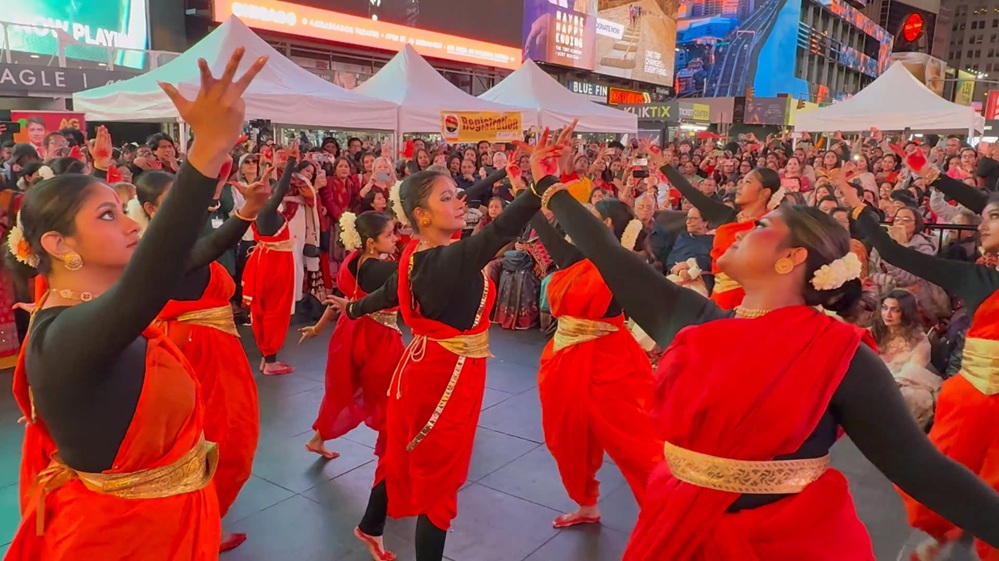
New York Correspondent — The two-day Times Square Durga Utsav 2026 concluded successfully in the heart of New York City, bringing together members of the Bengali diaspora for a vibrant celebration of religious tradition, culture, music, and dance. The festival, held on October 10 and 11, drew enthusiastic participation from the Bengali community despite challenging weather conditions on the second day.
Following the conclusion of the event, the Times Square Durga Utsav Association expressed its heartfelt gratitude to everyone who attended, volunteered, contributed, and supported the celebration.
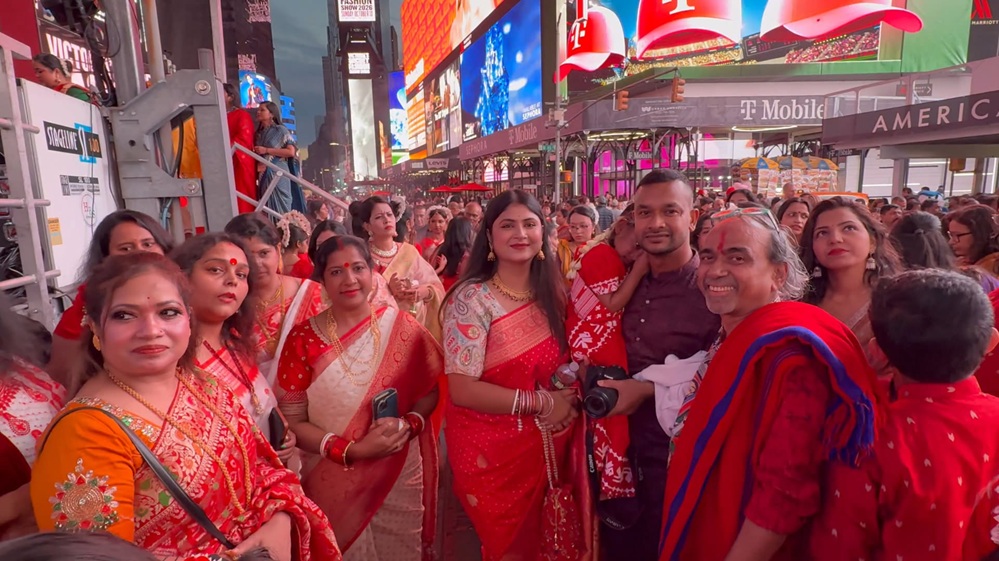
On Saturday, October 10, thousands of Bengalis gathered at Times Square under bright, sunny skies to celebrate the spirit of Durga Puja. The event transformed the iconic Manhattan destination into a lively gathering place for Bengali culture, devotion, and community spirit. Participants from New York and surrounding areas came together to pay their respects to Goddess Durga and celebrate their cultural heritage far from their ancestral homeland.
The festival provided an opportunity for members of the Bengali diaspora to reconnect with their traditions while sharing their rich cultural identity with the wider public. Weather conditions changed on Sunday, October 11, as rain swept through the area. Despite the unfavorable weather, hundreds of people continued to visit the festival venue to offer their prayers and pay homage to Goddess Durga.
Their presence reflected the deep devotion, enthusiasm, and cultural bonds that unite Bengalis across geographical boundaries. The turnout demonstrated that adverse weather could not dampen the community’s spirit or its connection to one of its most cherished festivals.
The two-day celebration featured religious rituals, prayers, floral offerings, the distribution of prasad, music, dance, and other cultural activities. Through these programs, the organizers sought to showcase Bengali heritage and the traditions of Durga Puja on an international platform. The celebration also served as an opportunity for younger generations of Bengali Americans to connect with their cultural roots.
For many members of the diaspora, the gathering represented more than a religious celebration. It was a moment to strengthen community ties, preserve traditions, and share Bengali culture with people from different backgrounds.
One of the notable highlights of this year’s festival was the recognition of six organizations for their contributions to preserving Bengali culture and the tradition of Durga Puja in the United States. The organizations honored were Bay Area Probashi Incorporated, Bengali Association of Greater Chicago, Bengali Cultural Society, East Coast Durga Puja Association, Kallol, and Pragati.
Their work in maintaining Bengali cultural traditions, promoting community engagement, and passing heritage on to younger generations was recognized as an important contribution to the Bengali diaspora.
In a message following the conclusion of the festival, the Times Square Durga Utsav Association thanked everyone who contributed their time, effort, and support to make the event possible.
The organizers highlighted the enthusiastic participation on the first day and the determination of devotees who attended despite the rain on the second day. They said the community’s love, devotion, and cooperation would remain a source of inspiration for future events.
The association also emphasized that although this year’s celebration had come to an end, the spirit of unity, friendship, and cultural harmony would continue. Organizers expressed their hope of welcoming Goddess Durga again next year with renewed enthusiasm and fresh aspirations.
The Times Square Durga Utsav has become an important occasion for the Bengali community to celebrate its religious traditions and showcase its cultural identity in one of the world’s most recognizable public spaces.
Beyond the religious ceremonies, the event highlighted the importance of preserving Bengali language, heritage, and traditions among communities living abroad. As the 2026 celebration concludes, organizers and participants look forward to returning next year for another gathering centered on devotion, cultural pride, and community solidarity. The Times Square Durga Utsav Association concluded its message by wishing peace, prosperity, and well-being for all and thanking everyone who helped make the festival memorable.
Channel i Celebrates 28th Anniversary in New York
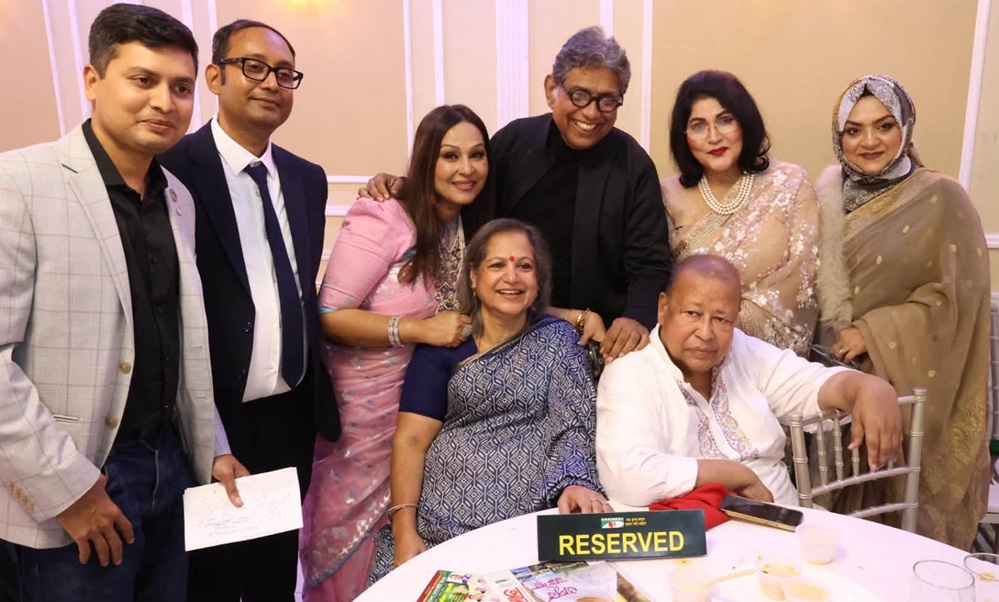
Shibbir Ahmed, New York – Channel i and Impress Telefilm, two prominent names in Bangladesh’s television industry, celebrated their 28th anniversary with a colorful event in New York. The celebration brought together prominent members of the Bangladeshi diaspora for an evening of awards, musical performances and greetings. The event was jointly hosted by Ekushey Padak-winning writer, filmmaker and singer Afzal Hossain and journalist and television presenter Mainul Islam.
One of the highlights of the program was the presentation of awards recognizing contributions to journalism, environmental journalism, and the promotion and expansion of Channel i across North America.
Mainul Islam, special correspondent and presenter at Channel i, was honored for his contributions to journalism. Special correspondent Md. Soumik Ahmed received recognition for his work in environmental journalism, while General Manager Md. Mohiuddin Khan Moin was honored for his role in promoting and expanding Channel i’s presence in North America.
The award ceremony was attended by Faridur Reza Sagar, managing director of Impress Telefilm Limited and Channel i, along with Afzal Hossain, entrepreneur Kona Reza and other distinguished guests.
Speakers emphasized the importance of the media in promoting the Bengali language and culture and showcasing Bangladesh’s heritage abroad. They noted that Bangla-language media serving expatriate communities can help strengthen the connection between younger generations and Bangladesh’s language, culture and traditions. The cultural segment was another major attraction of the evening. Popular actress Moushumi and singer Dinat Jahan Munni delighted the audience with a duet performance.
Other notable attendees included journalist Khalid Mohiuddin, Bangladesh’s Press Minister in Washington, Golam Mortuza, and Anisuzzaman, Bangladesh’s Deputy Consul General in New York. Leaders of the Bangladesh-American Police Association (BAPA), along with artists, businesspeople and guests from various professional backgrounds, also attended the celebration.
The 28th anniversary celebration of Channel i and Impress Telefilm served as a gathering of the Bangladeshi diaspora, highlighting the enduring role of Bengali-language media in preserving cultural identity and strengthening community ties abroad.
Enamul and Two Other Bangladeshis Detained in New York
New York: Several Bangladeshis have been detained by U.S. Immigration and Customs Enforcement (ICE) in New York State, raising concern within the expatriate community. Among those detained is Inamul Haque Inam, a familiar face in the Bangladeshi community and a cultural worker. Inam was detained last Wednesday. Since then, acquaintances have said they have been unable to contact him.
Inam came to the United States about 42 years ago. He lived for a long time in Jamaica, New York. Alongside his cultural activities, he was involved in organizing entertainment events. Inam used to bring actors, actresses and singers from Bangladesh to the United States to take part in various events. In the 1990s, artists such as Ferdous Wahid and Kumar Bishwajit visited New York at his invitation.
A few years ago, Inam moved to Virginia. Later, he began living in Buffalo, a city about 400 miles from New York City. Some acquaintances have claimed that despite living in the United States for many years, he was unable to obtain the necessary documents for lawful residence. However, no statement from the relevant authorities has been obtained regarding this claim.
ICE also detained another Bangladeshi businessman in Buffalo about a week ago. The man, known as Babu, owns a Bangladeshi restaurant on Kenmore Avenue. He was originally from the T&T Colony area of Moghbazar in Dhaka. He has not yet been released following his detention, according to people who know him. His restaurant has also closed.
Earlier, Bangladeshi national Zakir Hossain was detained in Buffalo. Although he had a green card, he did not have it with him at the time of his detention. He was subsequently released. These incidents have increased concern among the Bangladeshi community in Buffalo.
A report published on September 1 by Western New York media outlets Buffalo Toronto Public Media (BTPM) and WXXI News said the number of people detained by ICE in Upstate New York had exceeded 600 in July 2026.
An analysis of government data cited in the report also showed that the number of people detained by ICE across New York State had reached approximately 1,500 by the same period. The analysis found that nearly four out of every five people detained in Upstate New York had no criminal history. However, the U.S. Department of Homeland Security disputed the accuracy of the data and analysis.
JFK Airport Protest Against Dr. Yunus Over Bangladesh Politics
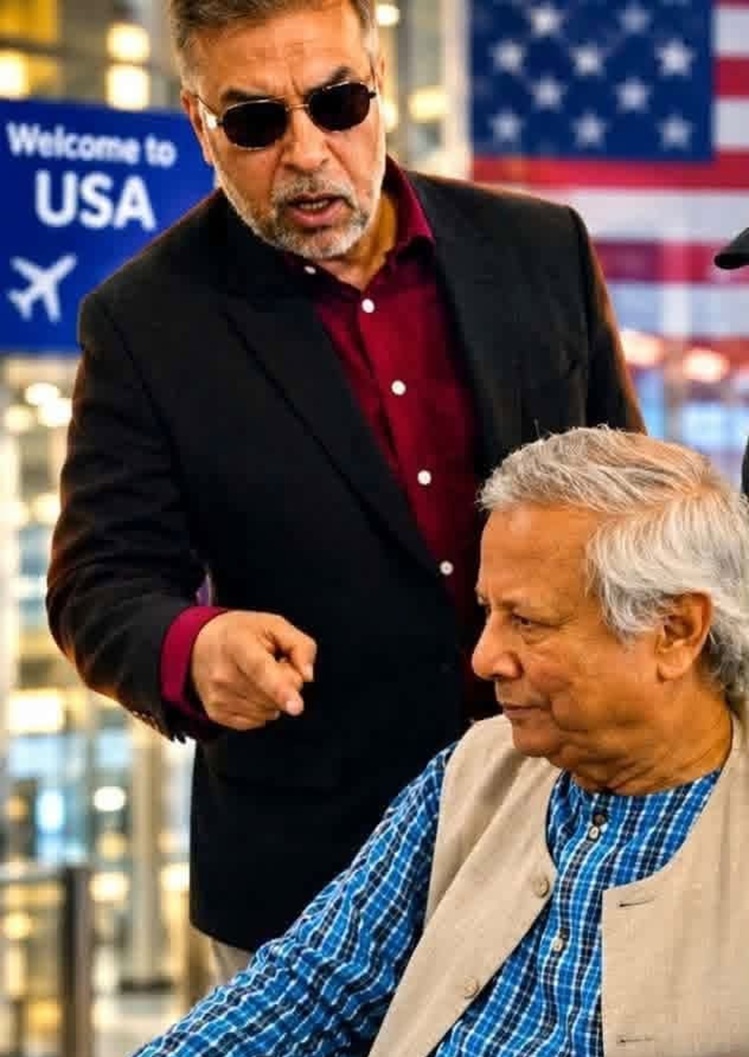
NEW YORK: Activists affiliated with the Awami League have claimed that they staged a protest against Dr. Muhammad Yunus at John F. Kennedy International Airport in New York on October 12, expressing anger over Bangladesh’s political situation and the restrictions imposed on their party’s political activities. In a social media post accompanying a video, the activists claimed that a group led by Imdad Chowdhury, general secretary of the New York Metropolitan Awami League, confronted Yunus at the airport.
According to the post, other participants included Mizan Chowdhury, general secretary of the US Jubo League; Sakhawat Hossain Chanchal, vice president of the New York Metropolitan Awami League; Tanvir Kaisar, general secretary of the Jackson Heights Awami League; and Jubo League leader Sagor.
The post raised several allegations concerning Bangladesh’s political environment, including claims of political repression, mob violence, police killings, attacks on opposition activists, arrests, assaults, killings, torture, and vandalism and looting of homes and businesses. These allegations reflect the protesters’ claims and have not been independently verified in connection with the airport incident.
The activists also expressed anger over the ban on the Awami League’s political activities and questioned the purpose of Yunus’s visit to the United States. According to the social media account, they sought answers from him about Bangladesh’s political situation. The post further claimed that Yunus left the area quickly with his associates without responding to their questions. The circumstances of the encounter could not be independently established from the account provided.
Dr. Muhammad Yunus assumed leadership of Bangladesh’s interim government after Sheikh Hasina’s government fell in August 2024 following a student-led mass uprising. The political transition prompted discussions about democratic reform, accountability, judicial independence, and investigations into alleged human rights violations committed under the previous administration.
At the same time, the interim government faced criticism over political violence, retaliatory attacks, arrests, and law enforcement practices. Following the change of government, cases were filed against numerous Awami League leaders and activists, and several were arrested. Concerns were also raised about alleged politically motivated harassment, arbitrary detention, and the need to uphold due process.
These developments have placed political accountability and human rights protection at the center of Bangladesh’s ongoing political debate. Ensuring justice for past abuses while protecting the legal rights and security of citizens regardless of political affiliation remains a significant challenge.
Imdad Chowdhury confronts Dr. Muhammad Yunus at New York’s JFK International Airport, raising questions about Bangladesh’s political situation and the ban on Awami League activities, according to a social media post accompanying the video.
On May 11, 2025, Yunus’s interim government announced a decision to prohibit all activities of the Awami League under the Anti-Terrorism Act. The government said the measure was taken in the interest of national security while legal proceedings concerning serious allegations against the party were underway. Allegations of involvement in deaths during the 2024 uprising were among the issues cited in the context of the decision.
The Awami League rejected the ban, calling it unacceptable. The decision triggered debate over the party’s ability to conduct public political activities, maintain its organizational structure, and participate in the country’s political process.
The restrictions also raised broader questions about political pluralism, freedom of association, and the distinction between prosecuting individuals accused of crimes and restricting the activities of an entire political organization.
Human Rights Watch’s World Report 2026 raised concerns about arrests under the interim government, including the detention of thousands of people described as political opponents. The report discussed the detention of Awami League leaders, members, and supporters, difficulties in obtaining bail, and the importance of ensuring due process. The broader human rights debate has focused on whether arrests are based on credible evidence and whether detainees receive fair treatment under the law. Human rights advocates have emphasized that allegations of criminal conduct should be investigated individually and adjudicated through independent legal proceedings.
Concerns have also persisted over mob attacks, harassment of political opponents, and obstruction of political meetings and demonstrations. Public humiliation, physical assaults, and organized pressure intended to silence political activity pose challenges to the rule of law and the protection of civil liberties.
In a July 2025 assessment, Human Rights Watch said retaliatory violence and human rights violations had continued following the fall of Sheikh Hasina’s government. The organization cited attacks on Hindu homes in Rangpur and clashes in Gopalganj in which five people were killed. It also expressed concern over the detention of people considered supporters of the Awami League following the Gopalganj violence.
These incidents underscored the risks of political retaliation during periods of transition. Human rights advocates have stressed that allegations against individuals or groups should be addressed through impartial investigations, credible evidence, and fair judicial proceedings rather than collective punishment.
Bangladesh’s political landscape has continued to evolve following the February 2026 national election. As a result, scrutiny of the interim government’s decisions has increasingly intersected with questions about political rights, arrests, and freedom of expression under the current administration.
In an October 5, 2026, report, Human Rights Watch said police took approximately 290 people into custody from a meeting of a left-wing political party in Dhaka. According to the report, authorities alleged that those detained had attended a clandestine meeting of the banned Awami League. The organization also reported that 27 of the detainees were subsequently sent to court custody.
The reported incident renewed concerns about the use of mass detention in cases involving alleged political affiliation or participation in gatherings associated with a banned party. Human rights advocates argue that accountability for abuses committed under previous administrations must go hand in hand with protections against arbitrary detention and politically motivated restrictions under the current government. Political affiliation alone should not determine a person’s right to freedom, a fair hearing, or peaceful political participation.
Bangladesh’s political divisions have also become increasingly visible among expatriate communities in the United States. Political rallies, competing slogans, and allegations of confrontations involving supporters of rival parties have highlighted tensions within the Bangladeshi diaspora, particularly in New York.
The claimed October 12 protest against Yunus at JFK Airport is another example of how developments in Bangladesh continue to shape political activism among expatriate Awami League supporters.
The airport incident also highlights the competing narratives surrounding Bangladesh’s political transition. Supporters of the former ruling party have raised concerns about political exclusion and alleged repression, while the authorities have cited accountability for serious alleged crimes as a justification for restrictions and legal proceedings.
The claims surrounding the airport encounter, however, should be distinguished from independently established facts about the incident and the broader political allegations.
Bangladesh’s political future will depend in part on whether the country can pursue accountability for past human rights violations while safeguarding political freedoms, public safety, and the rule of law. Allegations of crimes should be investigated impartially, with individuals held accountable on the basis of evidence and through fair legal proceedings. At the same time, political identity should not be grounds for collective punishment, arbitrary detention, or violence.
As Bangladesh continues to navigate the consequences of the 2024 political upheaval and the subsequent transition of power, ensuring equal protection under the law and meaningful political participation remains essential to restoring public confidence in democratic institutions.
New York Labor League President Khokon Dies at 58; Body Sent to Bangladesh
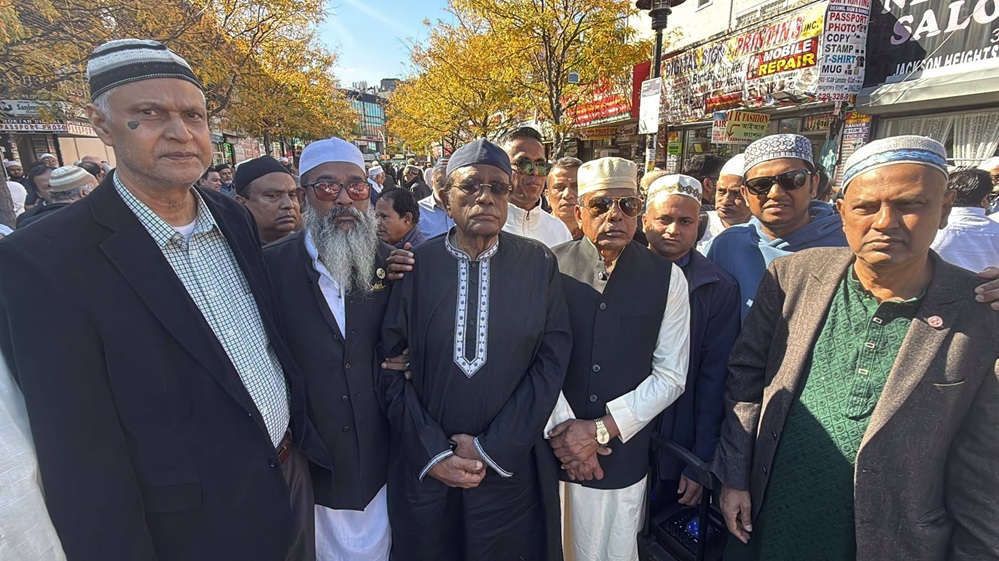
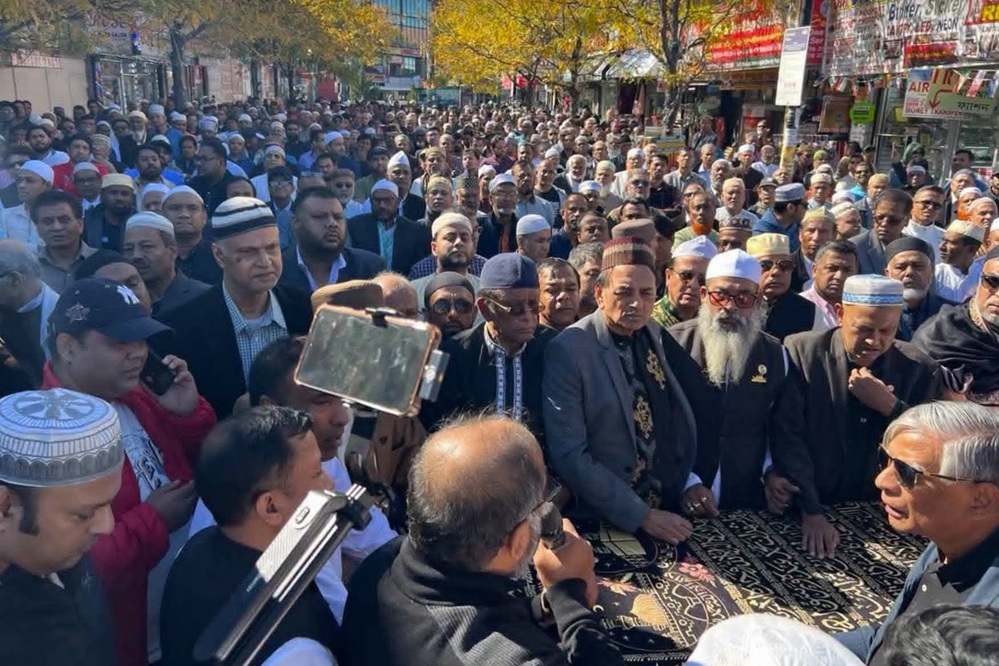
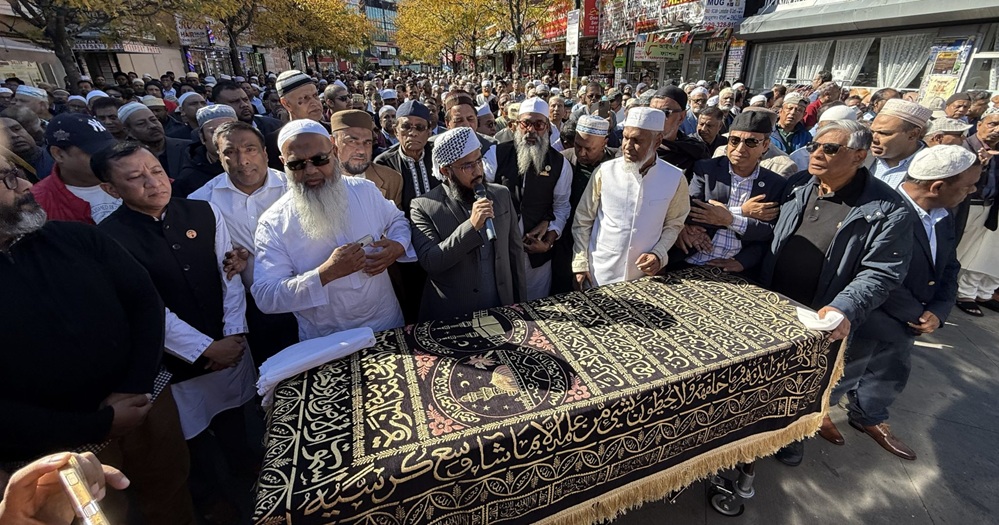
Shibbir Ahmed, New York — Kazi Azizul Haque Khokon, 58, president of the United States Labor League, was remembered with tears, prayers and heartfelt tributes as hundreds of Bangladeshi expatriates from across the political spectrum gathered to pay their final respects to the community leader in New York City.
Thousands of worshippers and mourners attended his funeral prayers after Jumu’ah on October 9 at Diversity Plaza in Jackson Heights, Queens. Community members, political leaders and longtime acquaintances gathered to bid farewell to Khokon, whose death had left many in the Bangladeshi diaspora in mourning.
Khokon reportedly suffered a cardiac emergency while traveling by bus to work on October 3. When he could not be located, a report was filed with police. Friends and political associates searched for him before his body was found at Bellevue’s morgue on the evening of October 7.
Originally from Magura, Bangladesh, Khokon came to the United States in 1992. According to people familiar with his circumstances, he had not obtained permanent immigration status and spent his years in the country living as a bachelor.
Before the funeral prayers, Jewel Ahmed, secretary of the U.S. Labor League, appealed to anyone who had outstanding financial matters with Khokon to contact him. Hossain Rana, an Awami League leader and one of the owners of Obosor Book Corner, where Khokon worked in Jackson Heights, also asked anyone who believed Khokon had wronged them to forgive him.
Ataur Rahman Selim, president of the Bangladesh Society, prayed for the forgiveness of Khokon’s soul and said the organization was taking responsibility for the funeral arrangements and the costs associated with sending his body to Bangladesh.
The funeral drew a broad cross-section of the Bangladeshi-American political and community leadership. Those attending included Moin Chowdhury, a Democratic Party district leader-at-large and attorney; Siddiqur Rahman, president of the U.S. Awami League; General Secretary Abdus Samad Azad; spokesperson Dr. Masudul Hasan; Awami League leader Engineer Mohammad Ali Siddiqui; Haji Enam; Misbah Ahmed; Rafiqul Rahman and Imdad Chowdhury, president and general secretary of the New York City Awami League, respectively.
Also present were Mujibur Rahman Mia, president of the State Awami League and a freedom fighter; General Secretary Shaheen Azmal; Abdur Rahim Badsha, chief adviser to the U.S. Labor League; H.M. Iqbal and Syed Kibria Zaman, president and general secretary of the Swechchhasebak League; former president Nuruzzaman Sardar; Momtaz Shahnaz, president of the Women’s Awami League; Shahahana Rahman, an executive committee member of the U.S. Awami League; former member of parliament Nazrul Islam Babu; Mahmud Hasan and Hridoy Mia, president and general secretary of the U.S. Chhatra League; Harun Bhuiyan and Fahad Solaiman, president and general secretary of the JBBBA; and Mahiyuddin Dewan and Mohammad Ali, senior vice president and general secretary of the Bangladesh Society, among others.
Following the funeral prayers, a vehicle carrying Khokon’s coffin departed for John F. Kennedy International Airport. His body was scheduled to leave for Dhaka on an Emirates flight that night, according to the information provided by community representatives.
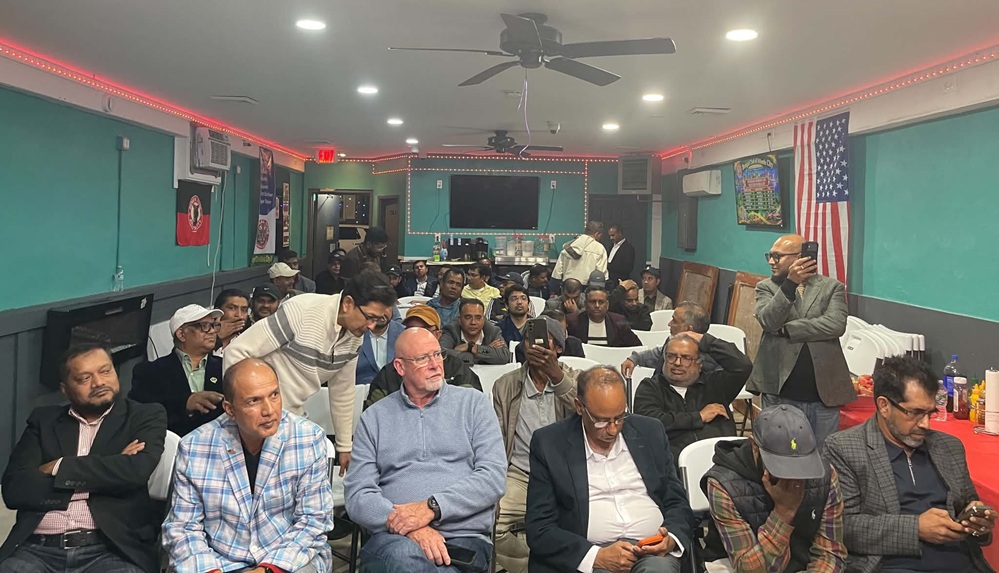
Meanwhile, members of the Awami League and affiliated organizations gathered at Nabanna Party Hall on the evening of October 8 in response to a call from the Labor League. They reportedly raised approximately $10,000 to assist with arrangements related to Khokon’s death and support his family.
Jewel Ahmed and Dr. Masudul Hasan said the collected funds, along with cash reportedly found in Khokon’s pocket, would be sent to his brothers and sisters in Magura. Khokon’s funeral brought together political colleagues, community leaders and expatriates from different backgrounds, reflecting the connections he had built during his decades in the United States. As his body was prepared for its final journey to Bangladesh, members of the community offered prayers and expressed condolences to his family.
Bengal Club Hosts Meet and Greet with Democratic Candidates in Atlantic City, New Jersey
Subrata Chowdhury | Atlantic City — The Bengal Club of Atlantic City hosted a meet-and-greet event on Wednesday evening, October 7, bringing together Democratic candidates, voters, party activists, and community representatives ahead of the 2026 U.S. midterm elections. The event was held at the Bengal Club auditorium in Atlantic City, New Jersey, providing an opportunity for candidates and political representatives to discuss their campaigns, share their priorities, and engage directly with members of the community.
Mike Suleiman, campaign manager for Democratic congressional candidate Jack Mulcahy and former chairman of the Atlantic County Democratic Party, addressed the gathering in support of the candidate. Also speaking were Sean Riggins, a candidate for Atlantic County sheriff; Stephanie Marshall, an Atlantic City council member-at-large; and Subrata Chowdhury, a member of the Atlantic County Democratic Committee. The speakers encouraged attendees to support Democratic candidates in the upcoming elections.
During the program, candidates and political representatives outlined their campaign goals, policy priorities, and vision for the future. The discussion offered attendees an opportunity to learn more about the candidates and exchange views on issues affecting their communities.
Community figure Shahru Raja Chowdhury moderated the event. Other speakers included Akbar Hossain, Md. Didar, Saeed Doha, Md. Mukit, Mahbub Rahman Majnu, Md. Rana, also known as Rana Kabir, Md. Hasan, Ferdous Ahmed, and Md. Zakir, among others.
The gathering drew community leaders, members of the Bangladeshi-American community, and Democratic Party supporters. Attendees had the opportunity to meet political representatives, discuss community concerns, and learn about the candidates’ priorities ahead of the midterm elections.
According to the organizers, the primary goal of the event was to strengthen direct communication between candidates and voters, encourage open discussion of public issues, and promote greater community engagement in the electoral process.
The meet-and-greet reflected the involvement of Atlantic City’s Bangladeshi-American community in local political activities and provided a forum for dialogue between community members and Democratic Party representatives.
South Jersey Metro Awami League Celebrates Sheikh Hasina’s 80th Birthday in Atlantic City
Subrata Chowdhury, ATLANTIC CITY, NJ — The South Jersey Metro Awami League celebrated the 80th birthday of Sheikh Hasina on Thursday night, October 8, at the Bangladesh Community Center in Atlantic City, New Jersey. The event was presided over by veteran Awami League leader Abdur Rafiq. Moniruzzaman Monir conducted the program, while Nur Mohammad led the prayers.
Several party leaders and community members addressed the gathering, including Abu Nasar, Belal Hossain, Abdur Rahim, Belal Uddin, Rakhal Das, Jhulan Pal, Sirajul Haque, Rowshan Uddin, Nur Mohammad, Shahana Ferdousi, and Ahsanul Islam Khan, among others.
During the event, speakers expressed their support for Sheikh Hasina and pledged to continue their political struggle until she could return to Bangladesh. They emphasized their commitment to the former prime minister and called for continued efforts toward their stated political objective.
Party leaders and activists also extended their wishes for Sheikh Hasina’s long life and well-being on the occasion of her birthday. The program concluded with a cake-cutting ceremony marking the birthday celebration.
Jagorani Cultural Society to Celebrate Durga Puja October 23–24 in South Jersey
Subrata Chowdhury | Atlantic City — Jagorani Cultural Society Inc. will celebrate Sharadiya Durga Puja on October 23 and 24, 2026, at the Hindu Jain Temple on South Pomona Road in South Jersey, New Jersey. The two-day celebration will feature traditional worship, aarti, cultural performances, and Mahaprasad distribution, bringing together members of the Bengali community and people from diverse cultural and religious backgrounds.
For Bengalis, autumn evokes memories of white kash flowers swaying in the breeze, fluffy clouds drifting across the sky, and the delicate fragrance of shiuli blossoms. Although Bengalis living in the United States are far from the familiar autumn landscapes of Bengal, their attachment to their homeland’s traditions and cultural heritage remains strong. Durga Puja provides an opportunity for expatriate Bengalis to preserve their cultural identity and celebrate their shared heritage.
According to Hindu tradition, Goddess Durga represents the triumph of good over evil and the restoration of righteousness. A popular account associated with the festival describes Lord Rama invoking Goddess Durga during autumn before his battle against Ravana to rescue his wife, Sita. This autumnal invocation, traditionally known as Akal Bodhan, is associated with the origin of the autumn Durga Puja tradition, which has become one of the most important religious and cultural celebrations among Bengali Hindus.
This year’s celebration in South Jersey is being organized by Jagorani Cultural Society Inc. at the Hindu Jain Temple, located at 571 South Pomona Road. Preparations are underway for the two-day festival, which will include religious ceremonies, aarti, cultural programs, and the distribution of Mahaprasad.
One of the major attractions will be a musical performance on Friday night, October 23, by Abhishek Sinha Chowdhury, known for his association with Zee Bangla’s popular musical reality show Sa Re Ga Ma Pa, according to the organizers. His performance is expected to add a special musical dimension to the festivities and attract music enthusiasts from South Jersey and neighboring communities.
Beyond its religious significance, Durga Puja serves as an important cultural gathering for Bengali communities across the United States. The annual celebration offers an opportunity for families to maintain longstanding traditions, introduce younger generations to Bengali heritage, and strengthen friendships and community ties.
Jagorani Cultural Society Inc. has invited everyone, regardless of religion, ethnicity, or background, to join the festivities. The organizers hope the celebration will foster cultural understanding, communal harmony, and a stronger sense of community while keeping the traditions of Bengal alive in the diaspora.
The Durga Puja festivities will take place on Friday, October 23, and Saturday, October 24, at the Hindu Jain Temple on South Pomona Road in South Jersey. The organizers welcome community members and visitors interested in experiencing Bengali religious traditions, music, and cultural celebrations.
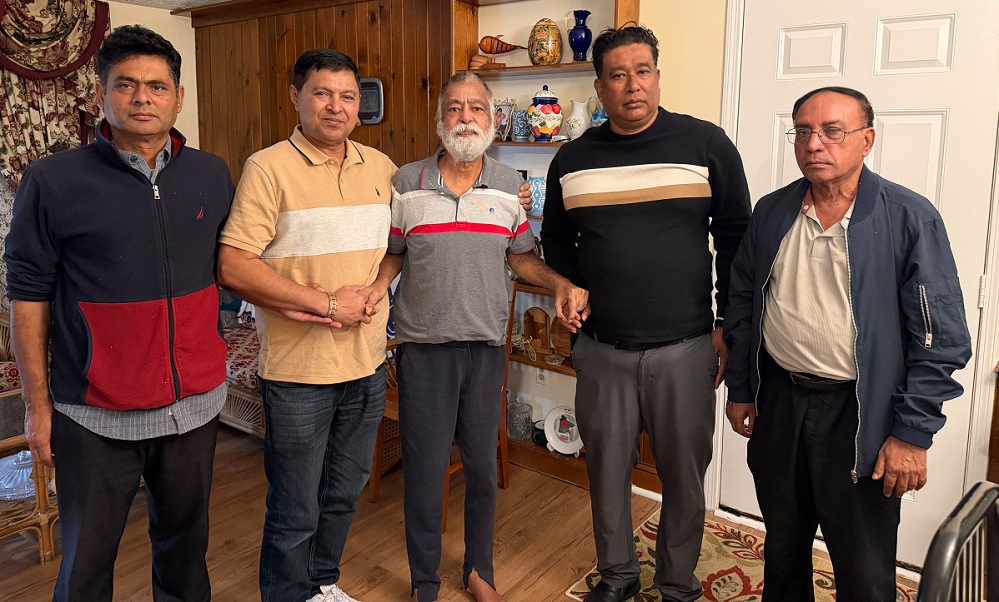
Bangladeshi Community Leaders Visit Ailing 1971 Freedom Fighter Harun Chowdhury
VIRGINIA — A group of Bangladeshi community leaders and journalists recently visited veteran journalist and 1971 Liberation War freedom fighter Harun Chowdhury at his Virginia home, offering support and checking on his health.
The delegation included Shibbir Ahmed, ZI Russell, Sheikh Selim, Sadek M. Khan and Jewel Barua. They spent time with the 77-year-old former wartime leader, who is now largely confined to his home because of age-related health problems.
According to family members, Chowdhury is managing several chronic conditions, including diabetes, high cholesterol and high blood pressure. His health problems have significantly reduced his mobility, and he requires assistance with many everyday activities.
The visit provided an opportunity for the group to reminisce about their years of friendship and professional association with Chowdhury. Conversations centered on shared memories, journalism and his long involvement in the Bangladeshi community in the United States.
Chowdhury’s connection to Bangladesh’s Liberation War is a defining part of his life story. During the 1971 war, he trained at Melaghar in Agartala, India, and served with Sector 2’s K Force under Major General Khaled Mosharraf and Major Haider. He later commanded operations in the Srinagar thana area.
After independence, Chowdhury established a career in journalism and literature. He served for many years as the Washington, D.C., representative of Weekly Thikana and wrote extensively about the Liberation War and the media.
Among his published works are Amar Muktijuddho Amar Ahankar 1971, a memoir of his wartime experience, and Shangbadiker Shongbad, a chronicle of journalism. Both were published by Anannya Prokashoni.
The visitors said Chowdhury’s decades of service to Bangladesh, journalism and the expatriate community remain an important part of his legacy. They also encouraged members of the Bangladeshi-American community and his former colleagues to remember him and his family in their thoughts and prayers as he faces continuing health challenges.