9/11 at 25: New ‘In Their Honor’ Exhibition Unveiled in New York

Shibbir Ahmed, NEW YORK — The 9/11 Memorial & Museum on 31St August Monday unveiled a new exhibition highlighting the enduring legacy of service inspired by the September 11 attacks, as New York prepares to mark the 25th anniversary of the tragedy. Titled “In Their Honor: 25 Years of 9/11-Inspired Service,” the exhibition offers a look at how individuals and communities transformed the aftermath of the attacks into acts of service and public commitment.

The exhibition was previewed for members of the media during a briefing at the 9/11 Memorial & Museum in Lower Manhattan. It will open to the public on September 12, 2026, one day after the 25th anniversary of the attacks.

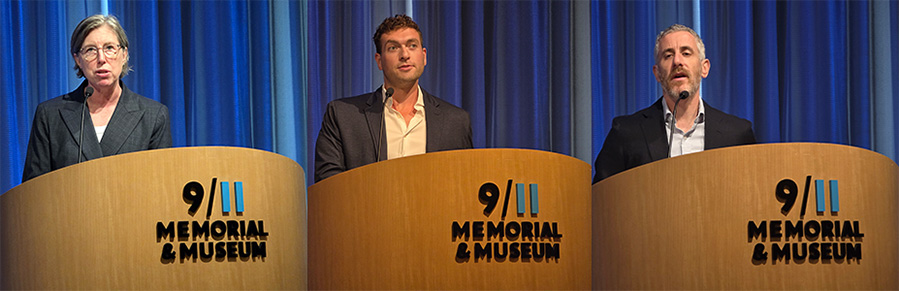
The afternoon program began with remarks from Beth Hillman, President and CEO of the 9/11 Memorial & Museum, followed by comments from 9/11 family member Logan Miller and Noah Rauch, Senior Vice President of Education and Public Programming.

The museum’s new exhibition comes as New York and the nation prepare for a major commemoration of the nearly 3,000 people killed in the September 11, 2001 terrorist attacks. The exhibition focuses on the continuing impact of September 11 beyond the immediate loss of life, emphasizing the service and civic engagement that emerged in the years following the attacks.

Museum officials said the exhibition explores the ways people responded to the attacks through service, volunteering and efforts to help others, demonstrating how the legacy of September 11 continues to shape communities a quarter-century later.

Monday’s media program also included a guided preview of the exhibition, giving journalists an early look before its public opening. The museum is also preparing for the 25th-anniversary commemoration on September 11, which will bring families of victims, survivors, first responders and government and community leaders together at the World Trade Center site.

As the anniversary approaches, the museum’s programming is placing particular emphasis not only on remembering those who were killed, but also on the long-term consequences of the attacks and the continuing acts of service inspired by their memory.

The 25th anniversary will mark a quarter-century since the attacks on the World Trade Center, the Pentagon and United Airlines Flight 93. For many families and survivors, the anniversary remains both a day of remembrance and an opportunity to reflect on how the events of September 11 have shaped the lives of subsequent generations. The “In Their Honor” exhibition will open to visitors at the 9/11 Memorial & Museum on September 12.


Trump Announces Historic $65B-Barrel Venezuela Oil Deal

Shibbir Ahmed, WASHINGTON DC — U.S. President Donald Trump has announced what he called the “biggest oil deal in world history,” saying the United States has secured majority control of more than 65 billion barrels of proven Venezuelan oil reserves through partnerships with private businesses. The agreement places Venezuela’s vast oil resources at the center of a new U.S.-Venezuela energy relationship and could reshape the global oil market.

Trump said Secretary of State Marco Rubio and Secretary of War Pete Hegseth worked with Venezuelan interim President Delcy Rodríguez to finalize the agreement. Trump also said the arrangement would come at no cost to American taxpayers. The agreement reportedly covers the development of 17 strategic Venezuelan oil fields with a proven potential of about 65 billion barrels. The plan also includes expansion into eight additional oil blocks.

25-Year Energy Agreement

Rodríguez said Sunday that the broader energy agreement will remain in effect for 25 years and is designed to significantly increase Venezuela’s oil production. The initial target is approximately 1.5 million barrels per day, compared with current production of around 1.25 million barrels per day. Venezuela holds the world’s largest proven oil reserves but has struggled for years with declining production, damaged infrastructure and sanctions.

Rodríguez said Venezuela would retain sovereignty over its natural resources while using the agreement to attract investment and rebuild its oil industry. She estimated that the agreement could generate approximately $209 billion in revenue for the Venezuelan government, based on an assumed oil price of $65 a barrel.

What Does the U.S. Actually Control?

Despite Trump’s description of the agreement, the 65 billion barrels should not be interpreted as the United States simply acquiring 65 billion barrels of oil. The agreement concerns control and development rights over oil reserves through public-private partnerships. Reuters reported that Trump provided few details when he first announced the agreement, saying the U.S. had secured majority control of more than 65 billion barrels of proven Venezuelan reserves through a partnership with private business.

Other reports indicate that the structure could give a U.S.-linked joint venture a majority share of production from the fields, while Venezuela continues to assert ownership and sovereignty over its natural resources. The precise financial and legal structure of the agreement remains an important issue as additional details emerge.

Billions of Dollars in Investment

Reviving Venezuela’s oil sector will require substantial investment. Much of the country’s energy infrastructure has deteriorated after years of underinvestment, economic turmoil and sanctions. The agreement is expected to bring major American private-sector involvement into Venezuela’s oil industry, with companies including Chevron positioned to participate in the new framework.

For Washington, the deal could provide greater access to one of the world’s largest petroleum reserves while potentially increasing global oil supplies. For Caracas, the agreement represents an opportunity to rebuild its energy industry, increase production and generate badly needed government revenue.

Global Energy Implications

The scale of the agreement makes it significant well beyond Venezuela and the United States. A sustained increase in Venezuelan production could add substantial heavy crude supplies to international markets and strengthen the country’s position as a major global energy producer. The deal could also deepen U.S. influence over Venezuela’s economy and energy sector, raising questions about sovereignty, investment, environmental concerns and the future balance of power in Latin America’s oil industry.

For now, the agreement represents one of the most consequential developments in the global oil market in years — and its ultimate impact will depend on how quickly Venezuela’s damaged infrastructure can be rebuilt and production expanded.


Criminals involved in enforced disappearances should be brought to justice: President

DHAKA – President Mirza Fakhrul Islam Alamgir has said all criminals involved in enforced disappearances should be brought to justice, no matter how powerful they are. “There would be no more ‘Aynaghar’ in independent Bangladesh and every criminal involved in enforced disappearance must receive the maximum punishment under the law,” he said.

The President said this while addressing an event today marking the International Day of the Victims of Enforced Disappearances-2026 as the chief guest. Organized by the Ministry of Liberation War Affairs, the discussion was held at the Bangladesh-China Friendship Conference Centre here this morning.

The president said during the past one and a half decades under the fascist government, the unbearable grip of enforced disappearance and secret detention centre ‘Aynaghar’ had weighed heavily on Bangladesh.

“Those who protested against injustice, expressed dissent, or remained vocal on the streets to demand democratic rights were picked up to silence them and were subjected to enforced disappearance and killings. Yet, the state institutions subservient to the fascists continued to deny those heinous crimes,” he added.

Mirza Fakhrul said in the backdrop of mass uprising of unarmed students and people the fascist ruler was forced to flee the country. Now, reparation measures must be taken instead of revenge, and the real criminals must be brought under law.

The President noted that all scopes of returning fascism to this country would be permanently closed. He said enforced disappearance is not merely taking away a person. It takes away the smiles, peace, dreams, and economic and social well-being of their beloved ones.

“It is a heinous violation of human rights. The constitution of country has guaranteed rights of every citizen to live, enjoy liberty anf getting protection of law. Through enforced disappearances and killings, all these rights are violated at once,” he noted.

“I believe the state’s responsibility will not end merely by punishing the criminals,” he said, urging the government to stand beside the victims and families of enforced disappearance by ensuring their dignity, social security, healthcare, education, livelihood, and rehabilitation. The President said establishment of culture of enforced disappearance and killing is a deeply painful and humiliating chapter in our national history.

He mentioned the incidents of enforced disappearance during the fascist regime including Ilias Ali, Chowdhury Alam, Sajedul Islam, incumbent home minister Salahuddin Ahmed, Barrister Arman and retired Lieutenant General Azmi saying countless dissents, officials, writers, journalists, social workers, and even housewives and ordinary citizens were subjected to disappearance.

The President said former Prime Minister Begum Khaleda Zia had always been vocal against enforced disappearances and killings by the fascist government. Many leaders of BNP, Jamaat-e-Islami, social entities, media, civil society members, and people from all walks of life fell victim of enforced disappearance and killings during the fascist regime, he said. The president also remembered Sanjida Islam Tulee, convener of Mayer Dak, who had been vocal against enforced disappearances during the fascist era.

“We want a Bangladesh where there will be political differences, but no political vengeance. There will have freedom of expression, but no culture of fear. There will have law and order, but no injustice in the name of law. The state will have power, but that power will remain under the control of the Constitution and the law,” he said.

“Alongside economic growth, the true picture of a state’s development and success is reflected on how it practices democratic, how much it’s based on justice and humanity and how much safe its citizens lives,” he said.

Liberation War Affairs Minister Ahmed Aazam Khan presided over the event while Home Minister Salahuddin Ahmed, Law Minister Md. Asaduzzaman and State Minister for the Ministry of Liberation War Affairs Ishraque Hossain were present as special guests. Victims of enforced disappearances also lawmakers Humam Quader Chowdhury, Anisur Rahaman, Tahsina Rushdir, Sanjida Islam, Mir Ahmad Binquasem spoke on the occasion and demanded a fair trial of the incidents of enforced disappearances.


UN Urges Action to End Enforced Disappearances on International Day

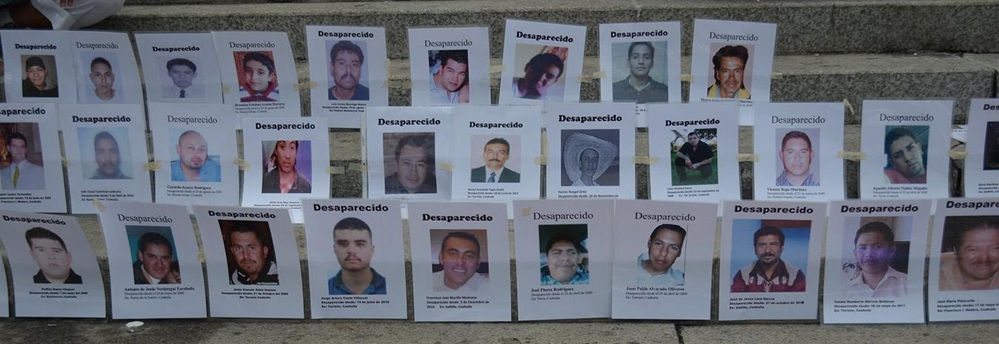
Shibbir Ahmed, UNITED NATIONS, NY — The United Nations is marking the International Day of the Victims of Enforced Disappearances on Sunday with renewed calls for governments to address the fate of missing people, protect victims and their families, and ensure truth and justice for those affected by enforced disappearance.

The annual observance, held on August 30, highlights the continuing suffering of people whose relatives have disappeared after being arrested, detained or otherwise taken into state custody while authorities deny or conceal their whereabouts.

UN human rights experts said the impact of enforced disappearance extends far beyond the individual victim. Families can be left for years without information about what happened to their loved ones, while communities can suffer social and economic consequences. The UN has described enforced disappearance as a serious human-rights violation that can also be used to spread fear throughout society.

The 2026 observance is particularly significant because it marks 20 years since the adoption of the International Convention for the Protection of All Persons from Enforced Disappearance. The convention was adopted by the UN General Assembly in 2006 and established an international legal framework aimed at preventing enforced disappearances and protecting people from the practice.

The UN Committee on Enforced Disappearances and the Working Group on Enforced or Involuntary Disappearances have used this year’s observance to renew attention to victims and their families and to the need for effective measures to prevent disappearances and clarify the fate of those who remain missing.

A Continuing Global Human Rights Challenge

Enforced disappearance occurs when people are arrested, detained or abducted by, or with the authorization, support or acquiescence of state authorities, followed by a refusal to acknowledge the person’s detention or to provide information about their whereabouts.

The consequences can continue for decades. Families may remain uncertain whether their relatives are alive or dead, while the lack of information can prevent them from obtaining justice, reparations and other forms of support.

The UN has repeatedly stressed that resolving cases of enforced disappearance requires credible investigations, accountability and access to information for families.

The International Day also serves as a reminder of the broader obligations of governments under international human-rights law to prevent enforced disappearance and investigate allegations when they occur.

Twenty Years of the UN Convention

The International Convention for the Protection of All Persons from Enforced Disappearance was adopted on December 20, 2006. It entered into force in 2010 and created the Committee on Enforced Disappearances to monitor implementation by states parties.

The convention recognizes the right of every person not to be subjected to enforced disappearance and calls on states to take measures to prevent the practice and ensure accountability. Two decades after its adoption, the UN continues to call for stronger implementation of the convention and greater protection for victims and their families.

The UN’s message on August 30 remains clear: families searching for missing relatives should not be left without answers, and enforced disappearance must not be allowed to remain a tool of fear, impunity or denial.


Trump Awards Congressional Space Medal of Honor to Artemis II Crew

Shibbir Ahmed, HOUSTON, Texas — President Donald Trump awarded the Congressional Space Medal of Honor to the four astronauts of NASA’s Artemis II mission Friday, honoring their historic journey around the Moon and their contribution to the future of human space exploration.

Trump presented the medals to NASA astronauts Reid Wiseman, Victor Glover and Christina Koch, along with Canadian Space Agency astronaut Jeremy Hansen, during a ceremony at NASA’s Johnson Space Center in Houston. NASA confirmed that the four astronauts received the nation’s highest space honor for their service during the Artemis II mission.

The Artemis II crew made history earlier this year by becoming the first humans in more than five decades to travel around the Moon. During the mission, the astronauts traveled farther from Earth than any humans had previously gone, testing NASA’s Orion spacecraft and the Space Launch System ahead of future crewed lunar missions.

The crew consisted of Mission Commander Reid Wiseman, Pilot Victor Glover, Mission Specialist Christina Koch and Canadian Space Agency Mission Specialist Jeremy Hansen.

During the ceremony, Wiseman emphasized that the achievement belonged not only to the four astronauts but also to their families, NASA teams and the international community that supported the mission.

The Congressional Space Medal of Honor was authorized by Congress in 1969 to recognize astronauts whose exceptional service and achievements have made significant contributions to the welfare of the nation and humanity.

Trump Announces U.S. Space Academy

The medal ceremony was also accompanied by another major announcement about America’s future in space. Trump signed an executive order establishing a commission to develop the nation’s first U.S. Space Academy, according to NASA. The proposed institution is intended to help develop the next generation of space professionals and support the growing needs of NASA, the U.S. Space Force and the civilian space industry.

NASA Administrator Jared Isaacman is set to chair the commission responsible for developing the framework for the new academy. The initiative is part of the administration’s broader effort to strengthen U.S. leadership in space.

The White House described the Artemis II crew as pioneers whose mission demonstrated the United States’ continued commitment to human space exploration. The White House also released video of Trump presenting the Congressional Space Medal of Honor to the crew.

The Artemis II mission is expected to serve as a foundation for subsequent Artemis missions aimed at returning astronauts to the lunar surface and establishing a sustained human presence around and on the Moon.


U.S. Sanctions Target Iranian Bank Official, Financial Network

Shibbir Ahmed, WASHINGTON, D.C. — August 28, 2026: The United States has imposed new sanctions targeting Iran’s financial network, including a senior official at Iran’s Bank Melli branch in Dubai, as Washington intensifies economic pressure on the Iranian regime. The latest measures were announced Friday under the Trump administration’s continuing “Operation Economic Outcast” campaign.

The U.S. government sanctioned Reza Mohammad Taeedi, manager of Bank Melli’s Dubai branch, accusing the Iranian bank of serving as a key financial hub for Iran’s armed forces. According to the U.S. government, Bank Melli has provided financial support to Iran’s Islamic Revolutionary Guard Corps-Qods Force (IRGC-QF) and the Ministry of Defense and Armed Forces Logistics, both of which are already under U.S. sanctions.

Washington also imposed sanctions on a Hong Kong-based company that it says helped designated Iranian individuals and entities gain access to the international financial system. Separately, the U.S. Department of the Treasury’s Financial Crimes Enforcement Network (FinCEN) proposed a rule that would cut Banque Misr UAE off from correspondent banking access to U.S. financial institutions. Treasury officials said Banque Misr UAE represents a critical channel through which the Iranian regime can access U.S. dollars.

“The latest action intensifies our pressure campaign against Iran,” the U.S. government said in its statement. Washington accused the Iranian regime of prioritizing what it described as malign activities over the needs of the Iranian people and said it would continue targeting individuals and entities involved in illicit financial activities on behalf of Iran.

The sanctions also specifically target individuals working for Iranian banks outside Iran, signaling an effort by Washington to disrupt the regime’s financial operations beyond the country’s borders.

The sanctions were imposed under Executive Order 13224, as amended, a U.S. counterterrorism authority, and Executive Order 13902, which targets individuals and entities operating in Iran’s financial sector.

FinCEN’s proposed action against Banque Misr UAE was taken under Section 311 of the USA PATRIOT Act, which gives the U.S. government authority to take special measures against foreign financial institutions or jurisdictions considered to pose money-laundering or other financial risks. The U.S. Treasury Department said additional details on the sanctions and proposed financial restrictions are available in its related enforcement announcement.


538 Dead, Nearly 1,000 Missing in Devastating Floods and Landslides in Nepal

Shibbir Ahmed, United Nations, New York: The death toll from devastating flash floods and landslides in Nepal has risen to 538, while nearly 1,000 people remain missing. Many of those missing are believed to be tourists. Search and rescue operations and relief efforts continue across the disaster-hit areas.

On Friday, citing figures from the Government of Nepal, the UN Office for the Coordination of Humanitarian Affairs (OCHA) said nearly 3,750 people had been rescued following the disaster. Rescue teams are continuing efforts to reach people stranded in various parts of Nepal’s Rasuwa, Nuwakot and Dhading districts.

According to the latest update issued Friday by Nepal’s Ministry of Foreign Affairs, 538 bodies have so far been recovered from the flood-affected areas. The ministry also said that among 632 foreign nationals from 33 countries, 121 have been located or accounted for, while 511 remain missing. The figures are expected to change as search and rescue operations continue.

Glacier Collapse Believed to Have Triggered Disaster

A devastating flash flood struck the Bhote Koshi River area of Nepal on August 26. The disaster is believed to have been triggered by a glacier collapse and subsequent landslide, sending huge amounts of water, rocks, mud and debris rapidly down mountain waterways.

Entire communities were destroyed by the powerful floodwaters, while roads, bridges, hydropower facilities and other critical infrastructure suffered extensive damage. Rasuwa is among the worst-affected districts. Rescue operations have been particularly challenging because of the mountainous terrain, damaged roads and disrupted communications.

Tibet Also Severely Affected

China’s Tibet Autonomous Region, on the other side of the Nepal-China border, has also been severely affected by the disaster. According to authorities there, around 560 people remain missing. Officials fear the number of casualties and missing people could rise as search operations continue in both Nepal and Tibet.

Renewed Flood Threat

The situation became even more dangerous after a new water reservoir or lake formed in the mountainous region following the initial flooding. On Friday, rising water levels raised fears of another flood, temporarily disrupting rescue operations in some areas. Rescue efforts resumed after the immediate threat was brought under control. Nepalese authorities continue to monitor river levels and the risk of further flooding downstream.

UN Supports Relief Efforts

UN agencies are working to deliver emergency food, medical supplies, tents and other assistance to communities affected by the disaster. The United Nations said it is providing medical supplies sufficient for around 10,000 people for three months, along with emergency food rations, tents and logistical support. Satellite imagery is also being used to assess and monitor the affected areas.

Lila Pieters Yahia, the UN Resident Coordinator in Nepal, visited the disaster zone. She described the rescue of an entire family as an extremely emotional moment. Her visit was cut short after a renewed flood alert was issued.

Risk of Disease Outbreaks

The World Health Organization (WHO) has warned of an increased risk of infectious diseases following the disaster. WHO spokesperson Tarik Jašarević said that when disasters of this scale cause displacement and overcrowding, while disrupting water, sanitation and health services, the risk of infectious diseases can increase significantly.

Dozens of Schools Destroyed

The UN Children’s Fund (UNICEF) said 18 schools have been completely destroyed and another 20 have been damaged by the floods. Dozens more schools located near riverbanks remain at high risk. As a result, an estimated 10,000 school-aged children in the affected areas need support to continue their education.

‘The Impact Is Truly Immense’

Kamal Kishore, head of the UN Office for Disaster Risk Reduction (UNDRR), highlighted the extraordinary scale of the disaster. He said that, in living memory, such a major mountain hazard event had not been seen for a very long time.

The disaster has had an immense impact on lives and livelihoods, as well as buildings, bridges, infrastructure, hydropower projects and power generation facilities, he said. Kishore added that authorities and humanitarian agencies are still trying to understand the full extent of the damage.

He described the current situation as involving both extremely high risk and significant uncertainty, stressing that the emergency itself is not yet completely over. The UN said the disaster has once again highlighted the fragility of mountain ecosystems and the challenges of establishing effective early-warning systems in mountainous environments.

More Than 93,000 People Affected

The International Federation of Red Cross and Red Crescent Societies (IFRC) said it is “very, very concerned” about the possibility of a secondary flood. According to the organization, at least 93,000 people have been affected by the disaster and are in urgent need of assistance.

Nepal’s Ministry of Foreign Affairs said security and disaster-management agencies are operating at full capacity to support search and rescue, medical assistance, evacuation and relief operations in the affected areas.

Region Has Faced Major Disasters Before

The disaster-hit region has experienced major natural disasters in the past. In April 2015, a magnitude 7.8 earthquake struck Nepal, killing more than 8,800 people. Last October, torrential rains triggered flash floods and landslides across parts of eastern and central Nepal, affecting more than 30,000 people.

The latest disaster is being viewed as one of the most severe natural disasters to hit Nepal in recent years. The death toll and number of missing people could change as search and rescue operations continue.



Trump Officially Renames Lake Ontario ‘Lake America’

Shibbir AHmed, WASHINGTON DC: President Donald Trump has signed an executive order directing the U.S. government to rename Lake Ontario as “Lake America,” adding another contentious geographic name change amid escalating tensions between the United States and Canada.

Trump signed the order Thursday, August 27, at the White House. The executive order, titled “Honoring the American History of the Great Lakes and Renaming Lake Ontario as Lake America,” directs the U.S. Department of the Interior to update the federal government’s official geographic records and maps to use the name “Lake America.”

The White House said the change is intended to recognize what it describes as the contributions and heritage of the American people and the historical importance of the Great Lakes.

The order applies to U.S. federal government usage. Because Lake Ontario is a binational body of water shared by the United States and Canada, the U.S. government cannot compel Canada to adopt the new name. Reuters reported that Canada is expected to continue using “Lake Ontario.”

The move comes as relations between Washington and Ottawa remain strained over trade. The Trump administration has imposed major tariffs on Canadian goods, while negotiations between the two countries have faced significant difficulties.

Trump’s decision immediately drew criticism from Canadian and American officials. Canadian Prime Minister Mark Carney has indicated that the historic name will remain in use in Canada, while several U.S. governors have also rejected the proposed change. During the signing ceremony, Trump also suggested that additional geographic name changes could be considered.

“Now all we need is an ocean,” Trump said, raising the possibility of changing the names of the Atlantic or Pacific oceans. The Lake Ontario decision follows Trump’s earlier move to change the U.S. government’s name for the Gulf of Mexico to “Gulf of America.” That change similarly generated controversy over whether the United States could unilaterally alter the name of an internationally recognized geographic feature.

The White House has published the Lake America executive order as an official presidential action and described the change as effective for U.S. government usage. Despite the presidential order, the traditional name Lake Ontario is expected to remain widely used internationally, particularly in Canada.


UN Secretary-General Mourns Loss of Life in Devastating Nepal Floods

Shibbir Ahmed, UN, NEW YORK: United Nations Secretary-General António Guterres has expressed deep sadness over the loss of life and widespread destruction caused by severe flooding in Nepal and China, extending his condolences to the families of those who died and solidarity to all those affected. According to a statement issued by his spokesperson, Guterres said he was saddened by reports of deaths and people still missing following the devastating floods.

The UN chief also wished those injured a speedy recovery and commended emergency responders working to save lives and assist communities affected by the disaster. The catastrophic flooding struck areas along the Nepal-China border after a massive ice and rock collapse in the Himalayas triggered torrents of water, mud and debris. The disaster swept through communities, damaging homes, roads, bridges and other critical infrastructure.

Nepali authorities have reported hundreds of deaths and hundreds of people still missing, while Chinese authorities have also reported fatalities and hundreds missing in Tibet. The figures continue to change as rescue teams reach affected areas. Guterres reiterated the United Nations’ readiness to provide further support to the relief and recovery efforts.

UN teams and humanitarian partners are mobilizing personnel and emergency supplies to assist communities affected by the floods, while working with the Government of Nepal to assess the scale of the disaster and determine urgent needs.

Rescue operations are continuing in difficult conditions, with damaged roads and bridges making access to several affected areas extremely challenging. Thousands of Nepalese army and police personnel have been deployed for search-and-rescue operations, while helicopters are being used to deliver emergency supplies and evacuate survivors.

The disaster has also affected foreign nationals, including tourists and religious pilgrims traveling in the Himalayan region. Nepalese authorities have reported hundreds of foreign nationals among those missing. The United Nations said it remains in close contact with the authorities and humanitarian partners as relief operations continue.


President Mirza Fakhrul Vows to Uphold Non-Partisan Role in State Duties

DHAKA: President Mirza Fakhrul Islam Alamgir today pledged to discharge his constitutional responsibilities in a completely non-partisan manner for the welfare of the state. “I resigned from the party, parliament and the Cabinet before assuming the responsibility of the President. I am now completely a non-partisan person, and after assuming the responsibility of the President of my state, I will work in a completely non-partisan manner for the welfare of the state and the nation,” he said.

He made the remarks at the first Durbar of the President with the officers and employees of Bangabhaban at the Durbar Hall of Bangabhaban at 11:30 am. The President said that after assuming the responsibility as President, he would have no anger or affection towards anyone, and the interests of the country, state and people would be his prime objective.

At the event, he urged the officers and employees of Bangabhaban to discharge their respective responsibilities with dedication, sincerity and honesty. He stressed ensuring public trust, honesty, dedication, sincerity and responsibility under any circumstances. “We must have love, respect and loyalty towards the country and its people.”

The President also emphasized on maintaining confidentiality of the important activities related to national securities that took place in the Bangabhaban. He called for economy and responsibility in state expending and urged prevention of waste.

The President said government resources and other facilities are managed with the money of the country’s people. “Therefore, their proper, responsible, transparent and accountable use must be ensured,” he said. He urged the officers and employees to maintain discipline in their personal lives as well as regularly strive to build moral strength and good character while maintaining balance between family life and workspaces.

“We are a family here and we all work from the same place. We will have opportunities, and at that time we will talk to each other and try to resolve the problems,” he said. The President said he had spent a long period of his political life and during that time had participated in struggles alongside the people.

He paid deep respect to those who sacrificed their lives in the country’s Great War of Liberation in 1971 and the contribution on Shaheed President Ziaur Rahman during the Liberation War and nation building afterwards.

Later, he recalled BNP Chairperson Begum Khaleda Zia for her courageous leadership, sacrifices and contribution throughout her long political career. Highlighting the history and tradition of Bangabhaban, he expressed the hope that everyone would continue to work together in the future.