PM to champion ‘Bangladesh First’ agenda at UNGA: Shama

DHAKA – Prime Minister Tarique Rahman will advance Bangladesh’s national interests, economic potential and development opportunities globally under the government’s “Bangladesh First” foreign policy during the upcoming United Nations General Assembly (UNGA), State Minister for Foreign Affairs Shama Obaed Islam said today.

“This year’s session is an extremely important one for Bangladesh. It marks a new journey, a new possibility and a new aspiration,” she said. She was addressing a discussion titled “Upcoming UNGA and Branding of Bangladesh” as the chief guest at the Pan Pacific Sonargaon Hotel in the capital.

The Centre for Non-Resident Bangladeshi (Centre for NRB), a non-profit research organisation for expatriate Bangladeshis, organised the event. Shama said the prime minister would attend the UNGA for the first time since the establishment of the new democratic government.

Guided by the government’s “Bangladesh First” foreign policy, Tarique Rahman would present Bangladesh to the international community as a democratic, confident, responsible and promising nation, she added.

The high-level segment of the 81st session of the UN General Assembly is scheduled to begin in New York on September 21. It will address poverty eradication, climate change, pandemic prevention, nuclear disarmament and the 40th anniversary of the Declaration on the Right to Development, among other pressing global issues. Shama said the session carries added significance as Foreign Minister Dr Khalilur Rahman will preside over the General Assembly.

Terming his election a matter of national pride, she said Bangladesh secured the presidency despite Cyprus having campaigned for the position for nearly a decade.
She credited the diplomatic success to the coordinated efforts of the Foreign Ministry and Bangladesh’s 83 missions abroad, alongside the country’s return to democratic governance and stability.

The state minister said Bangladesh already enjoys considerable respect at the United Nations because of the courage, resilience and sacrifices of its peacekeepers, including women serving in some of the world’s most dangerous missions.

Turning to economic diplomacy, Shama said the government was working to restore transparency and accountability in the banking sector and create an investment-friendly environment for foreign investors and non-resident Bangladeshis.

She said the government had introduced the “Bangladesh Invest” framework to offer investors one-stop services and was expanding digital facilities for company registration and other investment-related procedures. Work is also underway on the “One Citizen, One Card” initiative to consolidate citizens’ information in a single database, she added.

Shama said the government plans to issue 200,000 “Probashi Cards” by 2027 under an initiative of the prime minister to facilitate services for expatriate Bangladeshis. She called upon non-resident Bangladeshis to use their networks to promote the country’s investment opportunities, heritage, tourism, creative industries and exportable products internationally. The state minister said irregular migration and the activities of human trafficking syndicates were damaging Bangladesh’s image abroad.

“For the first time in the history of the Foreign Ministry, we have opened a separate Migration Wing,” she said, adding that it would address irregular migration, expatriates’ difficulties and other migration-related challenges.

She said the foreign and expatriates’ welfare ministries were working jointly with the International Organization for Migration to curb irregular migration and encourage the overseas employment of skilled workers through legal channels. The government has identified districts with higher levels of attempted irregular migration and begun awareness activities at the village, union, upazila and district levels, she said. Shama said the Cabinet had recently approved changes to Bangladesh’s visa policy to simplify business, tourism, work and visa-on-arrival procedures.

“The objective is to make Bangladesh more welcoming and investment-friendly,” she said, adding that reforms were also underway in airport services and tourism.

She stressed the need to diversify Bangladesh’s energy sources and reduce dependence on any single market, saying the government was exploring energy cooperation with African countries alongside additional sources of liquefied natural gas. The government is also promoting solar power, waste-to-energy projects and blue-economy opportunities, she added.

Shama said the Prime Minister’s Office had already been brought under 100-percent solar power, while efforts were underway to expand renewable energy use across government establishments.

Highlighting export diversification, she said the government had placed special emphasis on the creative economy, particularly women-led enterprises, traditional arts, muslin, cottage industries and cultural heritage.

She described jute as an ideal biodegradable alternative to plastic and said Bangladesh would seek to promote jute and jute products during the UN General Assembly. A stall is also planned at the upcoming climate conference in Trkiye to showcase jute as a sustainable natural fibre, she added. On the Rohingya crisis, Shama said a dedicated session would be held during the UN General Assembly with the participation of Prime Minister Tarique Rahman. She said the crisis had become increasingly complex because of the involvement of the Myanmar authorities, the Arakan Army, regional actors and competing international interests.

“Without international pressure, resolving this problem will become very difficult,” she said, urging Bangladeshis abroad and civil-society representatives to help mobilise international support for a sustainable solution. The state minister said Bangladesh should no longer be portrayed internationally merely through floods, disasters or the repatriation of undocumented migrants.

“Bangladesh has opportunities in tourism, business and investment, and it has the potential to be presented properly on the world map,” she said.

Shama said the government was committed to genuine reforms but cautioned that meaningful change would take time and require cooperation from citizens, businesses, civil society and Bangladeshis living overseas.

“We are trying to brand Bangladesh in the right way. The government alone cannot do everything; all of us must work together,” she said.

Centre for NRB Chairperson M S Shekil Chowdhury said the organisation arranged the programme as part of its annual World Conference Series to showcase Bangladesh’s positive developments to the international community. He said the series also seeks to deepen Bangladesh’s global engagement and encourage expatriate Bangladeshis to invest in the country and remit their earnings through legal channels.


Trump Calls Iran Conflict ‘Small Potatoes’ as 18 US Service Members Killed

Shibbir AHmed, WASHINGTON DC — President Donald Trump has described the ongoing U.S. military conflict with Iran as “small potatoes,” downplaying the scale of a confrontation that has continued for months and resulted in the deaths of 18 U.S. service members.

Speaking to reporters in the Oval Office on Friday, Trump said he preferred to describe the situation as a “military conflict” rather than a war, echoing Vice President JD Vance’s argument that the fighting does not meet the definition of a conventional war.

Trump said U.S. military operations have largely involved intermittent airstrikes and emphasized that American ground troops have not been engaged in sustained combat. He compared the current casualties with those suffered in previous major U.S. wars. The president’s comments came as tensions with Tehran remain high and the United States continues military operations against Iranian targets.

Trump threatens further strike

Trump also warned that the United States could strike Iran’s Pickaxe Mountain, a deeply buried nuclear facility, if Washington determines that Iran is moving equipment or taking other action at the site. The president said the United States could act against the facility “quite soon,” adding another potential escalation point in the conflict.

The conflict began on February 28 and has involved repeated U.S. military strikes against Iranian targets, while Iran has retaliated with attacks against U.S. and allied positions in the region. According to reporting cited by AP, the conflict has killed 18 U.S. service members and cost the United States more than $37.5 billion.

Trump says Iran will not obtain nuclear weapons

Trump reiterated that Iran will not be allowed to acquire nuclear weapons under his administration. The comments come amid continuing concerns over Iran’s nuclear infrastructure and the possibility that further U.S. strikes could broaden the conflict.

Trump has repeatedly sought to portray the U.S. military campaign as limited, while the continuing casualties, financial costs and regional consequences have kept the conflict at the center of U.S. foreign-policy and domestic political debate.

Vice President Vance has also defended the administration’s decision not to characterize the confrontation as a traditional war, pointing to the nature of the military operations and the absence of sustained U.S. ground combat.

Trump’s remarks are likely to intensify debate over the administration’s Iran strategy as the conflict continues and the United States approaches the 2026 midterm elections.


Trump Says U.S. May Strike Iran’s ‘Pickaxe Mountain’ Very Soon

Shibbir Ahmed, WASHINGTON DC— U.S. President Donald Trump said Friday that the United States may strike Iran’s heavily fortified Pickaxe Mountain site “very soon,” raising the possibility of a further escalation in the ongoing conflict between Washington and Tehran. Trump’s remarks came as tensions between the United States and Iran remain high, with Washington continuing military and economic pressure on Tehran.

According to Reuters, Pickaxe Mountain is located near Iran’s already heavily damaged Natanz uranium-enrichment complex. The site contains deeply buried tunnel complexes and has been identified by U.S. and Israeli officials as a location of concern because of its potential connection to Iran’s nuclear activities.

Trump signals possible new strike

Speaking to reporters on Friday, Trump said the United States could target Pickaxe Mountain soon. His comments represent a renewed warning over the facility after he previously threatened military action against the site.

Trump has repeatedly said that preventing Iran from obtaining a nuclear weapon remains a central U.S. objective. In a separate interview aired this week, he said the United States was closely monitoring Pickaxe Mountain and claimed American surveillance capabilities provide information about activity at the location.

The president’s latest comments do not establish that a strike has been ordered or that one is imminent. They indicate that military action against the site remains under consideration.

What is Pickaxe Mountain?

Pickaxe Mountain, also known by its Persian name Kuh-e Kolang Gaz La, is an underground facility being developed south of the Natanz nuclear complex, roughly 225 kilometers (140 miles) from Tehran.

The facility is located beneath a mountain, making it considerably more difficult to attack than above-ground nuclear infrastructure. Satellite imagery and open-source assessments have shown extensive construction and tunnel systems at the site.

The International Atomic Energy Agency has not had direct access to the underground facility, leaving uncertainty over precisely what equipment or nuclear material may be located there.

Why the site is important

The concern surrounding Pickaxe Mountain centers on its potential ability to protect sensitive nuclear equipment underground. Reports have suggested that Iran could potentially move uranium-enrichment centrifuges or other nuclear-related equipment into deeply buried facilities. However, the exact contents and operational status of Pickaxe Mountain remain uncertain.

Trump previously acknowledged that Iran may have moved centrifuges to the site but said the presence of centrifuges alone would not necessarily mean Iran possessed nuclear material there. The facility’s depth also presents a significant military challenge. Earlier reporting has noted that even the most powerful U.S. bunker-busting weapons may face difficulties reaching installations buried deep beneath the mountain.

Comes amid wider U.S.-Iran confrontation

Trump’s latest warning comes amid continuing military confrontation between the United States and Iran. The United States has also intensified economic pressure on Tehran. On Friday, the U.S. Treasury Department sanctioned Türkiye-based Golden Global Bank and two subsidiaries, accusing them of helping Iranian financial institutions access international banking networks.

The Treasury said the action was part of Operation Economic Outcast, a broader campaign aimed at disrupting Iranian financial networks and restricting resources that Washington says support Iran’s regional activities. The combination of military pressure and financial sanctions reflects Washington’s continuing effort to pressure Tehran over its nuclear program and other regional activities.

Risk of further escalation

A U.S. strike on Pickaxe Mountain could mark another significant development in the conflict because of the facility’s location and its reported underground construction. Any attack could also increase regional tensions and potentially affect ongoing diplomatic efforts involving Iran and international mediators.

For now, Trump’s statement indicates that the facility remains under close U.S. surveillance and that military action remains a possibility. Whether Washington ultimately carries out an attack, however, remains unclear. The situation is developing.


U.S. Sanctions Turkish Bank Over Alleged Iran Financial Links

Shibbir Ahmed, WASHINGTON DC — The United States has imposed sanctions on a Türkiye-based financial institution and two of its subsidiaries, accusing them of providing critical international banking access to Iran and facilitating tens of millions of dollars in transactions linked to the Islamic Revolutionary Guard Corps-Qods Force (IRGC-QF).

The U.S. Department of the Treasury announced the action Friday as part of Operation Economic Outcast, a broader campaign aimed at disrupting Iran’s access to international financial networks and cutting off revenue streams that Washington says support the Iranian regime’s regional activities.

The Office of Foreign Assets Control (OFAC) designated Golden Global Yatirim Bankasi Anonim Sirketi, also known as Golden Global Bank, under Executive Order 13902. Two Türkiye-based subsidiaries—Golden Global Varlik Kiralama Anonim Sirketi and Golden Global Portfoy Yonetimi Anonim Sirketi—were also designated.

According to the Treasury Department, Golden Global Bank provided correspondent banking services to Iranian financial institutions, allowing funds connected to Iran to move through the international financial system.

Treasury alleged that the bank was established to facilitate the transfer of Iranian oil revenues from China to Türkiye, where the proceeds could subsequently be converted into cash and gold through money exchangers associated with Iran’s financial networks.

The department also said the bank knowingly facilitated transactions involving accounts controlled by the IRGC-QF and its proxies. Treasury specifically cited a network connected to Turkish businessman Sitki Ayan and his companies, which the U.S. sanctioned in 2022 over alleged involvement in moving hundreds of millions of dollars related to IRGC-QF oil sales.

“Financial institutions continue to find out the hard way that we are serious about Operation Economic Outcast,” Treasury Secretary Scott Bessent said in announcing the action.

The Treasury said the latest sanctions are intended to send a warning to financial institutions around the world that facilitating Iranian sanctions evasion or illicit financial activity could result in restrictions on access to the U.S. financial system.

Part of broader pressure campaign

The action is the latest development in Operation Economic Outcast, which Treasury Secretary Bessent announced on Aug. 24. The campaign focuses on financial networks that the U.S. says Iran uses to generate revenue, evade sanctions and move money internationally.

Treasury said Iran’s existing U.S. sanctions have pushed the country toward multinational “shadow banking” networks that provide access to international financial channels, including U.S. dollar correspondent banking relationships.

Washington has increasingly targeted financial intermediaries outside Iran that it says help Iranian institutions access the global financial system. On Aug. 28, the Treasury Department announced measures targeting Iran’s access to banks in the United Arab Emirates, including a proposed rule that would restrict Banque Misr UAE’s correspondent banking access to U.S. financial institutions.

Sanctions take effect immediately

Under the latest action, property and interests in property belonging to the designated entities that are in the United States or under the possession or control of U.S. persons are blocked and must be reported to OFAC.

U.S. persons are generally prohibited from conducting transactions involving the blocked entities unless authorized by OFAC. The sanctions can also affect foreign financial institutions that knowingly conduct or facilitate certain significant transactions involving sanctioned persons.

OFAC said it has also issued Iran General License CC, which authorizes a limited wind-down of certain transactions involving persons blocked in the Sept. 4 action. The Treasury Department said it will continue identifying financial institutions and other intermediaries that provide Iran with access to international financial channels.

Washington has said the ultimate objective of the sanctions campaign is to pressure Tehran to abandon activities that the U.S. considers destabilizing, including support for armed groups in the Middle East and efforts related to its military capabilities.

Source: U.S. Department of the Treasury and Office of Foreign Assets Control (OFAC).


Bangladesh Takes Helm of 81st UN General Assembly

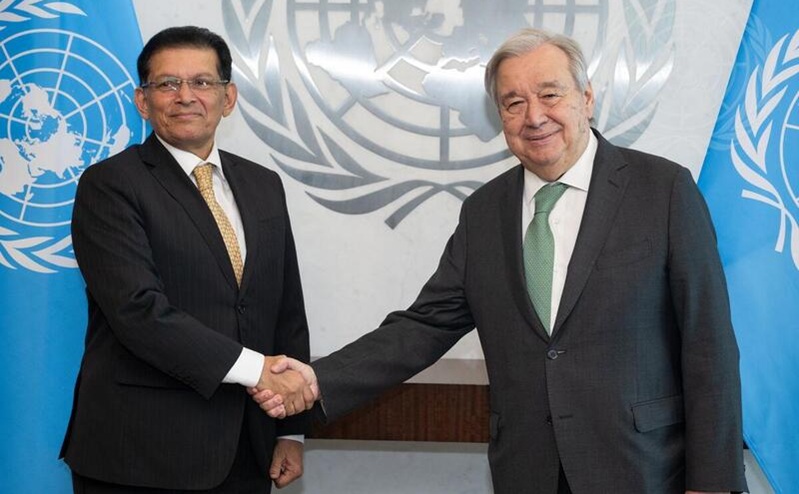
Shibbir Ahmed, New York — Bangladesh is set to take a prominent role at the United Nations as Foreign Minister Khalilur Rahman assumes the presidency of the 81st session of the UN General Assembly, which opens in New York on September 8.

Rahman was elected President of the 81st session on June 2, defeating Cyprus’s candidate Andreas Kakouris in a closely contested vote. The election placed Bangladesh at the center of one of the UN’s most important diplomatic forums at a time of growing geopolitical tensions and challenges to multilateral cooperation.

The 81st session will run from September 8, 2026, through September 7, 2027. During his one-year term, Rahman will preside over the General Assembly’s deliberations and high-level diplomatic engagements involving representatives of the UN’s 193 member states.

A critical moment for multilateralism

The theme of the 81st session is “Restoring trust and reigniting global solidarity.” The theme reflects the UN’s effort to rebuild confidence in multilateral institutions and strengthen international cooperation at a time when conflicts, humanitarian crises, economic uncertainty and geopolitical rivalries are placing pressure on the international system.

The General Assembly remains the UN’s principal policymaking and representative body, bringing together all 193 member states. Its annual high-level debate provides a platform for world leaders to address major international challenges and outline their countries’ priorities.

Bangladesh’s diplomatic opportunity

Rahman’s election gives Bangladesh an important diplomatic platform on the global stage. As President of the General Assembly, he will be responsible for guiding the Assembly’s proceedings, facilitating negotiations and encouraging dialogue among member states. The position does not give the president executive authority over the United Nations, but it carries significant diplomatic and political visibility.

For Bangladesh, the presidency provides an opportunity to highlight issues that are important to developing countries, including sustainable development, climate change, poverty reduction, migration, global peace and security, and greater international cooperation.

The presidency also comes at a time when developing countries are pressing for a stronger voice in global decision-making and for greater access to financing for development and climate action.

World leaders prepare for high-level week

The opening of the 81st General Assembly will be followed later in September by the UN’s annual high-level week, when presidents, prime ministers and other senior leaders gather in New York. The high-level segment is scheduled for September 22–28, bringing world leaders together for discussions on global cooperation and some of the most pressing international challenges. The gathering is expected to focus attention on ongoing conflicts, humanitarian emergencies, development, climate change and efforts to strengthen the international system.

Bangladesh at the center of UN diplomacy

Bangladesh has maintained a longstanding and active role in the United Nations, particularly on issues involving peacekeeping, development and the interests of developing countries. Rahman’s election to preside over the 81st General Assembly gives Dhaka a high-profile opportunity to contribute to discussions on how the international community can address increasingly complex global challenges.

The presidency will also require Bangladesh to maintain a balance between competing positions among UN member states while ensuring that the General Assembly’s work proceeds effectively. With the 81st session beginning on September 8, attention will now turn to Rahman’s opening priorities and the issues he intends to place at the center of the Assembly’s agenda.

For Bangladesh, the presidency represents both a diplomatic achievement and a significant responsibility as the country takes the chair of the world’s largest multilateral forum for the next year.


Syria Destroys Assad-Era Chemical Weapons as UN Hails First Verified Destruction Since 2014

Shibbir Ahmed, UNITED NATIONS, NY — September 4, 2026: Syria has begun destroying remnants of the chemical weapons programme inherited from the government of former President Bashar al-Assad, marking a major step in the country’s efforts to dismantle its clandestine chemical arsenal under international oversight.

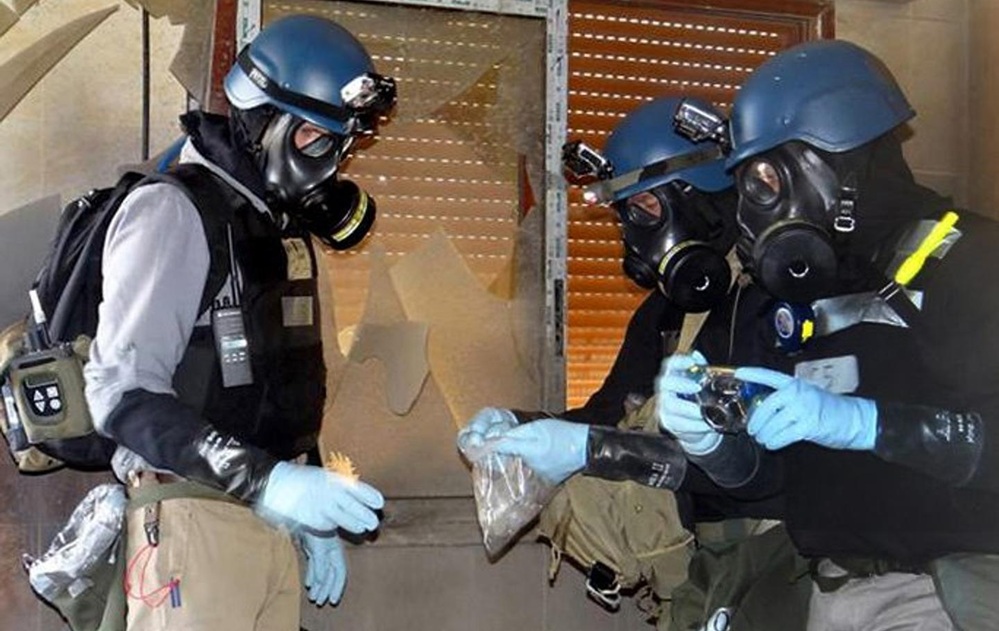
The development was highlighted during a United Nations Security Council briefing on Syria’s chemical weapons programme, where UN officials reported that the Organisation for the Prohibition of Chemical Weapons (OPCW) had verified the destruction of chemical munitions in Syria for the first time since 2014.

UN High Representative for Disarmament Affairs Izumi Nakamitsu told the Council that the verified destruction represented “significant progress” in international efforts to eliminate Syria’s remaining chemical weapons capabilities.

According to UN and Reuters reporting, the destruction includes 42 aerial bombs, along with additional chemical-weapons-related production and storage facilities. The verification represents the first confirmed destruction of Syrian chemical munitions by the OPCW since the international disarmament process began more than a decade ago.

Remnants discovered after Assad’s fall

The latest operation follows the discovery earlier this year of previously undeclared chemical-weapons materials in Syria. In May, an OPCW expert team working with Syrian authorities reported finding previously undeclared chemical munitions, chemical substances, equipment and extensive documentation linked to the former government’s chemical weapons programme.

The OPCW said its investigation found dozens of previously undeclared chemical munitions, including aerial bombs of the same type associated with chemical attacks in Ltamenah in 2017 and Khan Shaykhun in 2017, as well as rockets of a type associated with the 2013 Ghouta chemical attack.

The discovery was significant because the OPCW had repeatedly raised questions about gaps and inconsistencies in Syria’s earlier declarations concerning the full extent of its chemical weapons programme. Following the fall of the Assad government in December 2024, Syria’s new authorities opened the door to renewed international inspections and cooperation with the OPCW.

International verification

The OPCW plays the central technical role in identifying, securing and destroying Syria’s remaining chemical weapons materials, while the issue continues to be addressed by the UN Security Council under its existing mandate.

The OPCW said in July that Syria’s rights and privileges under the Chemical Weapons Convention had been reinstated after the country’s new authorities demonstrated progress in cooperating with the organisation. The decision followed steps including amendments to Syria’s declaration, preparations for facility agreements and plans for verification and destruction activities.

The current process is therefore not simply a Syrian announcement of destruction. The significance lies in the fact that the destruction has been independently verified by the OPCW.

That distinction is crucial in international chemical-weapons disarmament, where verification is intended to establish that declared materials have actually been destroyed and cannot simply be transferred, concealed or reused.

Damascus promises further action

Syria’s representative to the United Nations, Ibrahim Olabi, told the Security Council that the destruction programme was intended to protect Syrians and prevent chemical weapons from falling into the wrong hands. The Syrian government has said it is cooperating with international experts to address the chemical weapons legacy left by the previous government.

The authorities are also preparing legal proceedings involving individuals allegedly connected to the former chemical weapons programme. Reuters reported that Syria is preparing trials involving 18 suspects, including senior figures allegedly connected to the programme.

The move could add an important accountability dimension to the international disarmament effort: not only destroying the remaining weapons and materials, but also investigating responsibility for their development and use.

Concerns over military activity

The Security Council discussion also reflected broader regional tensions. Syria’s UN representative criticized Israeli military actions in Syria, arguing that strikes could complicate chemical-weapons operations and place personnel involved in the destruction process at risk. Türkiye also raised concerns that Israeli military activity could make the disarmament effort more difficult.

Those claims remain part of the broader political dispute surrounding Syria and should be distinguished from the independently verified technical findings concerning chemical-weapons destruction.

A milestone after more than a decade

The latest development represents a significant change from the period when Syria’s chemical weapons programme was the subject of intense international confrontation. Syria joined the Chemical Weapons Convention in 2013, following international pressure after the deadly chemical attack in Ghouta. The OPCW subsequently supervised the removal and destruction of declared chemical weapons, but questions remained about whether Syria had fully disclosed the scope of its programme.

The discovery of previously undeclared materials in 2026 reinforced those concerns. The new Syrian authorities’ cooperation with the OPCW has now created an opportunity for international inspectors to revisit sites, collect documentation, identify undeclared materials and oversee their destruction.

The OPCW said its current work includes efforts to establish a complete and accurate inventory of remnants of the Assad-era programme and ultimately ensure their destruction in accordance with the Chemical Weapons Convention.

UN welcomes progress but warns work remains

The UN briefing made clear that the destruction of 42 aerial bombs and other materials does not mean the Syrian chemical weapons dossier is closed. International inspectors still have work to do to determine the full extent of the former programme, verify Syria’s declarations and oversee the destruction of remaining chemical-weapons-related materials.

The OPCW has previously said that more than 100 locations across Syria were considered potentially relevant to the former chemical weapons programme, with high-priority sites selected for investigation based on information gathered over many years.

For the United Nations and the OPCW, the immediate objective is therefore twofold: complete the inventory and ensure the irreversible destruction of everything that remains. The first verified destruction since 2014 nevertheless represents an important milestone.

After years of international disputes over Syria’s chemical weapons declarations, the combination of renewed Syrian cooperation, OPCW inspections and verified destruction could mark the beginning of a new phase in efforts to permanently eliminate the country’s chemical weapons legacy.

For the Security Council, however, the challenge remains ensuring that the process continues safely, transparently and under international verification until the entire inherited programme is accounted for and eliminated.


Quad Sherpas Meet in New Delhi to Advance Indo-Pacific Cooperation

NEW DELHI — India hosted a meeting of senior officials from the Quad countries in New Delhi on Thursday, with the four nations reviewing ongoing initiatives and discussing ways to strengthen practical cooperation across the Indo-Pacific.

Indian Foreign Secretary Vikram Misri hosted the Quad Sherpas’ Meeting, which was attended by Elly Lawson, Deputy Secretary of the Strategic Planning & Coordination Group at Australia’s Department of Foreign Affairs and Trade; Hiroyuki Namazu, Japan’s Senior Deputy Minister for Foreign Affairs; and Sergio Gor, the U.S. Special Envoy to South and Central Asia and Ambassador to India.

The meeting followed the Quad Foreign Ministers’ Meeting held in New Delhi on May 26, 2026, and focused on implementing the outcomes of that meeting while preparing for the next gathering of Quad foreign ministers.

The Sherpas reviewed progress on a range of ongoing Quad initiatives and explored ways to deepen practical cooperation among Australia, India, Japan and the United States. The officials reiterated their shared commitment to promoting a free and open Indo-Pacific, amid evolving security, economic and geopolitical challenges across the region.

According to the media note, discussions covered several major areas of Quad cooperation, including maritime and transnational security, economic prosperity and security, critical and emerging technologies, and humanitarian assistance and emergency response.

The officials also exchanged views on developments across the Indo-Pacific as well as broader regional and global issues. The meeting placed particular emphasis on translating the Quad’s commitments into concrete and action-oriented initiatives, reflecting the grouping’s increasing focus on practical cooperation rather than solely diplomatic coordination.

The Sherpas reaffirmed the importance of continued consultations among the four countries and said they looked forward to further discussions ahead of the next Quad Foreign Ministers’ Meeting.

The Quad—comprising Australia, India, Japan and the United States—has increasingly focused on cooperation in areas ranging from regional security and maritime awareness to emerging technologies, economic resilience and disaster response. Thursday’s meeting in New Delhi is part of the continuing diplomatic process aimed at coordinating the group’s priorities and advancing initiatives across the Indo-Pacific.


UN Security Council Confronts Syria’s Chemical Weapons Legacy as Destruction Begins

Shibbir ahmed, UNITED NATIONS, New York — The United Nations Security Council met Thursday to address Syria’s chemical weapons program, as Damascus begins a major effort to destroy remnants of the arsenal left behind by the former government of Bashar al-Assad.

The meeting comes at a significant moment for Syria’s chemical weapons file. New discoveries made after the fall of Assad’s government have raised fresh questions about the scale of the country’s undeclared chemical weapons program and whether all remaining materials have been identified.

At the same time, Syria has begun destroying chemical weapons materials, marking a potentially important new phase in international efforts to eliminate the country’s chemical weapons legacy. The Organisation for the Prohibition of Chemical Weapons (OPCW) has verified the destruction of chemical munitions in Syria for the first time since 2014.

Security Council Focuses on Syria

The Security Council’s meeting was held under the agenda item concerning the situation in the Middle East, with particular attention to efforts to eliminate Syria’s chemical weapons program. The issue remains highly sensitive because Syria’s chemical weapons program has been linked to some of the most serious allegations of chemical weapons use during the country’s civil war.

The international community has spent years attempting to establish the full scope of Syria’s chemical weapons activities, verify declarations made by the former government and ensure that prohibited materials are destroyed. Thursday’s meeting comes as new evidence and discoveries have reopened questions about what remained hidden.

Syria Begins Destroying Chemical Weapons Remnants

Syria has now begun destroying materials connected to the former government’s chemical weapons program. According to Reuters, the materials were discovered in May 2026 by Syria’s new leadership. The cache included raw materials and munitions similar to those associated with deadly chemical attacks during the civil war.

The OPCW has verified the destruction of chemical munitions, representing the first such verification in Syria since 2014. The development has been welcomed as an important step toward removing a major security threat from Syria and the wider Middle East.

New Discoveries Raise Questions

International investigators have uncovered additional evidence concerning the former Syrian government’s chemical weapons infrastructure. The discoveries include an additional production facility, a previously unidentified chemical associated with nerve agents, unfilled munitions and two storage facilities, according to Reuters.

The findings have reinforced concerns that the former Syrian government’s declarations about its chemical weapons program did not provide the international community with a complete picture. For the United Nations and the OPCW, determining the full extent of the undeclared program remains a major priority.

42 Aerial Bombs Permanently Destroyed

Among the developments reported Thursday, OPCW teams confirmed the permanent destruction of 42 aerial bombs in Syria. The destruction represents a concrete step toward eliminating remaining chemical weapons materials and reducing the possibility that such weapons could fall into the hands of armed groups or be used in future conflicts. The process is expected to require continued international monitoring, verification and cooperation from Syrian authorities.

The Ghouta Legacy

Syria’s chemical weapons issue is inseparable from the devastating history of chemical attacks during the country’s civil war. One of the most notorious incidents occurred in the Ghouta area near Damascus in August 2013, when a sarin attack killed and injured large numbers of civilians. More than a decade later, the victims and survivors continue to demand truth, justice and accountability.

At Thursday’s Security Council meeting, Britain’s Deputy Permanent Representative to the UN, Ambassador Kate Foster, said Syria’s progress should receive international support but stressed that this progress must lead to the complete and verified destruction of the former regime’s chemical weapons program. She also emphasized the need for truth, justice and accountability for victims.

Accountability Remains a Central Issue

Destroying chemical weapons is only one part of the international community’s response. Another major question is accountability for those responsible for developing, maintaining or using chemical weapons.

The OPCW has previously identified Syrian government forces as responsible for several chemical weapons attacks. In January 2026, the organization said its investigations had produced further evidence of systematic use of toxic chemicals as weapons by the former Syrian authorities.

The organization has also said that the fall of the Assad government created an opportunity to uncover the full scope of Syria’s chemical weapons program. Since 2025, the OPCW has expanded its presence in Syria, including inspections, sampling, interviews and the collection of documents relating to the former chemical weapons program.

A New Phase for Syria

The destruction process represents a significant change from the situation that existed under the Assad government. Syria has committed to cooperating with international chemical weapons inspectors and fulfilling its obligations under the Chemical Weapons Convention.

The international community now faces the challenge of ensuring that this cooperation continues and that every remaining chemical weapons facility, stockpile and relevant material is identified and safely destroyed. The process could take considerable time because investigators must not only locate physical materials but also establish whether previous declarations were complete and accurate.

Concerns Beyond Chemical Weapons

The Security Council’s discussions come amid broader questions about Syria’s past weapons activities. The UN has also been examining information concerning undeclared nuclear activities under the former government. Recent findings by the International Atomic Energy Agency have added another layer to international scrutiny of Syria’s former weapons-related programs.

The IAEA has reported evidence consistent with nuclear reactor infrastructure at a site in Deir Az Zor and has said Syria failed to report certain nuclear material, facilities and activities under the Assad government. The combination of chemical weapons discoveries and renewed scrutiny of Syria’s nuclear history has made the country an important focus of international non-proliferation efforts.

Regional Security at Stake

The issue extends beyond Syria’s borders. Syria sits at the heart of a region already affected by multiple conflicts and competing military interests. Any remaining chemical weapons materials could pose a serious threat if acquired by armed groups or transferred outside the country.

For that reason, the United Nations considers the destruction and verification of Syria’s chemical weapons program an important component of regional security. The goal is not simply to remove existing weapons but to ensure that the infrastructure, knowledge and materials necessary to produce such weapons cannot be reconstituted.

International Cooperation Will Be Critical

The success of the process will depend heavily on cooperation between Syria, the United Nations, the OPCW and other international partners. Inspectors will need access to suspected sites, documents and relevant personnel. Syrian authorities will also need to provide information about facilities and materials that may not yet have been identified.

The international community, meanwhile, will have to provide technical expertise and support for the safe destruction of hazardous materials. Thursday’s Security Council meeting therefore represents more than another diplomatic discussion. It comes at a moment when international investigators are gaining access to previously hidden information and Syria is beginning to destroy remnants of its former chemical weapons program.

What Comes Next?

The immediate priority is to identify and destroy all remaining chemical weapons materials and verify that the process is complete. The OPCW and the United Nations will continue monitoring developments, while the Security Council is expected to remain engaged with the issue. The discovery of previously undeclared materials means the process is unlikely to end quickly.

But the destruction of the first newly identified stockpiles provides an important indication that Syria’s chemical weapons file may finally be entering a new phase. For the victims of Syria’s chemical attacks, however, destruction of the weapons is only part of the story.

The international community continues to face the larger challenge of establishing the truth about what happened, identifying those responsible and ensuring that chemical weapons are never again used against civilians. As Britain’s representative told the Security Council on Thursday, chemical weapons have no place in Syria—or anywhere in the world.


Trump Warns Iran of More U.S. Strikes as Middle East Conflict Escalates

Shibbir Ahmed, WASHINGTON DC — President Donald Trump has warned Iran that the United States is prepared to launch additional military strikes, as the latest round of fighting between Washington and Tehran threatens to widen into a broader regional conflict.

Trump’s warning came after U.S. forces conducted a major wave of strikes against Iranian targets, which the U.S. military said included air-defense systems, radar installations, maritime assets, mine-laying capabilities and communications facilities.

Speaking to reporters in the Oval Office on Wednesday, Trump said the United States had hit Iran “very hard” and was prepared to carry out another attack whenever he believed it was necessary. The warning came as Iran continued its retaliation against U.S. positions and regional countries hosting American forces.

Iran launches missiles and drones toward Kuwait

The conflict took another dangerous turn Thursday when Kuwait said its air-defense systems confronted incoming Iranian missiles and drones. Kuwait hosts several U.S. military facilities and has become increasingly exposed to the consequences of the widening U.S.–Iran confrontation. The Kuwaiti military said the attacks were hostile missile and drone strikes originating from Iran, although it did not immediately report casualties.

The latest attack follows Iranian strikes and attempted strikes against locations associated with U.S. forces across the Gulf and surrounding region. The developments have raised fears that the conflict could increasingly involve U.S. allies and partners, turning the confrontation between Washington and Tehran into a wider regional crisis.

U.S. strikes target Iranian military infrastructure

The Pentagon’s Central Command said the latest U.S. operation targeted Islamic Revolutionary Guard Corps facilities and military infrastructure. Among the targets were air-defense sites, radar systems, maritime equipment, communications facilities and capabilities that the United States says could threaten shipping through the strategically vital Strait of Hormuz.

The waterway is one of the world’s most important energy corridors, carrying a significant portion of global oil shipments. The renewed fighting has already disrupted commercial shipping through the area. Reuters reported Thursday that only six vessels passed through the Strait of Hormuz on Wednesday, compared with a normal daily average of about 13.

Civilian casualties increase pressure on Washington

The latest U.S. strikes have also generated concern over civilian casualties. Iranian officials reported that a strike in southern Iran hit a wedding gathering, with civilians among those killed and wounded. U.S. Central Command said the American military does not target civilians and said it was reviewing the reports.

Reuters reported Thursday that Iranian officials had reported 18 civilian deaths and more than 100 people wounded in the latest U.S. strikes. The competing claims have become another source of tension as the two sides present sharply different accounts of the conflict.

The United States maintains that its operations are directed against Iranian military capabilities, while Iranian officials accuse Washington of attacking civilian infrastructure and violating international law.

Iran reports military casualties

Iran has also suffered significant military losses during the latest American strikes. According to Iran’s semi-official Tasnim news agency, at least 13 Iranian military personnel have been killed in U.S. strikes this week. The reported dead include members of Iran’s regular military, the Islamic Revolutionary Guard Corps and its paramilitary forces.

The casualties come after a month-long lull in major direct hostilities. The latest fighting began again over the weekend, with the United States saying it had attacked Iranian launchers preparing to fire rockets into the Strait of Hormuz. Iran then retaliated against U.S.-linked targets in the region.

Gulf states caught between Washington and Tehran

The widening conflict is placing America’s Gulf partners in an increasingly difficult position. Countries including Kuwait, Bahrain, Qatar and the United Arab Emirates host important U.S. military facilities while maintaining their own relationships with the United States and other international powers.

Iran’s attacks or attempted attacks against locations in these countries raise the possibility that regional governments could become directly involved in the conflict even if they do not seek confrontation with Tehran.

Kuwait’s latest experience illustrates the problem. Although Kuwait is not a direct party to the U.S.–Iran war, its territory and military infrastructure are exposed because of the presence of American forces. Analysts have warned that Gulf states could face increasing pressure if Washington and Tehran continue exchanging attacks.

Strait of Hormuz becomes critical flashpoint

The Strait of Hormuz has emerged as one of the most important flashpoints in the conflict. The narrow waterway connects the Persian Gulf with the Gulf of Oman and the Arabian Sea and is critical to international energy markets. Any prolonged disruption could affect oil supplies, shipping costs and fuel prices around the world.

Oil markets reacted sharply to the latest escalation. Reuters reported Thursday that Brent crude rose to around $96 a barrel, while U.S. West Texas Intermediate crude approached $92 a barrel, putting both benchmarks near six-week highs. Higher energy prices could eventually increase transportation and consumer costs and add to inflationary pressures in the United States and other economies.

Pentagon prepares for a prolonged conflict

The military situation also suggests that Washington is preparing for the possibility that the conflict could last longer than initially expected.The Wall Street Journal reported Thursday that Defense Secretary Pete Hegseth has extended Middle East deployments into 2027. Approximately 50,000 U.S. troops remain in the region, supported by warships, air-defense systems, fighter aircraft and other military assets.

The deployment decisions indicate that, despite Trump’s public suggestion that the renewed campaign would not continue indefinitely, the Pentagon is maintaining a substantial military presence in the region.

That creates a complicated policy situation for the Trump administration. On one hand, the president has signaled that he wants to maintain pressure on Iran and has repeatedly warned Tehran against attacking American forces. On the other, prolonged military operations carry significant costs and risks, particularly if American forces become increasingly exposed to Iranian retaliation.

Political pressure grows ahead of midterm elections

The conflict is also unfolding against the backdrop of the November 2026 midterm elections. Reuters has reported that some Trump administration officials want to avoid allowing the war to dominate the political environment before voters go to the polls, while internal discussions have continued over whether the military campaign should be expanded or brought toward an end.

That creates a difficult political calculation for the White House. A continued military campaign could increase pressure over casualties, military spending and civilian deaths.But stepping back without achieving the administration’s stated objectives could create its own political challenges.

Trump has attempted to maintain flexibility, suggesting that the United States can strike again if necessary while also indicating that the renewed campaign will not necessarily continue indefinitely.

No clear diplomatic breakthrough

Despite occasional references to diplomacy, there is currently no clear indication of a comprehensive agreement between Washington and Tehran that would bring the conflict to an end. Instead, the latest developments point toward continued military pressure and retaliation.

The danger is that an attack initially directed at U.S. or Iranian military targets could trigger a chain reaction involving Gulf states, commercial shipping or other regional actors. The reported Iranian attack on Kuwait demonstrates how quickly the geographic scope of the conflict can expand.

A conflict with global consequences

The U.S.–Iran confrontation is no longer simply a bilateral military dispute. It has become a major international security and economic issue. The conflict is affecting shipping through the Strait of Hormuz, pushing oil prices higher and forcing Gulf governments to strengthen their defenses. It is also placing thousands of American service members across the Middle East in an increasingly dangerous environment.

For Iran, continued U.S. strikes threaten military infrastructure and economic interests while creating pressure on Tehran to demonstrate that it can retaliate. For Washington, the central challenge is balancing military pressure against the risk of a wider war.

Trump’s latest warning that the United States can launch another strike whenever it chooses underscores the uncertainty. Whether that warning becomes another military operation or part of a broader effort to force Iran back toward negotiations could determine the next phase of the conflict.

For now, however, the message from Washington is clear the United States has not ruled out further strikes, while Iran continues to retaliate. And with Gulf states increasingly exposed and the Strait of Hormuz under growing pressure, the consequences of the next move could extend far beyond the battlefield.


Trump Signs Funding Bill to Keep U.S. Government Open Through December

Shibbir Ahmed, WASHINGTON DC — President Donald Trump has signed a short-term government funding bill designed to keep the U.S. federal government operating through December 11, averting the threat of another government shutdown just weeks before the November midterm elections.

Trump signed the legislation Wednesday, September 2, after the U.S. House of Representatives approved the measure by an overwhelming bipartisan vote of 370–48. The Senate had already approved the legislation in August.

The measure, known as a continuing resolution, extends federal funding beyond the beginning of the new fiscal year on October 1. It largely maintains existing funding levels while giving Congress additional time to negotiate and approve the full set of spending bills needed to finance the federal government through fiscal year 2027.

Shutdown threat pushed beyond midterm elections

Without congressional action, federal funding was scheduled to expire at the end of September. That would have raised the possibility of a government shutdown during the final weeks of the midterm-election campaign. Instead, lawmakers have moved the deadline to December 11.

The timing is politically significant. Americans will vote in the November 3 midterm elections, and both Republicans and Democrats had strong incentives to prevent another prolonged disruption of federal services during the campaign season. The legislation gives Congress roughly two additional months to negotiate a longer-term agreement.

However, the agreement does not resolve the underlying budget dispute. Congress still has to complete the regular appropriations process covering major areas of federal spending, including defense, housing, energy and homeland security.

Bipartisan House vote

The House vote demonstrated unusually broad support for the temporary measure. The bill passed 370–48, reflecting support from members of both parties. Its passage followed the Senate’s earlier approval in August, allowing the legislation to reach Trump’s desk before the September 30 funding deadline. The overwhelming vote also underscored the political desire in Washington to avoid another shutdown. The United States experienced major funding disruptions during Trump’s second presidency, making another shutdown particularly politically risky as voters prepare to go to the polls.

What happens next?

The immediate crisis has been postponed, but the budget battle is far from over. Congress must now return to the more difficult task of reaching agreement on full-year appropriations for fiscal year 2027. The December 11 deadline will give lawmakers another opportunity to negotiate, but it also creates a new potential funding showdown later this year.

The outcome of the November elections could significantly influence those negotiations. If control of either chamber changes, the political balance surrounding federal spending, taxation, immigration, defense and domestic programs could shift substantially. For now, however, federal agencies have greater certainty that funding will continue beyond October 1.

A temporary solution, not a permanent budget

The legislation should therefore be viewed as a temporary political compromise rather than a final budget agreement. A continuing resolution allows the government to operate while Congress works toward completing its annual appropriations bills. It prevents the immediate disruption associated with a funding lapse but leaves many of the major disagreements unresolved.

The temporary agreement also means that the next major budget confrontation is likely to occur after the midterm elections, when lawmakers return to Washington with a new political landscape.

For federal employees, contractors and millions of Americans who depend on government services, the immediate message is straightforward: there will be no federal government shutdown at the beginning of October because of the current funding deadline.

But Washington’s budget battle has only been delayed. The next deadline — December 11, 2026 — could once again put Congress and the White House under pressure to reach a deal. With the midterm elections approaching and major disagreements over federal spending still unresolved, the temporary peace in Washington may prove to be just that — temporary.